
You need inspiration to build upwards – Stylepark Architecture
10/27/2009





| Stylepark-ID: | 60.7082.00003 |
|---|---|
| Categories: | Exterior walls / Facades › Facades › Ceramic facades |
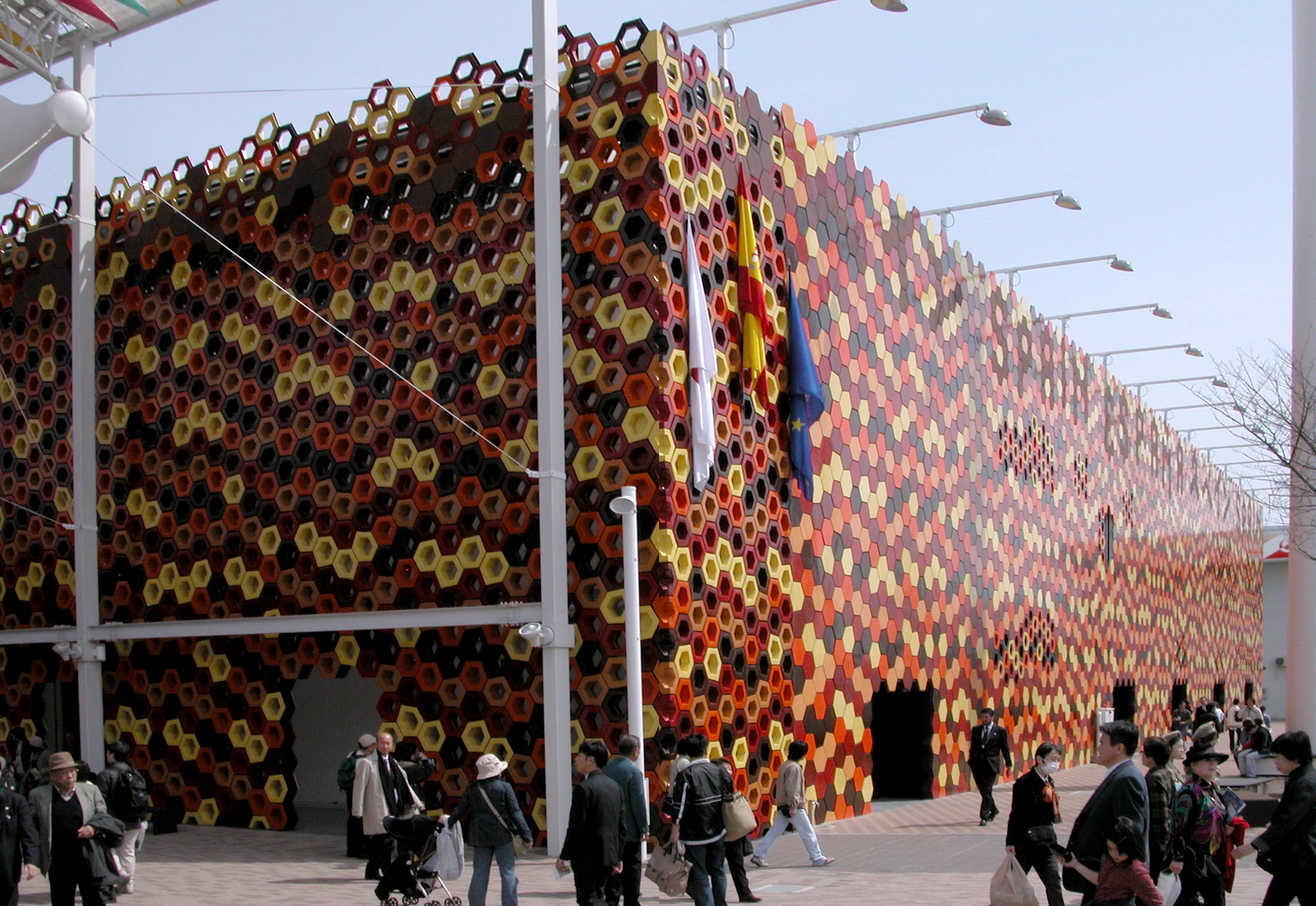
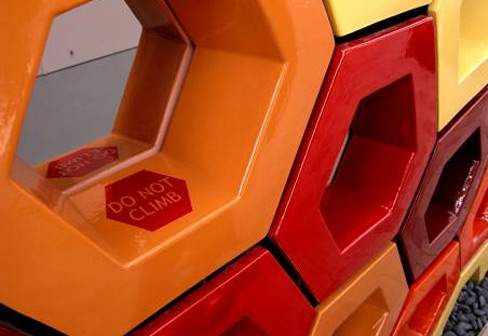
The exterior of the Spanish Pavilion features the "celosia," which is a typical element of traditional Spanish architecture. The ceramic hexagons utilized for the exterior were made from Spanish clay and shipped to Nagoya. TheseSuch material, "ceramics,"
areis another common denominator betweenof the Spanish and Japanese culture.; Aadjacent to the EXPO site is the city of Seto, which is renowned for its ceramic works. Furthermore, the pavilion is surrounded with a perforated translucent wall, creating a
space that acts as a transitions between the interior and exterior. - such this technique incorporates a traditional Japanese architectural element "mokoshi", which can be seen at the Horyuji Temple in Nara.
All pictures: Spanish
Pavilion, Aichí, Japan
Architect: Alejandro Zaera Polo, Barcelona, Spain

