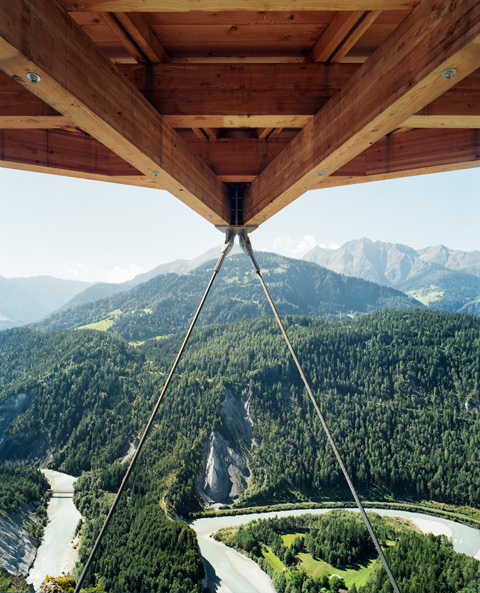
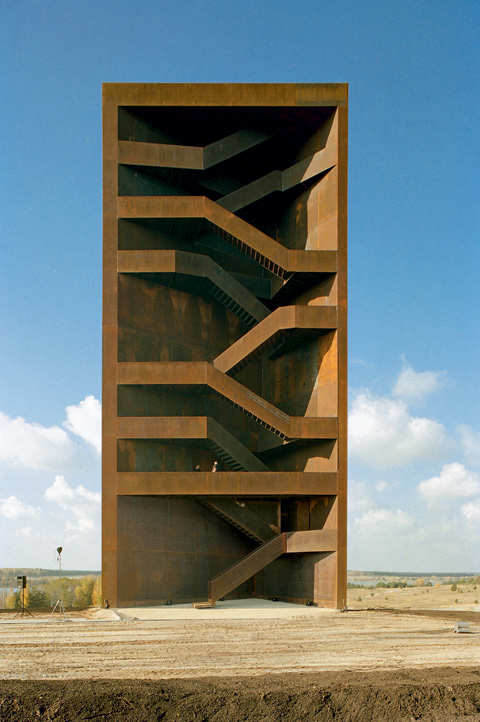
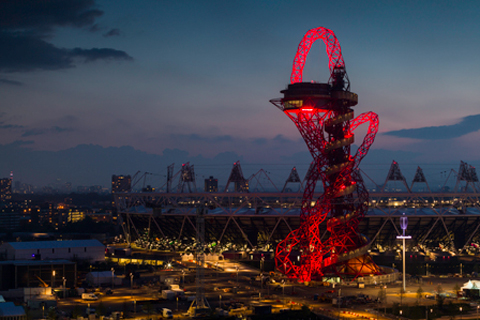
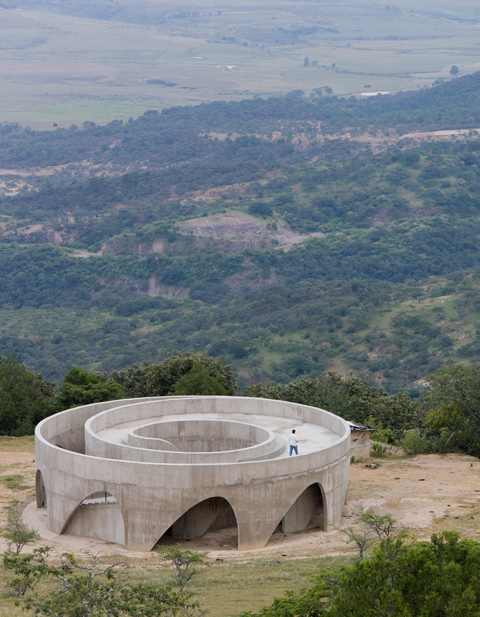
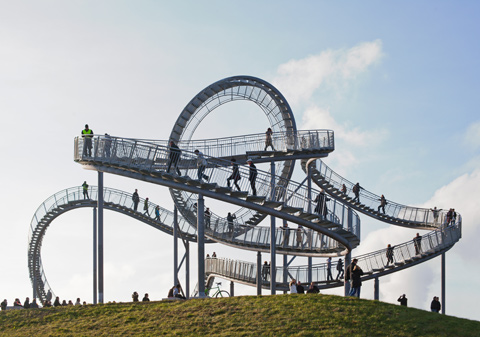
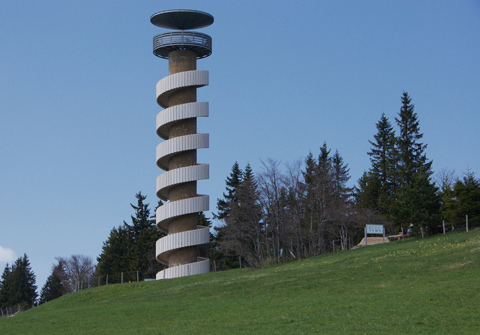
Let’s start with architecture. “Luginsland. Architektur mit Aussicht” (Lookout. Architecture with a view) is the title of a catalog by the Swiss Architecture Museum (SAM) in Basel accompanying the current exhibition of the same name. Even if, unfortunately, we didn’t make it to the show, we surprisingly still find ourselves in the present tense, as it doesn’t finish until March 9. The exhibition and catalog are devoted to a type of architecture that is literally difficult to miss, yet whose history with all its twists and turns often remains unexplored. We are talking about “lookout architecture”, i.e., towers, observation decks, treetop walkways and all those structures that more or less serve to afford a sweeping gaze over the urban or rural landscape from a high and often particularly appealing position. Who doesn’t like to see a little bit of the world spread out at their feet now and again and view it from an unusual perspective? Viewing platforms, be they old or new, are not just tall structures; they are quasi diving highboards for those who don’t suffer from vertigo.
“From the perspective of architectural history,” states Hubertus Adam, Director of the SAM, in his foreword, “buildings whose function is purely to serve as a lookout are a comparatively recent phenomenon. In the course of the 18th century the first structures appeared in English landscaped gardens and were simply there to afford a view of the environs. With the development of tourism throughout the 19th century a new type of building project emerged: the lookout tower. Frequently citing a national romanticist formal language, the early towers with their battlements and masonry still harked back to the military tradition of this type of architecture.” Every child has a mental image of a crenelated castle tower, from which approaching friends or foes can be seen long before they actually arrive. Then there are towers that serve communication purposes, i.e., lighthouses, television towers and airport control towers.
This is the right book for anyone wanting to take a closer look at this type of architecture and its development right up to the present day. Unfortunately it does not discuss the eye that gazes, which is only interested in looking and first and foremost perceives nature as the contryside. It is older than the type of building it gave rise to and originates in Italian poet Francesco Petrarca’s ascent of Mont Ventoux on April 26, 1336. Petrarch’s motive is clear: “Today I made the ascent of the highest mountain in this region, which is not improperly called Ventosum. My only motive was the wish to see what so great an elevation had to offer.” This is still part of the special appeal of all lookout structures today: They afford views of a region with one’s own eyes. Ultimately, lookout towers help us perceive the relationship between culture and nature.
Insightful essays by Hubertus Adam on the “Past and Present of Lookout Architecture”, by Joachim Kleinmanns on the pleasure of looking and by Gion A. Caminada on Switzerland’s hitherto largest nature park, planned in the Adula Alps region, teach us, among other things, that in the course of the 20th century the lookout tower initially lost its historicizing shell and was reduced to a constructive structure in order for it to then assume additional functions. It is not only as visitor platforms over city-center areas undergoing major transformation that lookout structures have regained popularity in recent years; they are also used for smart location marketing measures or a newly awakened ecological interest in nature. While this doesn’t refute the theory that here the gaze simply wants to look, it puts it in the service above all of tourism.
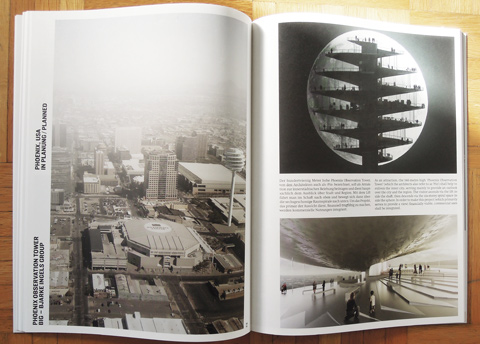
Irrespective of whether star architects, artists like Anish Kapoor or lesser-known experts tackle the task, the desire to look, fanned by tourism, is generally the driving force. That said, it is not only the view of the landscape, but also the view of the building that warrants it that has its appeal. Be it the Bjarke Ingels Group planning a city-center tower culminating in a six-story spiraling structure in Phoenix, Arizona, Jürgen Mayer H.’s “Metropol Parasol” in Seville affording a view of the city, or Sanaa’s Kazuo Sejima and Ryue Nishizawa designing a winding walkway through the palm grove, a World Heritage Site, in the Spanish city of Elche, in all cases spectacular architecture unites with the view of a diverse terrain.
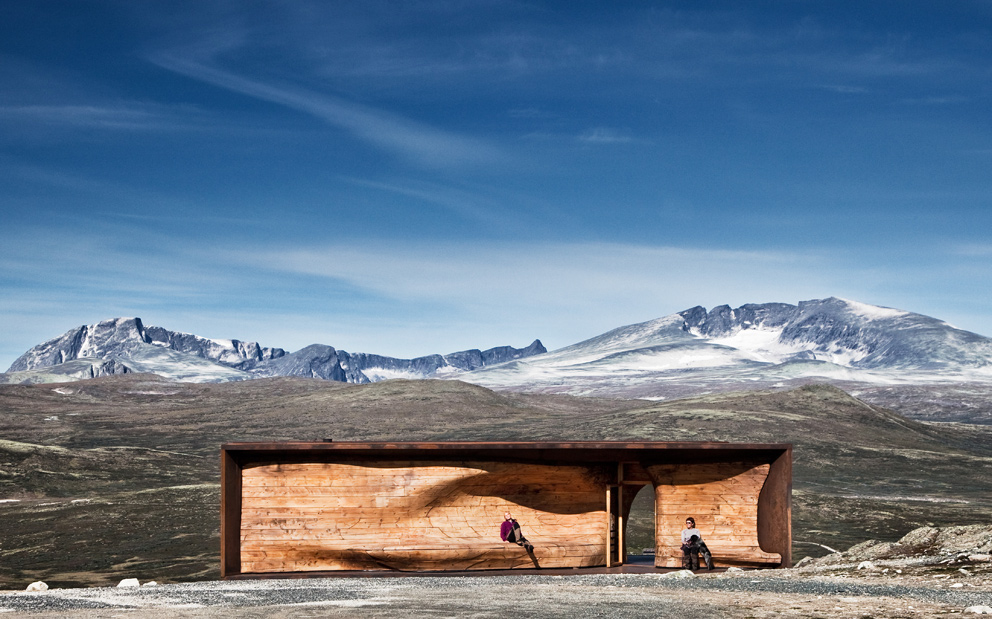
Mario Botta’s architecturally more restrained “Tour de Moron” puts the spotlight instead on the spectacular panoramic view of the Swiss Jura Mountains. The 36-meter-high “canopy research tower”, which Kirchspitz Architekten + Ingenieure conceived for the Palatinate Forest and for the research biologists from Technical University Kaiserlautern there and which can be easily assembled and dismantled, fulfils an entirely different function. And to show that modest, less-high solutions are possible, there is the “Grunnfør Bicycle Shelter” by 70o N Arkitektur on the windy Lofoten Tourist Route. So, what are you waiting for? Up the tower with you! Even if you are just leafing through the catalog.
SAM 11 – Luginsland. Architektur mit Aussicht / Lookout. Architecture with a view
Ed. by Hubertus Adam, Schweizerisches Architekturmuseum
22.5 x 30 cm, 112 pages, 157 mostly color illustrations, paperback
German / English
Christoph Merian Verlag Basel
EUR 29
Two volumes published by Lars Müller lead, once again, to Switzerland and to photography. Both are devoted to the great Le Corbusier, albeit in very different ways.
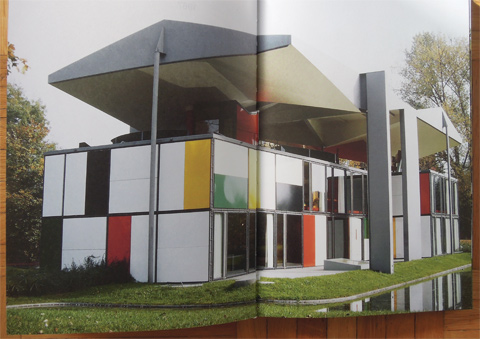
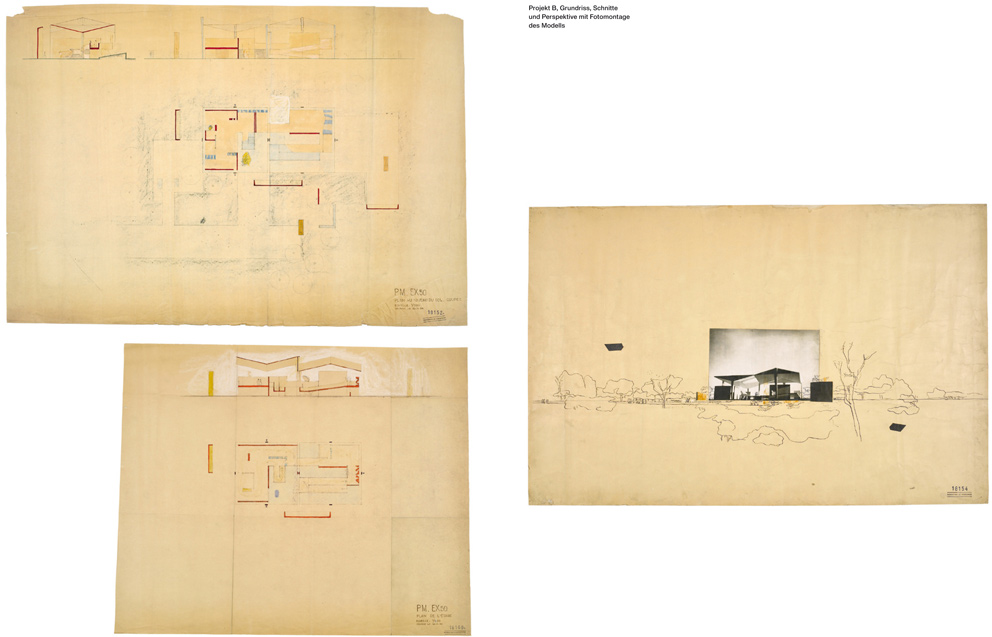
“Le Corbusier’s Pavilion for Zurich” focuses, as the subtitle indicates, on the “Model and Prototype of an Ideal Exhibition Space”. Drawing on numerous handwritten documents, sketches and plans from the “Laboratoire permanent des arts majeurs” at Porte Maillot to the design of “Maison d’Homme” for Heidi Weber in Zurich, as well as insightful essays, it presents, the development of this late work – Le Corbusier’s last building project, which wasn’t realized until after his death. We repeatedly wonder at how complex the plans were, at the care he took in checking variations and at how ambitious the whole project was. “Le Corbusier”, writes Uta Hasseler, “had his sights set on no less than an ideal exhibition pavilion: the home of his oeuvre and assurance of the survival of his work and its impact; a general abstract architectural design of great ambition and freedom, the demonstration of a synthesis of art, architecture and life.” The project, at once a house and a museum, was initiated by Zurich gallerist Heidi Weber and, with its abstract forms and colors, constitutes no less than an intellectual legacy of the famous architect.
Anyone interested in Le Corbusier, exhibition buildings in general or both should definitely take a look at this book on an in many ways extraordinary building, known alternately as the “Heidi Weber Museum”, the “Centre Le Corbusier”, “Exhibition Pavilion ZHLC” or simply “LCZH”.
Le Corbusier’s Pavilion for Zurich
Tim Benton, Catherine Dumont D’Ayot
Ed. by Institute of Historic Building Research and Conservation, ETH Zurich
16.5 x 24 cm, 224 pages, 198 illustrations, hardcover,
Lars Müller Publishers
English, French, German
EUR 40
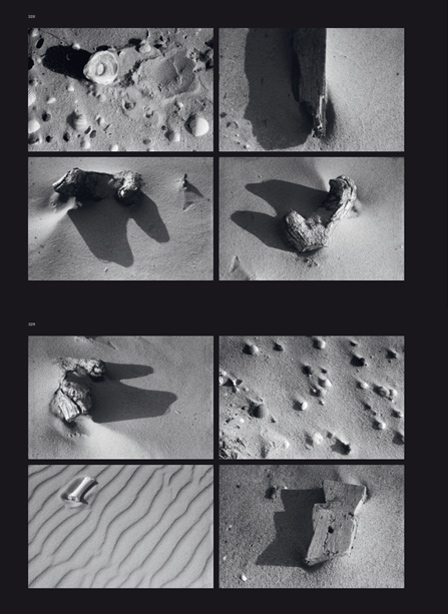
Tim Benton’s book “LC Foto: Le Corbusier Secret Photographer” approaches Le Corbusier from an entirely different angle. Here, Benton meticulously explores how the famous architect used photography. It begins with the first attempts by the young Charles-Edouard Jeanneret, who wanted to take professional images during his travels through Central Europe, the Balkans, Turkey, Greece and Italy. Although Le Corbusier always maintained that he didn’t attach any great value to photography, between 1907 and 1917 he bought three cameras, with which he took hundreds of pictures, many of them high quality. In 1936 he even bought a 16mm film camera, which he used to shoot 120 film sequences.
The book is based on excerpts from this mostly unpublished material. We learn which cameras LC used when and that LC experimented with numerous photographic styles. But that is not all by a long shot: If you engage with the rarely touristy or even appealing black-and-white photos, you will get an idea of how LC perceived nature and the city and what he learnt from that. It is at once the architectural ensembles and the details he includes as well as the sheath of a zeppelin or the links of an anchor chain that reveal his visual interests and attest to his power of imagination.
LC FOTO: Le Corbusier Secret Photographer
Tim Benton
24 x 16.5 cm, 416 pages, 970 illustrations, hardcover
Lars Müller Publishers
English
EUR 48
MORE on Stylepark:
Incompleted - Frankfurt at a glance: The Director of Deutsches Architekturmuseum takes a close look at new “Architectural Guide to Frankfurt/Main”.
(11 December 2013)
Thawing the ice of the Inca City: For the first time, a fascinating book of incredibly high quality photographs gives us the chance to see the Mars in its surface in detail.
(23 October 2013)