Shared difference
Anna Moldenhauer: Your team's areas of responsibility are interdisciplinary. How do you combine your expertise and what is the goal?
Savannah Willits: PLP Lab, the research and development arm of PLP Architecture, is a natural extension of an architect's work – we research a wide variety of topics, from people to environment to technology. This is how the projects were developed, and the results may be useful at a later stage or serve as a basis for further developing our work.
Together with Centric Lab, you published a study entitled ‘Designing for Neurodiversity’ for a British Council for Offices research project, which examines the impact of physical spaces on their users.
Savannah Willits: Exactly, we created suitable environments and collaborated with other organisations such as Central Lab, which are neurodiverse, activists and neuroscientists. We were also able to collaborate with Luke Ward, who works for the international architecture, design and planning firm Gensler. One result is the development of the Veiligheids Checklist Aannemers (VCA). This is a kind of framework for companies to use to check whether their spaces provide employees with a suitable workplace.
Neurodiversity is an umbrella term for a broad spectrum that includes dyslexia, dyscalculia, giftedness, ADHD and autism. What interested you in this group of people?
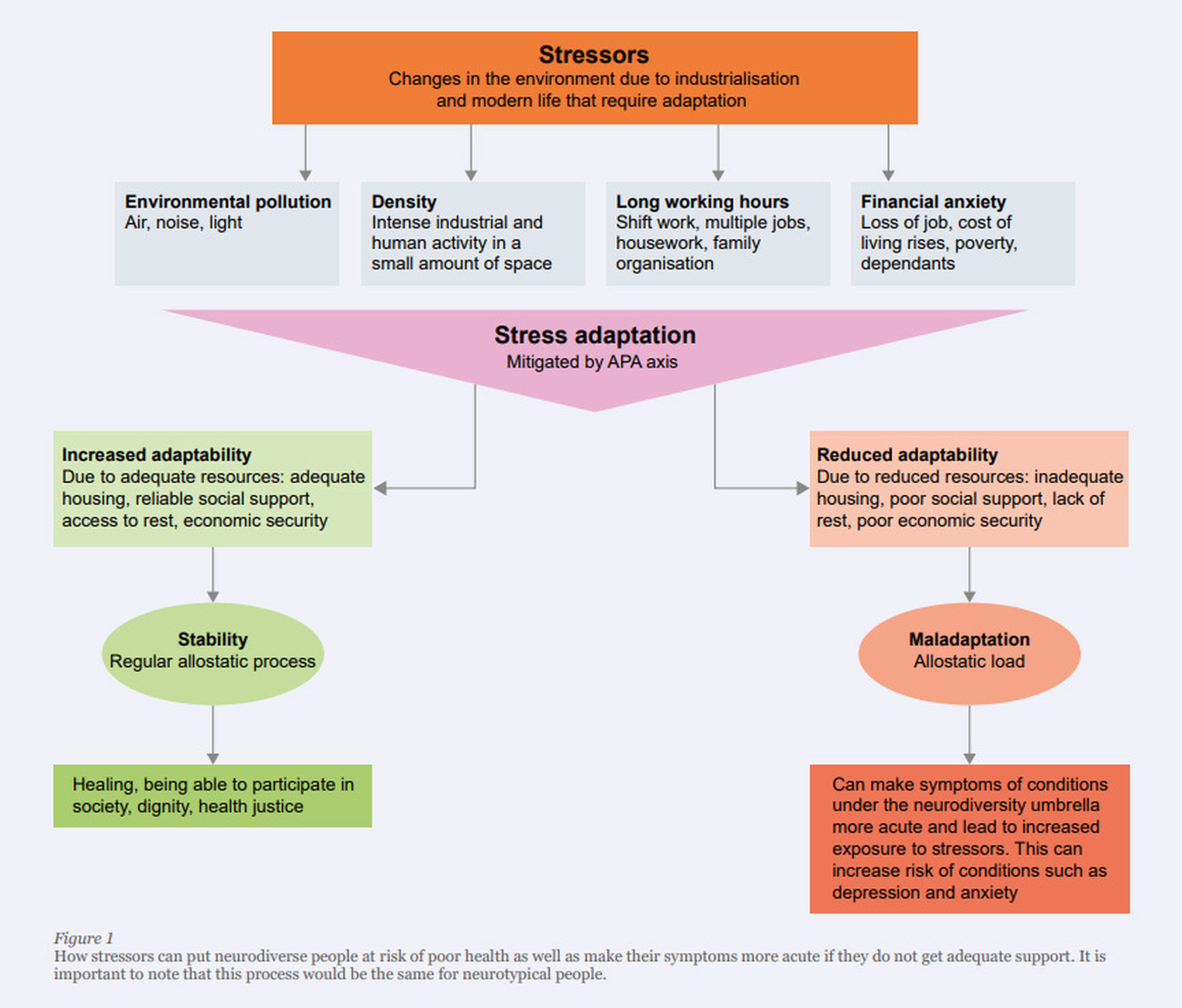
Savannah Willits: When we started our research, neurodiversity wasn't such a big area of focus, even though one in five or seven people are neurodiverse. That's a huge demographic whose needs for an ideal workplace have been largely ignored. As a result, employment rates among autistic people, for example, are very low. In the UK, only around 22 percent of autistic people were reported to do paid work in the labour market in 2021. Architecture and interior design play a major role in enabling everyone to work effectively. We therefore ask ourselves whether spaces are hindering or promoting workplace design that meets people's different needs. At the same time, it is important to look at the system: how can office processes and human resources be optimised?
Neurodivergent people often have a higher perception of detail, can quickly analyse patterns in structures, have a very good memory, are multitaskers and solve problems more creatively. Albert Einstein, Steve Jobs, Marie Curie and Frida Kahlo, for example, were neurodivergent. At the same time, stimuli such as bright lights, loud noises or intense colours can be counterproductive for them. What is the ideal workplace design?
Savannah Willits: When talking about neurodiversity, it is crucial to create many different spaces. Some people are hypersensitive and quickly feel overstimulated. Others are hyposensitive and want more stimulation. To accommodate this diversity, it is crucial to have work environments that reflect this and give people choices: lively areas, quiet places for individual tasks and relaxation rooms. This should be the basis of any office design.
So neurodivergent people don't all have the same needs in the workplace – just like neurotypical people. Does that mean everyone can benefit from your research?
Savannah Willits: Yes, and I think that's the point: when you give people a variety of options and choices and let them choose what works best for them, everyone benefits, whether they are neurotypical or neurodiverse. It's not about giving one group of people an advantage. Research on neurodivergent design is useful for everyone.
Can you give an example of a project from your portfolio?
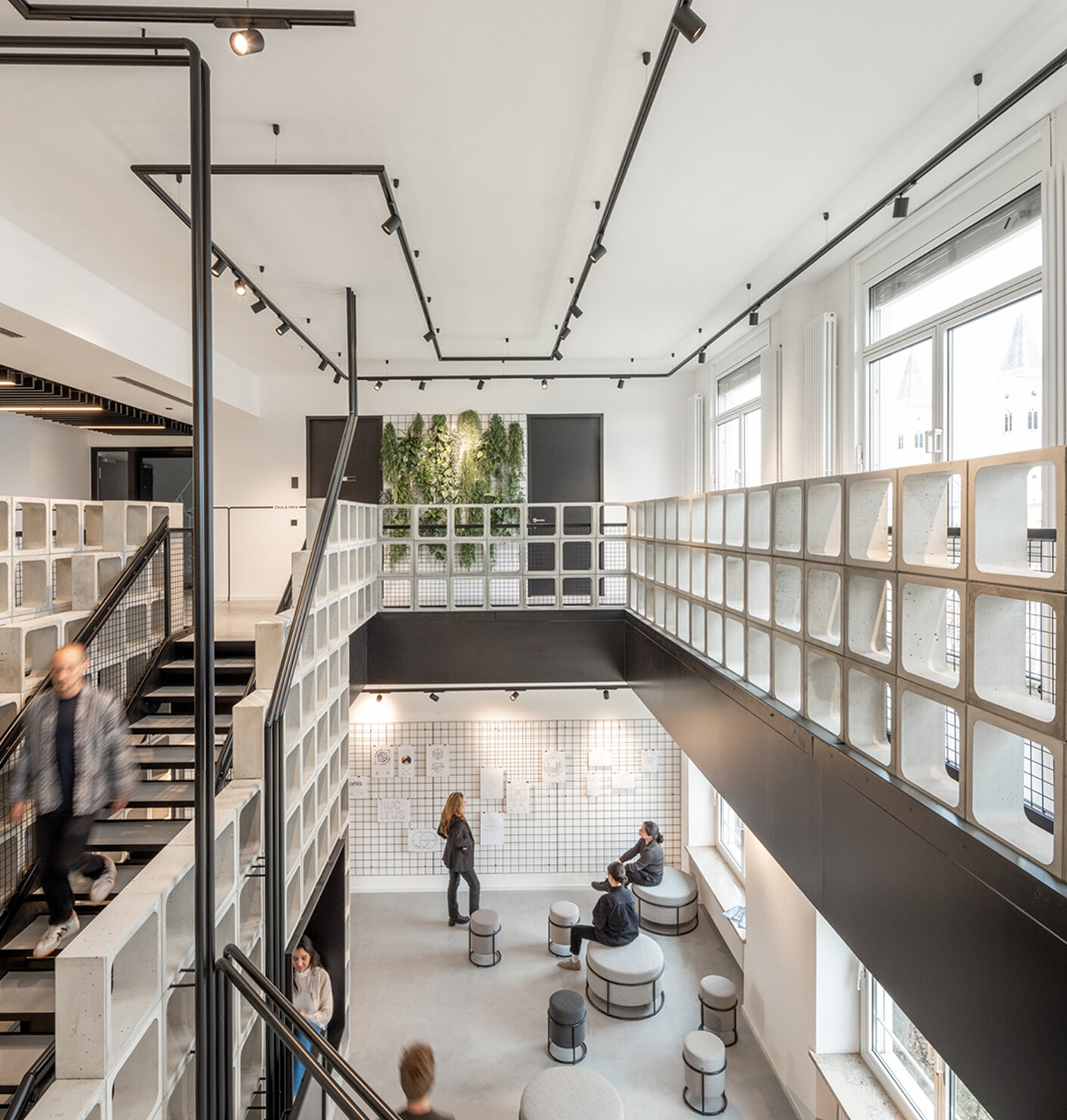
Savannah Willits: The PLP Design building in Amsterdam, for example, is equipped with sensors that are connected to an app. Personal settings, such as temperature, can be selected for each room. It's really great that we now have the technology and design capabilities to make this a reality.
According to a report in Psychology Today, neurological differences are normal variations in brain development and should not be considered disorders according to a medical model. Modularity and flexibility have been increasingly in demand in the design of rooms and furniture for several years. Do you see a positive development for inclusive workspaces in general?
Savannah Willits: Yes, because when designing workspaces, it should always be taken into account that people in the office perform different tasks and do not all work at the same times. The pandemic has shown us how important flexibility and communication are for collaboration, so a high level of attention to this is definitely positive. Everyone should be able to experience equality in employment. Being able to work in a place where you feel comfortable should be a given. When designing workspaces, it is therefore important to involve people and not discriminate against individual groups. We strive for equitable office design. Every person is different, and brains are very different in many ways.
Currently, the heterogeneity of the brain is also increasingly being discussed in social media. Do you find this helpful for further research?
Savannah Willits: I think it depends on the individual case. However, studies suggest that we underdiagnose neurodiversity, meaning that the proportion of the population is larger than previously assumed. There are also people who have neurodiverse characteristics but are not neurodivergent. We should therefore simply set ourselves the general task of creating places where all people can flourish.
”It's not about giving one group of people an advantage. Research on neurodivergent design is useful for everyone.“
Based on your research, which areas would you recommend investigating in more detail?
Savannah Willits: I am very interested in case studies. There is also an exciting publication from this year: ‘Designing Neuroinclusive Workplaces’ by Kay Sargent, interior designer and Director of Thought Leadership, Interiors at HOK, a global design, architecture, engineering and planning firm. Similarly, the British Institute for Standards (BSI) has published guidelines for designing the built environment for a neurodiverse society to make places more inclusive for everyone: ‘Design for the Mind. Neurodiversity & the Built Environment – PAS 6463’. These guidelines and recommendations are very helpful. Next, I would like to see case studies showing how architectural firms and developers have implemented the information from recent years in their buildings.
There are already a few projects that address autism. Other areas of the spectrum are overlooked. Do you see it that way too?
Savannah Willits: Autism is indeed a frequently used case study. It would be important to think more universally, for example, about how to design signs for people who do not immediately understand written words. Research should be as diverse as the design outcome. It is important that we do not just highlight one area or remain on the surface with our discussions.
What are your next steps?
Savannah Willits: We are continuing to work with our project teams and clients to raise awareness of the importance of a supportive environment. Every person has the right to a healthy and safe workplace, and we need to raise awareness of this.