Beautiful new world of data
Gabriela Beck: Why did you decide to focus on the topic of data in the form of an exhibition?
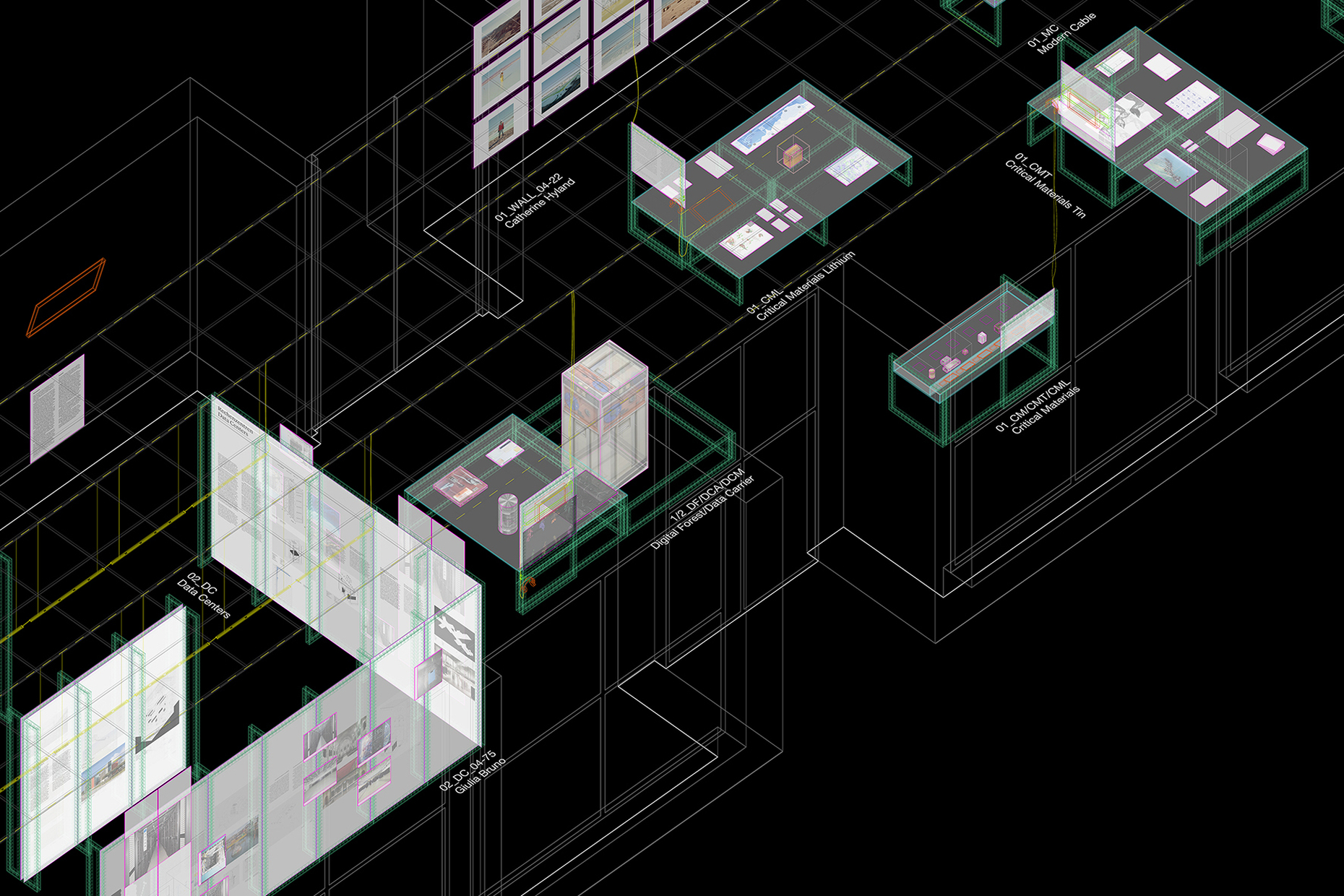
Damjan Kokalevski: We live in a hyper-connected world. Through smartphones, laptops, smart home devices and countless displays in urban spaces, we have access to the cloud almost anytime, anywhere. But it doesn't exist in a vacuum. Behind it are data centres, undersea cables and satellites. These structures determine our way of life and at the same time consume enormous amounts of resources. The name of the exhibition, ‘City in the Cloud – Data on the Ground,’ stems from the desire to understand the cloud not as a metaphorical entity to which we are all connected on a daily basis, but to show its actual impact on the ground of our planet. The aim is to create an understanding of how infrastructure for the data economy influences our view of spaces, burdens ecological systems, but also shapes our ideas of society and cultural heritage.
How do you visualise the abstract world of data?
Damjan Kokalevski: We show the cloud as physical infrastructure, including its historical development. For example, we look at the first transatlantic cable between Great Britain and the United States from the late 19th century and the geopolitical and material history of the emergence of the first telegraph infrastructure. We literally follow this development from the bottom of the sea to the five continents, show how data travels thousands of kilometres along the cables, which servers it passes through, and finally look at a global map of data centres, i.e. what these cables are connected to.
Data is the new global currency, and data centres are the new centres of power. They consume vast amounts of fresh water, energy and raw materials.
Damjan Kokalevski: There are currently around 10,000 data centres in operation worldwide. More than 5,000 of these are located in the USA. Directly behind the USA – who would have thought – is Germany with around 500 data centres, followed closely by the UK and China, also with around 500. Data centres contain cables, backup batteries, microchips and emergency power generators – all of which require critical raw materials such as tin, lithium, cobalt and copper. We present the ecological and social price of these materials. The soldering element tin, for example, literally holds all our devices together and 80 per cent of it comes from a single island in Indonesia. And in one of the largest lithium mines in the Atacama Desert in Chile, there is a merciless battle for water rights.
With the exponential growth of artificial intelligence, the demand for additional data centres is rapidly increasing worldwide. Is the environment facing collapse?
Damjan Kokalevski: To keep pace with current developments in AI, estimates suggest we would need to double the number of data centres. With current electricity production, we cannot cover the additional consumption. So I think that despite all the promises made by major players such as Meta or X, Tesla, Google and Microsoft, the dream of a fully automated society will not come true any time soon.
Are there no approaches to building new data centres in a more sustainable manner?
Damjan Kokalevski: Yes, there are a few pilot projects. For example, we are showing a data centre belonging to the European Space Agency (ESA). Several infrastructures are being launched into space there, which will then no longer require electricity and are intended to be self-sufficient, sustainable and self-sufficient – a very radical idea. We are also showing another project from Microsoft, which is currently being adopted by the Chinese government. This involves sinking hundreds of data centres into the sea in order to save enormous amounts of water for cooling, for example.
What role will data centres play in urban development in the future?
Damjan Kokalevski: Data centres are no longer just located in greenfield sites. They are much more prevalent than most people think. In Frankfurt, for example, the Neckermann site is currently being redeveloped. It was the largest logistics centre in Europe and is now being converted into a complex with eleven data centres. Other pilot projects are experimenting with decentralised or so-called micro data centres that can be integrated into residential buildings. Architects and designers are coming to the fore to design these systems in a meaningful way.
Many digital services such as social media, city apps and search engines appear to be free of charge. What is the actual price we pay for using them?
Damjan Kokalevski: Every time we use an app, we leave digital traces that are collected, stored and evaluated by companies. In doing so, we support a global system that is highly centralised and profit-oriented. Every search query, every swipe or stream also generates CO₂ and consumes energy. The ‘price’ of the data economy is therefore multi-layered: it affects our privacy, resource consumption and social and environmental justice. It's not just about whether we pay for a service, but what consequences the invisible infrastructure has.
Can you give us a specific example?
Damjan Kokalevski: Let's take the smart home as an example. In the exhibition, we use video and media installations to show the extent to which we give up our autonomy in a fully automated home. Can I still open a window myself? Can I turn on my refrigerator or stove myself?
The smart city uses data to optimise and manage complexity. Do you view this as positive or negative?
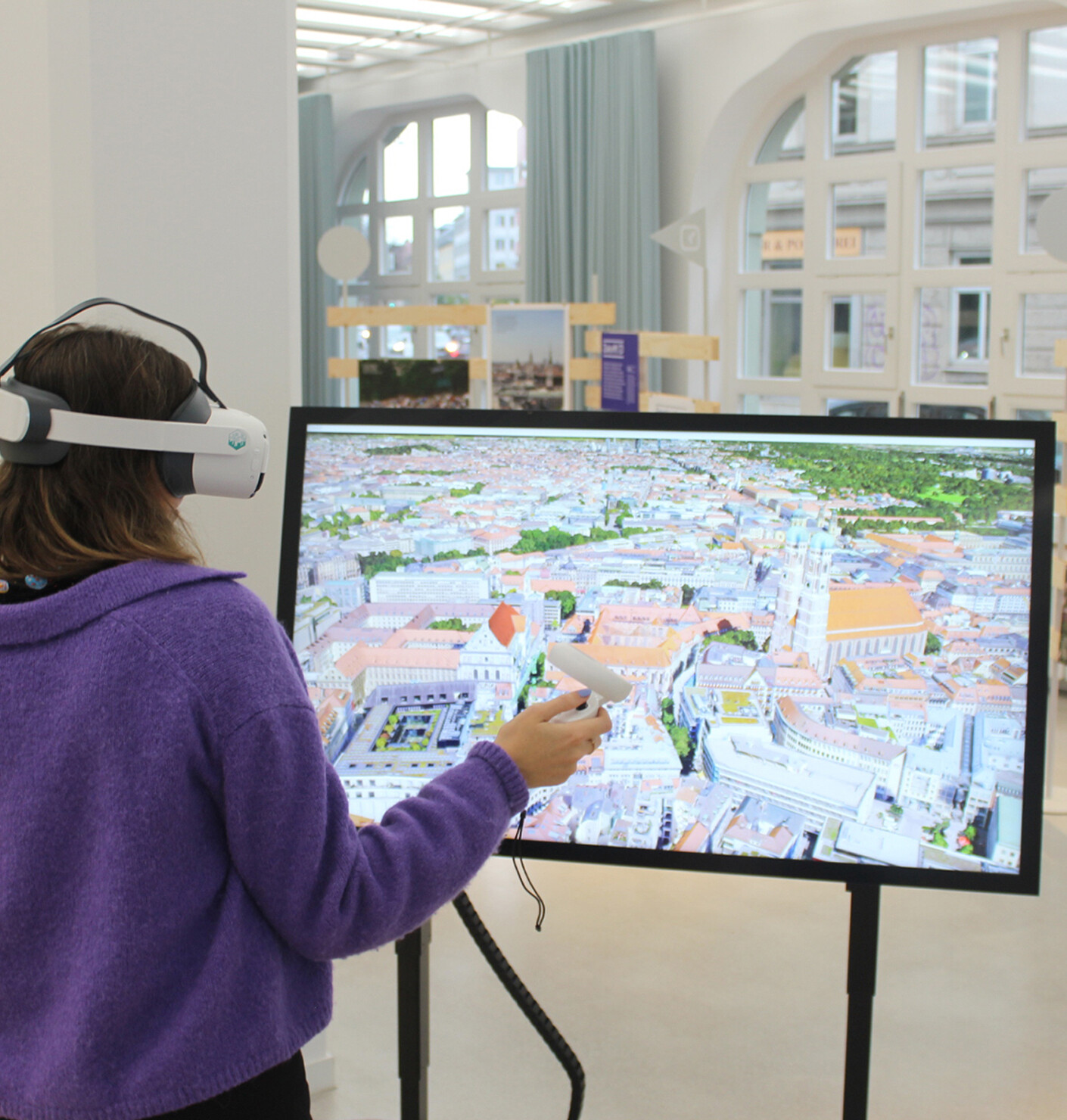
Damjan Kokalevski: There are plenty of dystopian scenarios in which data influences every aspect of urban life. In the exhibition, however, we use Munich as a case study for a smart city that is not simply about the production and use of data, but about a civic agenda. One example we have chosen is the map of cool places. The idea is that citizens can use it to plan their routes through the city so that they can get from A to B as cool as possible. Another map shows the current construction sites throughout the city, allowing users to plan alternative routes from different points. These maps are available online and are updated daily.
How do you see the role of AI in architecture? Will AI replace architects in the future?
Damjan Kokalevski: In my opinion, AI will not replace the work of architects. AI can design buildings more efficiently or use data models, but it cannot replace the creativity, regulatory knowledge and critical review that architects provide. For example, we are showcasing projects in which AI supports the ecological demolition and construction of buildings, for example by digitally dismantling and reassembling brick walls. But training AI requires architects. One annoyance is that many AI applications, such as Midjourney, are currently only used to create beautiful images without any functional architecture behind them. That's a waste of energy and resources. However, the use of AI can be exciting when architects and AI cooperate.
In light of the need to conserve resources, part of the exhibition addresses the question: Do we need to store all the data we produce every day, or can we delete some of it?
Damjan Kokalevski: The current social consensus is: more data, more backups, more availability – around the clock, globally. But this permanent use and storage has enormous ecological consequences. Each copy creates new burdens, and each search query using AI tools such as ChatGPT, Grok or Perplexity consumes around ten times more energy than a simple Google query. We are showcasing projects that question this approach. Why do we expect to have access to all data anytime, anywhere, while in the analogue world we accept that museums or archives, for example, are only open at certain times? There are experiments in which servers only run when there is enough solar energy available. We want to encourage visitors to think about how they use data more consciously.
There are considerations to restrict access to AI so that not everyone can use it – at least not free of charge.
Damjan Kokalevski: At this point in time, I don't believe there is a compelling need for AI for everyone, as is currently being communicated. There are five tech companies that currently dominate the AI landscape. And if they say we urgently need to develop AI, I would be very sceptical, because that means that these five companies in particular will benefit. The question is: what do we as citizens gain from the use of AI models, apart from unclear results whose accuracy and degree we cannot verify?
What final message would you like to convey to visitors to the exhibition?
Damjan Kokalevski: We want to show that data, technology and architecture cannot be viewed in isolation. It's about the responsible use of resources, the conscious use of AI and the possibility of designing urban infrastructure in a socially meaningful way. Data collection alone does not bring knowledge, and uncritical use of AI costs enormous resources. Our exhibition aims to raise awareness of these connections and stimulate discussion about how we can make our digital future more sustainable.
City in the cloud – Data on the ground
Opening: 15 October 2025, 7 p.m.
Duration: 16 October 2025 to 8 March 2026
TUM Architecture Museum in the Pinakothek der Moderne
Barer Straße 40
80333 Munich
Opening hours
Tuesday to Sunday
10 a.m. to 6 p.m.
Thursday 10 a.m. to 8 p.m.
Closed on Mondays
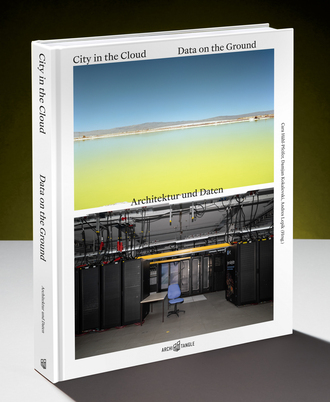
City in the Cloud – Data on the Ground
A catalogue has been published to accompany the exhibition and is available from the Cedon Museum shop. With contributions by James Bridle, Giulia Bruno, Teresa Fankhänel, Cara Hähl-Pfeifer, Max Hallinan, Mél Hogan, Catherine Hyland, Damjan Kokalevski, Andres Lepik, Niklas Maak, Marija Marić, Anna-Maria Meister, Marina Otero Verzier, Trevor Paglen, Godofredo Enes Pereira, Andra Pop-Jurj, Alison Powell, Māra Starka and Rafael Uriarte.
Edited by Cara Hähl-Pfeifer, Damjan Kokalevski, Andres Lepik
ArchiTangle Verlag
58 euros
ISBN book English: 978-3-96680-038-9