DAM Preis 2026: The finals!
Munich: etal. – ‘The robust house’
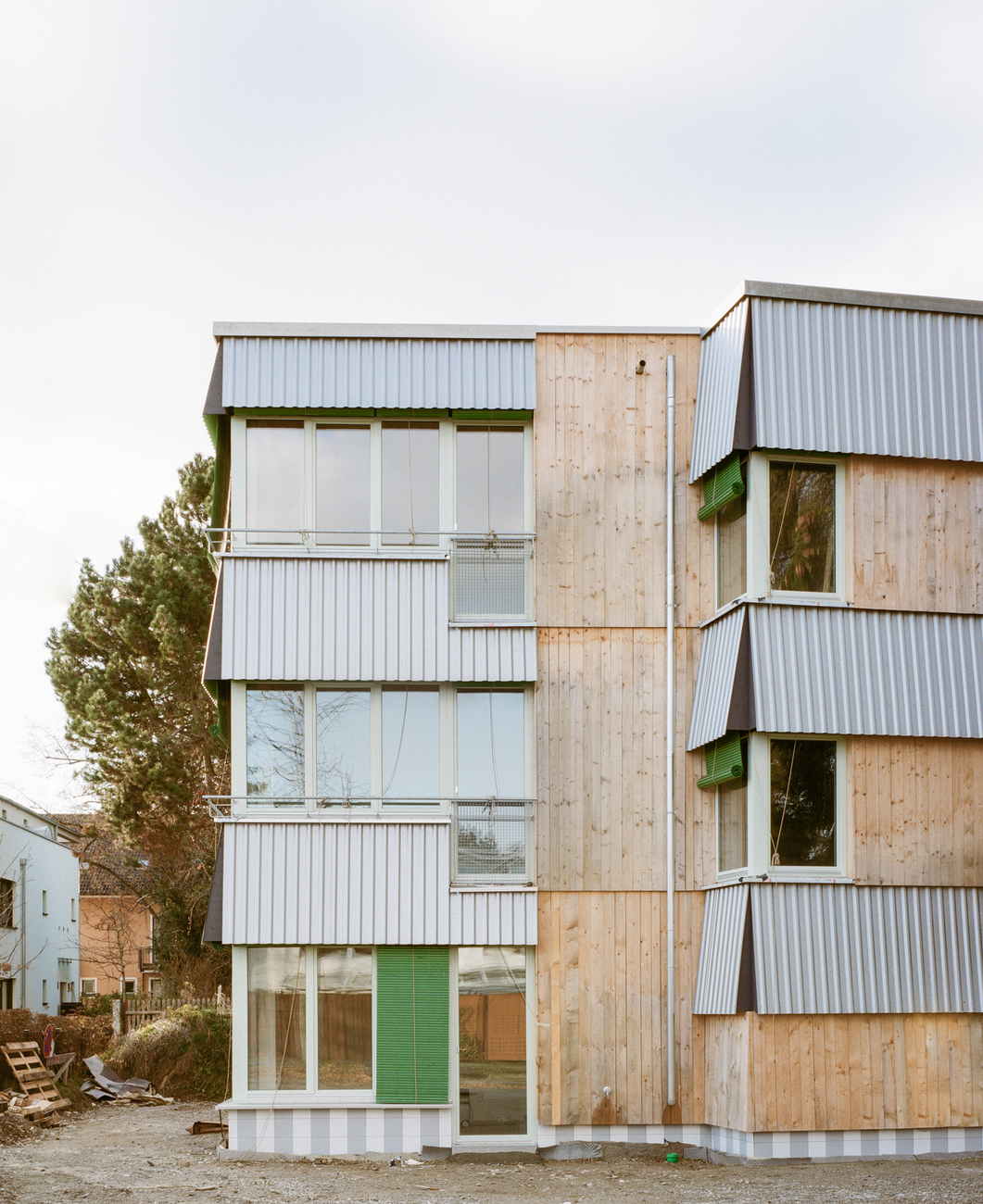
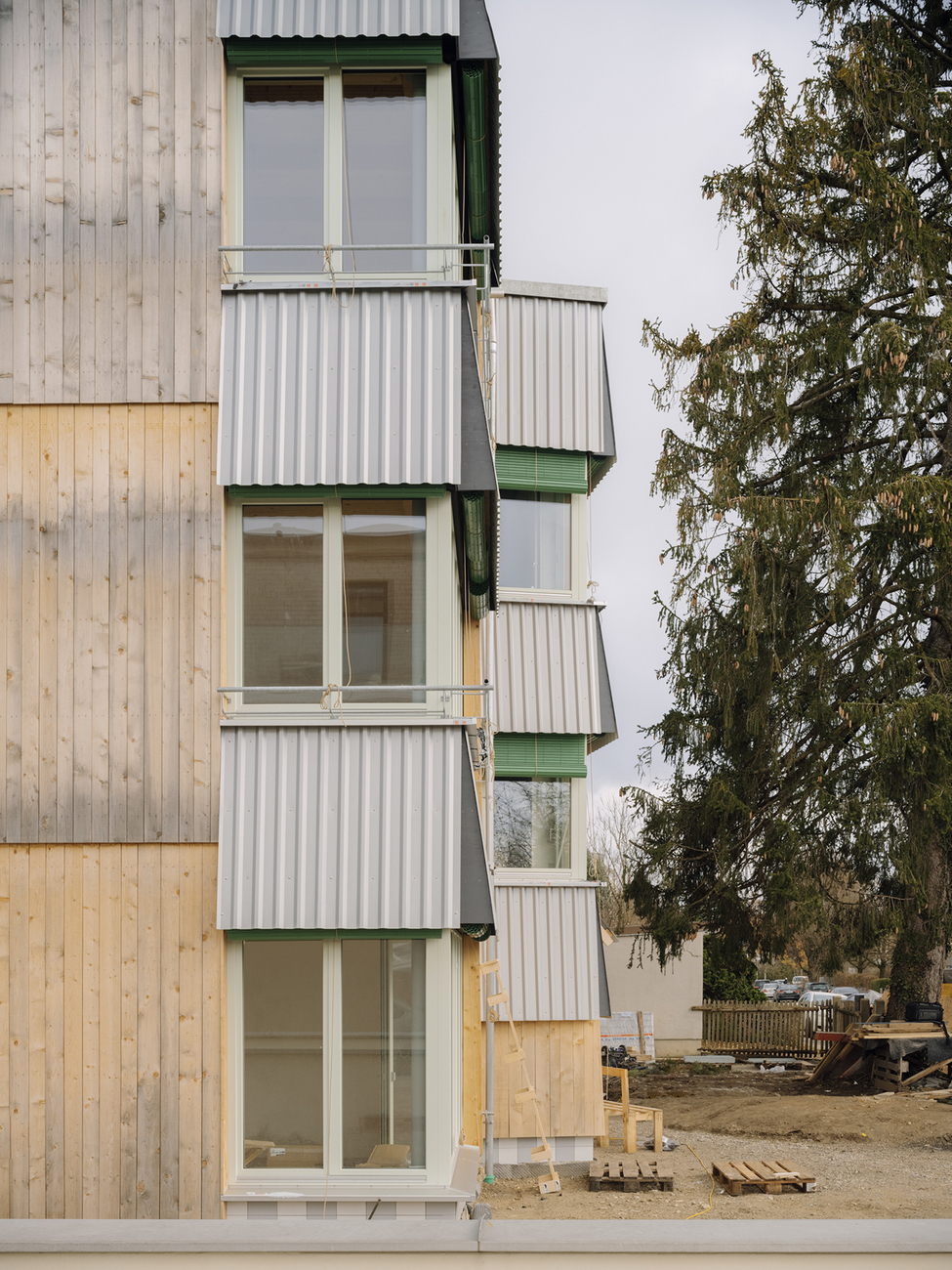
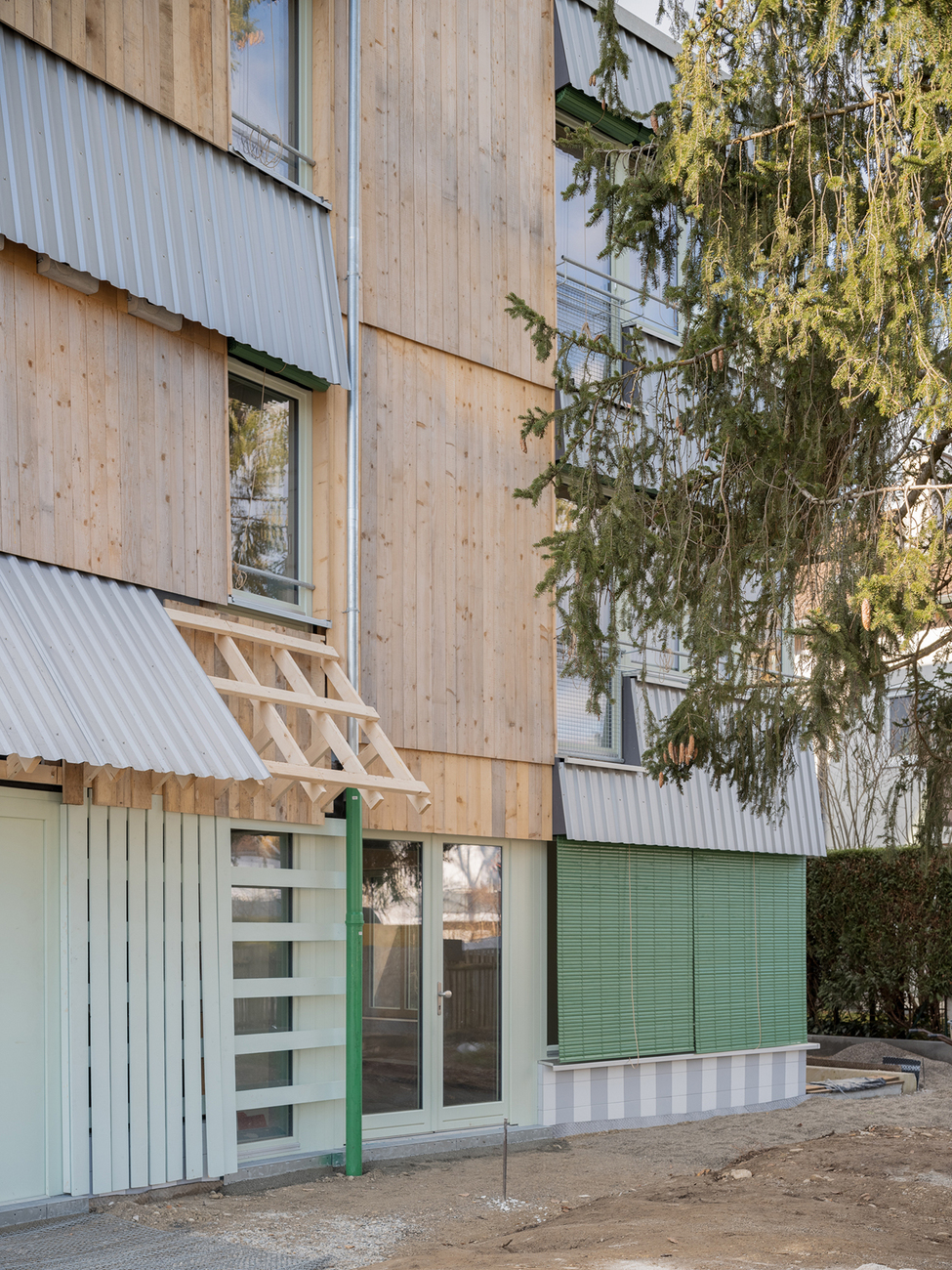
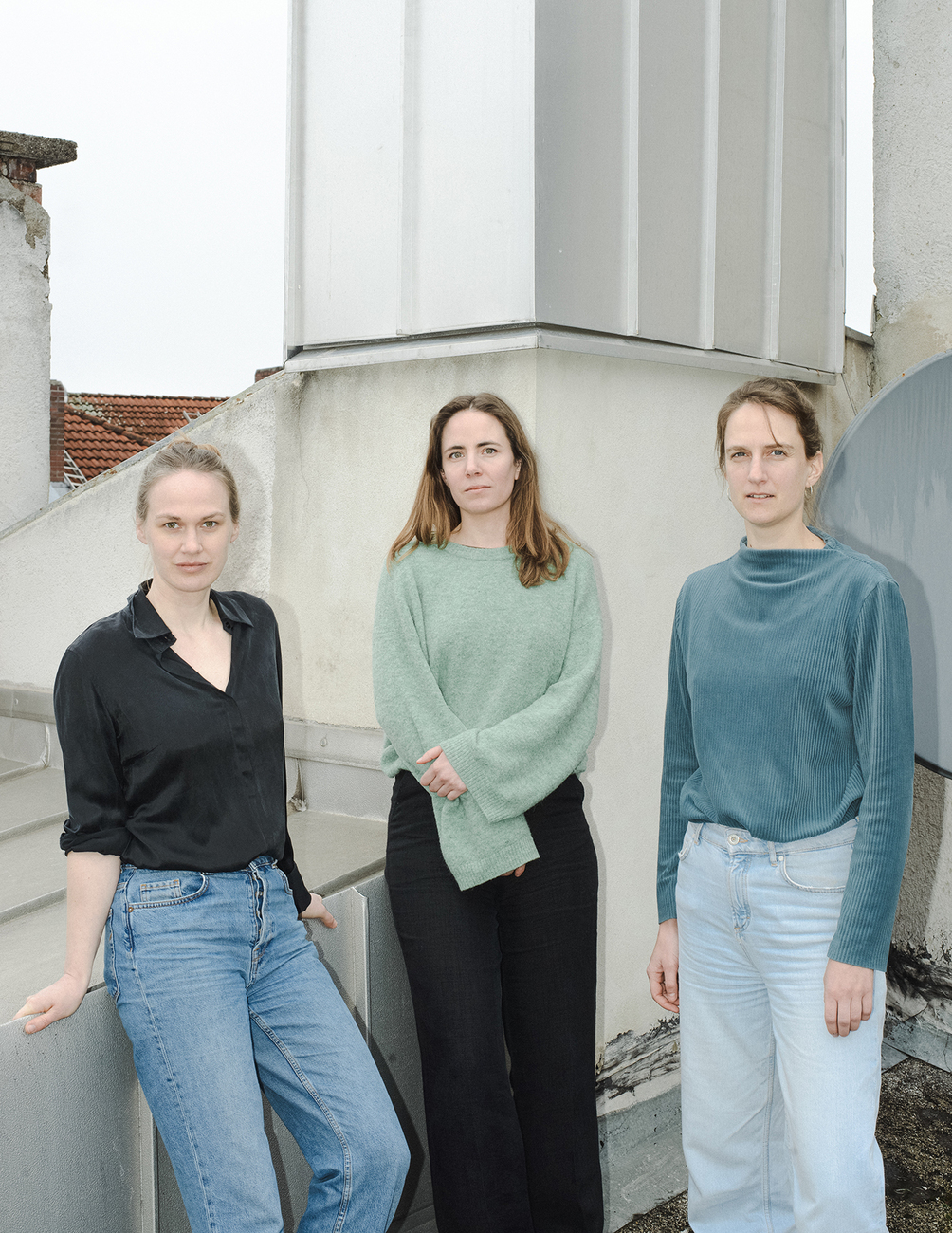
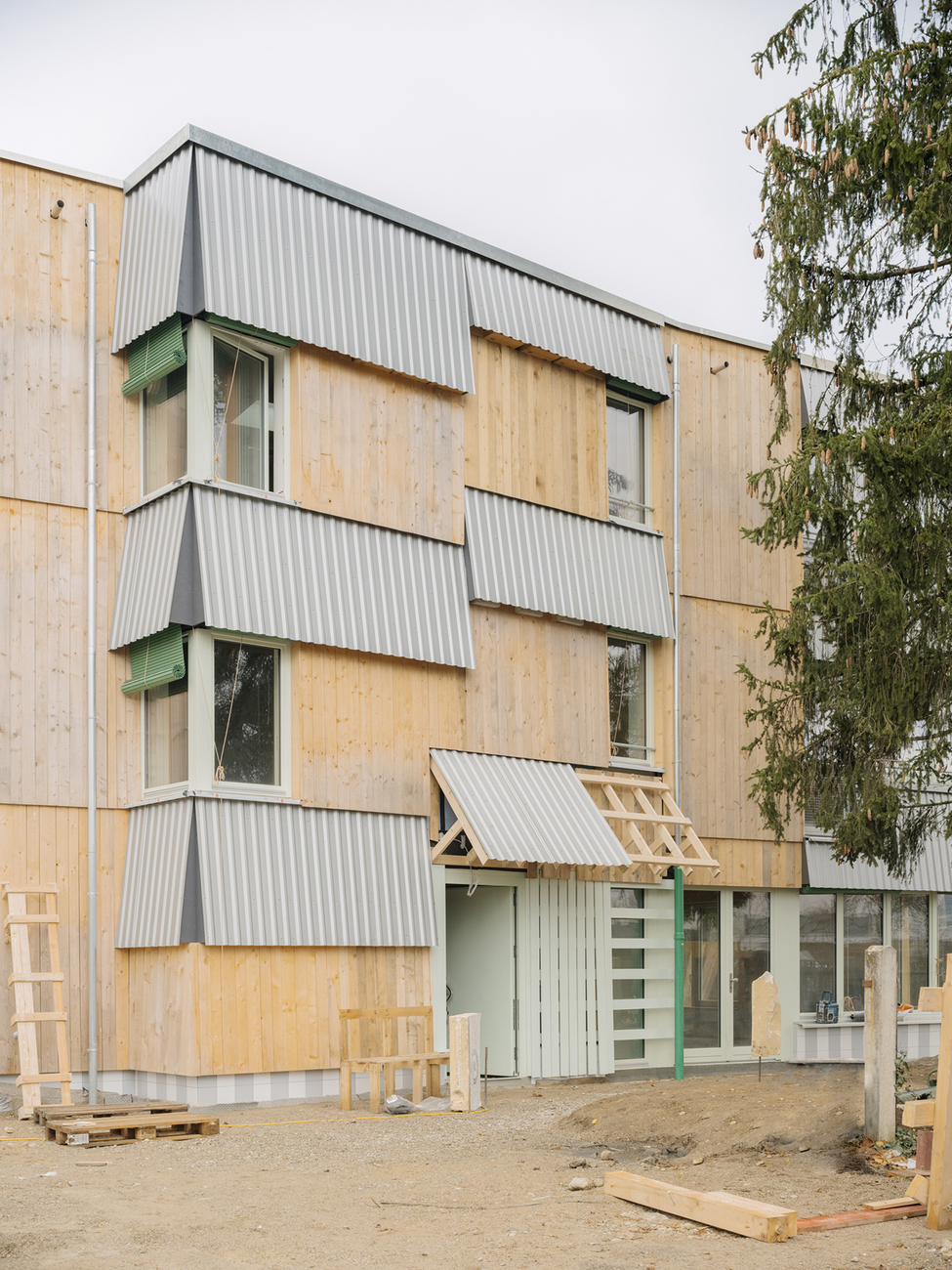
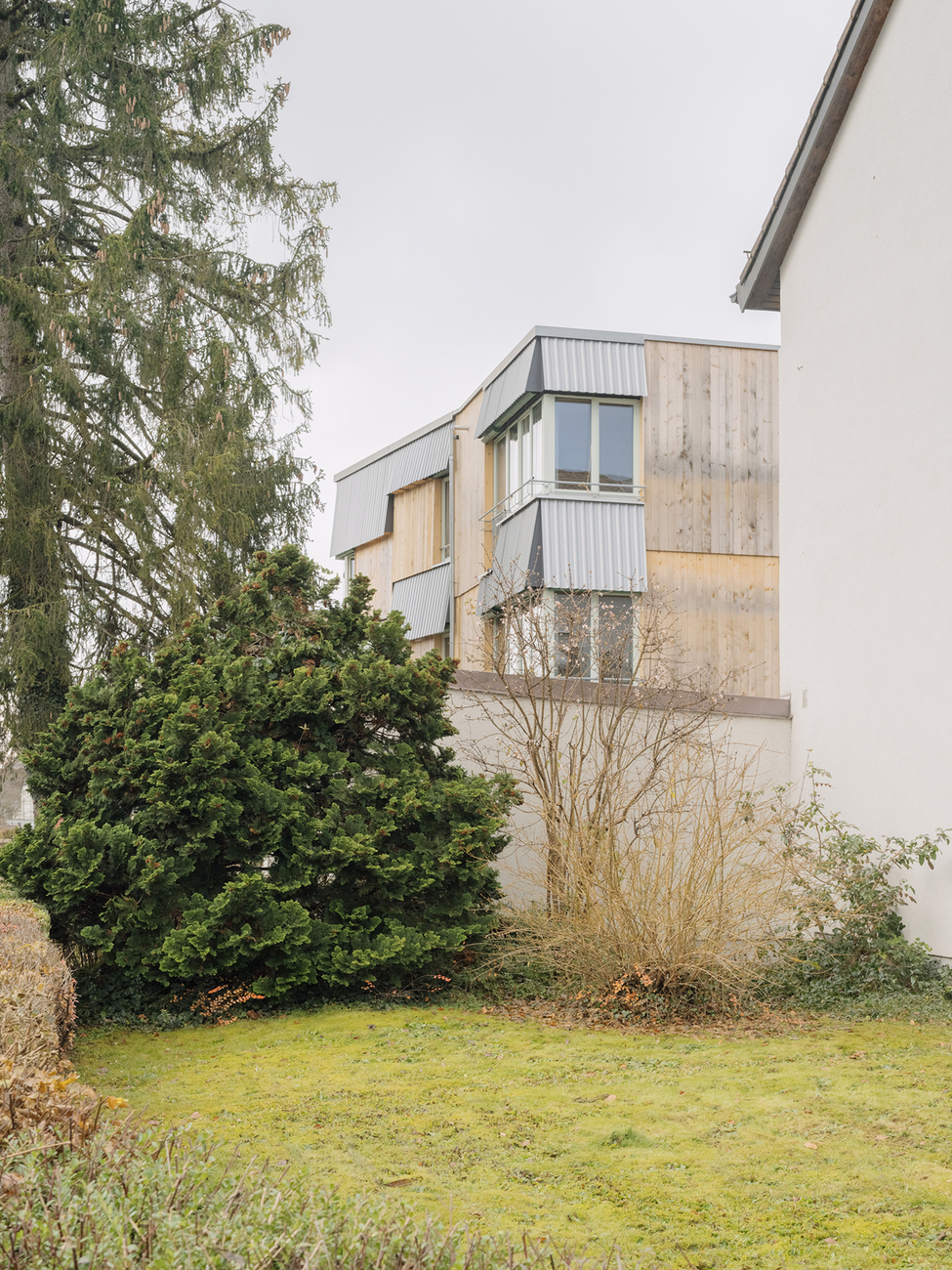
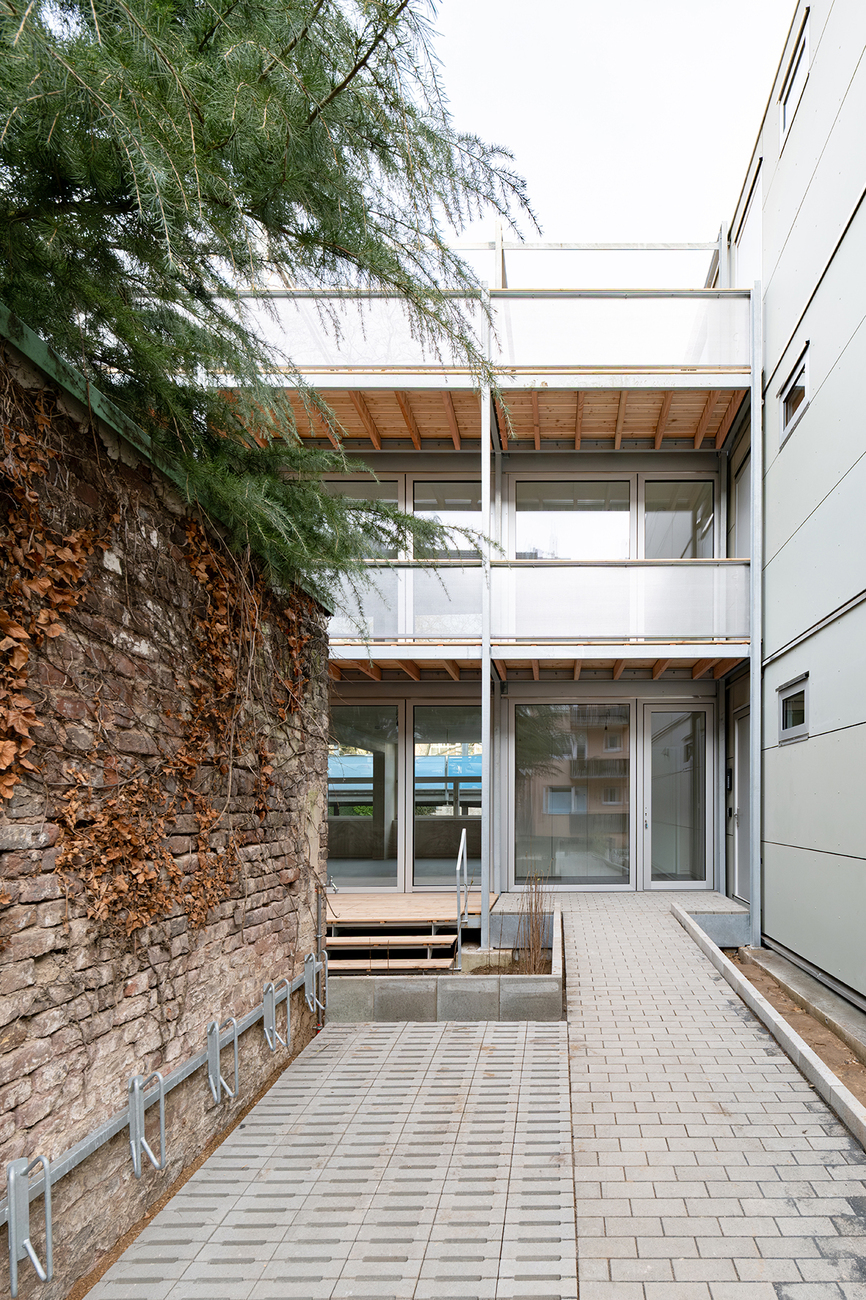
The ‘robust house’ is located in the Ramersdorf/Perlach district. An energy-efficient multi-generational building by etal. that, thanks to its unusual façade at Görzer Straße 128, arouses curiosity at first glance: surrounded by linear new buildings, modest apartment buildings and historic structures with gabled gable roofs, three storeys rise up into the sky. Its vertical spruce wood cladding is interrupted only by windows, doors and trapezoidal steel sheets. Slightly protruding, the latter resemble Mediterranean awnings and serve as weather protection, as green wooden roller blinds are installed underneath them. Attached only at the top, they can be moved and maintained flexibly. In general, all functional elements have been selected so that tenants can maintain and care for them as independently as possible. "Originally, we could have imagined the entire building being clad in recycled trapezoidal steel sheeting. However, the construction team wanted the timber structure to be visible on the outside. We opted for local Alpine spruce, which grows slowly and is of better quality than many local larch trees. The decision was also made for aesthetic reasons, as spruce turns grey more quickly and evenly. The cladding is possible because the building is classified as Class 3 and we do not need fire barriers. It is a simple way of protecting the end grain of the boards. Overall, the house has an honest aesthetic, which we have deliberately used, and we are excited to see how it ages," says Elena Masla, who runs the architectural firm together with Zora Syren and Gesche Bengtsson.
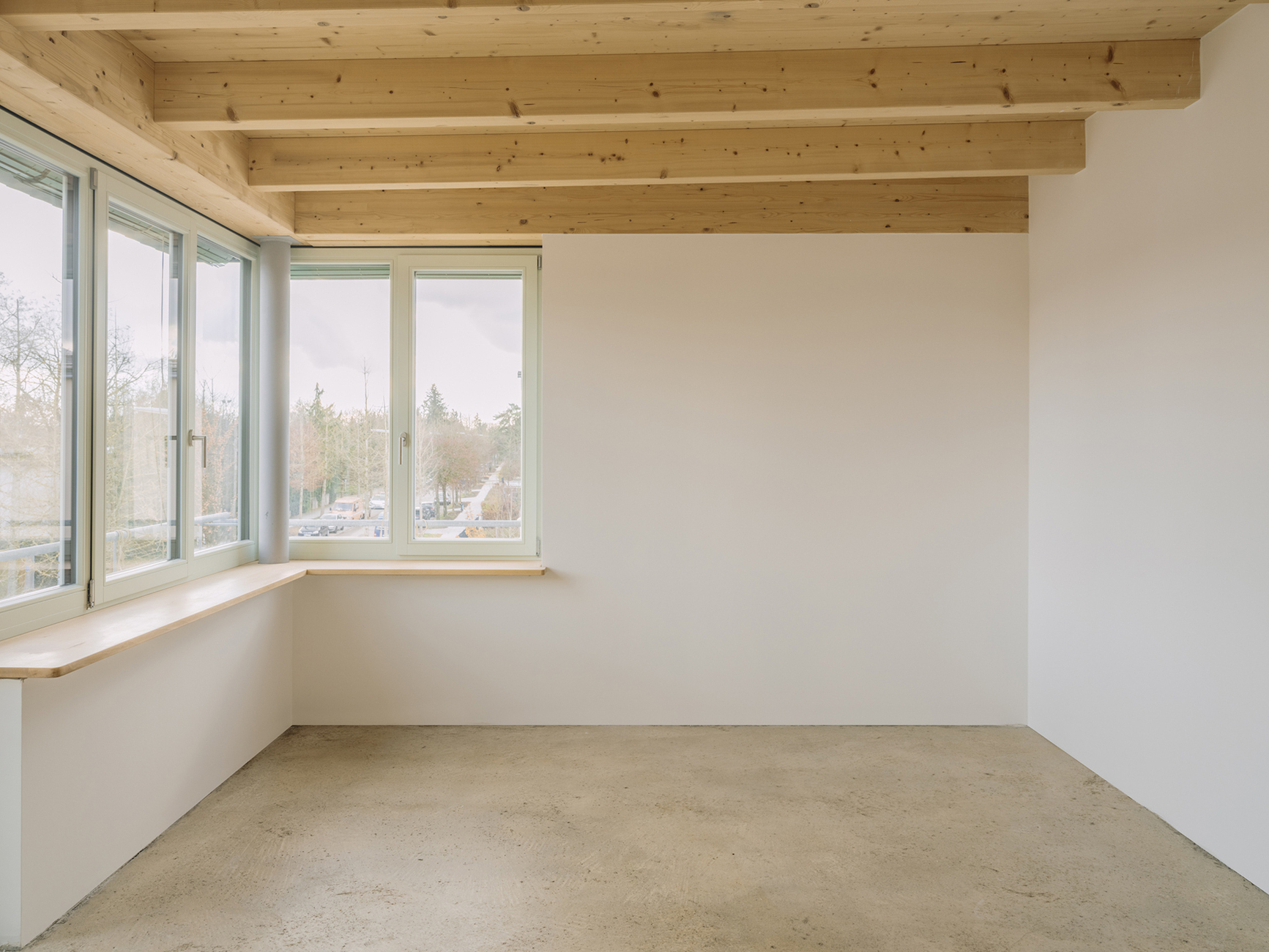
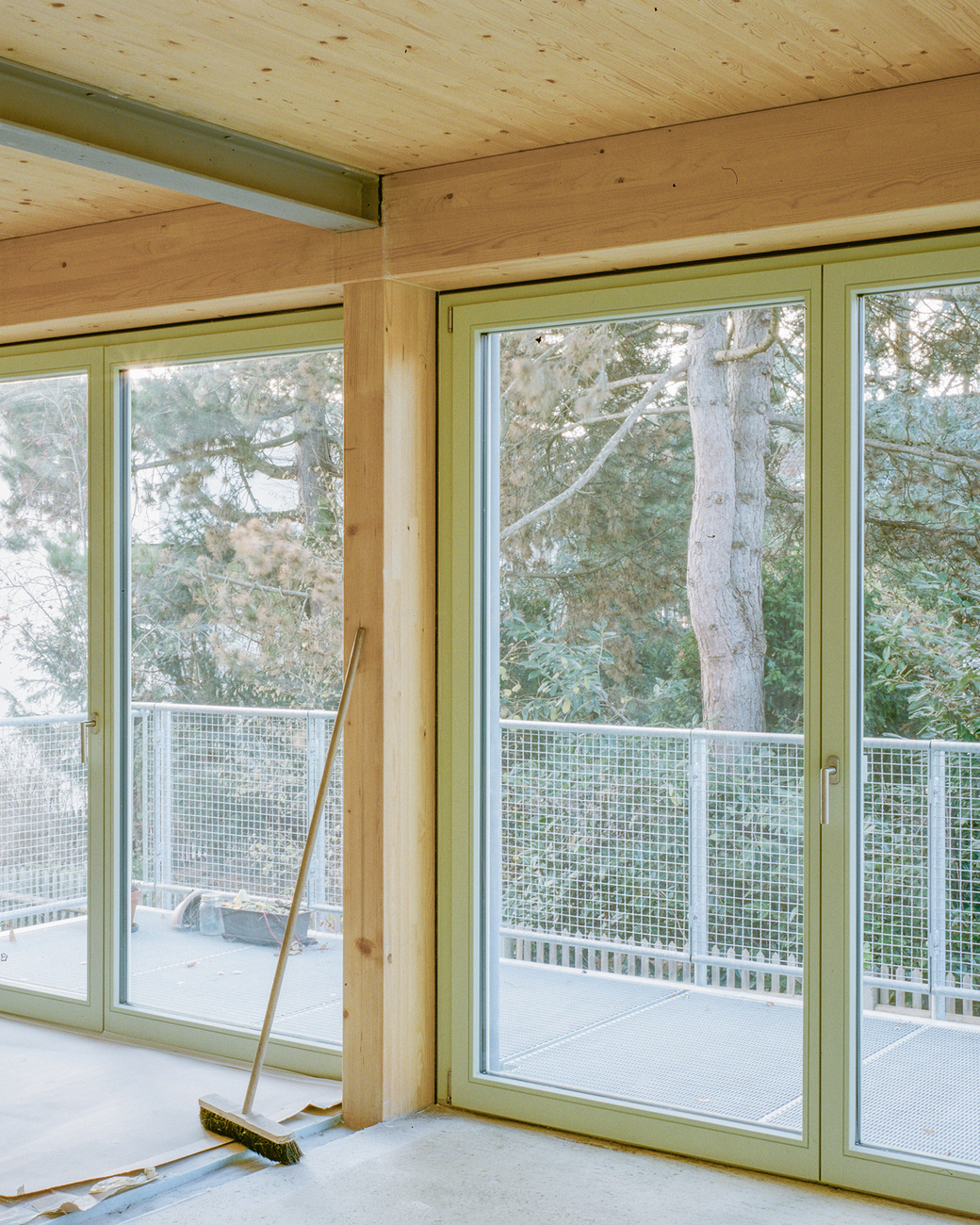
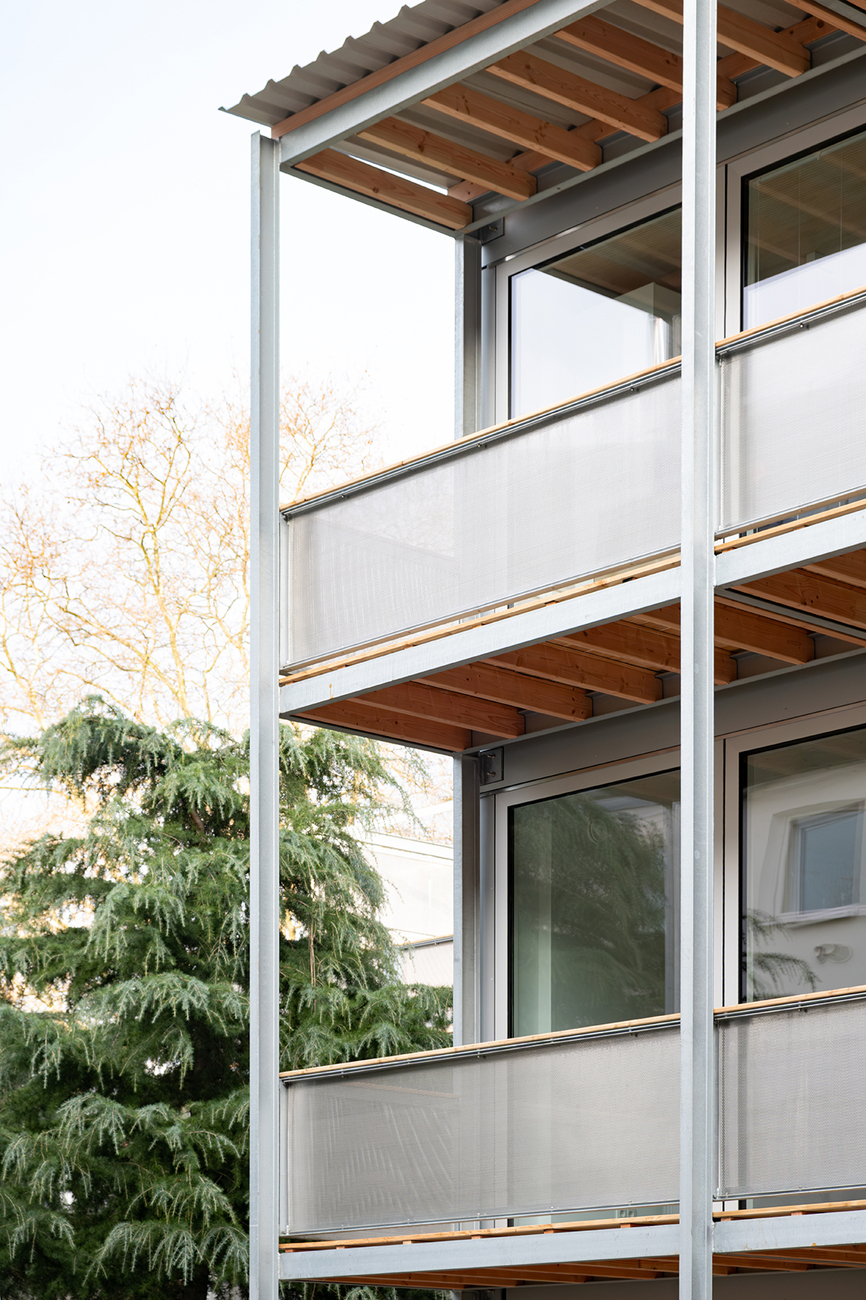
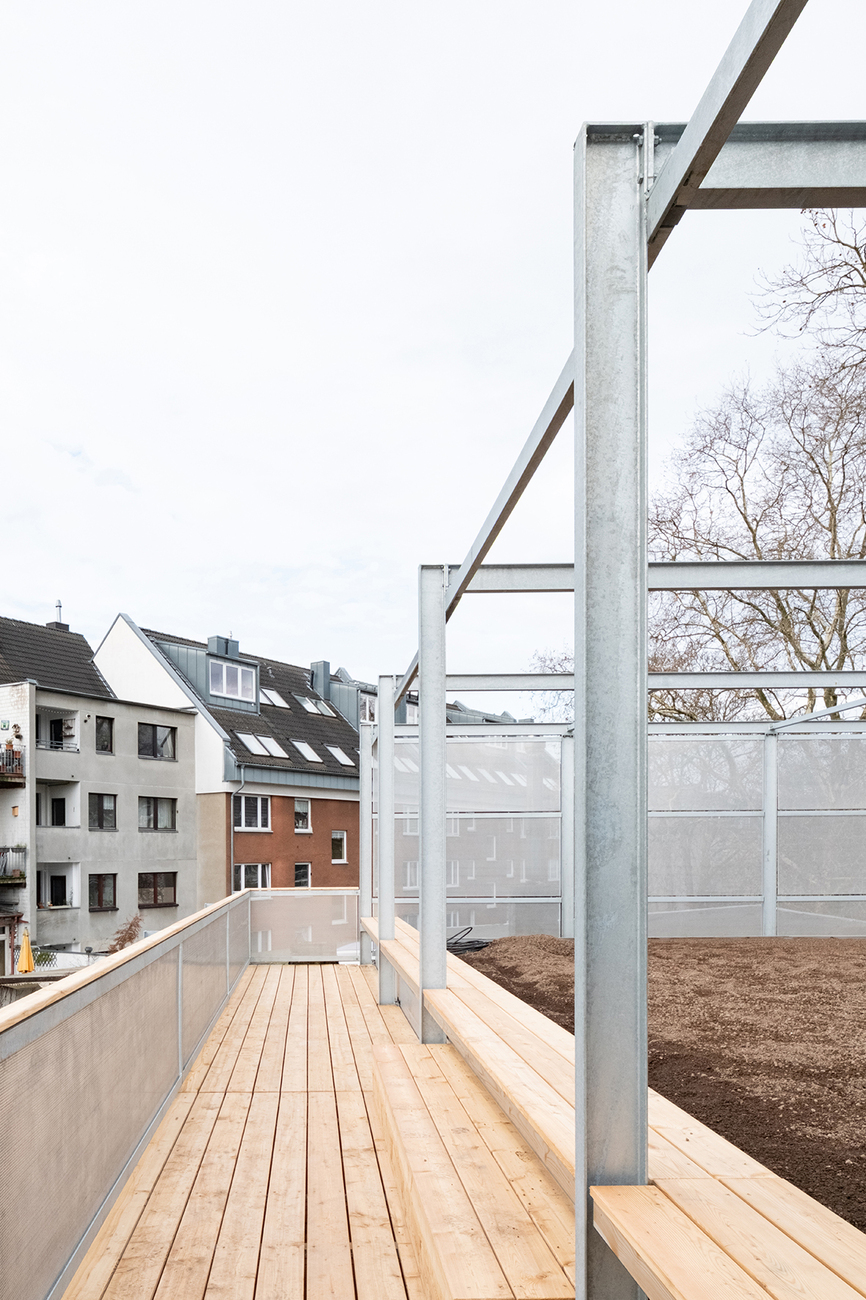
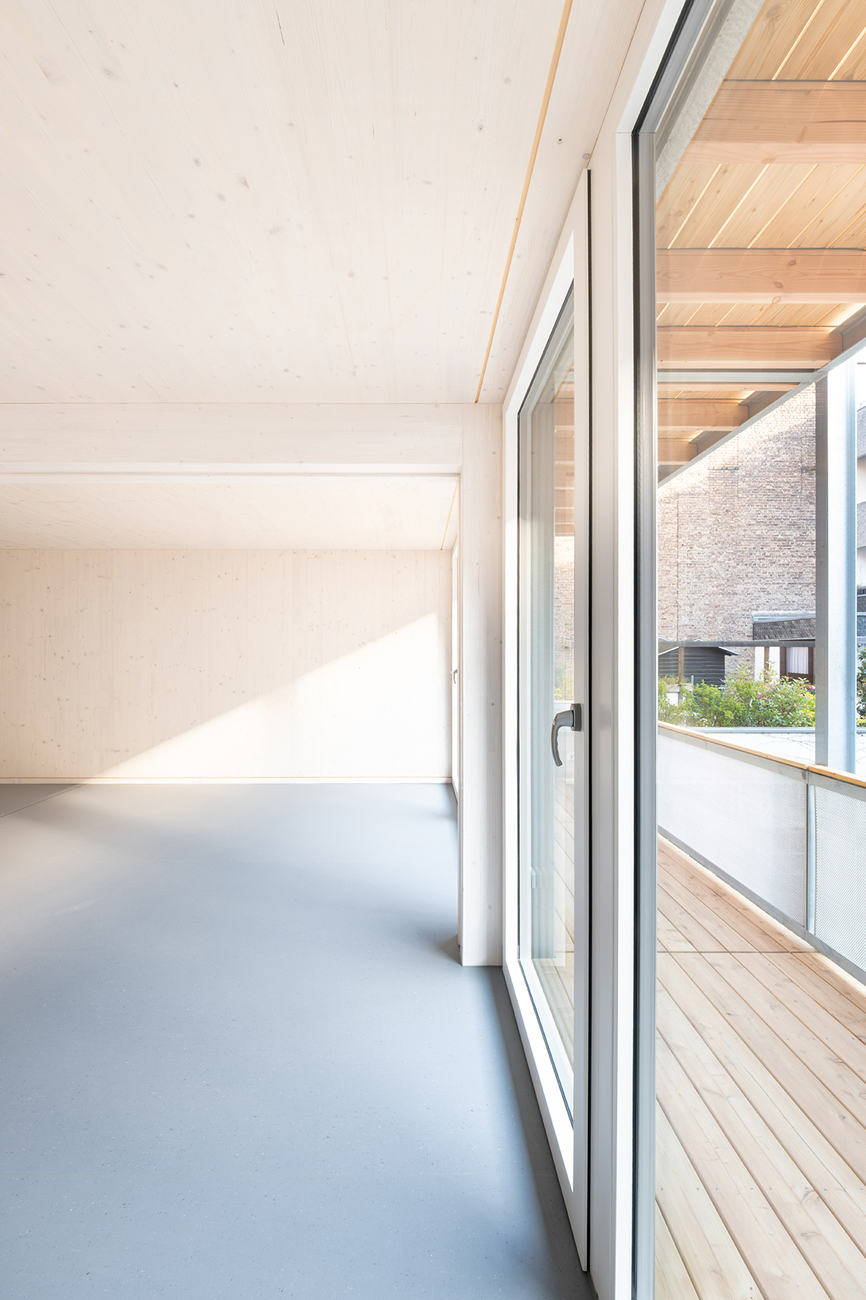
Wood, steel and open structures characterise the building, which has a gross floor area of 930 square metres, including the interior from the basement to the rafter roof. Each of the above-ground floors offers a cluster of communal and private rooms in shared accommodation-style units. The basement houses a laundry room, a workshop and a hobby room. Each floor has seven rooms of equal size, measuring approximately 18 square metres, whose use is not predetermined. The current room layout can thus be changed in the future at ‘predetermined breaking points’, such as lintels or thresholds. The knowledge of the options offered by the basic structure remains visible. Apart from underfloor heating, as little technology as possible has been installed in the house. The floor is simply lightly sanded and oiled cement screed, and the untreated wooden ceilings are visible. For barrier-free living, a lift has been integrated, which runs in a wooden shaft except for the basement. Balconies with grating have been installed at the rear.
A wild garden blooms in front of the building, and nesting boxes are attached to the façade. A yellow note hangs on the front door with black lettering that reads ‘Never again landlords – Mietshäuser Syndikat’ (Tenement Syndicate), with a line drawing of houses in between, one of which has a smiley face in the middle. The project emerged from a concept competition organised by the City of Munich, for which the building group applied together with the Mietshäuser Syndikat. With a pinch of anarchy and a good dose of optimism, the architects at etal. and Görzer128GmbH have developed a model project for a fair housing policy in Munich based on common ownership and flexibility. With communal living arrangements, this will provide long-term affordable rental housing in Germany's most expensive city. If one of the syndicate's houses is to be sold, all other house communities must agree to this plan, thus largely avoiding subsequent privatisation. ‘The tender specified a number of parameters – for example, that the building had to contain cluster apartments and be constructed with a minimum proportion of wood. This enabled us to implement the building as a timber frame construction despite cost pressures. We had already worked with the Mietshäuser Syndikat in Leipzig. Perhaps that contributed to us being awarded the contract for the project,’ explains Gesche Bengtsson.
The building on Görzer Straße belongs to Görzer128GmbH, is socially subsidised by the City of Munich and financed by a wide network of around 110 direct loans and standard bank loans. The project cost a good three million euros, and the 13 current residents now pay around 460 euros in basic rent each, with the exception of the child who belongs to one of the families. This is a dream price in times of exorbitant rents and scarce living space, but it is balanced by a large number of volunteer hours: during the planning and construction phase, groups were formed for each area of responsibility, and even after completion, each of the tenants performs a task for the property management. The high level of personal involvement and responsibility of all those involved in the success of the project strengthens their identification with the building. ‘What makes our project special is that it is a house built for the future, for flexible living arrangements, which can be converted and inhabited in many different ways,’ says Zora Syren. Some of the communal rooms in the basement can be combined and, like the garden, are also a meeting place for the neighbourhood, whether for joint celebrations, workshop afternoons or solidarity-based farming. An open house that offers space for equal living, participation and many different lifestyles. ‘We can't buy houses anymore, it's too expensive. Up to 320 euros per square metre in Munich city centre is no longer socially acceptable housing. But what we can do is do our own thing,’ says Peter Niedersteiner, one of the residents.
Munich: Hild and K – Overnight shelter Lotte-Branz-Strasse
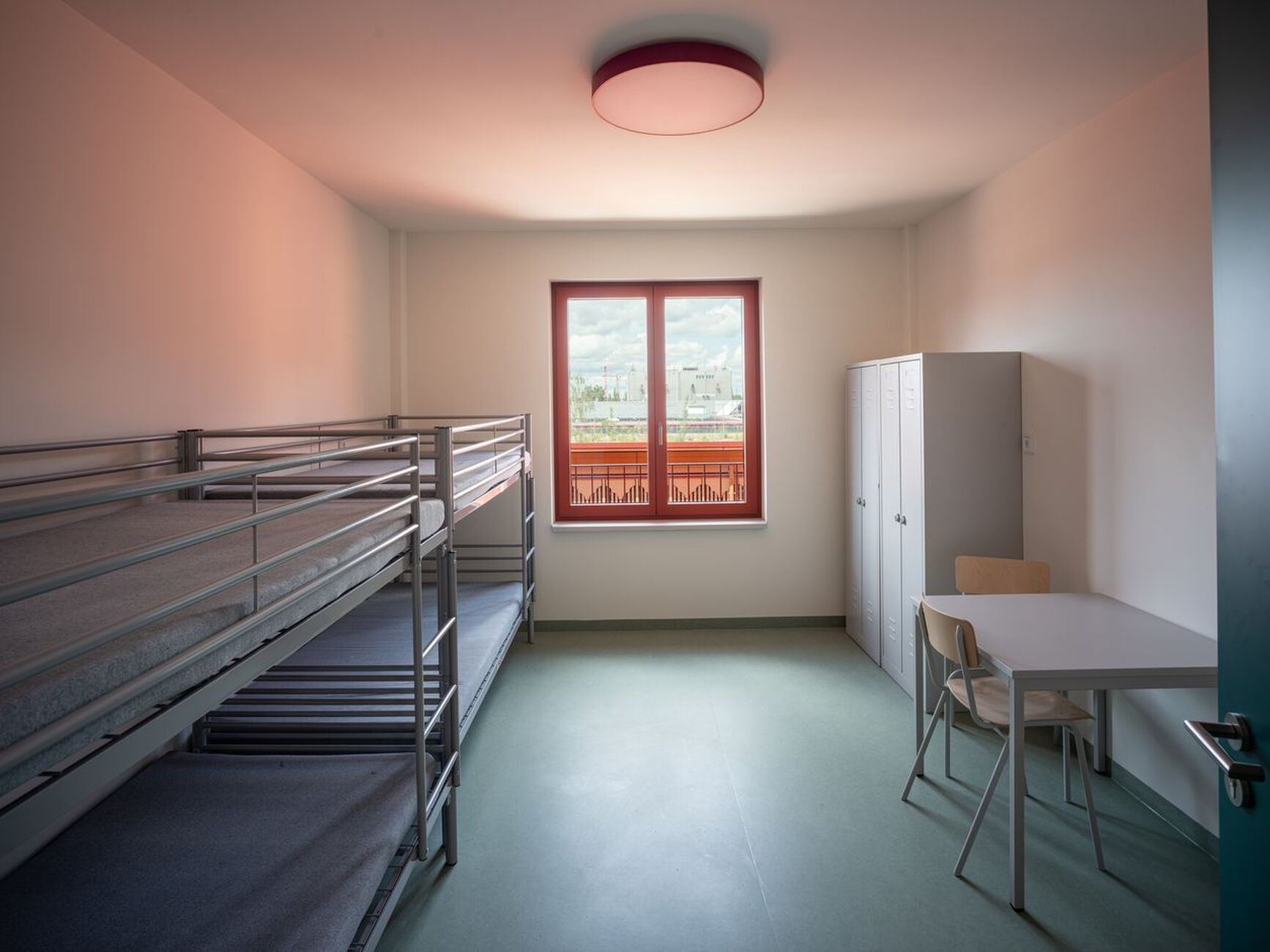
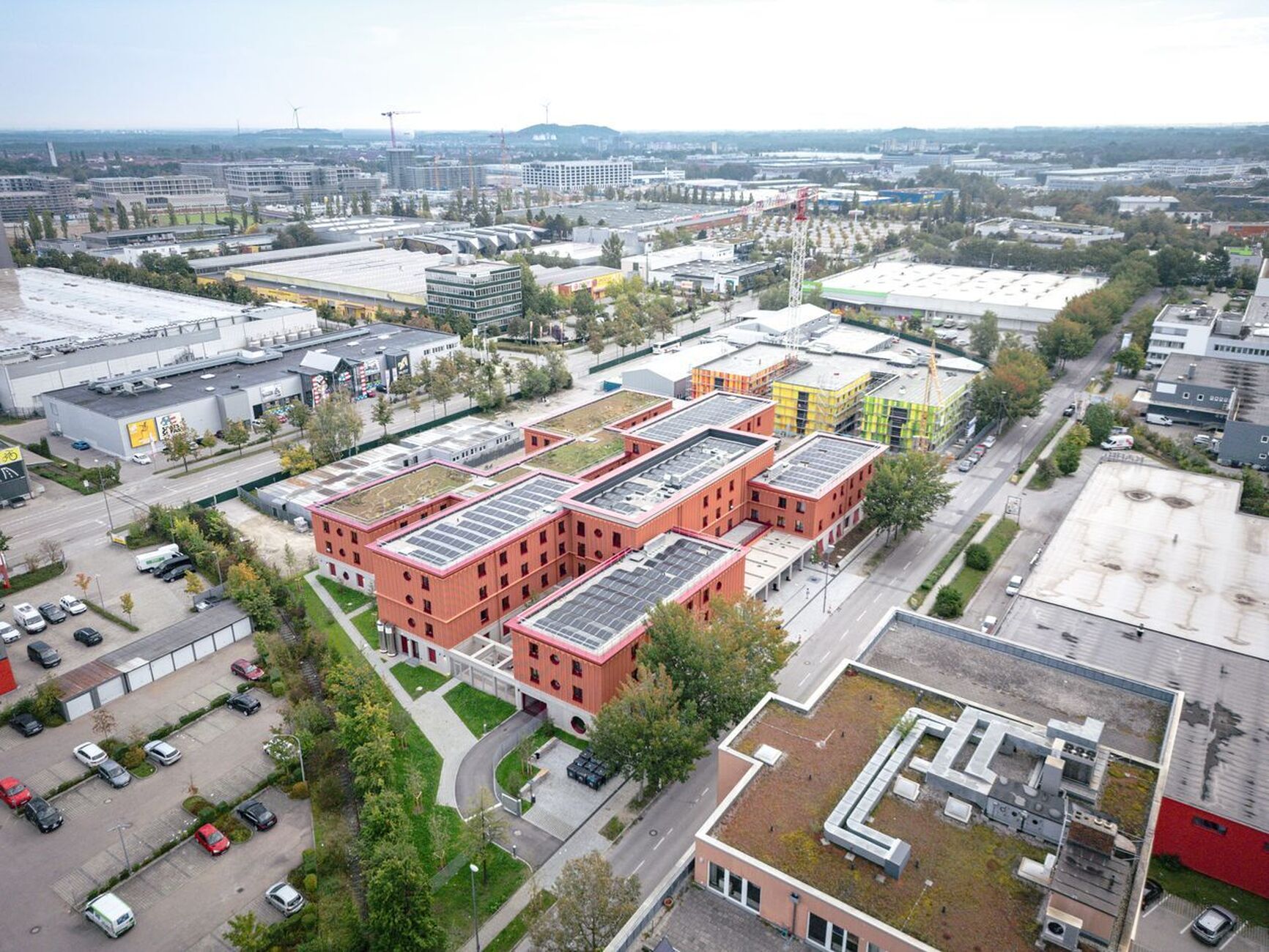
The bus brings us to Schwabing-Freimann in the north of Munich, to Lotte-Branz-Straße. Hild und K Architects have built a new structure in the industrial area that serves as temporary overnight shelter for homeless people. Medical care and a counselling centre are also located on the premises. Time and budget were tight during the planning phase because, in addition to the effects of the pandemic, the Bayernkaserne, which had served as a drop-in centre for people seeking shelter in Munich, was facing closure in 2020. Two of Hild und K's goals for this extraordinary project were to design the accommodation and medical facilities in a humane manner and to build them sustainably using a hybrid timber construction method. Instead of large dormitories, as had been the case up to now, smaller rooms with metal lockers and bunk beds for two, four and eight people were to be created. Specially equipped rooms for physically disabled people and separate areas for men, women and families were also required. In addition, there are protected outdoor facilities, communal and individual rooms. Pets are allowed in the rooms, a rare permission in public accommodation.
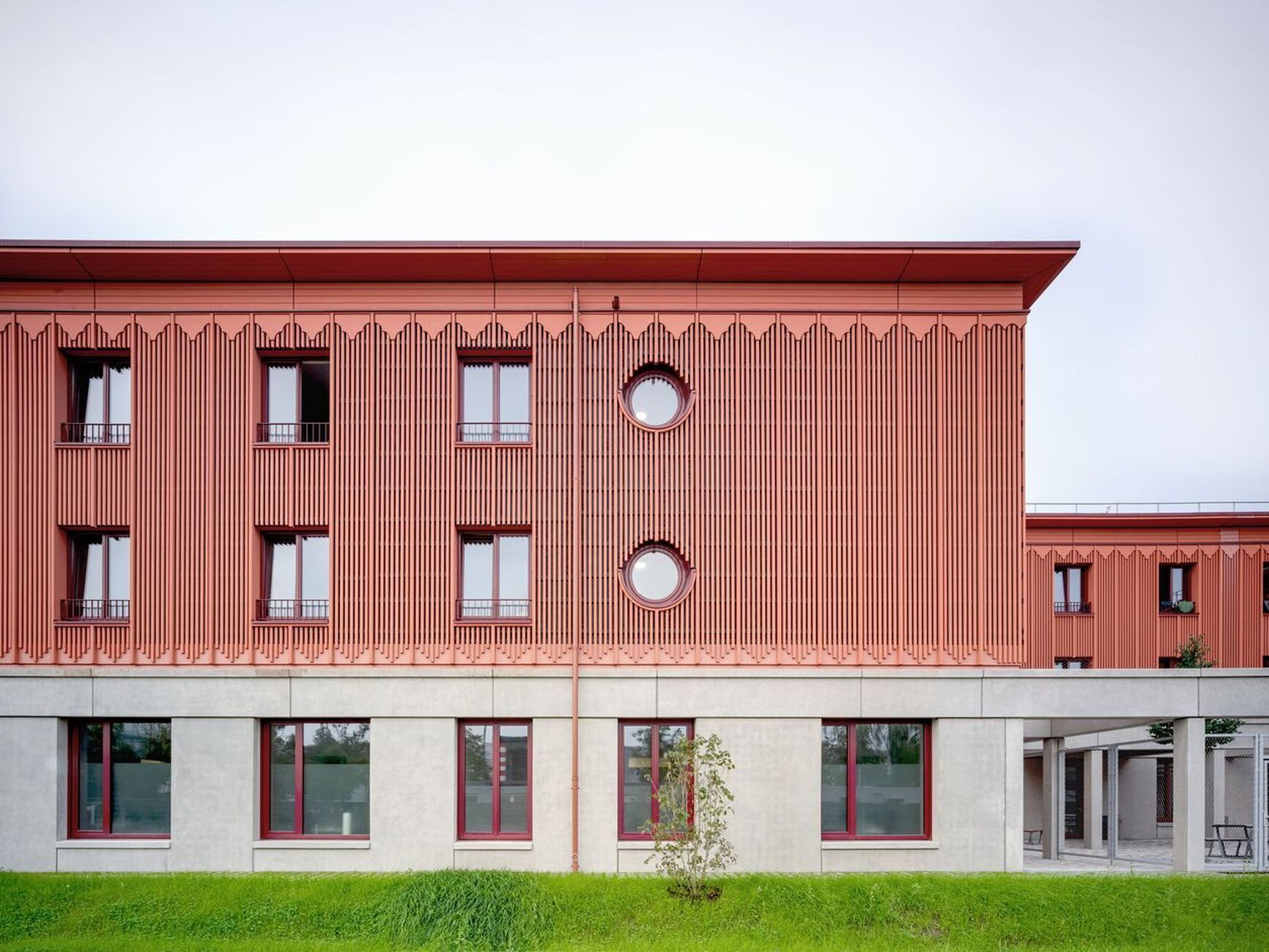
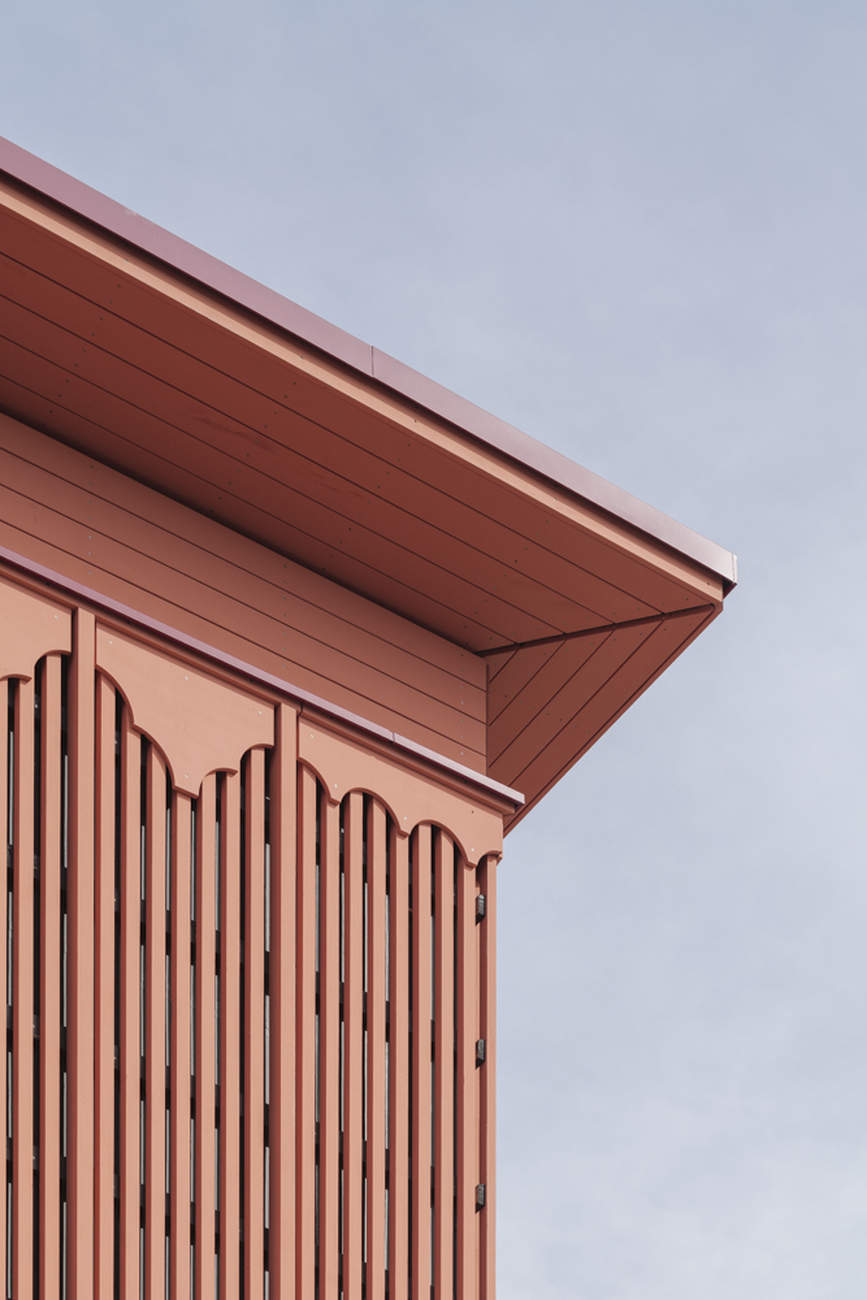
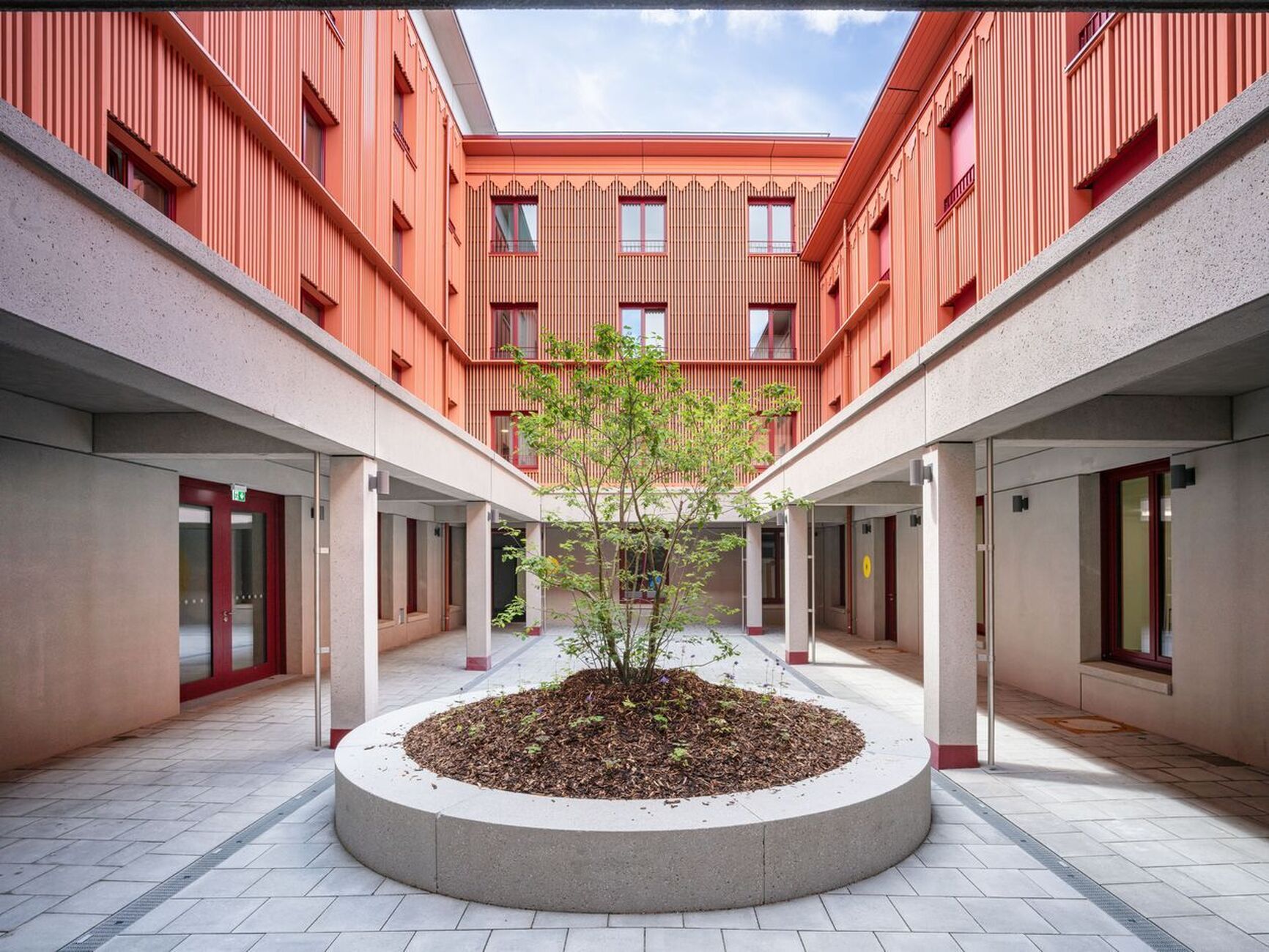
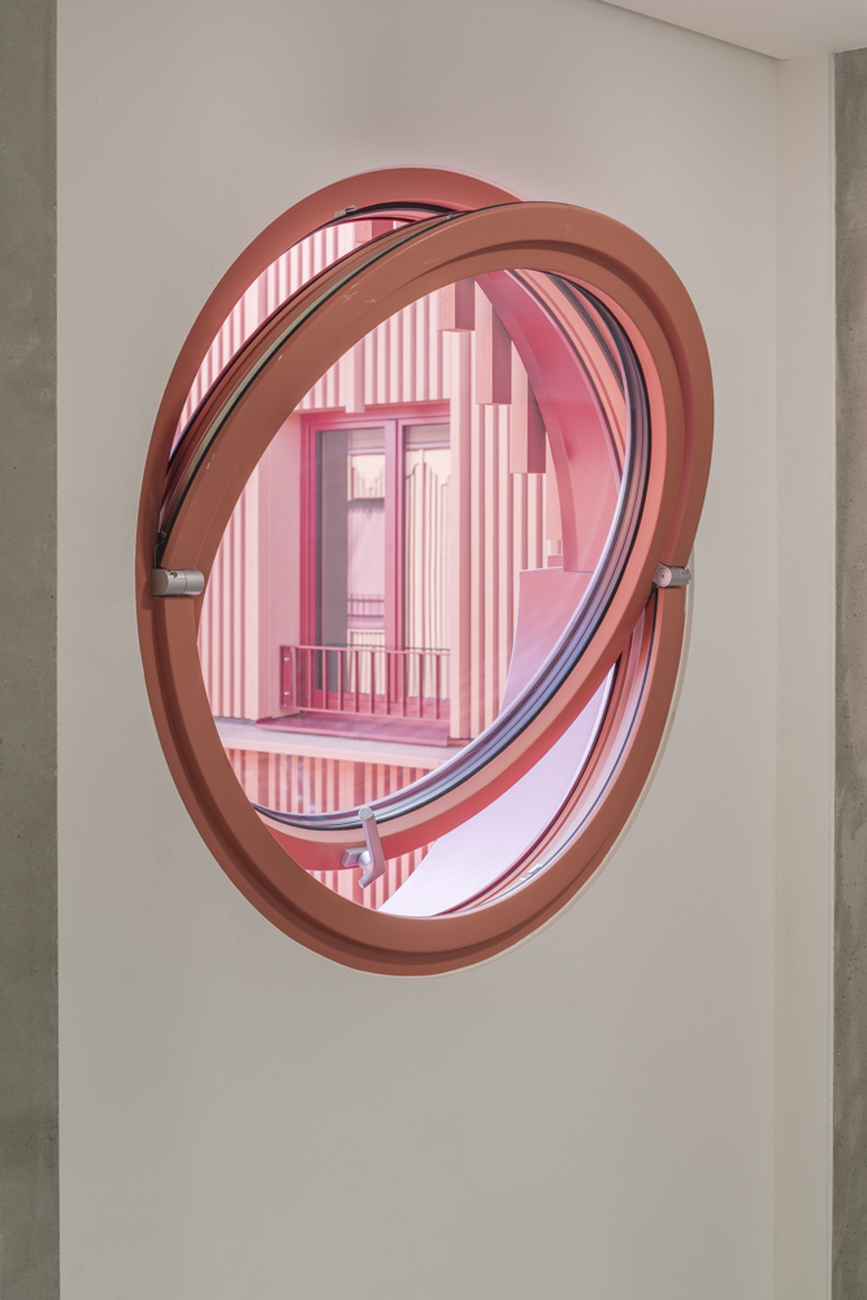
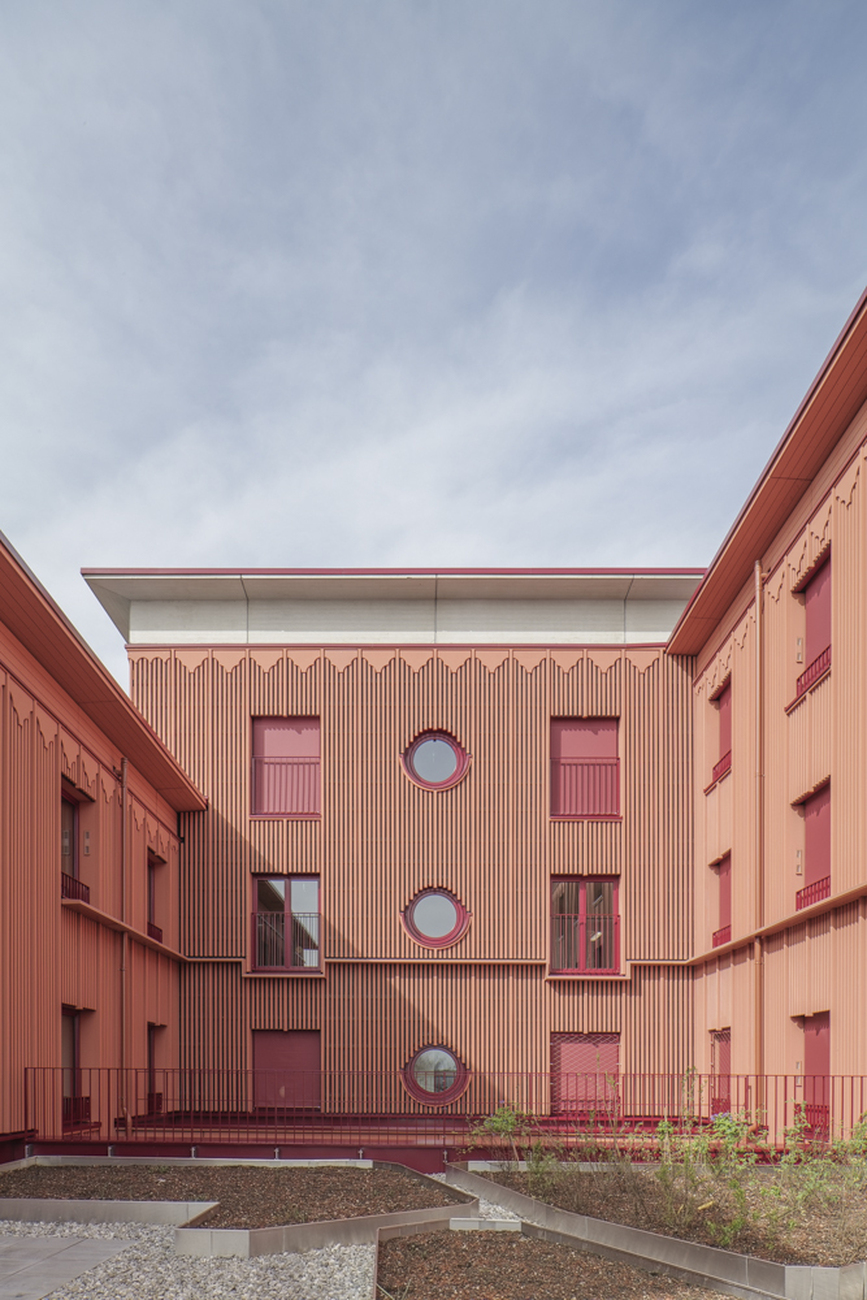
A modular construction method using containers, such as can be seen not far from the current building, was out of the question for the architectural firm. "It is questionable whether we should really be building something so temporary due to time constraints. There are also considerations that the commercial area will change, as it is a very important urban location. This means that we wanted to develop a building block that would become part of this structure in the long term and thus have a presence as an urban building. Building for the long term," says Matthias Haber. Instead, the team opted for serial construction: a concrete skeleton structure provided the basis for the four-storey structure, which was to be as robust as possible. In the comb-like layout, individual ‘building fingers’ are arranged offset from each other and connected only at the corners. There is a central courtyard and smaller courtyards with seating areas. The entrance areas feature a pergola structure that opens the building to the front and sides. The design is typologically based on Theodor Fischer's historic bachelor's residence. ‘The construction method should make it possible to react flexibly to possible future scenarios, such as changes in use, through simple extension, conversion and further construction,’ says Matthias Haber, who is part of the management team at Hild und K. The rising façade was constructed from prefabricated wooden frame elements painted brick red above the base area made of precast concrete elements. Profiled boards now protect the sensitive end grain from the weather. For the border below the attic, Hild und K took inspiration from the protective ‘sacrificial boards’ of historic wooden buildings, which need to be replaced after a few years. With this ornamentation and in combination with partially round porthole windows, the building appears unusually decorative for its function. Meanwhile, the photovoltaic panels on the green roofs ensure a sustainable energy supply. ‘What makes this project special are the residents. The task is to create housing for homeless people that is not just housing. An atmosphere, a quality of life that is needed and will continue to be needed,’ says Haber.
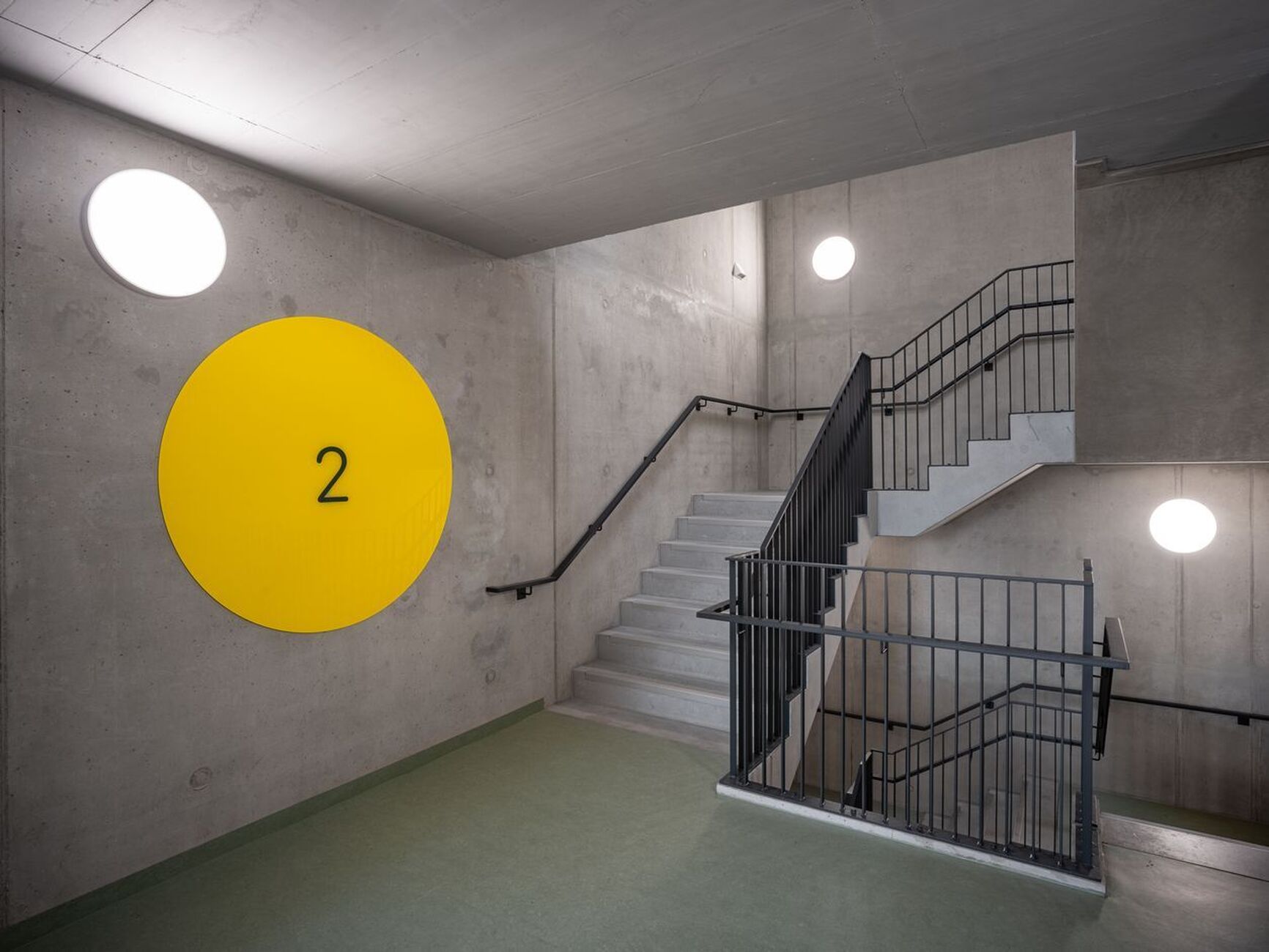
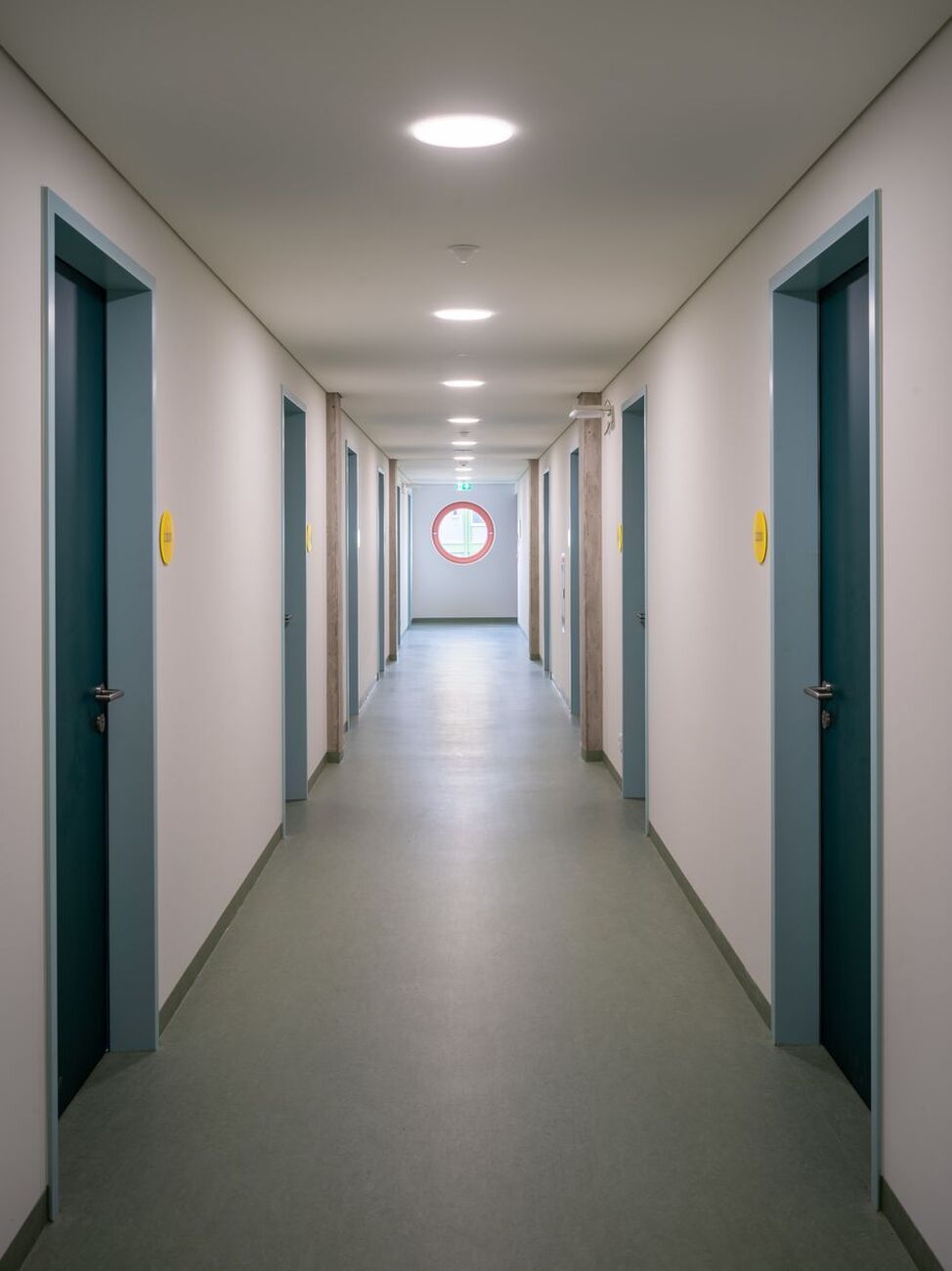
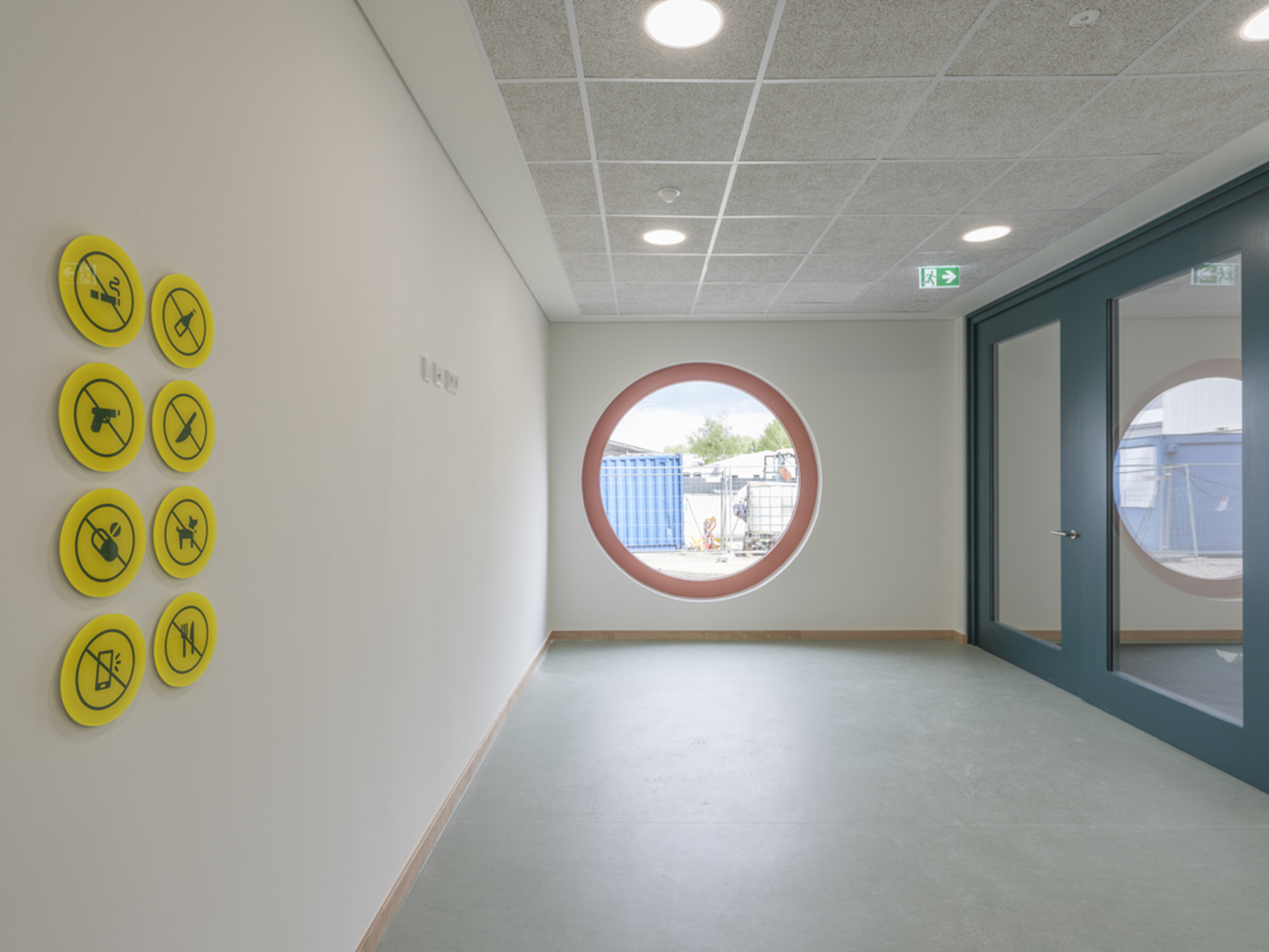
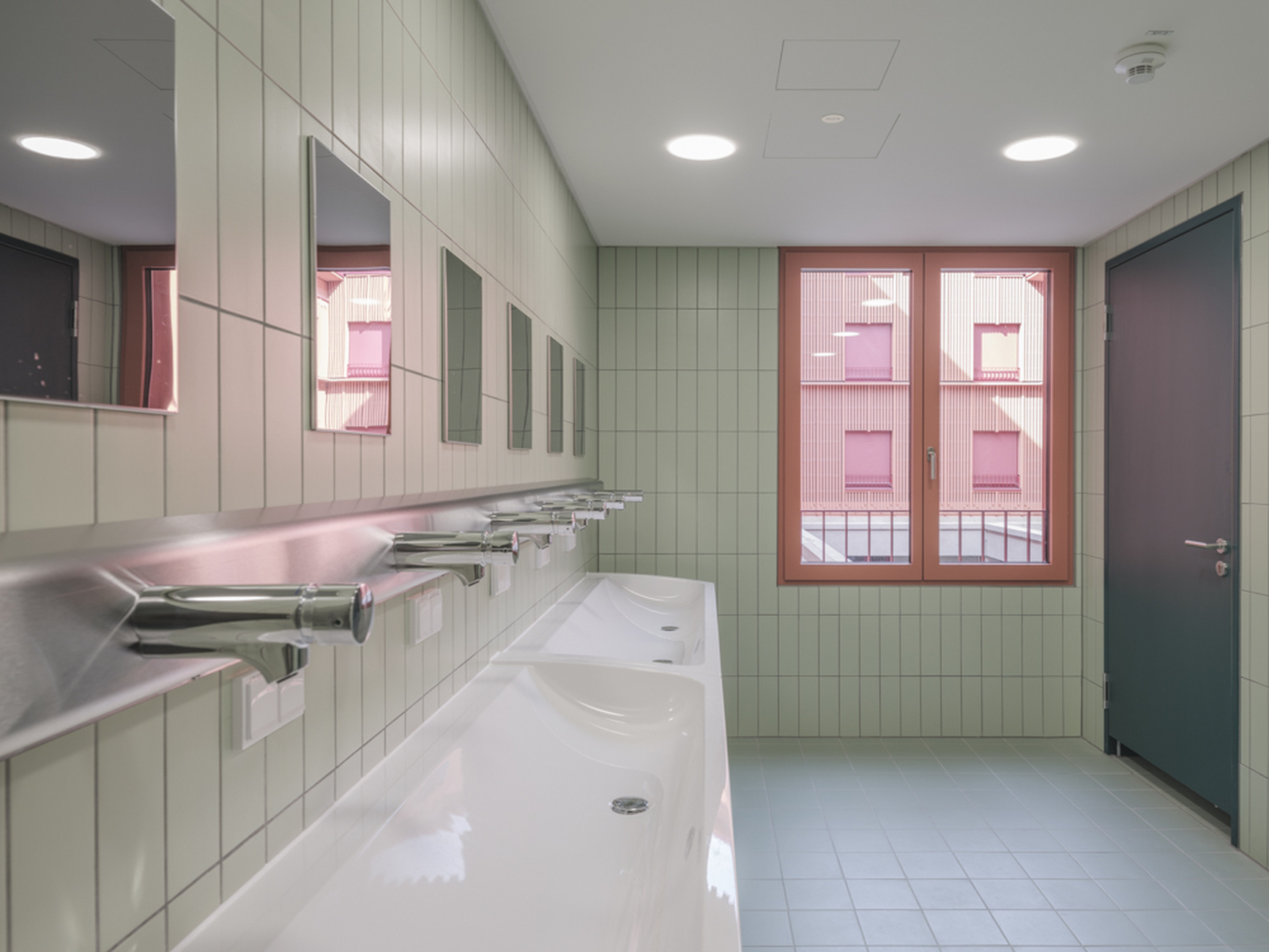
The interiors are neutral in design and predominantly furnished with wood, linoleum, ceramic tiles and polished screed. The brick red colour of the façade is repeated in the colour scheme of some of the window and door frames. One section further on, the doors are petrol blue. Colourful accents are also provided in each area by the barrier-free pictograms on yellow signs, which explain the use of the rooms and serve as orientation aids. Each of the long corridors ends at a window, and skylights are installed on the upper floors. To ensure that the separation between the areas can always be maintained, the larger windows are fitted with narrow grilles. The corridors are bright and smell of disinfectant. The building now has space for a total of 730 people. During the day, the rooms are closed for cleaning from 9 a.m., after which there is a day centre offering basic services. ‘The building has been in operation since mid-2024. The endurance tests are currently underway and the building has been very well received,’ summarises Matthias Haber.
Cologne: Aretz Dürr Architektur – Wohnen F // 9
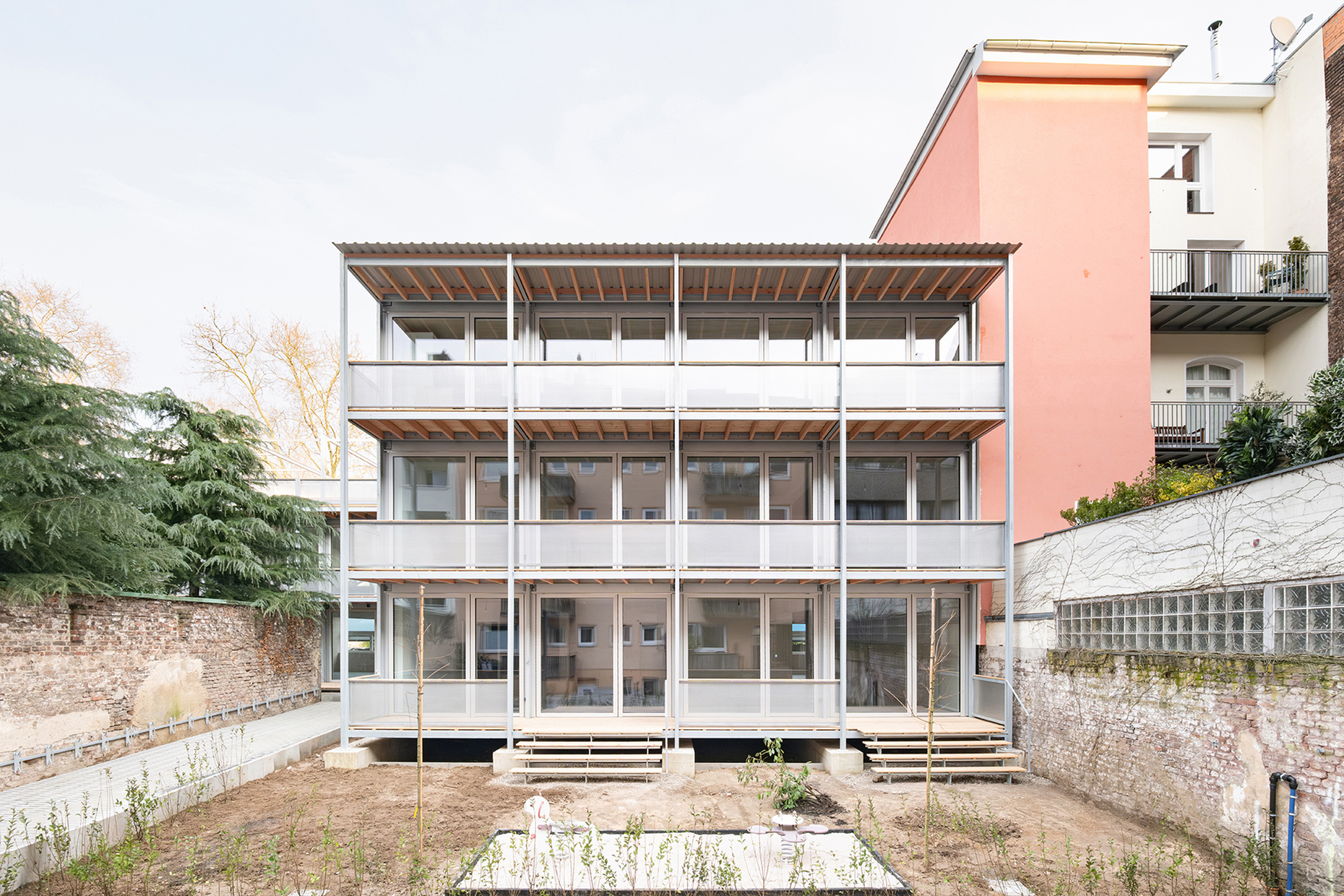
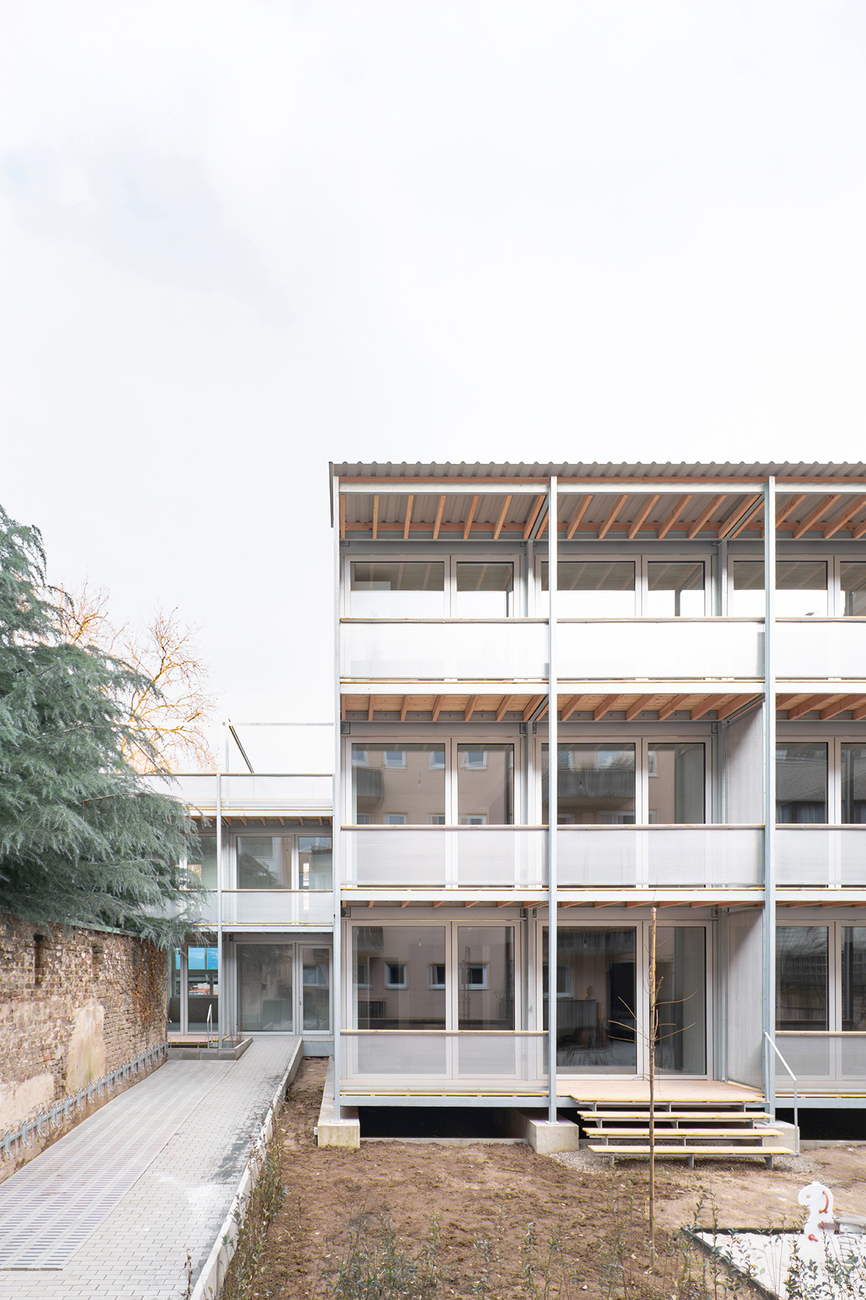
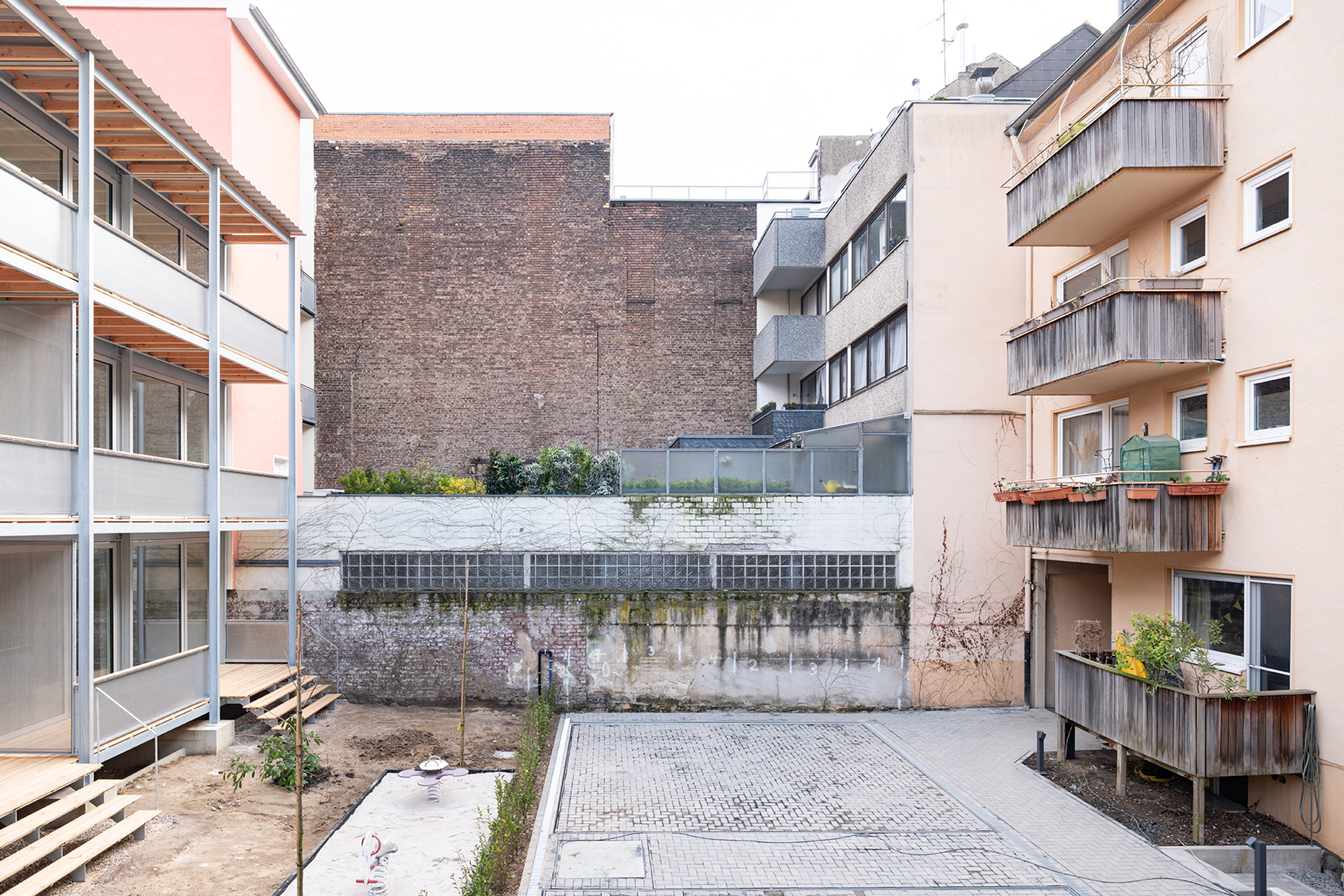
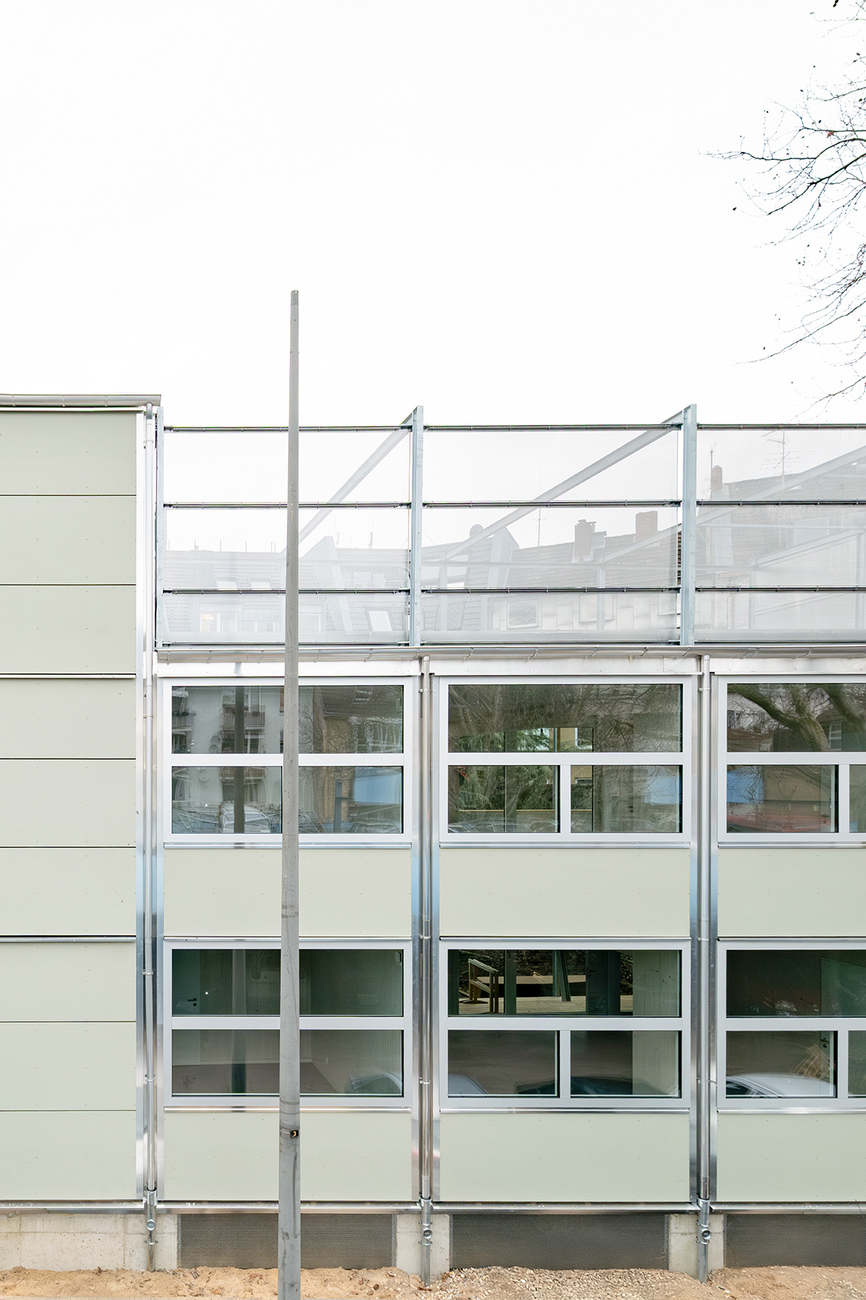
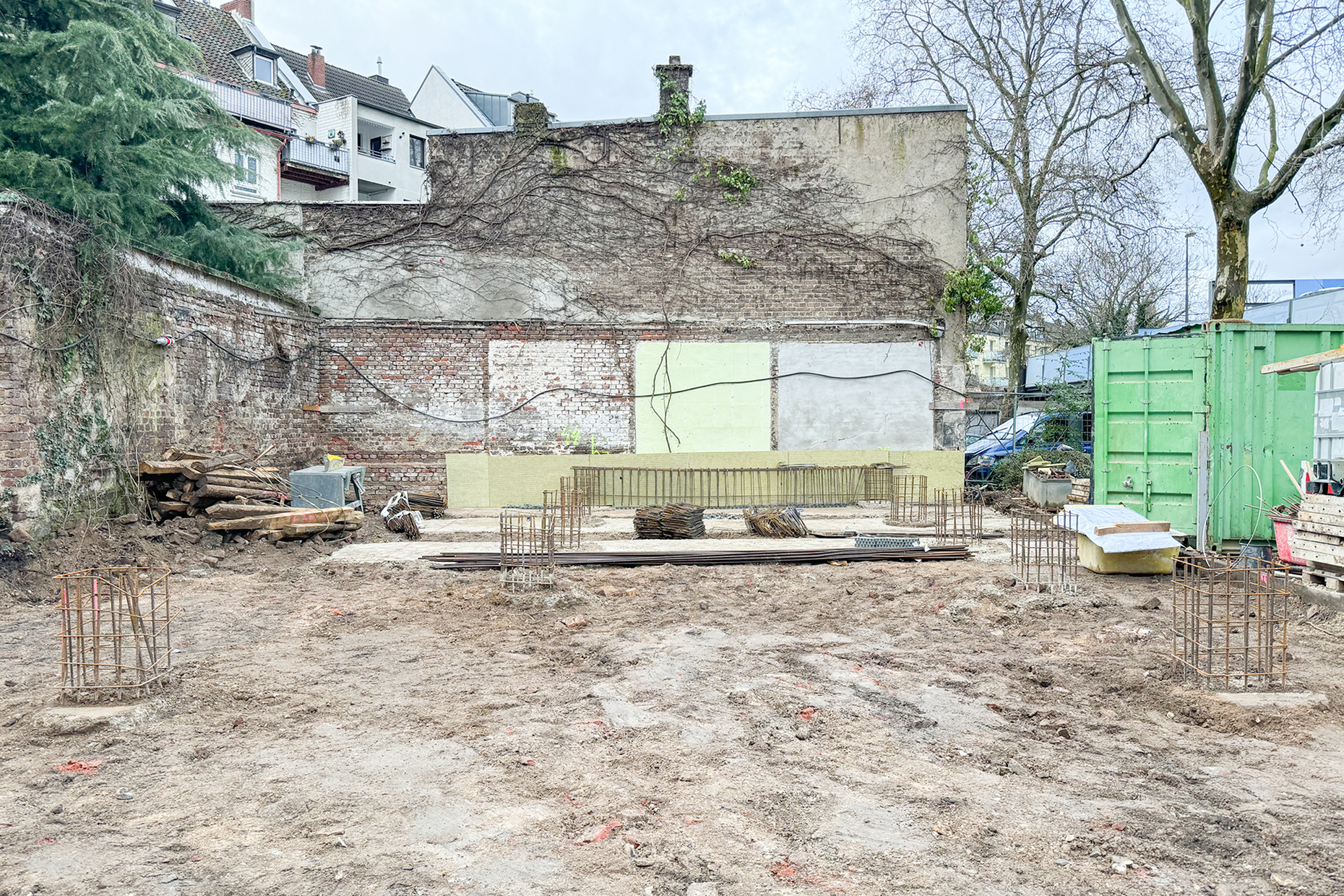
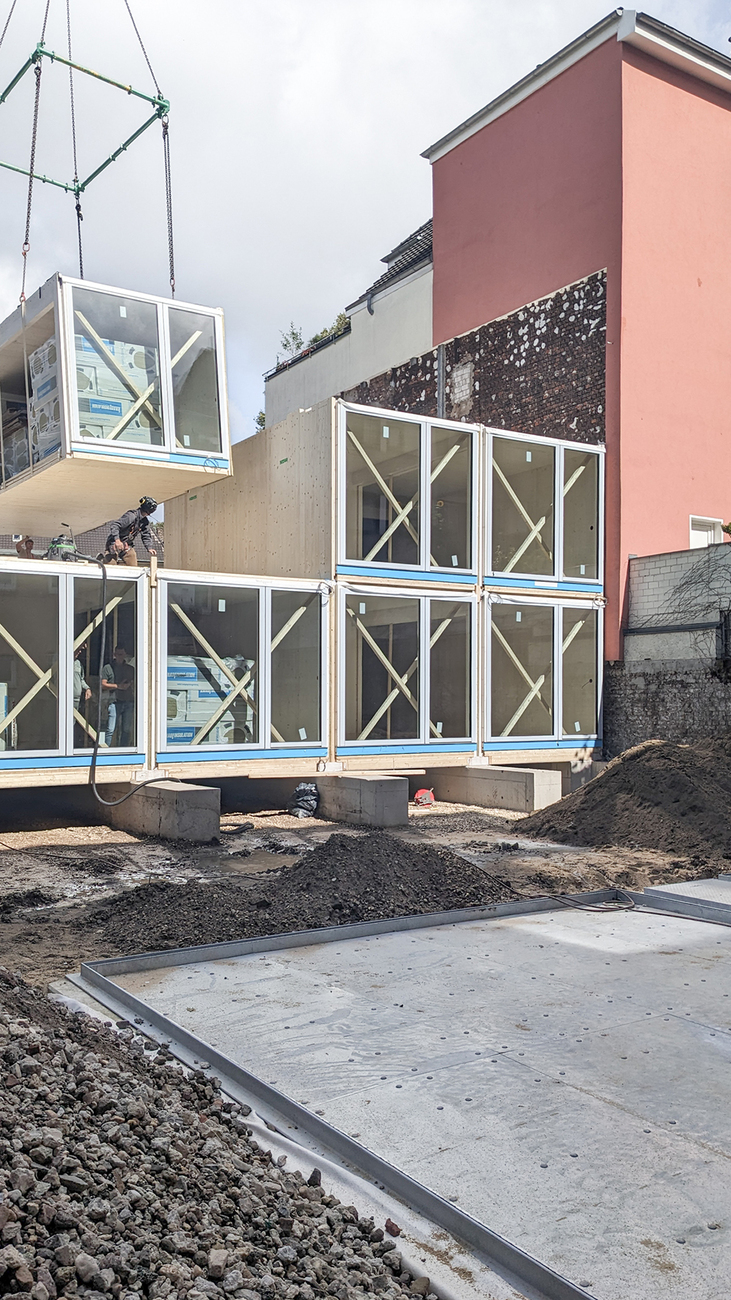
Aretz Dürr Architects have created a modular redensification project against all odds in Cologne's Südstadt district between Jakobstraße and Josephstraße, and that is to be taken literally. Because there were many obstacles. Another architectural firm had already tried in vain to develop the narrow rear courtyard property, surrounded by buildings and a parking deck. In 2018, Sven Aretz and Jakob Dürr submitted their building application for ‘Wohnen F//9’ and started a new idea from scratch. The patience of those involved was then put to the test over the following five years: virtually every regulation relevant to the construction was changed in the course of the project, be it the state building regulations, the timber construction guidelines or the parking space regulations. The latter was important because the integration of eight car parking spaces was a condition for the building permit. ‘On the one hand, there were the city's requirements to provide evidence of these parking spaces, and on the other hand, there was the unwillingness of the future users to forego their own parking spaces: both factors led to the architects resorting to such measures, causing construction costs to skyrocket,’ says Sven Aretz. In 2020, the pandemic hit, and in 2022, Russia's war of aggression against Ukraine began, the economic effects of which fell like dominoes on the project. Meanwhile, the city of Cologne showed the two architects how patient paper can be. After up to five rounds of revisions within the approval process, a mobility report and an urgent letter to the authorities, it finally arrived in the post: the building permit. "What makes this project special is that it is located in the city in a rear courtyard, in a densely built-up area. It is a redensification in modular timber construction, without a reinforced concrete floor slab, and ventilated from below. It was a challenge in terms of planning law and construction in earthquake zone two. This is a challenge for any timber module construction, but I think we have succeeded. We have redensified the courtyard, unsealing and greening two-thirds of it," says Aretz Dürr.
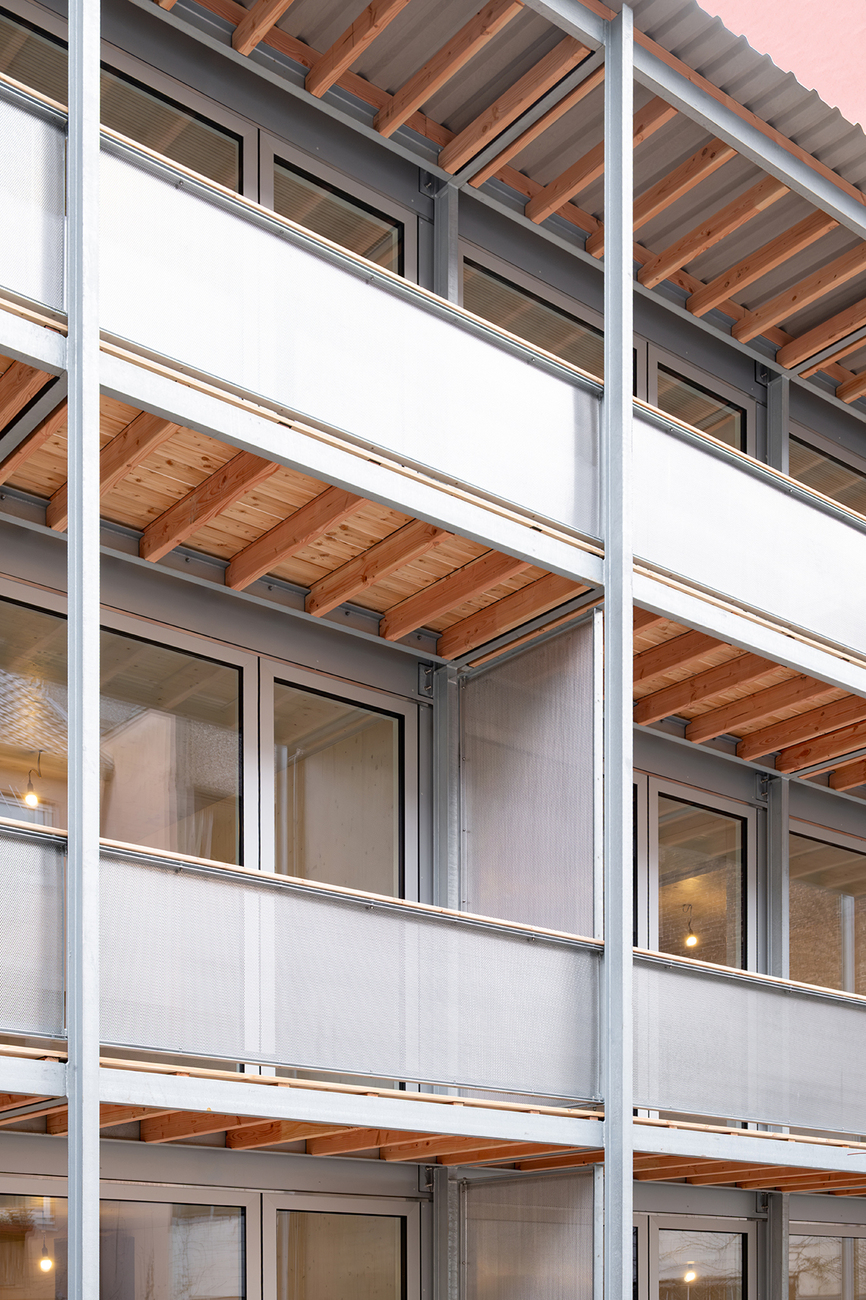
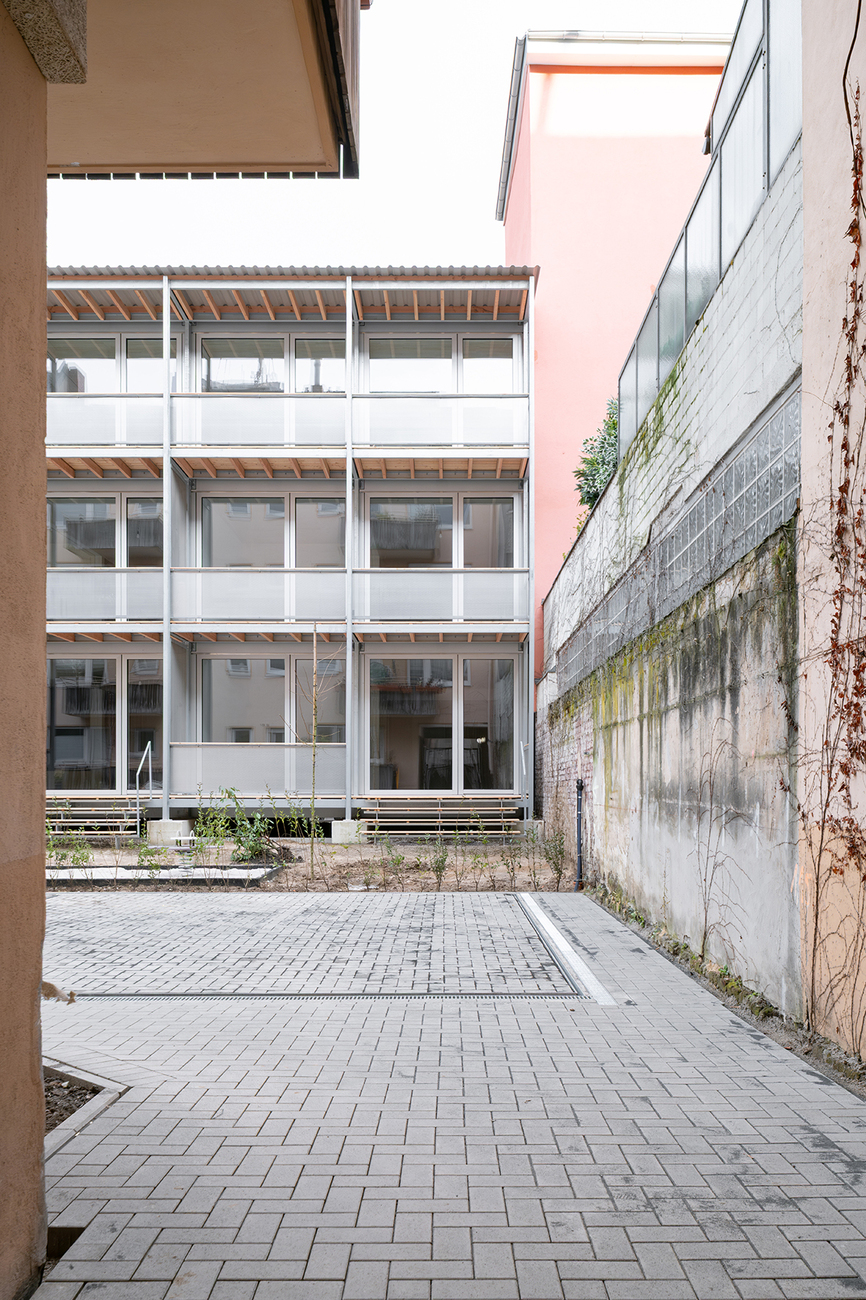
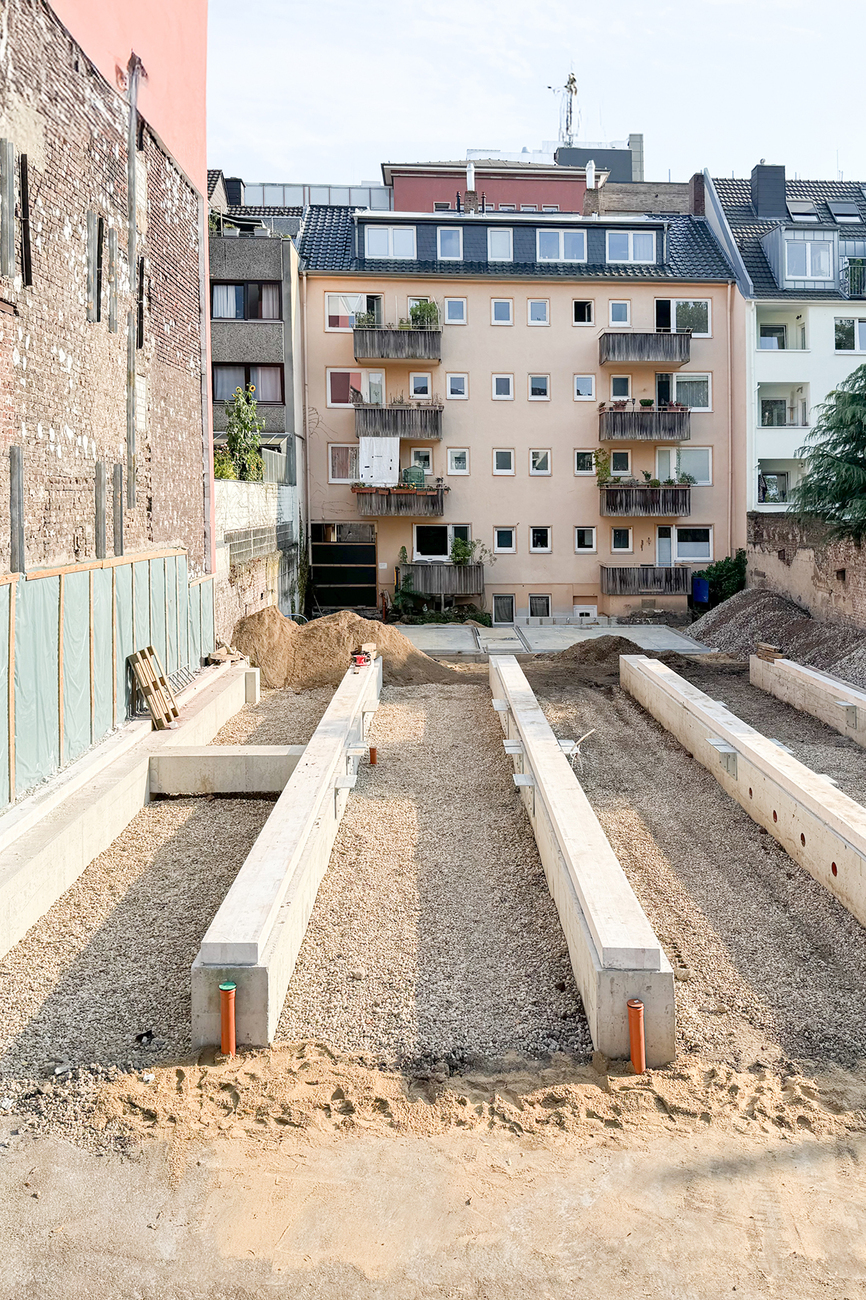
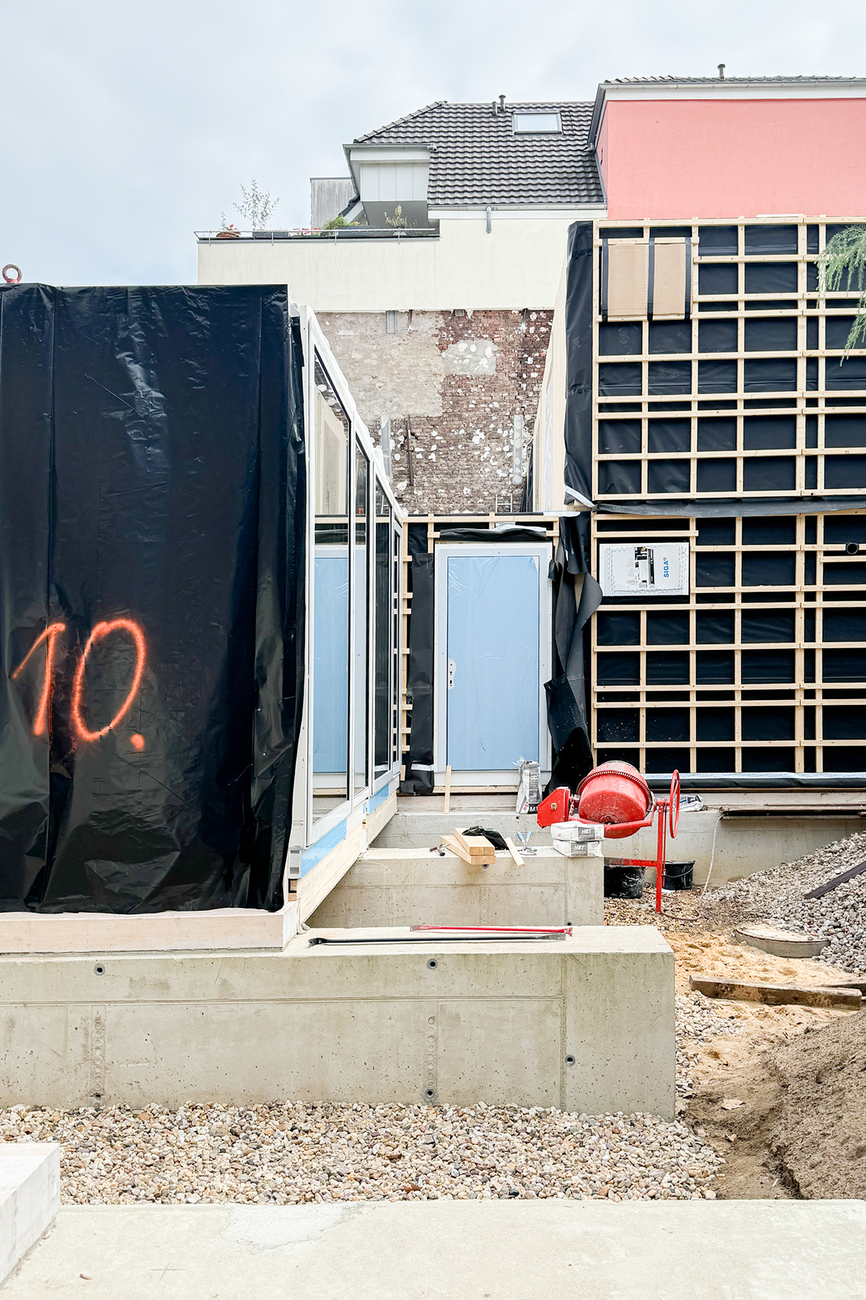
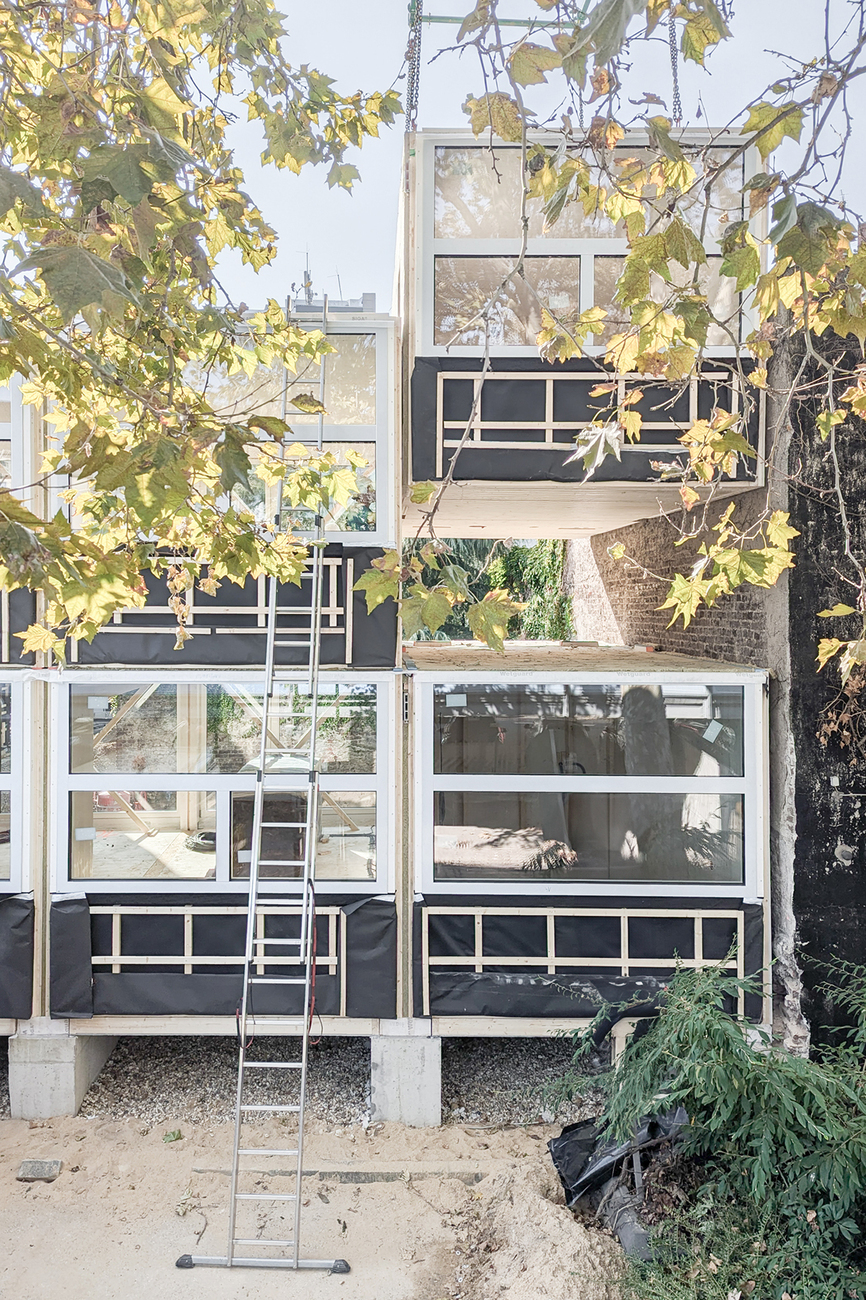
Standing on the site today, you would have no idea of the obstacles that had to be overcome. The structure of the building is airy, the parking lifts are sunk into the ground beneath the forecourt and can be impressively raised to two floors each. Aretz Dürr Architects filled the 25-metre-wide gap between buildings in just ten days with an elegant structure consisting of 32 prefabricated wooden modules, each three metres wide. To keep excavation to a minimum and ensure good cross ventilation, the building is raised on pile-founded strip foundations. The wooden modules, which are two storeys high on the east side and three storeys high on the west side, are each supplemented by steel profiles that have been used to create terraces and balconies. Seven flats, each offering between 38 and 90 square metres of living space, have been created. Unfortunately, the desired use of grey water failed due to extensive regulations, such as the unsealed cellar vaults from the last century under the neighbouring properties. However, the duo solved the required greening with a generous lawn area on the terrace of the penthouse apartment. ‘Architecture can only ever be as good as the rules it complies with,’ says Jakob Dürr. He laughs as he recalls how, in performance phase five, they were just able to prevent their open-plan structure from being covered up with drywall. ‘We come up against limits every day. But it's fun when you know you'll find solutions,’ says Sven Aretz.
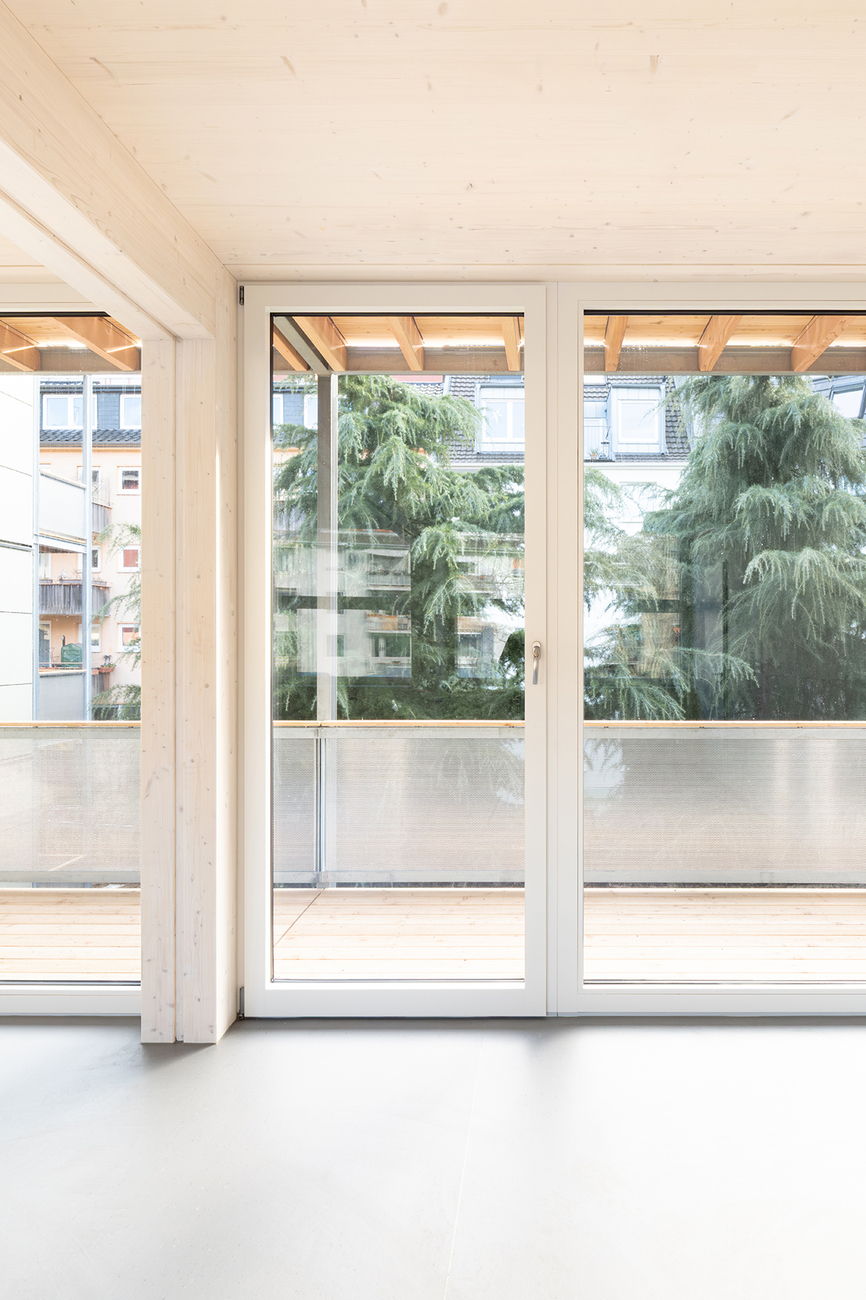
Thanks to the modular construction, most of the surfaces were prefabricated, and the duo opted for conventional screed flooring for sound insulation. The wooden walls are glazed with a white pigment, which has the advantage of making the rooms appear cosy with just a few pieces of furniture. Plenty of light floods through the wide windows into this oasis, protected on all sides and nestled amid the hustle and bustle of the city. ‘Wohnen F//9’ is logically constructed with minimal use of materials and allows for possible conversions and new uses. It is a previously missing piece of the puzzle on a densely built-up plot of land, creating individual living spaces and blending harmoniously with the neighbouring buildings.
Berlin: Peter Grundmann Architects: ZK/U Center for Art and Urbanistics
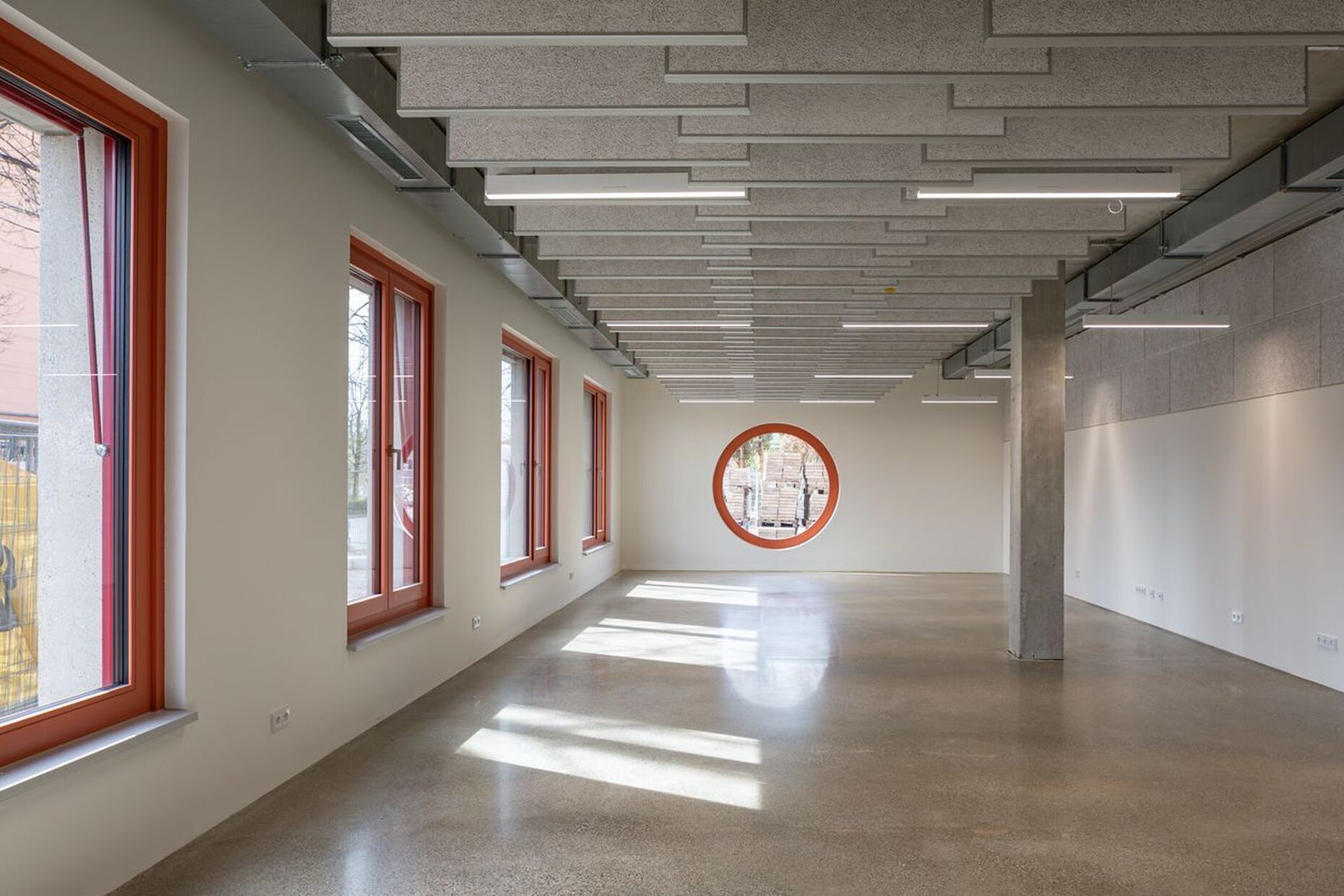
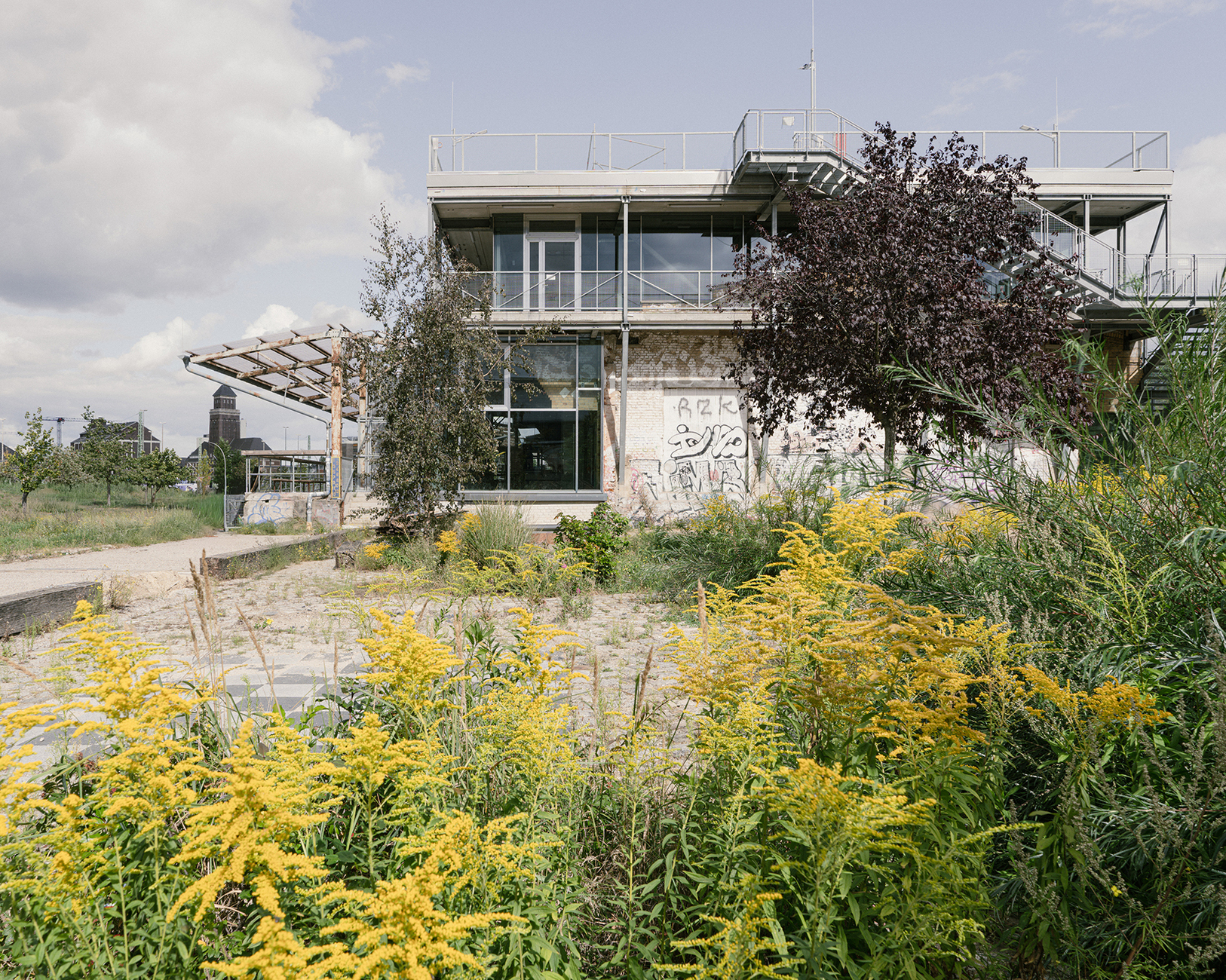
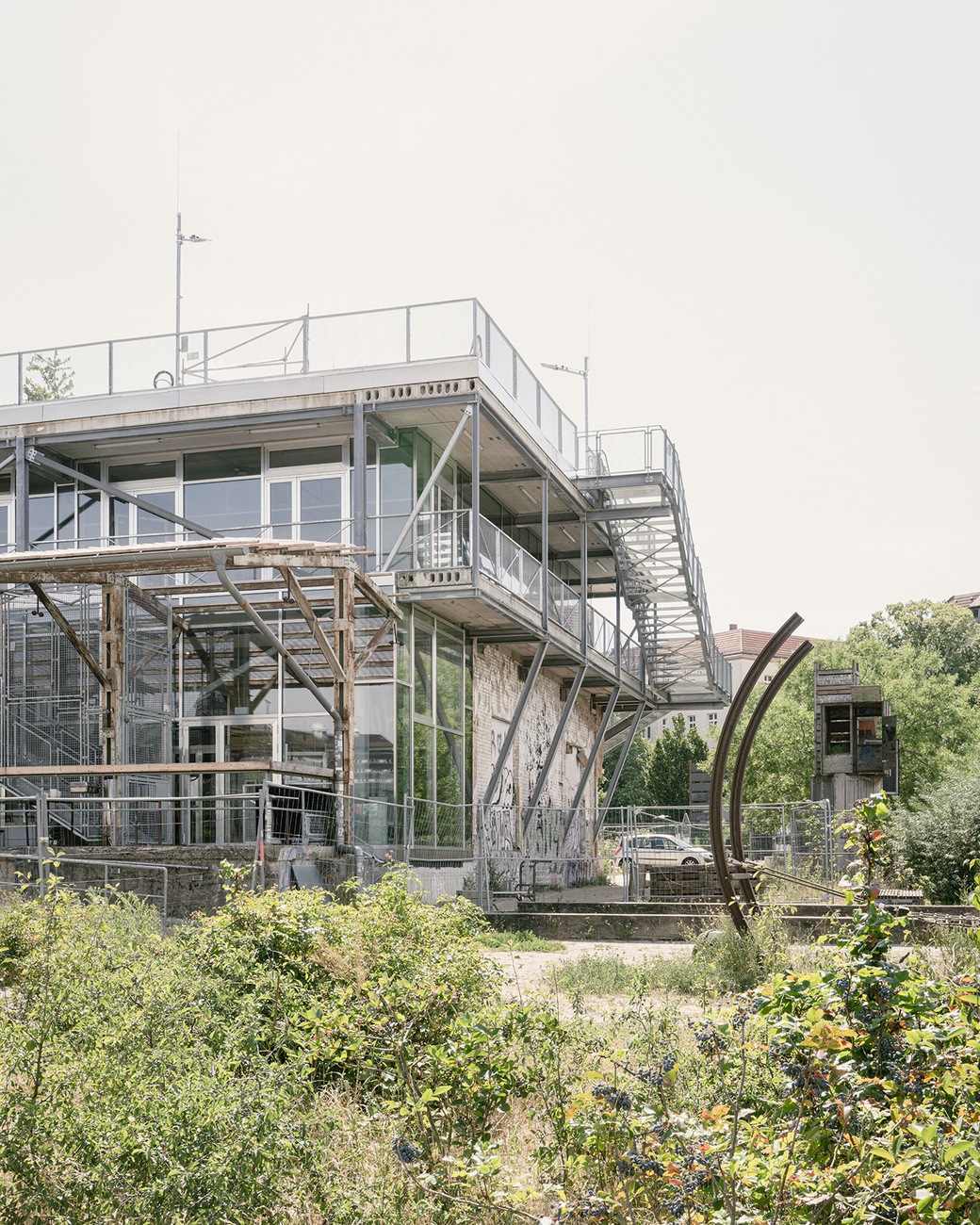
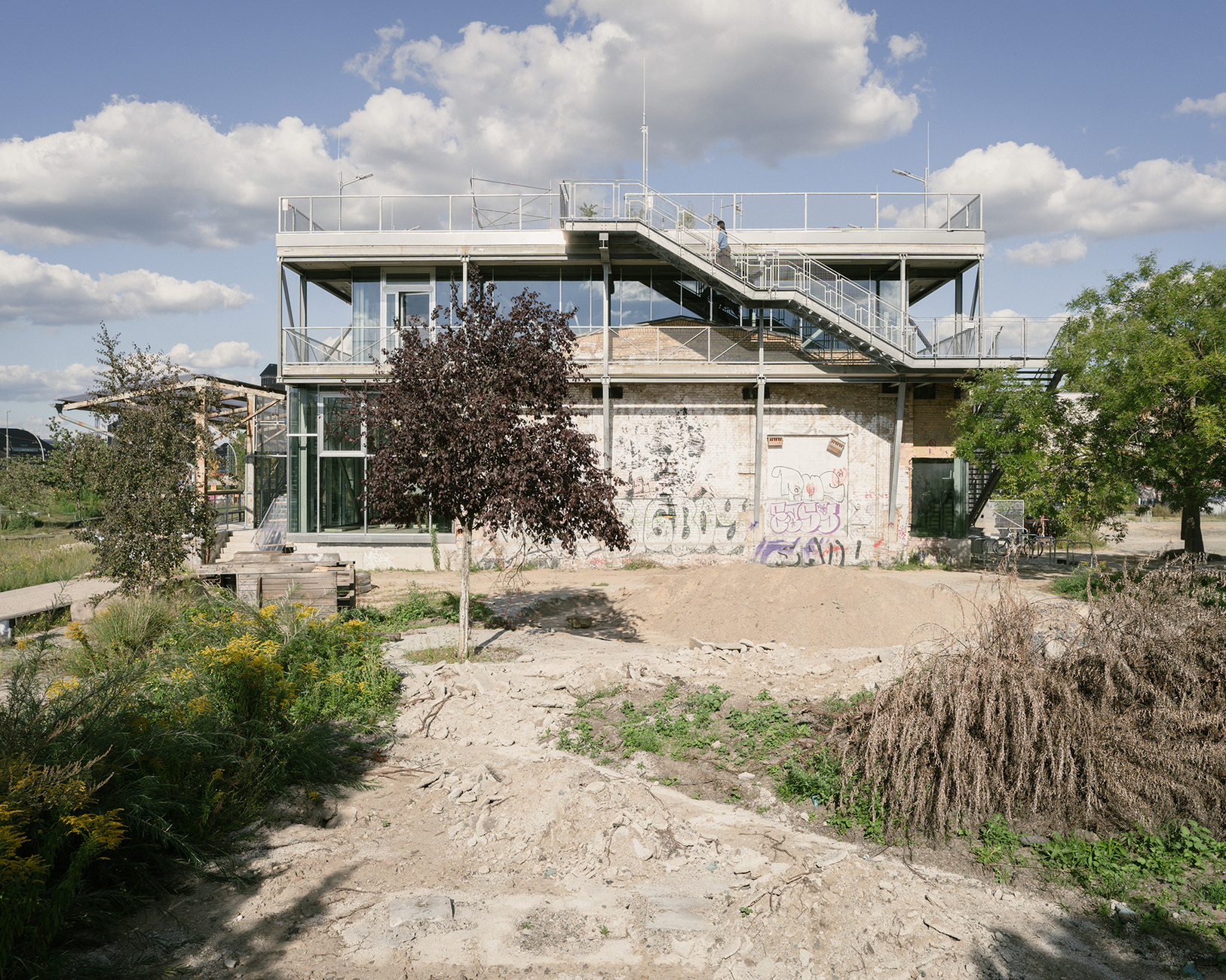
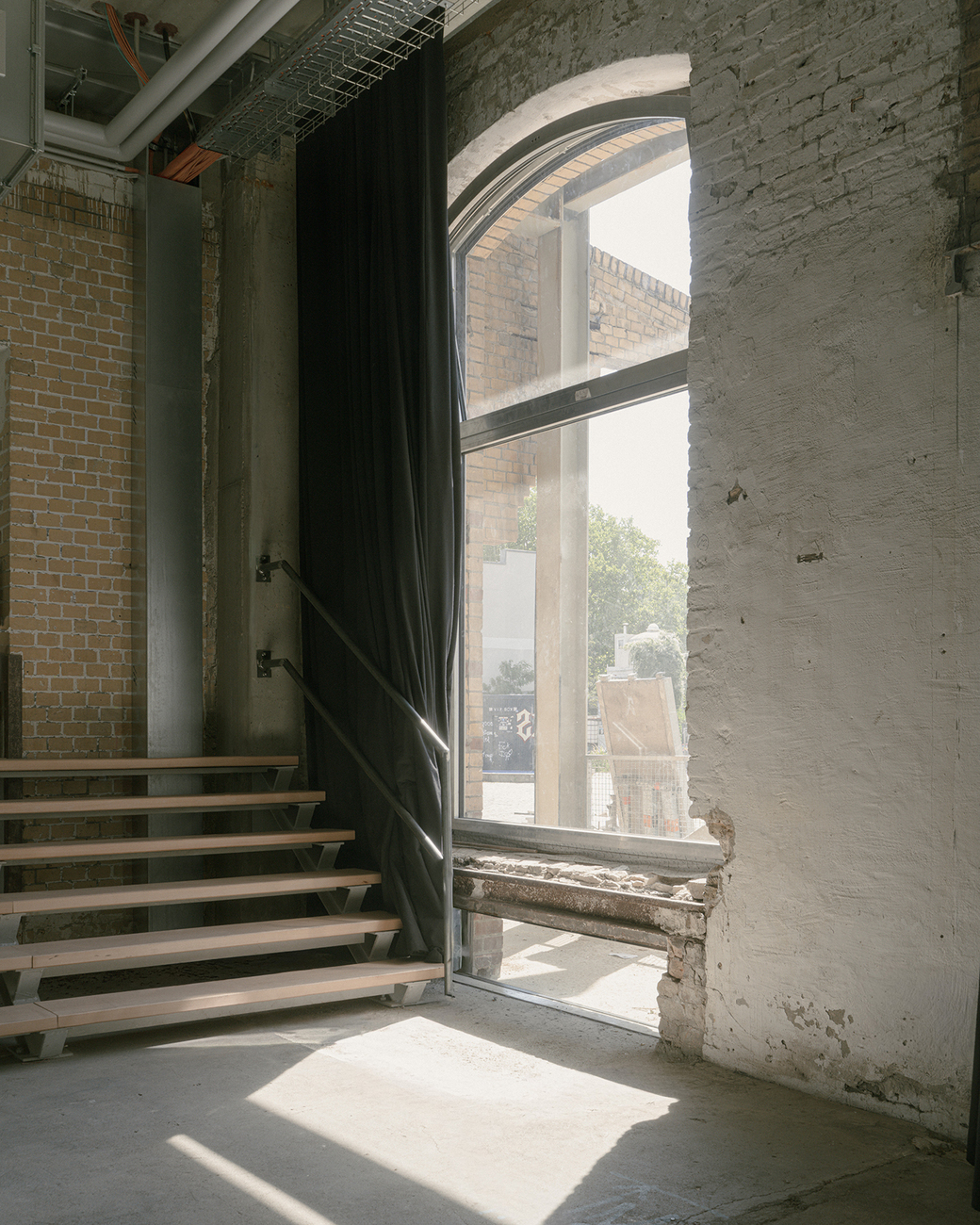
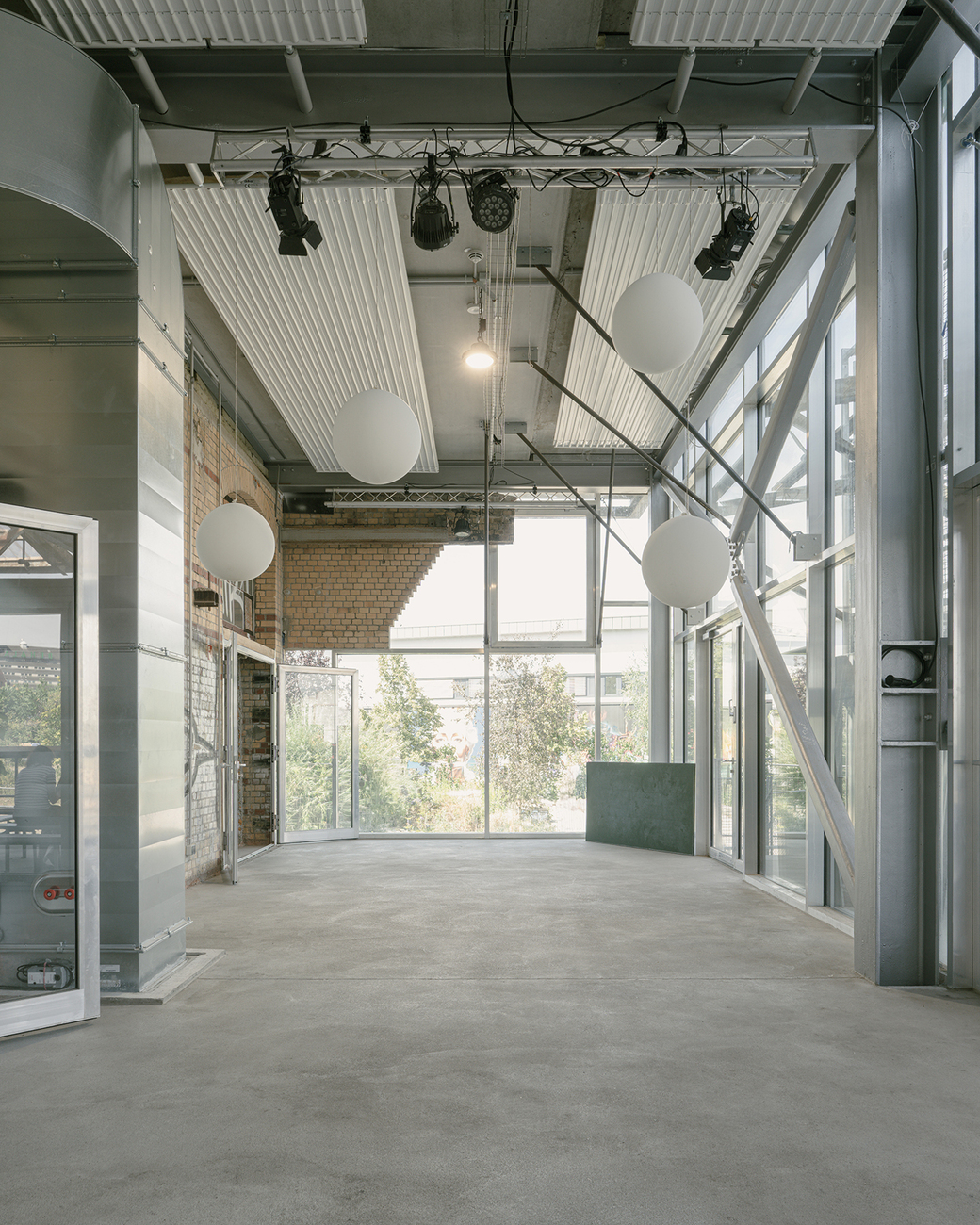
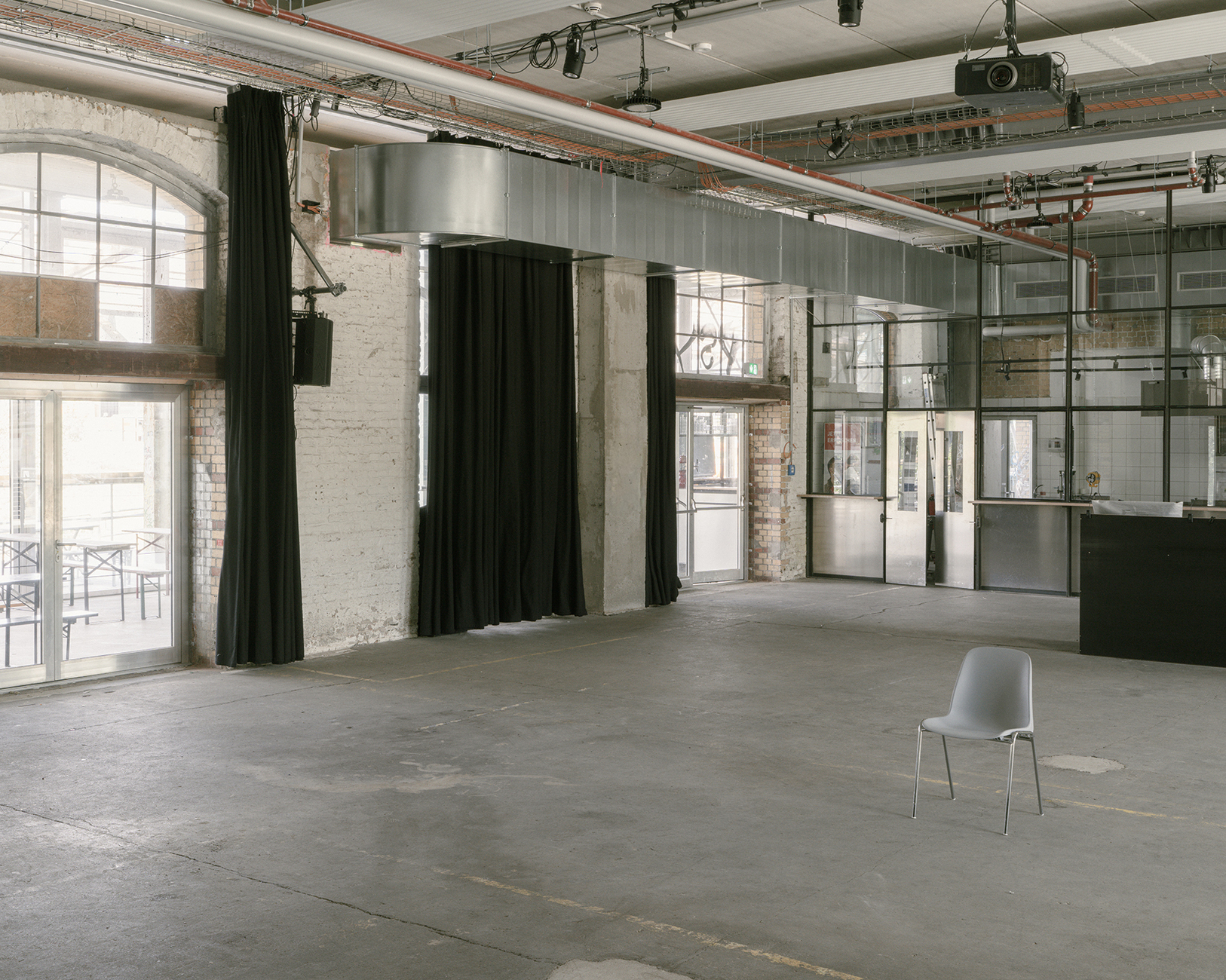
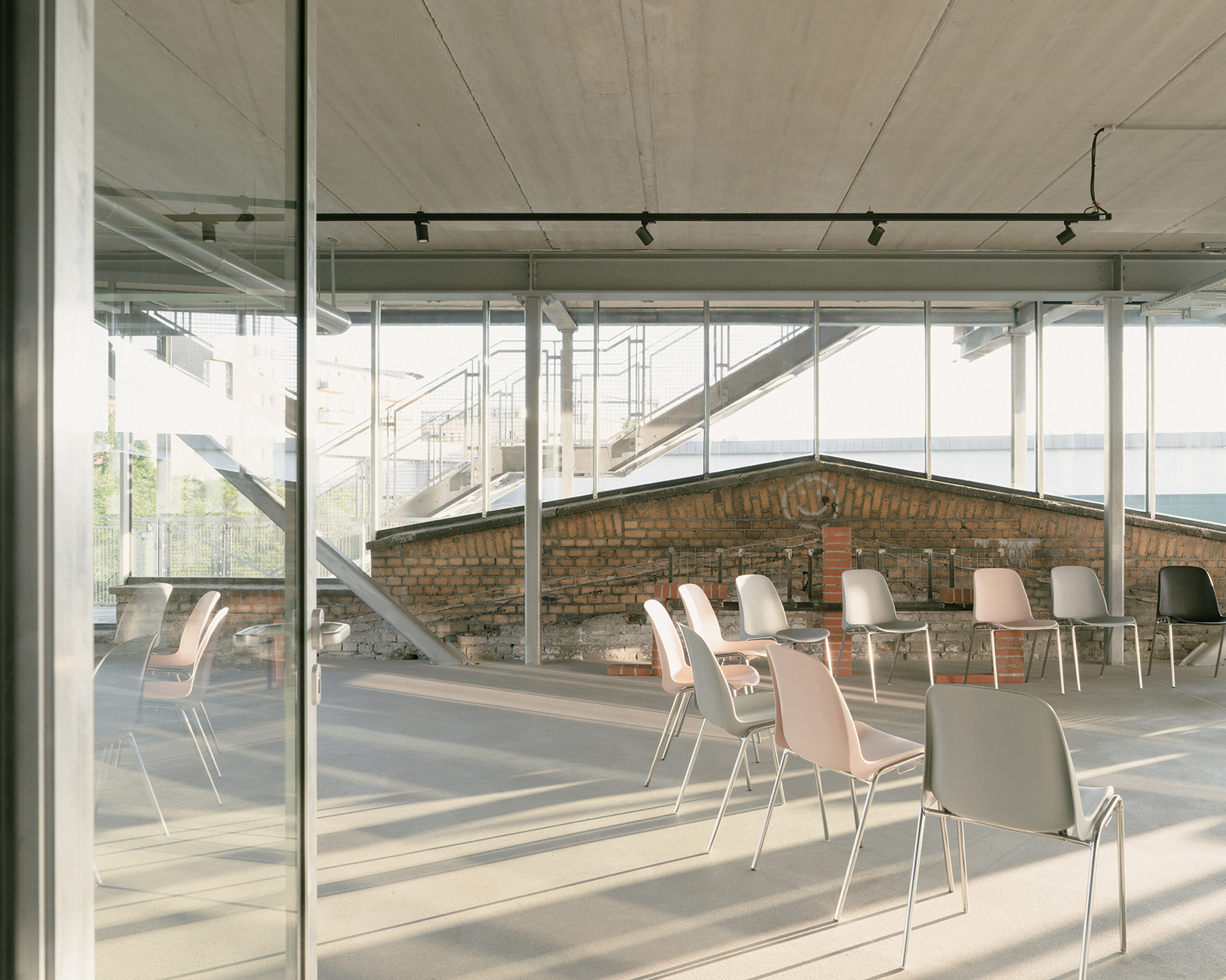
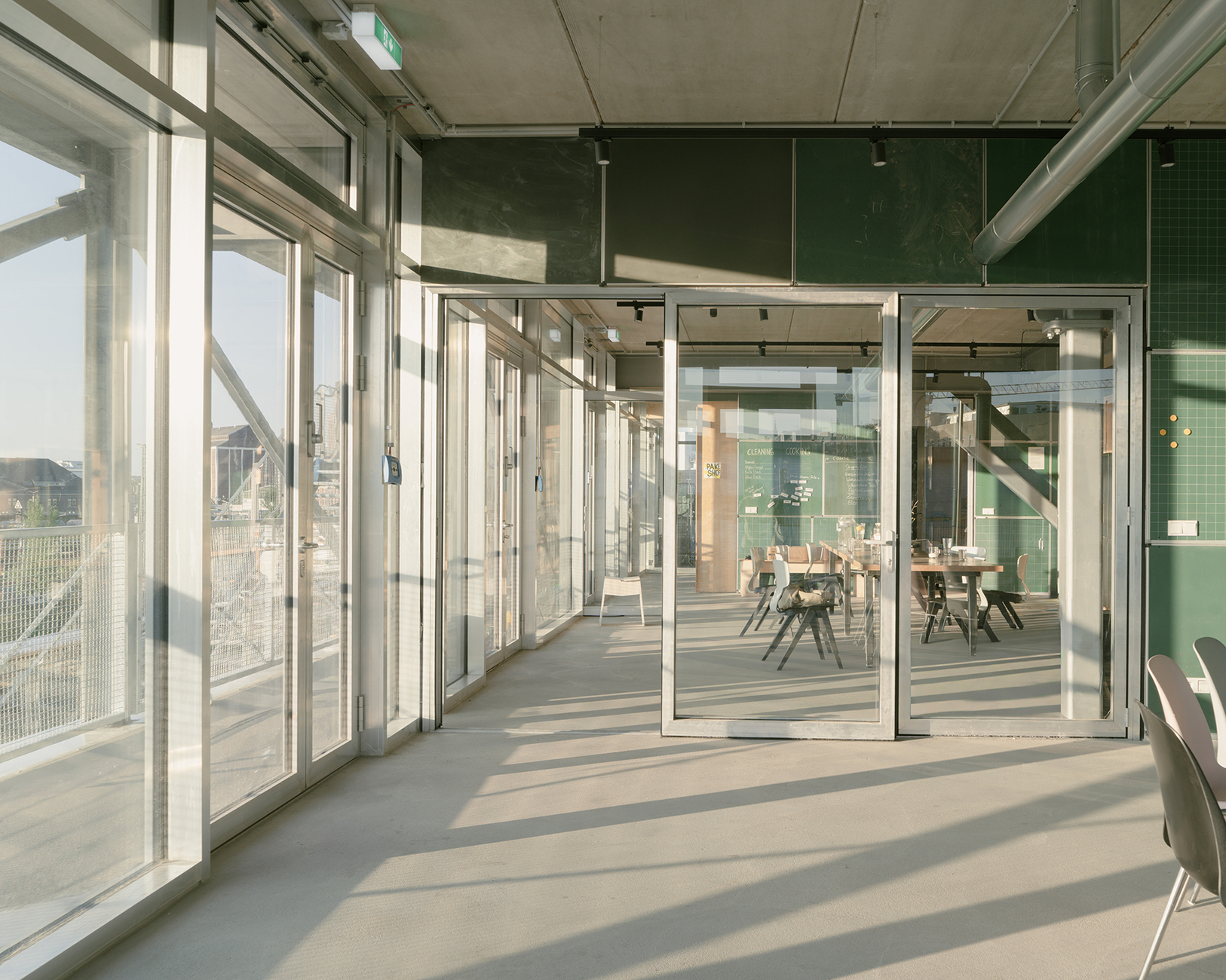
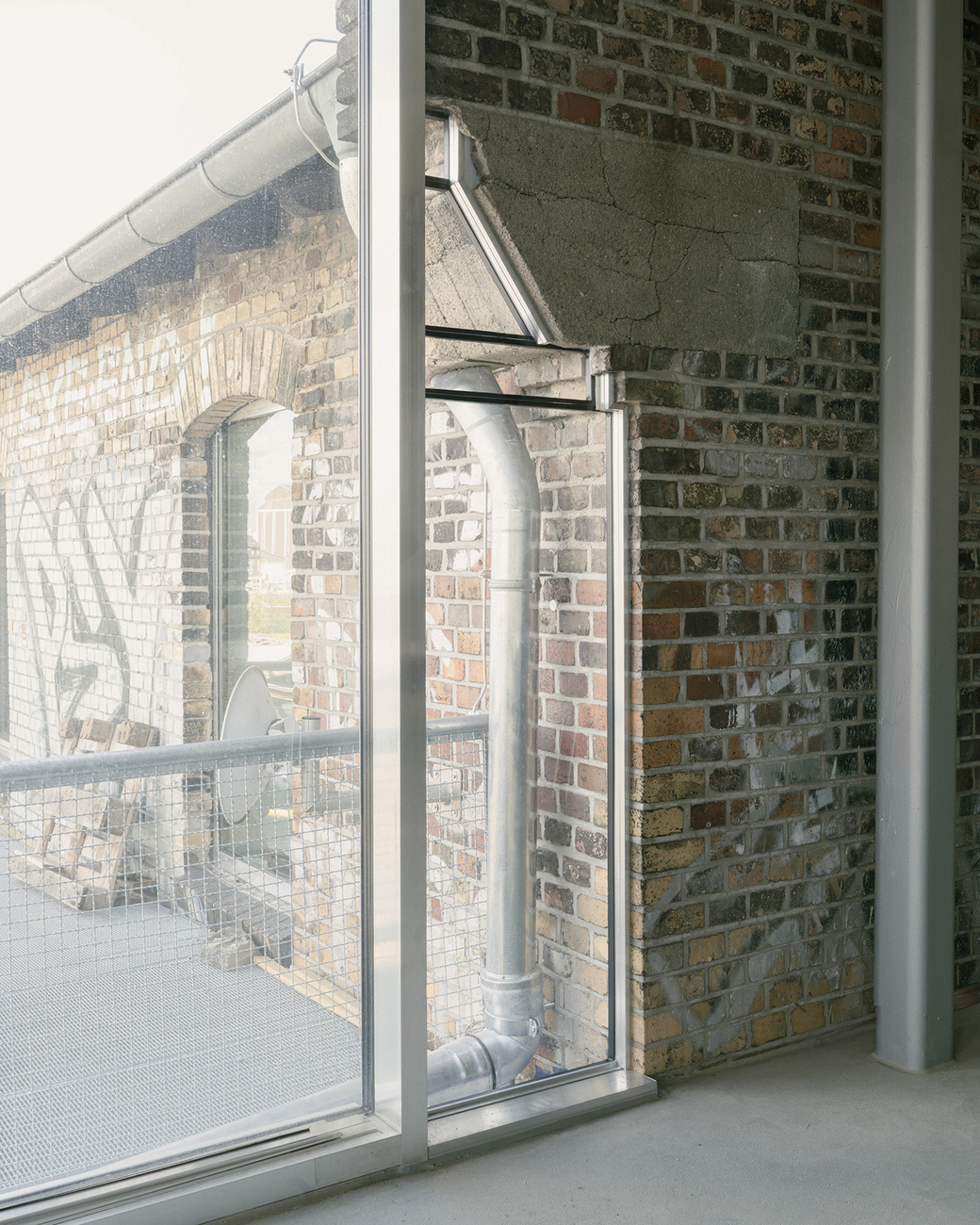
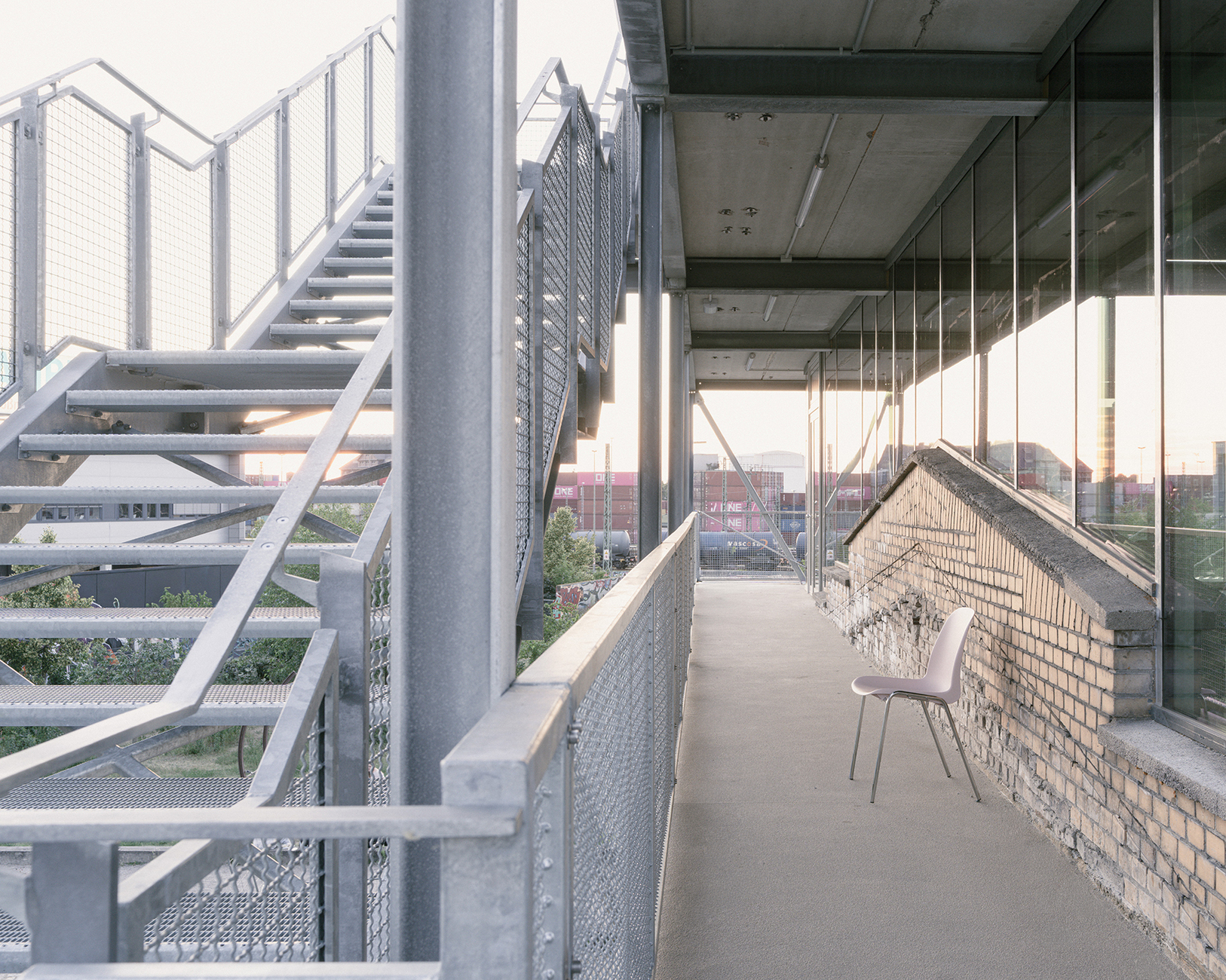
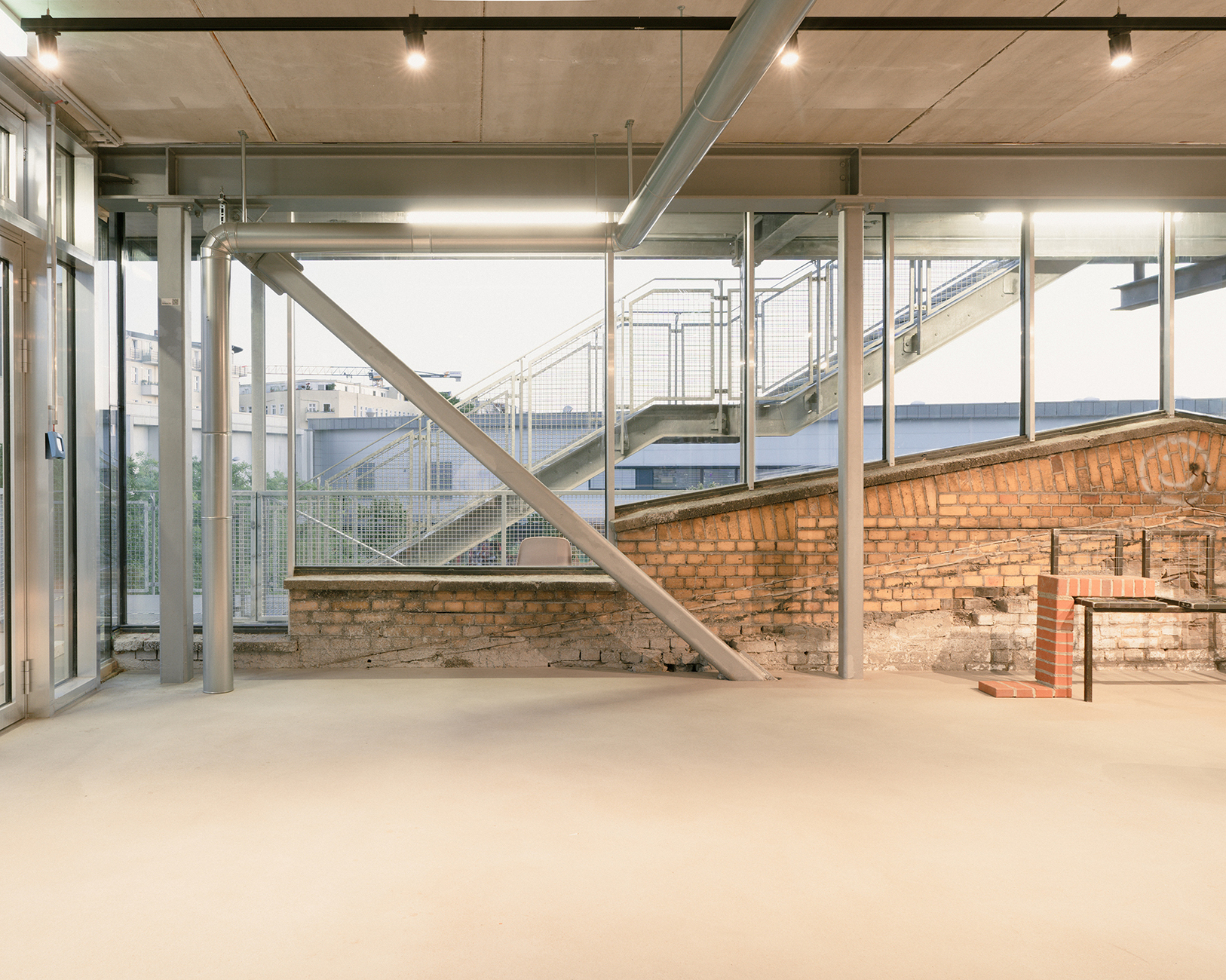
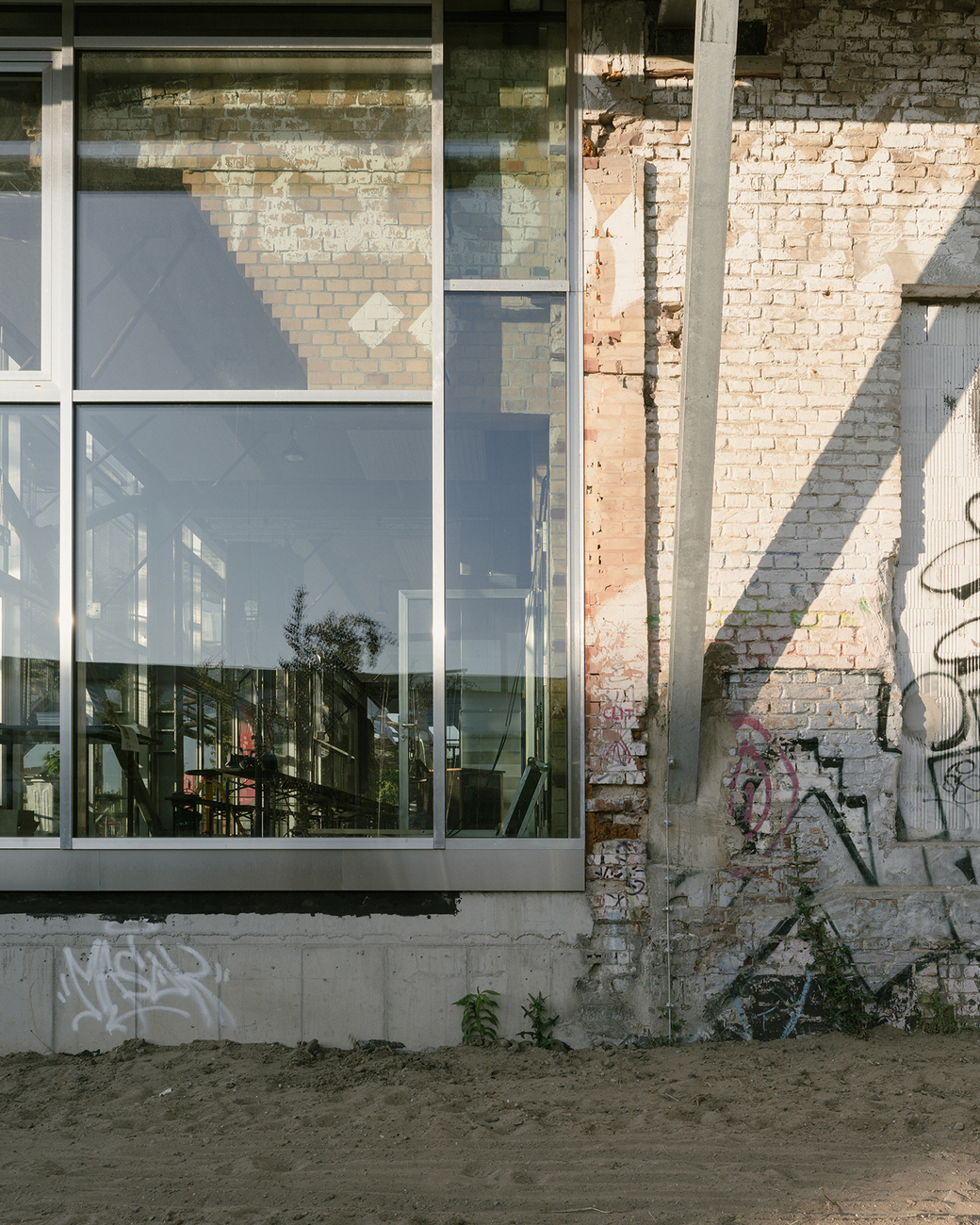
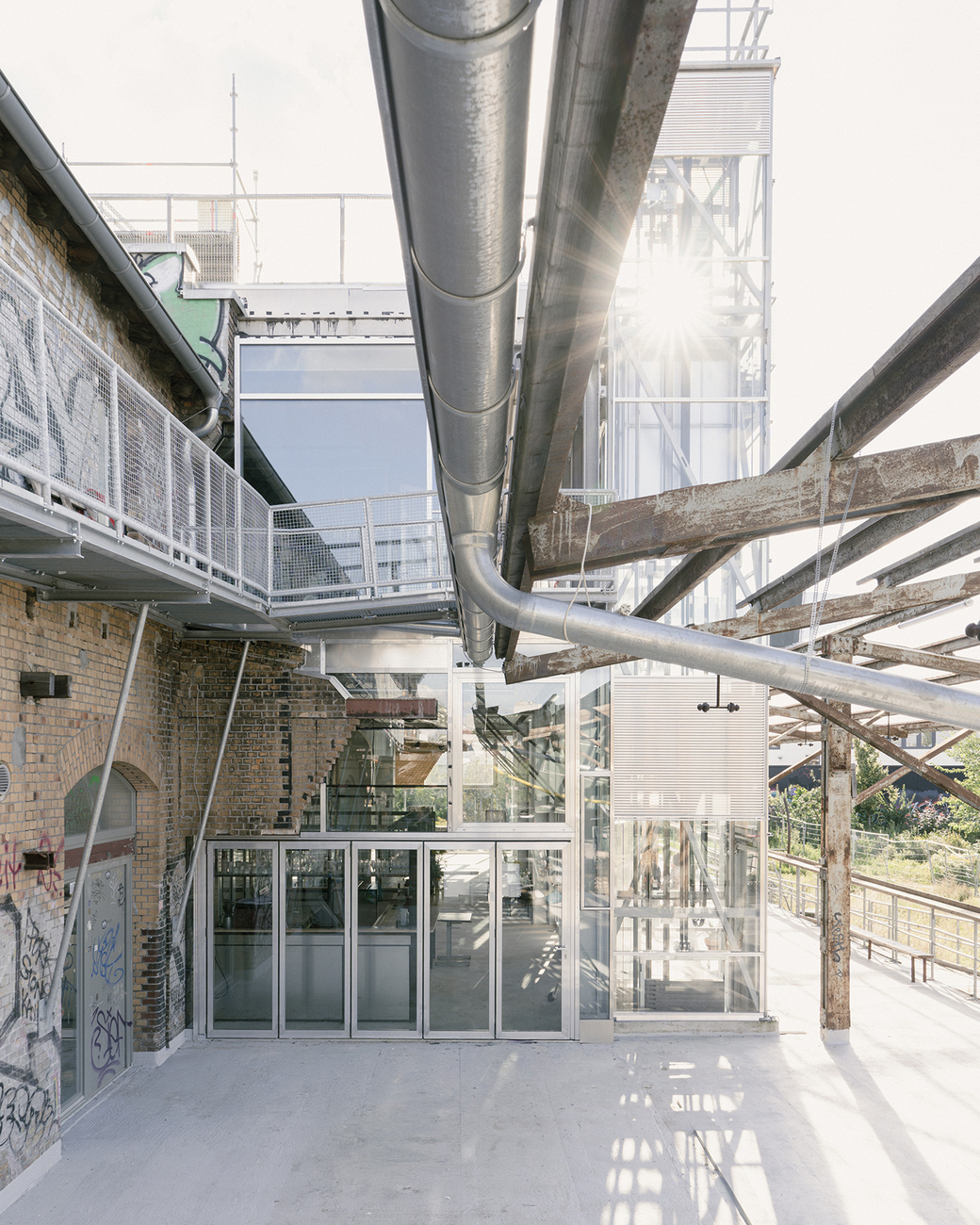
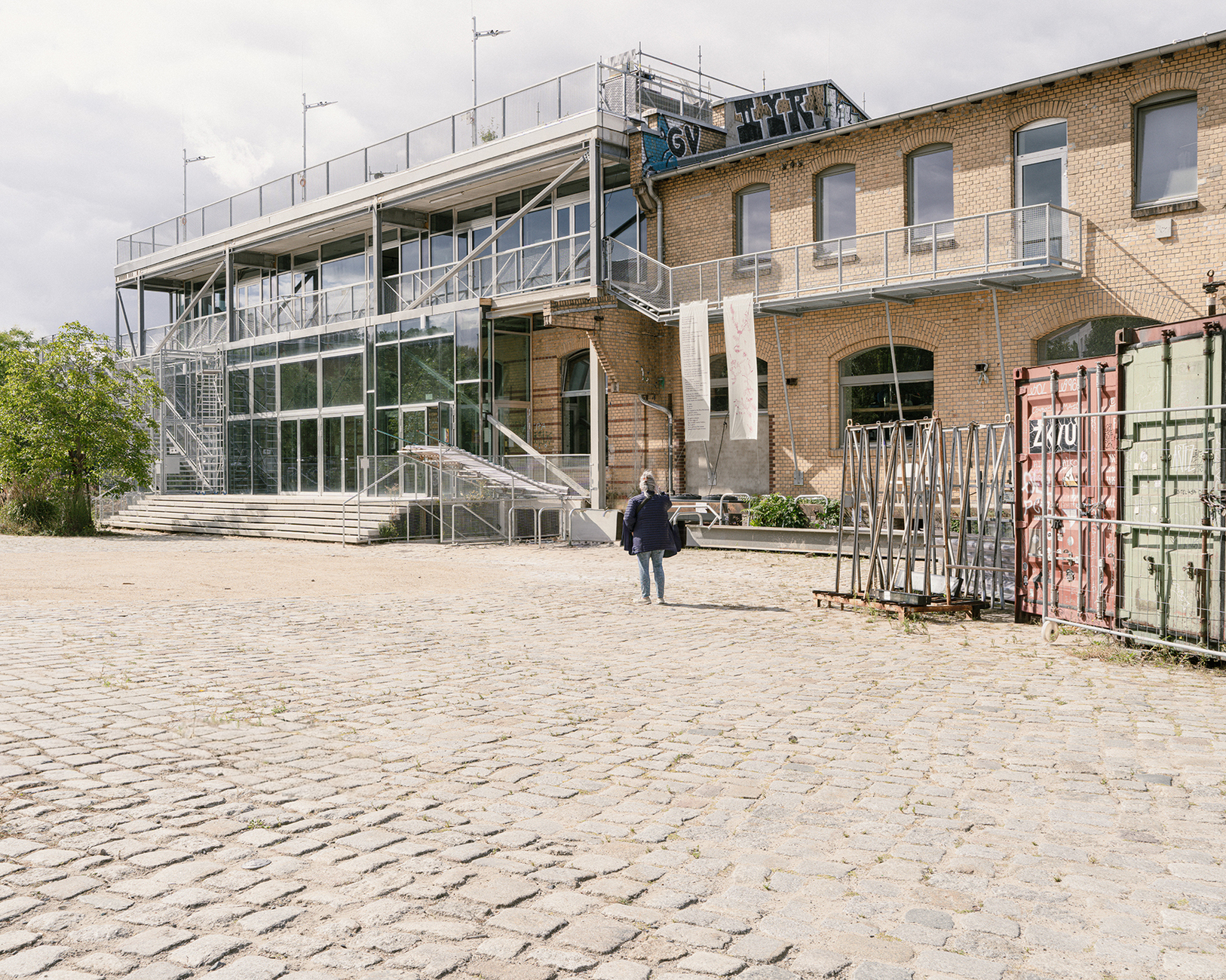
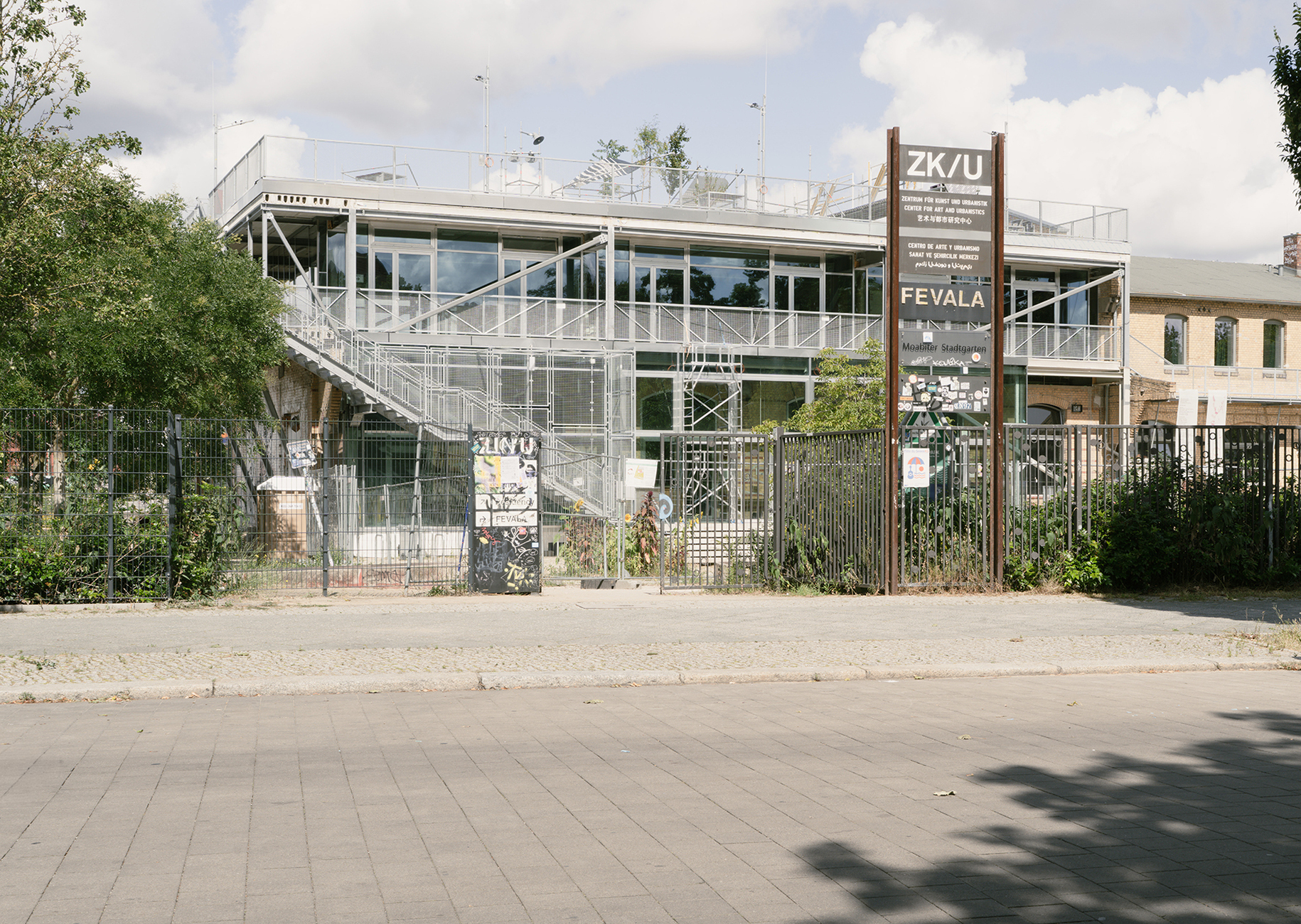
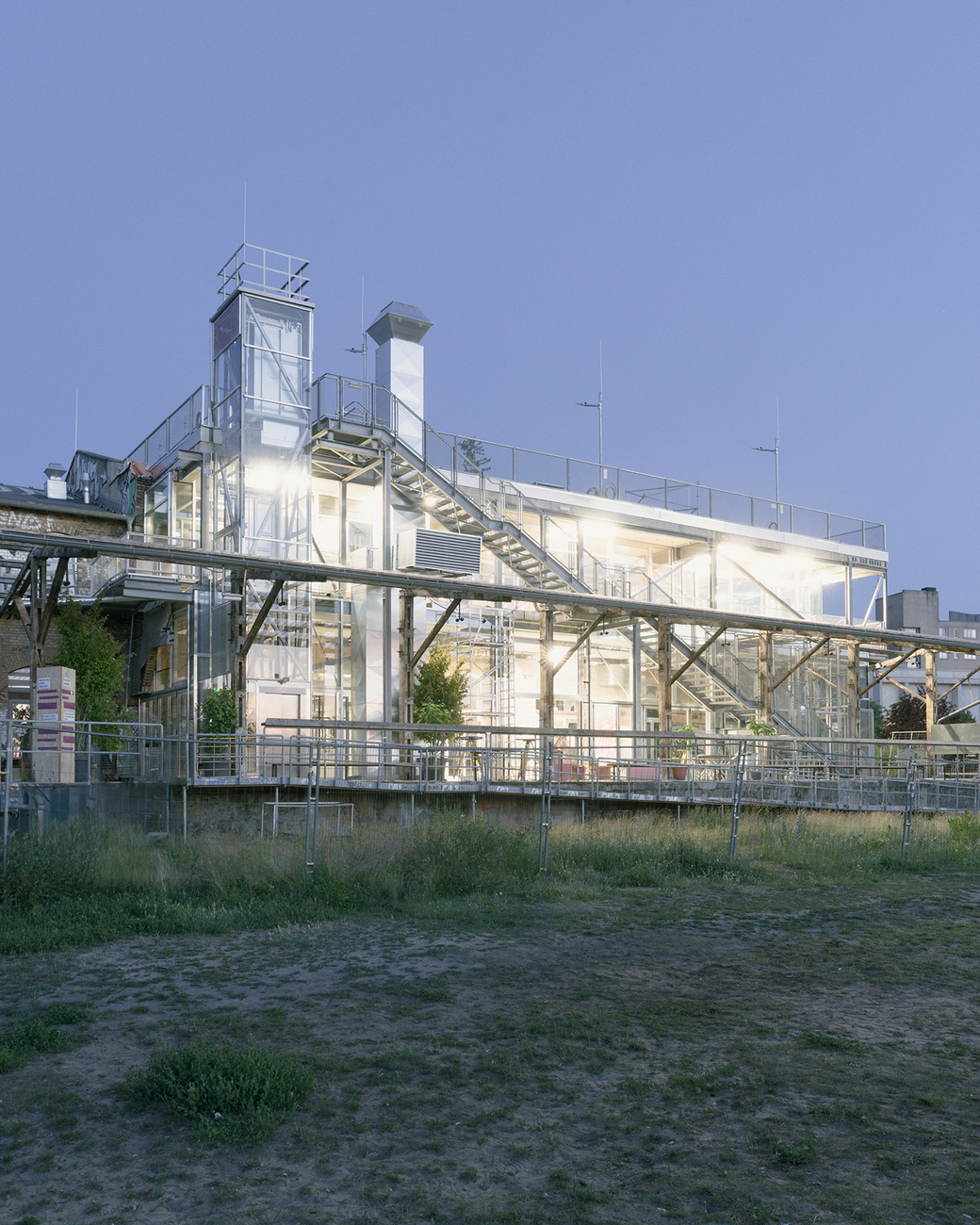
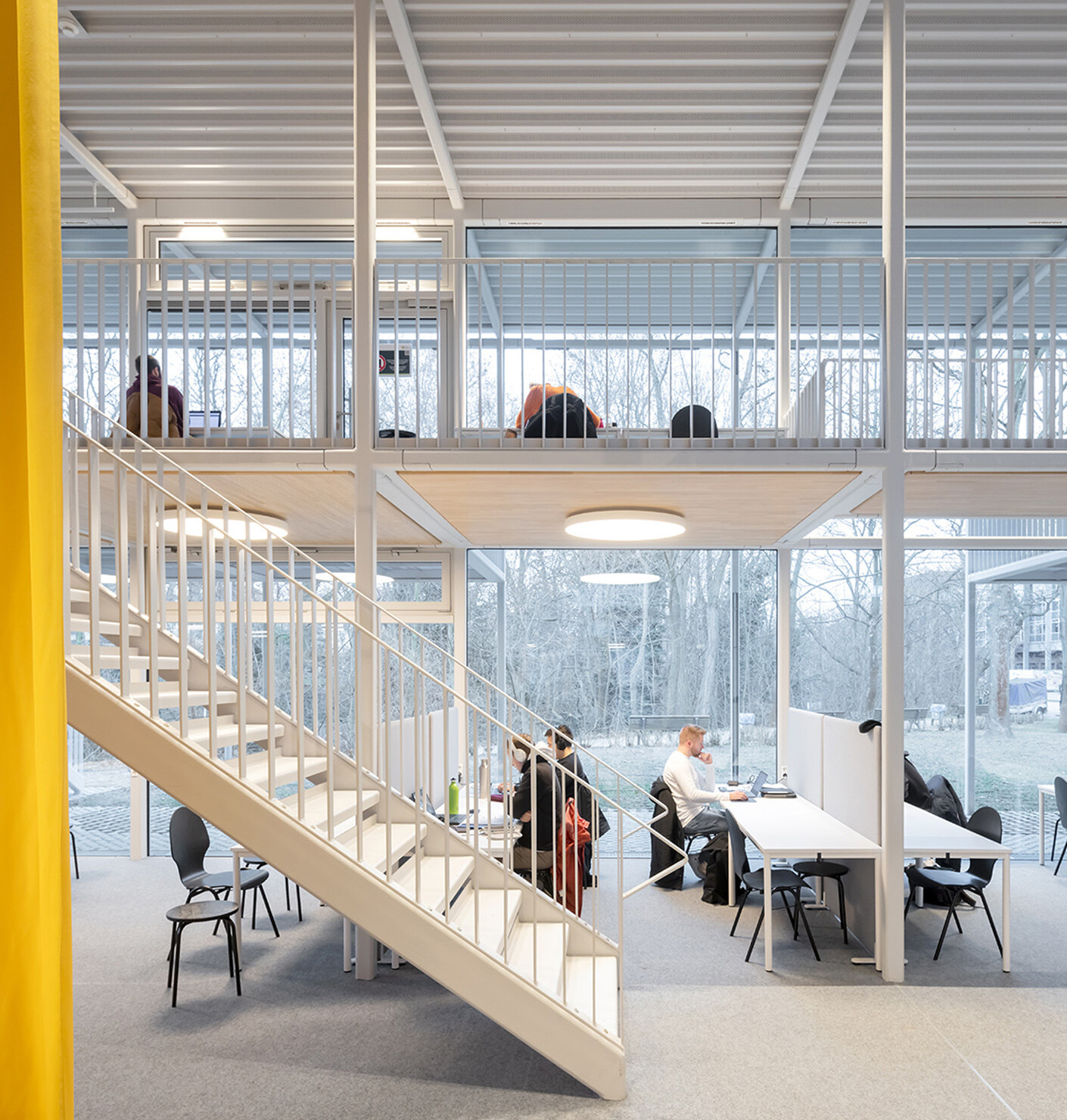
Arriving in the Moabit district, a short walk takes us to the site of the former freight station near Siemensstrasse, which was converted into a city garden after it was decommissioned. Since 2012, part of the 1,600-square-metre public garden has been home to the Center for Art and Urbanistics (ZK/U) run by the Kunstrepublik artists' collective, which aims to create a link between artistic practice, urban research and everyday city life. In order to meet the growing interest in cultural offerings and the general need for space in the capital, the listed building needed to be expanded. Visibly ageing and after numerous temporary uses, it was falling into disrepair. This is where Peter Grundmann came in: "2016 was the starting point for the idea to expand the existing building. At the end of 2018, there was an initial participation process, which was mainly run by the neighbourhood management, i.e. the district, in order to involve stakeholders from urban society and the immediate neighbourhood in the creation of this place. It was a multi-stage process, and Peter Grundmann won the subsequent tender," says Elisa Georgi, spokesperson for ZK/U. In order to become the central communication and anchor point for the neighbourhood, the existing building needed to be renovated to improve its energy efficiency and expanded spatially. Peter Grundmann and his team created the architectural foundations: he decided to remove the roof of the former warehouse but to use the walls and ceilings. The extension rests on these, partially enveloping them so that the bricks could be preserved in their original form, including the graffiti that had accumulated there over the years. Along the old walls, plenty of space was excavated for the ventilation system, a steel scaffold was erected and the truss girders were installed, creating a column-free space. ‘The glass façade was very expensive because it had to withstand a wind load of five metres,’ says Peter Grundmann. To keep the façade frames smaller, reinforcing diagonals were integrated in a DIY project. The façade now serves as thermal protection and allows year-round use of the old industrial hall, which was previously unheated. In addition, the open structure of glass and steel allows a view of the character of the original building.
In the guild's traditional trousers and with a folding rule in his hand, the architect leads us across the site to the basement, where the brick arches of the old building can still be seen and an event area with a bar has been created. We then move on to the multifunctional event area on the ground floor, which can be opened up in summer with folding doors, across the spacious rooms on the first floor to the external steel stairs and up to the roof. Designed as a walk-in terrace, there are beehives with bee colonies and large plants growing in raised beds. The usage agreement for the ZK/U includes maintenance of the grounds, from waste disposal to gardening. At the rear of the building, a large public parking area opens up, with a view of the historic buildings at Westhafen and the S-Bahn passing by in the distance, barely audible. The platform of the freight station once ran along what is now the ZK/U. ‘What's special about our project is that we worked with a very heterogeneous building fabric here, so that new and old overlap in many different ways,’ says Peter Grundmann. The project required €3,300,000, including EU (ERDF) funds, a mixture of regional development funds at the neighbourhood and EU level. The team did a lot of the work themselves and – typical of Peter Grundmann – came up with one or two unusual solutions.
The structure appears raw at times, almost provisional, yet forms a unified whole with industrial charm. The transitions from the existing building to the new structure are visible, and visitors can look into the open spaces. The architecture reflects the flexibility and laboratory character of the ZK/U, where the rooms can be rearranged at any time for individual use. Numerous events are held at this urban meeting place. Likewise, the 2,000 square metres of the converted freight depot offer generous workshop space as well as temporary work and living space for 14 international artists and urban researchers, ranging in size from 32 to 53 square metres. Applications for research-related residencies lasting two to eight months can be submitted via an open call each year. "We are a project space and artist in residence. The idea is to connect international guests and topics with local people, such as courses. To offer a transfer space, which is what the station used to be. We are very interested in how communities form and how communities can be connected,‘ says Elisa Georgi. It has become a building for society and community, with a minimal ecological footprint and contemporary architecture that can be adapted to the needs of the ’we" over the coming years.
Berlin: PPAGarchitects ztgmbh – Double School Allee der Kosmonauten
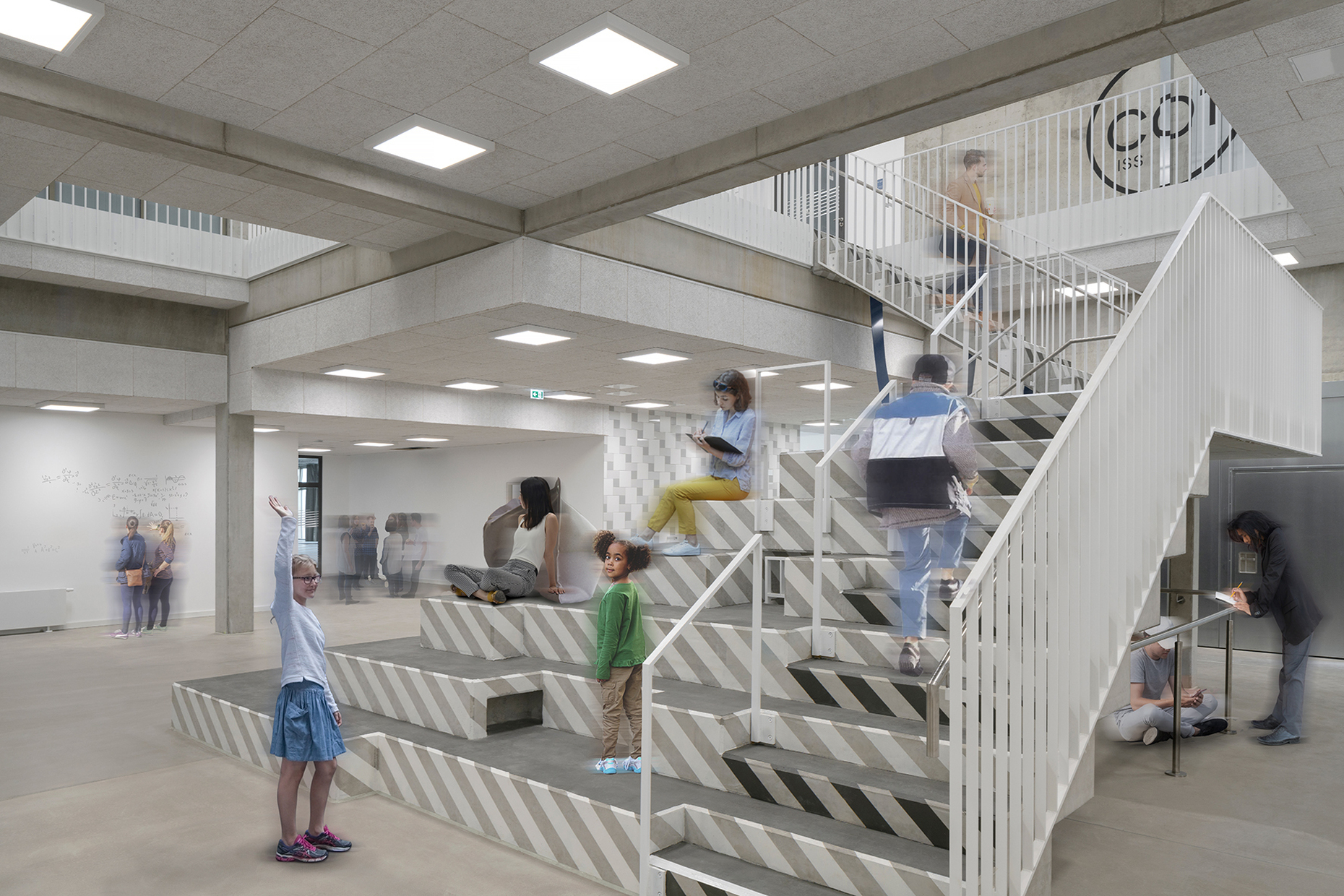
Leaving the hustle and bustle of the inner city behind, we drive to the district of Lichtenberg at the northern end of the Herzberge Landscape Park in eastern Berlin. This is where the ‘Allee der Kosmonauten’ dual school was built, combining an integrated secondary school (ISS) and a grammar school. ‘Allee der Kosmonauten’ is a school building that is part of the City of Berlin's school building initiative, a pilot project. It was one of the first to be completed and, among other requirements, takes contemporary pedagogy into account. It is a compartment school, which means that new forms of teaching are taken into account and can be seen prototypically in the architecture," says Georg Poduschka, managing partner of PPAG architects. The compartments form small schools within the building and are arranged equally around the centre, where the communal areas are located. To save energy, each compartment has its own ventilation system that is only used when needed. Instead of following the common concept of a ‘corridor school,’ cross-year and cross-class collaboration is encouraged in manageable communities: the rooms can be furnished as needed to create cross-class learning landscapes. ‘Learning together’ is the guiding principle.
In 2019, PPAG Architects won the architectural competition for the new school complex with a design featuring a hybrid timber construction. Just a few months later, work began on demolishing eight existing buildings, replacing the ground and relocating district heating and water pipes. The foundation stone was laid in 2021. Since 2024, the building has been constructed on 28,000 square metres, with the entire site covering 37,000 square metres. The secondary school, grammar school and two triple sports halls now merge into one another on five floors. The building can accommodate a good 1,600 pupils, plus around 200 teachers. There is no traditional assembly hall, but instead two multi-purpose halls that can be connected. In addition, the ground floor offers plenty of space for various uses, which can be adapted as required, with a 900-square-metre piazza. Small concrete step pyramids serve as meeting points near the stairwells on the ground floor. The unusual building is designed to arouse curiosity from the outside: many elements are abstract, such as the black rubber hanging seats on steel chains, which are attached at different heights in the entrance area. The pupils have access to numerous leisure facilities, such as a skate park, a teaching kitchen and a football pitch. The colourful accents are limited to a few examples in the outdoor area, such as the cherry-red frames of the table tennis tables or the roofs of the bicycle racks, whose shape is reminiscent of the geometric shapes in the sandbox computer game Mindcraft: groups of colour-coated steel structures with pyramid roofs are lined up in various shades of green. Inside, wide metal strips wind dynamically through the light wells up to the skylights, and the steel structure along the stairs is painted in different colours, such as yellow, blue and green, to aid orientation.
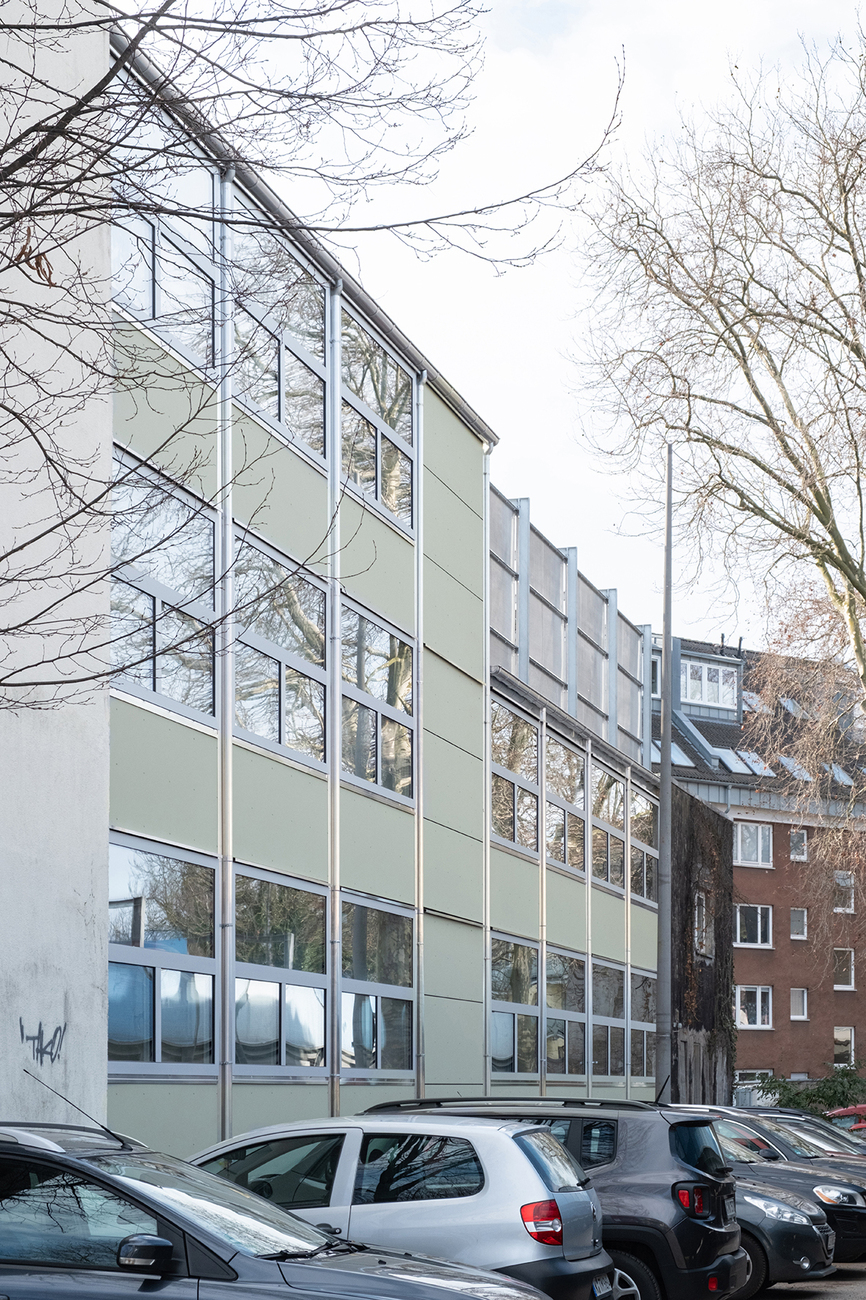
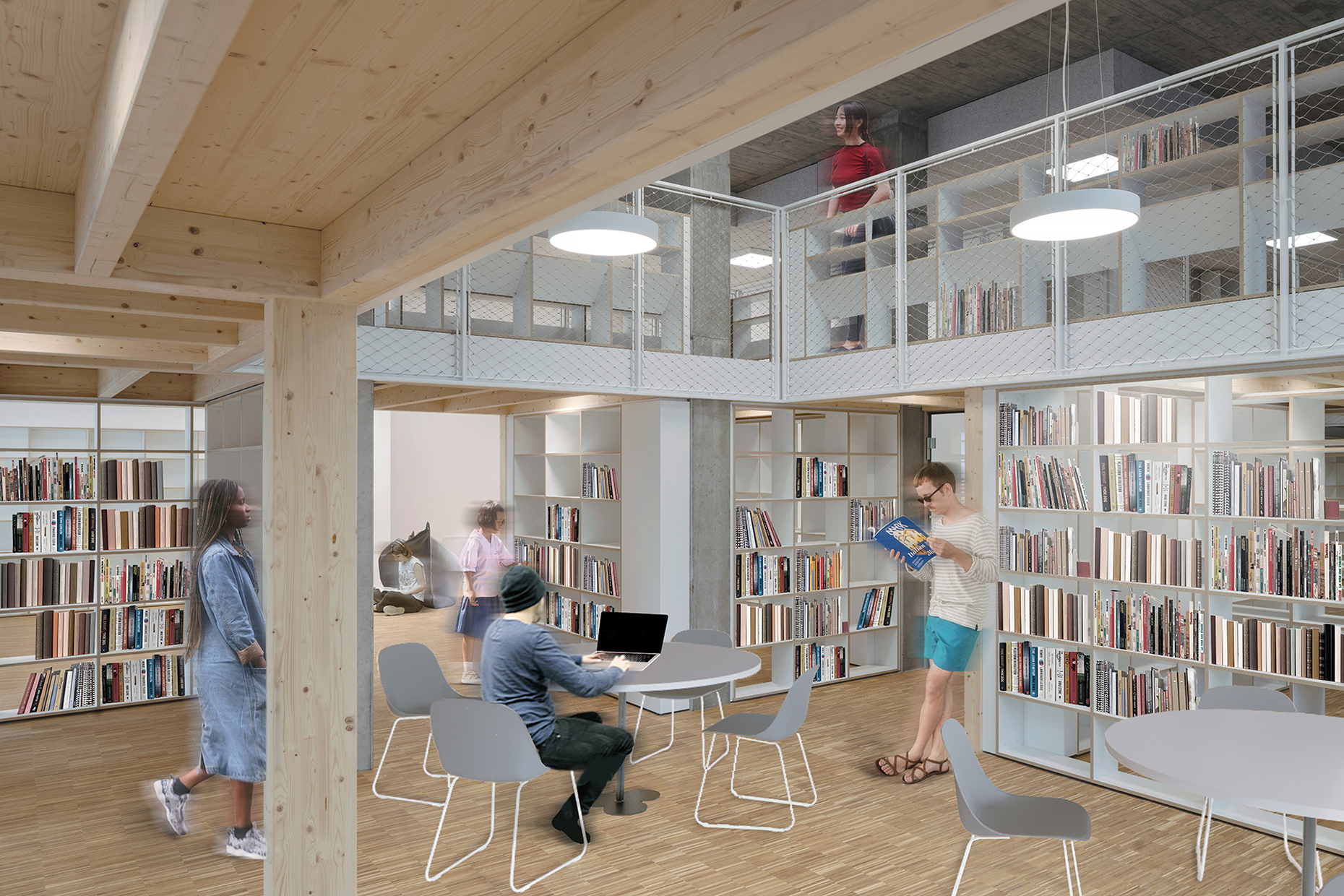
The spacious grounds are still relatively quiet, as completion is still recent. There are no books in the library, and the cafeterias are not yet open. ‘These schools need about six to seven years before they are operating normally,’ explains Poduschka. Initially, only seventh-year classes will be attending. Over the next few years, the pace will be determined by the all-day model, which offers pupils a space for working and learning as well as living. The completion of the training centre, on the other hand, was rapid: thanks to many prefabricated parts, the shell construction took only nine months, and the two sports halls were completed in six days each. The solid reinforced concrete skeleton construction with a lightweight timber frame façade has a linear appearance both inside and out and exudes industrial charm. ‘Educational buildings must essentially be the cathedrals of the 21st century,’ says Georg Poduschka.
The announcement of the winner and awarding of the DAM Preis 2026, as well as the opening of the exhibition featuring the winning project and all shortlisted buildings, will take place on 30 January 2026 at the Deutsches Architekturmuseum in Frankfurt am Main. The German Architecture Yearbook 2026 will also be published on this occasion, featuring detailed reviews of the shortlisted buildings and the winner.
EXHIBITION:
31 January – 3 May 2026
at the Deutsches Architekturmuseum (DAM)
Schaumainkai 43, 60314 Frankfurt am Main
AWARD CEREMONY + EXHIBITION OPENING:
Friday, 30 January 2026, 7 p.m.