Brutalist icon
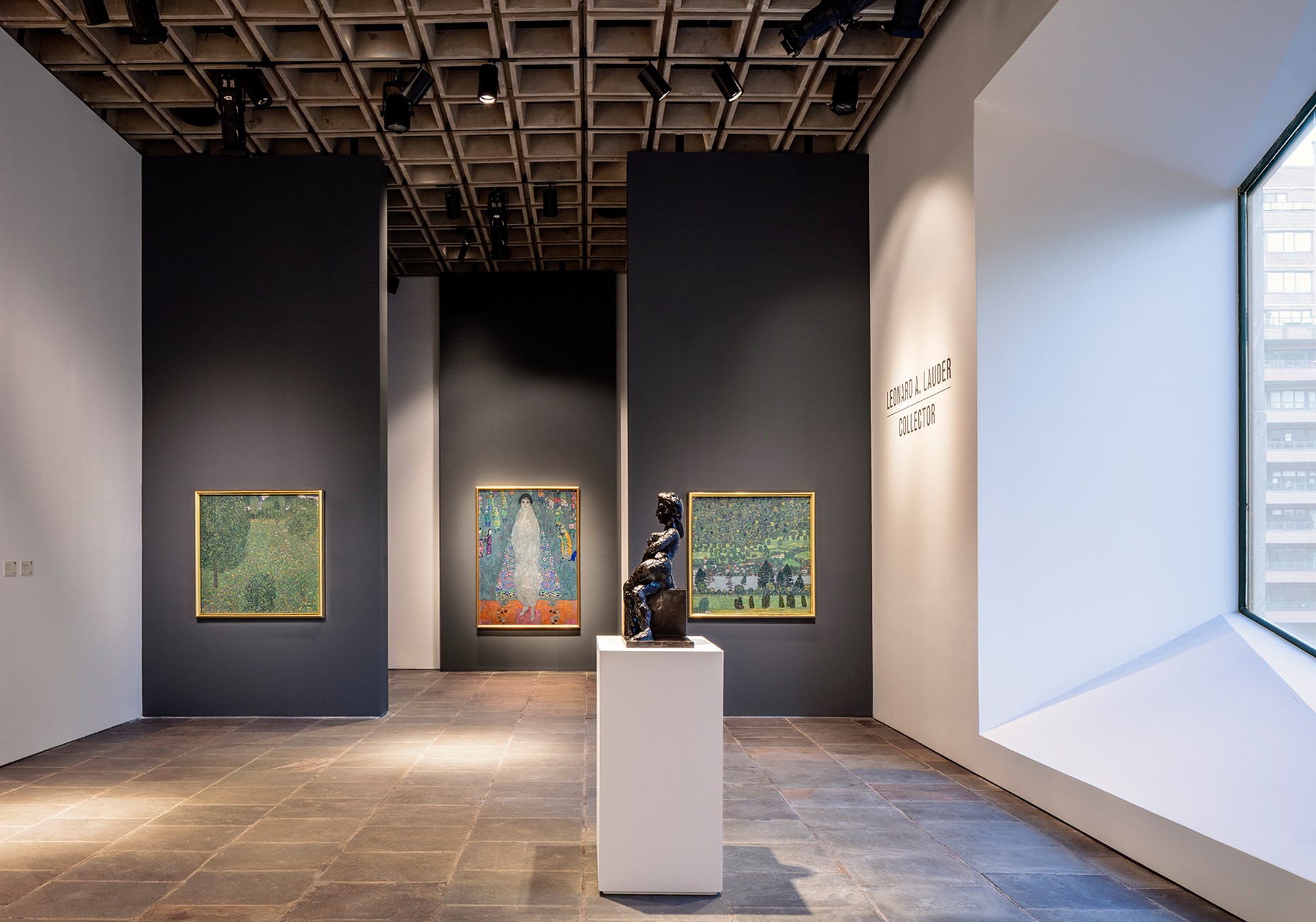
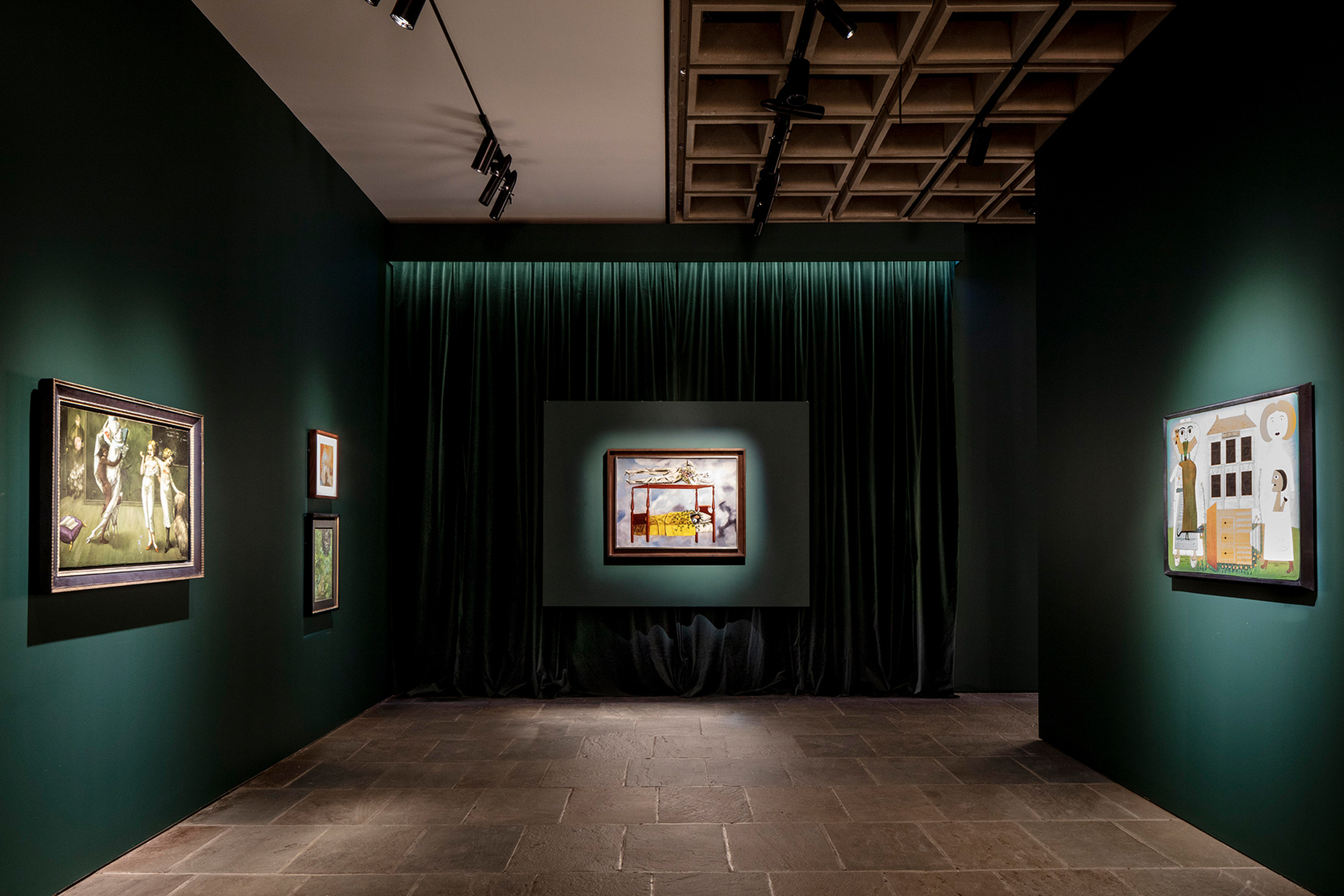
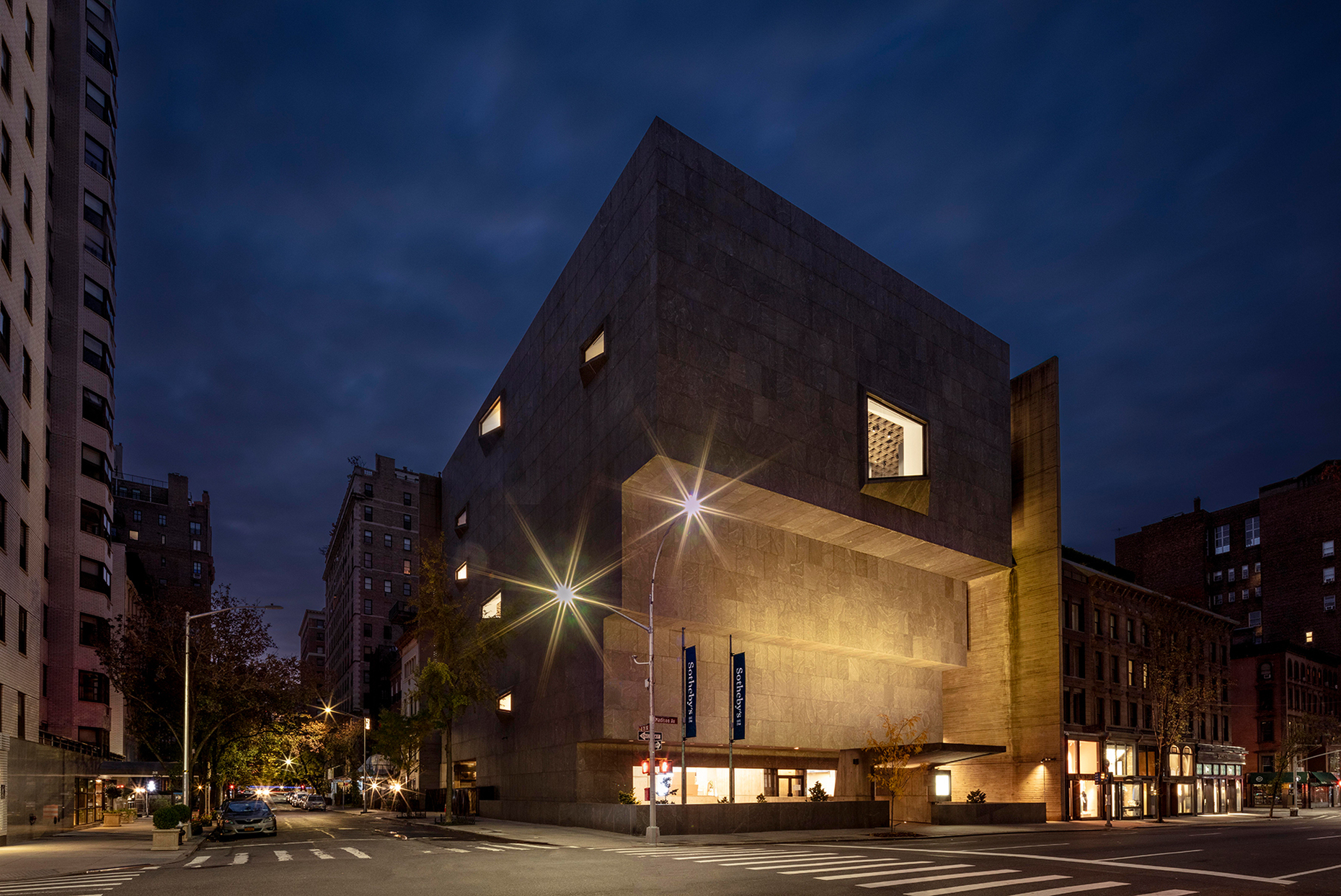
Sotheby's new global headquarters in New York opened at the end of last year with a spectacular first auction: Klimt's painting ‘Portrait of Elisabeth Lederer’ was sold for $235.4 million – making it the most expensive work of art ever sold at auction after Leonardo's ‘Salvator Mundi’. Before the large-format portrait went under the hammer, it was exhibited at Sotheby's newly opened headquarters on Manhattan's Upper East Side. Visitors were willing to wait up to an hour to catch a glimpse of Mrs Lederer. However, queuing up was worth it for two reasons: in addition to the painting, which has now disappeared into a private collection for the foreseeable future, the newly opened and renovated building by Marcel Breuer from the 1960s was the second sensation. The architectural icon on Madison Avenue had been carefully renovated by Herzog & de Meuron and their New York partners PBDW Architects. The corner building on 75th Street is the new home of Sotheby's auction house, which has set up its international headquarters here.
Granite sculpture in the urban space
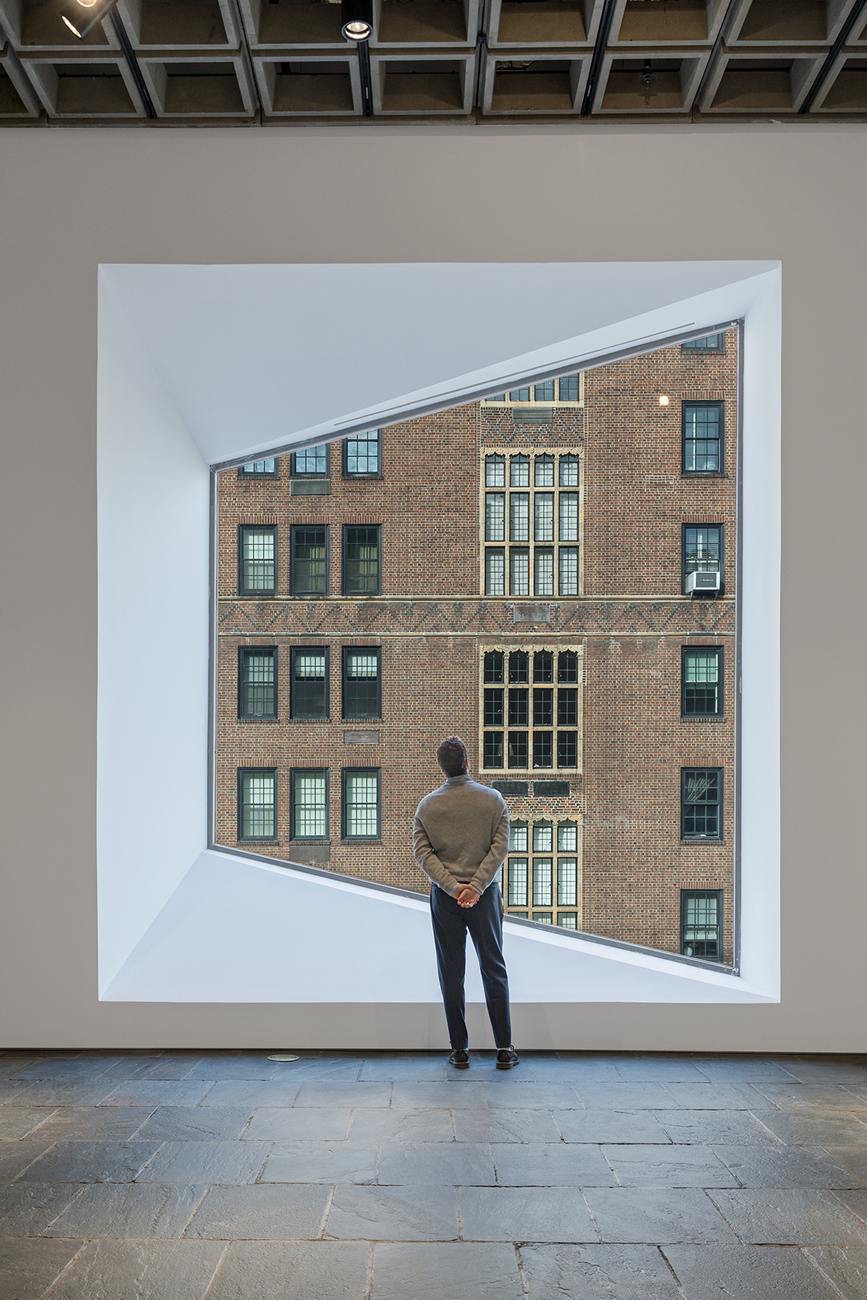
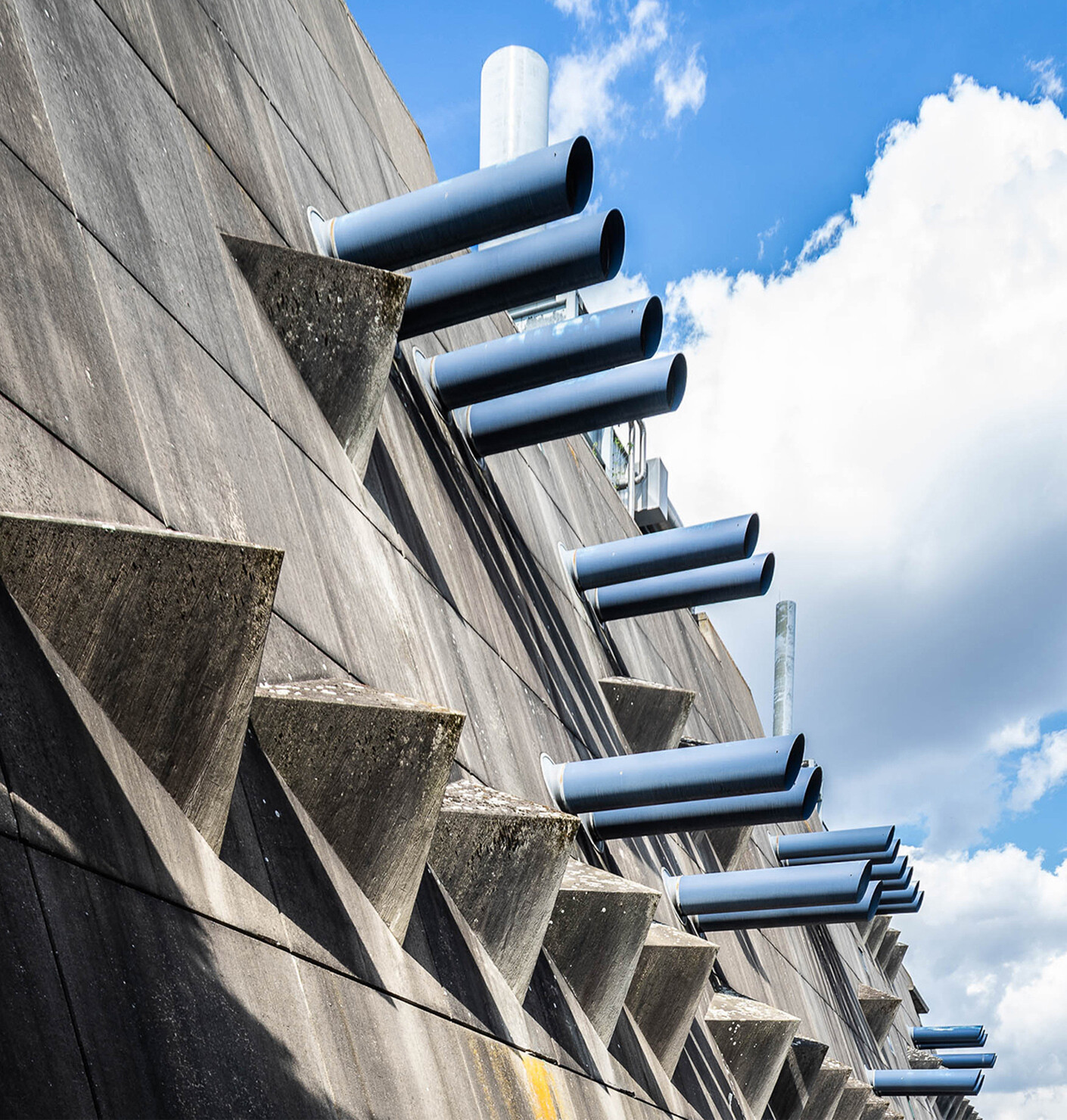
The striking five-storey building with granite façades is a sculptural landmark in the urban area. Only seven trapezoidal angled windows of varying sizes open up the closed façades of the massive structure. On Madison Avenue, where the main entrance is located, the floors protrude upwards like an inverted temple tower, a ziggurat. Marcel Breuer, a Bauhaus student and later head of the furniture workshop at the avant-garde school in Dessau, had a vision of transforming the ‘transform the vitality of the street into the sincerity and profundity of art. Since 1966, this unique architectural masterpiece has been used by the Whitney Museum of American Art, the Metropolitan Museum and other art institutions. The fact that it remains dedicated to art after a renovation phase lasting around a year is actually a stroke of luck. The listed building now has around 3,300 square metres of public space in its interior and exterior areas. For the first time in many years, the architecture largely corresponds to Marcel Breuer's original design.
Continuity and transformation
The Herzog de Meuron architectural team sees the carefully planned renovation of this landmark as a restoration to its original version with a sensitive update. ‘Paradoxically, our strongest architectural contribution to this building was to remain quasi-invisible, as if everything had always been there,’ says Jacques Herzog, summarising his firm's intervention. ‘The beauty and clarity of Breuer's original work radiates – also in its new function – and ensures its relevance for future generations.’ A covered bridge on Madison Avenue leads over the 4.5-metre-lower courtyard to the main entrance. The aspen trees in the sunken outdoor space stretch their crowns up to street level, indicating the new public space of the courtyard to passers-by on the pavement and arousing their curiosity.
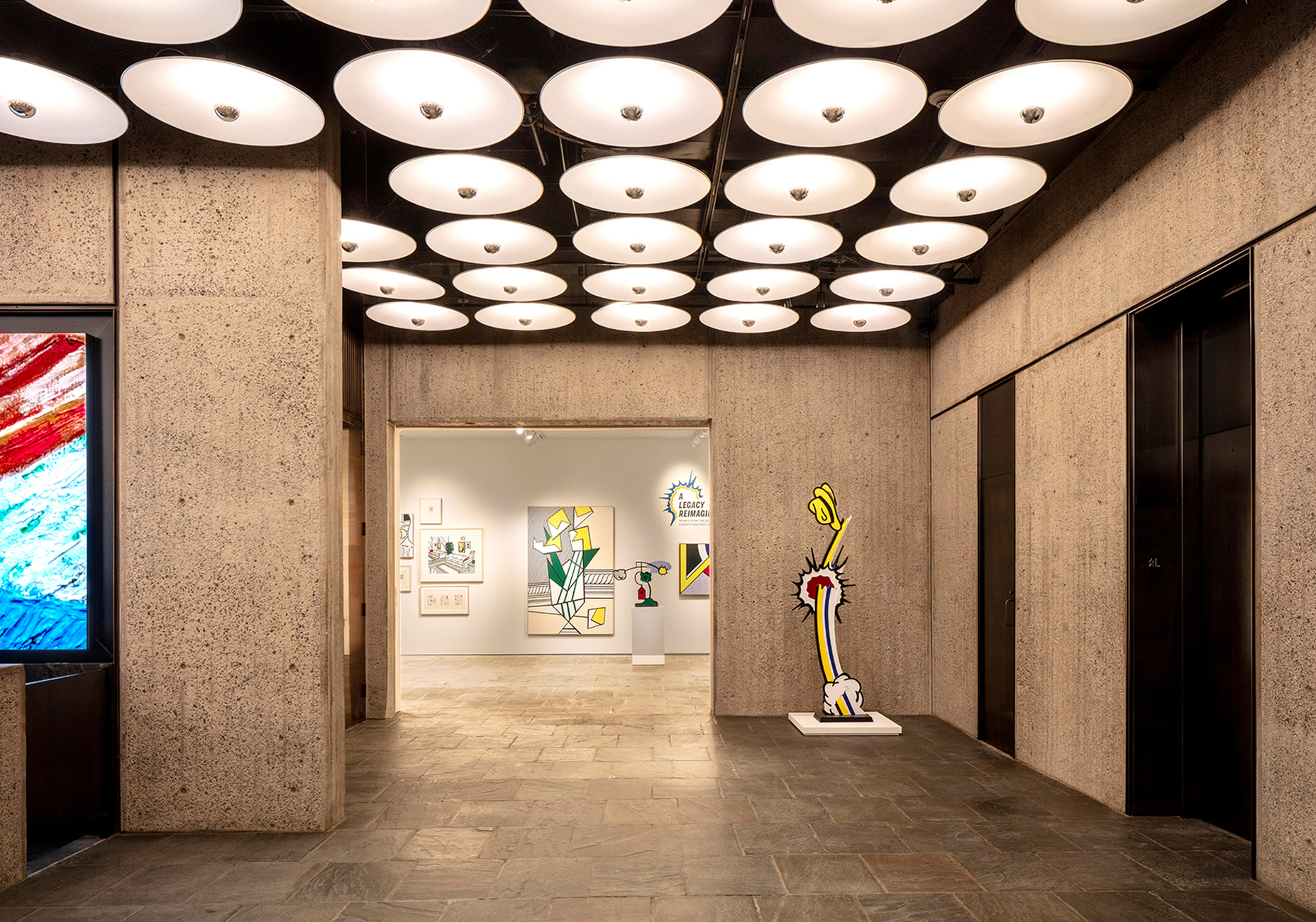
The central lobby at "The Breuer" opens up to the cityscape with large glass surfaces. Breuer's striking, coordinated palette of materials has been retained, but individual functions have been carefully added. The original slate flooring throughout is complemented by fixtures, display cases and benches in dark mahogany and bronze. The rough walls with hammered concrete surfaces resemble natural stone. The striking ceiling lighting, consisting of light bulbs in white circular reflectors, has been converted to bespoke LEDs with a similar effect, based on Marcel Breuer's notes. Future exhibitions are announced in the new display cases, the reception and security desk are equipped with large LEDs, while the benches are originals by Marcel Breuer. ‘Our goal is to amplify Breuer’s artistic legacy, as well as the building’s material and historical significance, ensuring it functions as a premier exhibition and auction venue,’ summarises Wim Walschap, senior partner at Herzog & de Meuron and project manager for the renovation.
From exhibition to auction
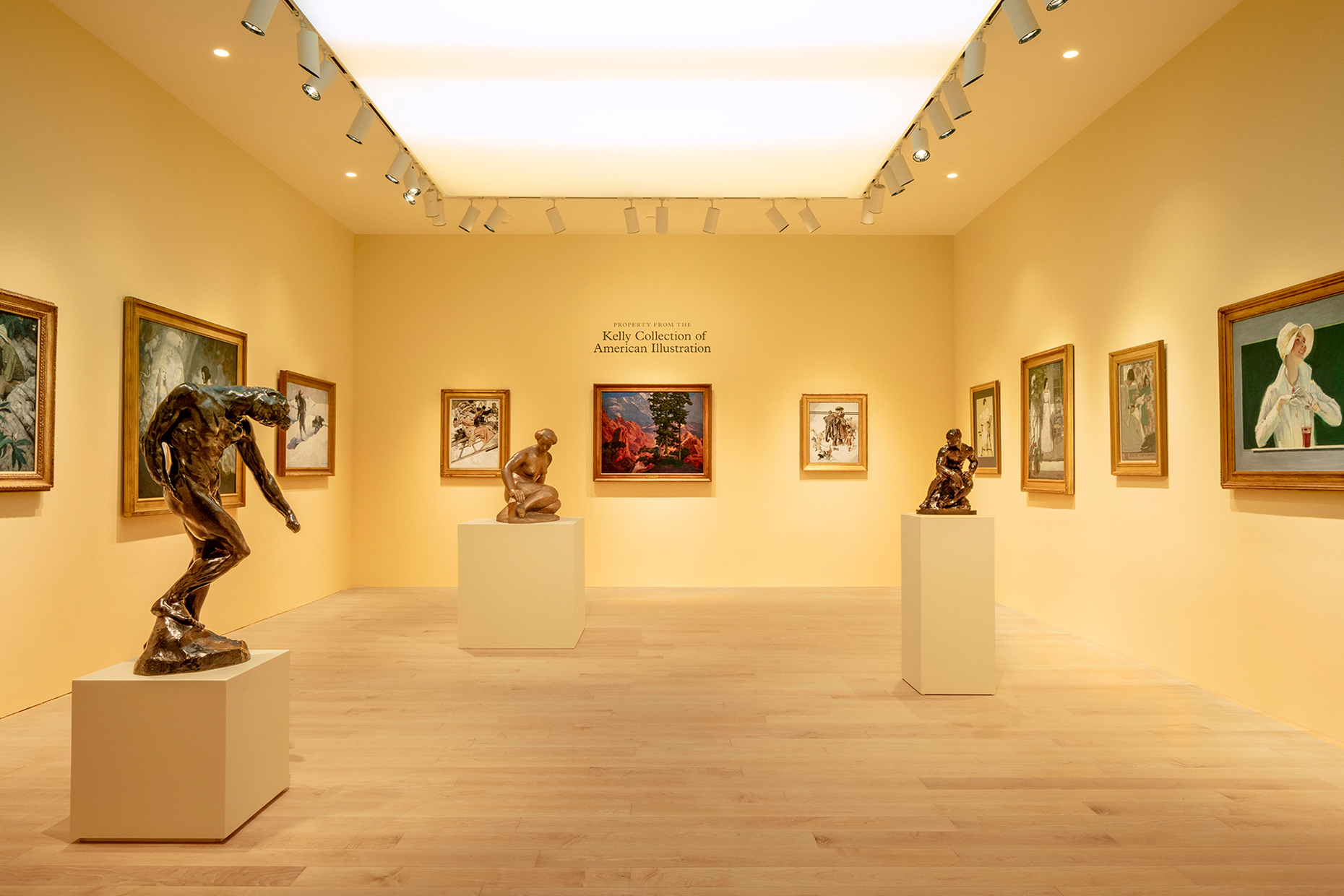
In order to expand the exhibition space by 27 per cent, former office and administrative areas had to be converted. Some of the galleries on the individual floors have been reopened, with their spaces oriented towards the iconic window openings that connect the interior and exterior spaces. The infrastructure is flexible in use, the rooms can be adapted to curatorial requirements and used for events and auctions with up to 220 guests on special occasions. On the fourth floor, with ceilings over five metres high, a central window opens onto Madison Avenue, and a small office area on the fifth floor is available to the Sotheby's team for their day-to-day work at "The Breuer". In addition to the lighting and air conditioning systems, which have been renewed throughout the building, a necessary security system has also been installed. The new service lift is located on the floor space of the original design and will ensure that exhibitions can be set up and dismantled more quickly in future.
Architecture as an ethos
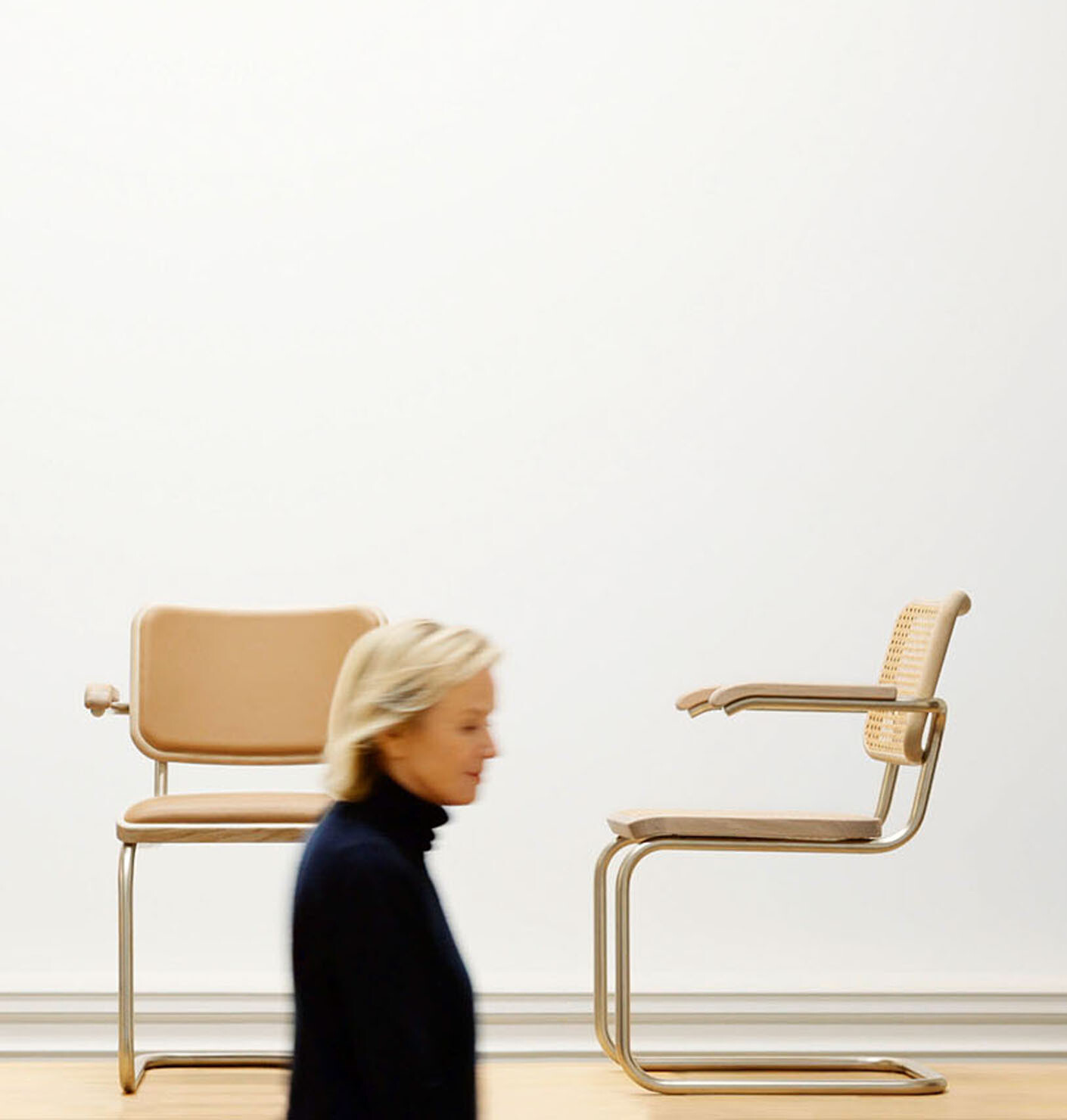
All's well that ends well?, I ask myself at the end of the tour. On the one hand, there is a touch of melancholy, for when the Whitney Museum was still housed in Breuer's building, there was a unique symbiosis between contemporary art and Breuer's brutalist architecture. On the other hand, the successful renovation has revealed a building that is more Breuer than ever before. Architecture is not a style, but an attitude, according to a famous bon mot by the Hungarian-American architect. At 945 Madison Avenue, we can see what Breuer meant by this.