Quiet heroes
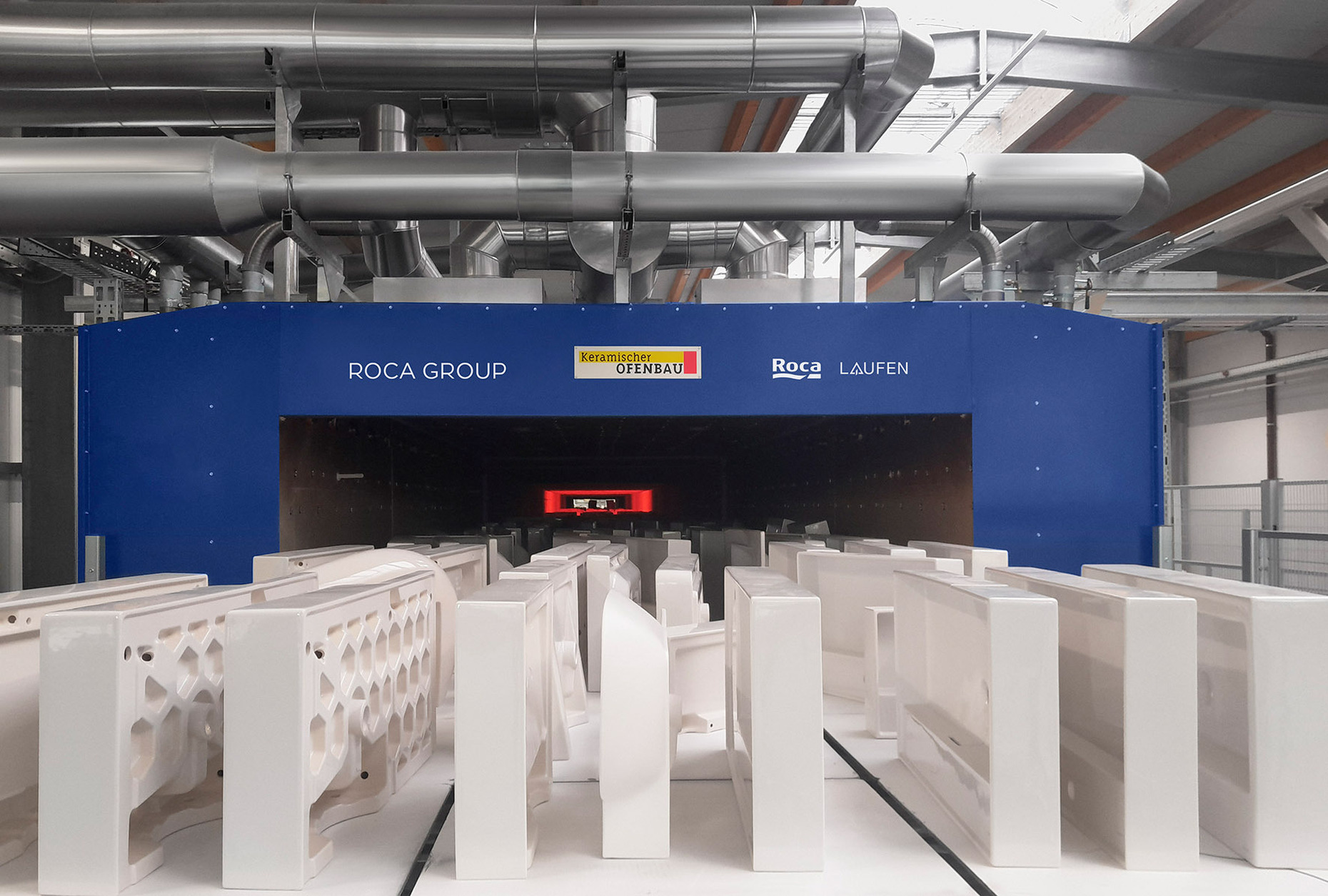
"We have a long-term goal to decarbonise our operations and we have been working hard to find solutions that will help us achieve this. This new pan-European partnership is also a clear step forward for the industry as a whole," says Albert Magrans, CEO of Roca Group. Together with Keramischer Ofenbau GmbH from Hildesheim, the family-run company recently presented the result of their joint research in Gmunden: The world's first electric tunnel kiln for sanitary ceramics. The facility in Upper Austria is set to become the globally first with an electric tunnel kiln for sanitary products this year. At the same time, the production site was equipped with a solar system. The furnace's processes are automated for maximum efficiency – a pioneering development for which the Group has already filed a patent application.
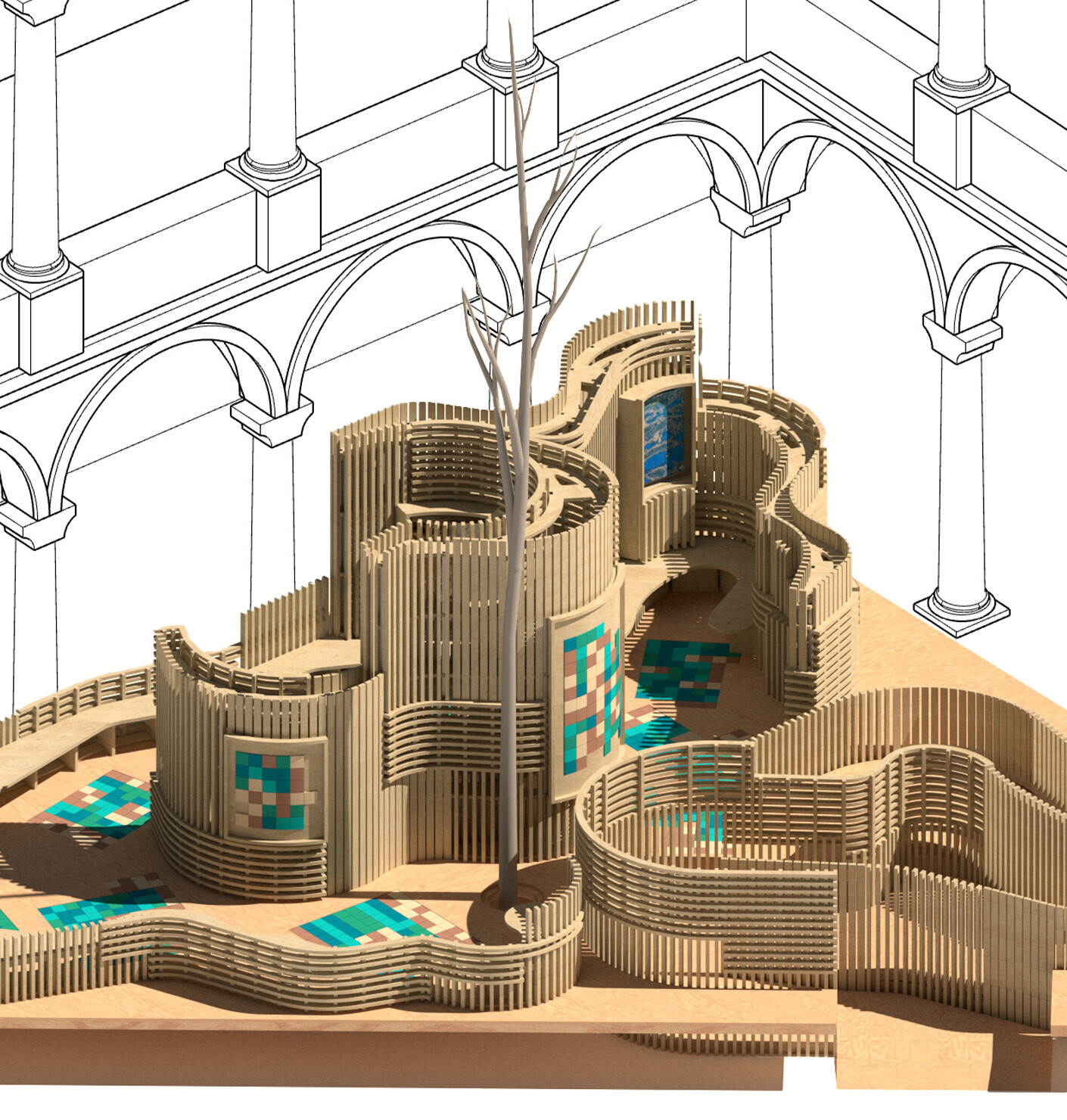
At this year’s Milan Design Week, Roca together with Mario Cucinella Architects presented an installation entitled “Sparking Change”: In the inner courtyard at the University of Milan, a 4.5-meter-high scenographic world was created consisting of 1,200 3D-printed modular elements made of ceramics. The nuanced coloring and curved structures served as visual metaphors for the progressive operating temperatures in the firing process. Each of the blocks featured details showing what temperatures are required in that specific production phase in order to guarantee ceramic products of the highest quality. After the end of the installation, the elements can be reassembled as street furniture or pavilions. Alongside the physical exhibits, Roca expanded the voyage of discovery into the production process in the form of Web-based Augmented Reality highlights. 'Sparking Change' is a unique installation that shows how knowledge, experience, and technology have enabled Roca to develop the single largest innovation in this sector, according to Marc Viardot, Roca Group's Marketing and Design Director.
The e-kiln technology is not just of relevance for the production of sanitary ceramics, a few technical adjustments, and the technology created can also be used to fire construction ceramics, such as bricks or pipes, and tableware. “This kiln is proof that innovation and progress really make a lot possible which in the first steps involved may initially seem inconceivable. Seen in that light, it’s a huge milestone,” concludes Axel Krause, Project Management and Development, Keramischer Ofenbau GmbH.