Featured
Knitted City
Anna Moldenhauer: What led you to textile design?
Izabelle Francis: I started crocheting in College as a way to add texture to my fashion designs (as originally I wanted to do Fashion at University) and I fell in love with the technique and fabrics created. When I did a tour of my University before applying, I was so amazed by all the facilities and workshops and it made me feel so excited and full of ideas of what I could make. I started to gain an interest in making the fabrics, which I would then take into Fashion designs.
Your studies at Buckinghamshire New University also included your own studio space and access to industry-standard textile design workshops. Which technique has stayed with you since your time at university?
Izabelle Francis: My studio space was so special to me, it truly gave me the ability to explore all my creative avenues. Having workshops on the knitting machines, both Domestic and Dubied were my favourites. I got my own knit machine just before my final year and all the techniques from double bed ribbing to racking to lace have stayed with me and I still go back to all my technical files to gain inspiration for newer projects.
One of your inspirations is Italian architecture. What exactly did you translate from this into a textile version?
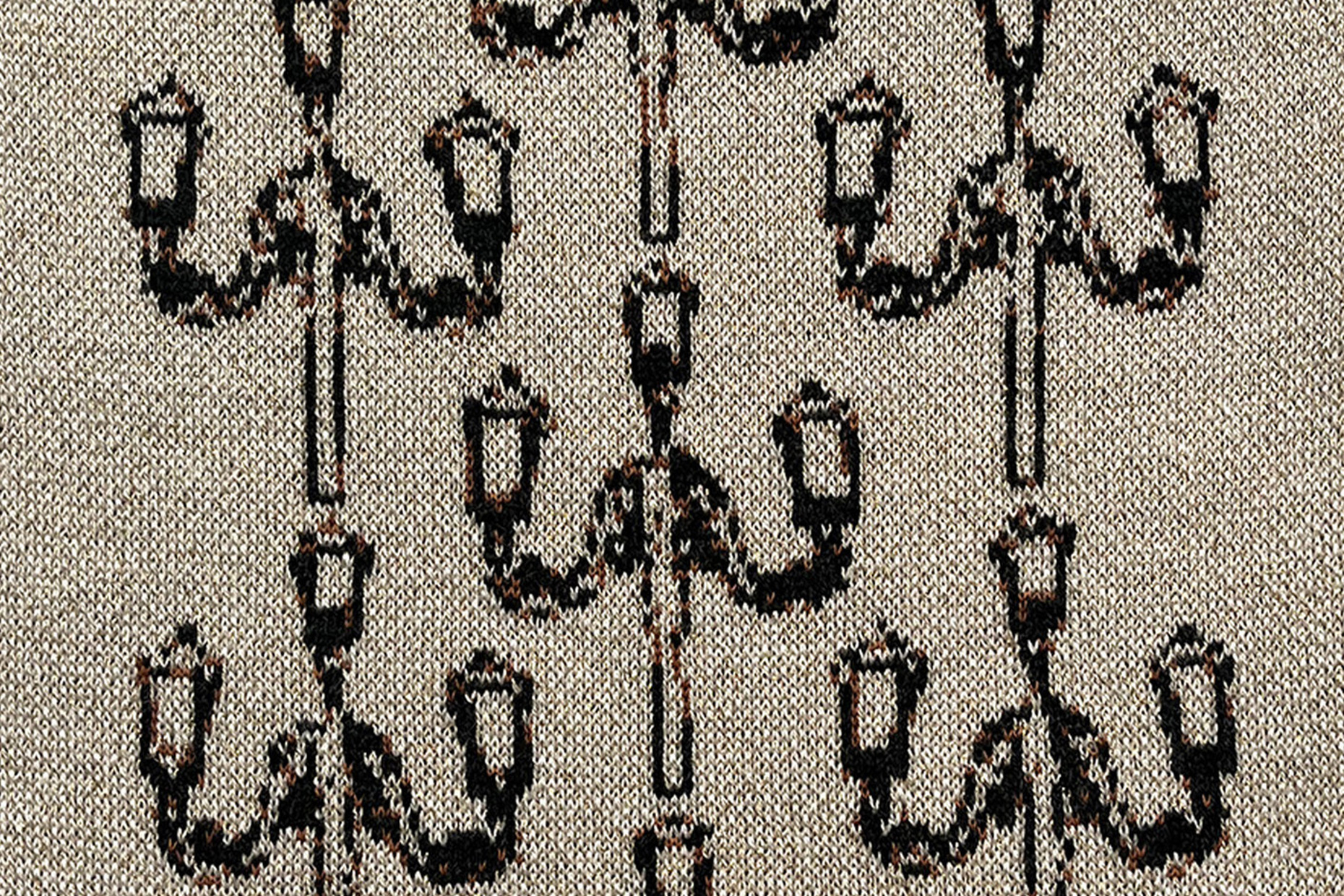
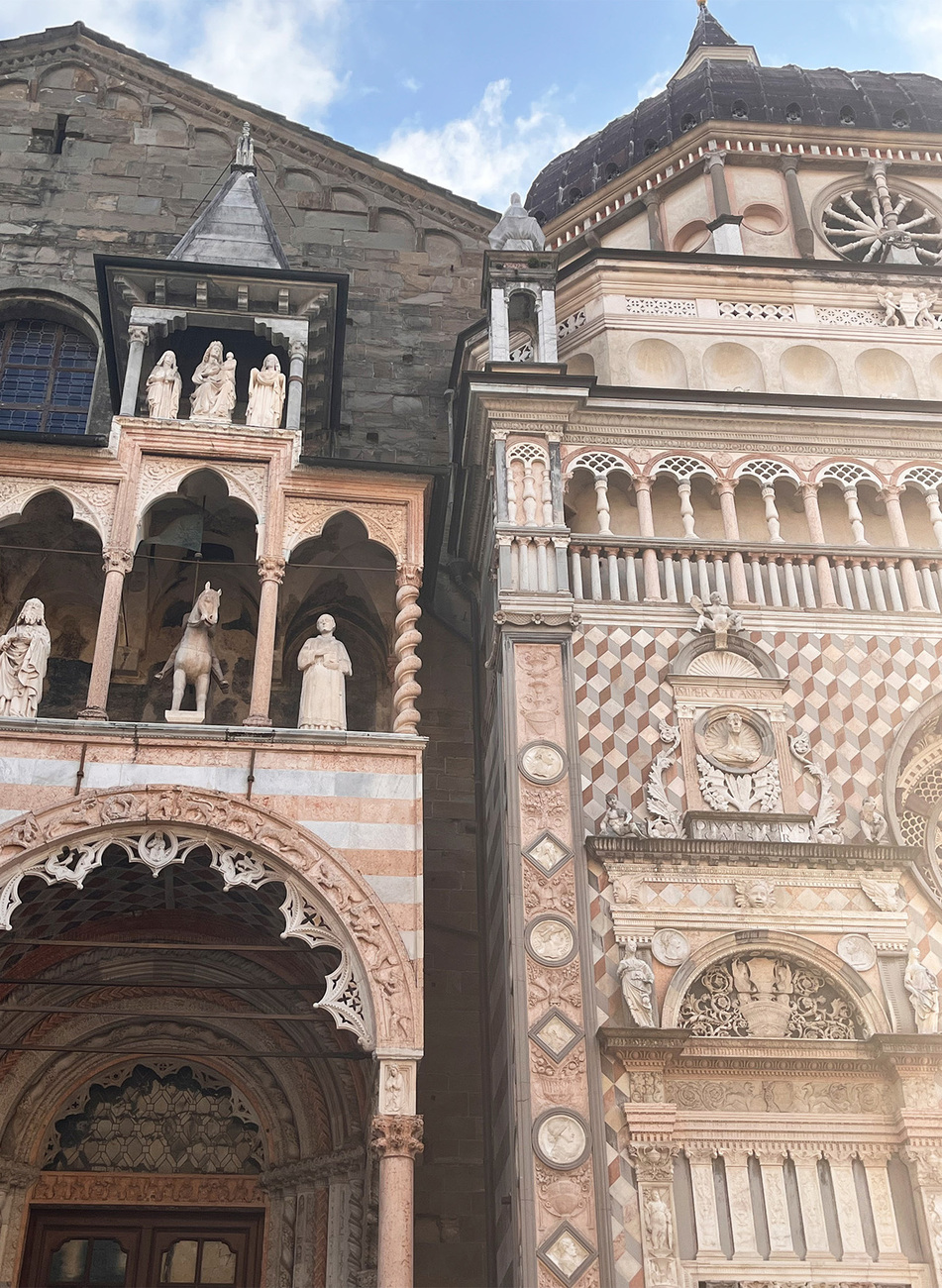
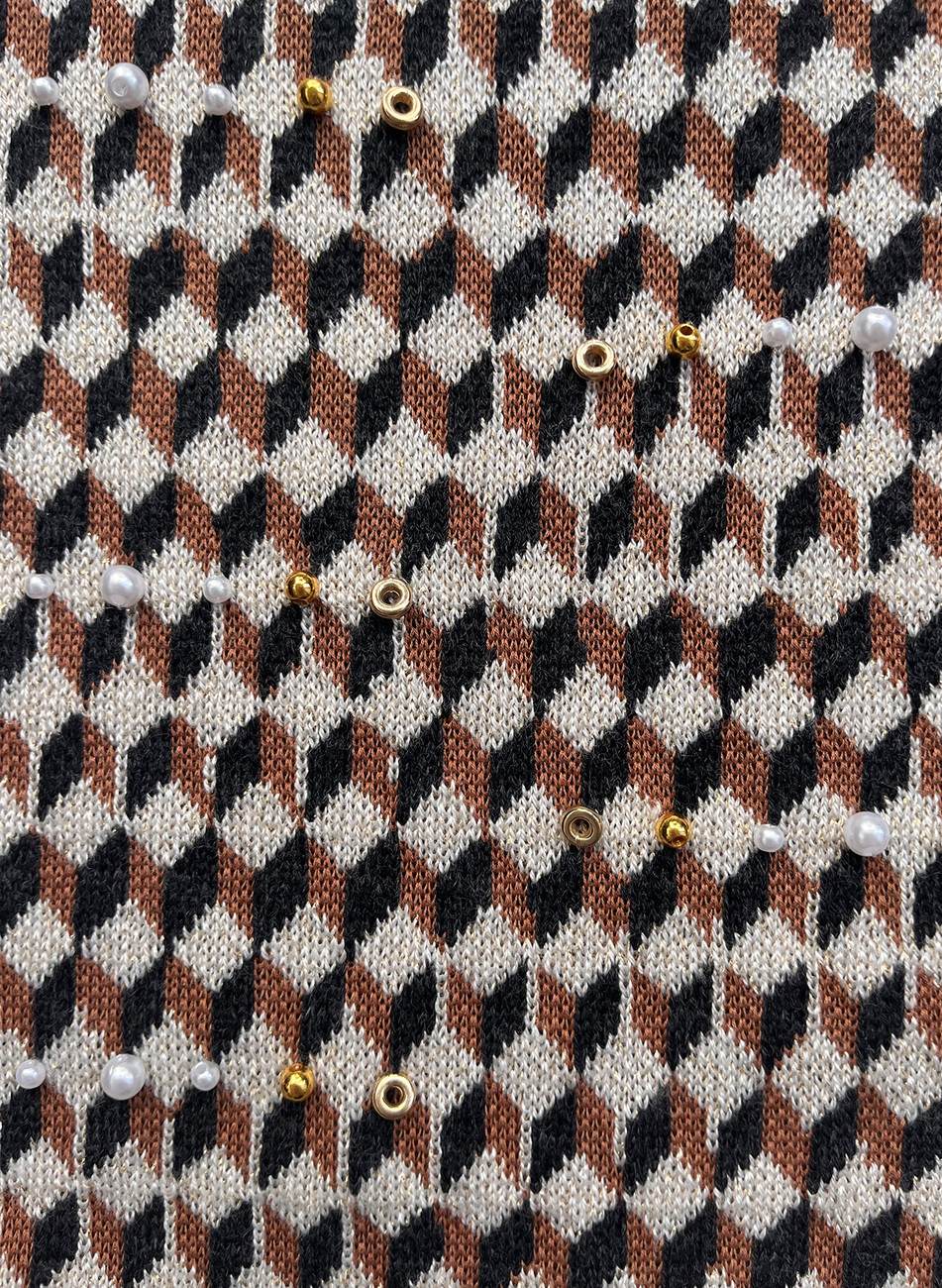
Izabelle Francis: I was in awe of the stone carving, colours and patterns found in Milan, Venice and Lake Como, I was constantly taking photos. The brief for this project was minimalism, so my colour palette was limited to the shades of one colour, leading to my main focus being the patterns and textures. This was the first project I was able to explore the Stoll Knit machine, so after many hand drawings, I made repeat patterns of cubes and lampposts to translate into knit. I wanted this collection to be full of texture, so I also focused a lot on crochet, using a mix of thick and thin yarns to add depth. To finish off this collection I embellished a few pieces with mini gold hoops, beads and pearl-look beads as a way to reflect a bit of light onto my fabrics.
What was important to you in selecting and reducing the textures and patterns of architecture?
Izabelle Francis: I would zoom in close to all of my photographs and would try to find parts of patterns that were more simple, so then I could turn them into more minimal repeat patterns or motifs. I look for interesting shapes that I hadn’t necessarily seen in a knit piece before. I then grab my sketchbook and start drawing all these patterns that I’ve found and pick ones that felt more cohesive and sat well against one another.
What invisible details and hidden beauties of the city of Paris did you discover in your project ‘Unseen Details’ and how did you incorporate them into your work?
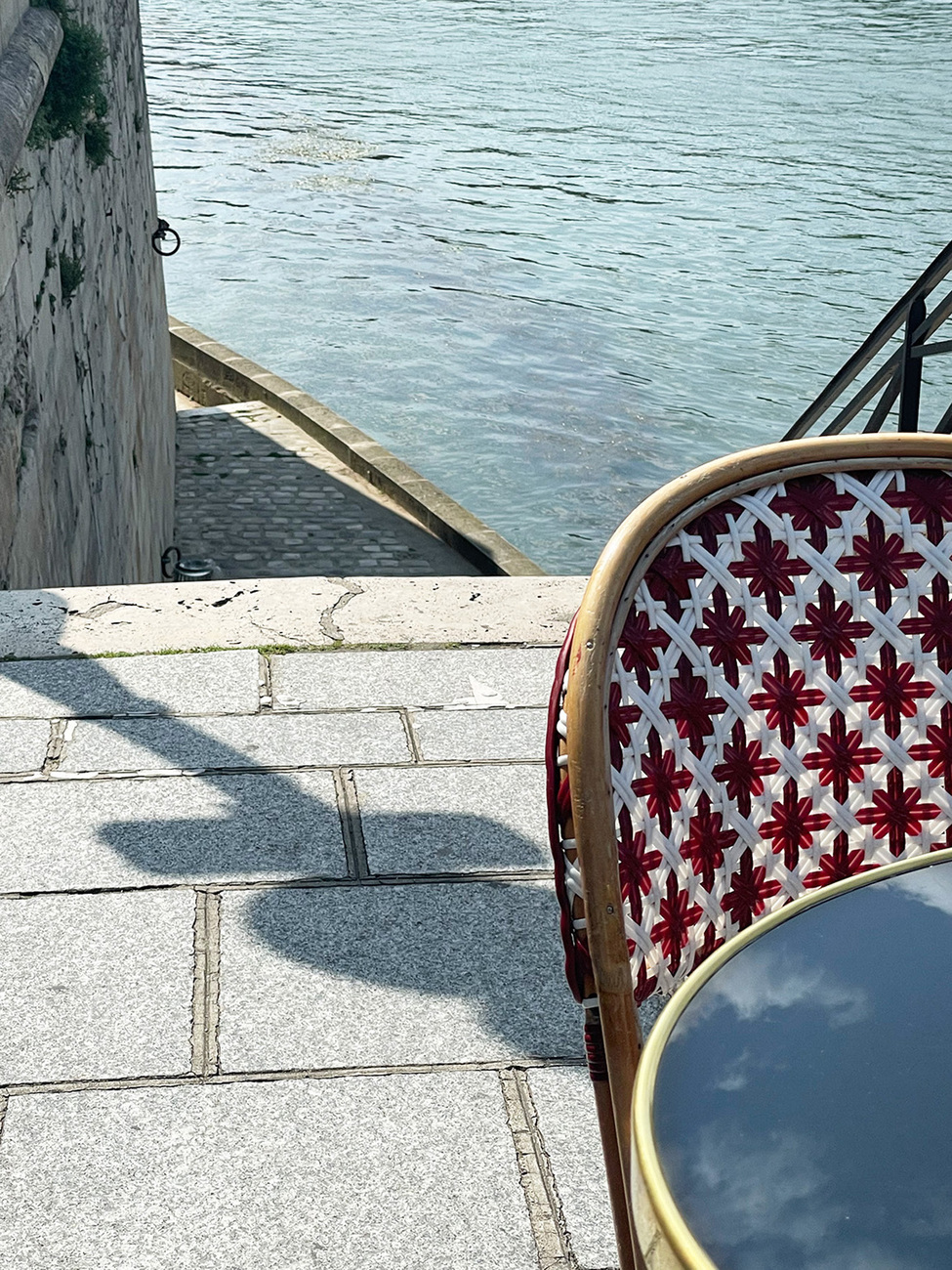
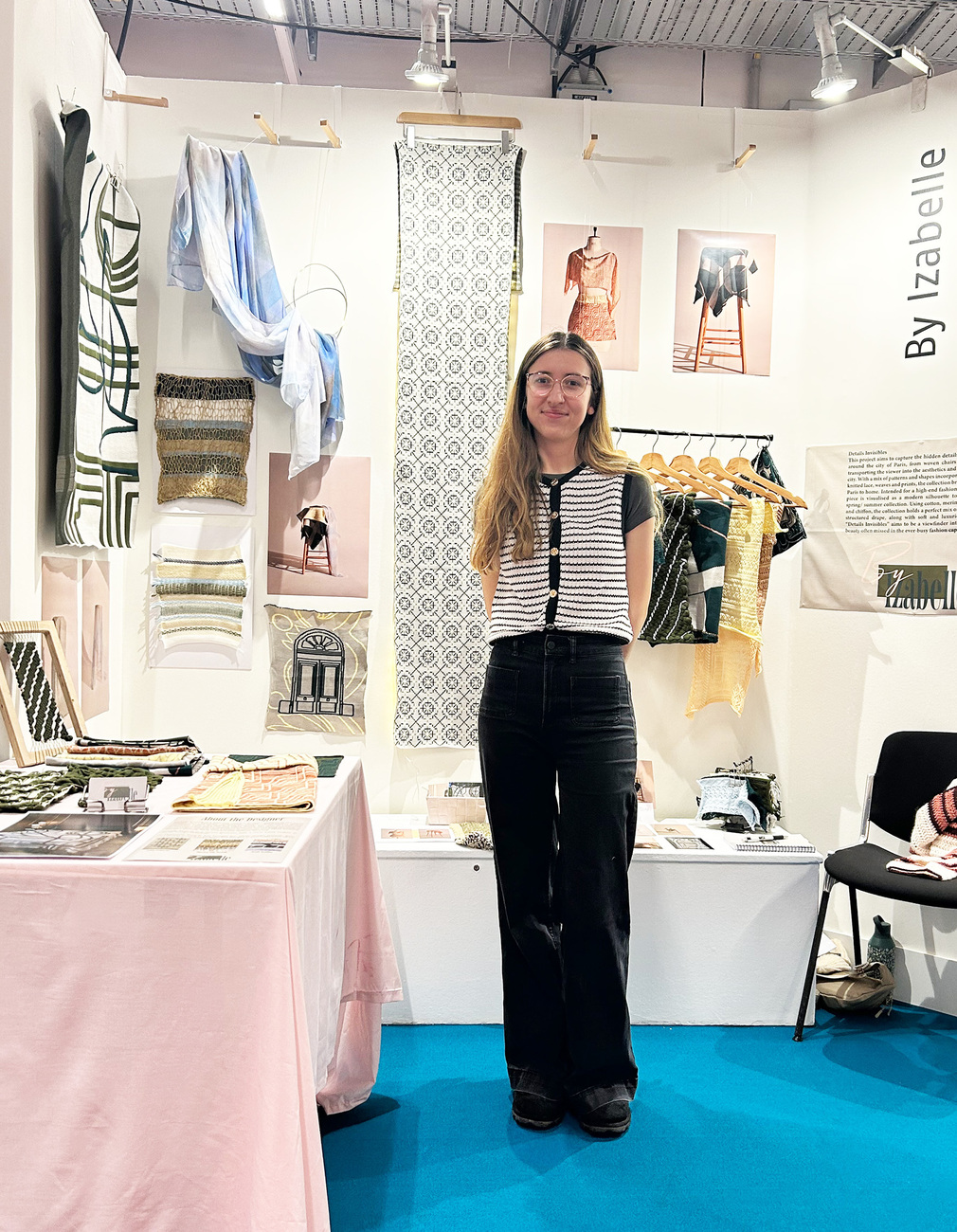
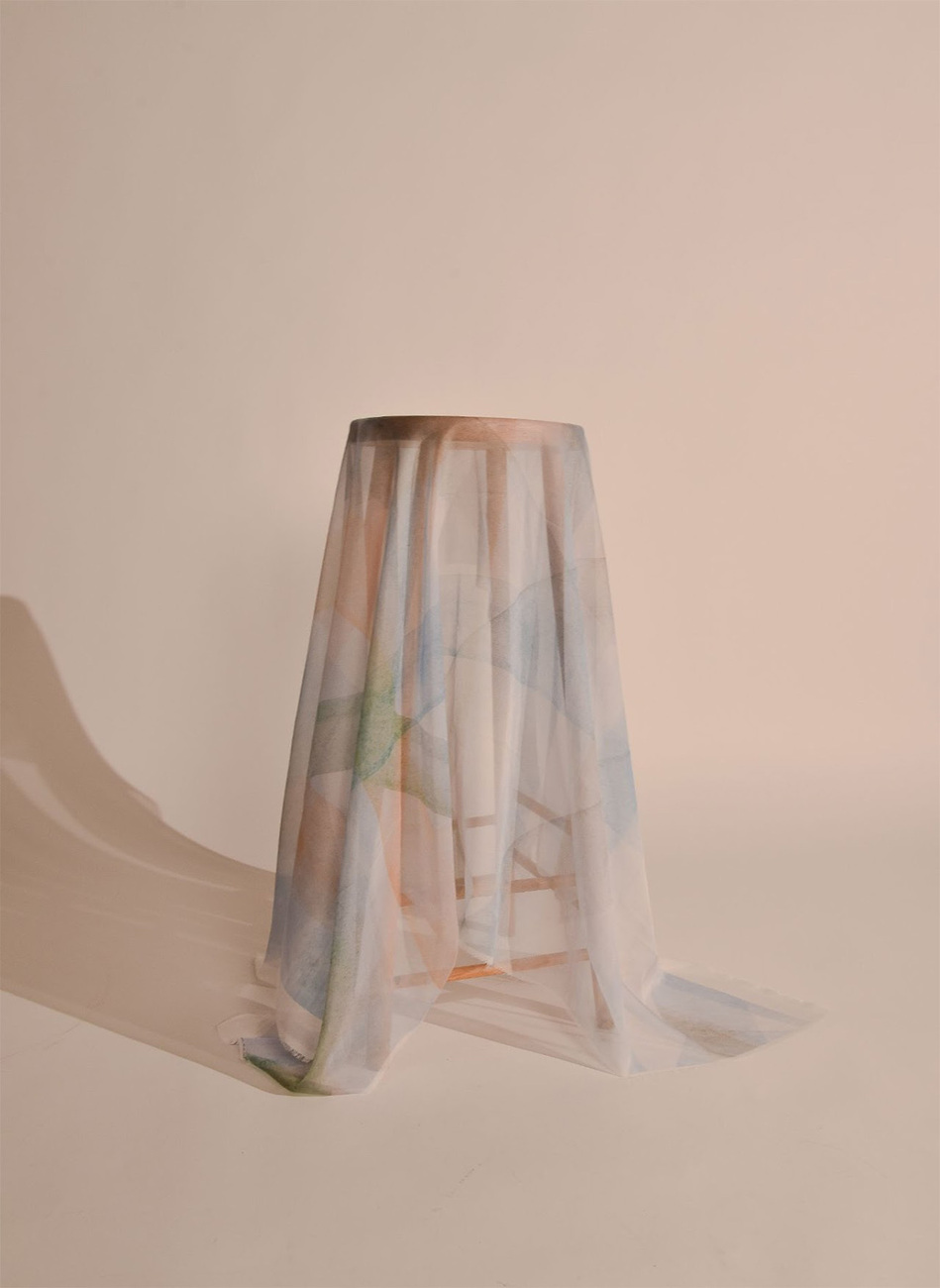
Izabelle Francis: I would find myself walking around Paris looking at absolutely everything from metal work on street signs and fences to the incredible stone work around doorways. I felt people would walk past these without seeing the hidden beauty right in front of them so I wanted to make these tiny works of art the main focus of my project. I sat for hours painting and drawing these hidden details and turned them digital in Illustrator so I could play around with collaging and turning these motifs into patterns. I also wanted to play with viewpoints, so I made a lace knit with a repeat pattern of a door with circular motifs found around it. I also loved looking at all the woven chairs around the city on cafe corners, so I did a lot of research into the makers and woven designs to draw and paint my own to translate into knitted and crochet pieces, exploring different techniques like top-stitching and entrelac knitting.
The patterns in the wickerwork of Parisian bistro chairs were also an inspiration for your project ‘Details Invisibles’. How did you develop the design further in textiles?
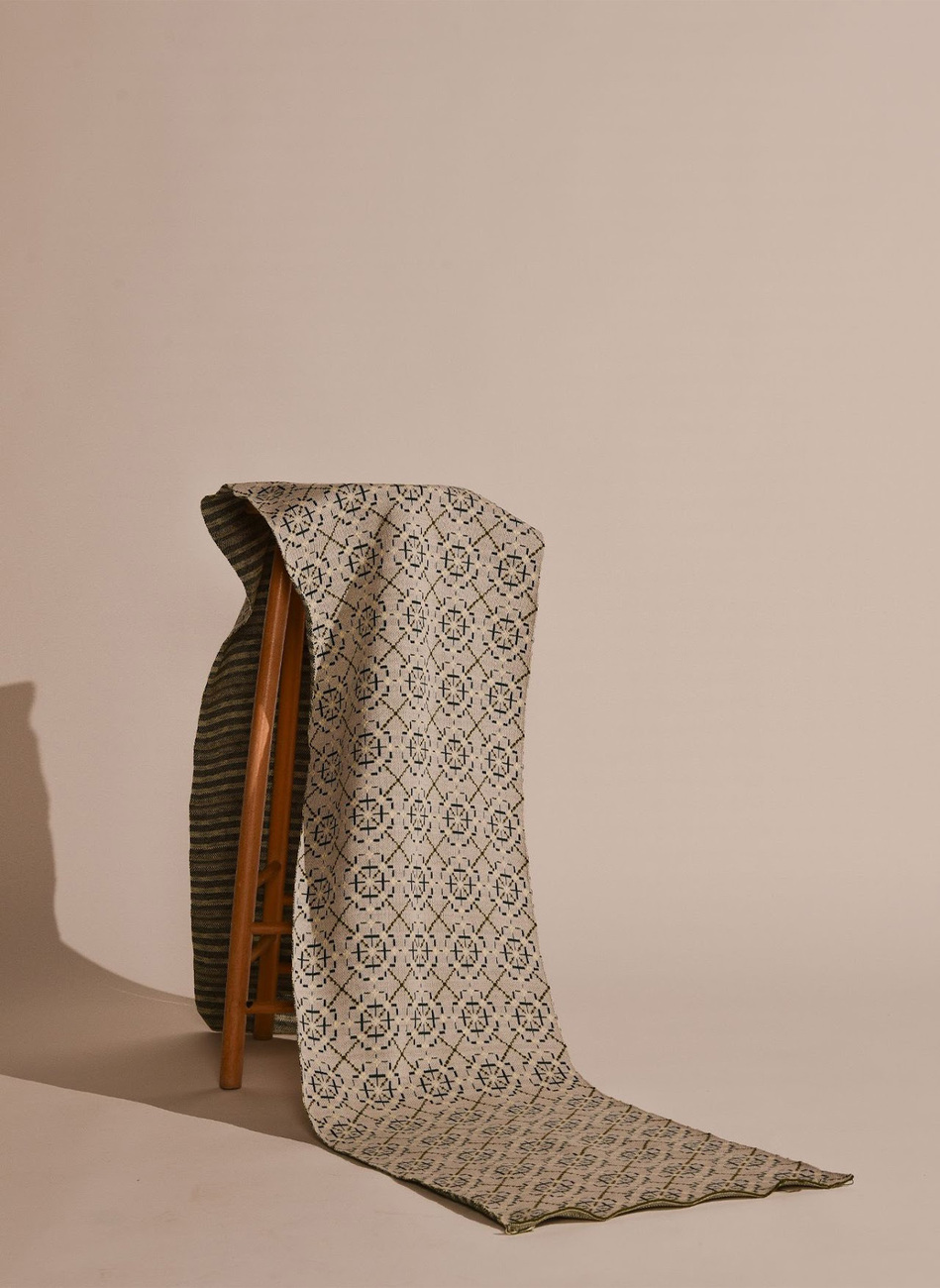
Izabelle Francis: As a knitter with not much experience in woven techniques, I needed to figure out a way of transferring this beautiful craft into knitted pieces. I did a lot of in-depth research into woven structures, the original makers of the Parisian bistro chairs and different materials used. At the beginning of my final year at University I completed a project named “Upscale” where we had to take a piece we had made in previous years and upscale it to be larger than 1 metre x 1 metre. I chose a woven sample inspired by Cornish coastlines and sat and knitted each individual strip to knit with, each being about 20 centimetre x 2 metres in size, which was time consuming, but gave me my desired upscale effect. I loved the look of these knitted strips being woven, so I took this and downscaled it to fit on a small loom I had bought for developments. I sat using the tubing machines at Uni creating lengths and lengths of knitted tubes at different thickness, which I then turned into Tens of woven pieces, looking at different patterns, structures and colours. Although I loved these pieces, as a knitted textiles designer I wanted to play around more with transferring these patterns into knit, so I sat drawing, both with pen and paper, illustrator and eventually Excel to recreate this woven structures. I found Excel gave me the best woven-look with each individual cel. I refined each of these drawings and put them on the Stoll machine to create my knitted samples. Finally to finish these off, I learnt a crochet stitch called “box weave: which I used to add trims to a couple of my samples.
You combine digital technology with working on the knitting machine – how can I imagine the process when you create?
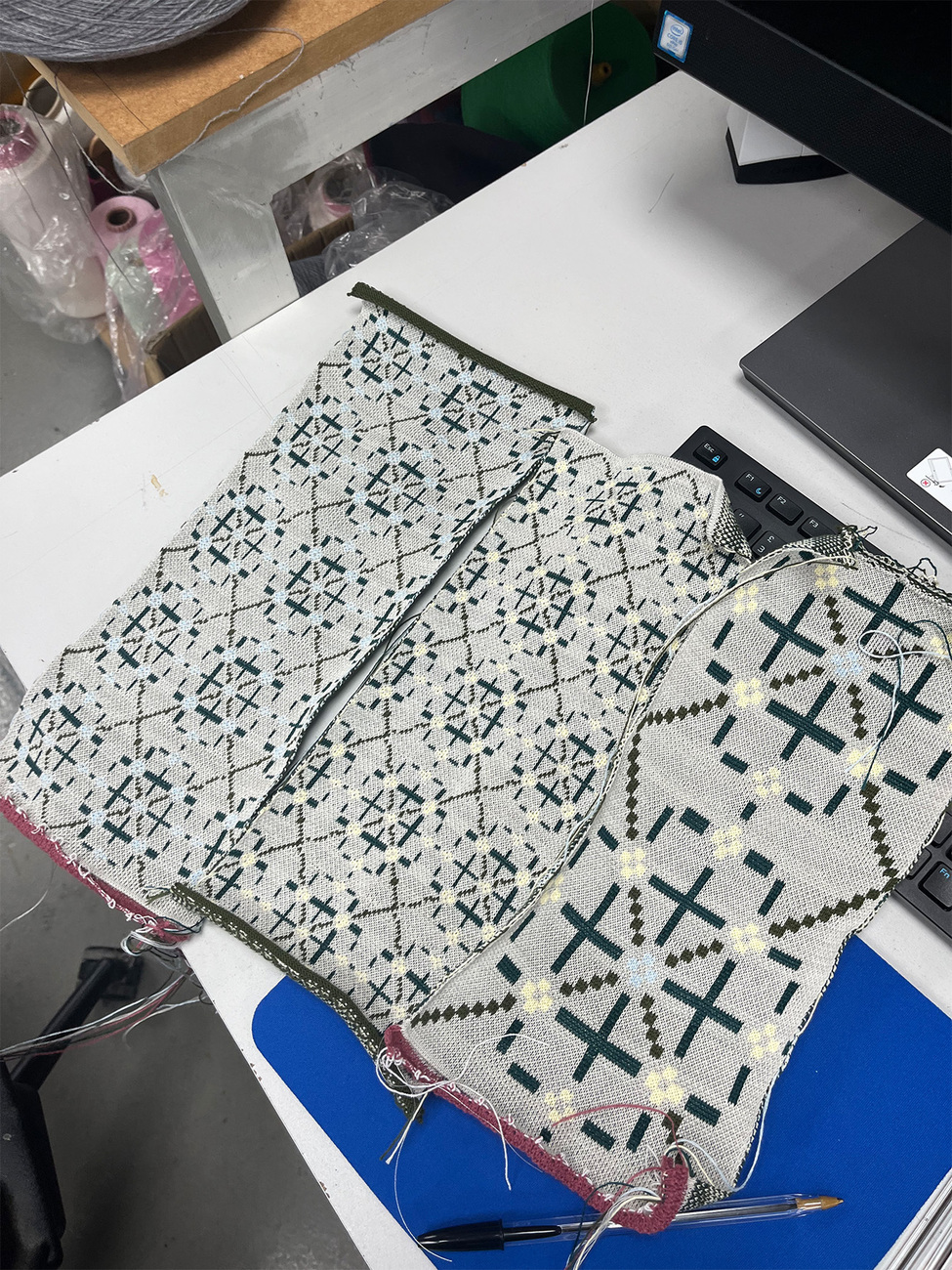
Izabelle Francis: As mentioned previously my designs always start hand drawn, painted or collages looking closely at all my photographs of my chosen inspirations. I then scan these in and put them into Illustrator to turn them into digital drawings. Here I play around with colour schemes and sizes, so I can produce a lot of developments in a shorter time than I could by hand. When I feel ready I then go to my yarn cone stash, whether this be at home or when I was at University, to see which colours best matched my designs. With the Stoll machine you have to be careful with yarns you use, to make sure there’s no breakages (I had many experiences where a sample would come out with hundreds of tiny holes the machine wouldn’t have picked up on) and actually fit in the needle gauge. With my wonderful Uni technician, we sat and explored samples for many hours, many days, trying out different colour variations and stitch patterns to create unique lace pieces (these samples were some of my favourites). At this point my samples would be roughly 20x20cm so they didn’t all come out with perfect images, but they allowed me to find my favourites without needing to waste a lot of yarn. With my favourite samples, I would scan them into my computer and scale them up to different sizes and print them out to figure out how big I wanted my final pieces to be. I would tape them together and stick them on the walls at University and stand back to figure what scale worked best, along with placing other samples around it to figure out the look of my whole collection. With some of these samples, I made punch cards and lace patterns to take to my domestic knitted machine, to figure out how else I could translate these drawings and motifs into knit.
How do you decide which technique to use for your designs?
Izabelle Francis: I was lucky in my time at University to be able to try so many techniques, from embroidery to screen printing and have always loved trying to figure out how to lead everything back to knit. I didn’t necessarily think about what techniques I wanted to use for my designs, I just fell into what felt right and what techniques I truly loved, which has always been knit and crochet, so I really spent my final year trying to develop my craft in every technique I could of knitting in this time, and found a way to blend these into one collection.
Izabelle Francis: Although I don’t shout about sustainability in my work, it is definitely apart of my process. For all of my samples, I never bought new yarn I used what my University already had collected over the years and also looking at my own yarn stash. Although this meant my samples didn’t truly reflect my colour scheme, it meant I wasn’t wasting any new yarns. I knew for my final collection I wanted to use fully natural yarns, so for these I sourced 100 percent cotton and 100 percent merino over using any synthetic yarns.
What do you want to change with your creative work?
Izabelle Francis: I want to help people see the beauty in the world around them, to look up more and really take in what is happening, rather than being glued to a screen all day.
You exhibited your work in the ‘New Talent’ section of Heimtextil this year. Did you take an idea or inspiration from this time that you would like to pursue further?
Izabelle Francis: I was so inspired by all the designers and brands also displaying at Heimtextil, it was such an incredible experience. My main inspiration from this time came from the architecture around Frankfurt, as usual I took so many photographs and I cannot wait to start translating these into knitted pieces.
In which area of the industry would you like to work later on?
Izabelle Francis: I have two areas that I want to explore in this industry, one being knitwear of course and my long term goal is to be a knit designer, whether for fashion or interiors, but during my recent project of “details invisibles” I have fallen in love with print design and I currently have such a drive to take this further and see how I can expand within this world of textile design.