Featured
Changing spaces
Anna Moldenhauer: Actiu's product range extends from soft seating and acoustic booths to height-adjustable work desks. Which products have been added this year and with what purpose?
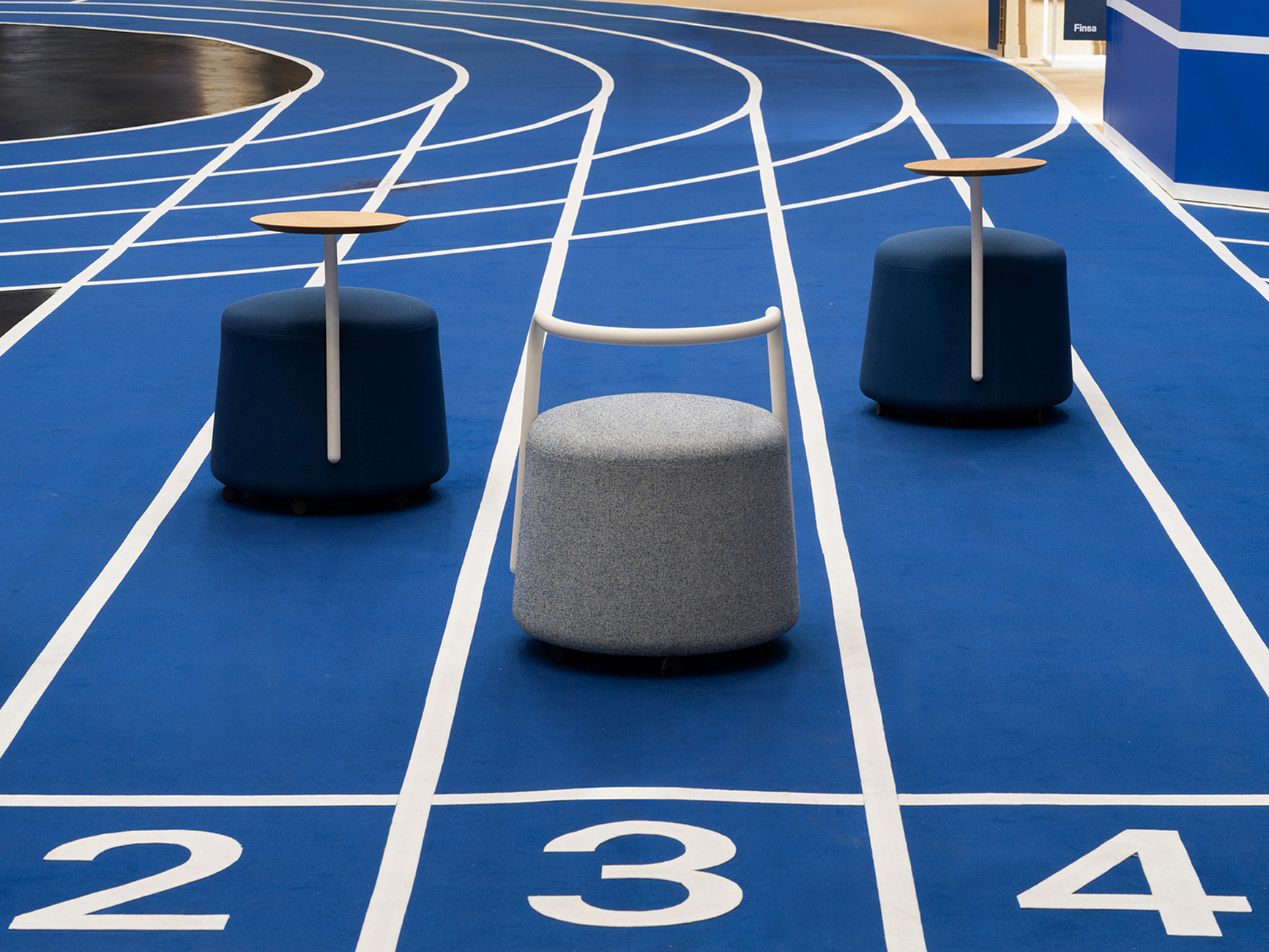
Vince Berbegal: Actiu has launched new products that reinforce the focus on flexibility, sustainability and well-being in work, education, healthcare and contract environments. Both were designed in collaboration with Jose Manuel Ferrero from Estudi{H}ac: ‘CUFF’, a modular upholstered seating system that offers great versatility in the design of configurations both in passageways such as airports or lobbies and in waiting or informal collaboration areas. Its main purpose is to improve the waiting experience and informal collaboration. The modular side table system ‘FOLIA’, on the other hand, is a collection that, thanks to its design, can be easily integrated into various seating ranges and meets the need for lightweight and adaptable storage surfaces in ‘third spaces’. It responds to the demand for flexibility and functional support in multifunctional spaces.
Actiu began as a specialist in computer furniture. What insights from this field of expertise have you been able to transfer to subsequent product development?
Vince Berbegal: Actiu’s origins truly began with a simple TV table on casters, and that concept of mobility has always been at the heart of how we understand design – not just as a functional element, but as a mindset: to move, to adapt, and to evolve. Today, that same spirit translates into flexibility, sustainability, and well-being. We focus on creating smart, adaptable, and people-centered spaces that support the continuous transformation of organizations. Our designs are highly versatile – each product is conceived to adapt to a variety of situations and environments, always evolving in response to the needs of society. Sixty years ago, the defining technology was the television, and we created a table for it. Later, it was the computer, and we developed furniture to support the home office. At every step, our evolution has been guided by the same principle: understanding people's needs and helping them thrive.
Actiu specializes in furniture for workspaces, educational and healthcare facilities, and the general contract sector. With its products, it aims to design spaces as “third spaces” where people can recharge their batteries and flourish. What is essential in furniture design to meet this requirement?
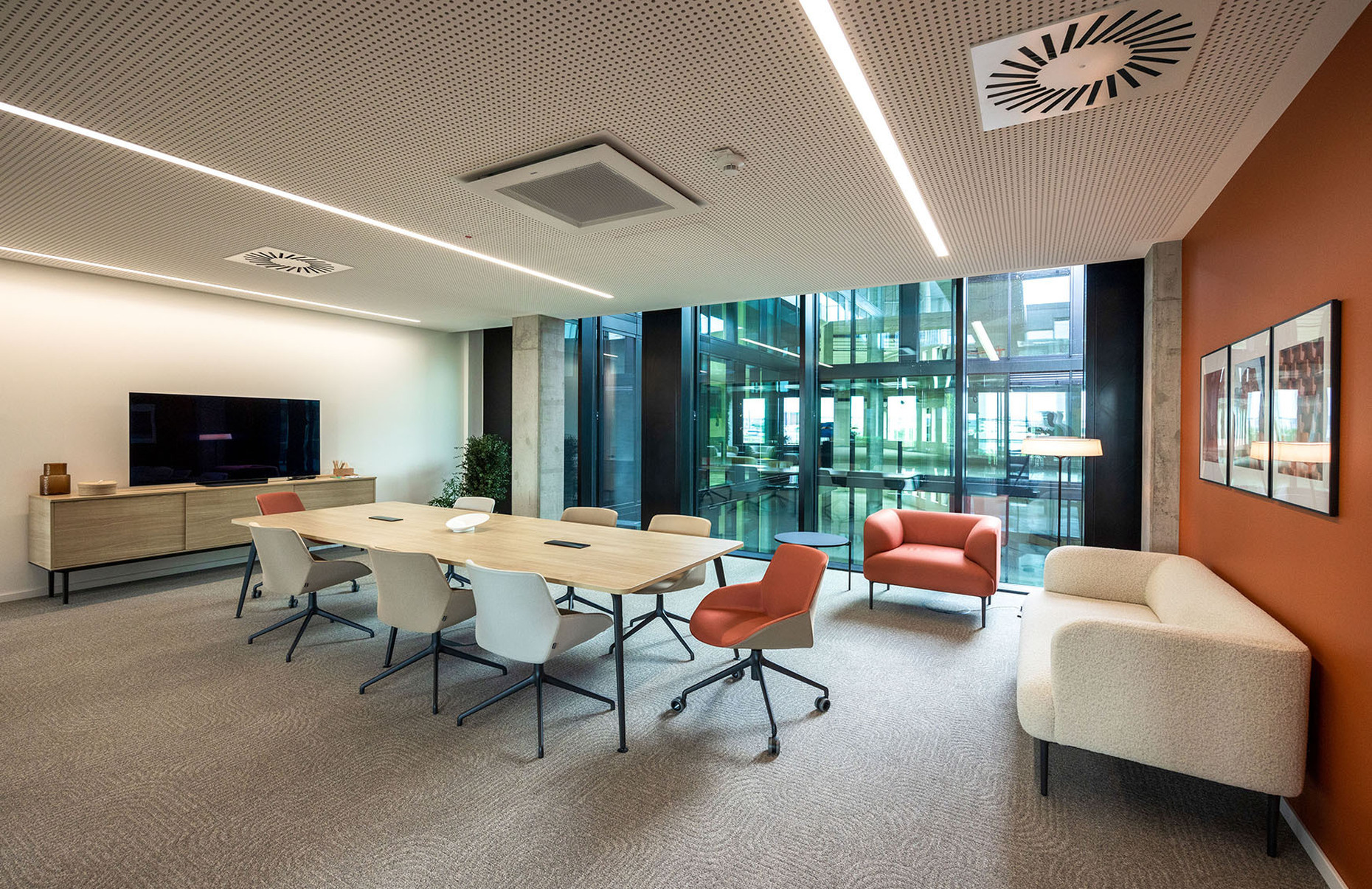
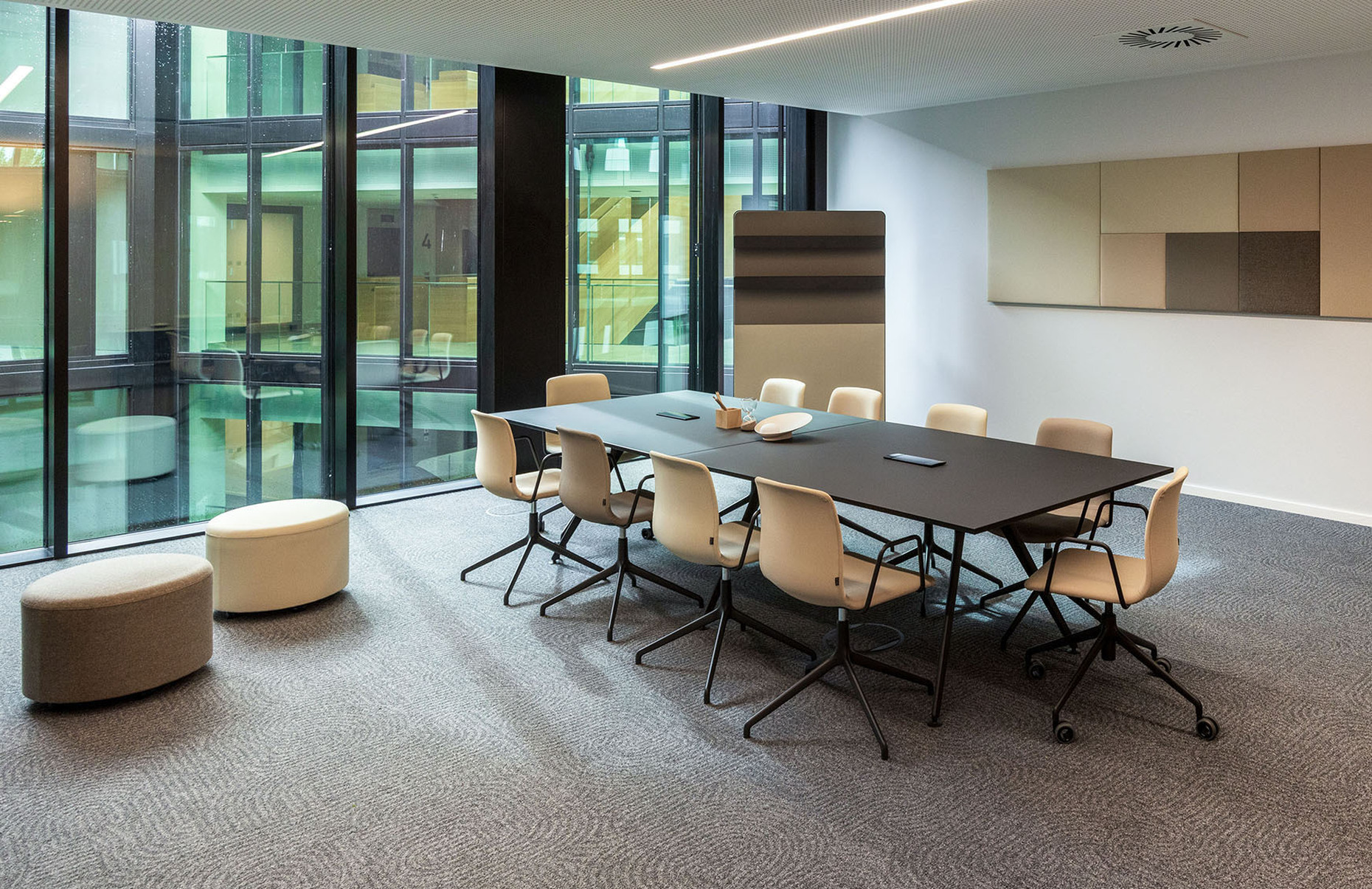
Vince Berbegal: Exactly, Actiu defines these spaces as places where people can recharge their batteries and flourish. In order to meet this fundamental requirement for regeneration and well-being, Actiu's furniture design must focus on the physical, mental and emotional well-being of the user, giving priority to the following essential elements: comfort and physical well-being, flexibility and modularity, connection to nature, acoustic control and privacy.
A large part of your commitment is to automation, digitalization, the circular economy, and the certification of products and processes with regard to sustainability. Where does Actiu currently stand in this regard?
Vince Berbegal: Actiu's business model is based on the vision of creating ‘Life-Friendly Spaces’, seeking to design environments that care for the physical, mental and emotional well-being of people at work, in education and in healthcare, following the visionary spirit of its founder. The company has moved from its origins in computer furniture to a holistic approach, where ergonomics, modularity and flexibility are essential for designing ‘third spaces’ (places of regeneration and connection). The latest products, such as "CUFF" and "FOLIA", reinforce this strategy by offering high-quality, comfortable and adaptable solutions for new working models. This commitment to the user is complemented by the application of Neuroarchitecture, in collaboration with the Polytechnic University of Valencia, to ensure that furniture design (acoustic control, materials, comfort) has a positive impact on cognition and mood.
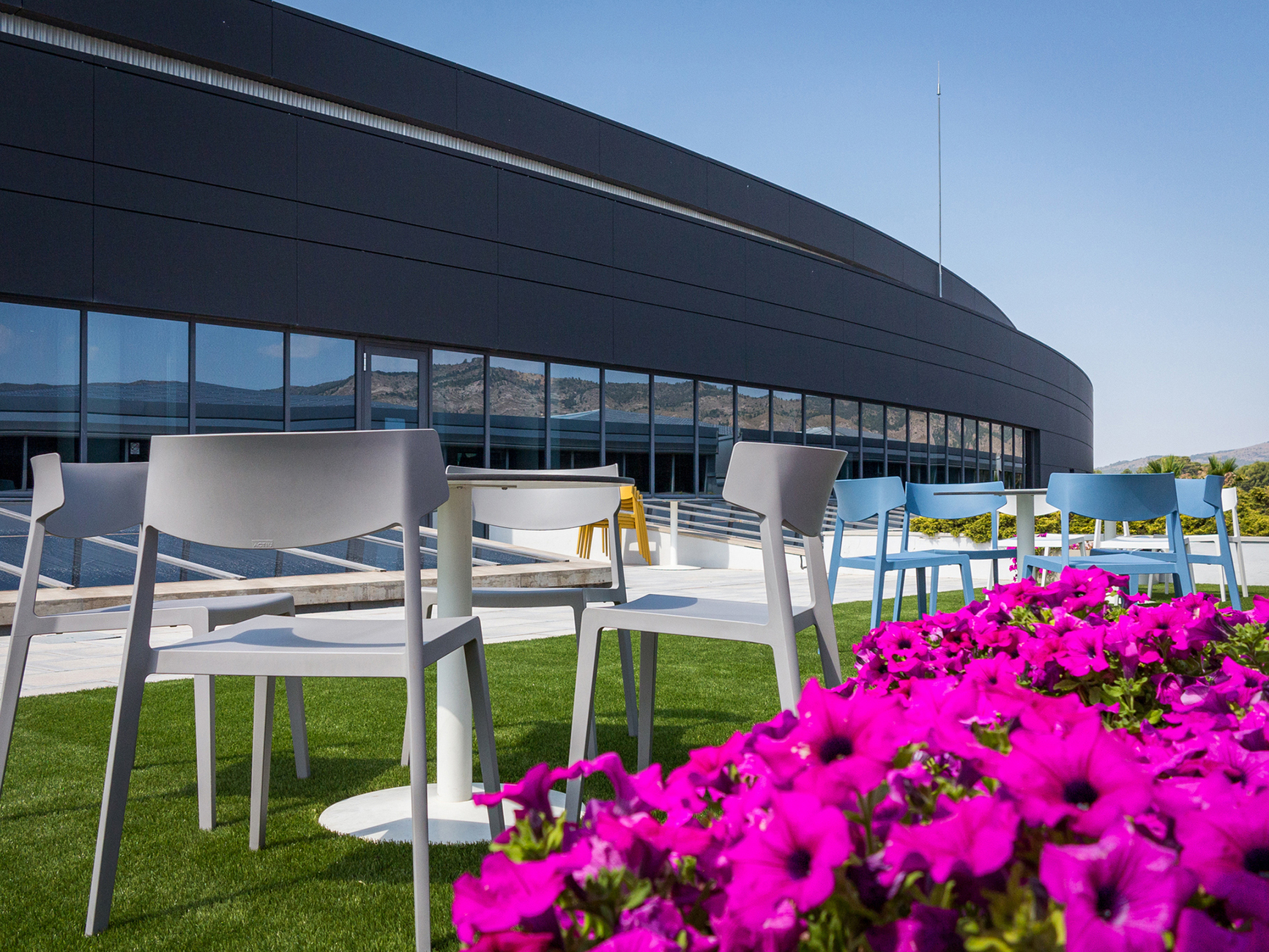
Actiu has established itself as a world leader in sustainability and efficiency. Its Technology Park in Castalla is a model of manufacturing with LEED Platinum and WELL Platinum certification, guaranteeing maximum well-being for its employees and energy efficiency. This commitment extends to its products, which are LEVEL® 2 certified and designed according to the principles of Circular Economy and dismantlability for recycling. The automation and digitalisation of its production processes reinforce this efficiency. Despite this technological advancement, international showrooms, such as the one in Frankfurt, remain vital for customers and professionals to experience the quality, ergonomics and philosophy of the brand first-hand. The company has recently achieved the B Corp seal, consolidating its triple impact – social, environmental and economic – business approach.
At the same time, Actiu is involved in the design of inclusive spaces, such as in collaboration with the Neuroarchitecture Laboratory at the Polytechnic University of Valencia. How do you implement these findings in your product range?
Vince Berbegal: Our collaboration with the UPV's Neuroarchitecture Laboratory allows us to implement inclusive design and cognitive wellbeing in our products through a scientific understanding of how the environment affects the brain. The most notable application focuses on controlling the sensory environment, with our acoustic booths "QYOS" being a direct example, as they are designed with high-performance materials for sound insulation and absorption, creating essential refuges for concentration and cognitive stress reduction in open environments, which is crucial for inclusivity. In addition, the findings are applied in dynamic ergonomics (height-adjustable desks), the use of organic shapes and colours inspired by biophilia, and the choice of materials that minimise negative sensory impact, ensuring that Actiu's furniture acts as an active tool to optimise user health and productivity.
How do you use current technologies to create “life-friendly spaces”?
Vince Berbegal: Integrating the physical and digital worlds, resulting in more efficient, flexible and user-centred environments. This includes incorporating sensors to optimise environmental management and space utilisation, discreetly integrating connectivity and phygital charging directly into furniture, and using advanced, recycled and high-performance materials that ensure durability and minimise environmental impact. In essence, technology acts as a silent enabler that optimises the comfort, functionality and sustainability of the space.
Actiu manufactures primarily in its own Technology Park in Castalla, designed by architect Tomás Llavador, as well as with partner companies in the region. Why did you decide to do this?
Vince Berbegal: To maintain total control over quality, the value chain and environmental impact (the ‘zero kilometre’ of furniture). This concentration of production allows for the implementation of a highly efficient, automated manufacturing model certified with LEED Platinum and WELL Platinum, ensuring maximum sustainability, energy efficiency and, crucially, the well-being of its employees. In this way, the Technology Park acts as the first and largest practical demonstration of the ‘Life-Friendly Spaces’ philosophy.
In recent months, you have opened showrooms in Germany, such as in Offenbach near Frankfurt. Why are these important for Actiu at a time of digitalization?
Vince Berbegal: The opening of showrooms is crucial because furniture, especially ergonomically designed furniture focused on well-being, requires an immersive physical experience. These spaces function as demonstration centres that allow architects, designers and customers to experience and feel the quality, ergonomics and acoustics of the product. They also serve as strategic platforms and meeting points that communicate the philosophy of ‘Life-Friendly Spaces,’ facilitating training, collaboration, and direct dialogue with the European market.
Your father, the founder of Actiu, has always been a visionary who looked ahead with his ideas. What advice from him have you carried over into your own way of working?
Vince Berbegal: One of the most important lessons I learned from my father is that differentiation must come from authenticity. He always believed that a company should never imitate others, but instead find its own perspective, its own voice, and build consistently around it. He taught me the importance of protecting our values while allowing them to evolve with society. Innovation, for him, was never about following trends, but about understanding real human needs, sometimes even before they are fully articulated, and responding to them with honesty and long-term commitment.
Another principle that has stayed with me is conviction. If you truly believe in an idea, you must commit to it fully: align your resources, your people and your decisions around that belief. When purpose and action are connected, the company not only grows, it thrives. This mindset continues to guide my way of working today: remaining faithful to who we are, listening carefully to what society genuinely needs, and having the courage to move forward with our own path. It is the same spirit that shapes Actiu’s vision of Life-Friendly Spaces, spaces designed not just to function, but to support people’s lives, wellbeing and future.
Actiu has dynamism already in its name. What are you currently working on?
Vince Berbegal: We are focusing our efforts on expanding and consolidating its strategy of ‘Life-Friendly Spaces’ and Circular Economy. This translates into the continuation of its applied research in Neuroarchitecture, in collaboration with the Universitat Politècnica de València UPV, for the design of more inclusive spaces that promote greater well-being, constant innovation in its product range with the use of recycled and sustainable materials, and the strengthening of its international presence through its showrooms as platforms for networking and brand experience.