From Form to Efficiency
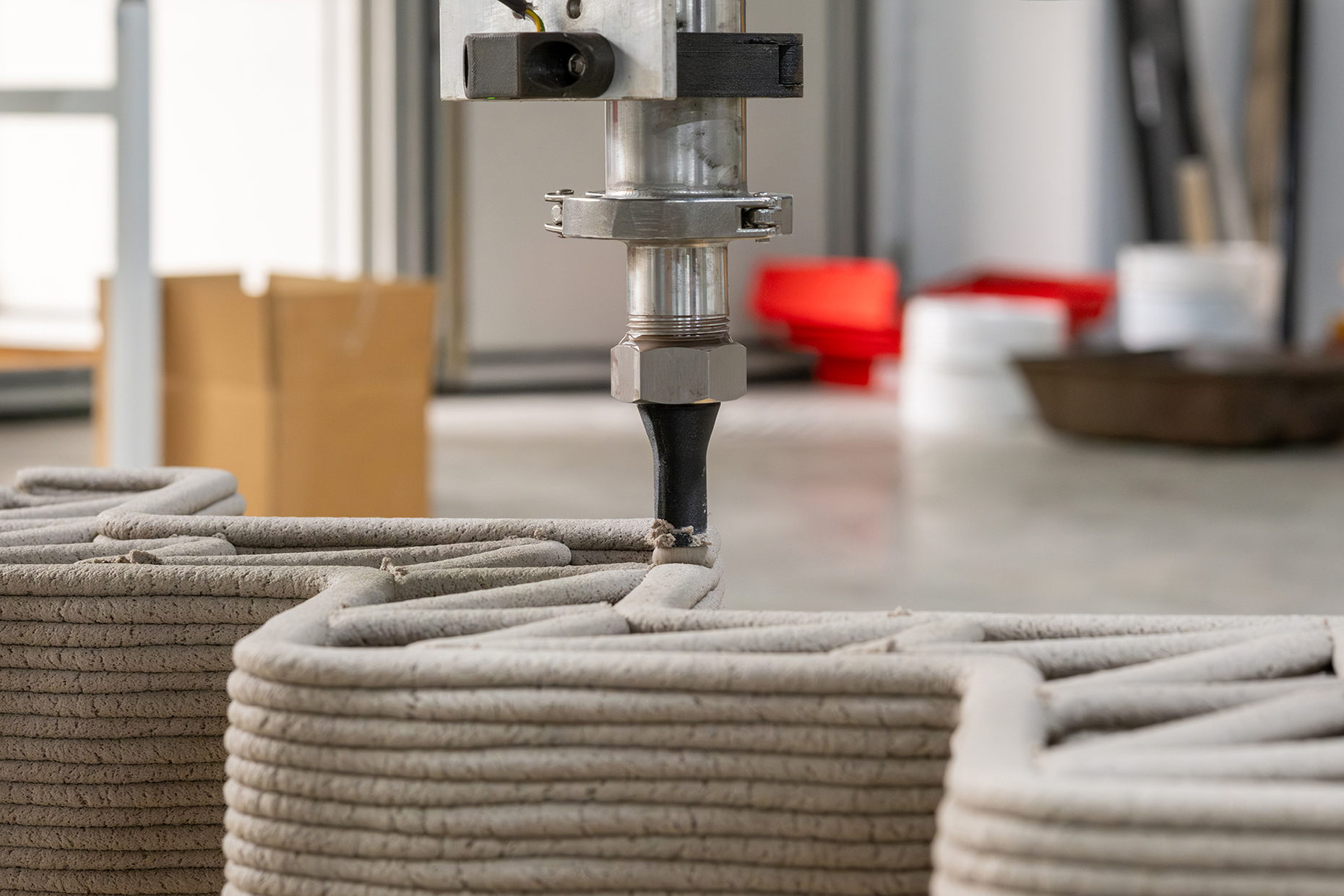
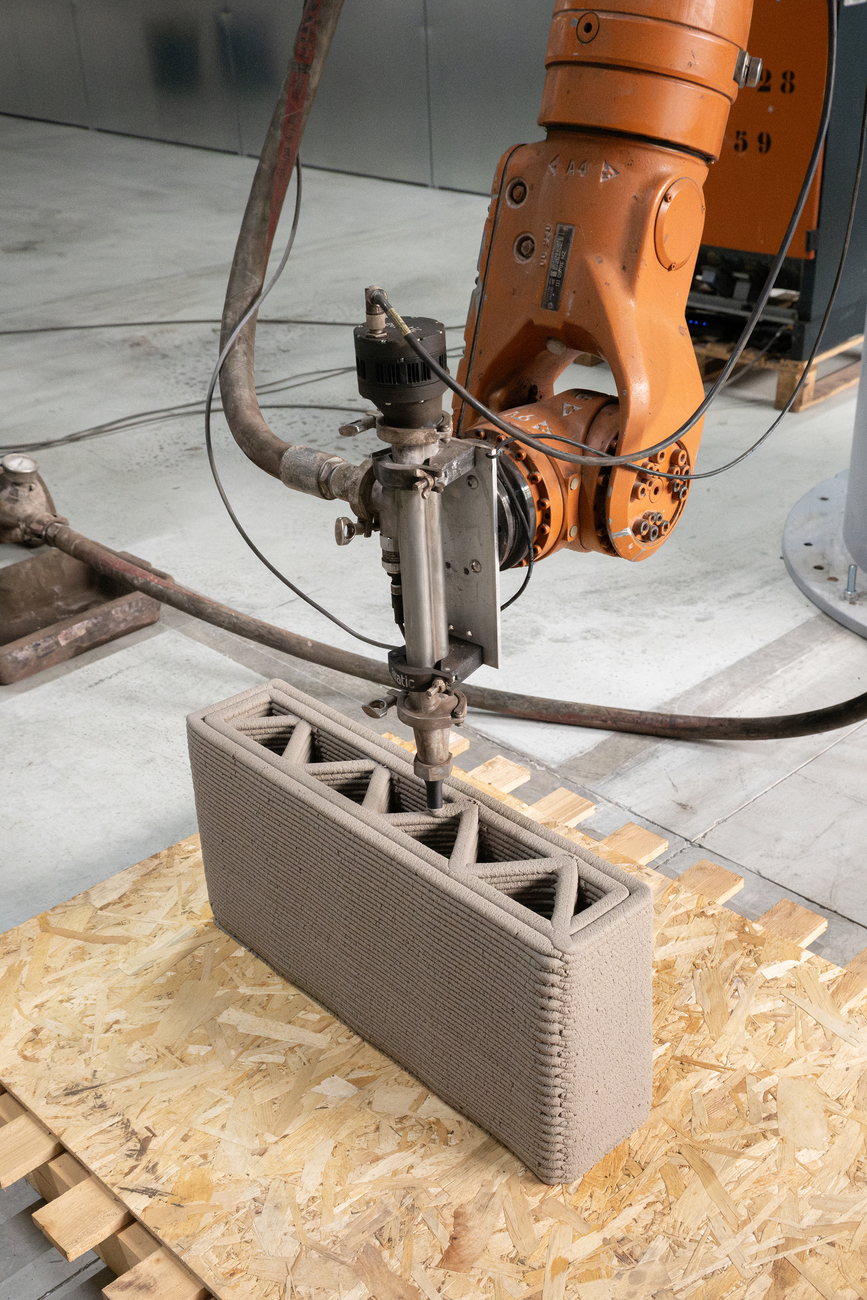
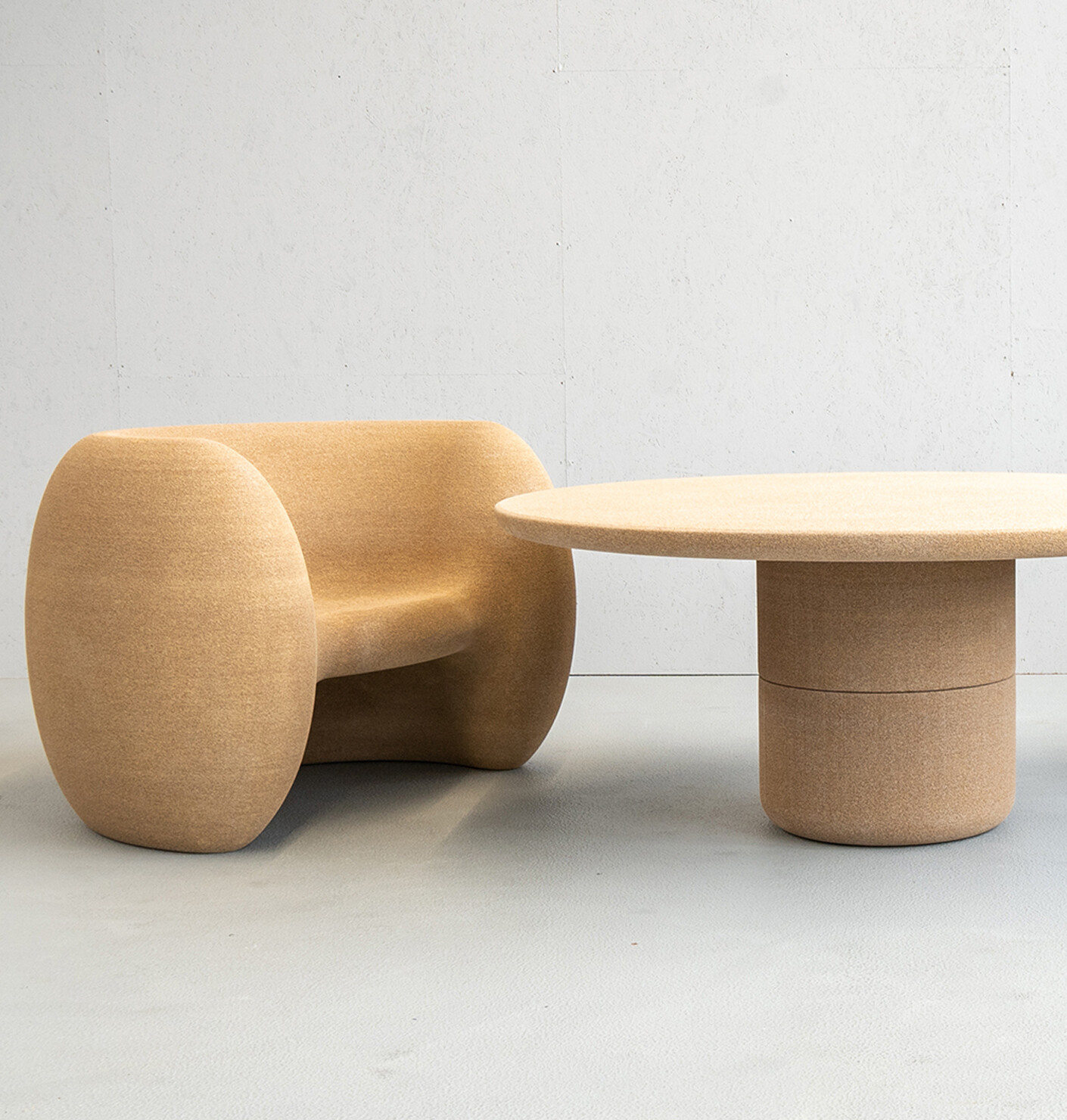
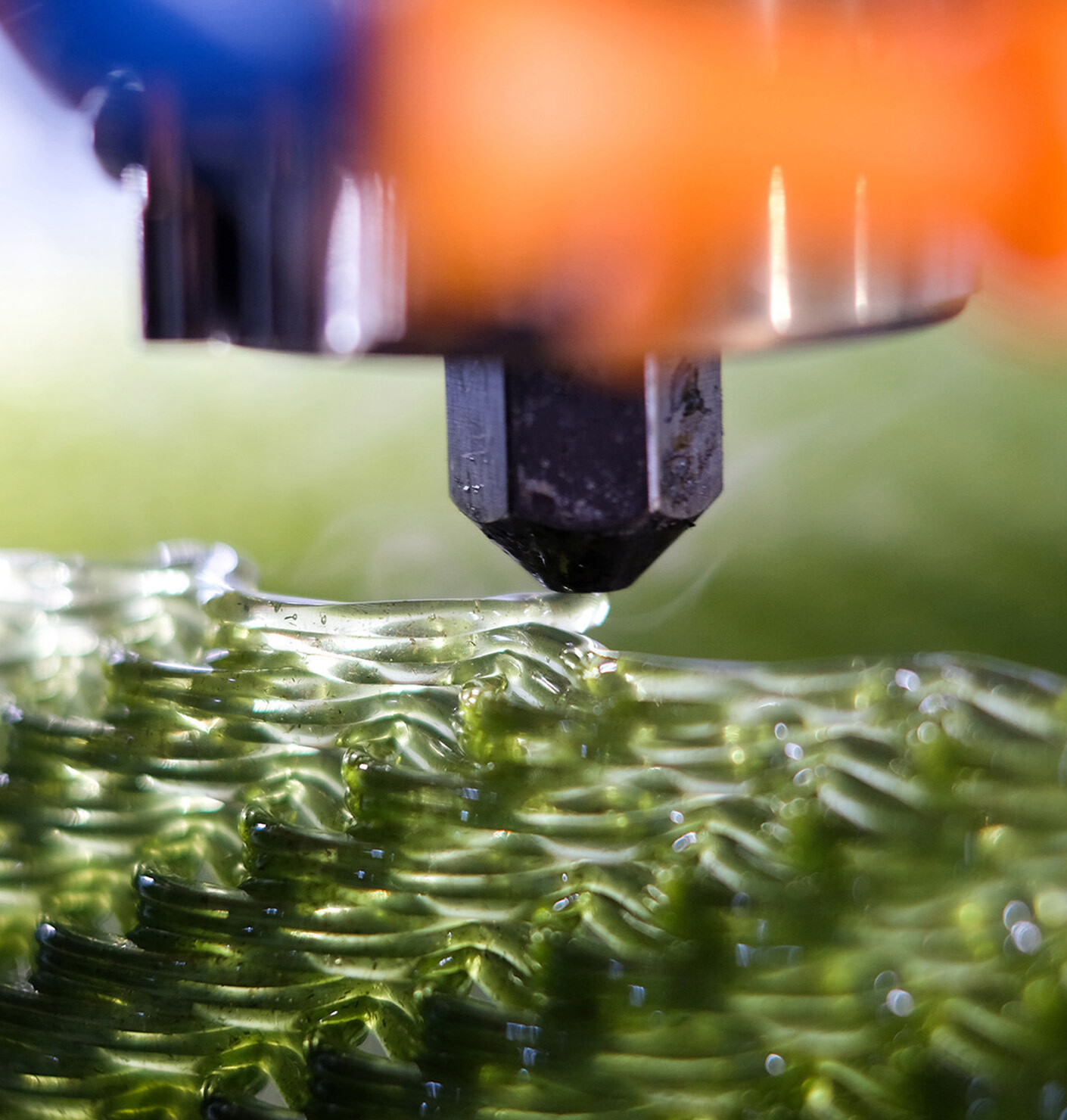
3D printing has been used in architecture and product design for some time. The first 3D-printed houses and bridges have already been built, with many featuring curved, organic designs. Meanwhile, product designers such as Simon Mattisson are using the technology to create designs that blur the boundaries between art, sculpture and furniture. As well as offering new approaches to producing more sustainable components, 3D printing provides designers with greater formal freedom. The 'Experimental and Digital Design and Construction' (EDEK) department at the University of Kassel, for example, is exploring this field. In collaboration with Buro Happold, the department is currently developing an additive process for producing reusable, load-bearing, lightweight components made from recycled wood particles. One of the goals is to find an alternative to concrete-based 3D printing processes.
The project stems from public funding provided by the Federal Institute for Research on Building, Urban Affairs, and Spatial Development (BBSR) under the “Zukunft Bau” funding program. Since new legislation has now restricted the use of waste wood for energy purposes, researchers are seeking a new use for the resulting wood scraps. The research project in Kassel therefore aims to use them as a raw material for a bio-based composite. “In the past, waste wood was primarily used for thermal energy. Since that is no longer possible, the question arises as to what will happen to the enormous quantities of this material,” explains Philipp Eversmann, a professor at EDEK. “That’s why we’re currently developing a new 3D printing process. The wood residue particles serve as the basis for high-quality components, such as reusable wall structures. For example, we want to develop a modular, non-load-bearing interior wall system that can be easily assembled and disassembled.” Eversmann also sees potential applications in product and store design: “For example, you could manufacture the entire interior design from a single piece. Fashion brands like Hermès are already using 3D printers to bring high-quality design concepts to life.”
The project in Kassel is called RAFA 2.0 and is part of several research initiatives. For example, EDEK is exploring alternative timber construction methods, such as digitally robot-assisted joints or additive manufacturing techniques using veneer strips. The goal is to develop material-efficient and adaptable structures. One example is the WoodWind+ project. Here, continuous strips of thin veneer are used as the basis for high-performance lightweight components. Previous projects had already explored material formulations based on wood particles. In an initial step, the Rethinking Wood project used a pressing process to produce acoustically effective panels from wood particles of varying grain sizes. In a second step, the RAFA 1 project developed a paste-like material for 3D printing. However, according to Eversmann, approximately 120 material formulations had to be tested to find a stable basis for the components: “We experimented with different particle sizes, binder contents, moisture levels, and mixing ratios. Our goal was to create a printable material that is liquid enough for extrusion but remains stable immediately after application.”
For RAFA 2.0, EDEK is now working with Buro Happold to further develop the material formulations and the associated robot-assisted manufacturing technologies. As part of this effort, various laboratory tests are being conducted, for example, to examine the properties of the printing material. These tests evaluate factors such as load-bearing capacity, material efficiency, and fire resistance. Buro Happold is responsible, among other things, for structural engineering, as Shibo Ren, Associate Director and Europe Computational Design Lead at Happold, explains: “Using computer-aided design, we have created digital simulations, geometric optimizations, and methods for predicting the structural behavior of the respective components. Our goal is to optimally coordinate material distribution, component geometry, and manufacturing processes.”
In this process, the components are additively manufactured using 3D printing, which allows for a higher degree of flexibility in production, as Ren explains: “3D printing opens up many new possibilities for application in architecture because it is based on geometric efficiency. In structural engineering, this is essentially a reversed design process. Normally, architects design a form, which we then translate into a structural framework. With 3D printing, it’s exactly the other way around: here, the geometric possibilities open up new ways for architects to explore form.” However, this applies not only to the stability of the components but also to their sustainability, as Eversmann adds: “3D printing allows for a more sustainable use of resources because you only use as much material as is actually needed based on the geometry. This results in high material efficiency.”
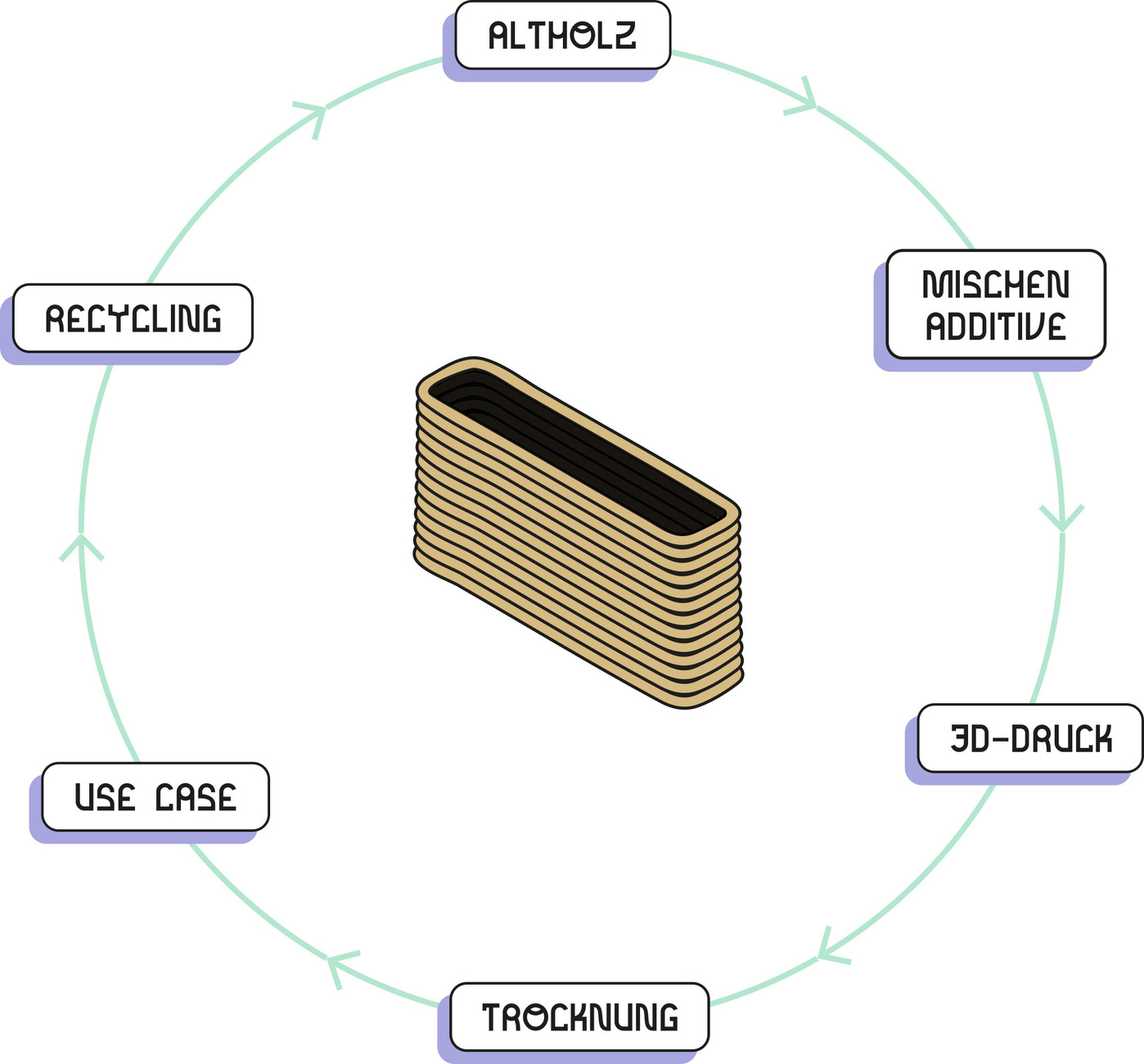
In addition, RAFA 2.0 does not use chemicals but rather biogenic binders to produce the material for 3D printing. Furthermore, the project is based on a circular approach, in which the components produced in this way are shredded at the end of their life cycle so they can be reused as material for 3D printing. For Eversmann, this is a technology of the future: “Unlike conventional timber construction, digitized pre-planning enables precise, automated assembly and disassembly processes. This makes it possible to realize complex structures.” Ren adds: “It changes the mindset in planning because the focus is no longer on standardization, but on optimization.”
As well as being material-efficient, the new components have good acoustic properties. At the same time, they are very lightweight due to their material composition. “That makes them interesting for prefabrication, because you can build very large wall panels that are still relatively easy to transport to the construction site given their weight,” explains Eversmann. As for fire safety, several tests were conducted at the University of Kassel, as Ren notes: “It’s not a material that burns easily. This is partly due to its composition. Additionally, the geometry can be used to increase its fire resistance.”
The next step is to complete the material tests and the development of the digital manufacturing process. According to Eversmann, an initial prototype for a specific application will then be developed. “So far, we have produced models with a height of about 40 to 50 cm. The next step is a leap in scale, in which we will compare the actual mechanical behavior of the component with our computer simulations. Our goal is to develop a functioning system that will become part of the construction process.”