Behind the Scenes
Anna Moldenhauer: You originally studied business administration and psychology. What drew you to the fashion industry?
Florian Müller: It was never my intention to work in fashion; rather, it was a gradual development that happened by chance. While studying abroad in Paris, I gained access to an environment that was heavily influenced by fashion. At first, I assumed that my academic background and qualifications were the key factors in being noticed in that context. However, at a renowned fashion house, I was made to understand very directly that my physical appearance had played the decisive role. This experience permanently changed my perspective, as it clearly revealed the discrepancy between self-image and the actual mechanisms of the system – particularly with regard to how little weight professional competence was – and still is – given in certain contexts. In parallel with my work in fashion, I have continuously deepened my exploration of mental health. More than 20 years ago, while in Paris, I first had the idea to write my thesis in psychology because I wanted to understand the motivation of those who worked – perfectly dressed in designer pieces – under financial circumstances that were sometimes very unstable. I also pursued further training that qualified me to work in a psychotherapeutic context in Germany and I am actively involved in the Berlin Crisis Network. These perspectives from outside the industry have significantly broadened my understanding of the dynamics within the fashion world.
How would you describe the structural problems in the industry?
Florian Müller: The fashion industry works with images that are controlled down to the last detail. Even when it employs disruptions or dystopian scenarios, the presentation remains aesthetically perfect. This is no coincidence, but rather part of a framework designed to evoke emotions and stimulate consumption. The problem is that this superficiality leaves little room for the actual conditions under which these images are created. These range from overwhelming workloads to precarious working conditions, unpaid labor, and heavy dependencies that many people in the industry must accept in order to remain part of the system. What is visible is the result, not the process – neither in the creative sector nor along the global supply chain.
Why is this system successful?
Florian Müller: We’re talking about an industry that thrives on people feeling like they’re not good enough. This principle manifests itself on several levels: Consumers are led to believe that they must enhance their appearance with all kinds of products, while within the industry there is constant pressure to perform, which leads people to push themselves beyond their limits. This dynamic continues throughout the entire value chain: from creatives to workers who produce under conditions that society often completely ignores. The mechanisms of these exploitative structures are similar because they are based on the same fundamental principle. In short: the feeling of not being good enough acts as a driving force that generates dynamics, propels economic processes, and keeps existing structures stable. Of course, this does not affect everyone equally: those with less power and leeway have significantly less freedom to make decisions and are more tightly bound into the system.
What effects on the mental health of those involved do you observe?
Florian Müller: Through my work, I’ve noticed a high prevalence of mental health issues in the industry, though the causes cannot be clearly separated, as some people enter the industry already carrying psychological burdens, while others only develop mental health issues as a result of the conditions there. At the same time, these mechanisms also operate outside the fashion scene, as they shape body image, consumer attitudes, and societal expectations. The homogenized beauty ideals make it difficult for many affected individuals to fully recognize their own suffering. Combined with a system that obscures these issues, this creates a particularly complex situation.
To what extent does this shape your approach to communication work?
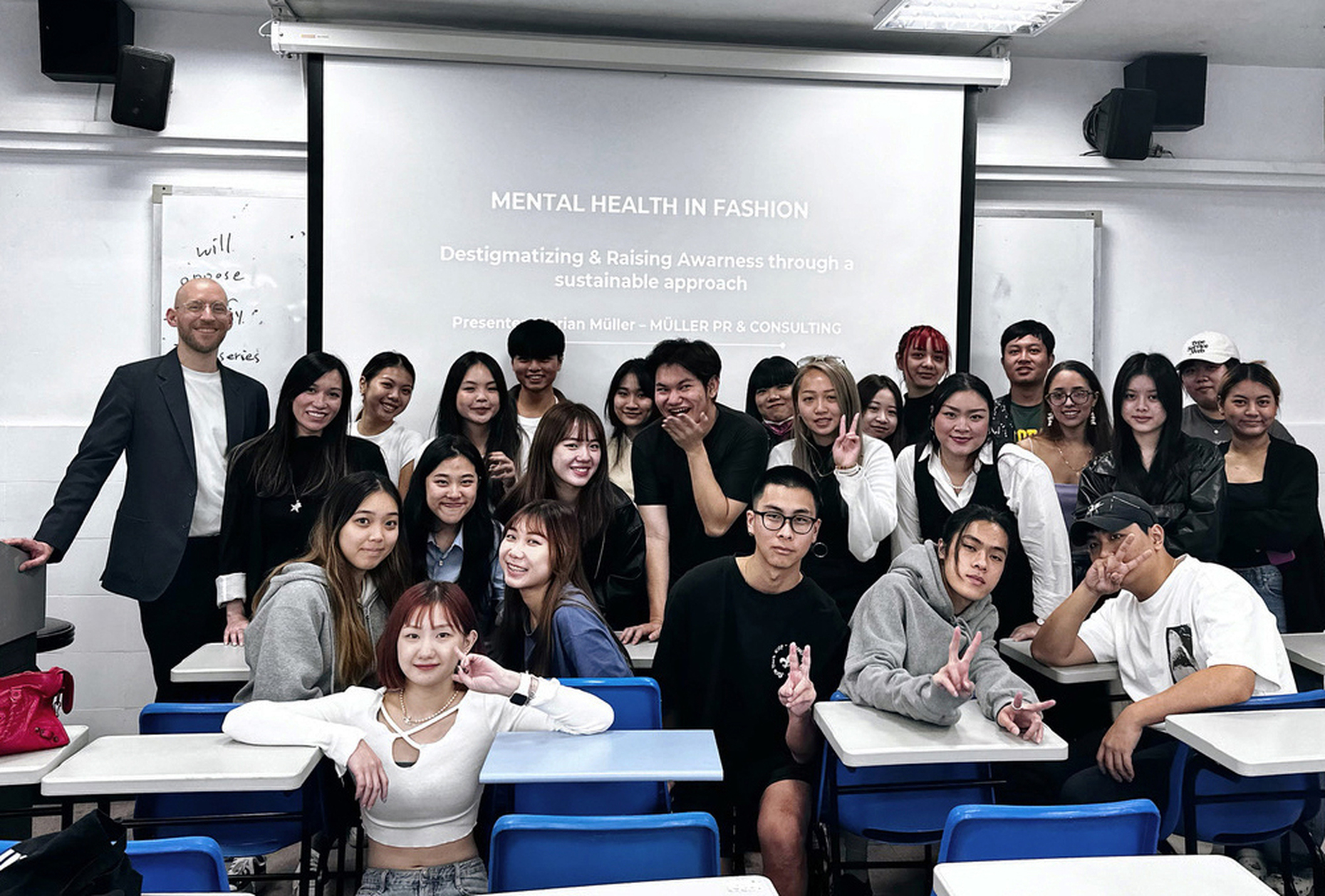
Florian Müller: My goal isn’t to make diagnoses or categorize people, but rather to first raise awareness of the issue. Many people don’t know how to cope with mental strain, whether in their personal or professional lives. My programs focus on fostering understanding and highlighting concrete strategies that can be applied in everyday life. At the same time, I incorporate structural issues – such as how work environments are designed, what responsibilities management bears, and how inclusion can be implemented in practice. Part of this work also takes place in an international context. My stays in cities in other countries, such as Tokyo, where I’ve given lectures at renowned fashion schools like Bunka Fashion College and Esmod Tokyo – or in Paris at the l'Institut Français de la Mode (IFM), have been particularly formative for me. Despite potential societal differences, it always becomes very clear just how much of a taboo the topic of mental health still is in many situations, even in academic settings and, indeed, in Germany as well. The underlying problems are universal: pressure to perform, being overwhelmed, and structural dependencies occur regardless of cultural background. My experiences in different countries have reinforced my belief in how important it is to create spaces worldwide where these topics can be discussed. Another key aspect is setting boundaries: working with this topic often leads people to share personal experiences without clear guidelines. Dealing with this professionally is part of the challenge.
What is your overarching goal?
Florian Müller: I want to raise awareness without stigmatizing, open up opportunities without creating pressure, and question structures without condemning them outright. It’s not about fundamentally casting doubt on the fashion industry, but rather about fostering a more mindful approach and gradually driving change. Mental health should be an integral part of creativity, leadership, and economic decisions.
In your view, what role do the media play in this context?
Florian Müller: The media fundamentally have the potential to play a central role, but they often remain on the surface or only address issues when prominent figures are involved. There is often a lack of willingness to engage with complex or uncomfortable topics – partly because they can raise personal or structural questions.
The younger generation aka “Gen Z” is said to have a special power to bring about change. Do you agree?
Florian Müller: In a way, yes, because many younger people are more sensitive in their use of language and can describe issues in a more nuanced way. At the same time, in practice they often unconsciously reproduce the very patterns they criticize in theory. Therefore, in my view, this is less a generational problem than a structural one.
Your work on this issue often takes place without financial support. How do you strike the necessary balance?
Florian Müller: The situation is challenging because many projects require a significant investment of time and emotional energy. While I generally receive expressions of interest and appreciation, that doesn’t automatically translate into support. The lack of financial support for mental health initiatives in fashion is itself part of the problem. Nevertheless, I keep going because I see that even small efforts can make a difference.
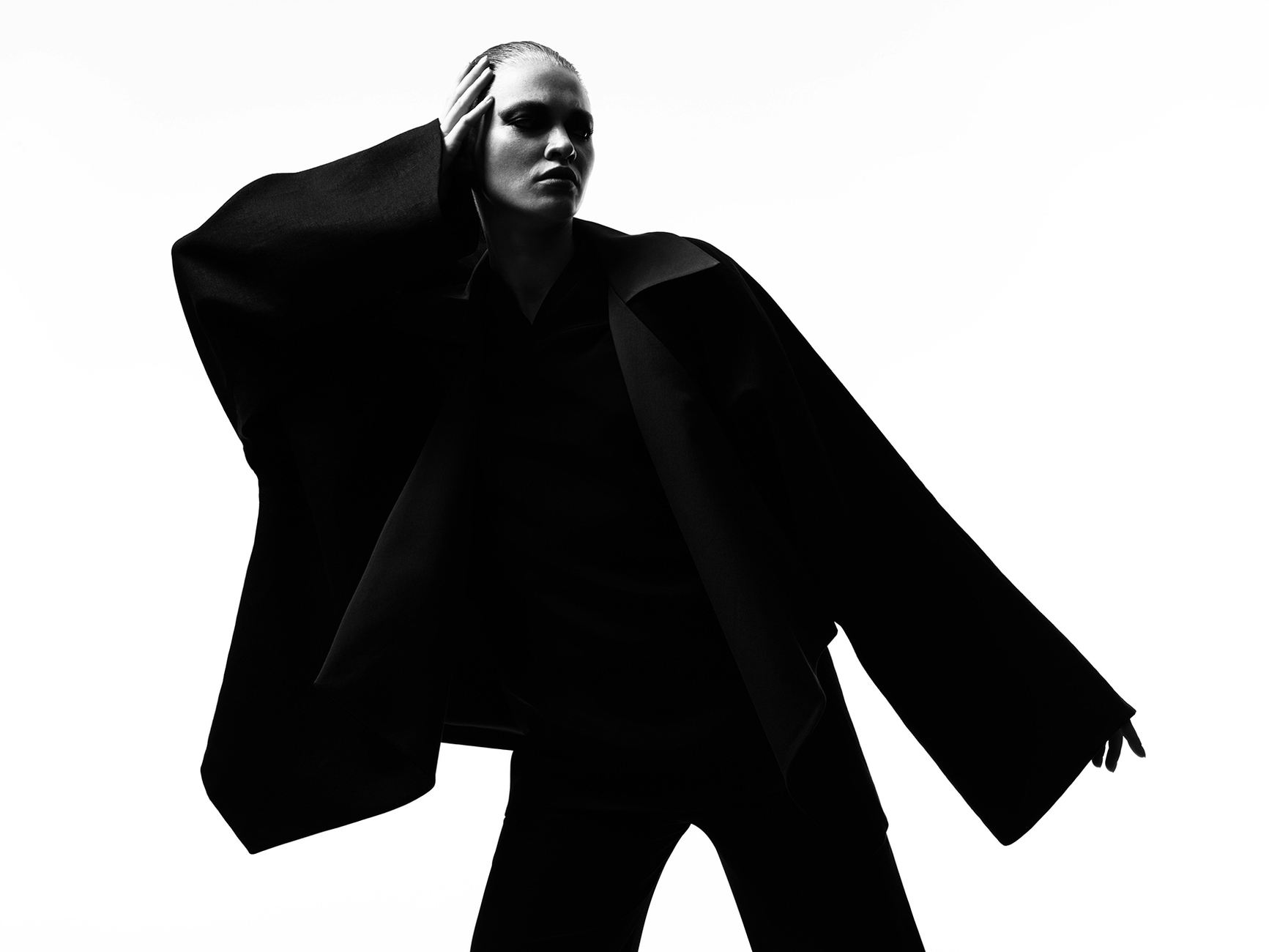
You’re currently working on numerous projects, such as the photo series “One person. One voice.” in collaboration with filmmaker, artist, creative director, and photographer Claudia Malecka. What’s it about?
Florian Müller: In addition to the film category of the same name in my campaign at Diane Pernet’s Asvoff Festival in Paris, I wanted to further raise the profile of the issue through photography and text. The project grew out of the idea of creating a space where people can take a stand without having to expose themselves or reveal personal details. We photographed 35 people from very different backgrounds and deliberately highlighted a wide range of perspectives – regarding bodies, identity, origin, and lived experiences. With this project, we aim to reflect diversity and show that many different realities coexist side by side.
Your initiative has developed significantly over the past few years. How are you bringing Mental Health in Fashion into the industry today in concrete terms?
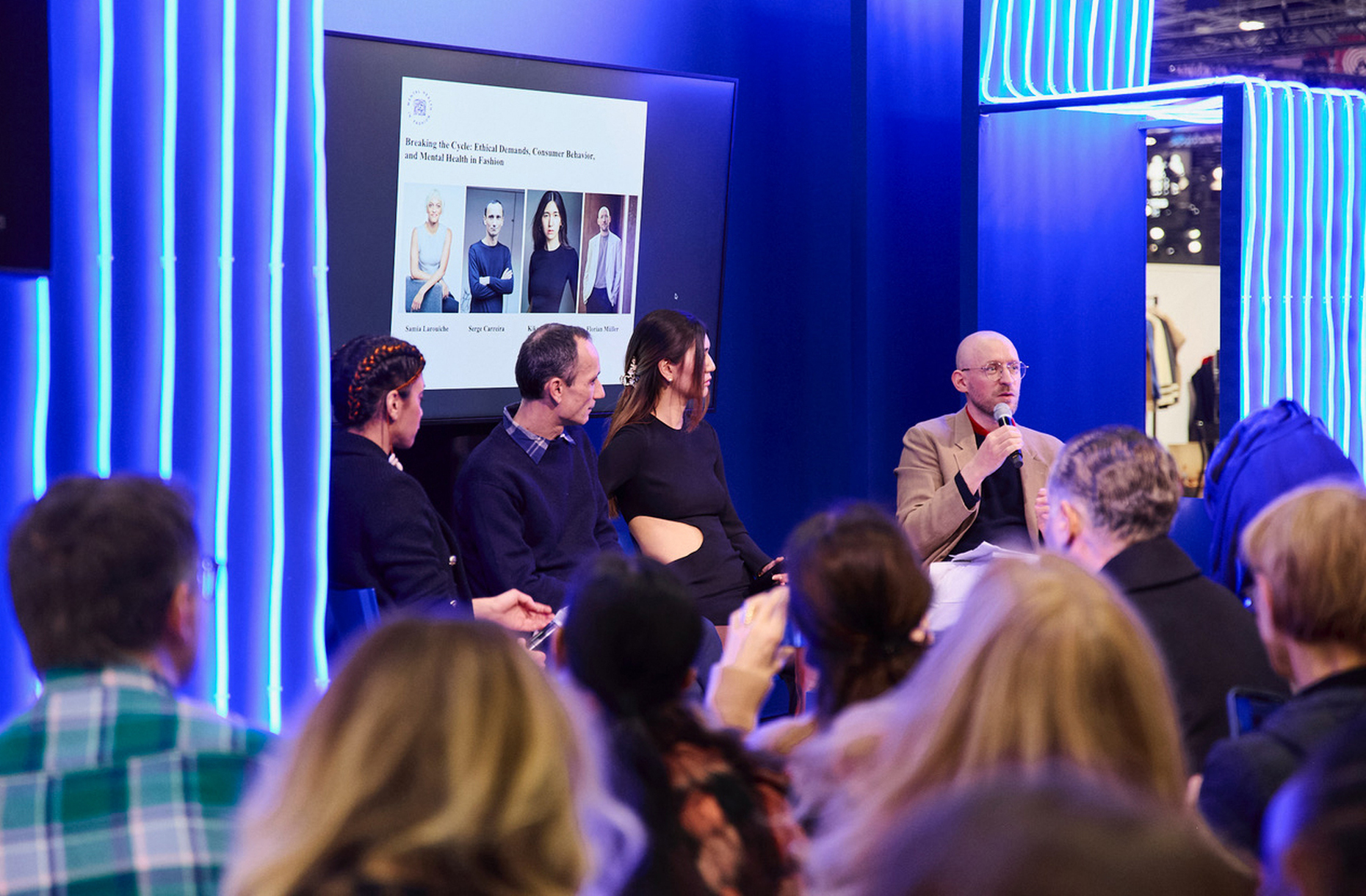
Florian Müller: From the very beginning, it was important to me not only to address the problem, but also to develop different ways of engaging with it. The initiative has therefore grown into a network of different approaches. With the Mental Health in Fashion category at the Asvoff Festival in Paris, filmmakers now have an international platform for the third year running to engage participate creatively with the subject. The photographic series “One person. One voice.” gives representatives from the industry greater visibility and shows how different people’s experiences can be. The images and statements were presented to an international audience in early September at the Fashion Positions fashion platform as part of the Positions Art Fair. Through the Modem Dialogues interview series, I speak with personalities from fashion, culture, education and other fields about the future of the industry and its social responsibility. This is complemented by talks, workshops and teaching at universities around the world, as well as the development of educational and awareness-raising formats for companies. At a recent Fireside Chat at PolyU in Hong Kong, the focus was on how young people themselves can contribute to the conversation around Mental Health in Fashion. Among other things, we discussed the opportunity to submit their own films to the Mental Health in Fashion category at Asvoff and give their experiences a platform. This exchange will continue in the future.
The idea for Fashion & Mental Health – Industry Dialogue also emerged from my long-standing work with Mental Health in Fashion. The pilot project brings together people from different parts of the fashion value chain with advocates from the psychotherapeutic field. Together with a local partner, this concept was implemented in Hong Kong. The focus is on exchanging perspectives on mental health and the conditions under which people in the industry work. Further conversations and follow-up editions are already being planned. All of these activities are part of the Mental Health in Fashion initiative and pursue the same goal: to establish mental health as a natural part of fashion, creativity and sustainable transformation in the long term, while also reaching people beyond the fashion industry.
A particularly significant moment for me now is being invited as a speaker on Mental Health in Fashion at the Global Health Futures Forum organised by the Pvblic Foundation, taking place in New York during the 81st session of the United Nations General Assembly. After many years of developing this work from within the fashion industry, I am now bringing this conversation into a broader health and societal context. Being there as a speaker representing Mental Health in Fashion is a decisive moment for me: it brings the issue onto a true international world stage, far beyond the fashion industry. Although there are still considerable obstacles, I am very grateful for the growing support and trust in my work. It encourages me to continue evolving the many ideas that have emerged over the past few years and to turn them into concrete projects. What is particularly motivating is that I am now receiving requests for collaborations from a range of different fields. Seeing people and institutions wanting to work with me on these topics shows that awareness of the importance of Mental Health in Fashion is growing and that this can lead to further long-term change.