Featured
Ingenuity and sensitivity
Franziska von Schumann: Georg Bechter Licht is known for its minimalist lighting solutions. How did this come about, and what is your personal approach to the subject of light?
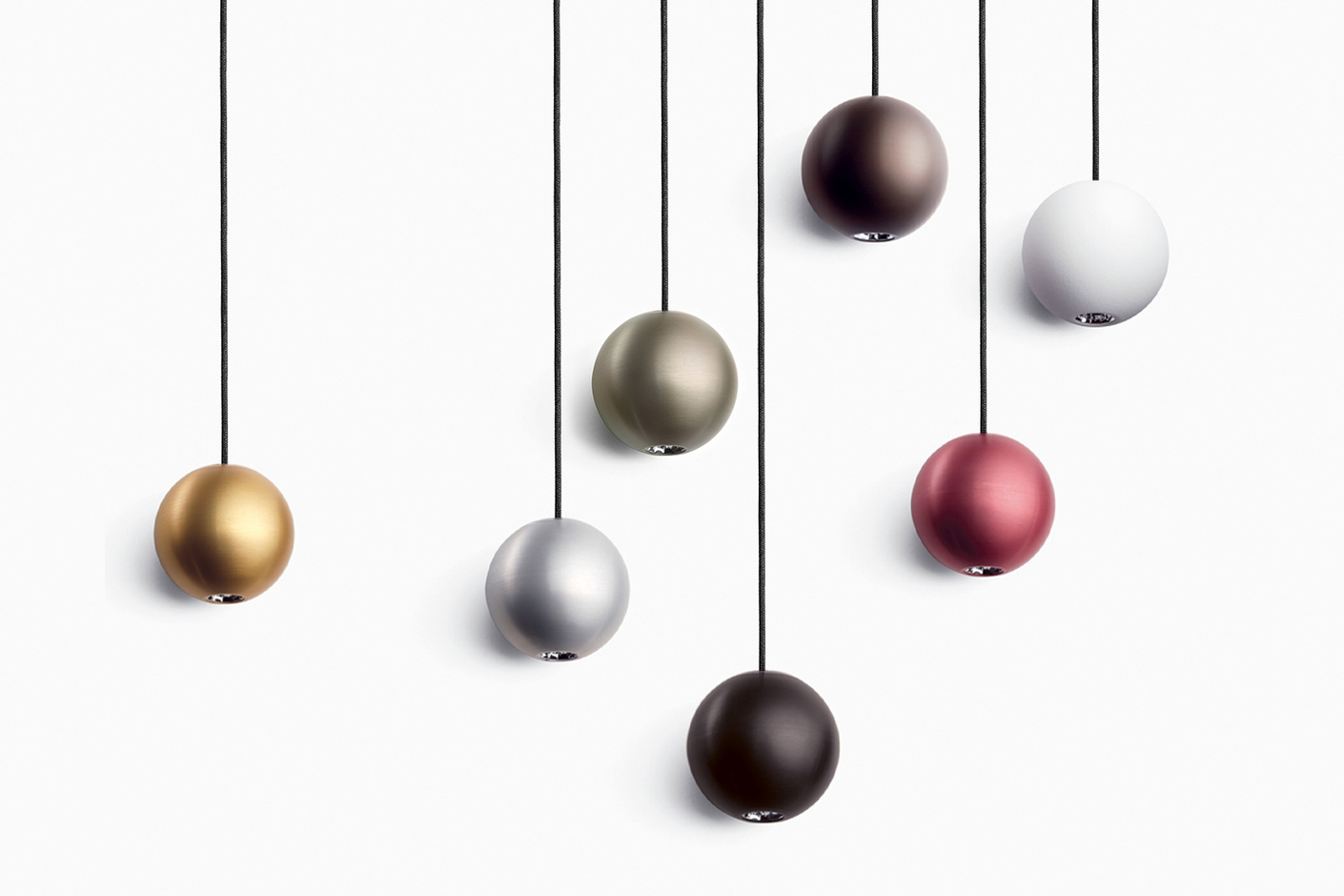
Georg Bechter: I come from a very traditional background in the trades. There, I realised quite early on that a purely structural approach would eventually reach its limits. I could build, think technically and work out the details, but I lacked the creative aspect. That’s why I deliberately chose the Academy in Stuttgart. I had the technical side down pat; I’d already carried out a renovation of an old building for my sister whilst still at school. But architecture is more than just construction. I’ve always designed – furniture, objects, concepts – but much of it remained experimental. I came to the subject of lighting rather by chance, through my surroundings in the Bregenzerwald, through the Werkraum and competitions such as Handwerk + Form. For me, that was a platform for experimentation. That’s where I created my first lamp.
Franziska von Schumann: Were there any products you found were missing at that time, which led you to decide to develop them yourself?
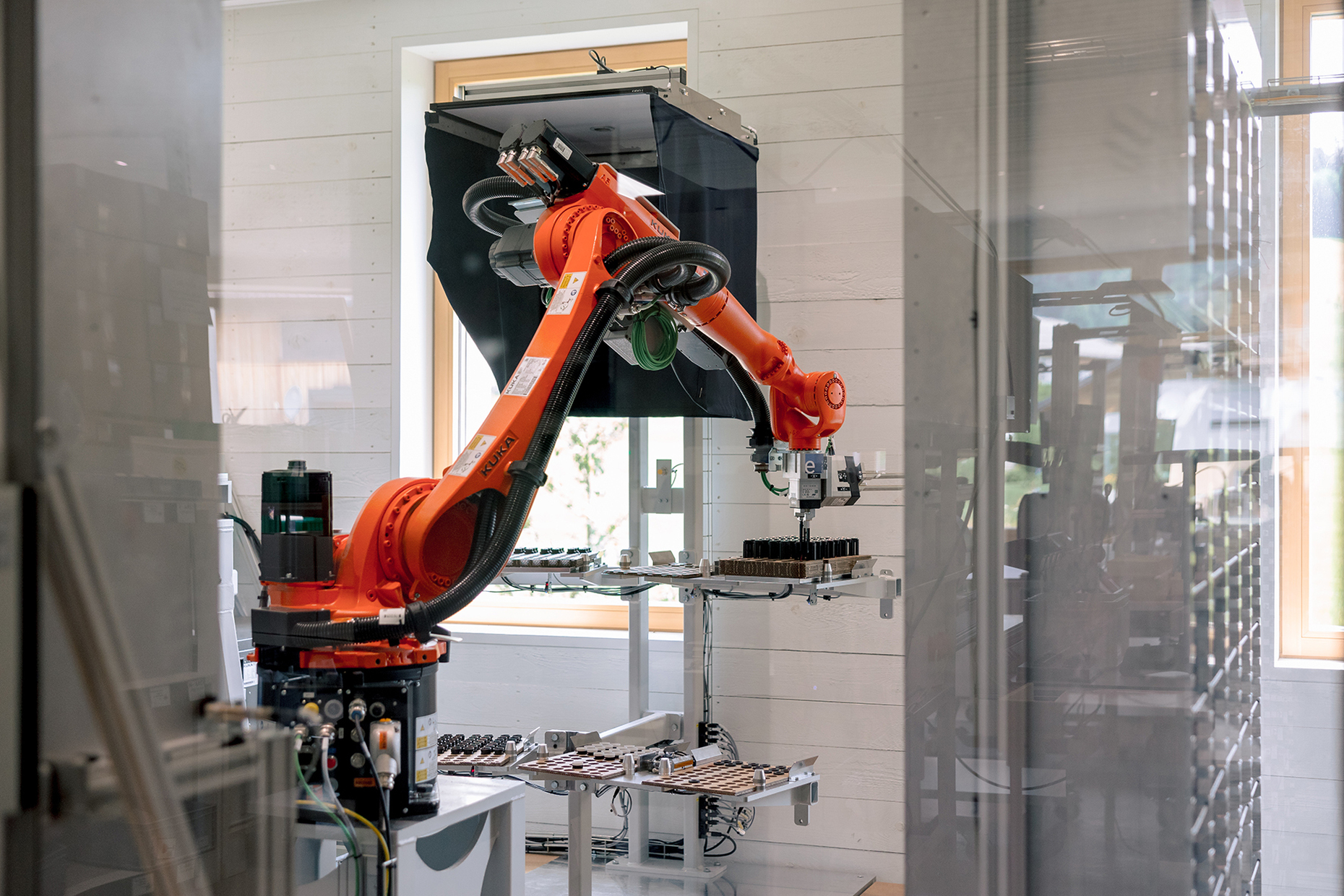
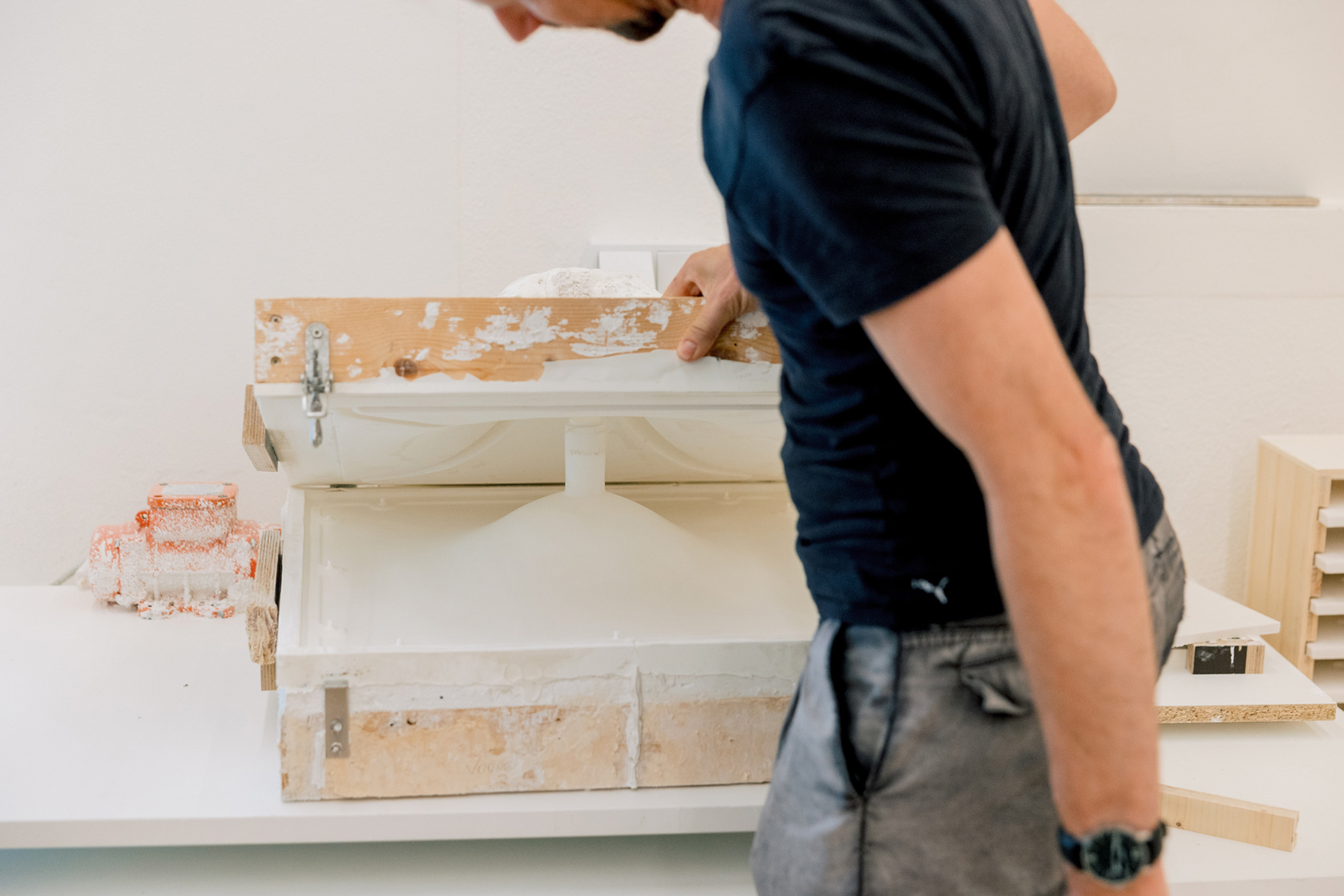
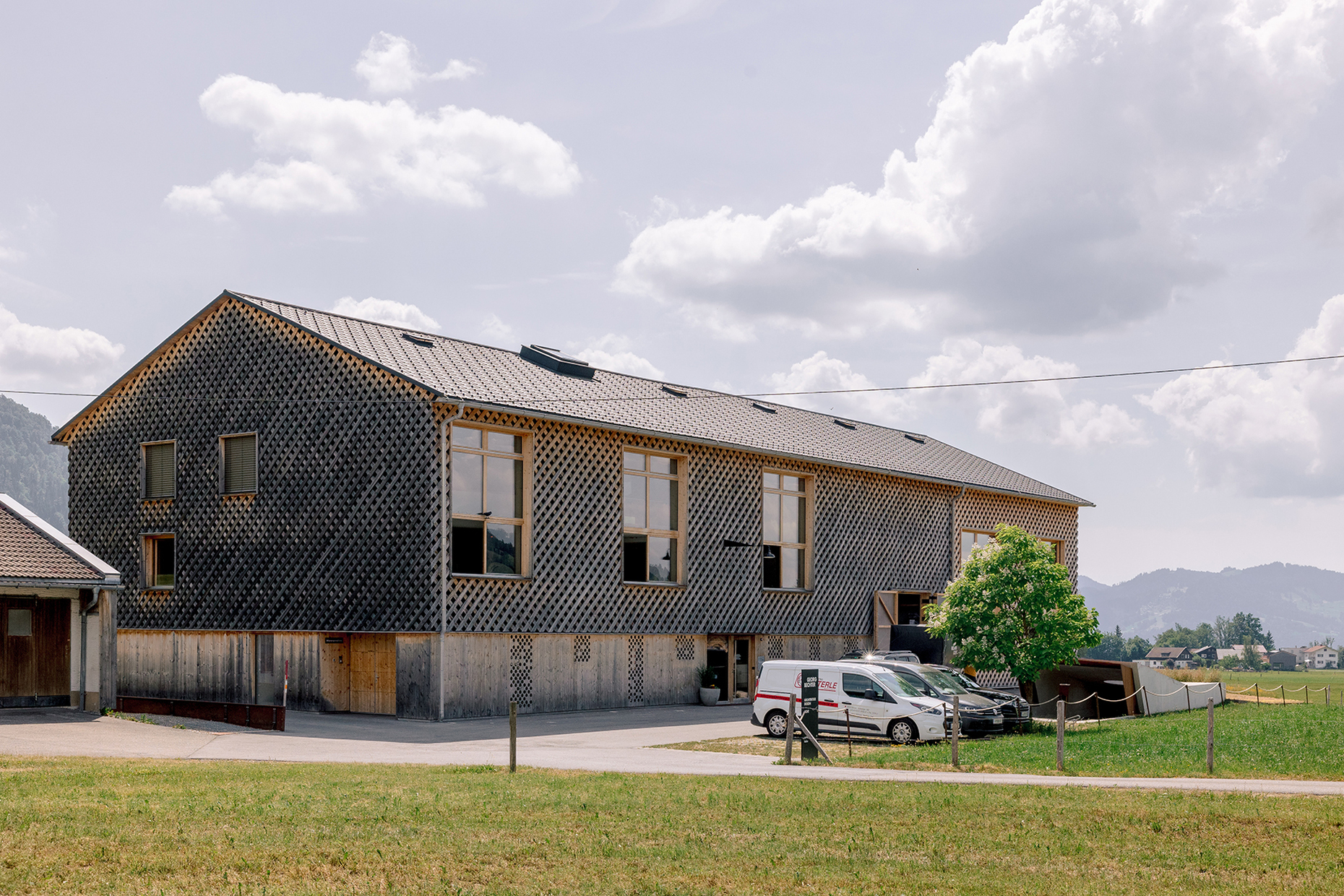
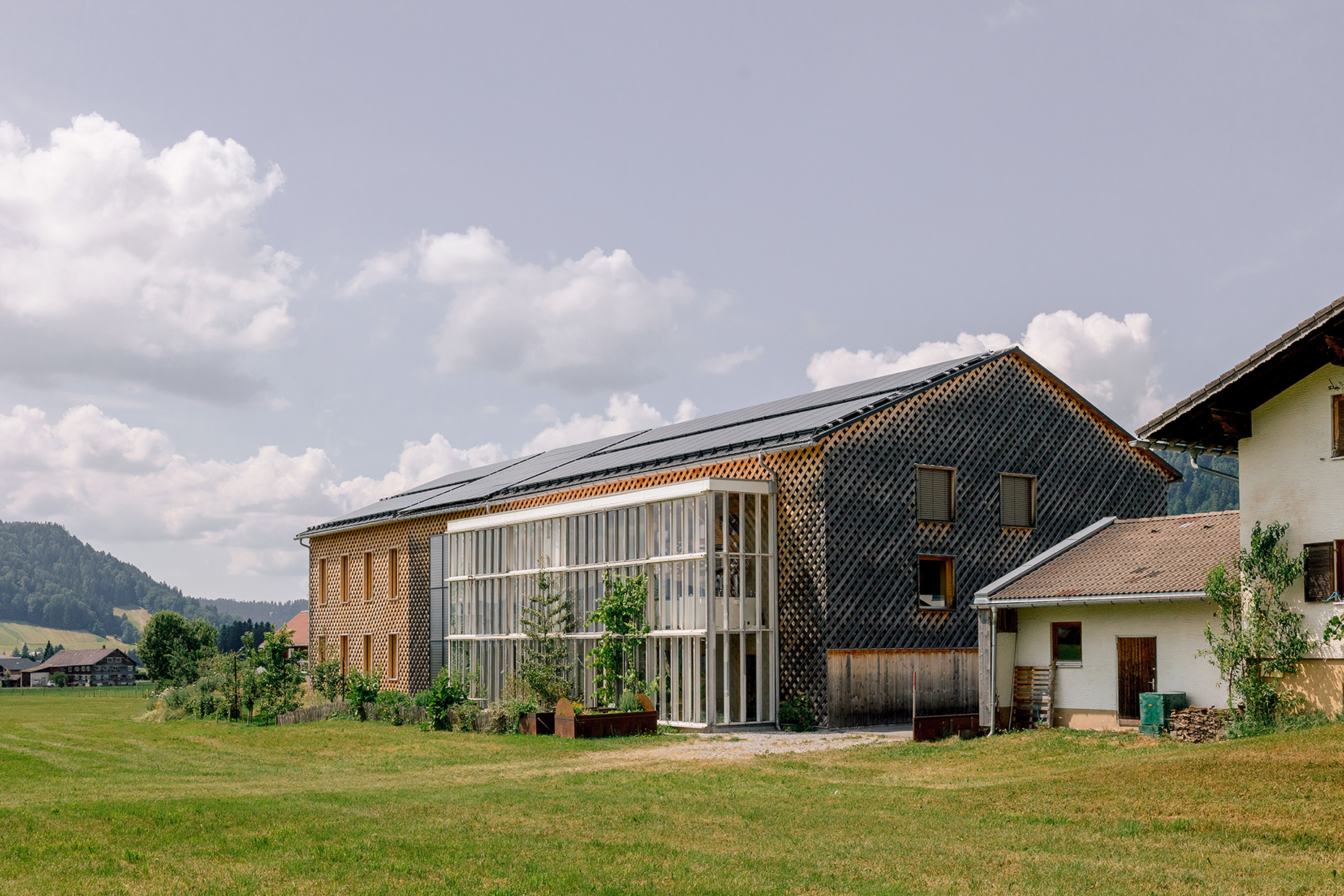
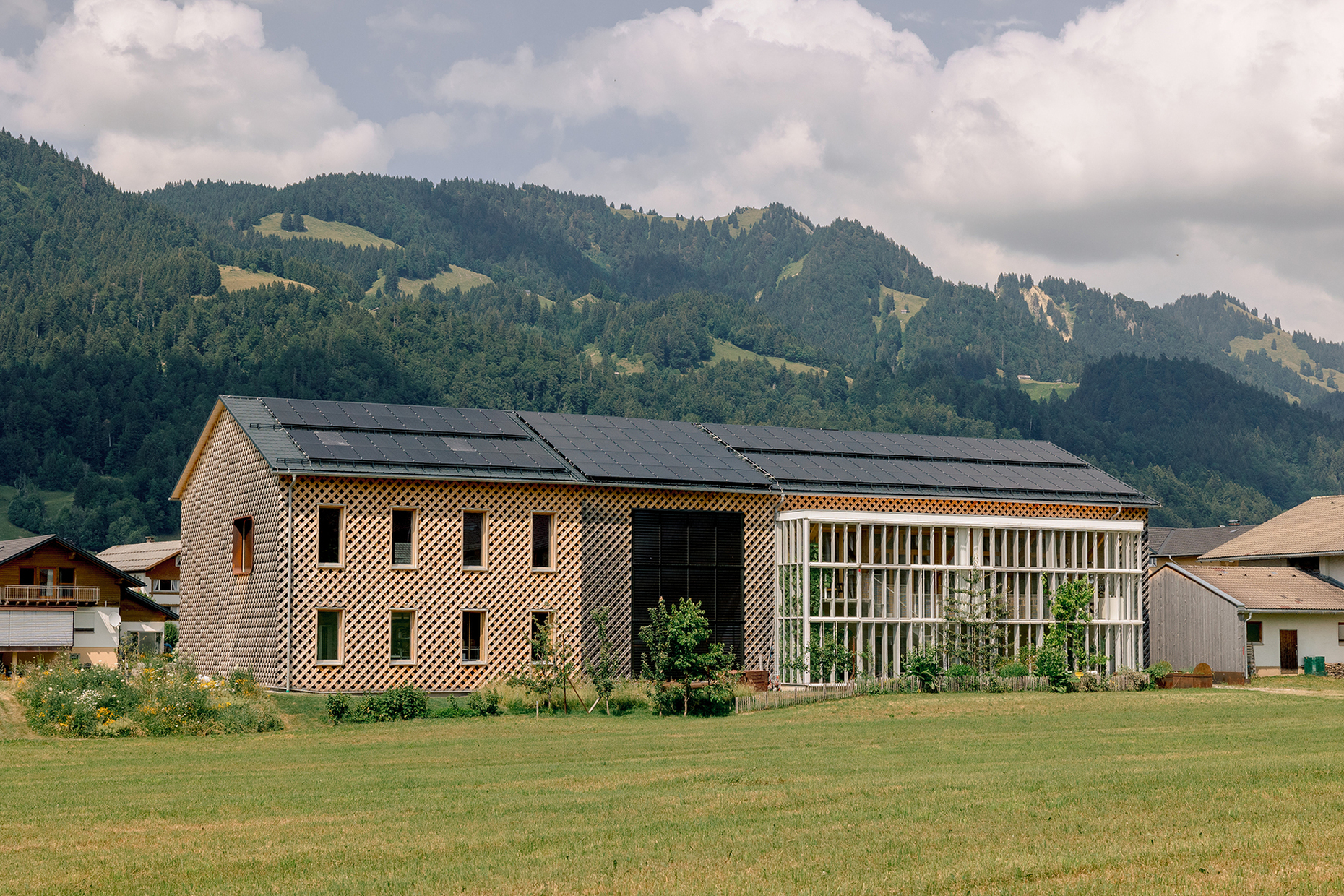
Georg Bechter: I’ve always been designing products, but often they were more like thought experiments. Looking back, I can see why so many of them weren’t marketable. With the lamp, it was different – I thought straight away: this has to exist. As an architect or designer, you then look for manufacturers to bring the idea to life, but this was in the midst of the 2008–09 economic crisis. The discussions proved difficult. After several rounds of negotiations, I decided to set up production myself. I had a few machines available in my parents’ cellar, and later an old barn. It was the classic process: trial and error, failure, improvement. At the start, you think that production is enough, until the moment comes when it becomes clear that communication, explanation and sales are also part of the process. It was a steep learning curve, but that’s exactly how the company grew.
Robert Volhard: How does light shape our perception of architecture?
Georg Bechter: To begin with, my approach was very formal: scale, flush surfaces, frameless design. That was an architectural approach, not yet one focused on lighting. It was only later that I realised just how much specialist knowledge lighting requires – how it defines spaces, interacts with surfaces and creates atmosphere. I was fortunate to have a team that was on a similar wavelength to me – curious, open-minded and willing to learn together. Light is difficult to describe. People often talk about atmosphere, but that actually doesn’t quite capture it. Moreover, our connection to light is deeply rooted in human nature: for example, we recognise the reddish light of evening from sunsets and fires. It conveys a sense of security. This perception predates any technology.
Franziska von Schumann: In your opinion, how will lighting design and product development change over the next few years? What are the challenges?
Georg Bechter: Our product development has always been primarily market-independent. It arose out of curiosity. I come from a background in architecture, not the traditional lighting industry, and that was a great advantage. We’ve always asked ourselves: What’s missing? What interests us? That’s how our products came about. That’s why I don’t care whether AI exists or not. Of course, it will change the lighting industry, because new technologies open up new possibilities. But the phenomenon of light remains the same: it fulfils a visual function and shapes spaces for as long as the Earth exists.
Robert Volhard: Your product range has developed significantly. Where is this journey heading?
Georg Bechter: A key aspect is sustainability – and the question of how we position Georg Bechter Licht within society. For us, this also means not launching a new luminaire every year. Instead, we celebrate a product’s tenth anniversary. Our aim is to revisit and further develop luminaires, rather than replacing them. And we’re doing relatively well in that regard.
Franziska von Schumann: How else would you define the term ‘sustainability’ for yourselves?
Georg Bechter: Sustainability is a very complex concept that is often overused. For me, beauty matters: when you like something so much that you don't want to part with it. For us, certifications are less a marketing tool than a confirmation that we are on the right track. It was all the more interesting for us that we were able to have our existing products certified under the Cradle to Cradle standard without altering them, and that we achieved Gold status. This has shown us that we are on the right track.
Franziska von Schumann: Are Georg Bechter Licht’s products primarily used in new-build projects, or are they equally suitable for use in existing buildings or in the increasingly important refurbishment of existing properties?
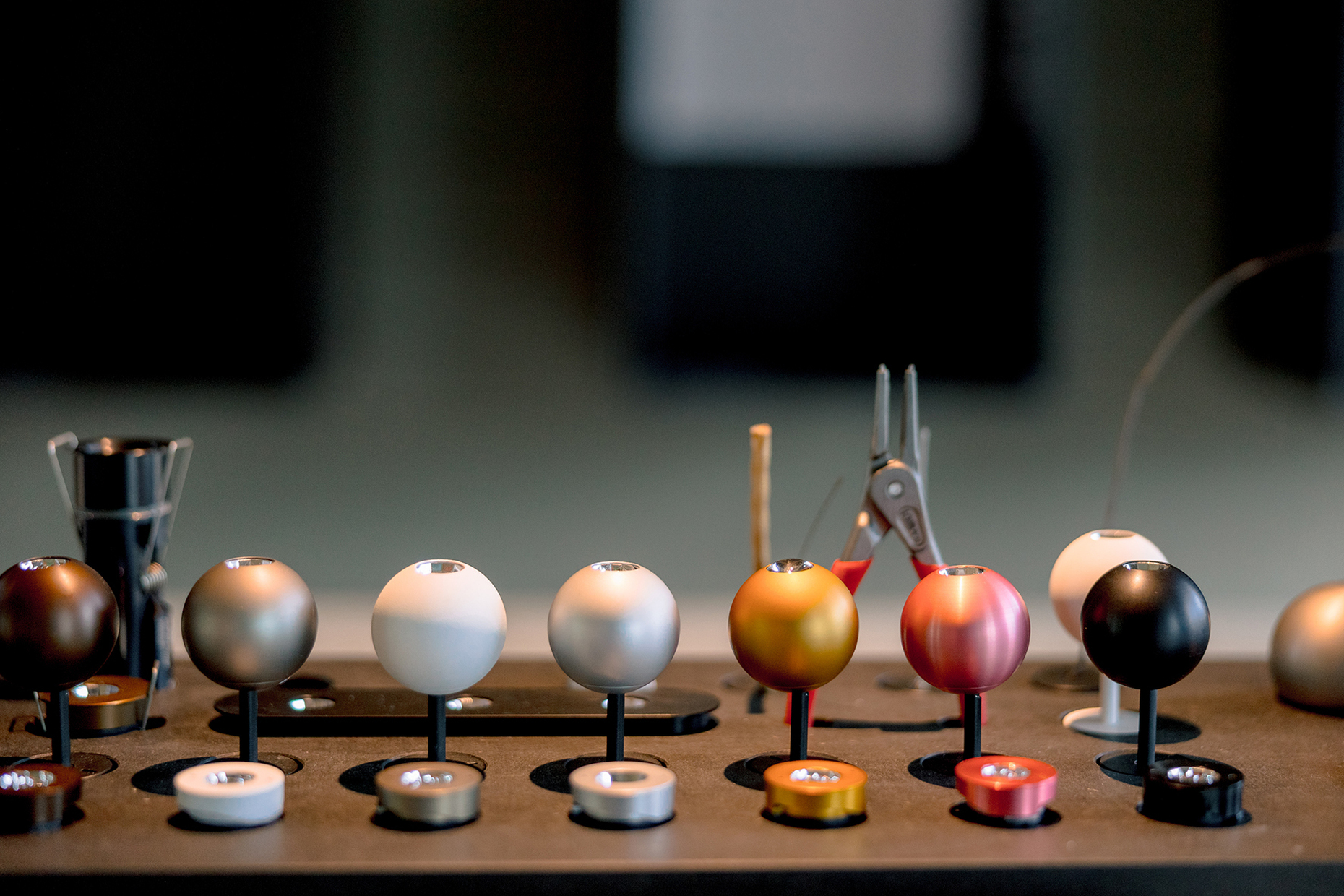
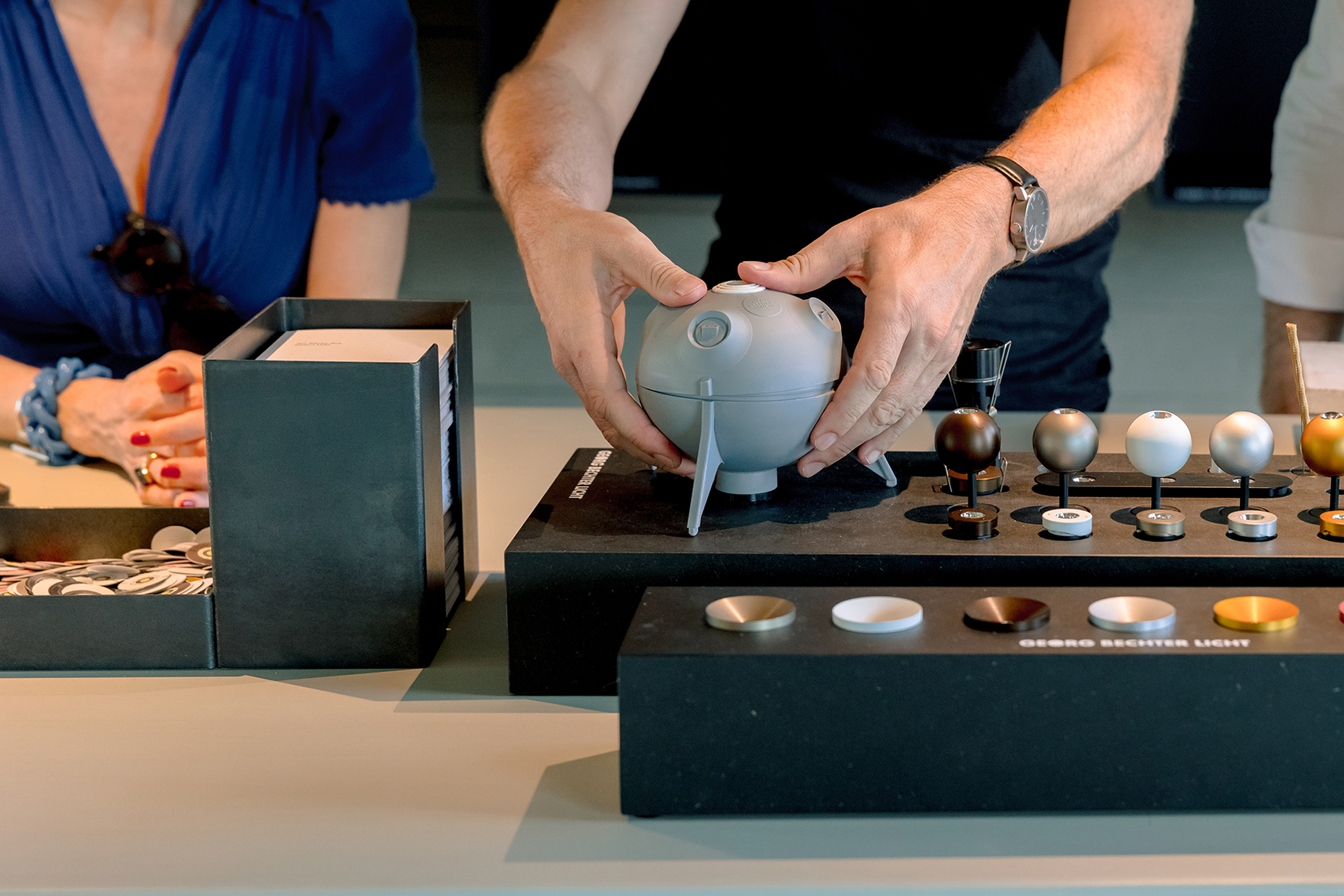
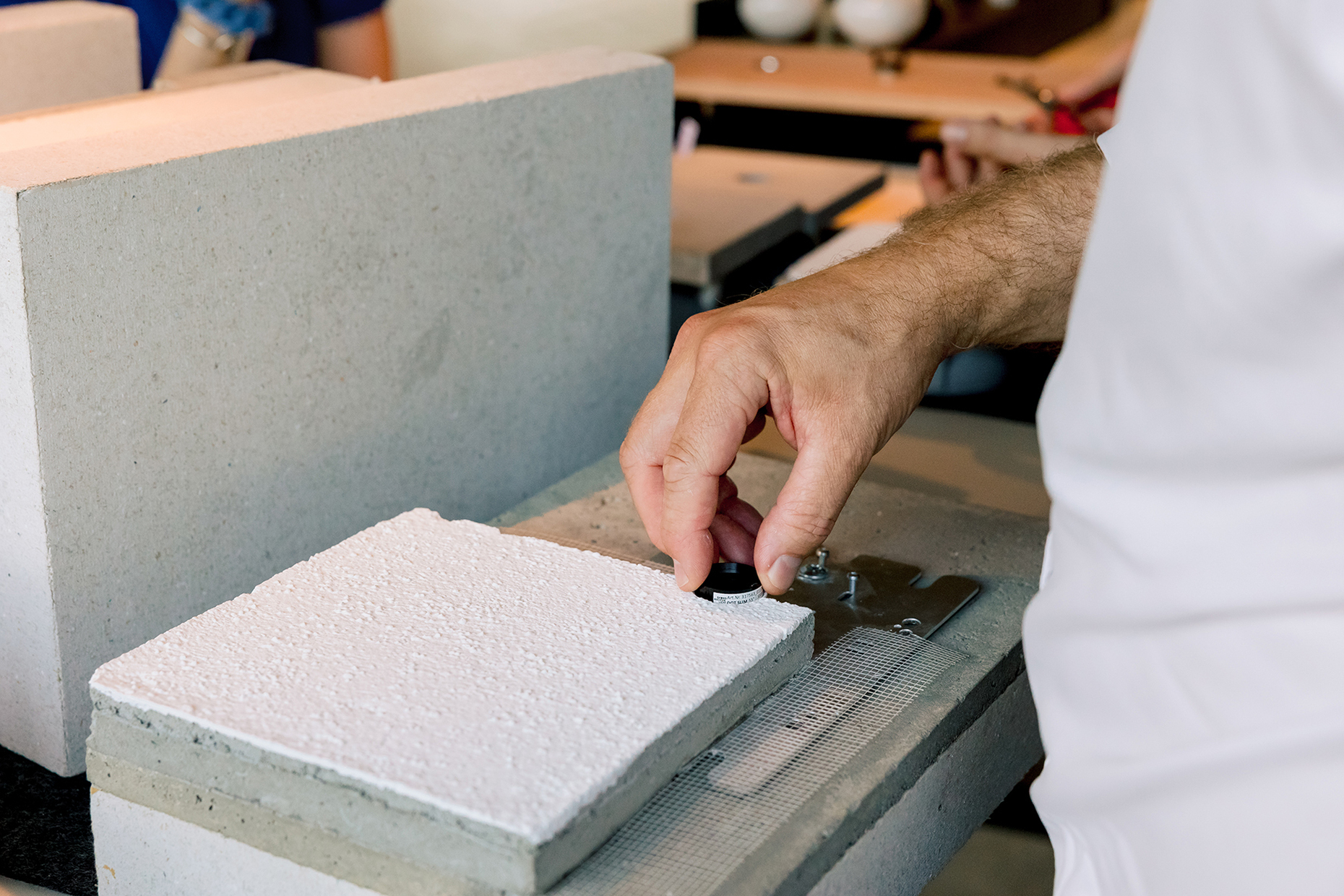
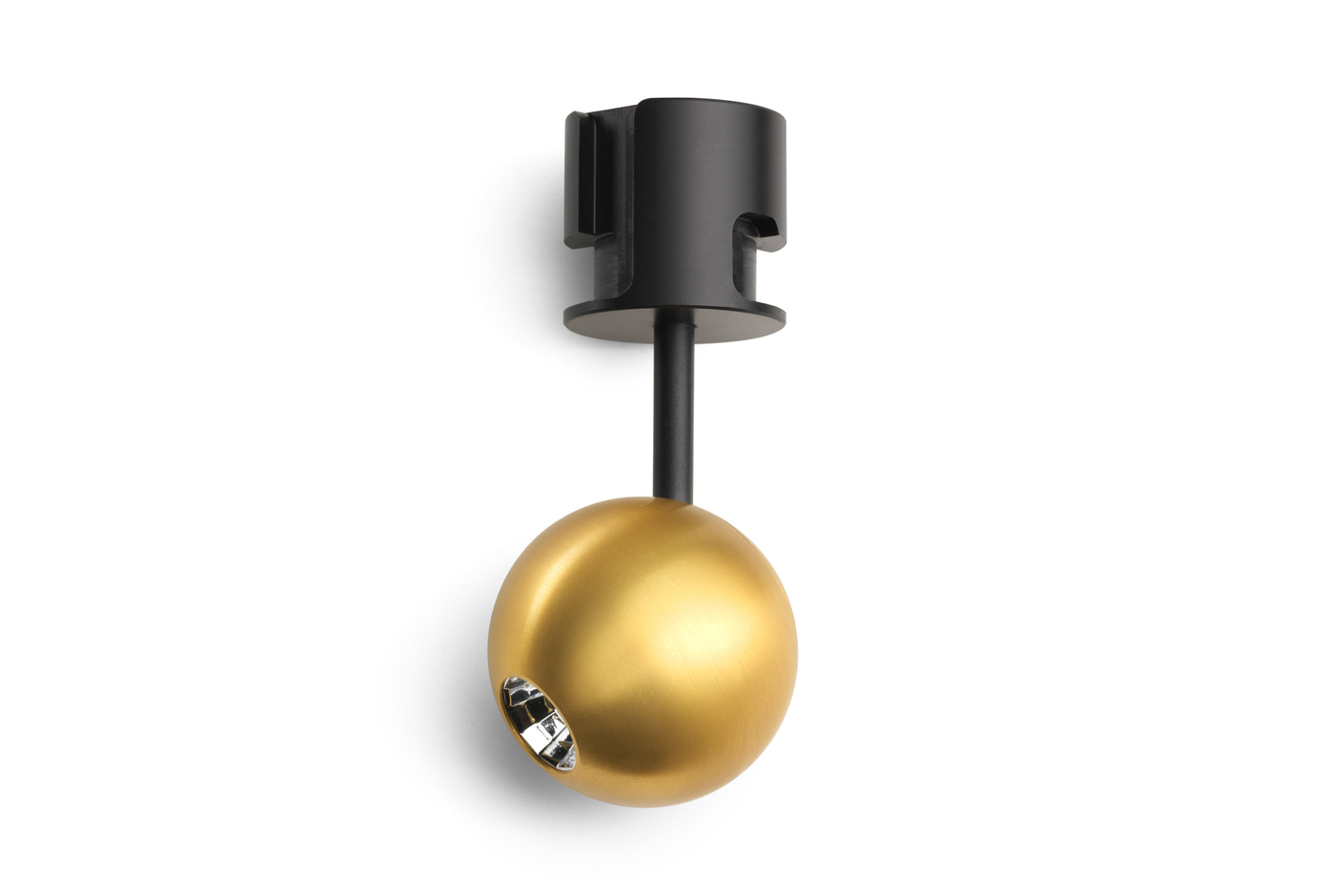
Georg Bechter: Absolutely, yes – and they’re actually ideal for this. Our luminaires are deliberately designed to be very minimalist and require only a few small components. This is a major advantage, particularly in older buildings or during refurbishments, as they require very little installation height and can be adapted flexibly to existing structures. Furthermore, thanks to their minimalist design, the products are also ideal for use in listed buildings.
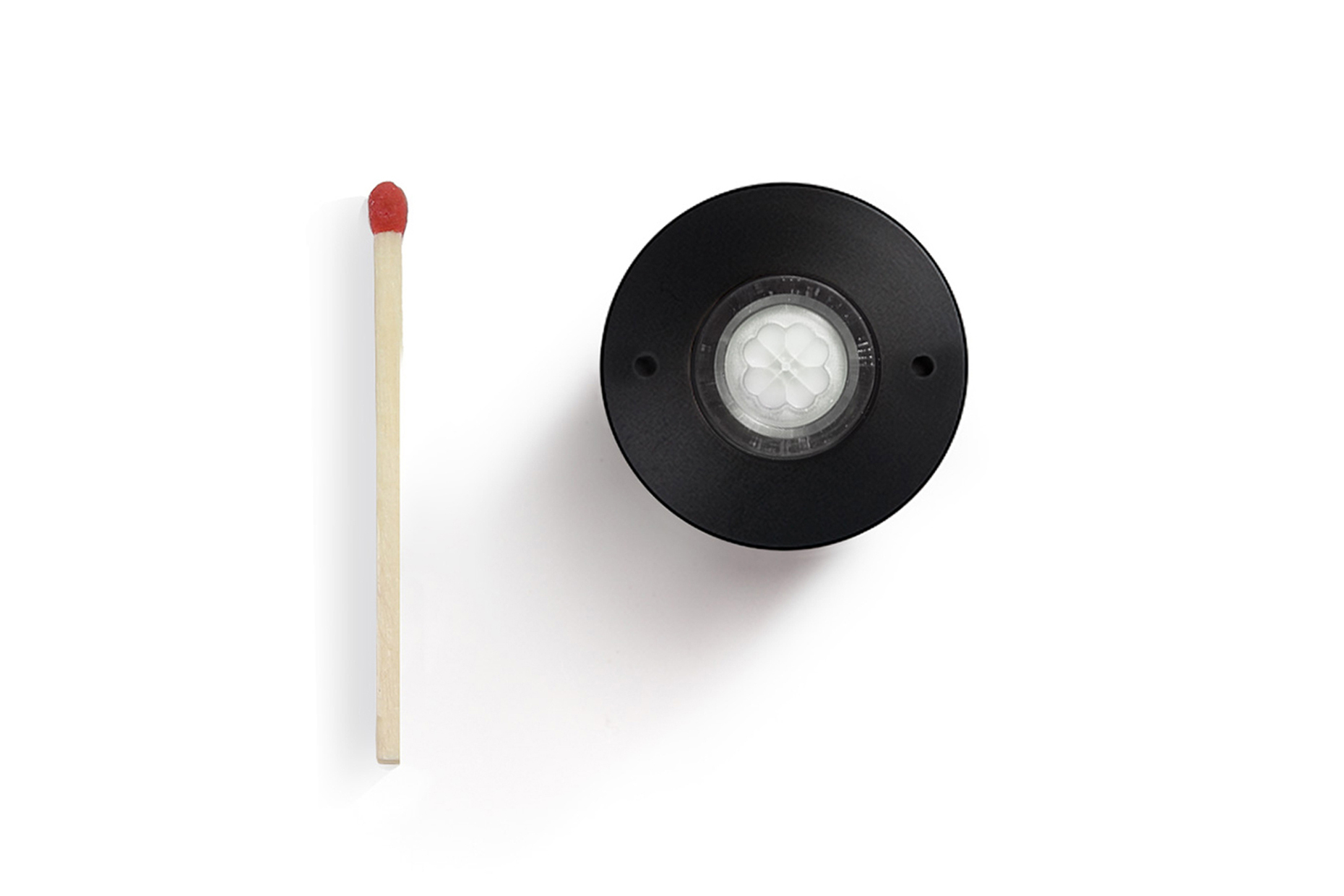
Robert Volhard: At this year’s Light + Building, you won the Designplus Award for your new motion and daylight sensor, the “VISO 28”, which is presented by Messe Frankfurt in collaboration with Stylepark magazine. What does this design award mean to you? And how important do you think trade fairs are in general?
Georg Bechter: This award is hugely significant, as we do not run traditional advertising. We invest time and money in innovation. Awards are therefore a form of communication for us. When an independent jury says, ‘This is good’, that replaces many other marketing measures for us. Trade fairs are very important as a platform for showcasing our work. Particularly in the age of AI, when the lines between digital imagery and reality are becoming increasingly blurred, a physical presence and the ability to experience products first-hand are becoming ever more important. Moreover, every two years they provide us with a huge boost to innovation, as we want our products not only to be photographed at the trade fair, but also to be tested and ready for delivery the following week.
Franziska von Schumann: In what direction should Georg Bechter Licht develop in future?
Georg Bechter: The crucial question isn’t how big we’ll become, but how we’ll stay innovative. Growth is a byproduct of innovation and culture. That’s a challenge. The heart of the company is creativity and tinkering. For me, success is the result of good work. I'm focused on responsibility, stability and good workplaces. Doing good work every day is much more important.
Robert Volhard: That’s a lovely closing sentence.