Stage for the future
Anna Moldenhauer: Looking at the exhibitors expected at Light + Building, what is the current demand like and how international will the range of products on offer be?
Steffen Larbig: We are currently expecting around 2,000 exhibitors. There is still a lot of movement in the market. The proportion of international companies is currently 70 per cent, confirming the trend from the previous event. Around 60 per cent of our exhibitors come from the lighting sector and 40 per cent from networked building technology. Of course, we are aware that the markets in which our exhibitors operate are currently facing challenges. For us, this means that many companies are waiting until the last minute to decide whether to participate. This has an impact on our planning cycle. However, looking at the economic surveys, we have the impression that we are in a better position than the markets themselves currently assess, especially in Europe. The demand for new construction and renovation – and thus also for lighting and building technology – is huge. What is causing us concern in the markets is the global political situation: global uncertainties, trade barriers and armed conflicts. Free trade, exchange and travel are not currently possible everywhere in the world, and we are noticing this. Nevertheless, the conclusion from our partnerships and discussions with exhibitors is that we are in a comparatively stable situation overall. We are very much looking forward to Light + Building, the central industry meeting place in Frankfurt am Main in the heart of Europe. From 8 to 13 March 2026, specialists and industry representatives will come together here, as the event is of great importance to everyone.
As you mentioned, the building sector is currently facing many challenges, including the energy transition, efficient AI implementation, skills shortages, high costs and trade conflicts. What will Light + Building be offering in terms of networking opportunities for the industry to tackle these challenges together?
Steffen Larbig: Our matchmaking tool is the central instrument for optimising personal encounters at the trade fair and has recently been comprehensively expanded. Every exhibitor can present themselves there. Users can filter their search according to their primary interests, and exhibitors have the opportunity to position themselves according to key topics. Everyone who purchases a ticket for the trade fair is automatically added to the pool, unless they actively opt out. This gives companies the opportunity to engage with their target group and allows guests to find the right contact person more quickly. The system is a development that will be offered for the first time at Heimtextil 2026. At the same time, we are providing a wealth of information for trade visitors via our website and social media channels so that they can plan their visit to Light + Building as efficiently as possible.
Why were ‘Sustainable Transformation’, ‘Smart Connectivity’ and ‘Living Light’ identified as key topics in discussions with the industry?
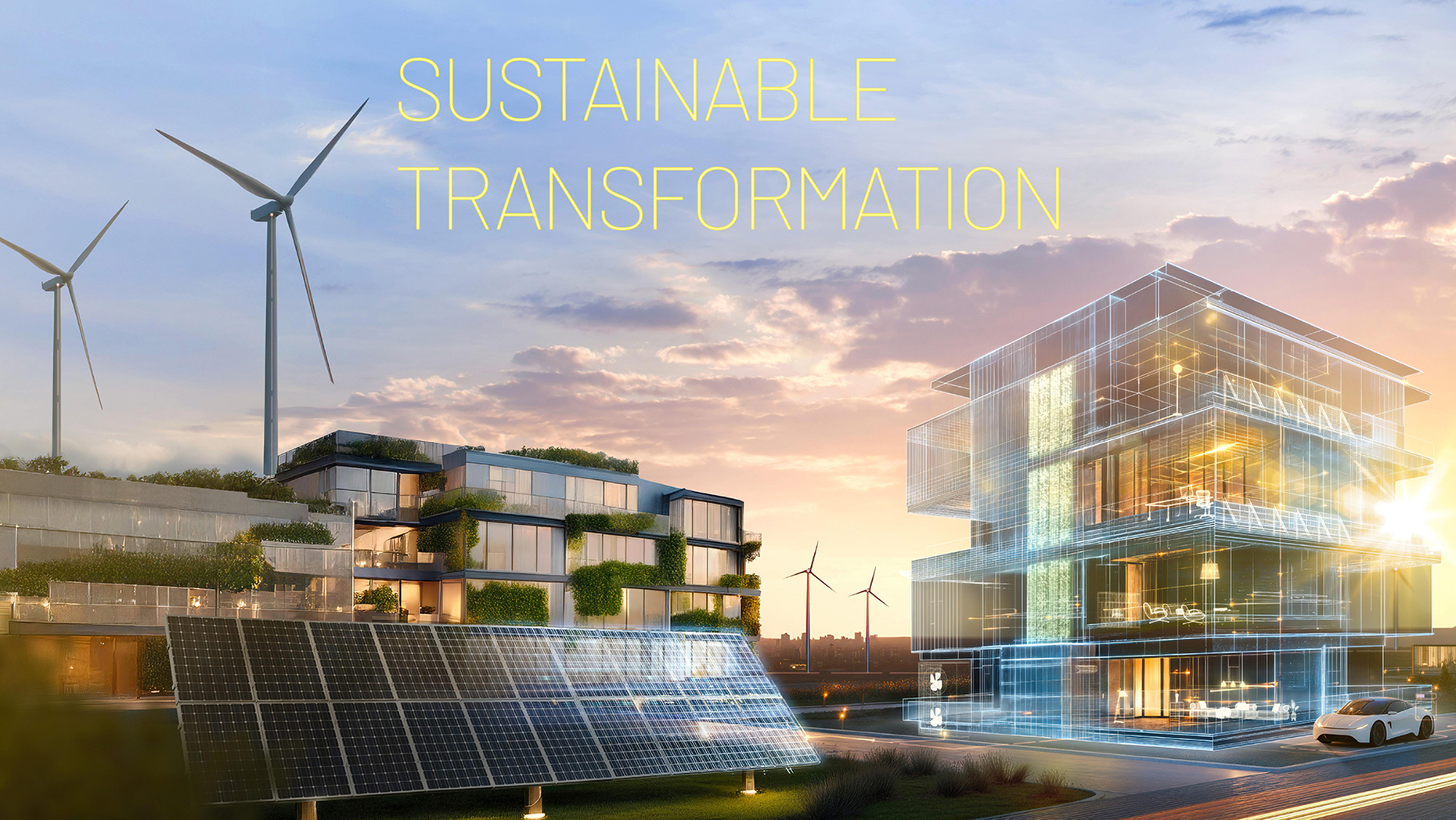
Steffen Larbig: The selection of the top themes is made in close dialogue with the industry and is based on innovations and developments that are particularly relevant to our exhibitors. In this way, they also reflect social developments and are sometimes politically driven. ‘Sustainable Transformation’ stands for the path to climate-neutral buildings and shows how technology and architecture can contribute to an energy-efficient future. Important aspects of this key topic include energy efficiency, intelligent energy management, digitalisation and sector coupling.
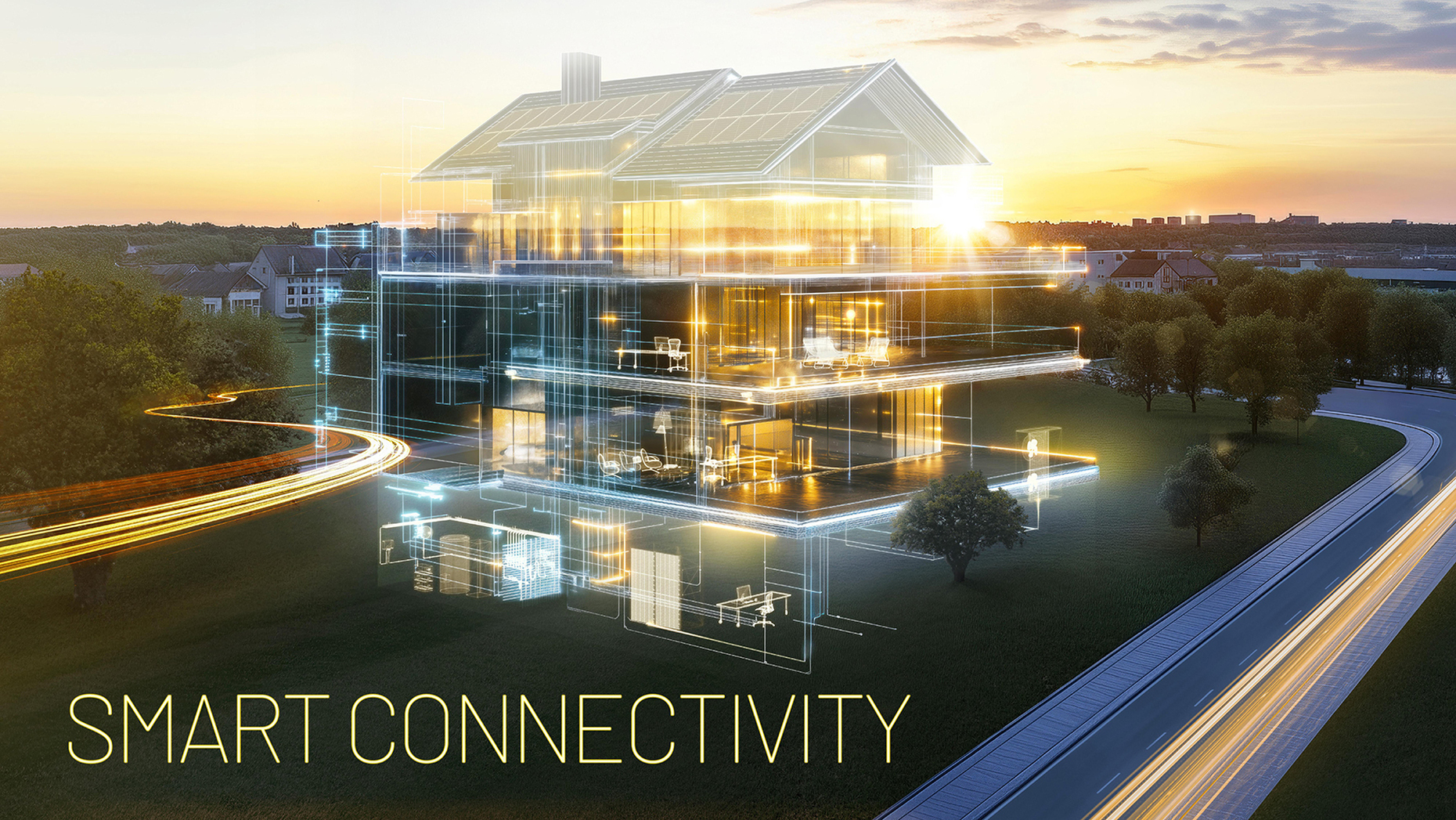
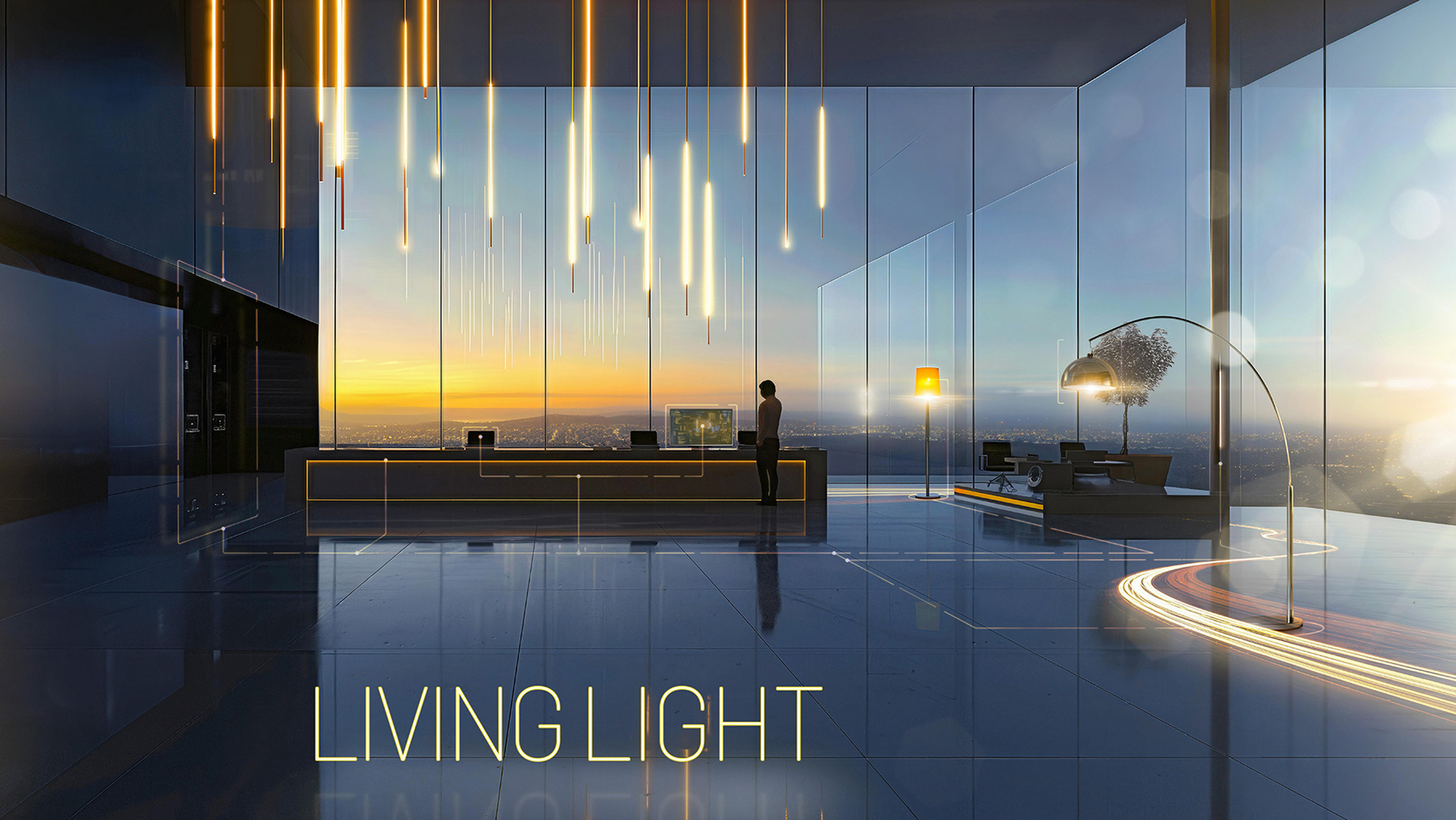
When we talk about ‘smart connectivity’, we are referring to the fact that our world is becoming significantly more networked. And, of course, in the context of buildings, we are talking about buildings that are increasingly becoming intelligent systems. The top theme stands for network infrastructures, digital processes and efficient data management. Looking at the exhibitors, we can currently see that the fields of lighting and building technology are converging much more strongly today than was the case in the past. Ultimately, connectivity means that we are better connected, can understand users better and can create more comfort, especially in the area of lighting. Light stands for life and offers the opportunity to react, to design rooms, to influence the atmosphere and also moods. And it is precisely this broad field between architecture, technology and emotions that we bring together under ‘Living Light’. Special focus points in this top theme include human-centric lighting, lighting design and smart systems for various application examples. With regard to urbanisation, many people currently live in small flats where rooms have to fulfil different functions. Our exhibitors provide innovative technologies as well as design expertise, practical application concepts and ideas on how lighting can improve the quality of life in a variety of situations.
The three key topics represent the central theme of Light + Building and provide us with a degree of guidance, both in terms of communication and our event programme. In line with this, we are offering the new special show ‘The Living Light’ in collaboration with Lichtvision Design. We are creating different scenarios for this and bringing together our entire portfolio of exhibitors. For example, there will be a room demonstrating how lighting can be used to create the ideal environment for different types of learners.
The special exhibition ‘Living Light’, by Carla Wilkins and the team at lighting design agency Lichtvision Design, will use interactive elements and natural materials to demonstrate how light transcends its purely functional role and becomes a living part of everyday life. Why did you choose this offer?
Steffen Larbig: With ‘The Living Light’, we want to show how powerful light is today at the interface between technology, design and user experience. This requires a curated, planning perspective – complementing the product presentation of individual companies. In recent years, there has been a lot of talk about ‘ecosystems’ in relation to many innovations. To make this diversity visible, we deliberately chose to collaborate with an experienced lighting design firm that can bridge the gap between technology, application contexts and user experiences. Lichtvision Design has an international network and is developing the special show in four areas, each of which is the responsibility of one of its global locations. This allows us to incorporate different cultural and planning perspectives. After the last Light + Building, we evaluated our supporting programme intensively. Formats such as the Design Plaza were very well received. ‘The Living Light’ is therefore a logical next step in offering visitors an inspiring, sensory experience.
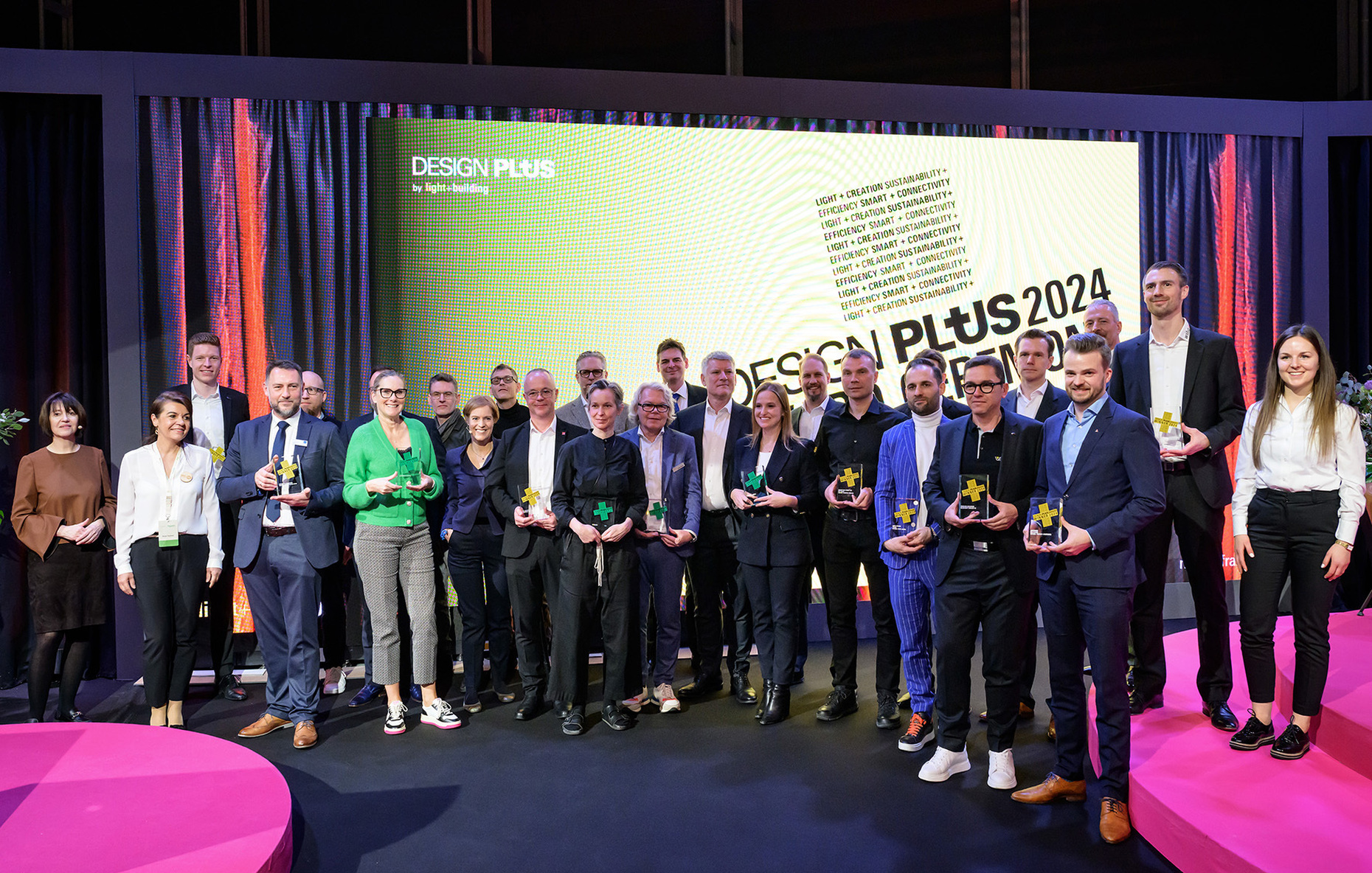
The Designplus Award, for example, is presented in collaboration with Stylepark during Light + Building to honour products and concepts that combine design quality, technical innovation and forward thinking. Why are awards important for the industry?
Steffen Larbig: Prizes such as the Designplus Award offer visitors important guidance by highlighting special products and developments. At the same time, they are a recognition for companies, which can thus communicate their innovations more effectively. Award ceremonies are also important meeting places for the industry. They create moments of community, promote exchange and strengthen the network. Their significance is therefore enormous. In 2026, the IALD International Lighting Design Awards will be presented for the first time at Light + Building in Frankfurt am Main; until now, the award ceremonies have only taken place in the USA. This will significantly increase our international visibility in a target group that is important to us.
To what extent is artificial intelligence used at Light + Building?
Steffen Larbig: We are addressing this topic with the AI Lounge. This is a first concrete step. Artificial intelligence is currently being discussed at all levels, but the possibilities are difficult to grasp in their entirety. This is precisely where we want to provide guidance, offer inspiration and give answers. I personally use ChatGPT every day, and Messe Frankfurt is already testing a wide range of application scenarios, for example for translations or the creation of visuals. Humans are naturally part of this as a controlling and creative factor. We need to develop a feel for giving efficient instructions to AI and be able to assess whether the result is usable. The technology offers enormous potential.
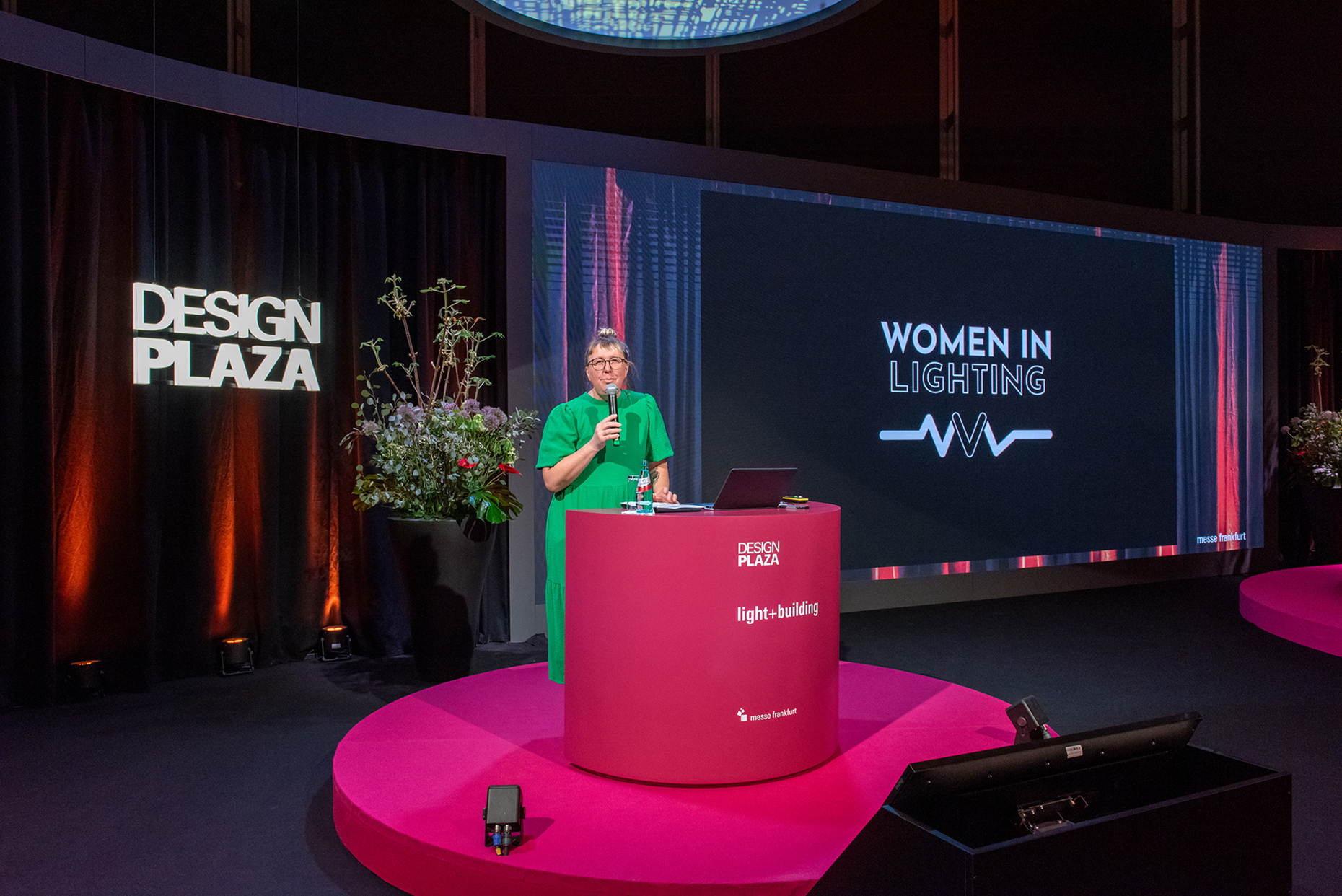
The topic of women in the crafts sector is to be given greater visibility at Light + Building 2026 – coinciding with International Women's Day on 8 March 2026. What efforts is Messe Frankfurt making to promote greater diversity in the industry, for example with regard to the Women in Lighting initiative?
Steffen Larbig: At the last Light + Building, Women in Lighting was already present at the Design Plaza on International Women's Day with talks and lectures. In 2026, International Women's Day will even be on our first day of the fair, and Women in Lighting will once again be represented at the Plaza. It is important to us to give this topic visible space, precisely because women in the skilled trades and in the lighting industry as a whole need to be given greater focus. Architect Carla Wilkens has confirmed this to us once again. She is one of the founders of Lichtvision Design and has told us in conversations about the hurdles she herself has experienced in the industry. Unfortunately, the performance of women and men is still often evaluated differently in current social structures. As an institution and as individuals, it is therefore important for us to take a stand against structural sexism. In addition to ‘Women in Lighting’, we also highlight women in our trade campaign. Passion for a subject and the quality of work cannot be tied to a gender, and the industry should take a clear stand on this.
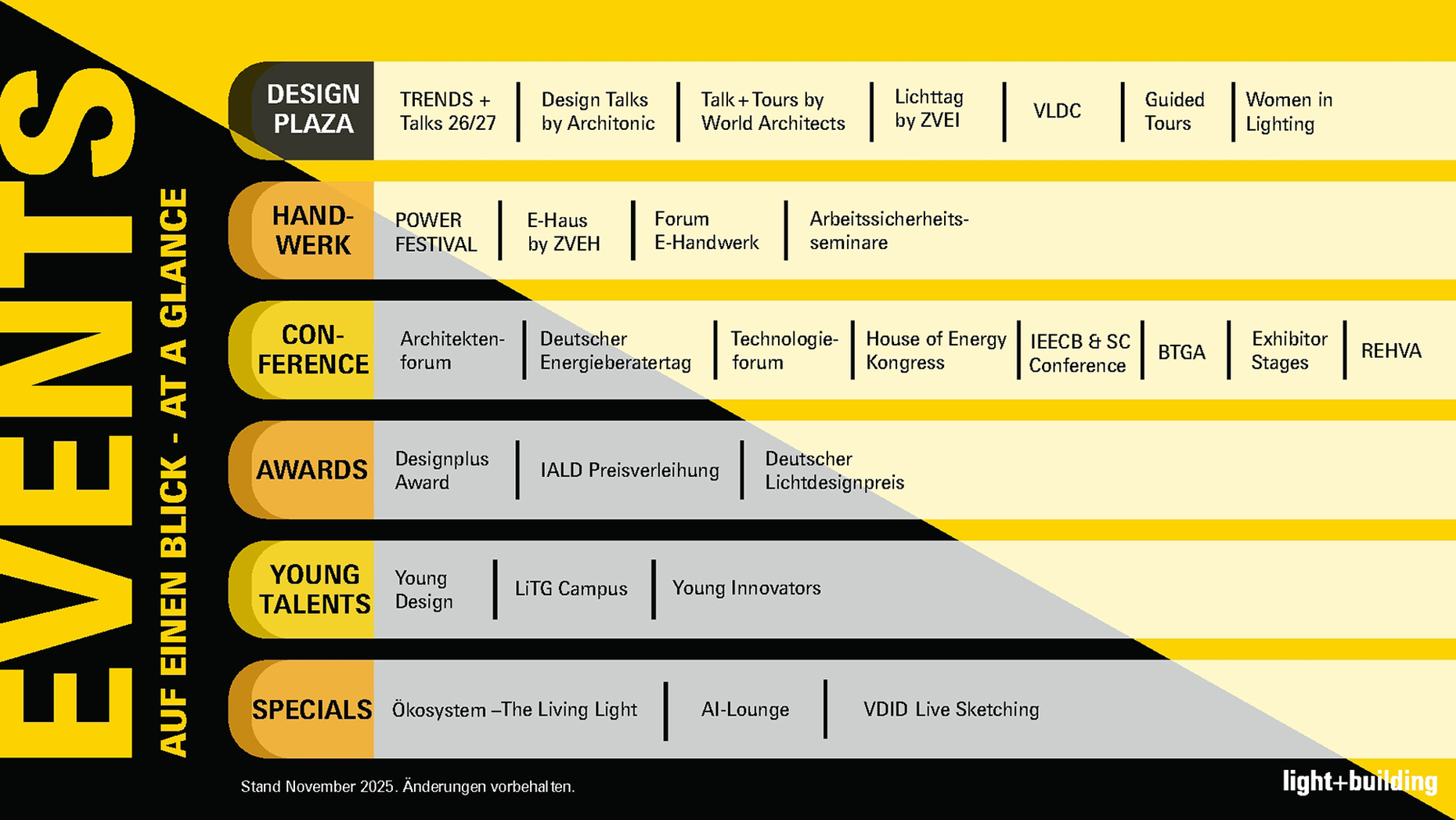
The building technology and trade sector is very event-driven, from the Power Festival to the AI Lounge, the workshop street, the master craftsmen's breakfast, numerous lectures, the walk-in ZVEH E-HAUS and the hot air balloon in the Agora. Why so much action?
Steffen Larbig: Experience-oriented communication plays a particularly important role in the field of building technology and skilled trades. Many topics are simply easier to understand in a practical environment than in a traditional presentation. That's why we are increasingly focusing on formats that bring technology to life, impart knowledge and at the same time provide a stage for the community. The Power Festival, for example, builds on the workshop street, which traditionally has a strong focus on training and young talent. For many exhibitors, this is an ideal platform to show their products and innovations to the younger generation – in an environment that is fun and actively engaging. Together with content creators, we also use the wide reach of our social media channels to raise awareness of these topics. Craftsmanship is attractive, modern and versatile – and that is exactly what we want to show. Formats such as the AI Lounge, the Master Craftsman's Breakfast and the walk-in ZVEH E-House also contribute to not only presenting technical developments, but also making them directly tangible. Innovations can be found in all areas of Light + Building – in lighting as well as in building technology. The event formats help us to adequately reflect this diversity. Another aspect is the further development of the trade fair itself. In 2026, the Power Festival will move from Hall 9 to the gallery. With daylight and new spatial possibilities, we can completely redesign the ambience and use two levels. This makes the format even more open, lively and inviting.
Parallel to Light + Building, events such as the House of Energy Congress will be held to address key issues surrounding the energy transition. What message does the programme send to policymakers?
Steffen Larbig: The event itself is already a signal. Electrification is the technology of the future – the topics we cover, such as the energy transition and increasing efficiency, affect every industrialised nation globally. Emerging economies are also increasingly looking for solutions to use their resources and renewable energies more efficiently. As a trade fair, it is important for us to reflect this, as we have an international reach. At the same time, we consciously seek dialogue with leading political figures and invite them to Light + Building so that they can see the latest developments and innovations for themselves.
You have been managing Light + Building for about a year now. What is one key insight you have gained during this time?
Steffen Larbig: The impact of our themes, such as energy efficiency and sustainability, stems from the interaction with the internationality and innovative strength of the exhibitors and our offerings. Our global network is equally important: with events in various countries, we can present Light + Building where the markets are emerging and reach local companies in a targeted manner. The urgency for forward-looking solutions will continue to grow, which is precisely why Light + Building is the central point of contact for the industry.