YOUNG TALENTS
Sunbeams for the cityscape
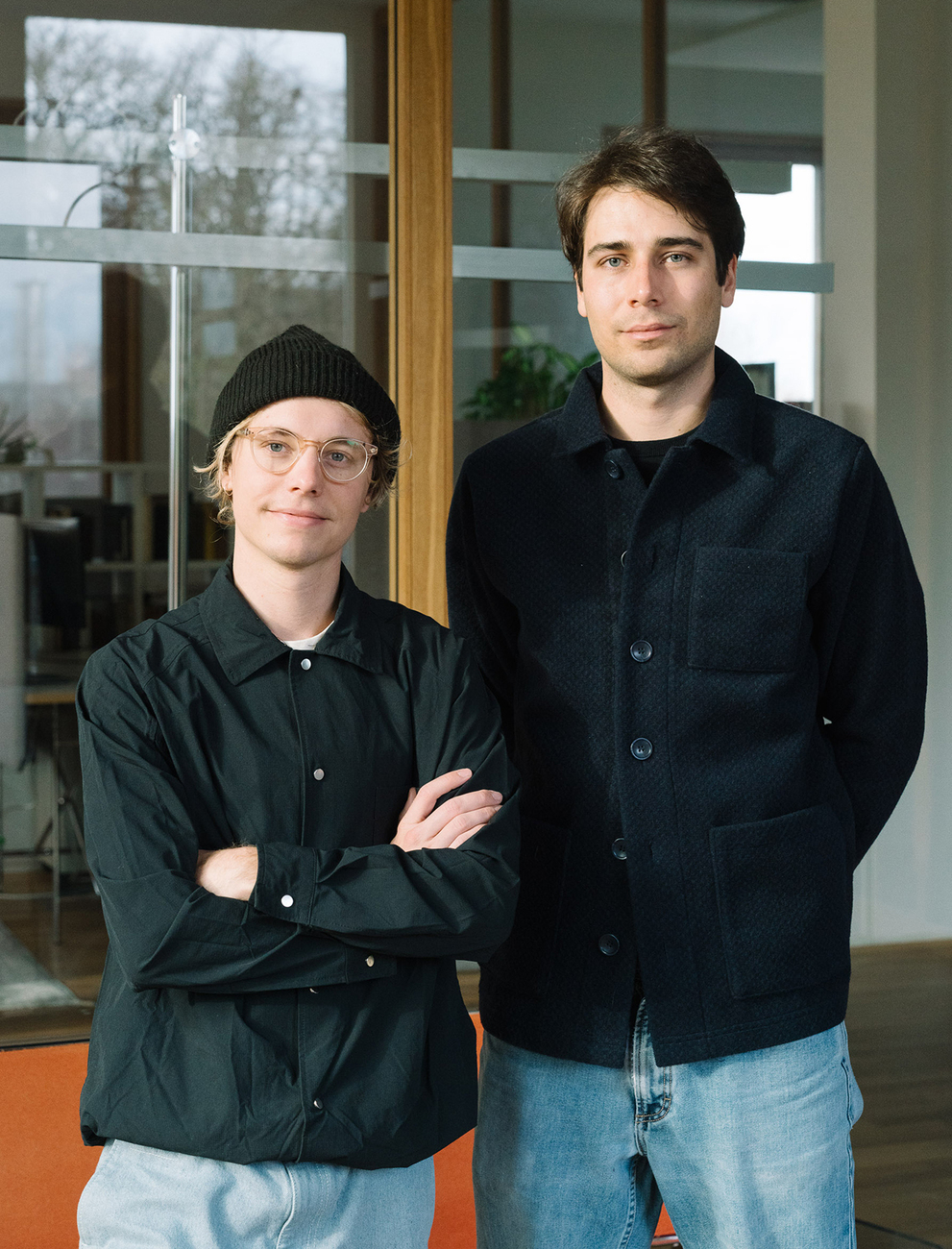
What happens when design does not detach the shape of an everyday object through unconventional aesthetics, but instead makes it more tangible for an entire society – and, in the best case, even comprehensible? Andreas Lang and Tobias Trübenbacher have often asked themselves this question. And next year, they will attempt to find an answer with their lighting concept “Main Light,” which will be presented as part of the “World Design Capital (WDC) Frankfurt Rhine-Main” program from May 6 to October 30, 2026.
“Main Light” in both senses of the word
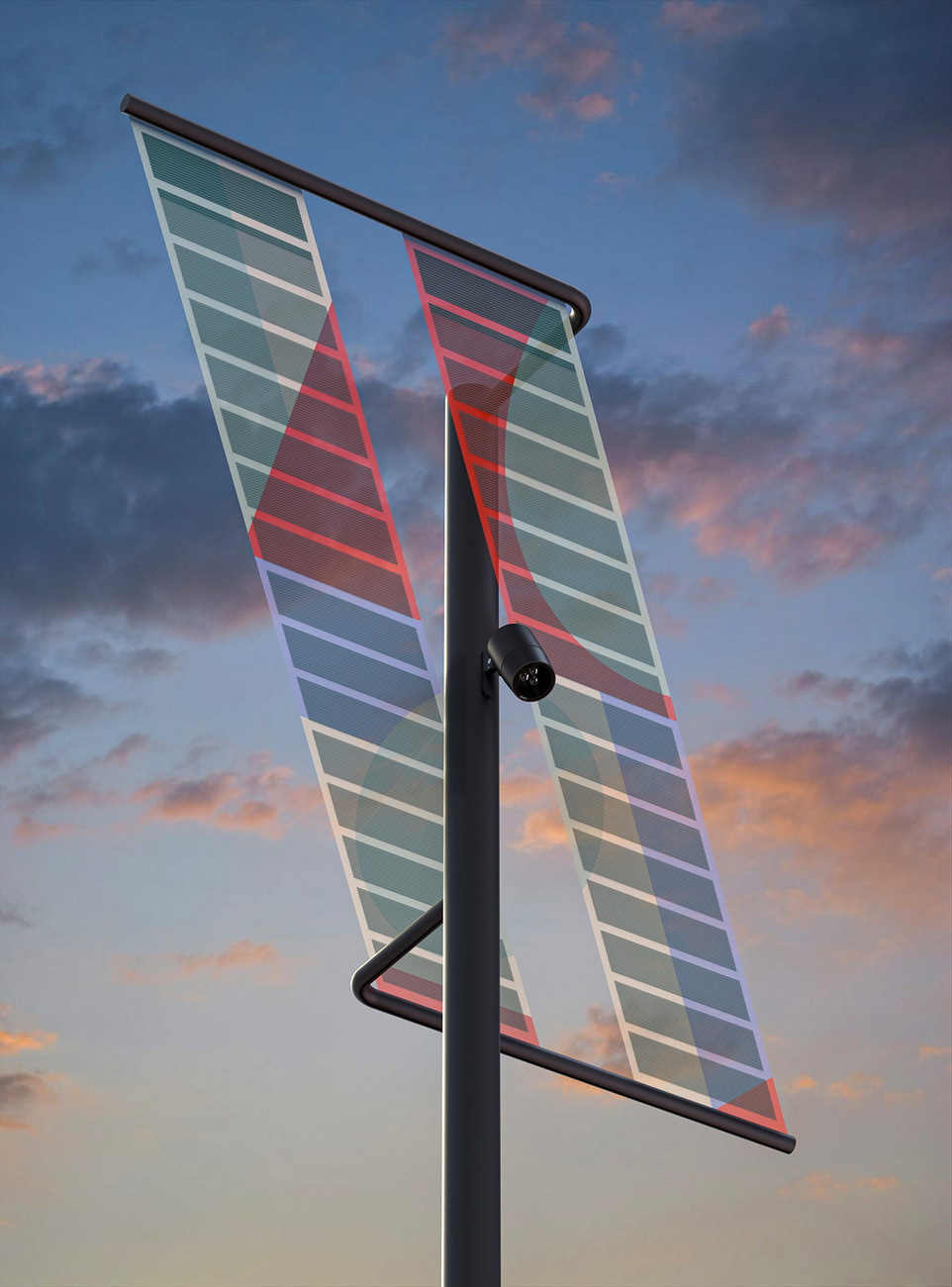
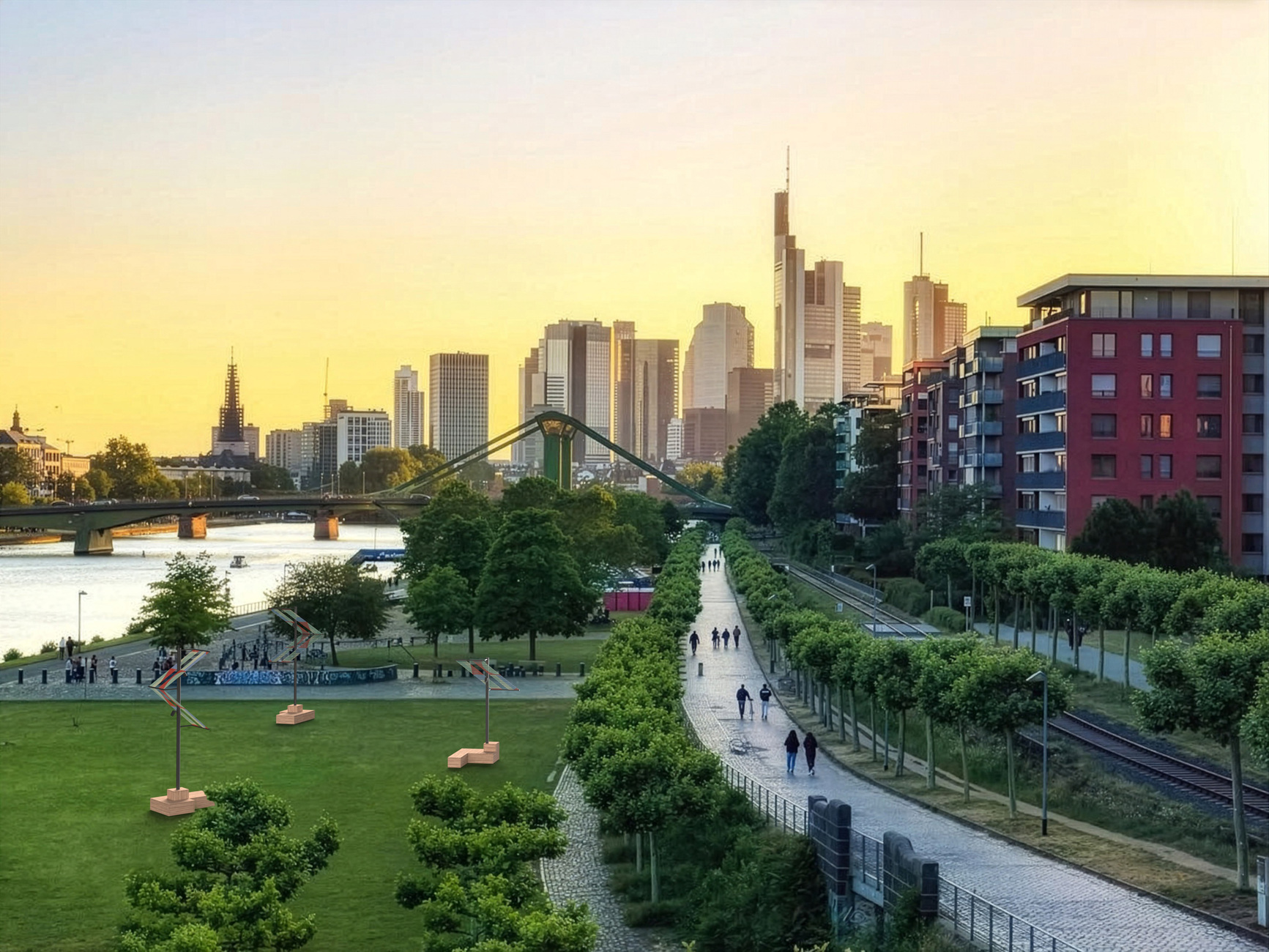
The focus of this aptly named project by the young Munich designers is equally on a cycle path that follows the course of the Main River from Frankfurt city center to Offenbach, as well as its lighting—much of which does not exist at all. This, in turn, prompted Lang and Trübenbacher to come up with a sustainable solution just under a year ago, with the aim of increasing safety and user-friendliness along the cycle path and enriching the cityscape. Of course, this is entirely in line with environmental concerns: because conventional street lighting, even when using long-life LEDs, causes significant ecological damage through light pollution and requires a high amount of energy, it was immediately clear to both designers that their “Main Light” project needed a climate-neutral approach. One that not only uses renewable energy in public spaces, but also makes it literally visible – with colorful solar films that capture sunlight during the day and use it to generate the energy needed to power battery-powered street lights after dark.
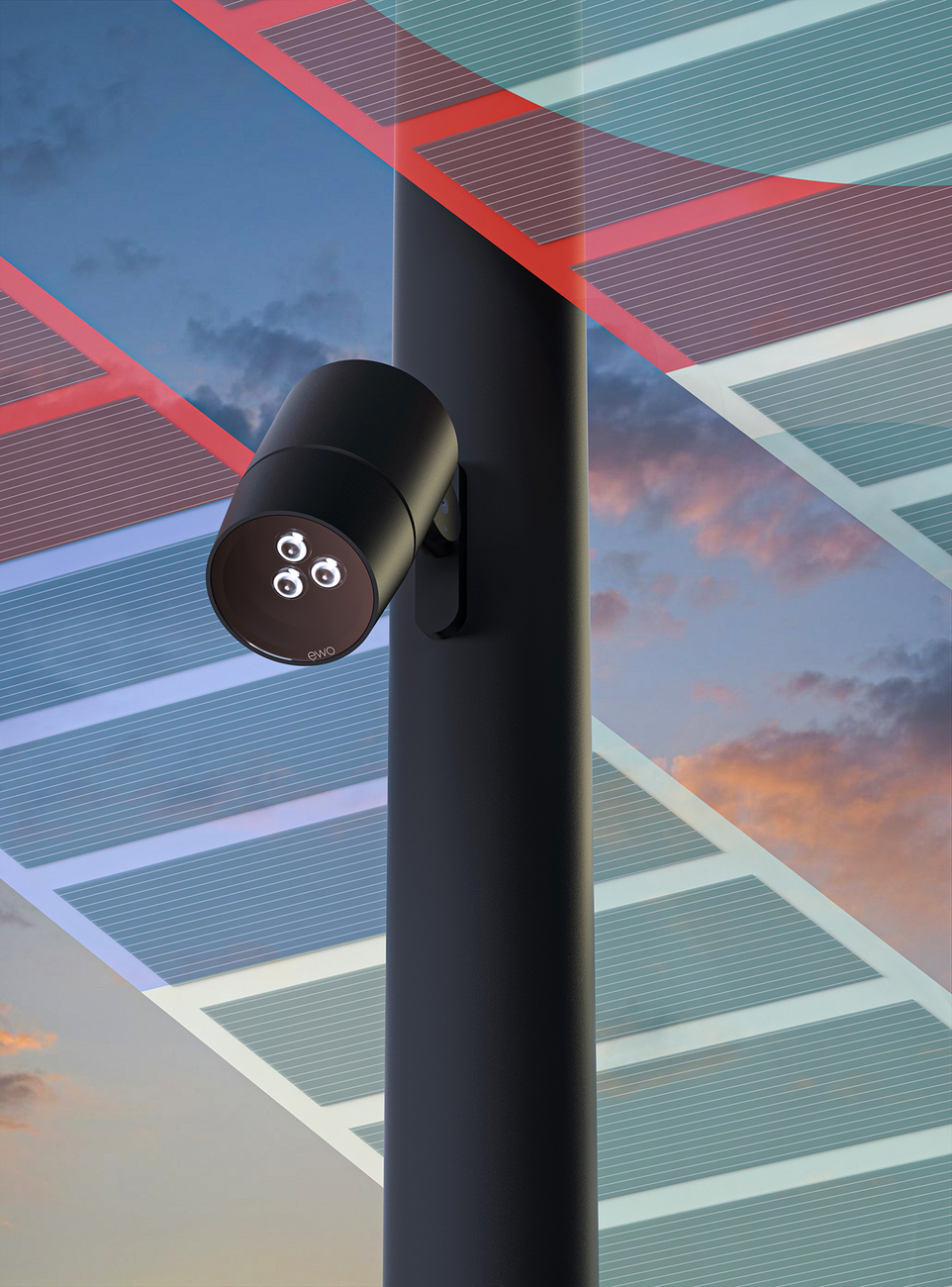
Not only is the electrical circuit self-sufficient, requiring no costly pre-installation such as power lines or a poured foundation, making it as accessible as possible for implementation in public spaces, but so is the lighting control system itself: it is sensor-operated and activated only when someone actually approaches the bike path. With the help of infrared technology, “Main Light” can even distinguish between smaller animals and humans in order to keep light pollution to a minimum. As Andreas Lang and Tobias Trübenbacher make clear in conversation, this is particularly important to the two designers. Lang unintentionally sums it up with a pun: “Today's city lighting has quite a few downsides.”
The intensity and number of light sources in the public urban landscape disrupt the day-night rhythm of humans, plants, and animals, as numerous studies have shown. Among other things, this is due to the high blue content in cold white, concentrated light, which particularly affects nocturnal animals and insects. According to Lang, this could kill around 1.2 billion insects on Germany's streets in a single summer night, based on current projections. That's why the “Main Light” solar light, developed by the designer duo together with their project partners Asca and ewo, either switches off completely at night when not in use or is dimmed to just 10 percent brightness. During the day, the solar panels provide at least partial shade. Together with additional benches, this invites people to use them as “third places” in public: without any pressure to consume, but with space for exchange and encounter.
Change needs optimism
It is a design approach that takes several aspects of social coexistence into account – and therefore fits in perfectly with the program of World Design Capital Frankfurt Rhine-Main 2026, which is committed to democratic participation in design processes and elevates them to the driving force behind urban development, social interaction, and economic change. The actual work of Andreas Lang and Tobias Trübenbacher is not limited to the construction and installation of the various solar panels of “Main Light.” Rather, the installation will be accompanied by numerous workshops and lectures on site, especially during the summer months. Lang and Trübenbacher want to invite local government officials and residents, as well as other designers, and promote discussion of sustainable urban design through information boards and posters. “The technology needed for an energy transition is already available today,” says Trübenbacher with conviction. “What is missing is the will in society to use it—and the optimism that something can be achieved with it.”
That being said, the two young designers also need a little faith in the implementation of their project. Although their inclusion in the WDC Frankfurt Rhine-Main program is a success in itself, it does not mean that bureaucratic hurdles will be cleared any quickly. Specifically, the project involves a section of the nearly six-kilometer-long bike path between Frankfurt's Flößerbrücke bridge and Offenbach's market square, which runs through a nature reserve. Although Lang and Trübenbacher have made extensive preparations for their project and are consciously promoting resource- and environmentally-friendly street lighting with “Main Light,” the local authorities have thwarted their plans in the protected area. “We really went through a lot of hoops and had to deal with at least 15 different departments and agencies,” says Andreas Lang. “But when it comes to lighting, every country in the EU has its own rules – and so do the municipalities themselves.”
As an alternative solution, Lang and Trübenbacher are now using a 50-by-50-meter open space along the Wesel shipyard on the opposite bank of the Main River, which will serve as a “test garden” for the lighting concept and as a basis for further project development. But that is precisely what being a designer is all about for him, says Lang. The job is a democratic process with different opinions – and a corresponding number of iteration stages.
Let a light shine
The young Munich-based designers – both under the age of 30 – are already familiar with this from previous projects. There, too, the duo literally caused a stir with an idea: “Papilio” pursues the very similar idea of sustainable street lighting with an insect-friendly light spectrum. The only difference is that the electricity is generated from wind power instead of solar energy. Trübenbacher developed the concept for his bachelor's thesis; he is now working with Lang to turn it into reality in a small Danish town. Cities around the world have expressed interest, and the two designers are even in contact with Guam, a tiny island in the Western Pacific. Only in Germany is it still difficult to fulfill the desire for change with climate-friendly design solutions. “Our work is not a sprint, but a long-distance run,” says Tobias Trübenbacher. In the case of “Main Light,” this can even be applied to a bike path. It is to be hoped that the visibility of sustainable urban design in the course of WDC 2026 in Frankfurt Rhine-Main will trigger a rethink in public discourse – and that one or two people will finally see the light.