Soft protest
Curator Dr. Katharina Weiler has compiled works for Wool. Silk. Resistance. that offer numerous perspectives, both in terms of craftsmanship and theme. Traditional techniques such as knotting, weaving, and tufting are combined with modern technology to create rugs whose motifs are directed against traditionalism, discrimination and racism, environmental destruction, sexual abuse, and political power structures. The creators question the hierarchies of our societies and arts, strive for self-empowerment, and create powerful images that stand in stark contrast to the soft material of the textiles from which they are made. The dissolution of boundaries extends to formal expression: the familiar flatness of the rug sometimes grows into a three-dimensional sculpture, literally spilling into the room or traversing it in a long track. Exhibits also serve as a canvas for video projection and, equipped with a ceiling mirror, as a walk-in, multisensory experience.
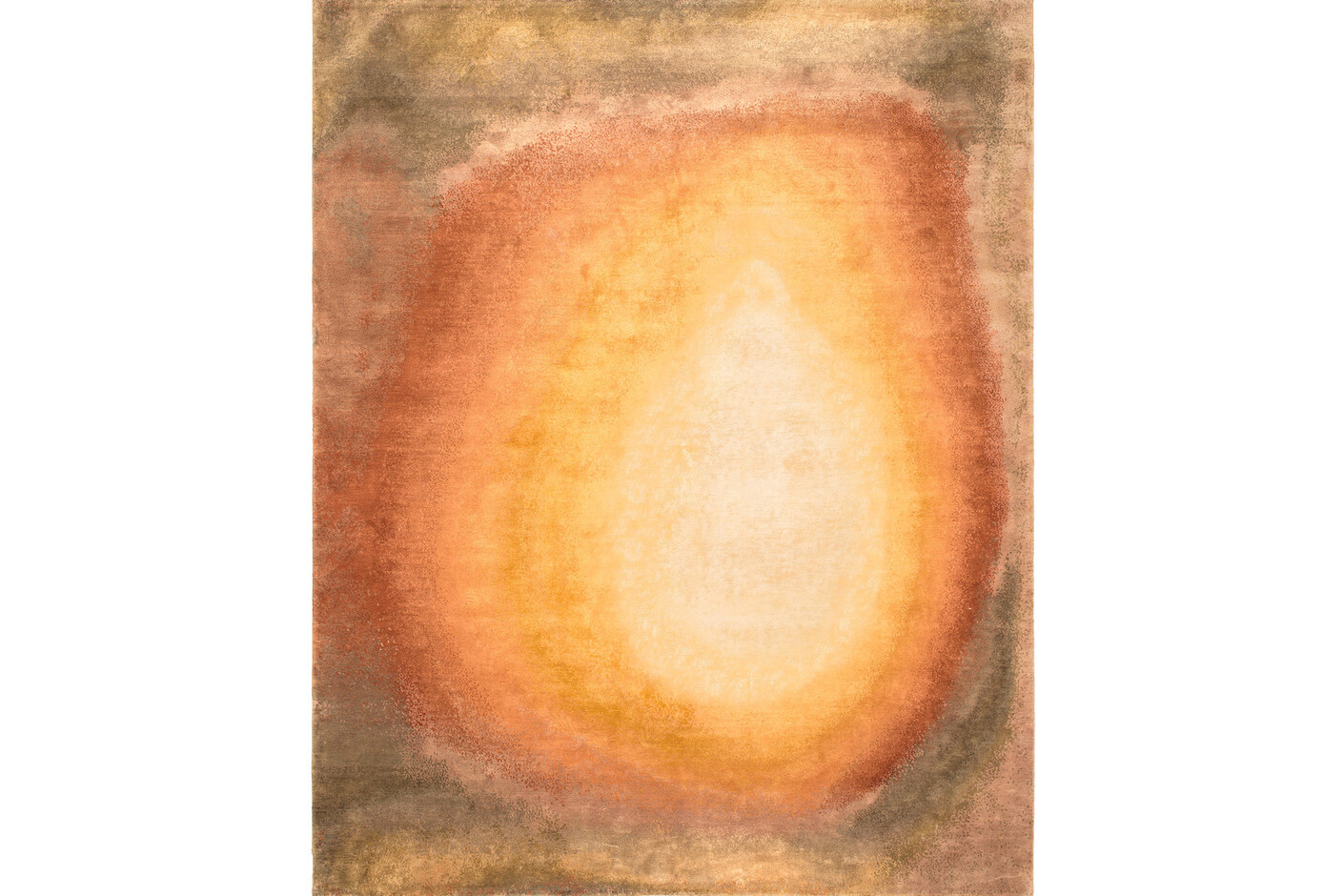
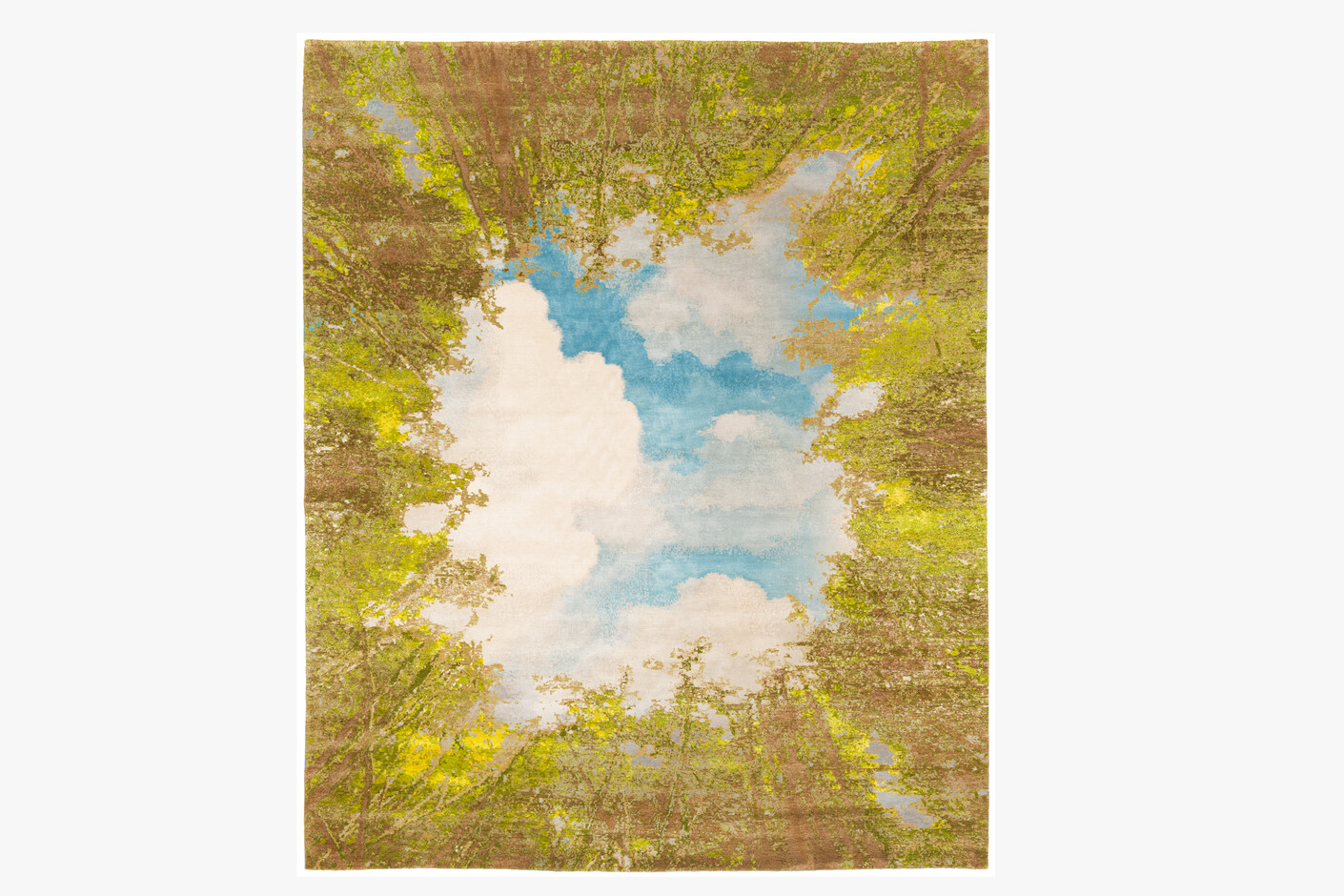
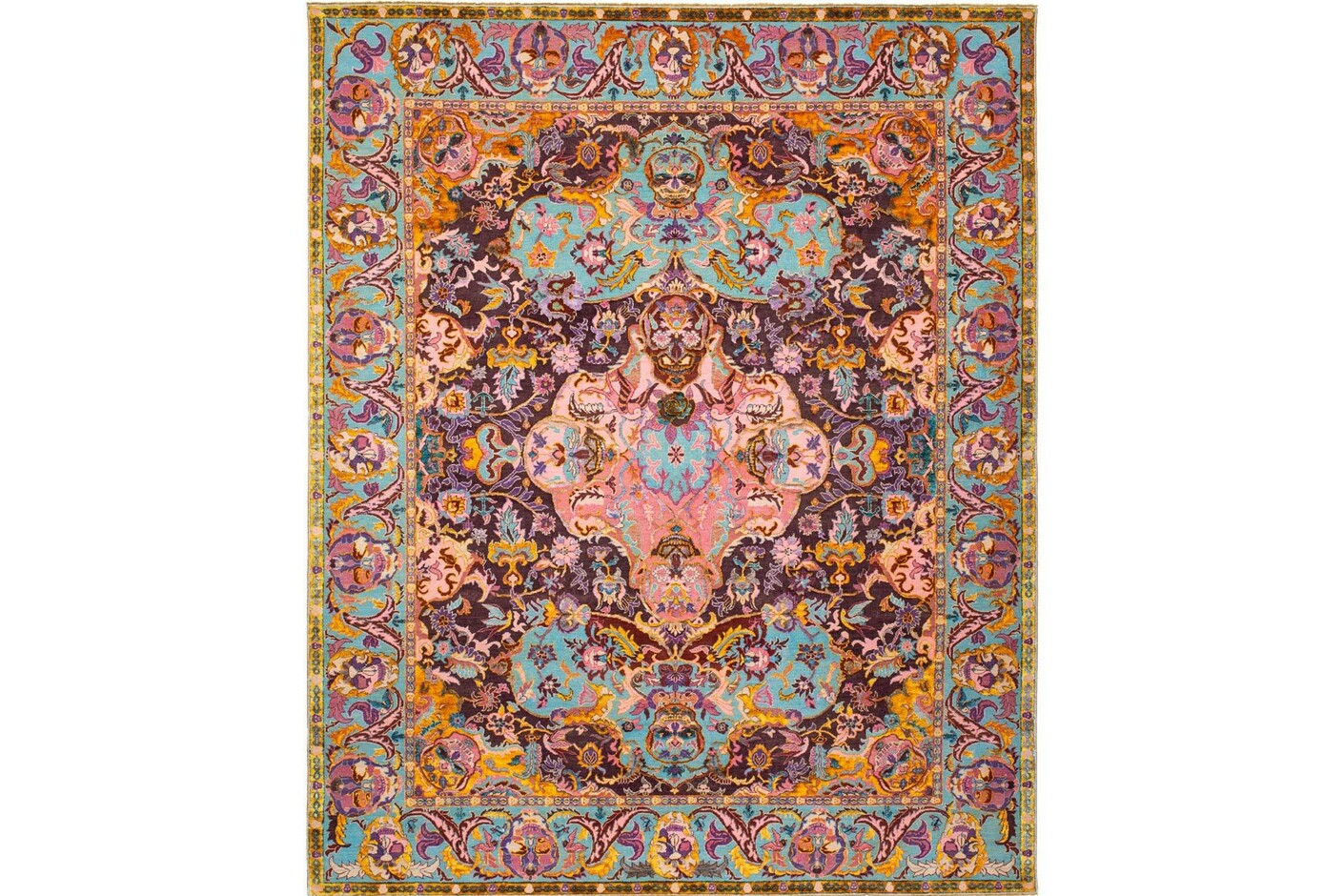
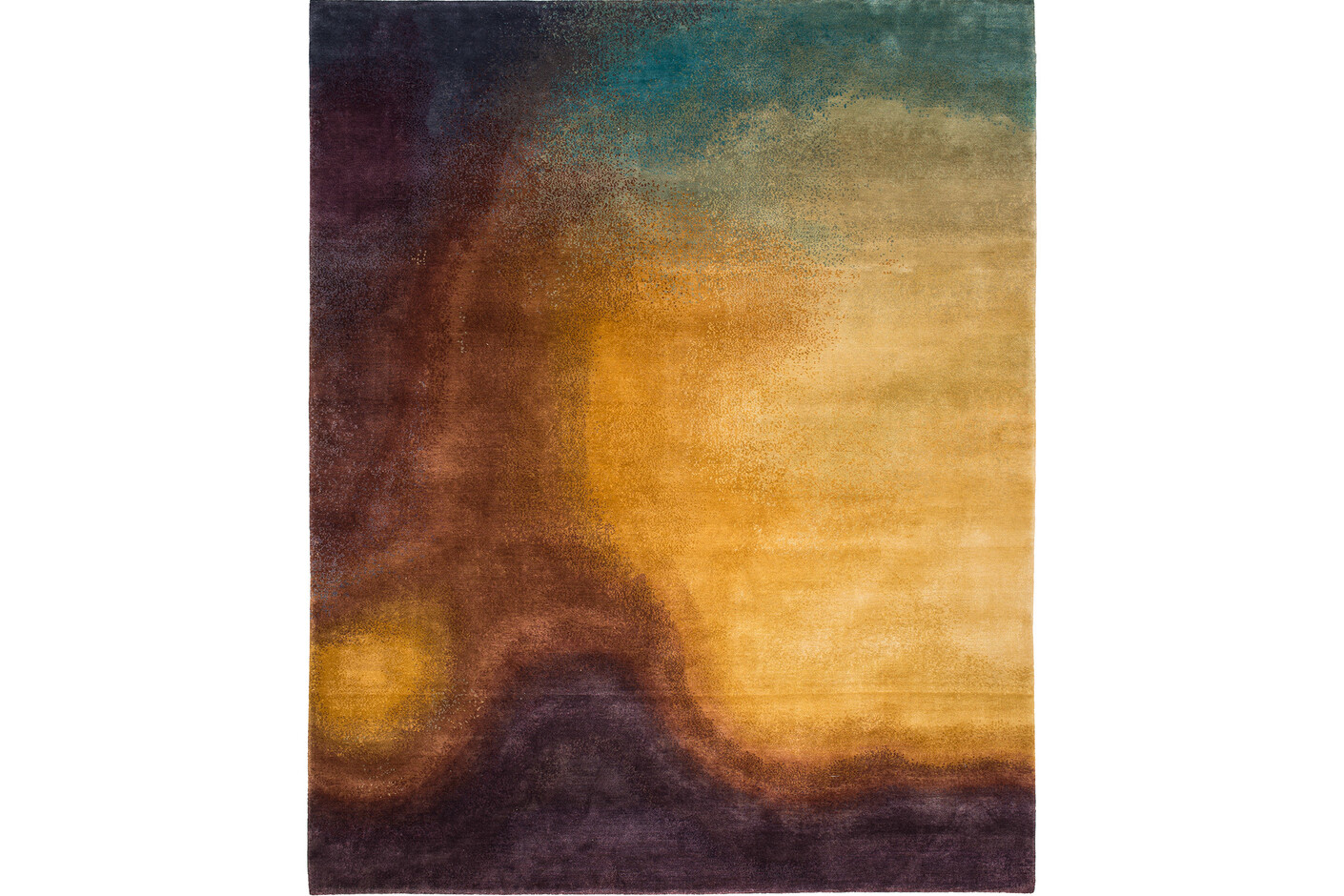
Jan Kath presents several works in his “Rug Bombs” series: “Group of People Walking,” “Stopover,” “Family Walking,” and “On High Seas” show shadowy black figures on an abstract background. Hand-knotted from Tibetan highland wool and Chinese silk, these works symbolize displacement, flight, hope, and despair, combining hell and paradise within themselves. Kath is known for breaking with conventional styles by combining classic elements of Oriental carpets with contemporary design and interpreting photorealistic motifs in textile art. With “Alcaraz Sky” and “Verona Vendetta,” he deconstructs classic patterns and challenges our viewing habits. “The rug can be more than just an ornament and a luxury item. It can be a carrier of memory, of disruption, of discourse,” he says.
In “A Foolish Pleasure in Wicked Schemes,” Jeroen van den Bogaert uses a triptych made of machine-woven cotton to explore the stereotypical phenomenon of masculinity, from heroism and tragedy to aggression. Staged as collages, the absurdity of the gestures becomes apparent, their meaning lost in the hustle and bustle, the often threatening claim to grandeur appearing refreshingly ridiculous. Faig Ahmed, meanwhile, takes up the tradition of 15th-century Anatolian carpets with “Virgin,” made of hand-knotted wool. In the course of the work, the flat rug becomes a blood-red mass composed of many fine threads. With this textile sculpture, he questions the rites, customs, and gender roles of traditional Azerbaijani society, the iconized role of virgins, and the myth of the hymen. “Virgin” is thus also a warning image that visualizes the social pressure, human rights violations, and social control to which women in traditional communities are subjected.
German artist Tobias Rehberger has created double images made of hand-knotted wool, entitled “Dolores Huerta in Chinese teapot” and “Koloman Wallisch in glazed ducks,” which feature textile reliefs with varying pile heights. “Koloman Wallisch in glazed ducks” is a textile work that shows four ducks on strings and contains a two-thirds portrait of the social democratic politician Koloman Wallisch. As a labor leader, he called for resistance against the fascists and was hanged by the Nazis in 1934. For “Dolores Huerta in Chinese teapot,” Rehberger abstracted the motif of a teapot as the portrait of the American trade unionist and civil rights activist Dolores Huerta (*1930), who has been campaigning for the rights of marginalized groups for decades. The work thus refers to her commitment, as it addresses questions of authorship and boundary setting in art.
Johannah Herr's colorful, cartoon-like ornamentation also reveals its thematic depth only at second glance: the “American War Rugs” made of tufted wool and acrylic each tell a story of state violence in the USA. The rugs become testimonies to deeds and serve as activist tools at the same time. "We need all forms of resistance, large and small, to bring about real change. At both the micro and macro levels, we must question and push back against hegemonic narratives and systems that support hierarchies based on class, race, gender, sexual orientation, or ability. I continue the textile tradition of Afghan war rugs, which translate the horrors of US imperialism into knotted carpets. My rugs draw on this visual and material language to criticize state-sanctioned violence inside and outside the US," she says. Noelle Mason's “Ground Control” series also depicts historical sites of conflict on the border between Mexico and the US. The fascinating motifs are based on textile satellite photographs that connect human destinies with abstract images of the earth. Arrogant demarcation, dehumanization, and surveillance are symbolically brought back down to earth. The incomparable beauty of the Earth in the aerial photograph makes us question geopolitical conflicts at the same time.
The multifaceted positions in Wool. Silk. Resistance. show how traditional craftsmanship and new technologies can be combined for contemporary criticism. They serve as a catalyst for discussions about design, production methods, and social realities. (am)
Wool. Silk. Resistance.
Until May 24, 2026
Museum Angewandte Kunst
Schaumainkai 17
60594 Frankfurt/ Main
Opening hours (may vary on public holidays)
Mon closed
Tue, Thu to Sun: 10 a.m. – 6 p.m.
Wed: 10 a.m. – 8 p.m.