PREVIEW – SALONE DEL MOBILE 2026
Always breaking new ground
Anna Moldenhauer: The difficult economic times are continuing. Many manufacturers are hesitant to invest in product development due to uncertainties about the future, and we must always be prepared for the unpredictable. How are you dealing with this situation in your strategic planning for the direction of the Salone del Mobile?
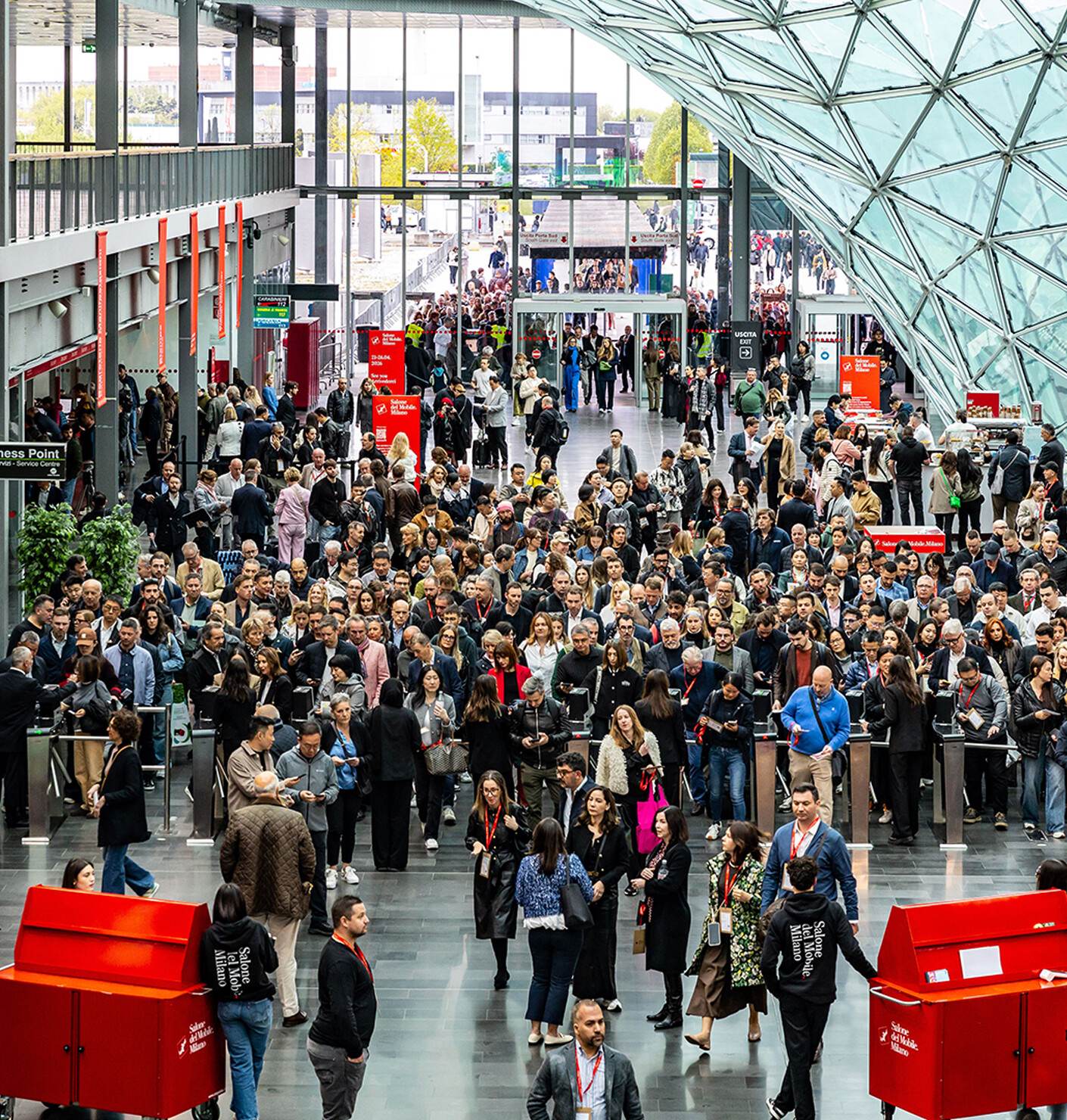
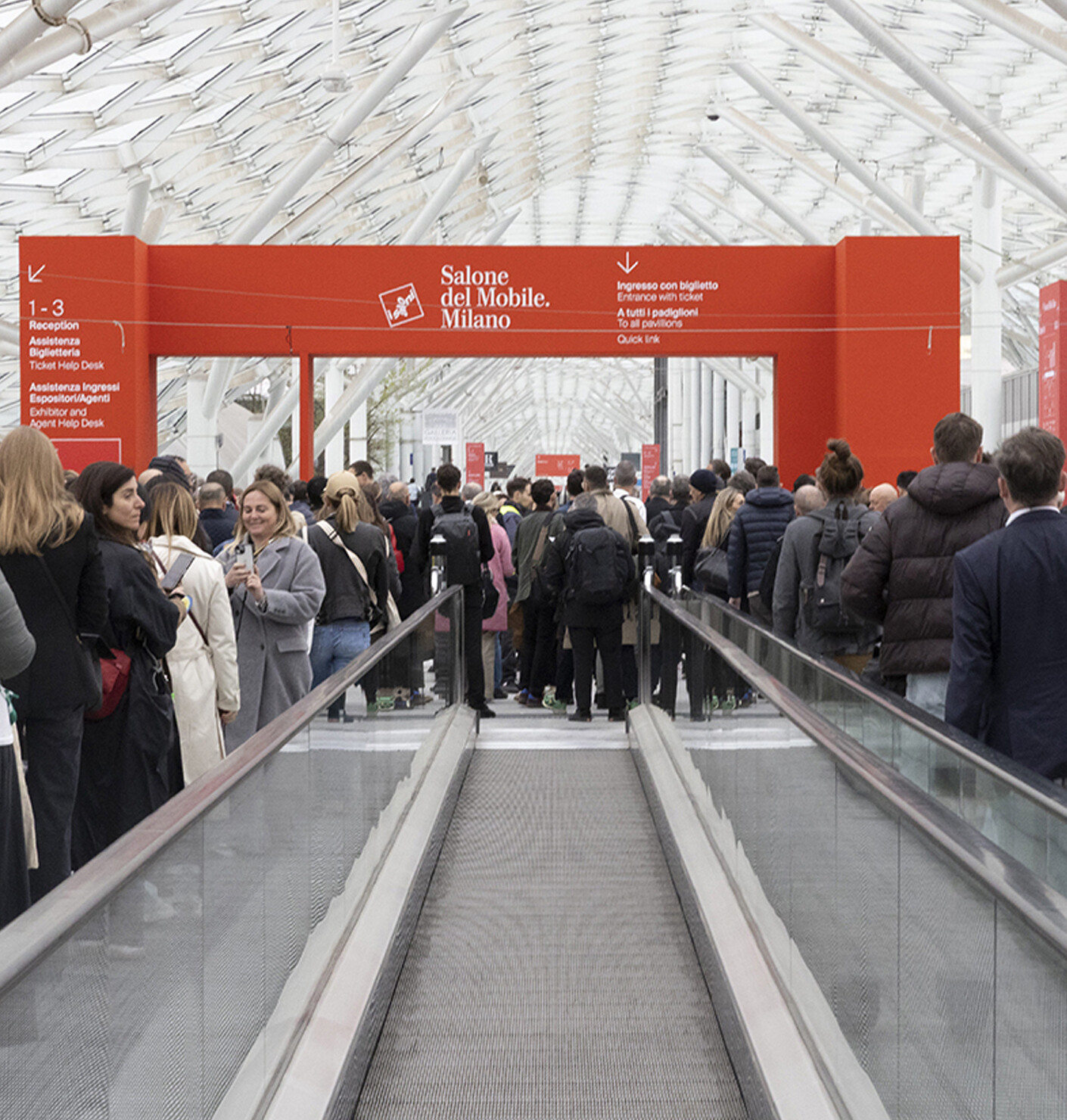
Maria Porro: It's true, we need to take the situation we find ourselves in into account more than ever. This also means that many markets around us that have been functioning well for a long time are now fluctuating. Sales methods and models are changing, as is the way we communicate our products. Artificial intelligence also makes it more difficult to understand what quality is and what it isn't. So there are many challenges at the moment. What is certain is that the fair is a physical event. You can touch, feel and try out the products. It is an opportunity for exhibitors to show, without compromise, that the quality of their work is of global significance. The efforts and strategy of the trade fair are aimed at achieving this international level. That is why we are using proactive advertising to encourage journalists from abroad, as well as players in the design industry and buyers, to come to the Salone del Mobile.
When it comes to products, we have to be precise in what we develop – and by that I also mean the Porro company, where I was born. I believe in consistency, in continuous development and research, where new products are not simply thrown onto the market in the hope that someone will buy them. In the development of concepts that change over the years. We must not stop investing in research and development, because that is what makes the difference. At the same time, the market in certain countries is no longer as fast as it used to be, while processes elsewhere have accelerated. It is therefore important for the industry to be able to use the Salone del Mobile as a global platform, and we are constantly working to optimise the offering for everyone.
In this context, the Salone del Mobile is opening up new markets, such as with ‘Red in progress. Salone del Mobile.Milano meets Riyadh’ in Saudi Arabia, or with regard to the collaboration with Art Basel Miami Beach and Art Basel Hong Kong. Why did you decide to pursue these projects?
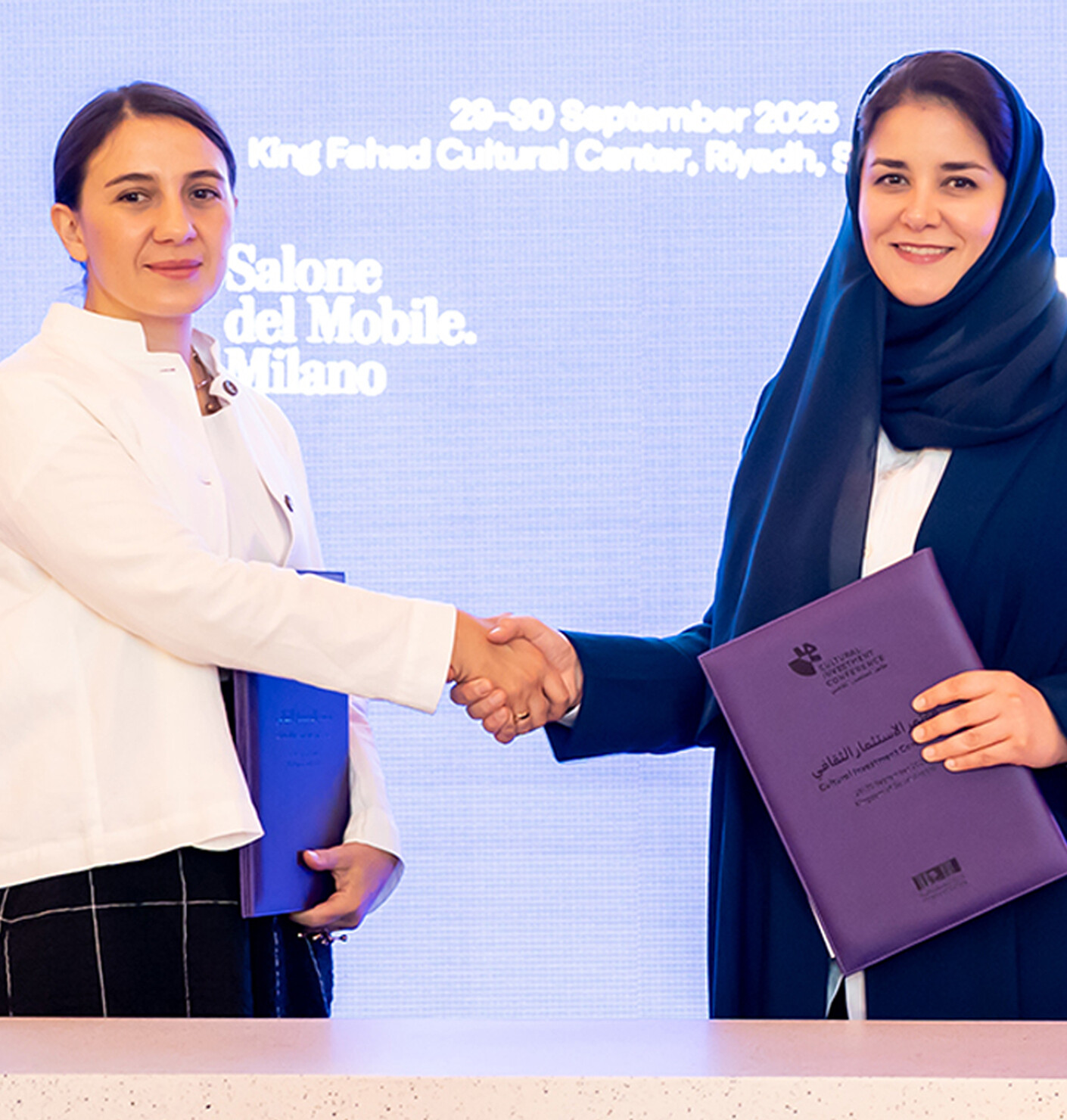
Maria Porro: Saudi Arabia is an important hub for the entire Gulf region; that's no secret. Numerous major developments are taking place there, such as real estate and hospitality projects. The region is a huge workshop for new trends and materials. At the same time, its geography also poses major challenges in terms of weather. It's a very interesting place. That's why we decided to organise an event there to help companies reach the right stakeholders. Conversely, we want to help local creatives find the right companies. The event was organised in cooperation with the Architecture & Design Commission of the Ministry of Culture of Saudi Arabia and kicked off with the presentation of a market study of the country, which was conducted by the Italian Embassy exclusively for the exhibitors. So it's a very serious approach to a market.
When you think about our target audience in Basel, it's very important to offer not only B2B but also B2C, and at the highest level. This is an area that is still in the growth and development phase. Art Basel is a remarkable brand that has a lot in common with our values and goals. We are furnishing the Collectors Lounge at the fair. Hong Kong also has impressive economic power, which has intensified in recent years. Investment in architecture, design and culture is on the rise, as exemplified by Herzog & de Meuron's ‘Museum M+’, to name just one example. It is therefore a place where cultural discussions about products can be initiated. That's why we held the extensive exhibition ‘SaloneSatellite Permanent Collection 1998-2024 Exhibition’ there at the end of last year.
You and your team have travelled extensively in recent months and spoken to numerous industry leaders. What is currently important in the industry? Is it just about economic survival or also about sustainable action?
Maria Porro: The main theme is the economy. That is why we continue to emphasise and underline the aspect of sustainability, as we believe that this highlights companies that invest in respectful production and products that are designed to last. This is an economic value, especially as we are currently dealing with contracts and large-scale projects. In large projects, the sustainability of the project is crucial, for example when designing a light fixture that consumes less energy. The impact increases with the size of the project, from a single-family home to a skyscraper. Sustainability is an obligation that everyone who works with government administrations should internalise. It can also be a competitive advantage.
The current annual report refers to Milan and the Salone del Mobile as a design ecosystem. The number of events in the city, including those organised by the trade fair, has increased. Do you plan to further expand the ecosystem beyond the exhibition halls in 2026?
Maria Porro: Many of the exhibiting companies are already present in the city in small or large ways throughout the year. At the same time, we have long-standing partnerships with the Triennale, the Compasso d'Oro, the Castiglioni Foundation and other foundations with which we collaborate, from the most important cultural institutions to educational institutions. I am thinking of the Polytechnic University, but also of the Luigi Bocconi University of Economics. We have deep ties to the city. With last year's major events, we wanted to send a strong message that the city should not just be used as a backdrop or a location. It is a call for more respect. This year, we will be showcasing Milan's ‘forgotten architecture’. We want to use these offerings to create a very fruitful exchange. We are currently focusing on the needs of companies, on organising smaller events such as master classes and the Forum Contract, in order to support the local network in the city and help it gain more visibility.
Thanks to your interdisciplinary training, the Salone is moving closer to the arts. Creative minds such as Es Devlin, Bob Wilson and David Lynch have created installations for the Salone in recent years and participated in the lecture programme. What message do you want to convey with these offerings?
Maria Porro: It's a shared opportunity. I grew up with a grandfather who was a craftsman and pianist, and I studied at the art academy. During my training, I had the opportunity to work with Alessandro Mendini on a limited edition of works, among other things. The first thing I created for my company was a collector's collection called ‘Material House’, which I realised together with Sony. But it's not just about me or my experiences. Looking back, for example at the work of Italian architect and designer Carlo Mollino, there are many, many examples of this kind of collaboration. What we created together last year is already travelling around the world – Es Devlin's installation was recently on display during Miami Art Week. We have sown the seeds that are now growing internationally and hope that our message will reach many people.
The current campaign, ‘A Matter of Salone’, revolves around an essential question: what significance can design have today? The material itself, the origin of the whole, is analysed. Why did you choose this theme?
Maria Porro: Artificial intelligence allows us to create places and spaces that do not exist. We can give free rein to our imagination, but then we have to deal with real materials. This challenge brings with it limitations that are not only physical in nature, but also relate to the values we want to express and the processes that a self-designed product must go through. Do we really feel that we are limitless today? That's not the case. What's more, limits are one of the most important drivers of creativity. We should take care to preserve our connection with simple elements. Show how you can create something that offers change from what already exists. A transformative force. We should develop a greater awareness of this in the industry.
For the contract section of Salone del Mobile 2026, you and your team are working with OMA, its founder Rem Kolhaas, and the think tank AMO, which is affiliated with the architectural firm. Can you tell us a little more about this?
Maria Porro: The contract sector is constantly evolving and difficult to communicate. We chose OMA and Rem Kolhaas because they have the structure to conduct scientific research and create the curatorial master plan. To create the forum, but also to imagine how we can describe this world, how we can help companies showcase their capabilities, how we can involve leading architects and developers. It is a multi-layered project that is very challenging and one that we have been planning for some time. A curatorial master plan for the contract sector is also planned for 2027. We have decided to communicate this project now because it is a long-term project and it takes time to involve all stakeholders. It is a new development, an ongoing offering. It is designed as a platform that is also intended to be a mirror of the market. It helps us to look a little into the future. Because that's what it's all about: thinking ahead.
In recent years, you have reinforced the pioneering position of the Salone del Mobile with a constant stream of new ideas for the trade fair concept. In your opinion, what is crucial for maintaining a holistic perspective in our turbulent times?
Maria Porro: You should always start with an empty pavilion. Start with a blank sheet of paper when planning your presence as a company. This opens up incredible opportunities, but also requires responsible action. I see this as an opportunity and hope that the industry will also pursue this approach.