The illusion of an image
Anna Moldenhauer: Your work includes architectural photo collages, installations, and black-and-white sculptures, many of which are site-specific. Why is this connection so important to you?
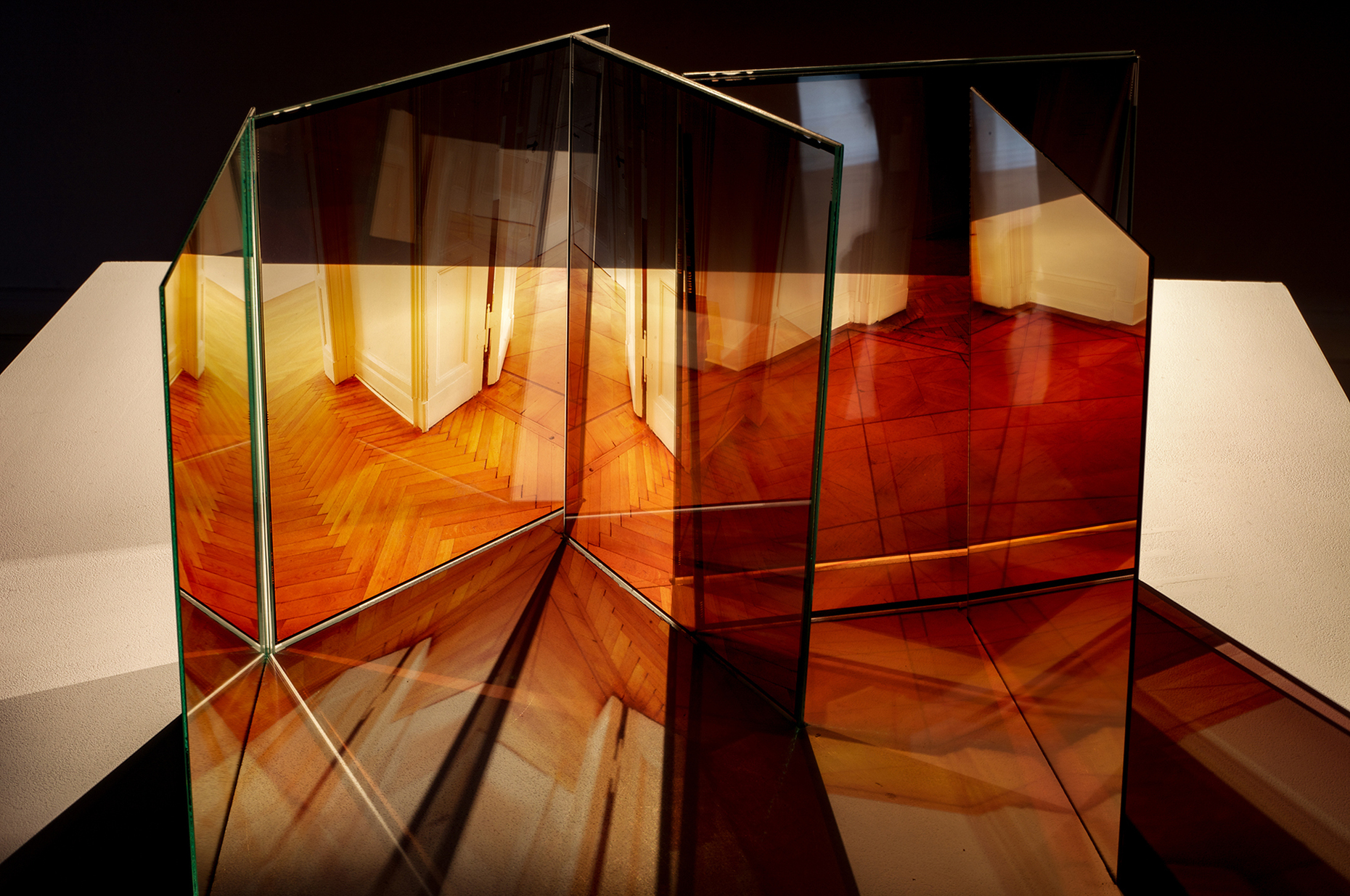
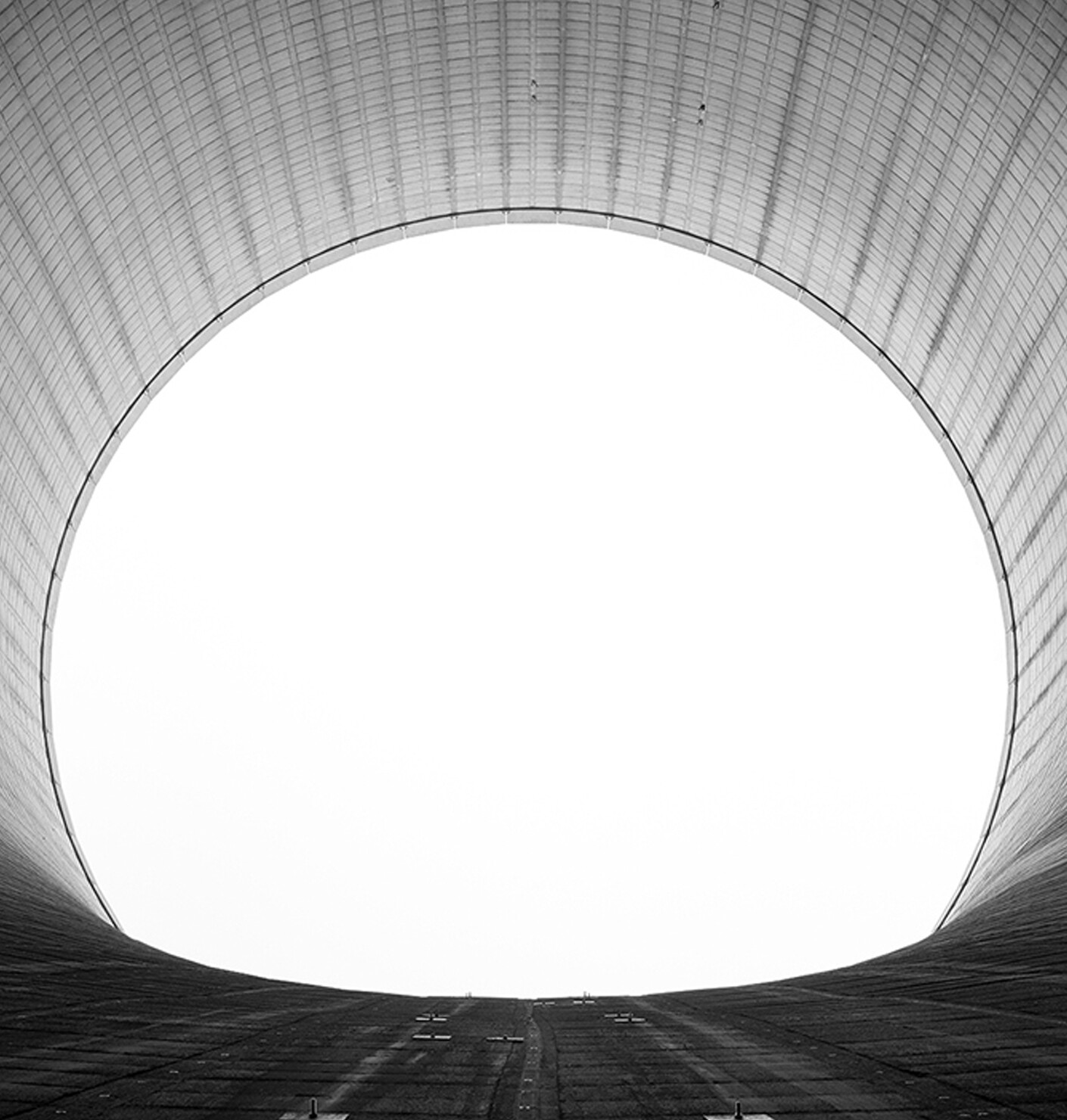
Sinta Werner: On the one hand, I work with site-specific installations; on the other, with works that are developed more from the image itself. With the installations, the specific space forms the starting point. I deliberately intervene in its conditions to create shifts and disorientations. I often transfer the logic of the image into the space – not with the aim of simulating spatiality within the image, but to create the illusion of an image within the real space. I am interested in spaces with their own history, so not the neutral white cube, but rather historically significant architecture. For Sehnsucht nach dem Jetzt, for example, I used mirrors to fan out and visually multiply the spaces in Biesdorf Palace. For Introducing Insitu – Episode 0, I worked with the specific characteristics of the site in a Berlin project space: exposed heating pipes were photographed and duplicated using black-and-white photocopies, creating deliberate shifts. At its core, my aim is to intertwine what actually exists – what is immediately visible – with the pictorial plane. Image and space overlap, creating interstices that cannot be clearly assigned to either of the two planes.
Just how effective this illusion is can also be seen in the work A Penchant for Self-Expression.
Sinta Werner: The building originally housed a bank, and there is a built-in safe in the basement. The heavy door of the safe can be seen in the background. Later, the room was used as a laundry room, which is why the washing line fits quite naturally into the scene. In the photograph, the print hangs on the bars like a piece of laundry. The room extends into the image while still forming part of the composition. Such interventions can easily be achieved digitally, but are extremely complex in analogue photography, as brightness and tonal values must be precisely matched. On site, I produced numerous test prints to determine the appropriate grey value for each one. Printing the photo directly would create new shadows and immediately shatter the illusion. Only through this careful calibration could the file be adjusted so that the print blends seamlessly into the room.
The architectural style you choose for your photo collages is usually functional, modern and largely devoid of ornamentation. What is it about these structures that appeals to you?
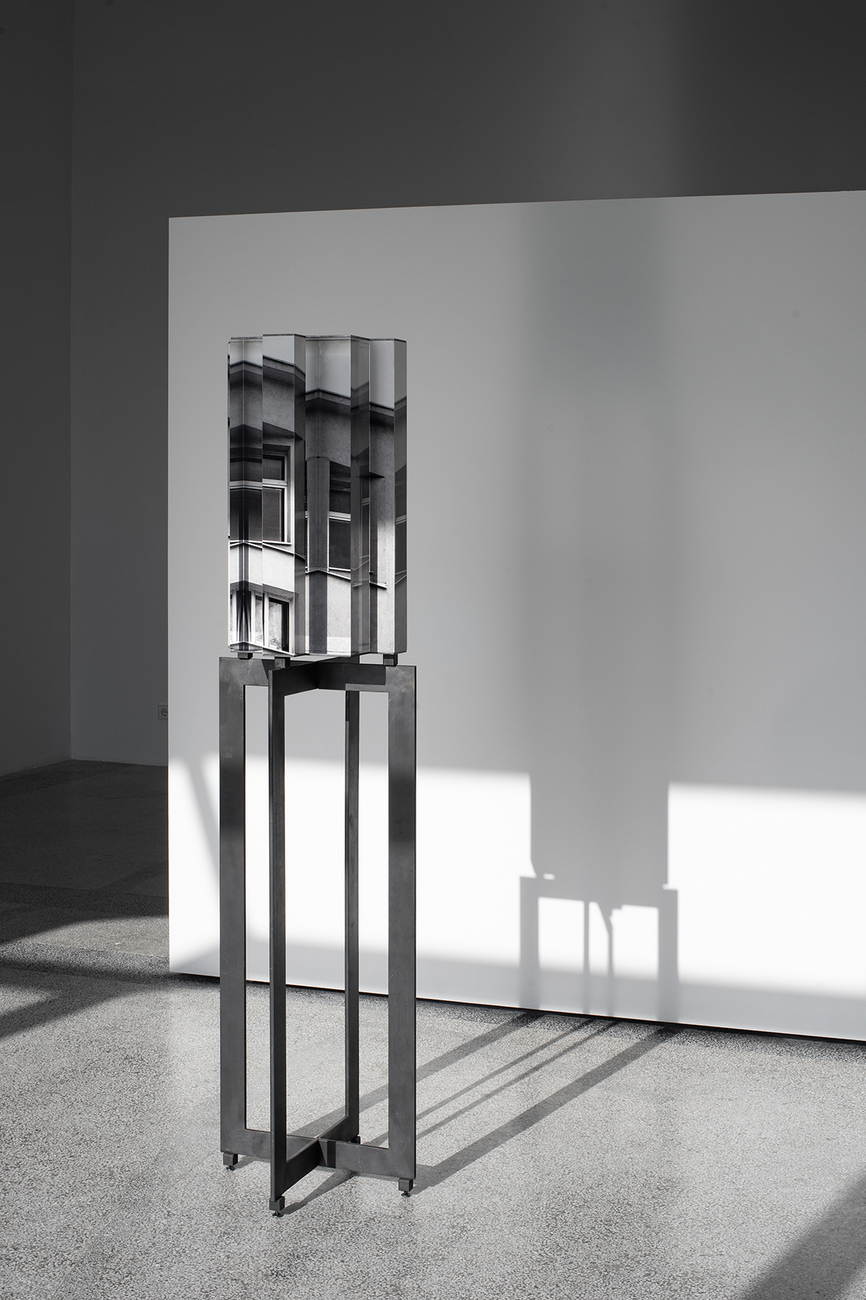
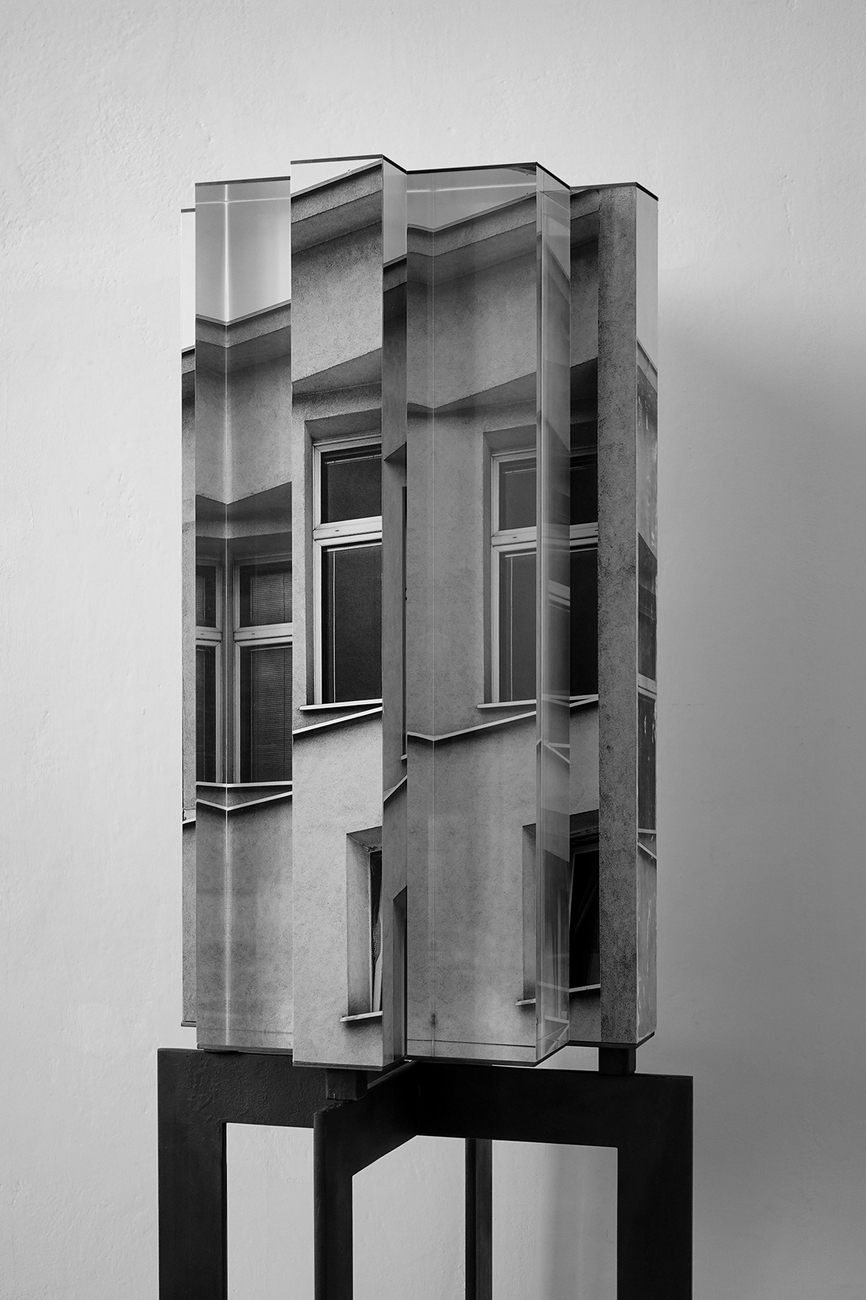
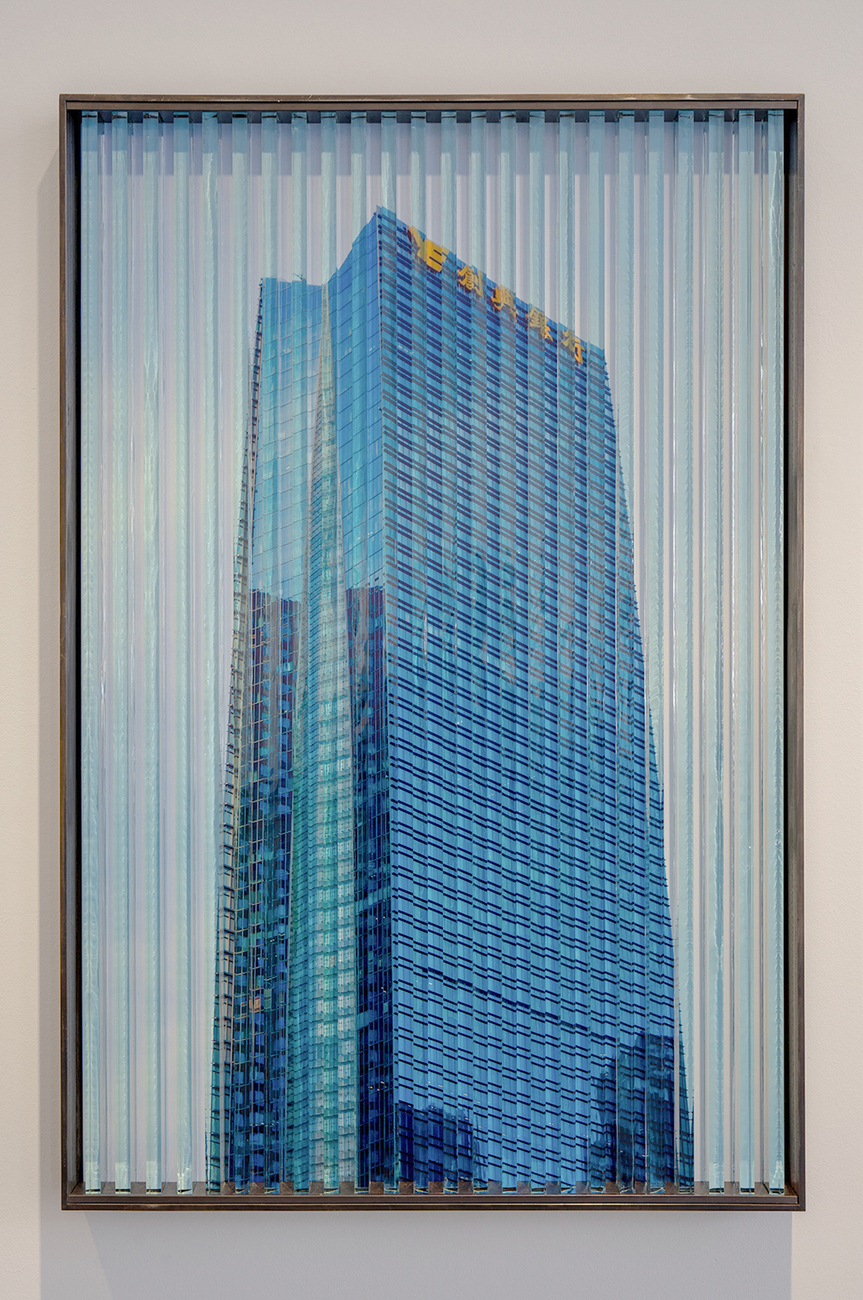
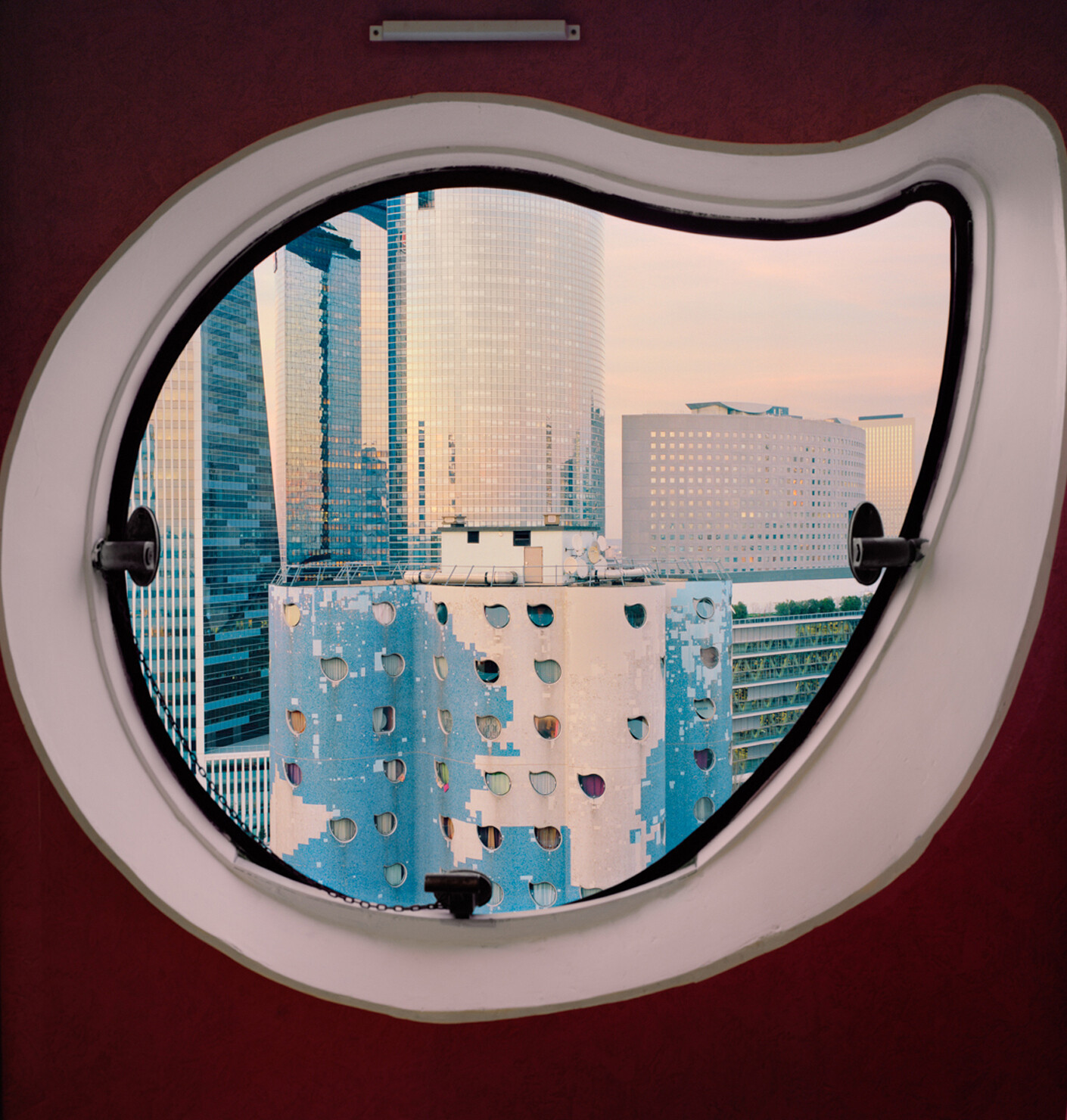
Sinta Werner: "On the one hand, I am strongly drawn to functionalist modernism. On the other hand, this choice is closely linked to my formal approach." In my early collages, I worked with folds, making simple alterations to the paper. Duplications played a central role from the outset, with architectural folds being transferred into the material to either reinforce the space or deliberately break it up. This theme continues in series such as Apartments. The clarity of the architecture is crucial for these works, as I transform it into sculptural, model-like situations. The objects evolve into simple structures that formally refer to the depicted motif. Added to this is my interest in geometry, perspective, light, and shadow. Modernist buildings, particularly those without ornamental embellishments, provide an ideal basis for this. I am also interested in the fragmentation of architecture. Materials such as acrylic or glass rods reflect and refract the motif, dissolving it in a Cubist manner. To me, modern architecture represents an idealistic promise of order and progress that I am re-examining from today's perspective. In an age where so much has become digital, fluid, and unstable, this sense of order is becoming increasingly tenuous.
Your works sometimes create a surreal in-between space that alters our perception of architecture. What fascinates you about these breaks and transitions?
Sinta Werner: I am interested in opening up the image spatially and temporally. The works engage the viewer, for it is only through movement that they unfold fully. The gaze must constantly reorient itself, causing the photograph to develop a dynamism that seems almost cinematic. At the same time, I wish to sharpen the perception of architecture in the urban space. Buildings are often perceived as static, whereas when walking past them they appear rather fleeting. In the work Korrektur der Gegenbewegung, in which stripes are twisted, I capture this moment of flow through movement. In this way, the work itself becomes an event – comparable to the perception of architecture in urban space, which is never static but always situation-dependent.
Your works are difficult to pinpoint geographically; many locations remain anonymous. Why do you deliberately avoid providing a clear context?
Sinta Werner: On the one hand, I am strongly drawn to functionalist modernism. On the other hand, this choice is closely linked to my formal approach. In my early collages, I worked with folds, making simple alterations to the paper. Duplications played a central role from the outset, with architectural folds being transferred into the material to either reinforce the space or deliberately break it up. This theme continues in series such as Apartments. The clarity of the architecture is crucial for these works, as I transform it into sculptural, model-like situations. The objects evolve into simple structures that formally refer to the depicted motif. Added to this is my interest in geometry, perspective, light, and shadow. Modernist buildings, particularly those without ornamental embellishments, provide an ideal basis for this. I am also interested in the fragmentation of architecture. Materials such as acrylic or glass rods reflect and refract the motif, dissolving it in a Cubist manner. To me, modern architecture represents an idealistic promise of order and progress that I am re-examining from today's perspective. In an age where so much has become digital, fluid, and unstable, this sense of order is becoming increasingly tenuous.
In your works, glass appears both fragile and heavy. Some pieces evoke memories or a sense of transience. Do you agree with this interpretation?
Sinta Werner: Yes, absolutely. In my earlier glass works featuring an integrated light source, I had a strong sense of a memory-filled space. In those pieces, the glass functioned as both an object and a projection surface. Reflections and duplications created a dreamlike situation that was sometimes disorienting, comparable to a hall of mirrors. The ephemeral nature of glass, whose appearance changes with every movement, lends itself well to associations with memory. At the same time, fragility plays an important role, as glass can break at any moment. In more recent works, this fragility is deliberately contrasted with the substantial weight of the material. I now work with pieces up to 15 millimetres thick that are solid and sharp-edged, yet still appear fluid. Ultimately, glass is a solidified liquid material whose organic quality is particularly evident at the edges where it breaks.
You also undertake projects in the field of art in architecture. How do you go about it?
Sinta Werner: One of my key works is 'The CMYK Colour Space', created in a school in Munich in 2015. The building's entrance hall served as the canvas for my explicit references to colour theory and colour models. The architectural elements – the doors, windows, and wall surfaces – served as a grid to which I assigned colour fields according to the principle of a colour cube. The walls, windows, floor and ceiling were designed so that the colour model could be experienced spatially. As the building houses various facilities, including schools, workshops, a sports hall and a nursery, I draw on this complexity and establish links to subjects such as biology, physics, chemistry and art. The space functions as a sensory gateway through which people pass when entering and leaving the school.
Which aspects of your training continue to influence your artistic practice today?
Sinta Werner: I studied painting, initially at the Berlin-Weißensee School of Art, where I received a foundation training strongly influenced by the Bauhaus, in which technical skills, colour theory and drawing played a central role. During my main studies at the Berlin University of the Arts (UdK), I worked in a painting class, but across different media, including photography, screen printing and sculptural forms. Questions of geometry and the transfer between media were central to my practice. At Goldsmiths College in London, I fundamentally reoriented my practice once again. There I began working on architectural collages and site-specific installations. The intensive theoretical engagement and working beyond clear media boundaries were particularly formative. This critical approach remains an essential tool in my artistic practice to this day.
In 2012, in an interview with the Berlin Studio Programme, you also spoke about the difficult housing situation for young creatives in Berlin. How much space is still available to young creatives today?
Sinta Werner: The housing situation in Berlin has become much more acute in recent years. The interview was originally conducted in collaboration with the Professional Association of Visual Artists, which provides funding for studio spaces. This funding is now under constant threat due to budget cuts. What’s more, studio rents have become extremely expensive. You really have to move out to the outskirts of Berlin. It has become very difficult for young artists to find a studio space or exhibition opportunities, as even the project spaces themselves are struggling with high rents and temporary use of spaces free of charge is hardly possible anymore
You teach at the Berlin University of the Arts. What do you consider particularly important in your teaching?
Sinta Werner: I mainly work with first-year students on the teacher training programme. As there is no longer a traditional foundation course, I try to convey this material in other ways. I believe it is important to take a practical approach, to run workshops and to visit museums and artists’ studios together. I want the students to explore a wide range of options, to experiment and, initially, to keep an open mind without committing themselves too early.
What are you currently working on?
Sinta Werner: I am currently preparing two exhibitions. The first is a solo exhibition due to open in September at the Alexander Levy Gallery. The conceptual framework for this exhibition is now taking shape. One new piece relates to Hansaplatz in Berlin. Four panes of transparent black-and-white glass are arranged at right angles to one another. The architecture frames itself, with canopies becoming visual axes that structure the space behind them. I am very interested in this self-framing and am currently working intensively on this piece.
Tip: You can also see works by Sinta Werner until 4 October 2026 in the exhibition 'New Woman, New Vision'. The Bauhaus Photographers' at the Museum für Fotografie, Jebensstraße 2, 10623 Berlin.