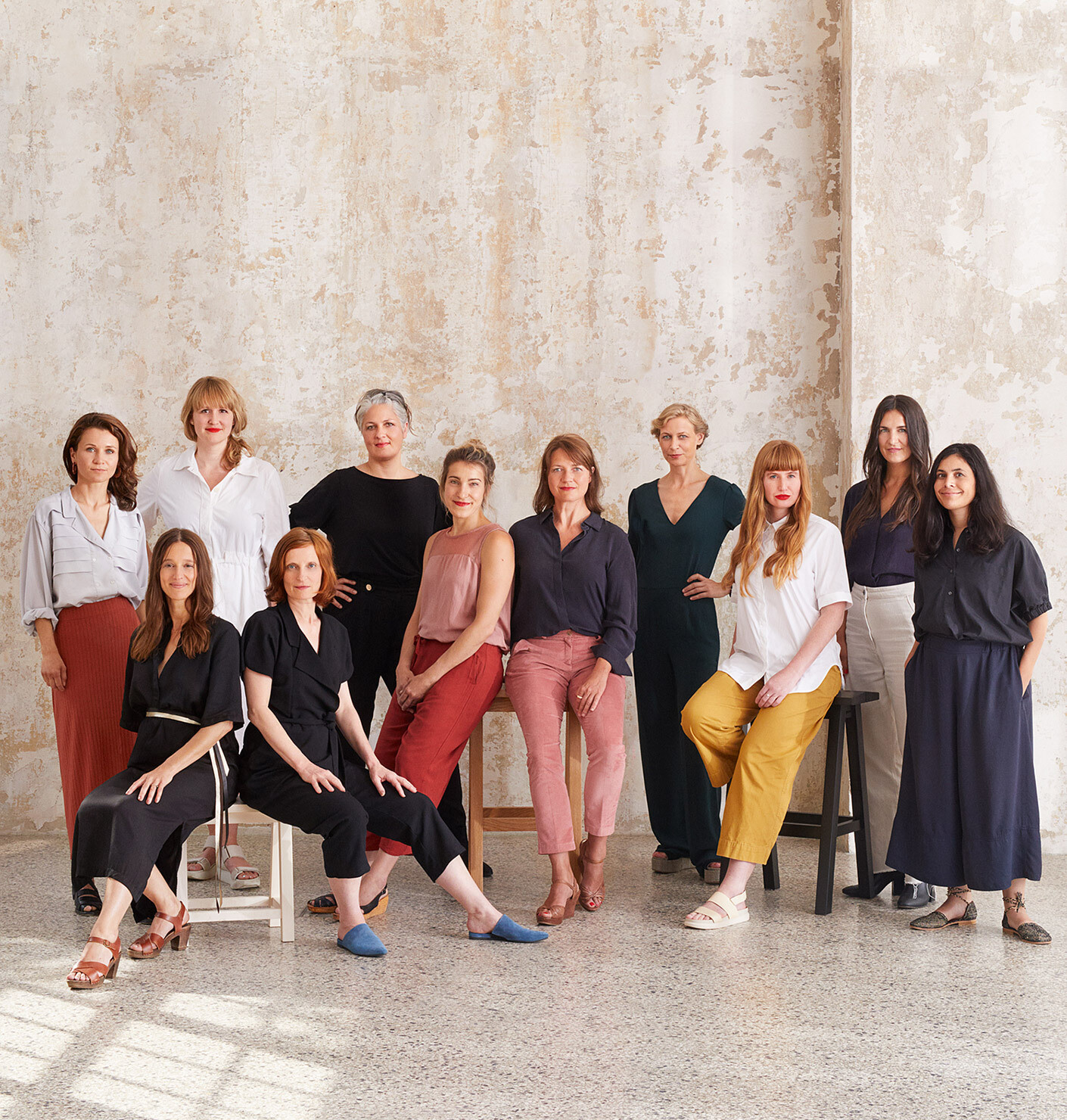
Definitely eclectic
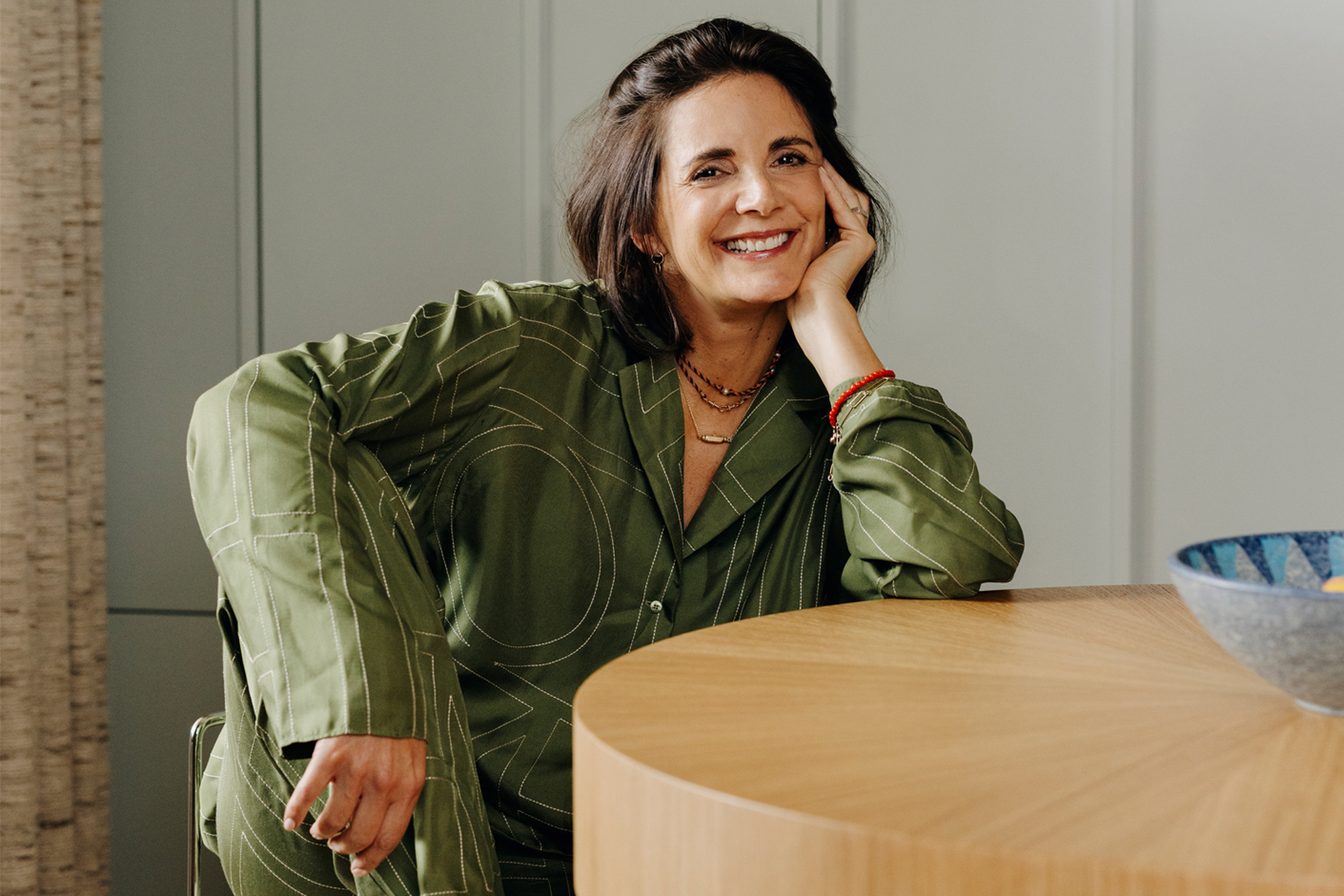
Sandra Böhm: Stephanie, you are one of the most recognised interior designers in Germany today. Was this your dream job from an early age?
Stephanie Thatenhorst: No, after finishing school, I had no idea what I wanted to do. I had no particular interests, no obvious inclinations or outstanding talents. The only thing that was clear was that I wanted to escape the farm wilderness as quickly as possible. So after finishing school, I went as far away as I could – to Australia as an au pair. I stayed with a very nice family there. The father was an architect and built wooden houses. From time to time, he took me with him to construction sites. I can still remember the wonderful smell of wood there. When I returned to Germany after almost two years, it was clear that I wanted to study architecture. However, I had great respect for this course and initially applied to study interior design in Rosenheim. But I was rejected. Which I find very funny from today's perspective (laughs). So I tried studying architecture after all. Today I know that this path was predestined for me. My architecture studies still benefit me greatly. They give you a good view of the big picture. And it's an advantage when you can meet your colleagues from structural engineering on equal terms.
How did you get started? Was there a particular project that marked your breakthrough as an interior designer?
Stephanie Thatenhorst: At the end of my studies, I met my ex-husband, a gastronome. He gave me the opportunity to design the interiors for his restaurants and gave me complete freedom. Gradually, more and more requests came in. After the birth of our second child, it was clear that I wanted to take the whole thing to a professional level. Designing the interiors for my ex-husband's restaurants was certainly my springboard, but my breakthrough as an interior designer came with other projects. My barn project on my parents' farm was ultimately the absolute game changer. At the time, it was one of the first projects of its kind. It was completely free of the usual yodelling chic, but rather a contemporary interpretation of Alpine architecture. That took my work to another level. And finally, I was listed in the AD100, the top 100 best designers and creatives in interior design, architecture and design. That brought with it a completely different public image and perception, even internationally.
Who or what influenced your style?
Stephanie Thatenhorst: To be honest, Emiliano Salci and Britt Moran from Dimore Studio fascinated and inspired me stylistically right from the start. That's still the case today. I like their eclectic style, not only in their furniture collection, but also in their projects. You can recognise their signature style immediately.
How would you describe your style?
Stephanie Thatenhorst: Definitely eclectic. Even with quieter projects. I can never completely leave eclecticism behind; it's my style. But I notice how the desire arises to do something completely different, something calmer. This came through a little in my barn project, and one of the rooms in our new showroom is also a little calmer. I would like to show the world that I can do that too. It's important for me to try new things, to constantly reinvent myself. That's very healthy for creativity. If you want to play in the top league, you can't allow yourself to stand still.
How important are trends to you?
Stephanie Thatenhorst: No one can free themselves from external influences, whether consciously or unconsciously. I draw a lot of inspiration from fashion, colours, fabrics and patterns. Sometimes you might even set trends yourself. It's important to think outside the box and be courageous. Mainstream has every right to exist and is right and important for the majority of humanity. However, many years ago, I decided not to follow the mainstream path. I took a different turn and have remained true to this path to this day, with great joy and passion.
What role do materials and colours play in your designs?
Stephanie Thatenhorst: Textiles create a cosy atmosphere in any project. For me, there are no limits – I've even used fabric wallpaper in bathrooms. The more unusual, the better. I particularly like using fabrics in rooms that aren't traditional living spaces. It doesn't always have to be practical. It's about playing with different surfaces and textures. We really enjoy working with contrasts. Colours also play a very important role for us. Creating bold colour combinations that you don't see very often – I think that's my great strength. We always exploit the entire spectrum.
How is a room concept created?
Stephanie Thatenhorst: It's 99 per cent gut feeling. What counts is having a good sense of style. That's what good designers need to have. You can learn a lot, but the intuition that the wall needs to be red in this exact spot or the carpet needs to be blue, that's instinct. Sometimes it's just one little thing that comes to mind for a project. That's my very first piece of the puzzle.
What is most important to you in your designs? Appearance or function?
Stephanie Thatenhorst: To be honest, it varies from project to project. It depends on whether it's a private home, a restaurant or a retail outlet. There are different requirements, needs and clients. Sometimes they can be persuaded to abandon conventional principles. But there are also moments when I give in. Basically, though, I'm quite stubborn and don't like to accept that something can't be done. Fortunately, this stubbornness often gets me where I want to be. But we are clearly service providers. Customers pay a lot of money and if they absolutely don't want something, then that's the way it is. On the other hand, there are always things that I fight for and try to push through. Simply because I am convinced that it is the right thing to do at that moment. You have to strike a balance. But I don't want to be the kind of interior designer who just pushes everything through and only lets her own opinion count.
Your rooms always look very modern without ever appearing cold. How do you manage to not only make a room look stylish, but also give it personality and warmth? How does a room become liveable and individual?
Stephanie Thatenhorst: It's down to the mix of materials. Eclectic style always has something to do with warmth. The trick is to combine objects, materials, surfaces, colours, furniture and lighting in such a way as to create this harmonious, inviting atmosphere.
What role do light sources play in a room?
Stephanie Thatenhorst: Atmospheric lighting is very important to me. I achieve this through irregular lighting. A room needs different light sources.
Is there anything that immediately recognises a work by Stephanie Thatenhorst? Something that you particularly value?
Stephanie Thatenhorst: Actually, I don't want it to be obvious from afar that it's Thatenhorst. It's important to me to constantly reinvent myself and think in new ways.
You live in a so-called show flat. What does that mean?
Stephanie Thatenhorst: No one can free themselves from external influences, whether consciously or unconsciously. I draw a lot of inspiration from fashion, colours, fabrics and patterns. Sometimes you might even set trends yourself. It's important to think outside the box and be courageous. Mainstream has every right to exist and is right and important for the majority of humanity. However, many years ago, I decided not to follow the mainstream path. I took a different turn and have remained true to this path to this day, with great joy and passion.
Do you design your own furniture as well?
Stephanie Thatenhorst: There isn't a single project where we don't design and have furniture made. Furniture design has been more of a side project so far, but we are gradually getting into the licensing business. This means that furniture manufacturers ask us if we can design something that they can then produce and add to their collection.
What's next?
Stephanie Thatenhorst: Luckily, the door to my office is closed (laughs)... This year has been really busy. We launched our book ‘Love & Passion’, which we worked on for a year. The new showroom took an incredible amount of energy and effort. We launched an online shop and a new website. My team of 30 and I are still very busy with ongoing projects and we're already receiving lots of new enquiries. It's great to achieve things, but it's also really important to maintain standards, both in terms of design and service. None of what we've achieved was planned long in advance, and I'm so grateful for that. It's important to always remain curious and open to whatever comes your way.
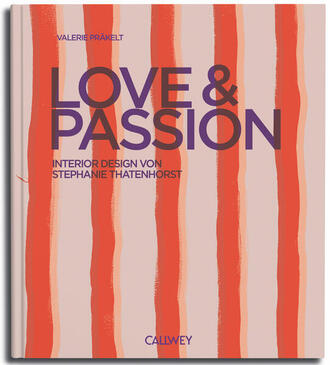
Love & Passion – Interior Design by Stephanie Thatenhorst
Publisher: Callwey
Author: Valerie Präkelt
Number of pages: 224
Publication date: 2 May 2025
German
Dimensions: 281 x 253 x 24 millimetres
ISBN-13: 9783766727787
59.95 euros