A place in the void
Even in their introductory studies, architecture students are repeatedly told how important the site is to the design process. The concepts of 'type' and 'topos' are mentioned time and again. The relationship between the site and the building designed for and on that site is what is meant. The argument is that the site has a decisive influence on the design. Yet despite this, buildings across the country look astonishingly similar — indeed, at times interchangeable — despite the fact that the site is supposedly so important for the creation of architecture. Nevertheless, in historic town centres, on the slopes of mountains or overlooking the sea, it is relatively easy to discern the spirit inherent in a place, what shapes its atmosphere and how this can be addressed architecturally. Creating architecture becomes more challenging when the place itself is difficult or impossible to grasp. The southern edge of the airport site in Frankfurt am Main is an example of such a non-place. Rather than being able to identify a concrete genius loci, it resembles a patch of earth abandoned by all good spirits.
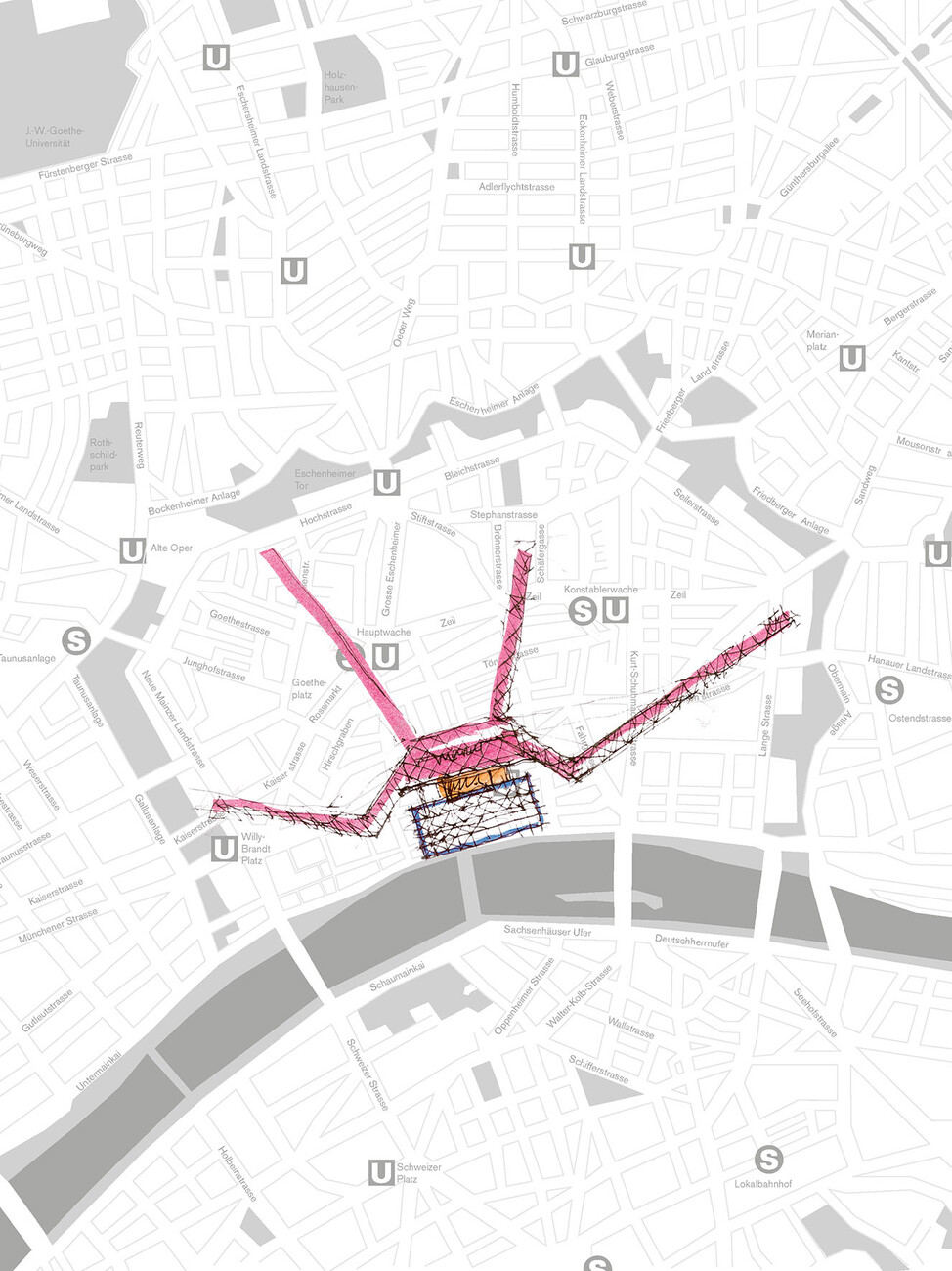
The airport’s two existing terminals are located to the north of the aprons, directly alongside the A3 motorway and the railway line. While Terminal 1 is undergoing refurbishment while remaining open, Terminal 2, completed in the late 1990s, is already in need of refurbishment. A lengthy closure for renovation work is imminent. As early as 2001, a two-stage international competition was launched to explore extending the northern terminals with a new building south of the runways. Foster + Partners won the urban planning concept phase. Three years later, the architectural design competition was launched, which was won by the Frankfurt-based firm Mäckler Architekten. This is somewhat fitting, given that Christoph Mäckler’s father, Hermann, and his office partner, Alois Giefer, had planned and built Terminal 1 between 1965 and 1972, working alongside the airport construction specialist, Heinrich Kosina.
Like father, like son
The airport’s two existing terminals are located to the north of the aprons, directly alongside the A3 motorway and the railway line. While Terminal 1 is undergoing refurbishment while remaining open, Terminal 2, completed in the late 1990s, is already in need of refurbishment. A lengthy closure for renovation work is imminent. As early as 2001, a two-stage international competition was launched to explore extending the northern terminals with a new building south of the runways. Foster + Partners won the urban planning concept phase. Three years later, the architectural design competition was launched, which was won by the Frankfurt-based firm Mäckler Architekten. This is somewhat fitting, given that Christoph Mäckler’s father, Hermann, and his office partner, Alois Giefer, had planned and built Terminal 1 between 1965 and 1972, working alongside the airport construction specialist, Heinrich Kosina.
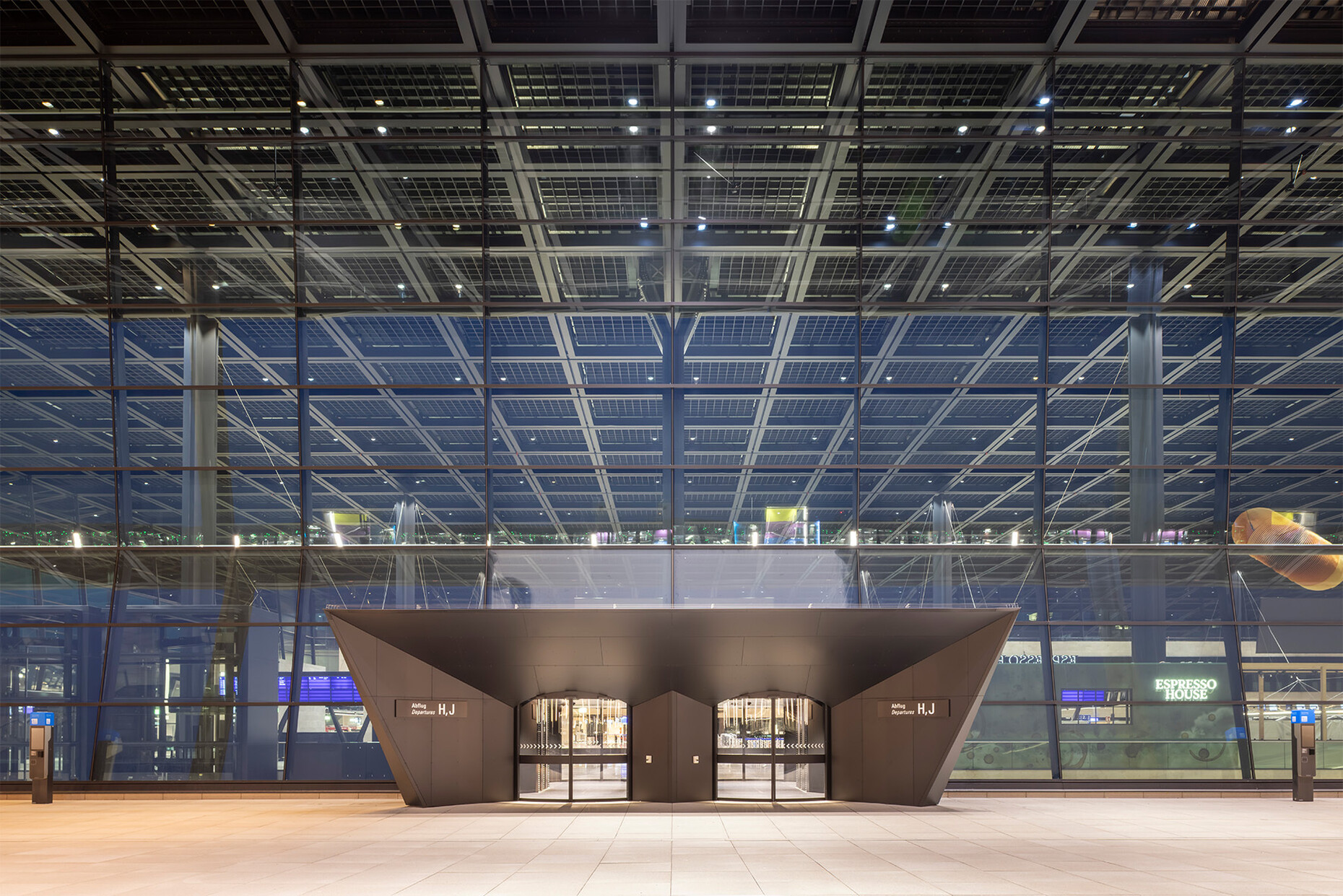
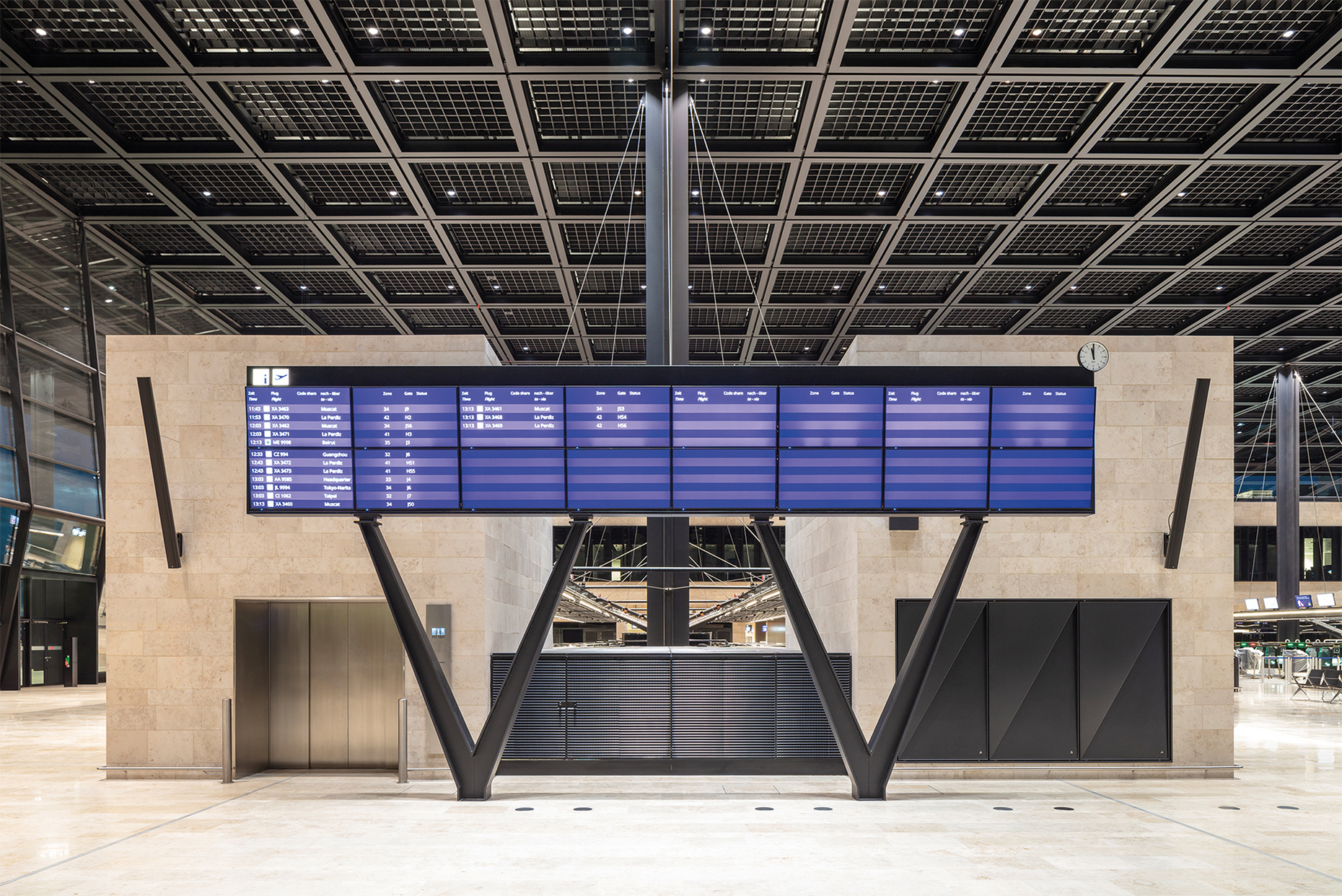
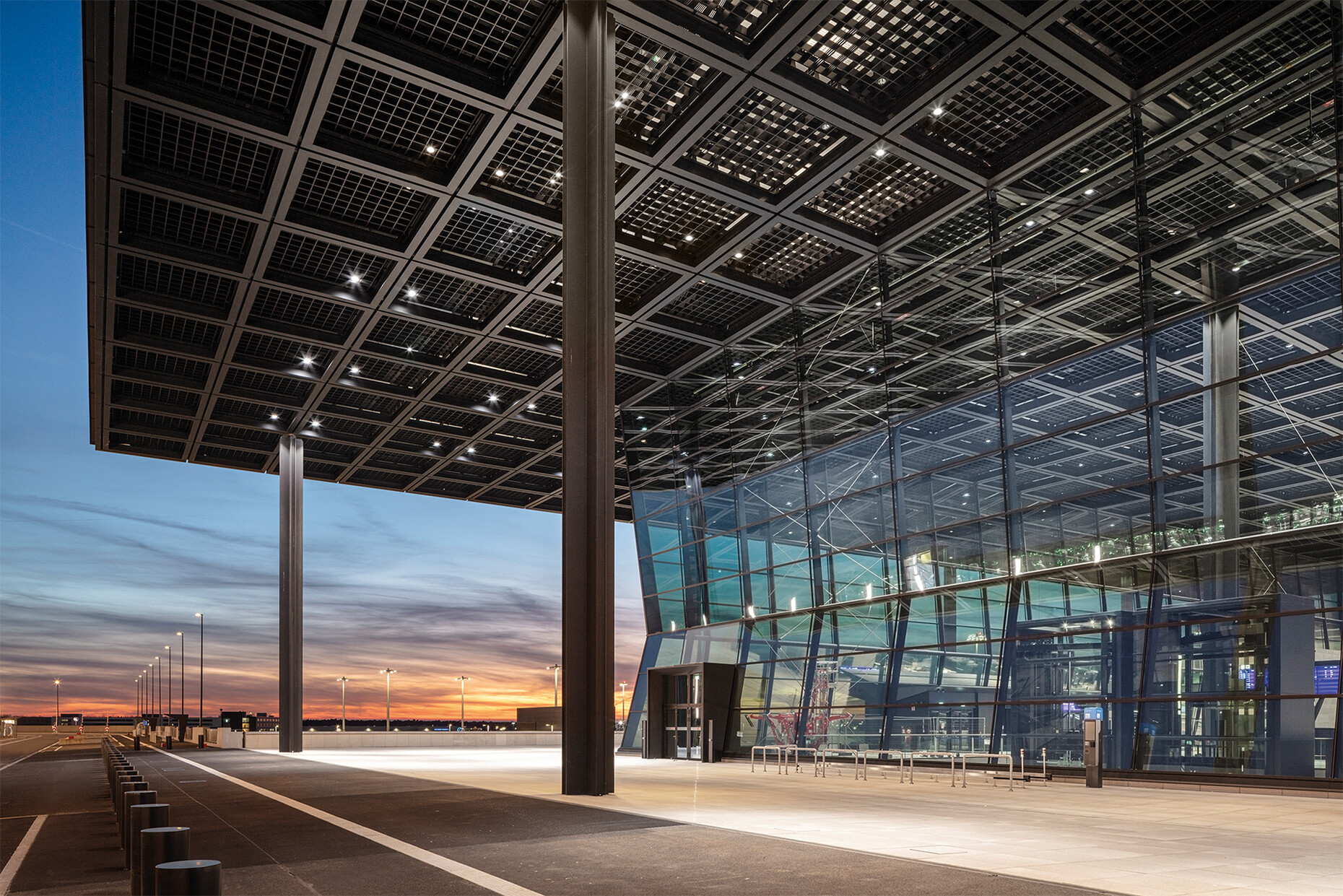
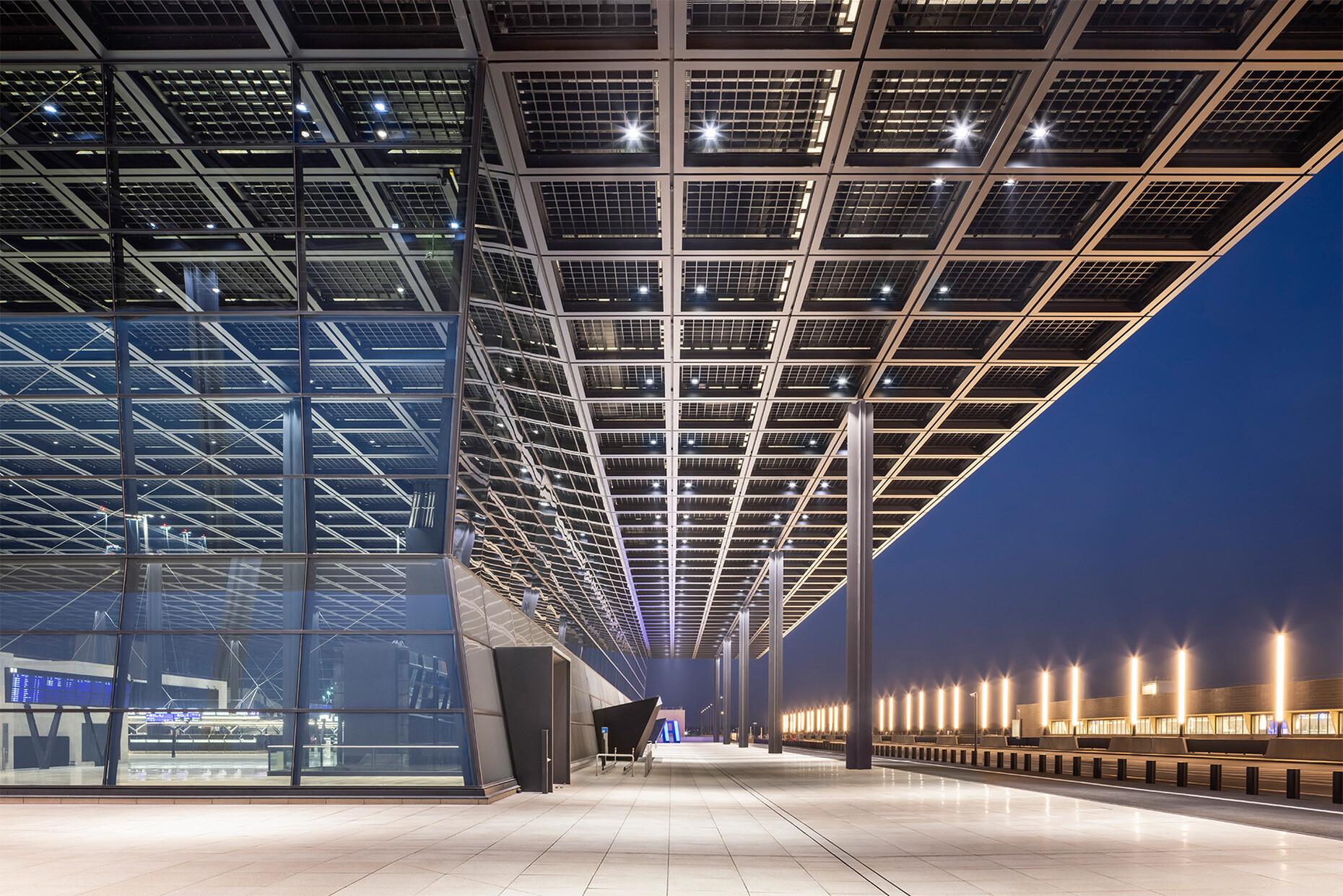
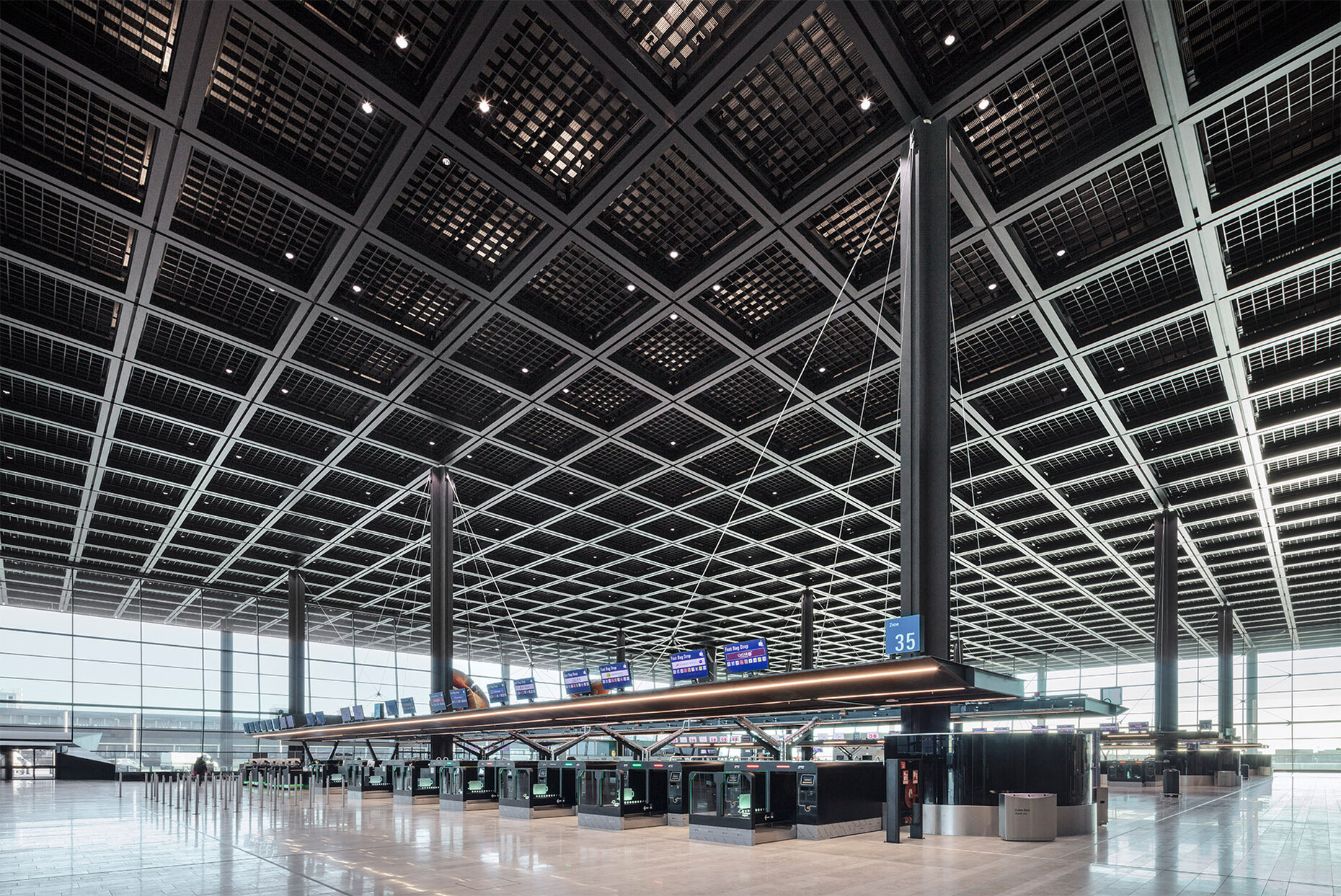
Christoph Mäckler and his team address the feeling of being in a place without a sense of location with an almost ironic gesture: the large reception hall, which houses the check-in desks, is inspired by what is arguably the most place-less architecture in the Federal Republic of Germany – the beautiful hall of Ludwig Mies van der Rohe’s New National Gallery. Mies van der Rohe designed the building in 1957 for Cuba, where it was intended to serve as the headquarters of a rum producer. However, it was realised between 1962 and 1968 as an iconic but less functional museum building in the sandy terrain of Berlin. The Frankfurt-based studio has succeeded in creating a truly impressive space with this interpretation, which is perfectly complemented by the mesmerising kinetic sculpture “The First, the Last, Eternity” by the artist Julius von Bismarck. Resembling giant doughnuts, the three objects, crafted from coloured aluminium discs, hang beneath the 18-metre-high ceiling, rotating on their own axes and around themselves. This creates the impression that they are continuously turning inside out. The discs forming the ring shapes have different silhouettes, creating constantly shifting patterns on the surfaces of the objects which the eye perceives as rotating bodies. One depicts the topography of the Earth’s surface. While nothing obstructs the view beneath this vast, sweeping roof, one cannot help but wish that the hall had been graced with the attractive espresso bars designed by the architectural firm rather than the shabby wooden shacks that now stand there.
Sound restraint
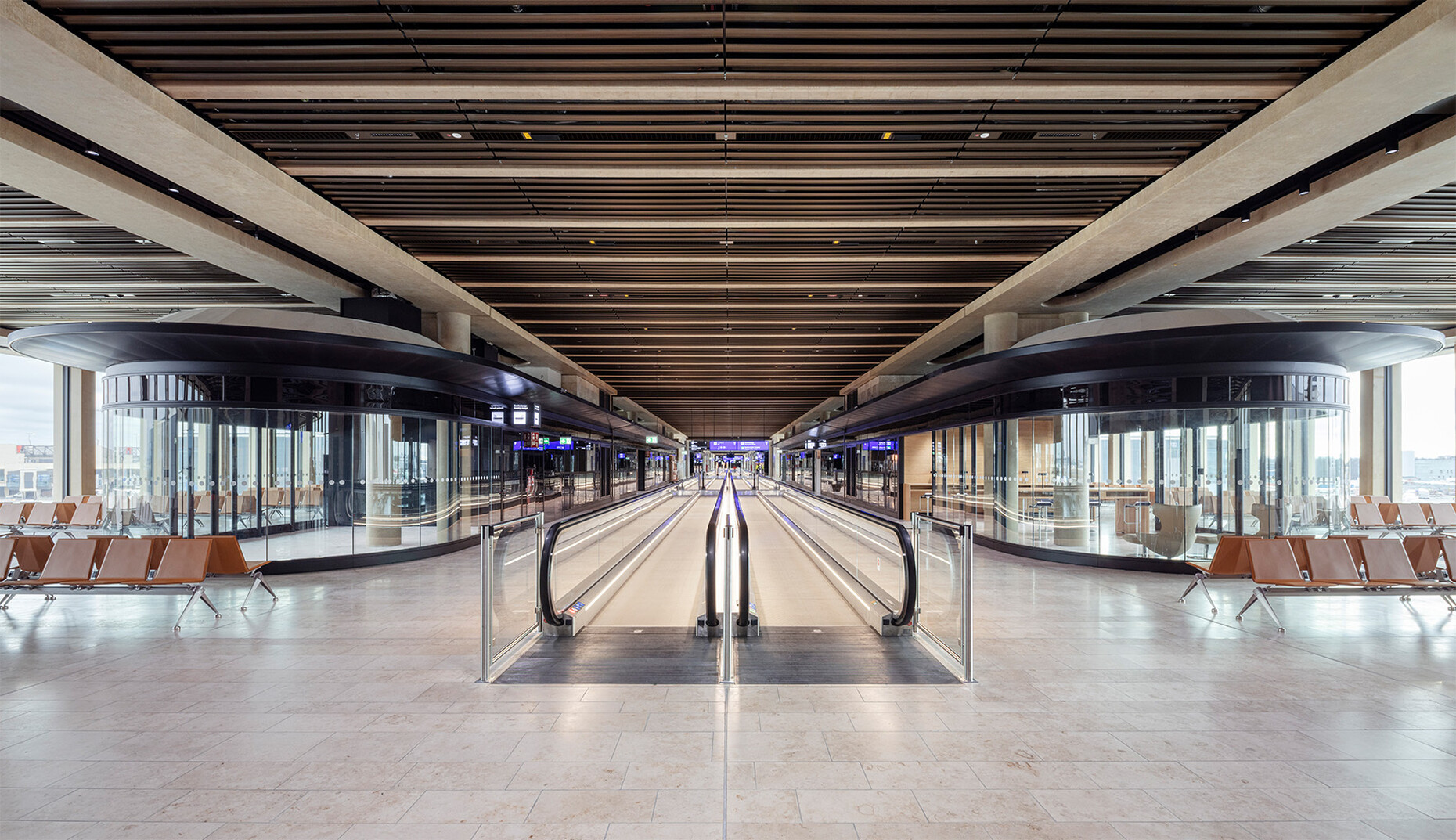
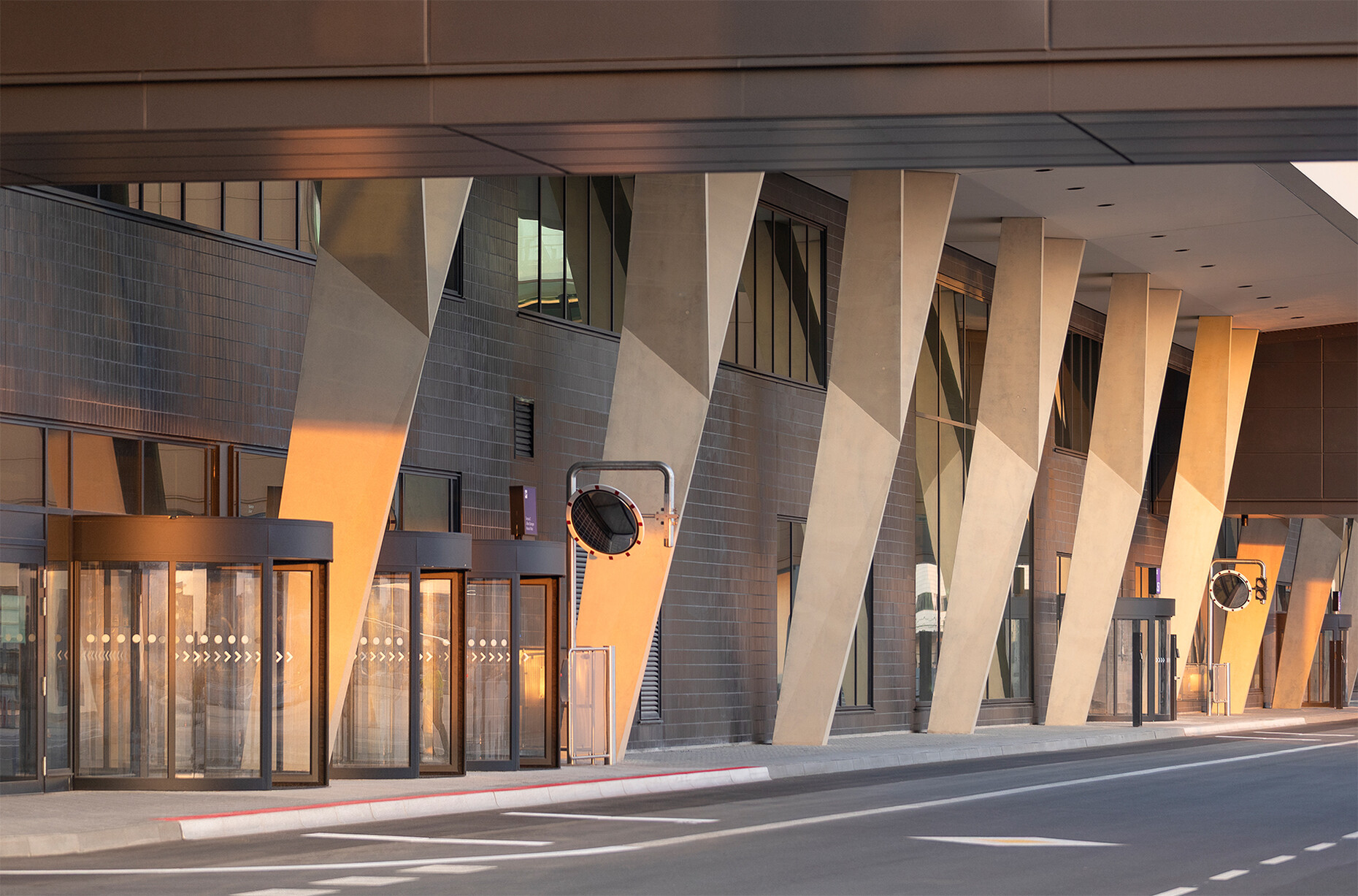
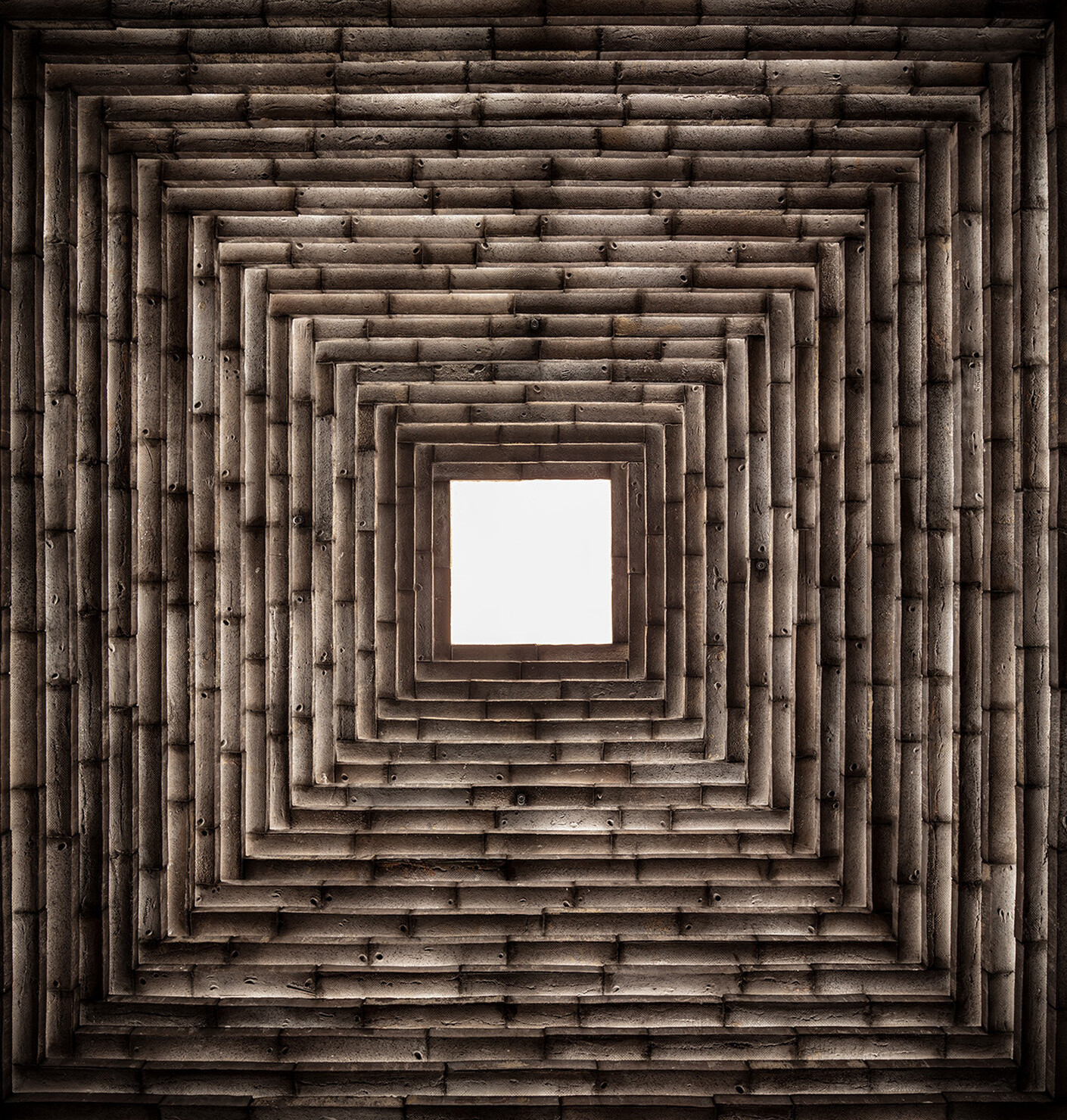
While other airports feature low-maintenance, high-value materials with polished stone floors, glass panes and stainless steel railings that vie for attention with their shine, Terminal 3 is now dominated by the warm brown of matt natural stone flooring. This tone is echoed in the through-coloured concrete of the precast elements used for façade panels, pillars and ceiling beams. These sandy tones are offset by dark, almost black metal, used for all kinds of sheet metal: sliding doors in front of shops, kiosk fittings and suspended ceilings. This colour duality runs through the entire building.
Rather than a maze of paths through shopping mall-like duty-free shops, the route leads from the check-in hall through the security checkpoint to a central marketplace. An amorphous ceiling structure designed by Stuttgart-based firm Lava cascades down and channels daylight through prismatically angled light fixtures into the space, whose floor plan is reminiscent of Rome's Piazza Navona. Unfortunately, the wall surfaces above the shops were painted white at the operators’ request even before the airport opened, despite originally being finished in a beautiful dark blue, which means that Lava’s installation is far less effective.
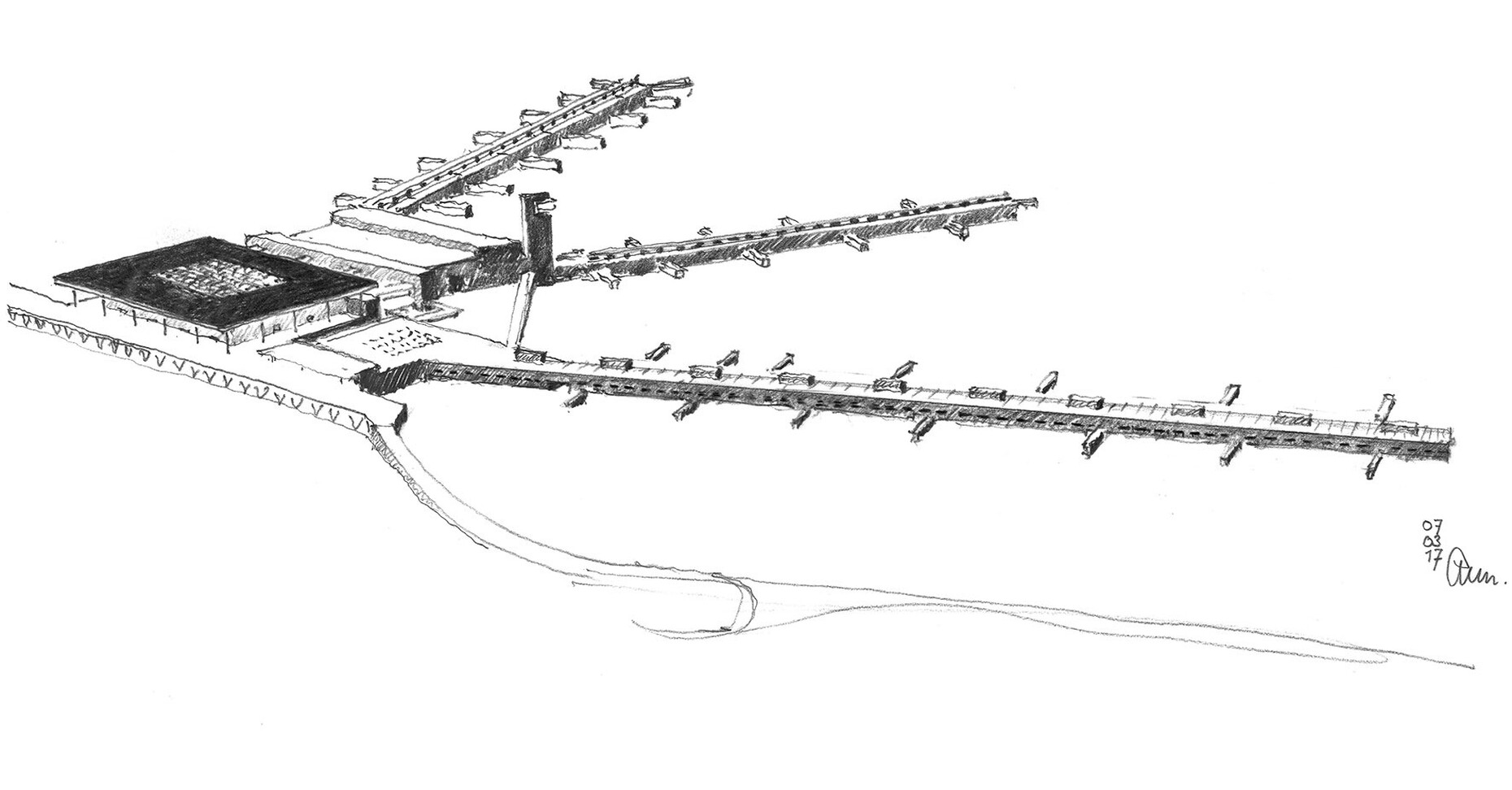
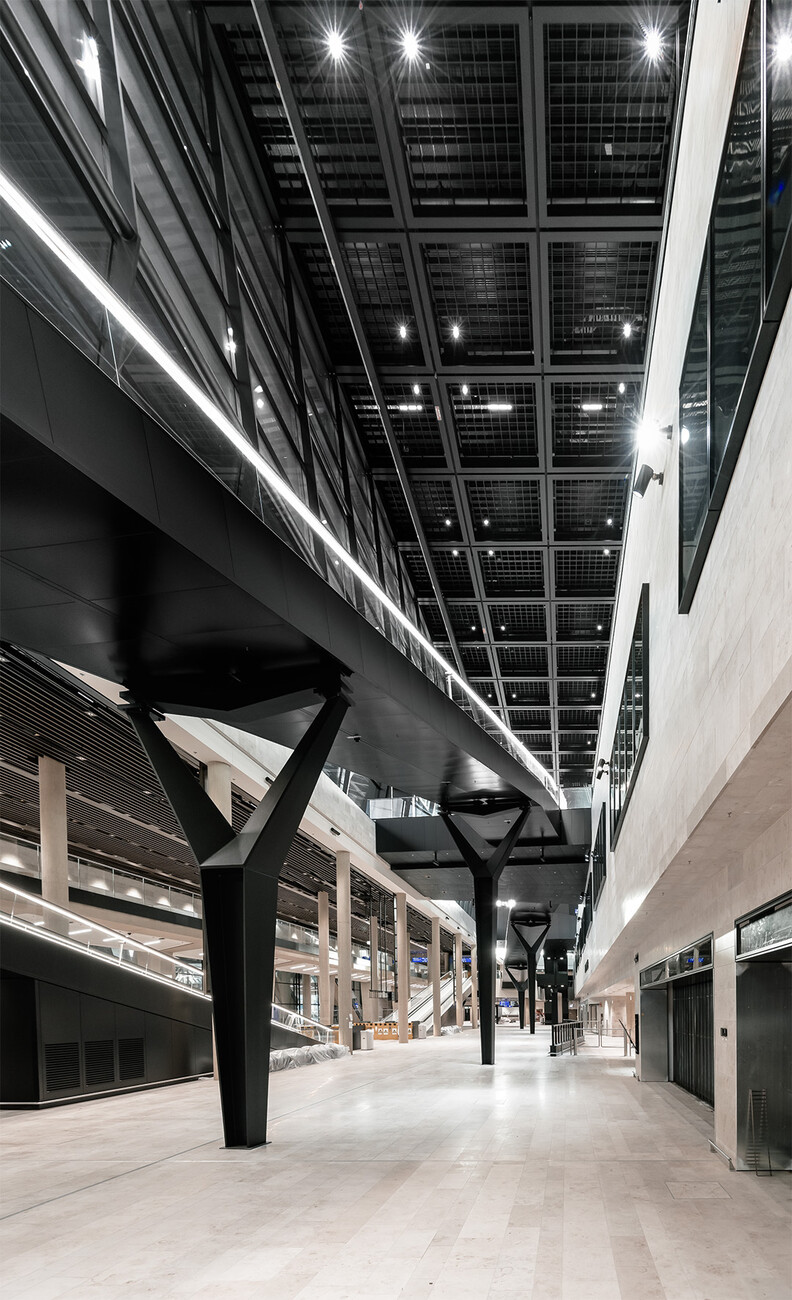
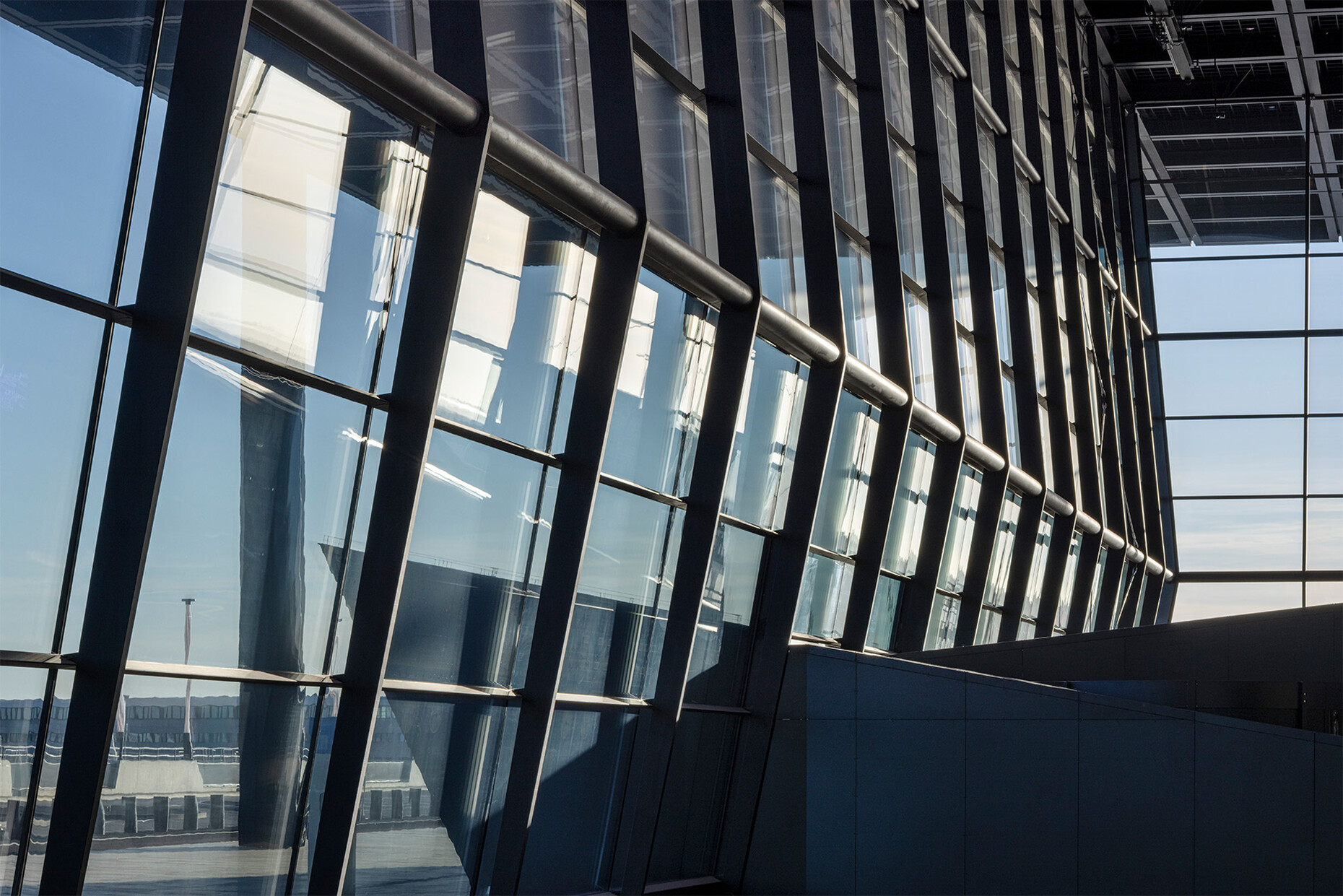
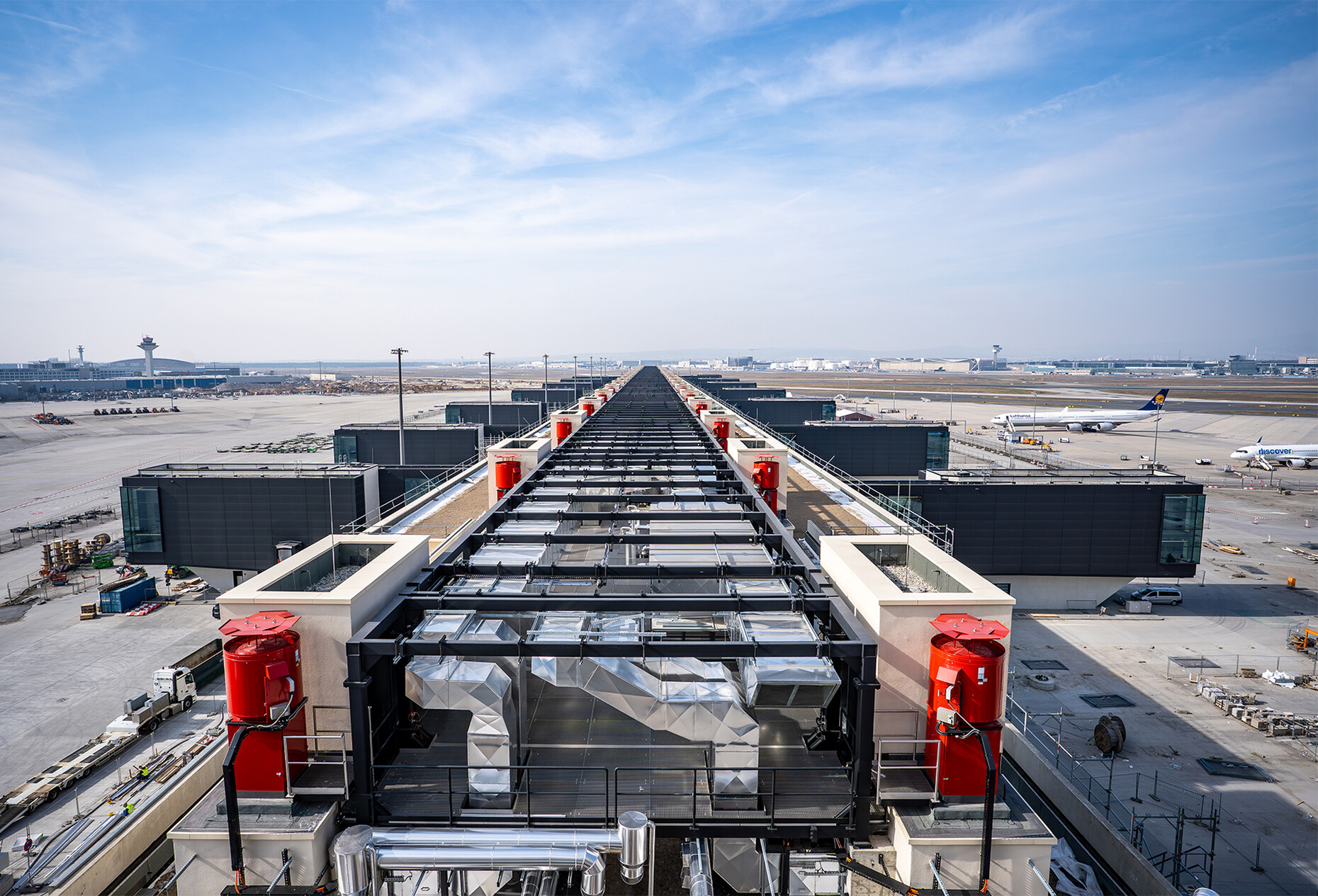
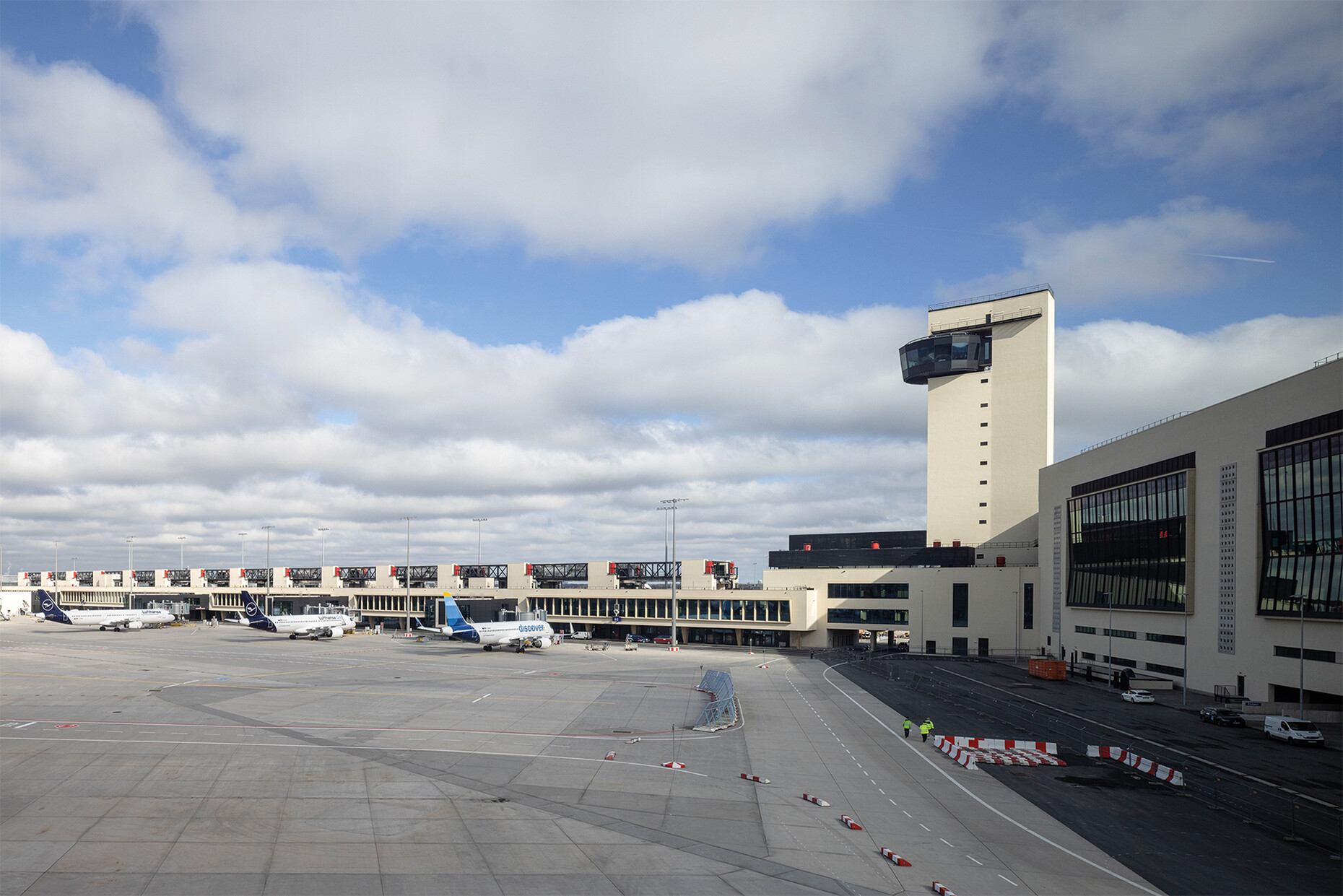
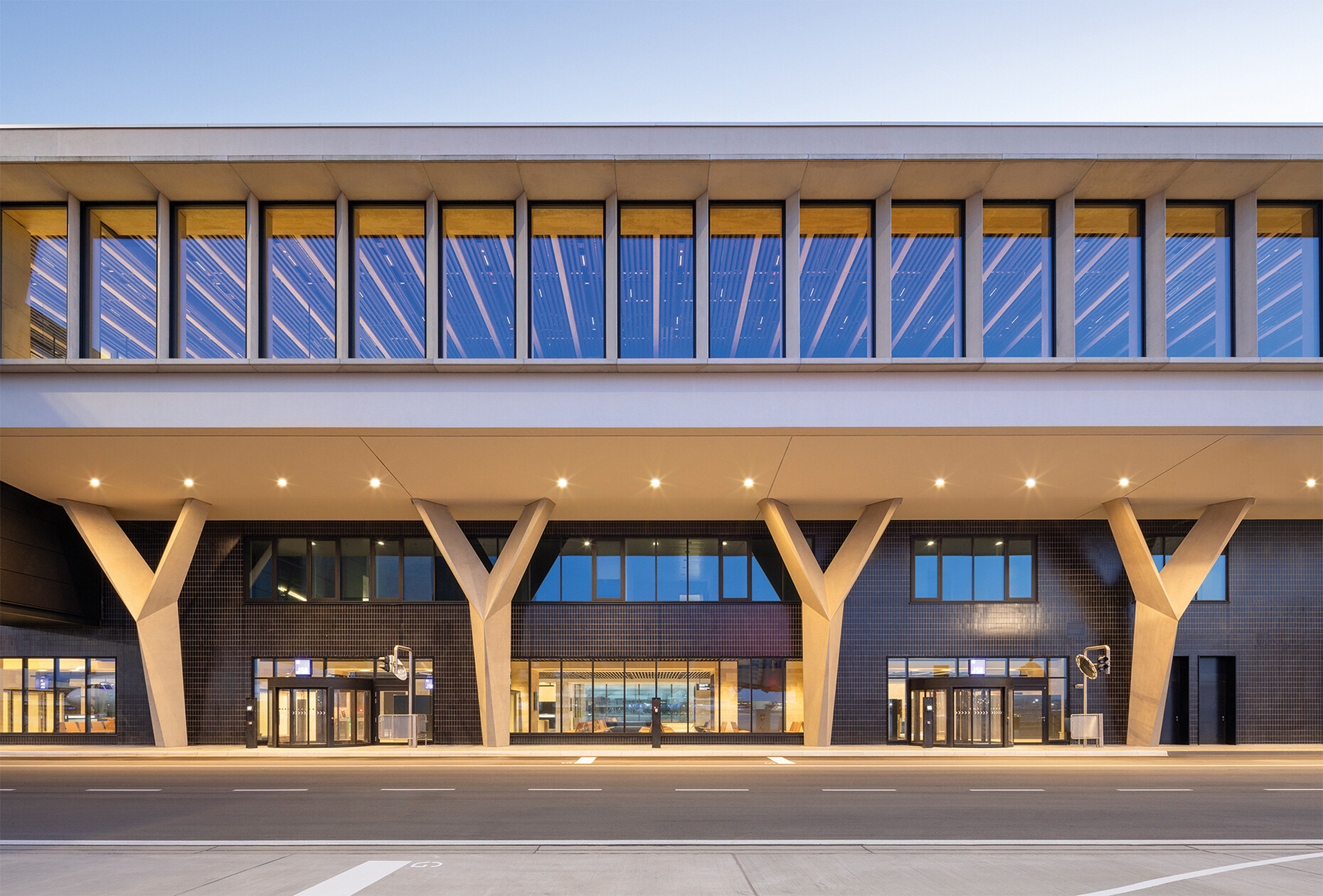
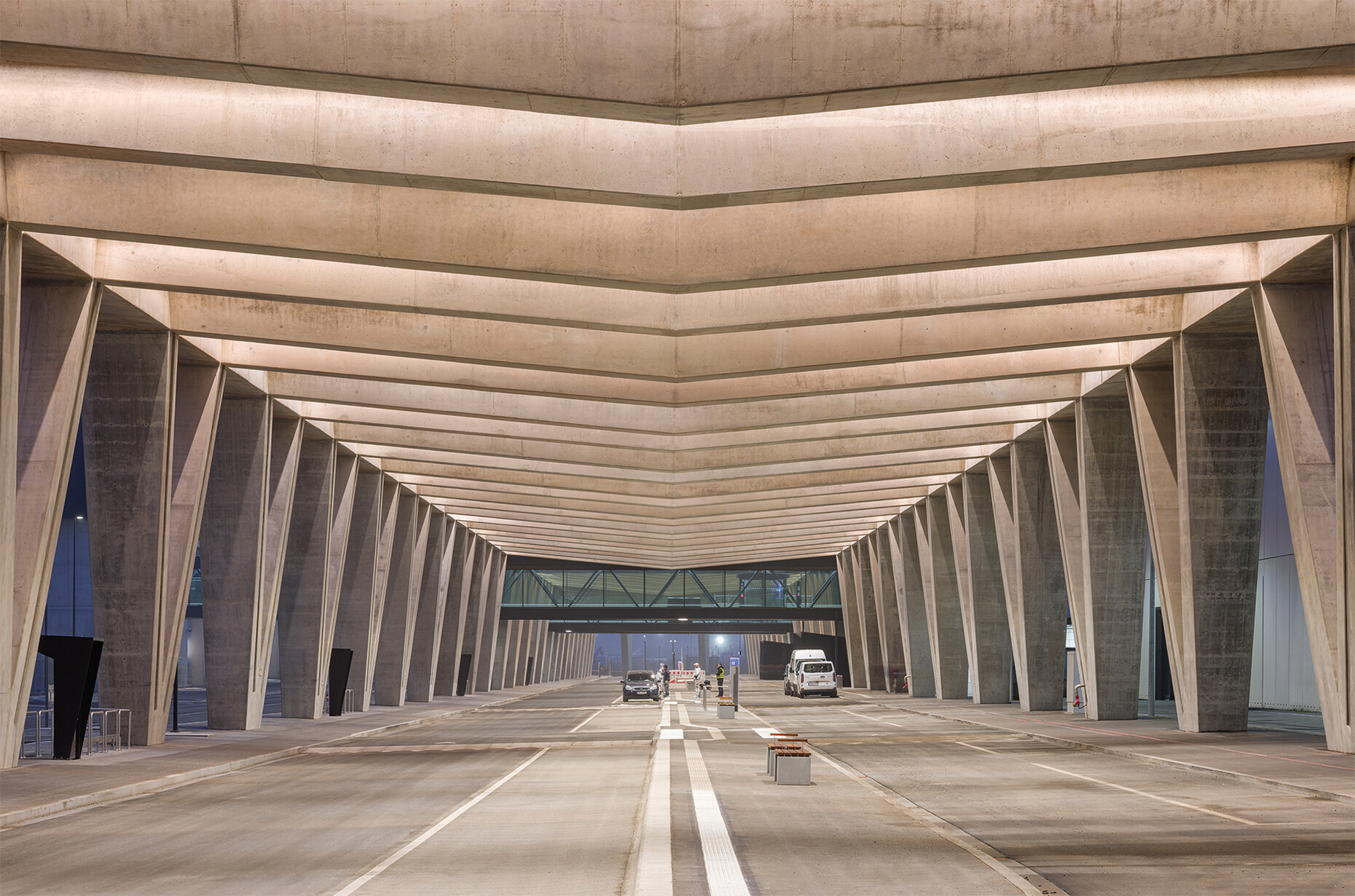
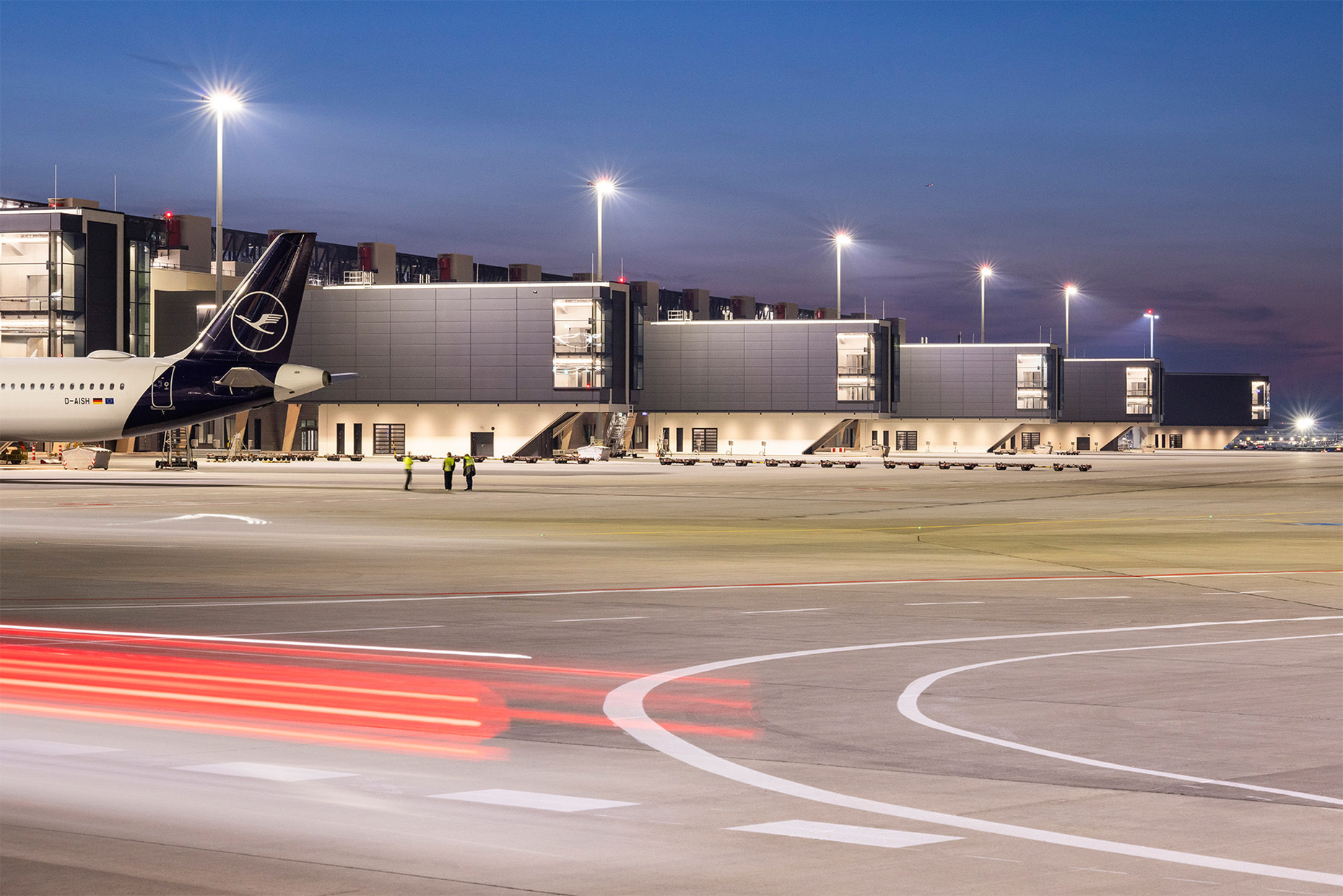
The piers along which the gates are positioned resemble long streets. The symmetrical, side-mounted structures also house kiosks and bars. Designed as attractive little pavilions, their dark metal roofs make them appear as if they are freestanding objects set within the structure, which stretches for many hundreds of metres. The precast concrete elements of the external façades punctuate the long building in the shape of a Y, a form that is repeated throughout the building in the form of columns, beams and profiles. Although around a quarter of the façade is enclosed by these wide profiles, the large windows nevertheless make the long building appear bright. Even on a gloomy day in late February, the lighting effect inside is warm and characterised by incoming daylight: warm-glowing LEDs are recessed into the ceiling in such a way that no light fixtures are visible along the length of the room.
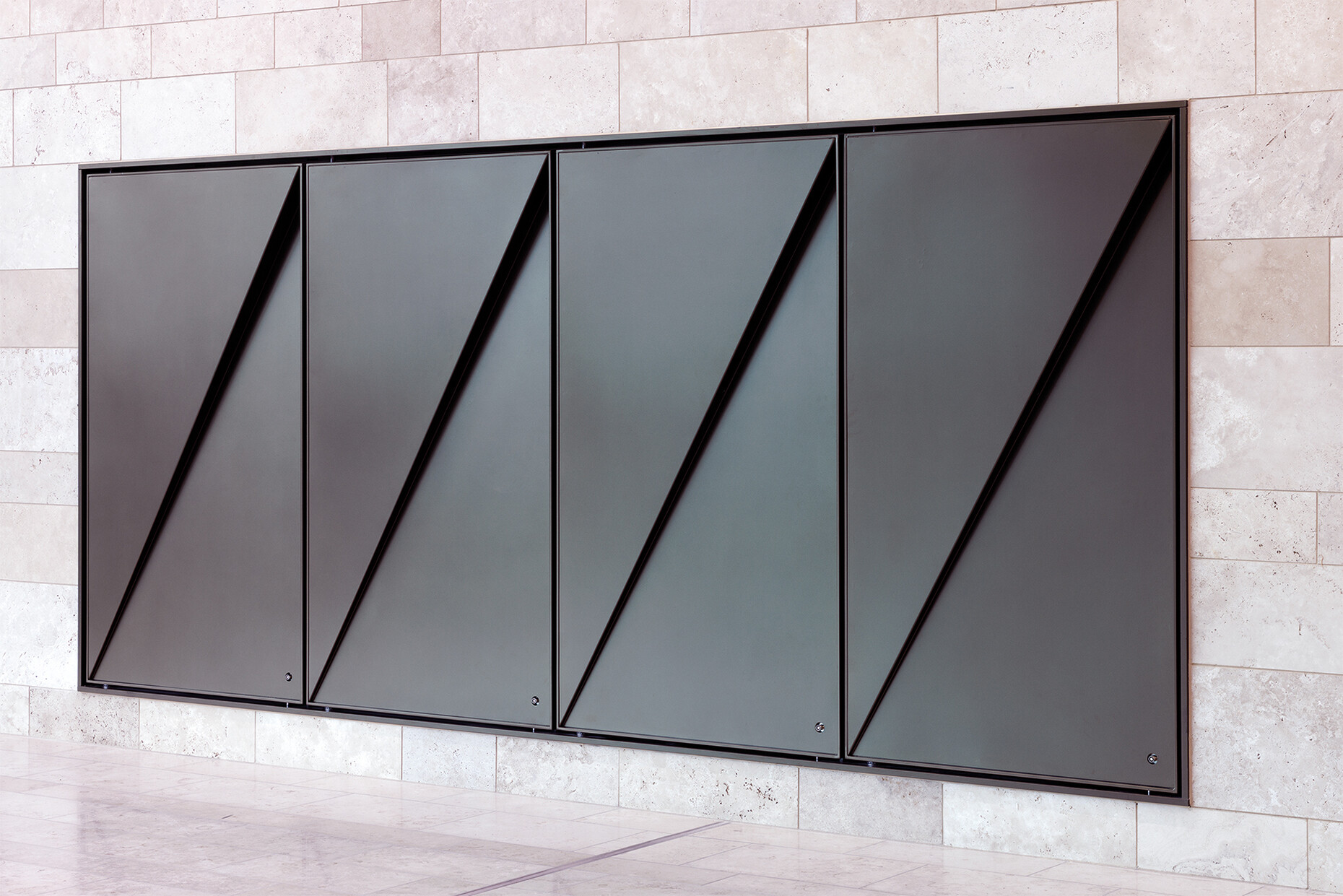
Above the piers, a steel bridge on each side houses all the technical infrastructure so that it can be replaced if necessary without disrupting operations inside. Massive steel cabinet doors are also found in the walls throughout the building. Typically divided diagonally in Mäckler’s work, these elements are actually access hatches that provide access to the building services in an emergency. The circulation routes are logically organised too: in the two-storey pier, non-Schengen flights smoothly pass one another without conflict, while the single-storey pier houses the gates for destinations within the Schengen area.
Loci sin loci
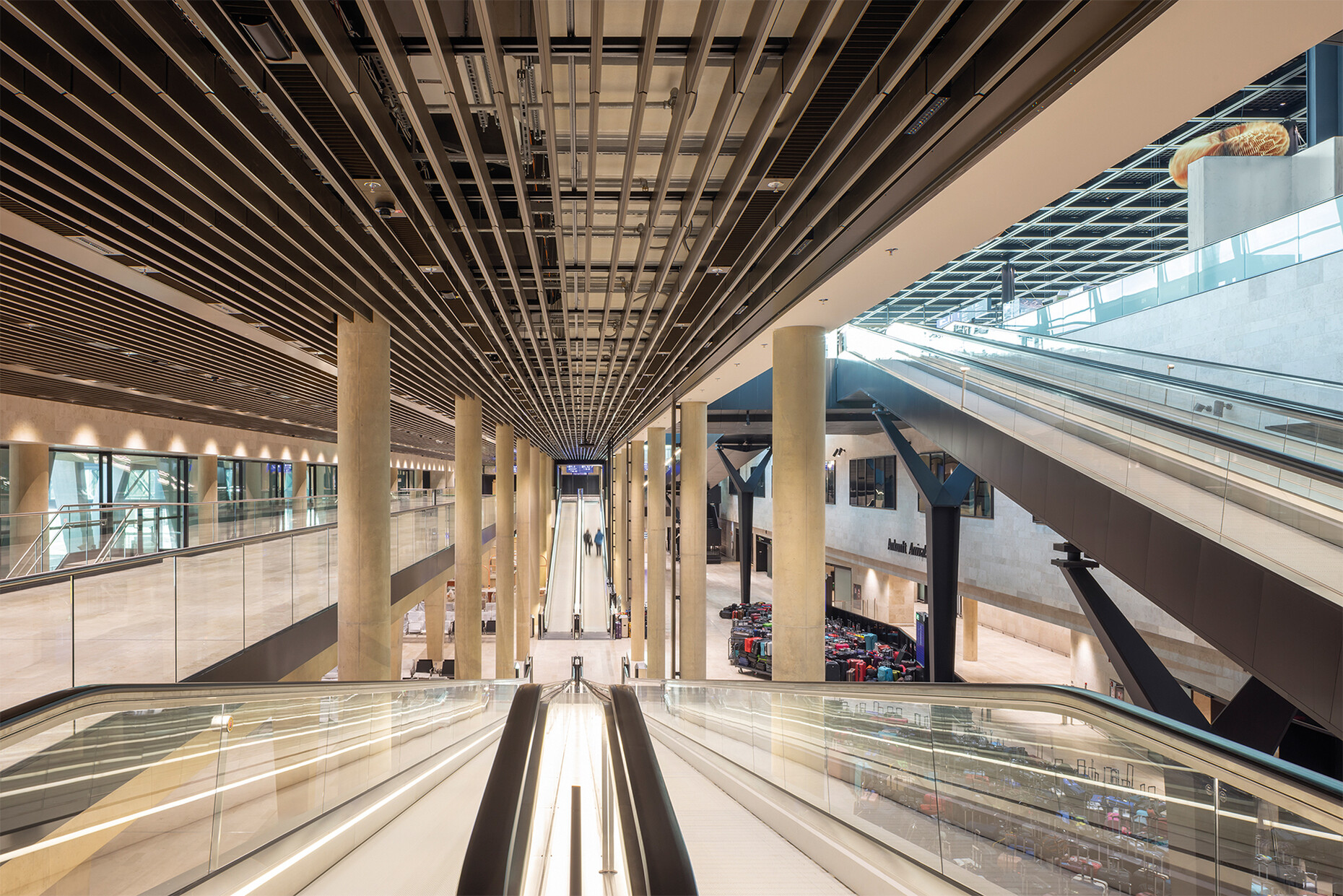
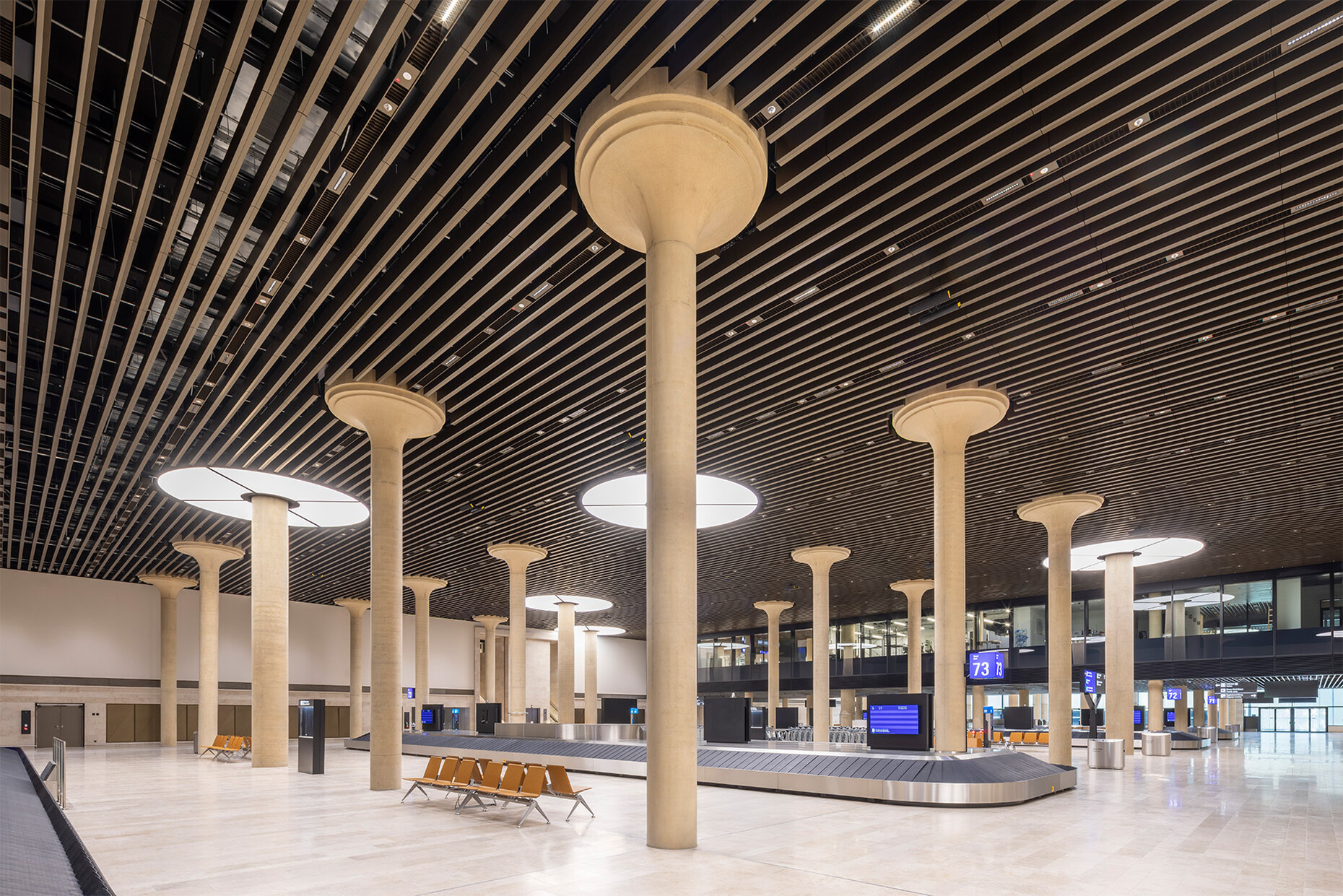
The luggage hall, where passengers collect their checked-in luggage from the baggage carousels after their flight, is also impressive. On the ground floor, this area is located beneath the entrance hall. Due to structural requirements, it was necessary to incorporate columns of varying diameters here. Christoph Mäckler and his team have embraced this necessity with characteristic focus on form: Like a forest of columns, the various pillars now grow upwards towards the ceiling. Sometimes thicker, sometimes thinner, sometimes connected to the ceiling by a curved capital, sometimes tapering into circular light-fitting capitals of two different diameters, and sometimes disappearing seamlessly into the suspended ceiling.
Thus, Terminal 3 is a robust structure, capable of withstanding the ongoing adjustments specific to airports, resulting from frequent installations and alterations. Mäckler Architekten have succeeded in creating a genuine place amidst a sense of placelessness here, offering travellers a sense of calm, both visually and atmospherically.
On 23 April 2026, Fraport will open the new Terminal 3 at Frankfurt Airport.