Attention to detail
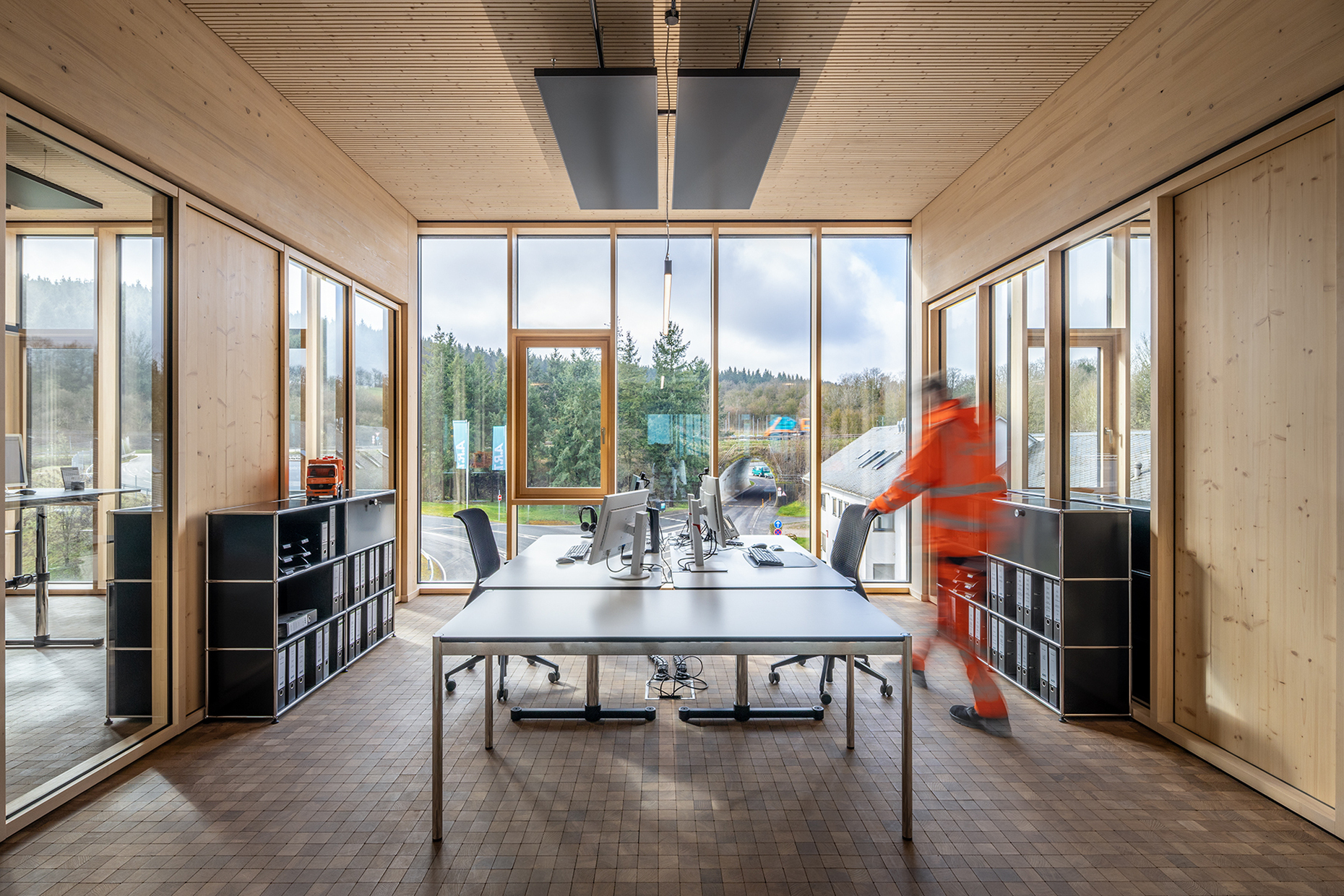
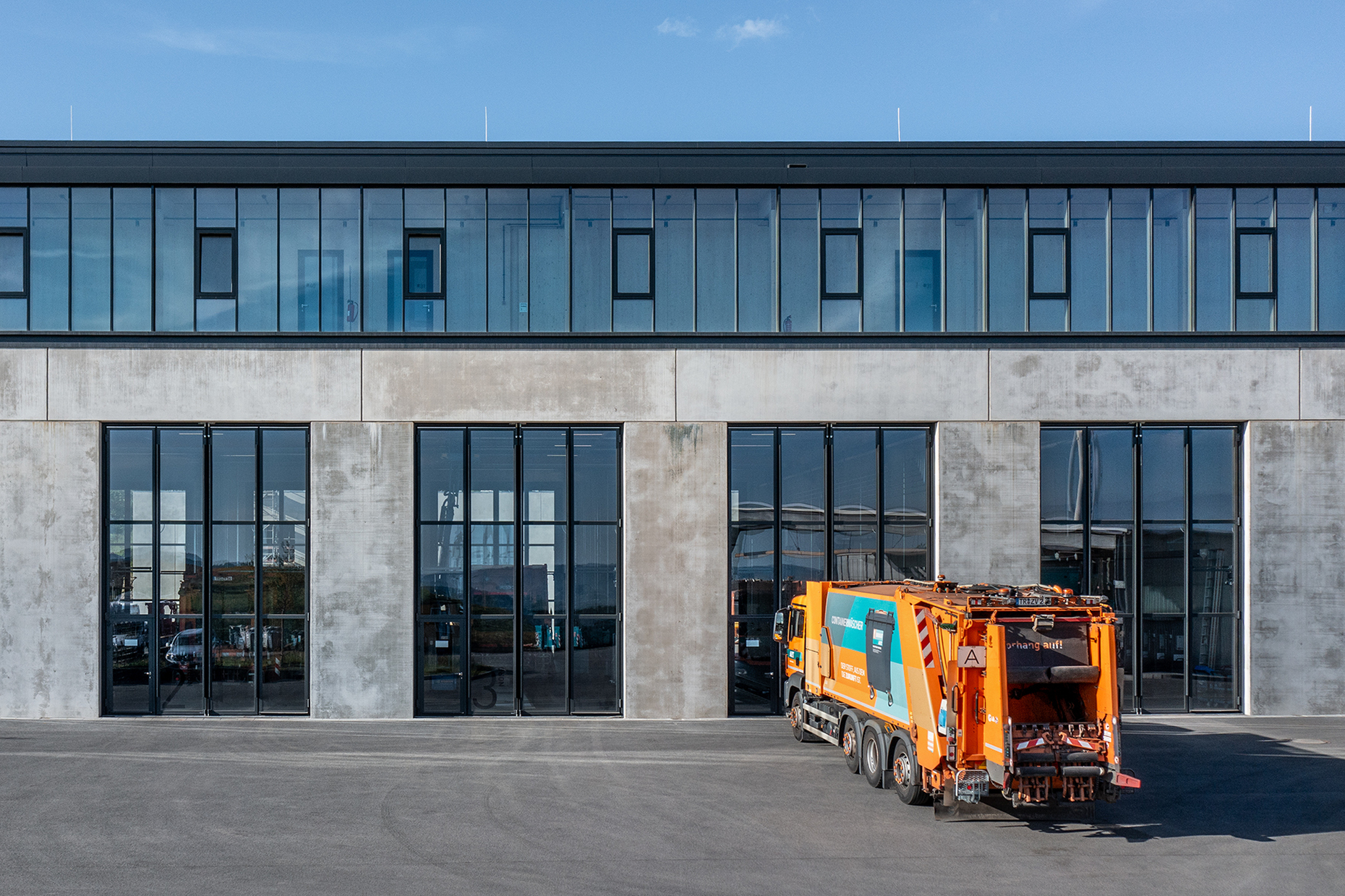
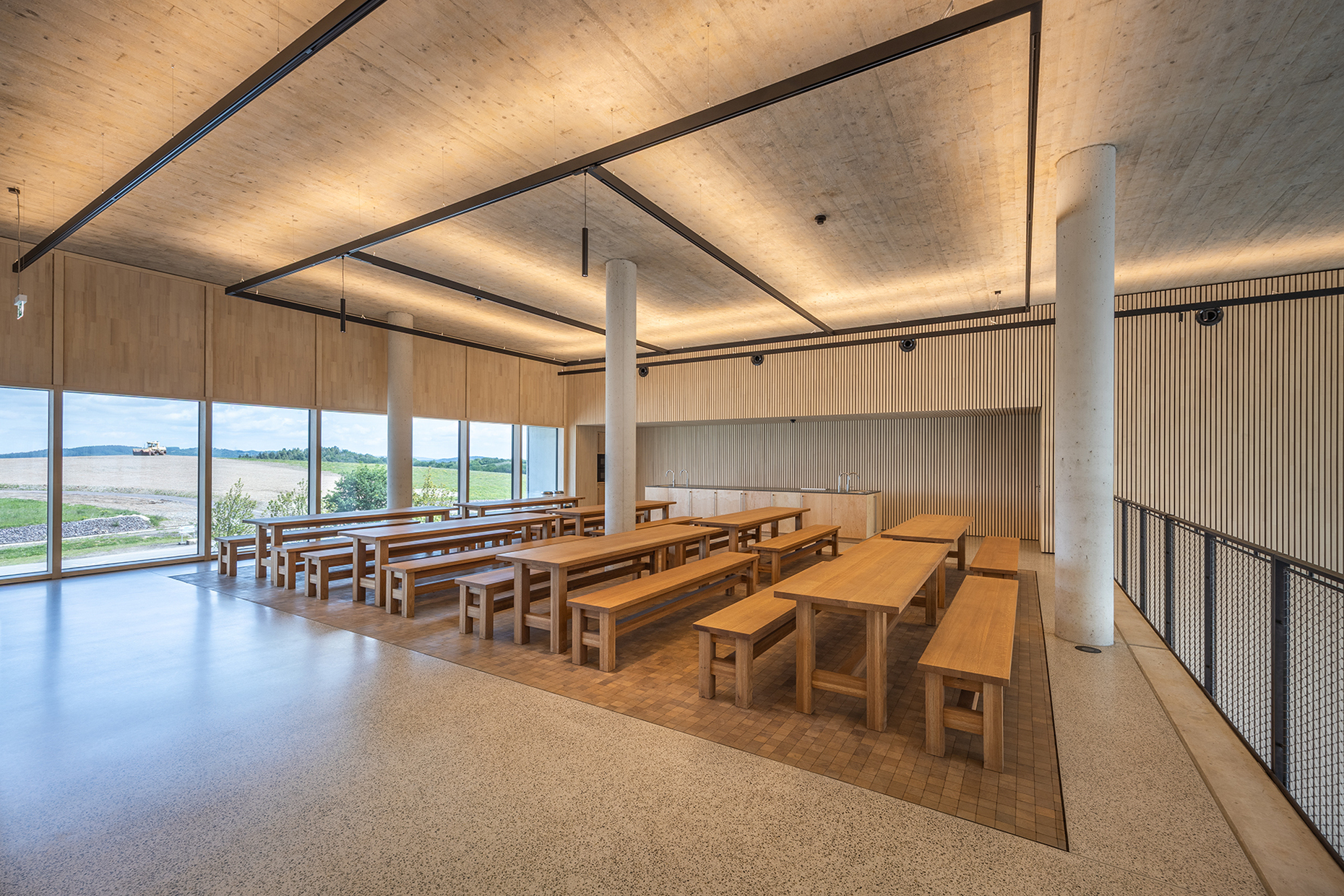
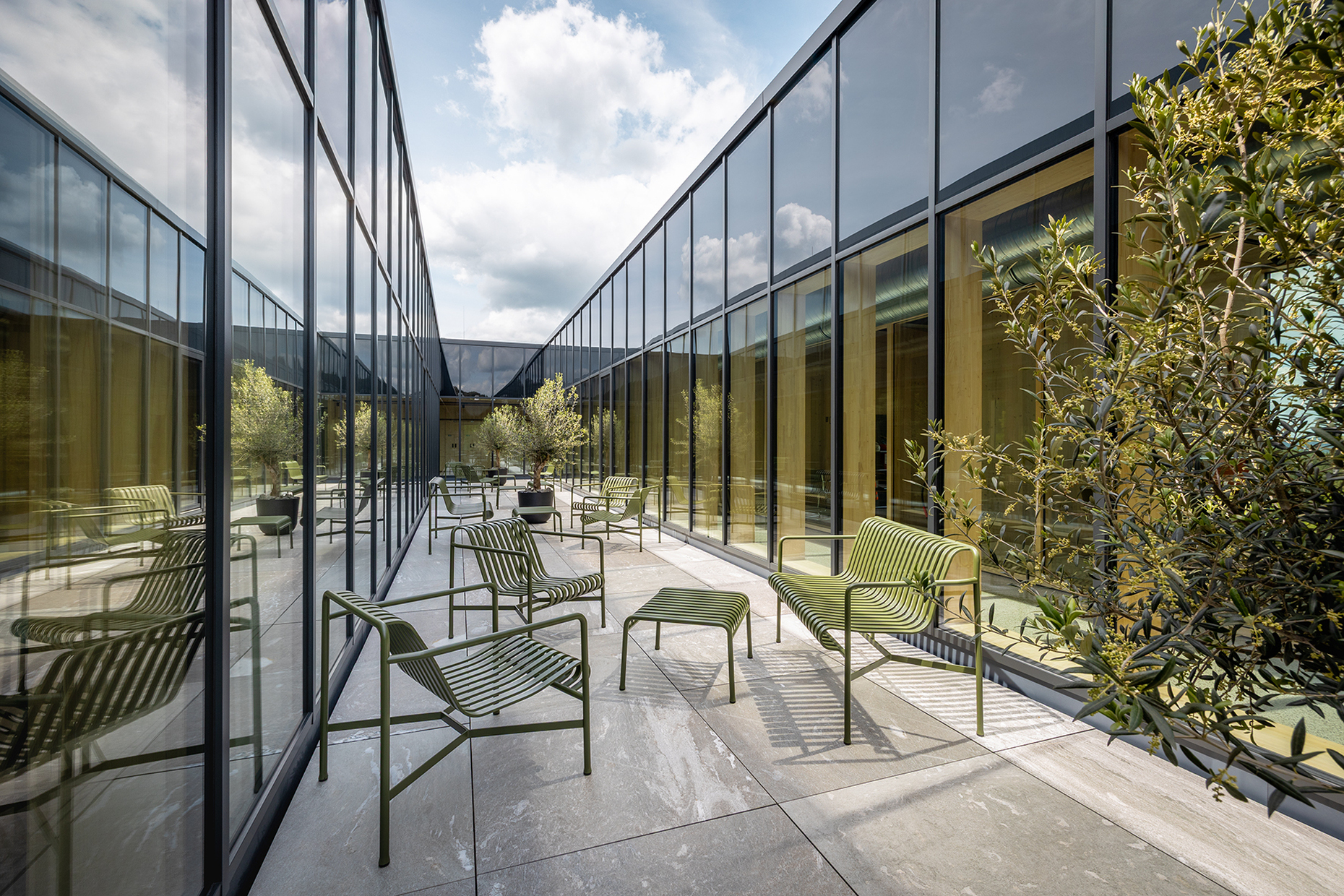
As soon as you step into the new depot of the Trier Region Waste Management Association (A.R.T.), you can quickly sense that the design has been thought through for the long term: wooden surfaces characterise the office and communal areas, lending the building a warm, welcoming atmosphere. “We didn’t want to build a polystyrene box, so we focused primarily on steel, glass, timber, concrete and natural stone – natural materials that people can understand, touch, repair and maintain. If, at some point, this building is no longer used in its current form, its components should, as far as possible, be reused or recycled as building materials. This way of thinking is in line with our daily mission and was therefore part of the planning from the very beginning,” explains Max Monzel, Director of the A.R.T., who, as the client, commissioned Pasucha Klepzig Architects to oversee the project.
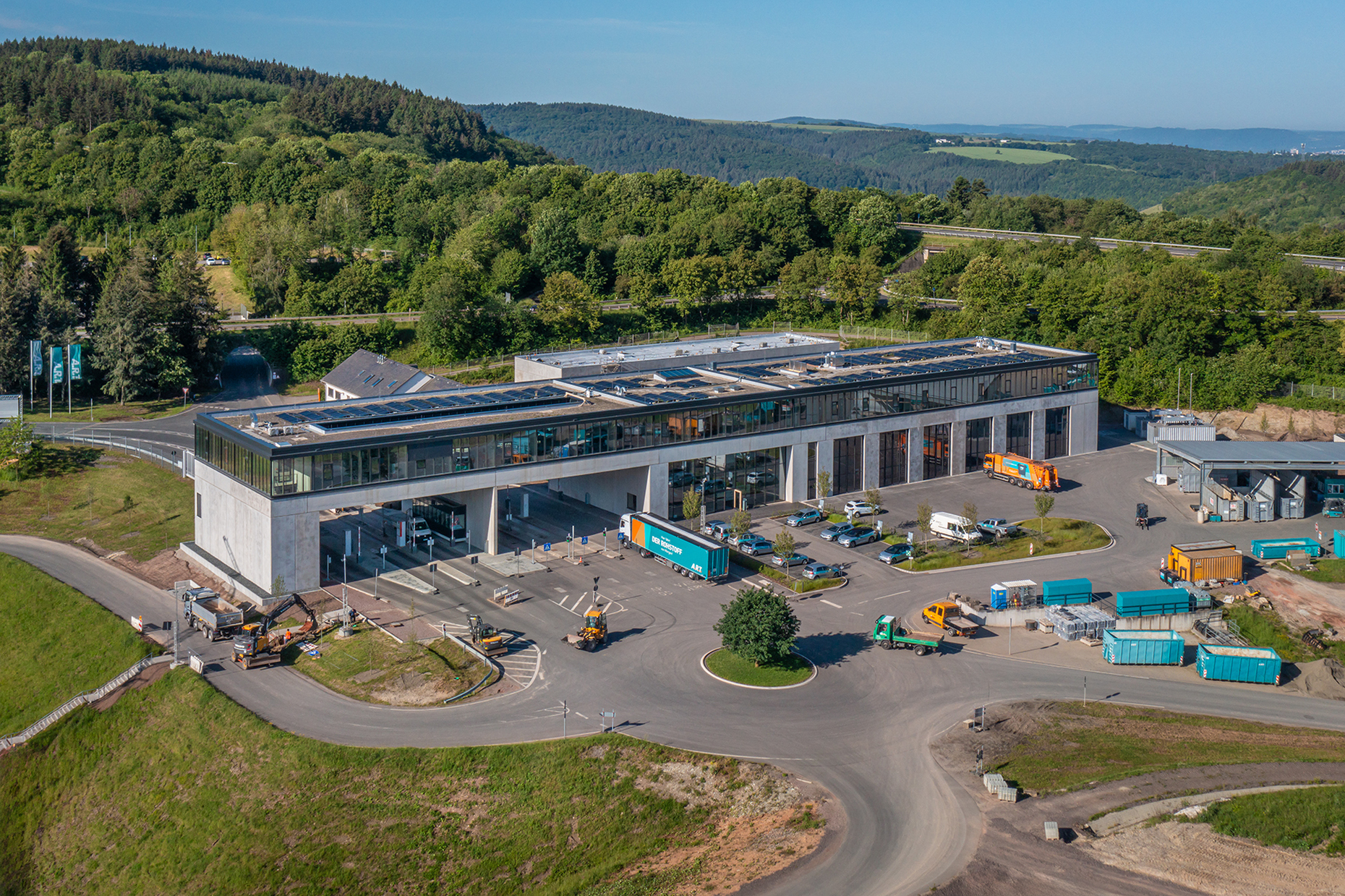
The result is a workplace for around 220 staff members, combining office space, workshops, storage areas and communal spaces, whilst architecturally reflecting the association’s values. “Our mission is to promote reuse, recycling and the responsible use of resources. If you take this idea seriously, you have to live by it yourself,” states Max Monzel.
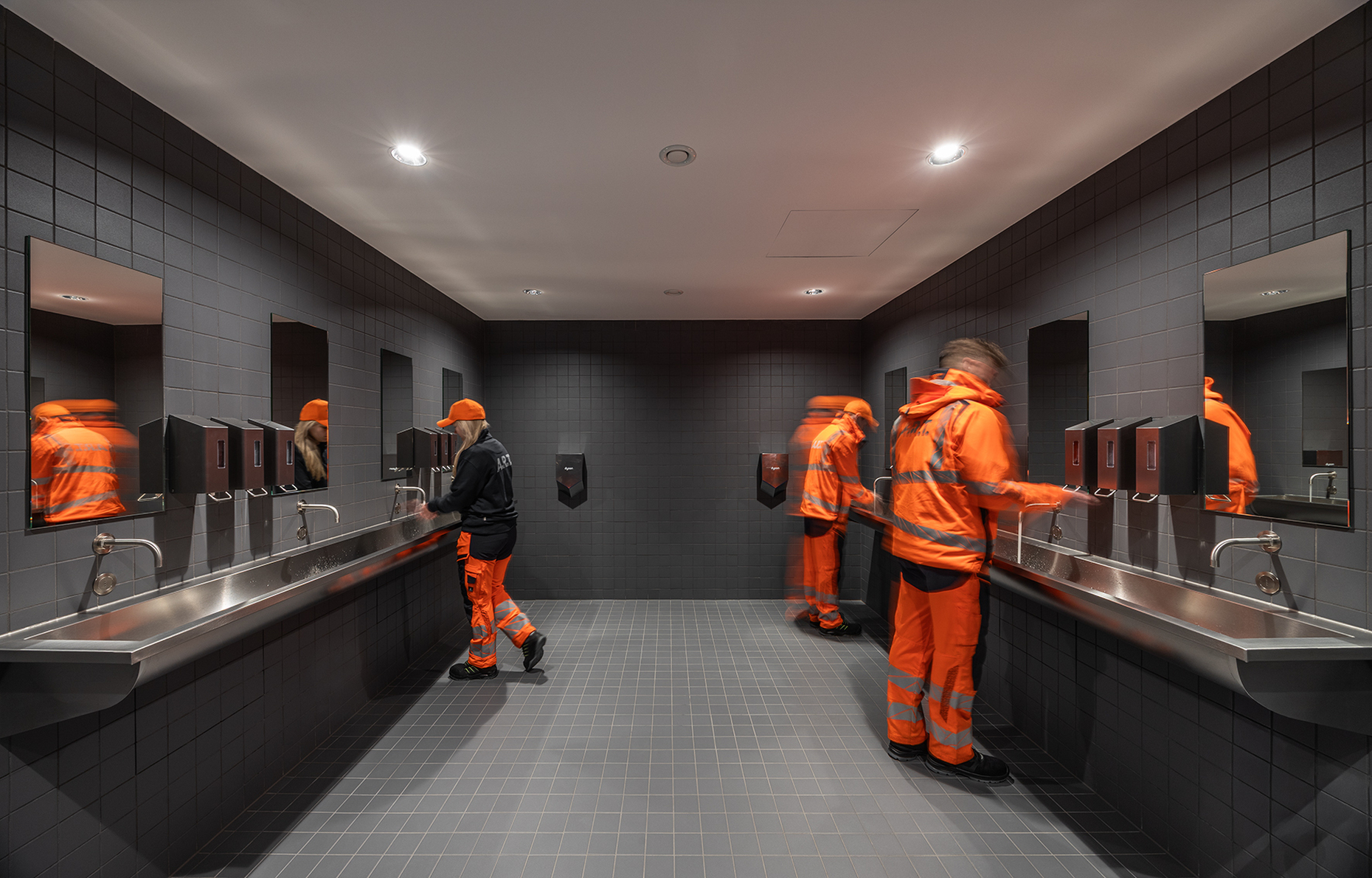
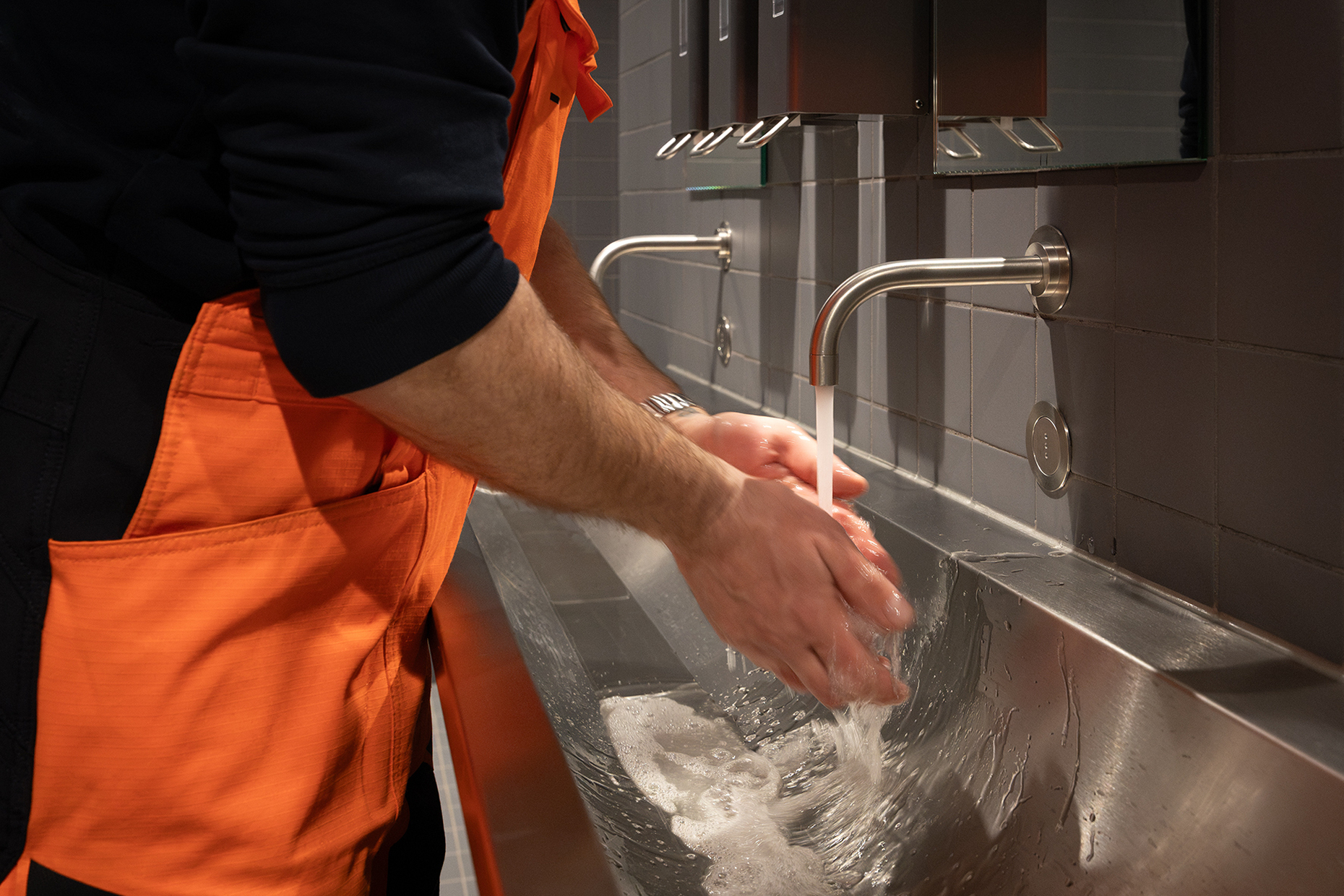
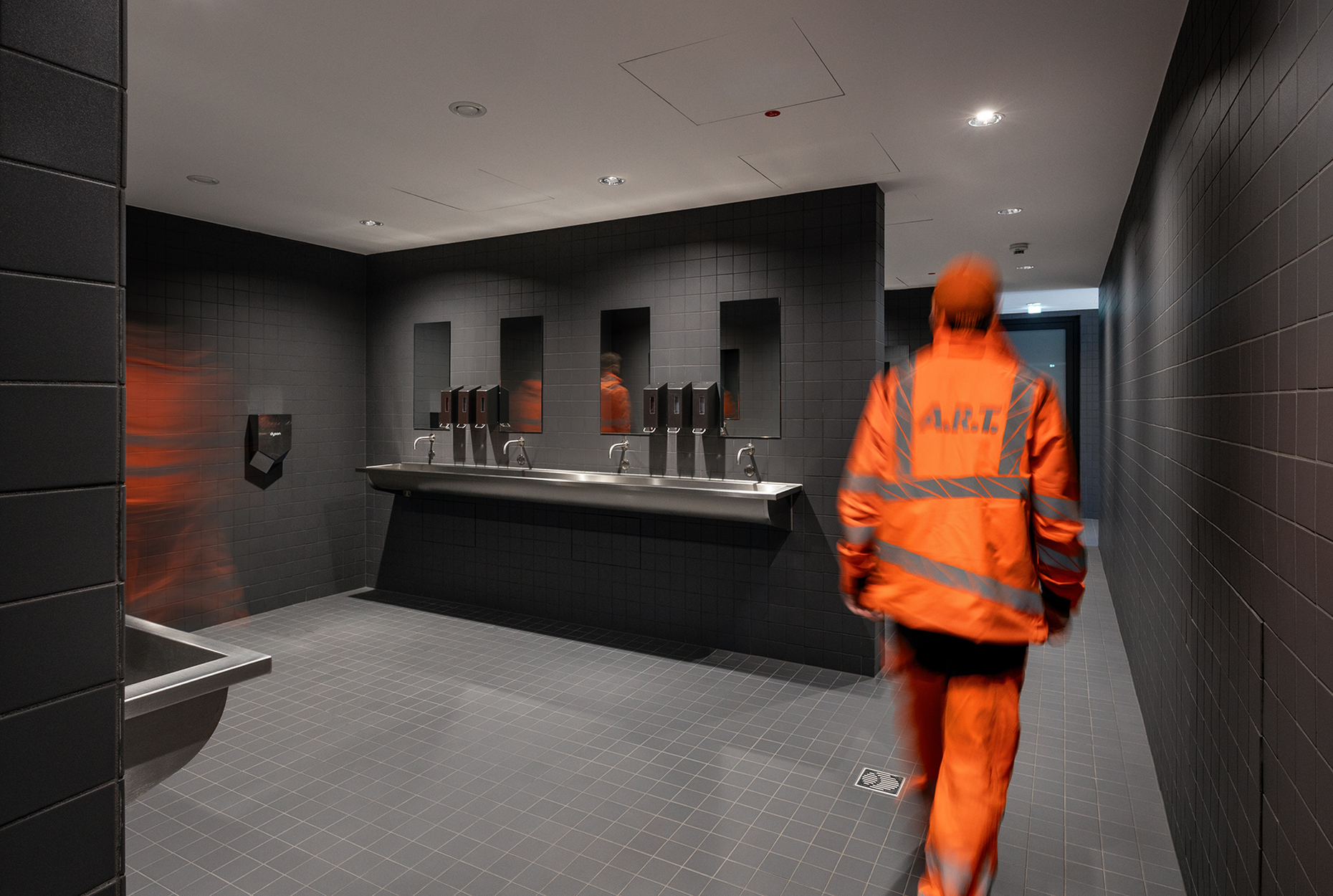
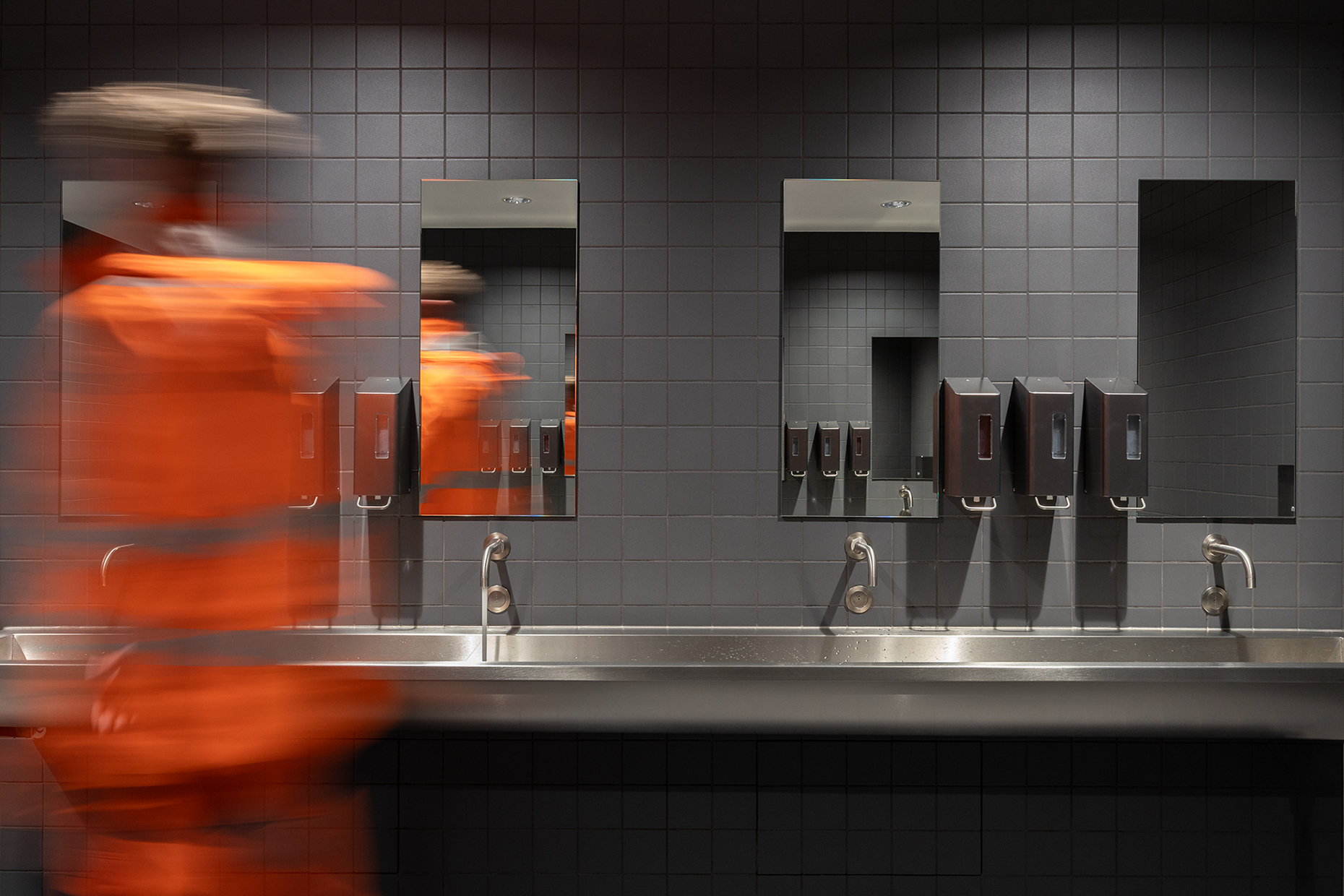
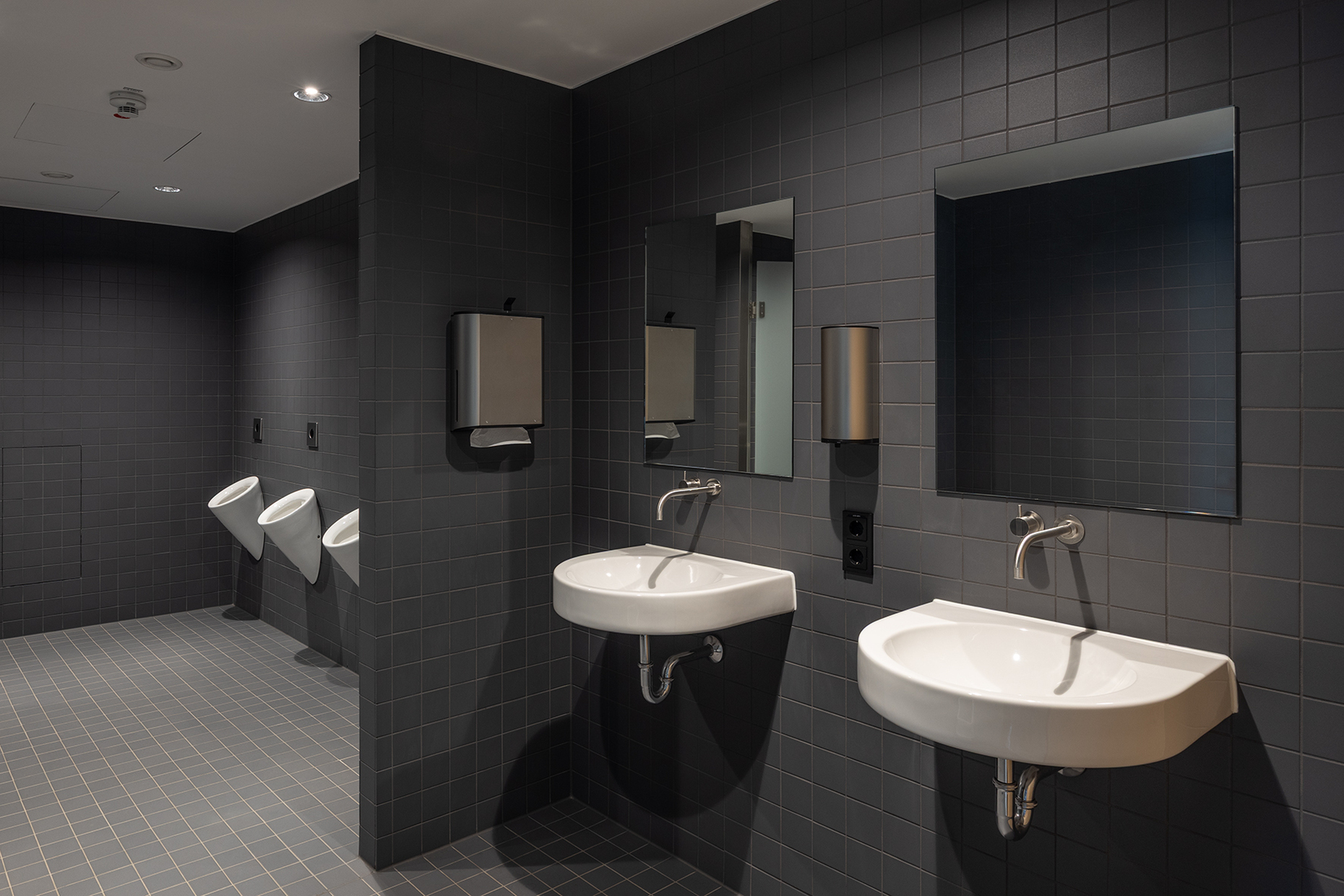
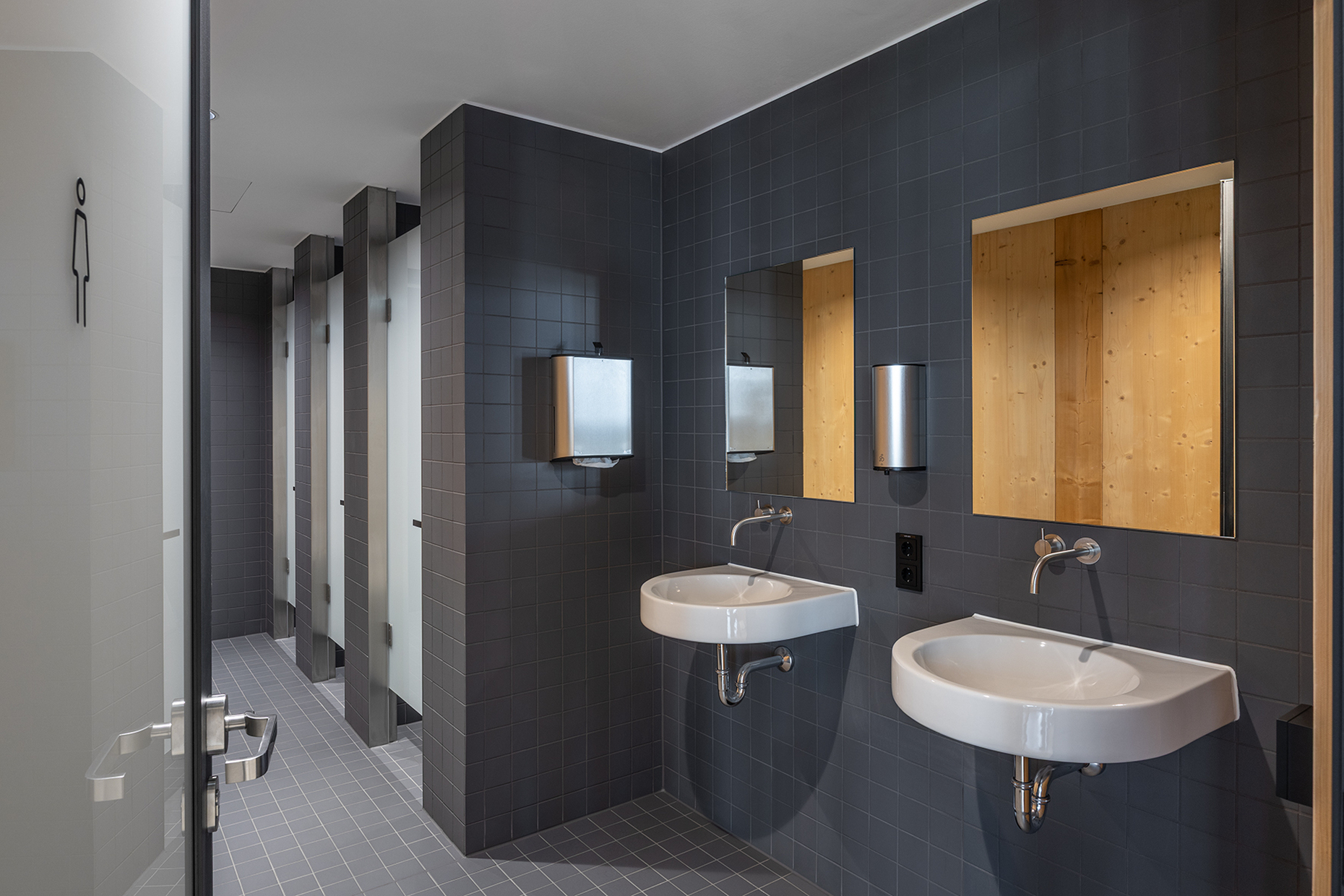
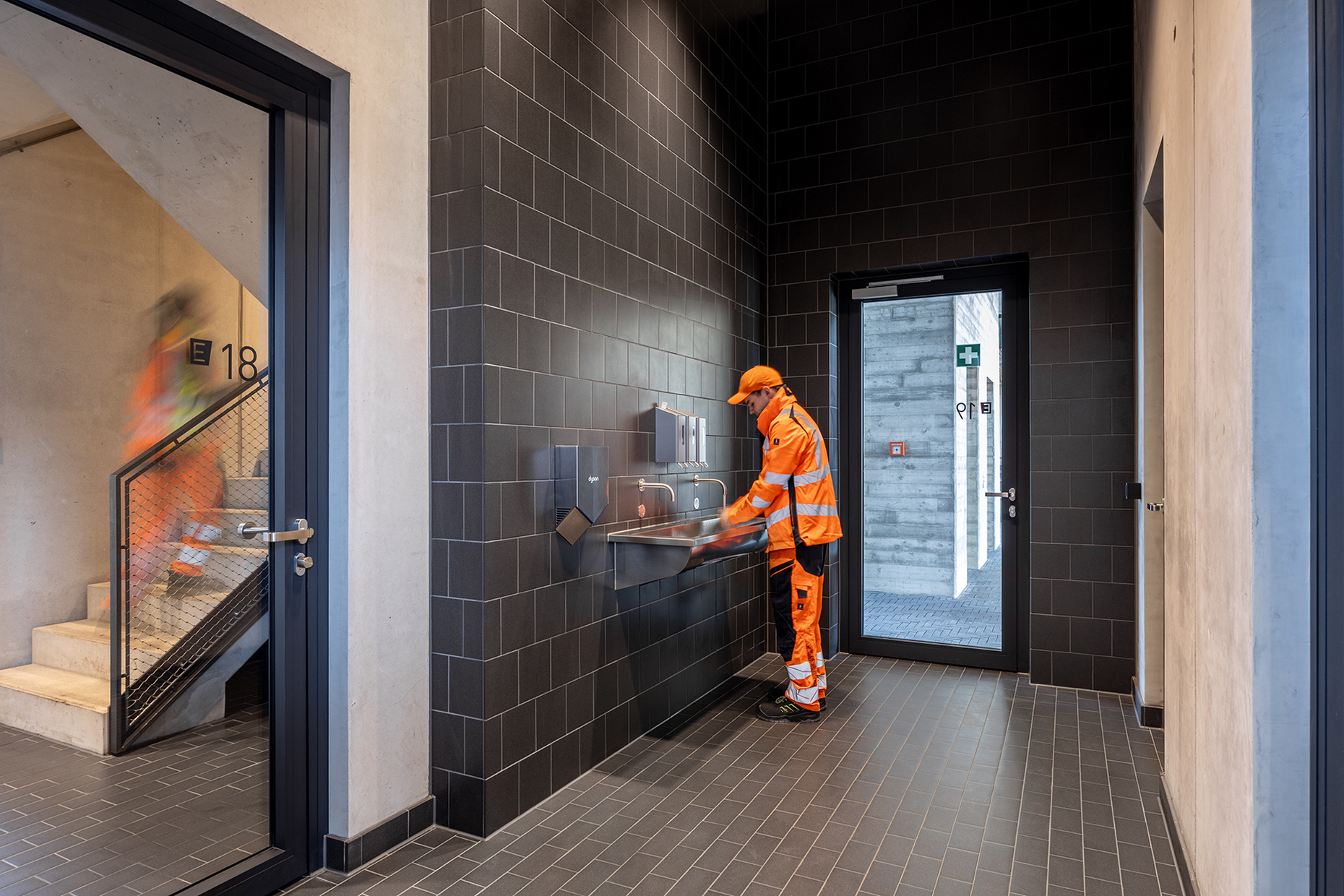
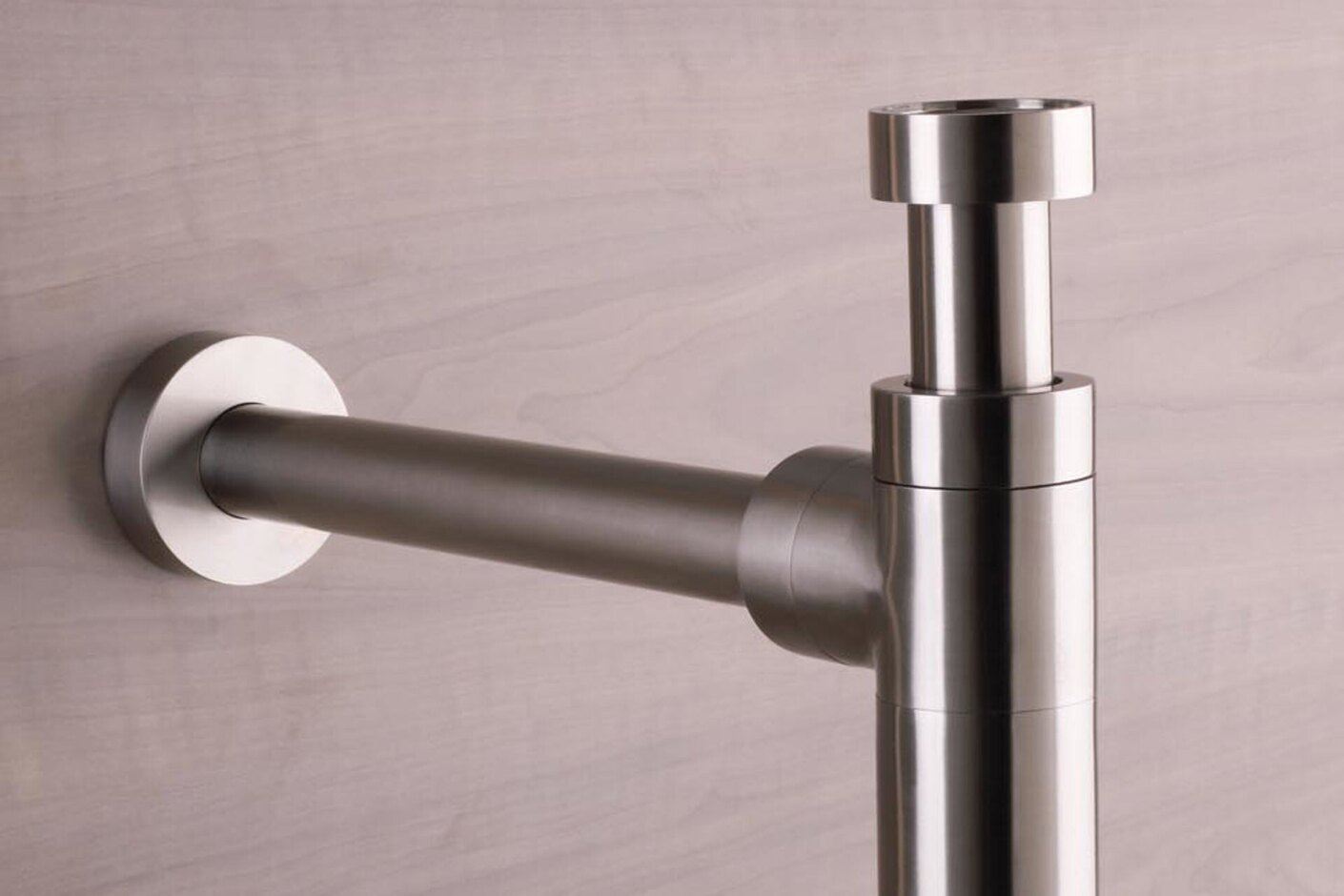
This approach also shaped the choice of fittings – the focus was on solutions that would function reliably for many years and could be easily maintained when necessary. The fittings from Vola meet these high standards: for the sanitary areas, the touch-free wall-mounted washbasin spout “Vola 4321-40”, the concealed washbasin mixer “Vola 121-40” and the bottle-type odour trap “Vola A34-40” were selected. In particular, the touch-free “Vola 4321-40” model promotes hygienic use in high-traffic areas and, with its wall-integrated design, blends discreetly into the architecture.
Developed by Arne Jacobsen and Verner Overgaard, the concealed installation principle is characteristic of this long-established Danish company: the technology is installed behind the wall, with only the control elements and spout remaining visible. This design principle has defined the brand since 1968. “For this project, we were looking for a solution whose minimalist and clear design language would match our architectural standards. For me, another advantage of Vola’s products is that the cartridges are easy to replace. That may sound like a minor detail, but it is extremely important in day-to-day use,” says Max Monzel.
At the same time, the manufacturer’s system concept – designed with durability in mind – proved convincing: handles, levers, spouts and other elements can be interchanged or added to within the product range without compromising the overall design. Many of the components remain available over long periods: “In addition to the quality of the design, long-term usability and the option for refurbishment played a particularly important role. It was important to us to use products that can be operated economically in the long term.” The fittings are manufactured in Denmark; for the depot, the choice fell on versions made of solid V4A-grade stainless steel. Collaboration during implementation also played a key role. Queries regarding drawings, installation details and assembly could be clarified directly with the manufacturer. “Short decision-making processes and reliable technical advice are invaluable in a construction project of this kind. They help to resolve detailed issues on site swiftly,” says Max Monzel.
The forward-looking architecture of the Trier Region Waste Management Association thus offers a stylish elegance right down to the washrooms, which is also becoming increasingly important in the competition for skilled workers: “Anyone who works for a company every day should feel that attention is paid to quality. Not in the sense of luxury, but in the sense of care. There should be no contradiction between our social mission and the way we build and work,” emphasises the client.
In the new depot, it becomes clear just how consistently A.R.T. puts the concept of the circular economy into practice: what begins with the choice of materials continues right down to the smallest details. In this way, the responsible use of resources becomes visible and tangible in the day-to-day running of the building.