Unlike expected
Anna Moldenhauer: You studied art at the Offenbach University of Art and Design and, in Vienna, painting, tapestry and experimental animated film, and have worked in a multidisciplinary way from the very beginning. You don’t want to be pigeonholed or become a brand. Why?
Xenia Lesniewski: It has a lot to do with the traditional image of artists – that cult of genius, which relies on recognisability and a cut-throat mentality. I think it’s fitting for our times to break away from that, to take art off its pedestal and consciously choose not to conform to that cliché any longer. For me, that also includes working collectively or seeking out alternative forms. Of course, I’m aware that, in the end, you’re still marketable – but simply not within the usual narratives.
You work across different disciplines. How do you decide which medium to use for each form of expression?
Xenia Lesniewski: It always depends on the project. The context determines the form. Sometimes I want to translate a situation into a spatial form; sometimes a painterly work emerges. Each approach creates a different encounter with the viewers. It makes a difference whether something is immediately recognisable as art or whether I create a space that evokes everyday situations. For a while, I was more interested in this spatial-performative work than in traditional media. I like it when viewers have to engage and aren’t just passive consumers.
I’ve read that you often start with painting. Is that still the case? If so, why?
Xenia Lesniewski: Yes, probably because that’s how I started out. Back when I had no idea what art could actually be, ‘being an artist’ simply meant ‘being a painter’ to me. I wasn’t even aware of the world of contemporary art at the time. That influence still lingers today. At the same time, I now work with such freedom that all media interest me. I make a fresh decision depending on the situation. And I’ve fought hard to ensure that no one pigeonholes me into just one thing — like “the one who only does works on paper” or “only performances”. I feel this openness is very important and I’m determined to preserve it.
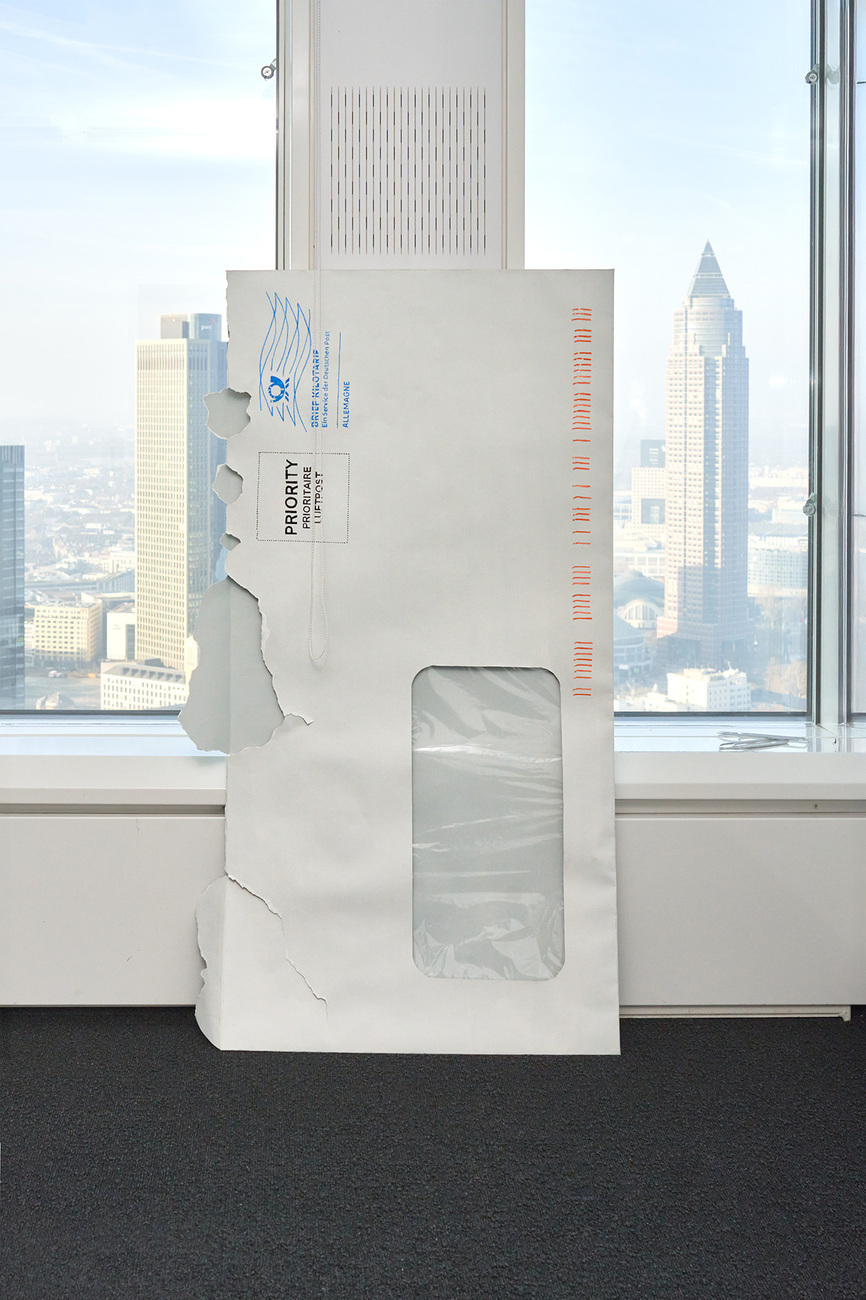
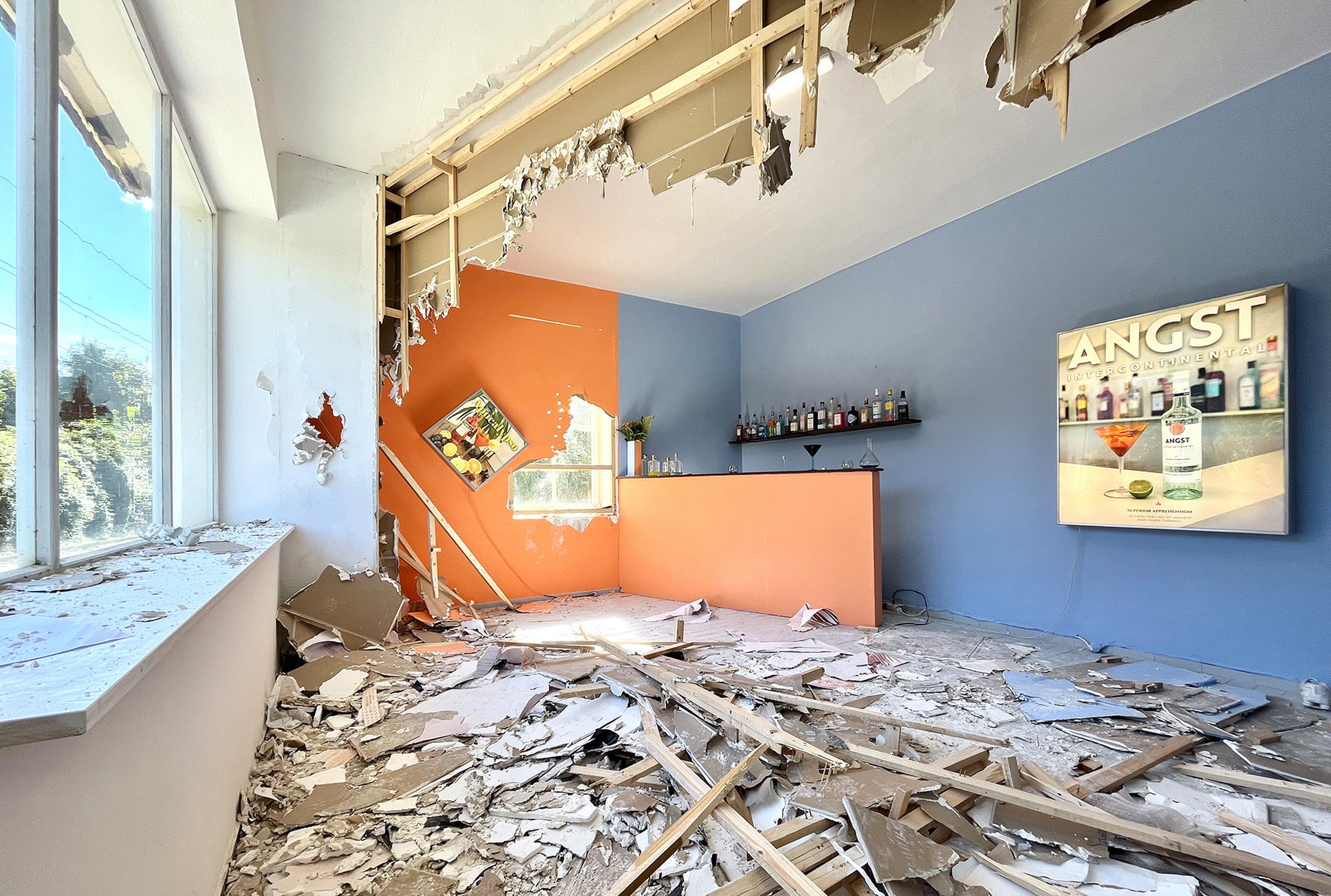
You often take everyday objects and push them to the point of absurdity: a washing machine that’s leaking; a laptop that’s smoking; a bed with a wall running through it; a huge, torn-open envelope. You strip these objects of their function and provoke strong reactions – amusement, astonishment, alarm. What interests you about this shift between function and dysfunction?
Xenia Lesniewski: Much of what you’ve described captures my intention quite well. I’m interested in how people engage with a piece of work. Everyday objects such as coffee machines, envelopes or beds are accessible – they don’t instil a sense of trepidation, as, for example, a 16th-century Old Master painting might, which one approaches with reverence. And then comes the irritation: the panic when the computer ‘crashes’, or the coffee machine ‘overflows’. For me, these small cracks in perception create moments that are very valuable. I’m also very interested in the overlap between design and art. In art, there’s often a fear of having to choose one side: art or design, art or fashion. Yet it’s precisely at these intersections that surprising friction arises.
The extent to which design shapes our everyday lives is sometimes underestimated. Disrupting the familiar form creates an opportunity for discussion.
Xenia Lesniewski: Yes, and my background in Offenbach certainly plays a part too – the connection to the Bauhaus, the concept of ‘design’, which encompasses so many disciplines. For me, this concept remains significant to this day, even though hardly anyone in the visual arts uses it to describe their own work.
Looking at your work, I couldn’t help but think of Marcel Duchamp’s readymades – or Meret Oppenheim’s fur cup.
Xenia Lesniewski: That's a very good example: an everyday object that suddenly becomes unusable and turns into something completely different. There are clear connections there, and I really appreciate these works.
You work at the intersection of many different spheres: private and public, internal and external, high culture and subculture. Your work is, on the whole, very dense. What inspires you?
Xenia Lesniewski: I am interested in bringing contrasts to light and sustaining tension. Many of these contradictions are part of our everyday lives, but we often refuse to acknowledge them. This is precisely where my work comes in: it creates spaces where these tensions can be felt and seen.
How does the critique of capitalism, which often features in your work, come about? Is it deliberately woven in, or does it emerge during the creative process?
Xenia Lesniewski: It's both. Sometimes I start a project with a clear idea in mind, but a lot shifts during the process. Ideas become fragile, contradeictory, or turn into their opposite. This openness is important to me – regardless of whether I'm working alone or as part of a collective. Meaning often only emerges through the act of doing. It is precisely in moments of doubt or failure that we see what truly holds up. My critique of capitalism is therefore rarely a contrived statement, but develops from an engagement with the material, the context and the conditions under which we produce.
You travel a lot. How do you manage to work whilst you’re on the move?
Xenia Lesniewski: Lots of things just come to me by chance, no matter where I am. That’s part of my work. When I have an idea, I naturally do more in-depth research. But I discover a lot of things in my everyday life. And in the studio, I then bring things to life that go beyond sketches or digital designs.
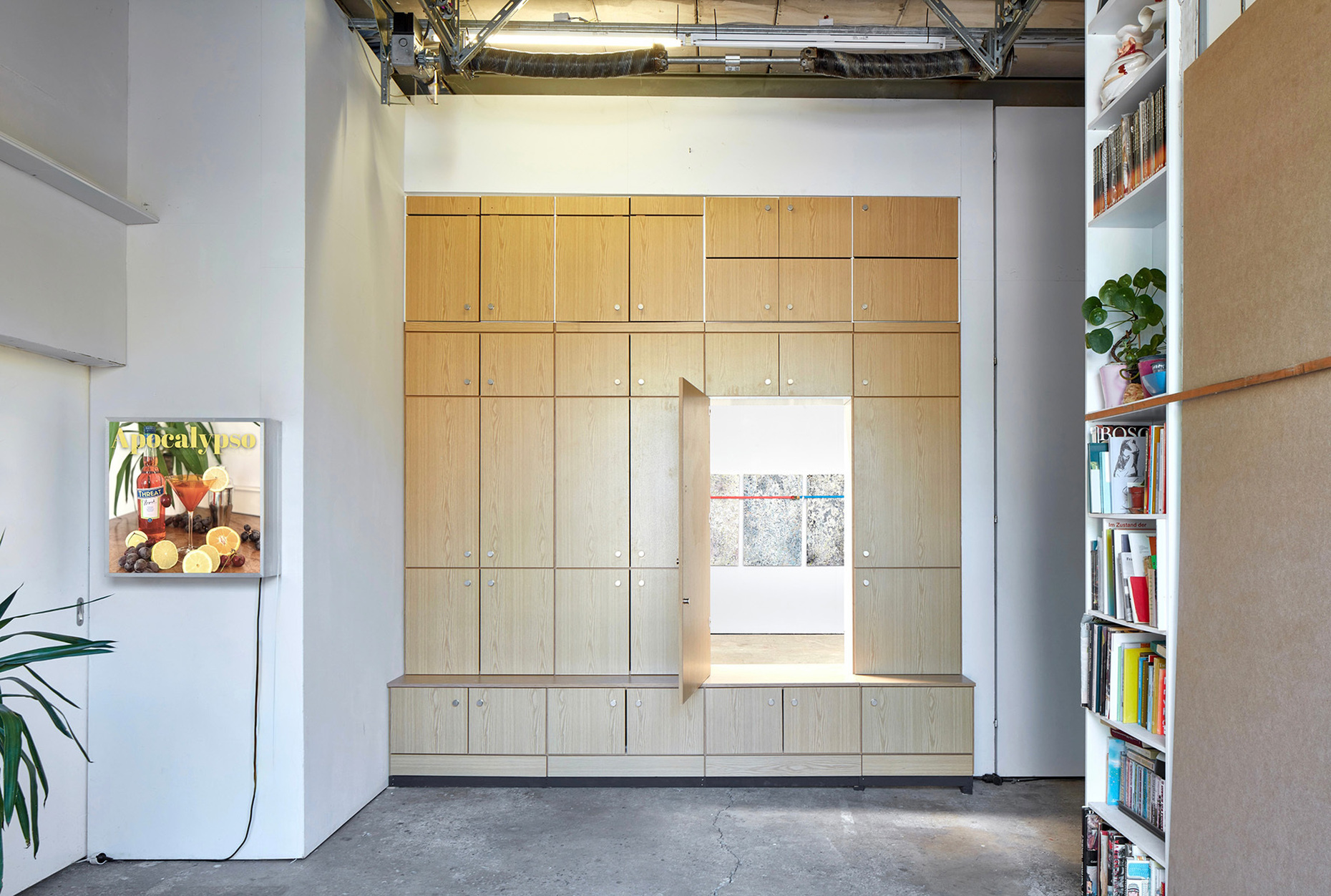
You also make significant alterations to the architecture – recessed walls, hidden doors, a doorway in the fridge. This changes the way the space is perceived. What do you hope to evoke in the viewers?
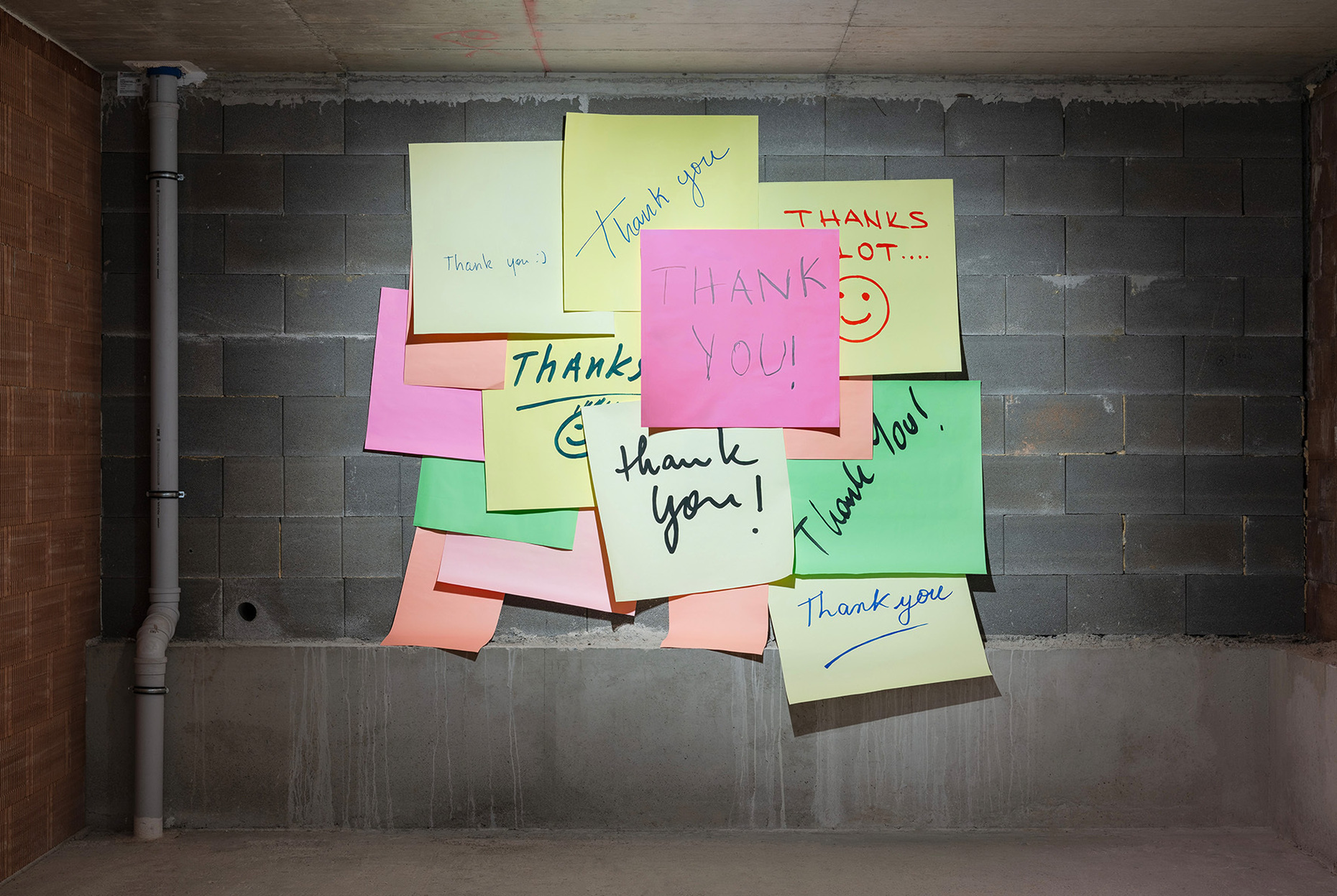
Xenia Lesniewski: I’m generally interested in spaces – architectural, social, poetic. Many people are wary of contemporary art and would never go into a gallery of their own accord. I want to create situations that engage them, unsettle them and surprise them. I see great potential in this: art can have a social impact, particularly when it is not aimed solely at a privileged class and thus does not reproduce classist exclusions, but instead opens up new perspectives.
Your sense of humour when dealing with the subjects of death and funerals also makes them more accessible.
Xenia Lesniewski: Humour can be a force of resistance. It helps us cope with situations that are hard to grasp. In ‘Instant Solutions’, there is a humorous element, but also a clear critique of the capitalist exploitation of death – an area that was long a personal matter and is now increasingly becoming a kind of lifestyle product.
You are very much in charge of things yourself, whether it’s book projects with Edition Furor, setting up the artists’ collective Club Fortuna, or the Ainex art association. What drives you?
Xenia Lesniewski: I want to create, transform and try new things – and I see countless ways to do so. Through my start-up, Parxs, I’m also developing inclusive and eco-socially produced furniture for public spaces. I like not just to make use of structures, but to challenge them – which is why my objects often work in ways that are quite different from what you’d expect. I discover opportunities everywhere, and there simply isn’t enough time to put all my ideas into practice.
You also teach at the Hochschule für Gestaltung (HfG) in Offenbach. What knowledge do you want to pass on to your students?
Xenia Lesniewski: I’m in the Painting Department, although my own practice goes much further than that. That’s what I try to convey: the question of ‘why’ is more important than pure technique. Of course, I can pass on technical knowledge, but what really matters is the discourse – the questioning, the shared discussion about the work. It’s important to me to bring the ‘painting princes’ down from their pedestals. We make mistakes just like everyone else. Art affects everyone and can be very accessible.
What topics are the students exploring?
Xenia Lesniewski: AI and technological developments – how they are transforming artistic practice and social spaces. Then there are political developments that affect us all. And the major theme of identity, which has been very much in the spotlight in recent years. I continue to believe that art can offer hope and the confidence to help shape the future.
What are you currently working on?
Xenia Lesniewski: I’m currently working on a number of projects: in Germany, I’m developing an art-in-architecture project and ideas for works in public spaces that can exist independently of exhibitions. In collaboration with Andrea Bier, I’ll be creating my first outdoor metal sculpture in July as part of her Air101 residency programme in Gmunden. Two exhibition projects are coming up in Berlin: one for Gallery Weekend in May and one with the Haus des Papiers in June. With my collective “CLUB FORTUNA”, we are opening the exhibition “BESSER WIRD’S NICHT” on 18 March in a Viennese project space. I am also undertaking a research trip to China – to Hong Kong, Shenzhen, Shanghai and Beijing – to gather new inspiration for my work.