Power and weakness
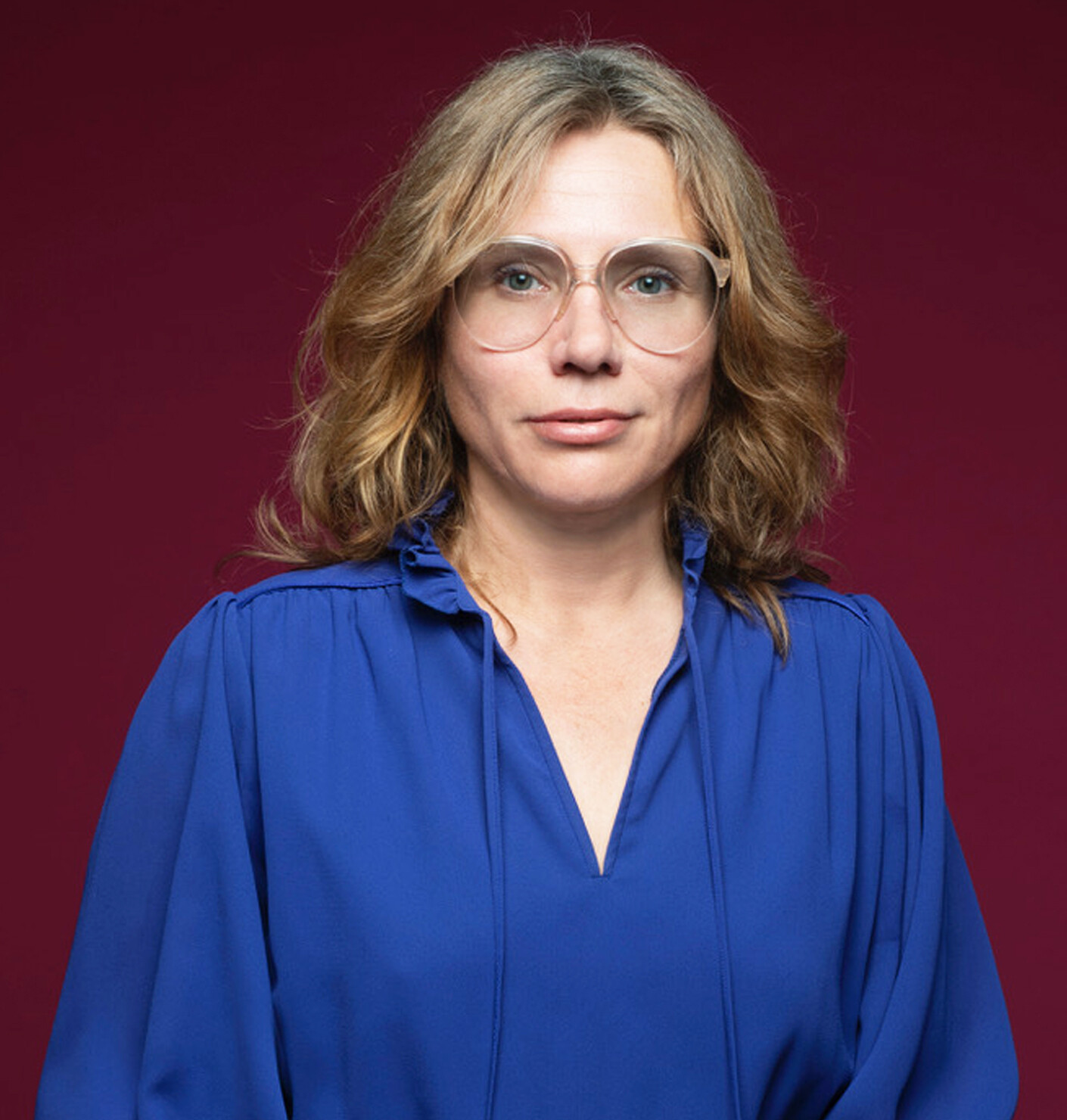
Anna Moldenhauer: Your sculptures depict oversized objects from our everyday lives – things that are familiar to us, yet which, because of their new scale and placement, take up an unusually large amount of space. What appeals to you about this shift in perspective?
Frank Brechter: By enlarging objects or hanging them on the wall, I elevate the selected items to a different level: everyday objects become symbols. Enlargement, in particular, helps to draw attention to specific details. When I work with reductions, on the other hand, the aim is to reveal structures or systems. The smaller scale creates a sort of bird’s-eye view of something that is actually large. Working with different scales is probably also linked to my career path – I have always worked with large surfaces and spent many years working as a freelance stage painter, stage sculptor and in stage construction in the theatre. I also use some of the techniques I learnt in the theatre in my own artistic work.
What interests you about everyday objects?
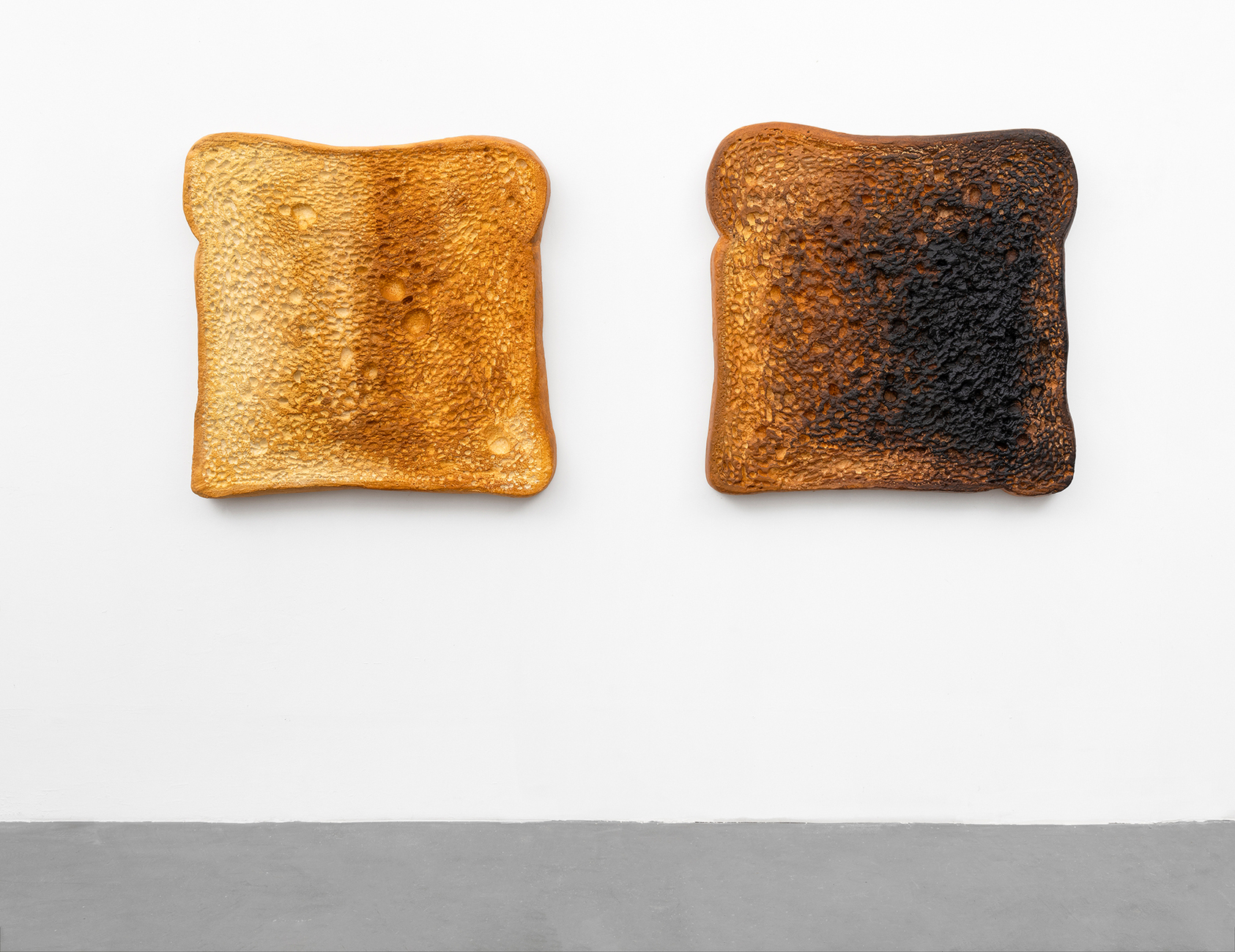
Frank Brechter: Above all, it’s important to me that viewers can relate to the works. That’s why I like to work with objects that are widely recognised and part of everyday life. Take a slice of toast, for example: there’s hardly anyone who doesn’t have an opinion on it. When I hang it on the wall in a strikingly enlarged form, associations spring to mind immediately. You find yourself wondering: where’s the butter, where’s the cheese? Does the degree of browning match your own preferences? I deliberately seek out motifs with a certain affinity to pop culture, in which as many people as possible can recognise themselves. In my work, I reveal little about myself. Of course, there’s a lot of me in it, but I don’t want to lay that bare. It’s more important to me that my art communicates with the viewer and says something about their perceptions and experiences. To achieve this, I need motifs with which people can immediately form a connection.
You don’t work from photographs or sketches. Yet the objects are hyper-realistic and incredibly detailed. They look very authentic. Do you have a photographic memory?
Frank Brechter: No, I don’t have a photographic memory. Research forms a significant part of my work. As I deal with specific objects, I can study them directly in everyday life. For example, I look very closely at a piece of toast and try to understand the system according to which it is constructed and which details are crucial. In this case, that would include, for instance, the structure of the dough or the air bubbles that form during baking. These have a specific arrangement, and it is precisely such features that are important. They shape my impression of the object and are therefore incorporated into the work. Other details do not need to correspond exactly to the original, because what matters are the characteristic elements that create the illusion that it is the real object. So I examine the objects very closely at first, but then put the reference materials aside. I work neither from a sketch nor from a photograph, but try to let the work emerge from memory. If I were to work directly from photographs, the works would certainly be accurate, but they would lack something. It is precisely these small inaccuracies or errors that are important to me. If you look closely, you can see the brushstrokes and the creative process. From a greater distance, however, the illusion of an exact replica emerges. It is this tension that interests me.
That makes sense – perfection on its own does not necessarily mean vitality. If you copy something exactly, you end up with nothing more than a reproduction. It is the small variations that turn it into something in its own right.
Frank Brechter: I’m actually waiting for the moment when some algorithm classifies my work as AI-generated. That’s probably a risk we’ll face more and more often in the future.
Whilst preparing for this interview, I read that you originally studied graphic design at the Lazi Academy in Stuttgart. Did that training shape your eye for precision, or do you not see a direct link there?
Frank Brechter: To be honest, I don’t think it has much to do with that. Although I studied design, I’ve never worked as a designer. Whilst I was at university, I quickly realised that this wasn’t the career path I wanted to pursue. At the same time, I acquired skills there that I still benefit from today. As an artist, you often have to be a graphic designer, web designer, copywriter and much more besides. I was able to take quite a few of these skills with me from my studies.
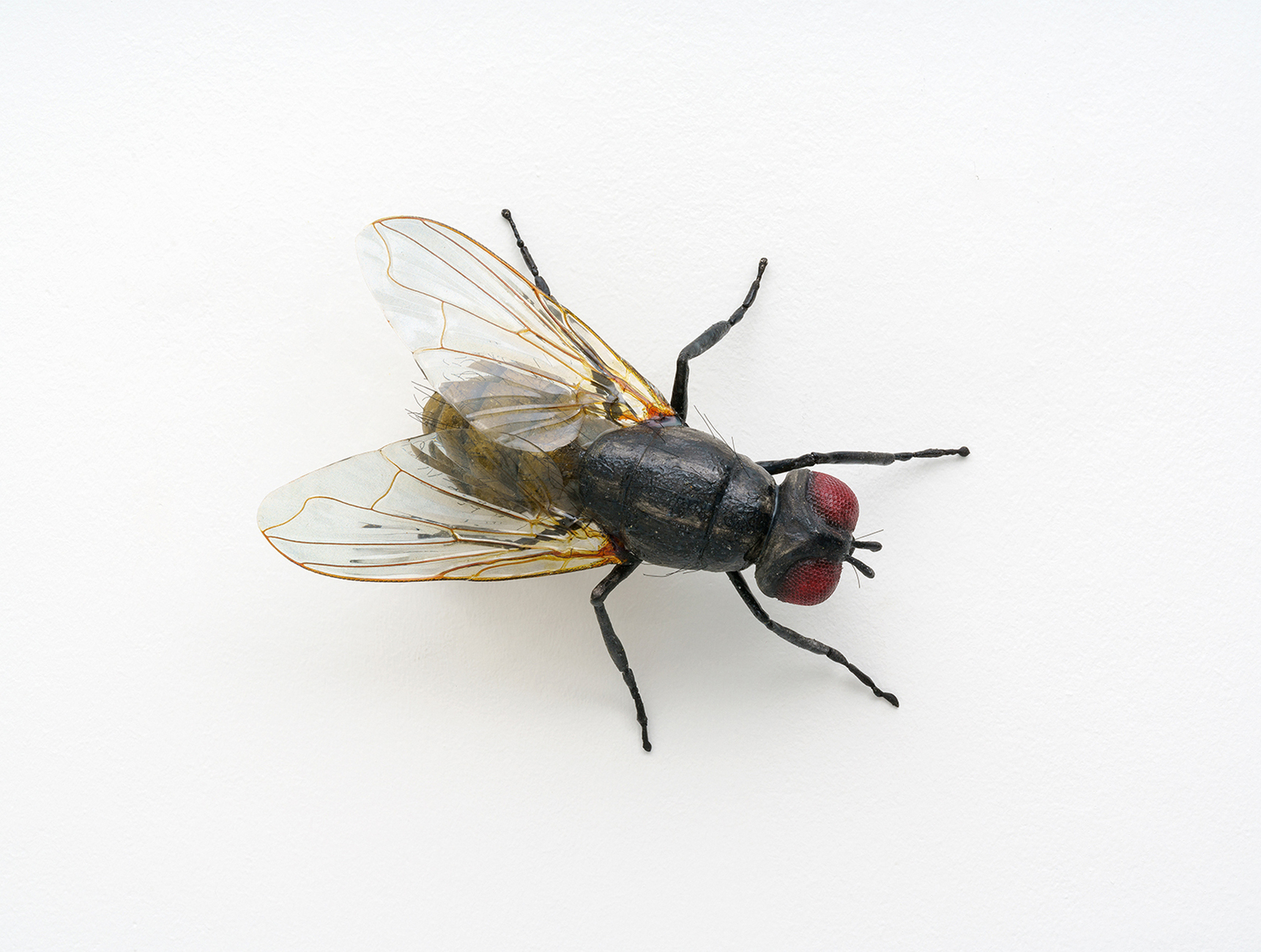
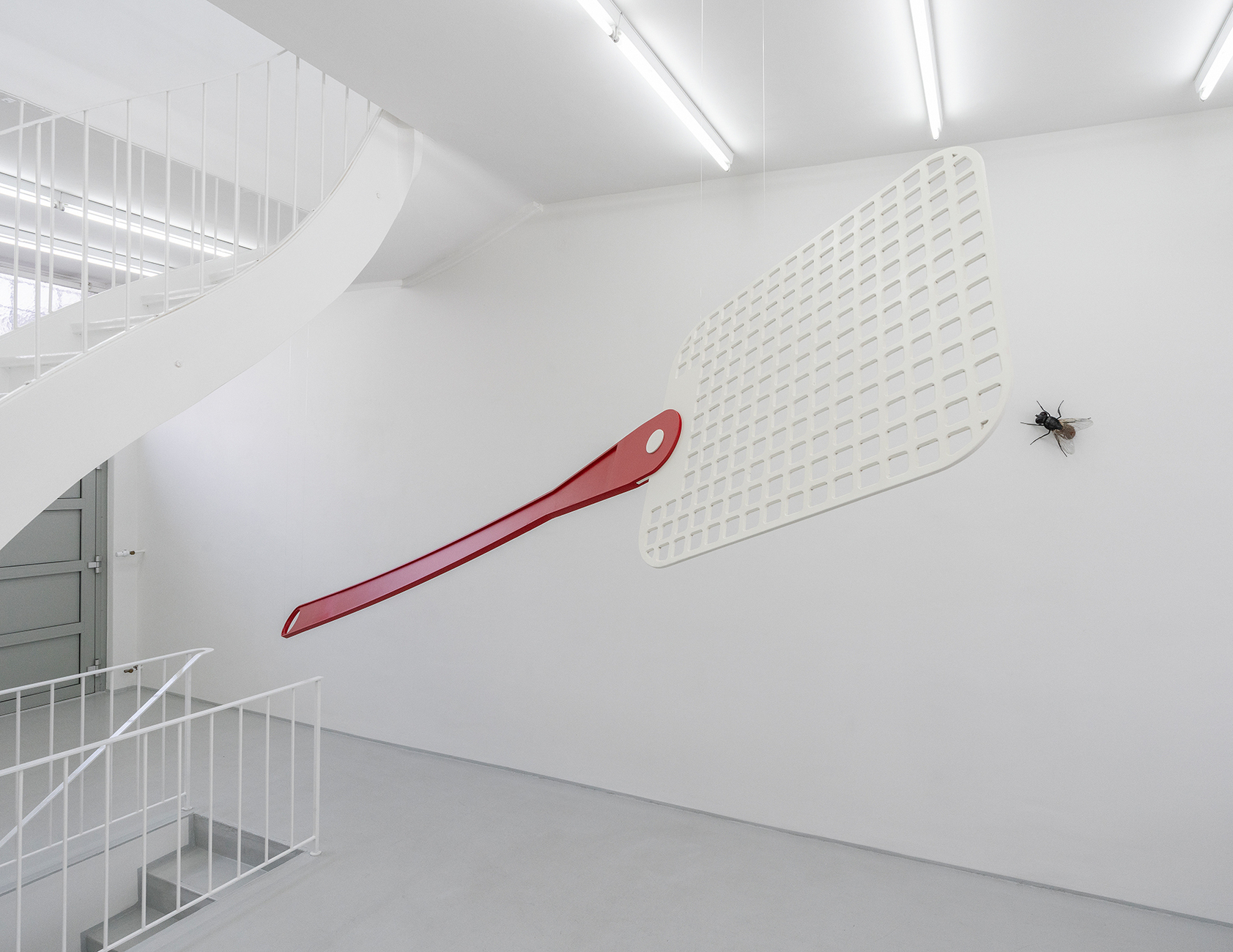
To me, the objects you have chosen – be it a bottle, a cigarette, a piece of toast or the fly-whacker complete with fly – seem like a snapshot of a larger narrative. There is no barrier for the viewer. They are free to imagine for themselves how the situation began and how it will unfold. There is plenty of scope for interpretation and imagination.
Frank Brechter: Hearing people’s ideas is a great pleasure for me too. It is precisely because I say so little myself that the most interesting reactions often arise. Of course, many visitors expect the artist to provide an interpretation. I refrain from doing so, however, because the most fascinating narratives often emerge precisely when I say nothing. A good example is the oversized pill packet I once created. It was important to me not to depict an instantly recognisable, iconic pill. When the work was hanging in my studio and the first visitors arrived, something interesting happened: many of them immediately thought they recognised their own medication in it. In doing so, they often shared personal stories about their health or their everyday lives. That’s when I realised that the work functions in a way I hadn’t anticipated at all. Viewers project their own experiences onto it, thereby turning the work into something very personal.
Do you intentionally consider this effect when choosing your subjects?
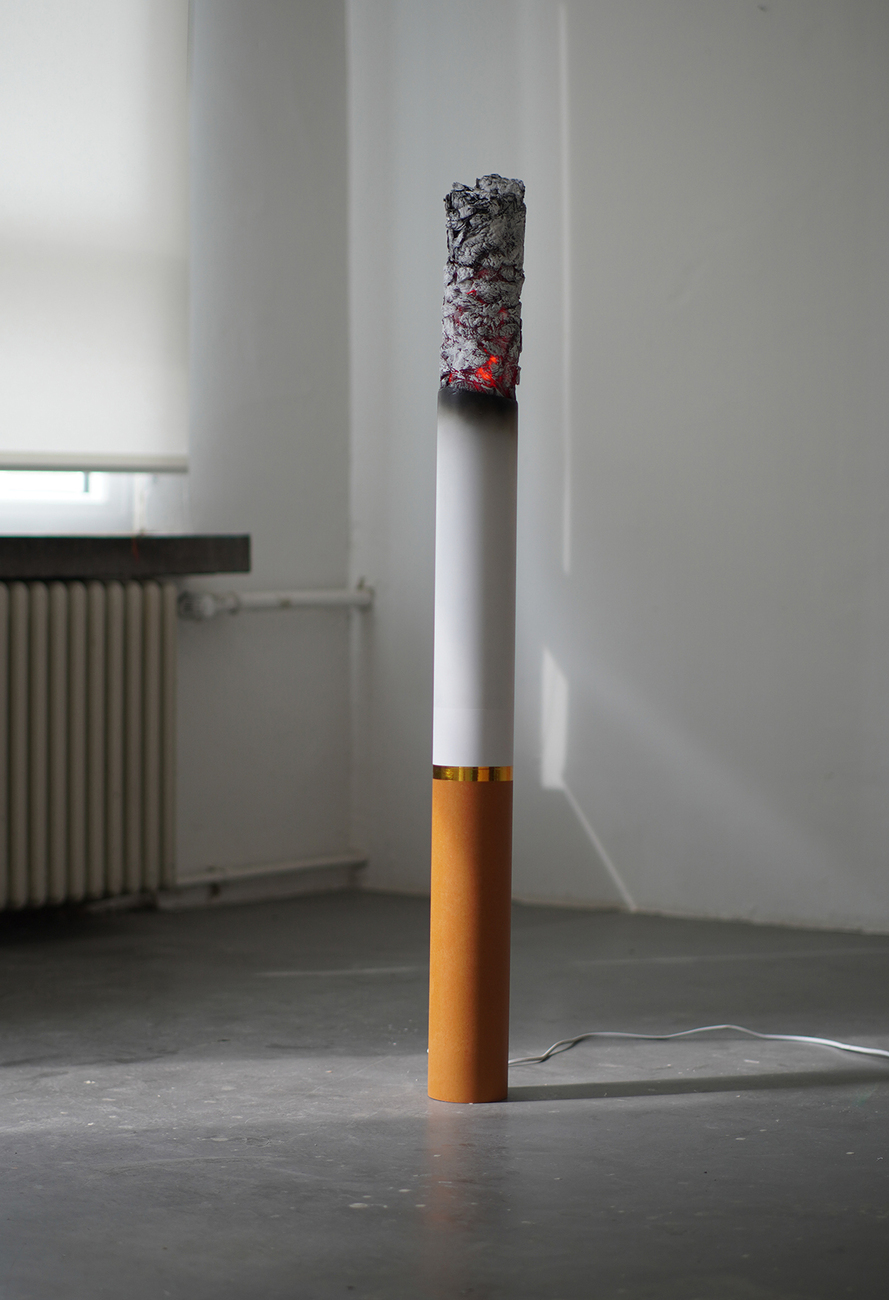
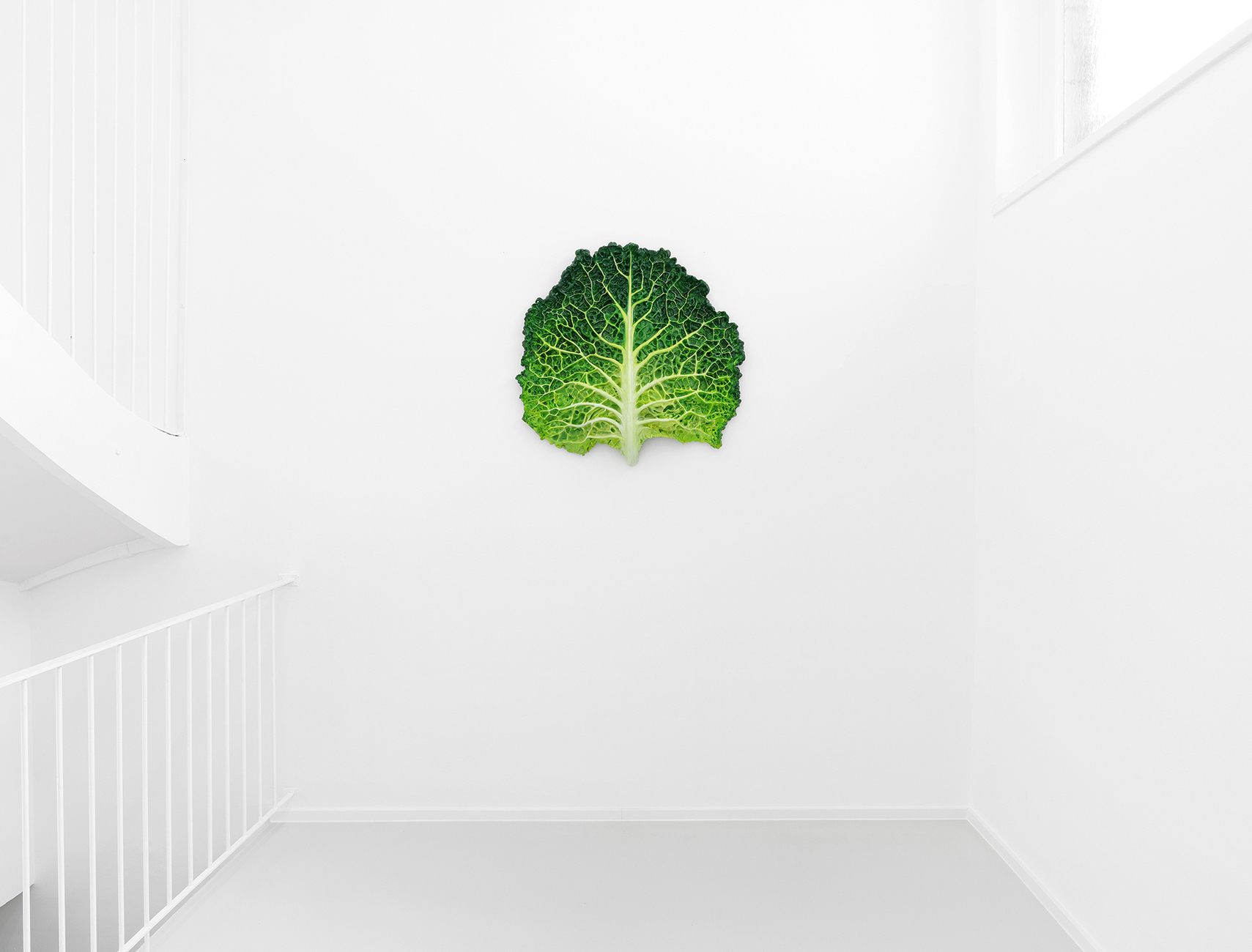
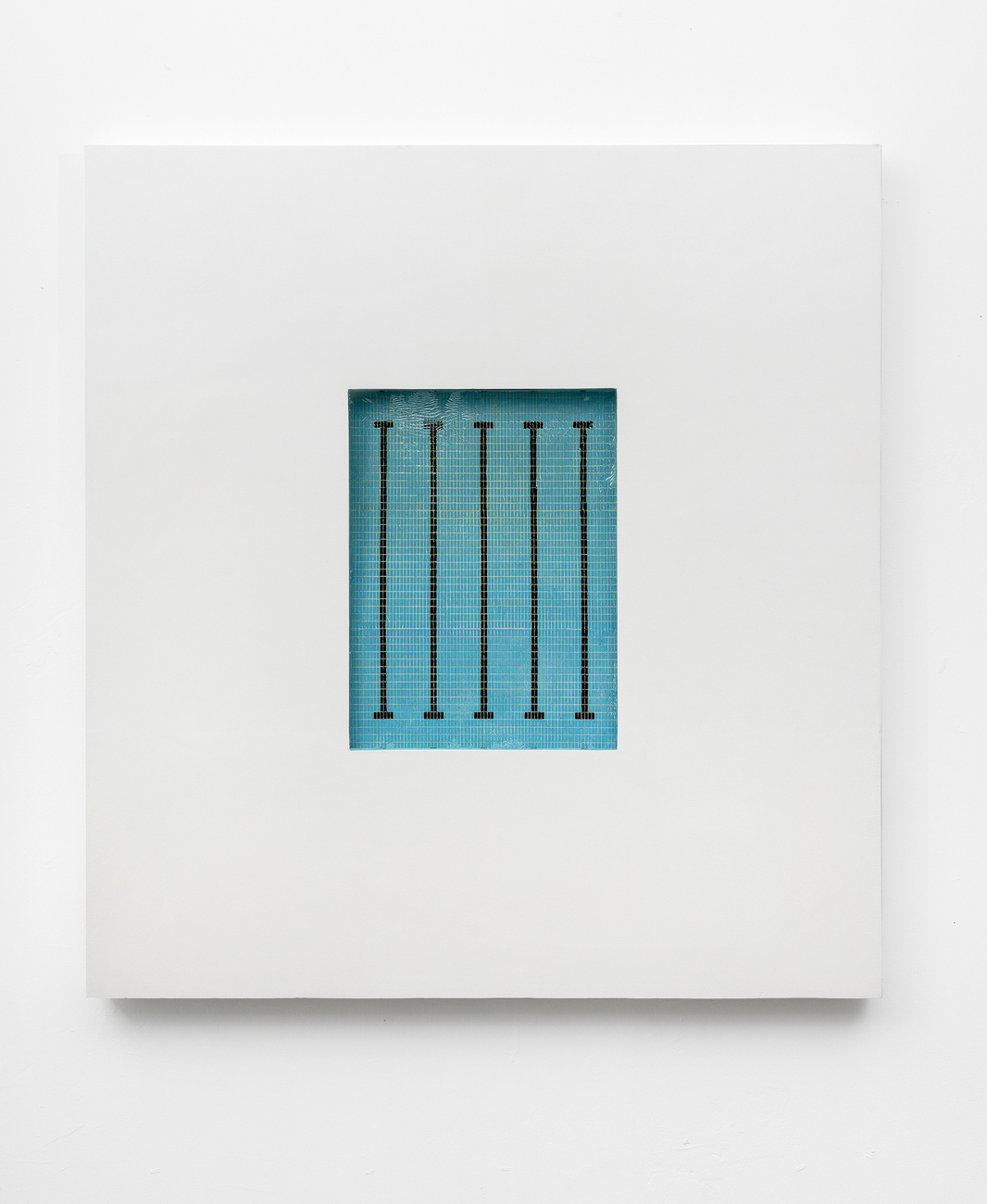
Frank Brechter: A lot of it comes about intuitively. First and foremost, a subject has to be interesting to me personally. Of course, with some subjects I sense the potential for them to appeal to a wide audience, but I also associate my own memories with the objects. I also like to take up subjects that could essentially be described as classic visual themes, such as swimming pools or cigarettes. That’s precisely what appeals to me. I’m interested in how they can be reinterpreted or how their technical execution can lend them an additional layer of meaning. A good example of this is the cigarette, because in each of the three works I’ve produced so far there’s a slight variation: the cigarettes are getting shorter. For me, it has become a symbol of the span of life. The last cigarette I’ll ever build will be almost completely burnt down, right up to just before the filter. That’s my personal dimension within the works. Generally speaking, I try to create an overarching overall picture with my work. The choice of motifs follows an internal logic, as it is often not just about a single savoy cabbage or a slice of lemon. When viewed as a whole, the motifs are intended to convey a particular attitude or perspective.
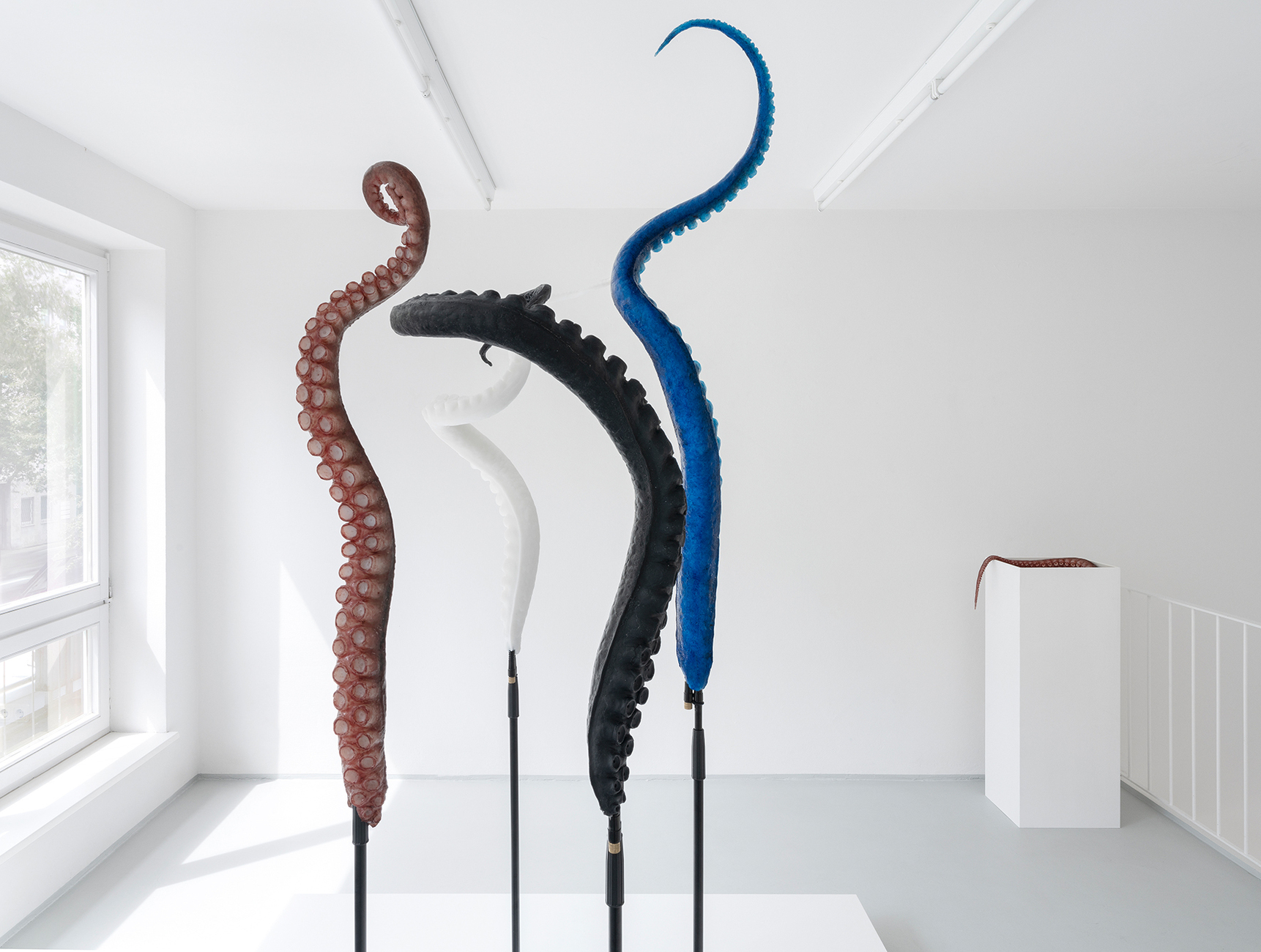
I shall offer an interpretation: what I perceive in your work is, on the one hand, a strong sense of fragility and transience. Food goes off, animals are transient, and even everyday objects bear the marks of time and change. As we've discussed, the burning cigarette is a memento mori. At the same time, however, there’s a critical dimension: questions about our consumer behaviour and how we treat living creatures. Take the fly swatter, for example, which we use to eliminate unwanted insects. Or consider the octopus, an intelligent animal that is simultaneously regarded as food. There is a certain humour between these two levels – transience and critical reflection. Your works do not take a moralising tone; they convey a positive, familiar emotion. This makes it easy to reflect on the underlying themes.
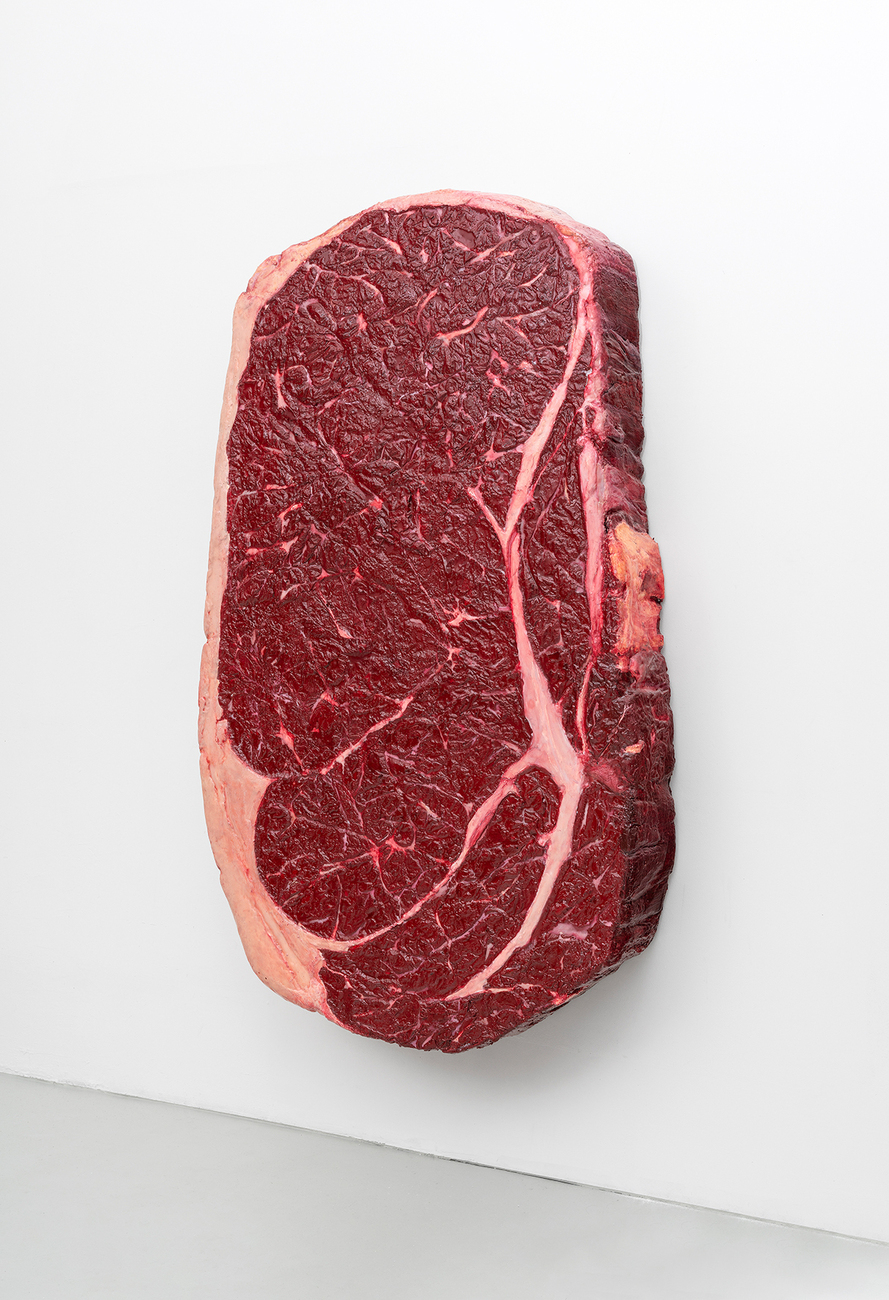
Frank Brechter: What you’ve described is certainly true. Take my most recent work, for example, which depicts half a steak. Some people say, ‘Oh, that looks delicious’, while others might see it as human flesh. The same applies to my work Cutlery, in which I’ve leaned the knife against the fork. To me, it’s a romantic piece with no connection to food. I have therefore asked my gallery owner to ensure that these works are not sold to restaurateurs.
To prevent your work from being perceived as mere decoration, stripped of its depth, in the wrong context?
Frank Brechter: Exactly. I’m aware that my works can certainly come across as decorative, but I’d find that a great pity.
Apart from the artistic aspect, your works are often a kind of interpretation of design. This applies, for example, to the cutlery, the blister pack for tablets, the glass bottles and the fly swatter. What role does the design of the objects play for you?
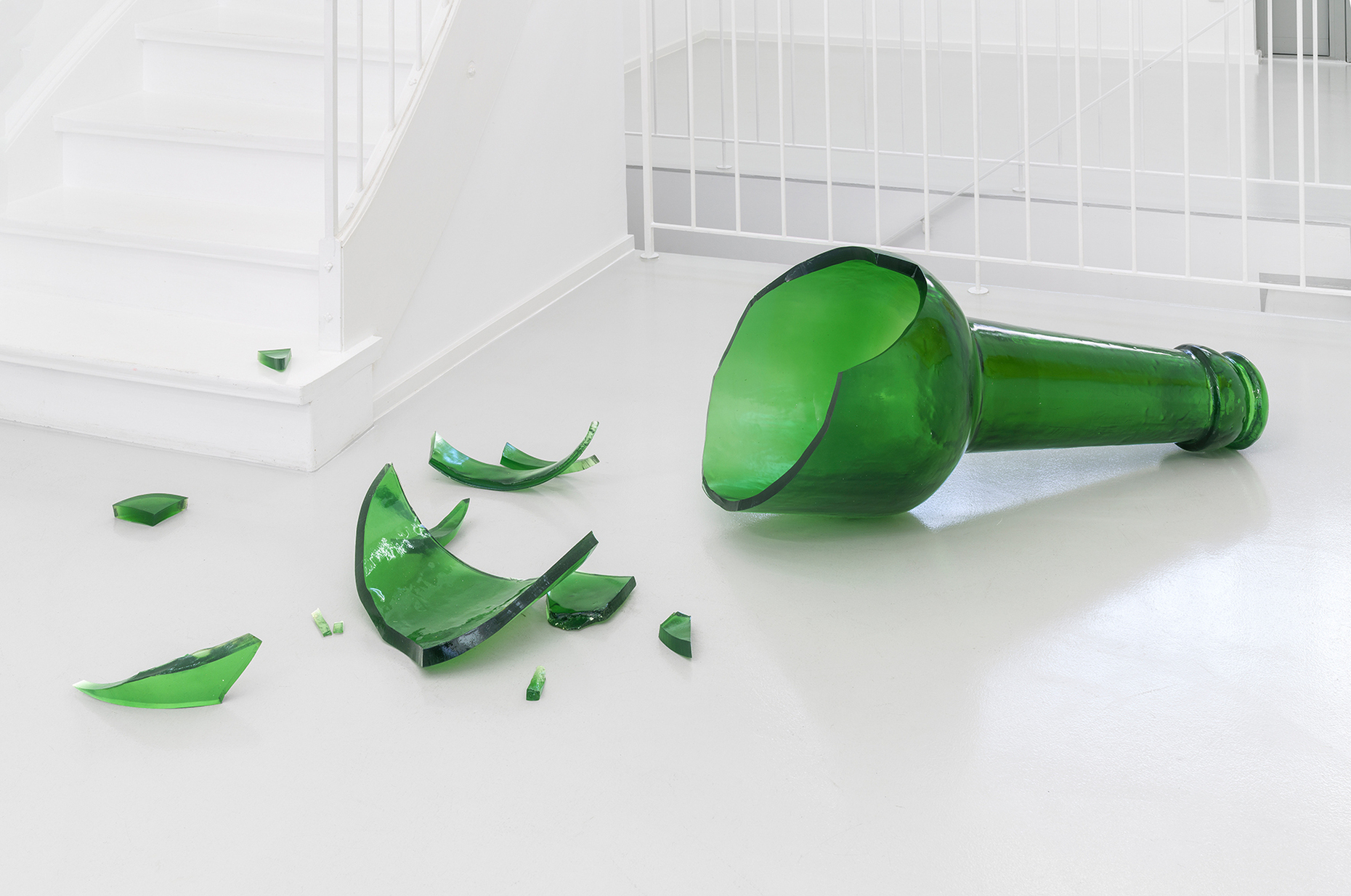
Frank Brechter: Broken glass bottles are a very common sight, especially in big cities. To me, they are a sign of violence, difficult circumstances, or states of emergency. I associate this much more strongly with beer bottles than with cola bottles. Broken cola bottles are rarely seen on the street, whereas broken alcohol bottles are very common. That’s why I chose this motif. With the blister pack of tablets, however, the decision was more aesthetic. I didn’t make that choice consciously at the time. The cutlery actually comes from my own home. I simply like the minimalist, clean-lined design. Often, though, practical considerations also play a part. The question is always: how can an object be realised?
Depending on the project, you work in different spaces – sometimes in larger studios, sometimes in smaller workshops – depending on the materials and the scale of the project. What is your main consideration when choosing materials?
Frank Brechter: It always depends on the material and the objects I’m trying to depict. The cutlery I’ve made, for example, isn’t made of metal but of materials such as plaster. As an artist who works with my hands, I also have to consider which shapes can be produced with the resources available to me. It is much easier to create a handle with a more oval basic shape than a flat, strongly curved one. Other shapes might require different materials or techniques. Take the fork, for instance: the prongs are curved. To achieve this, I need a flexible material, and aluminium is ideal. The knife blade, on the other hand, is made of wood. Why? Because wood is easy to shape. The knife blade has specific curves, so I consider how to create these as simply and precisely as possible. In this case, I use wood and carve out the shape. These are, first and foremost, practical considerations. I work alone and attach great importance to not commissioning any external craftspeople. The work must be entirely my own creation — that is part of my artistic ethos. This naturally means that I have to work with limited resources and make my decisions accordingly.
Can you give an example of something you learnt in the theatre or during your training as a craftsperson that you now apply to your artistic practice?
Frank Brechter: First of all, I learnt basic craft techniques and how to work with materials, particularly wood and metal. During this time, I also became familiar with various painting techniques that I still use today. I learnt a great deal simply by experimenting with the objects themselves. At the time, a set designer asked me whether I could work in three dimensions. Up until then, I had mainly been building traditional stage elements, such as wooden and steel structures. However, I had hardly any experience of working with three-dimensional polystyrene objects. The task was to build a five-metre-long high heel. I replied, “Of course I can do that.” I ordered a huge block of polystyrene, learnt the basics, and got to work. I really enjoyed working in three dimensions, and the results were well received, leading to new commissions. One subsequent project involved creating sculptures for the Federal Horticultural Show that people could sit on. When works are displayed outdoors, you quickly realise just how sturdy an object needs to be. For a long time, I didn’t see myself as an artist, but instead worked for creative professionals who either couldn't carry out their craft themselves or were realising large-scale projects. I’m grateful that my career has taken this path rather than the other way round.
Is there any everyday object that doesn’t interest you?
Frank Brechter: Not really. Of course, I regularly receive suggestions from outside as to what I might build. I find motifs that rely very obviously on sexual innuendo less interesting. That strikes me as too one-dimensional. Otherwise, however, I wouldn’t categorically rule out any subject matter.
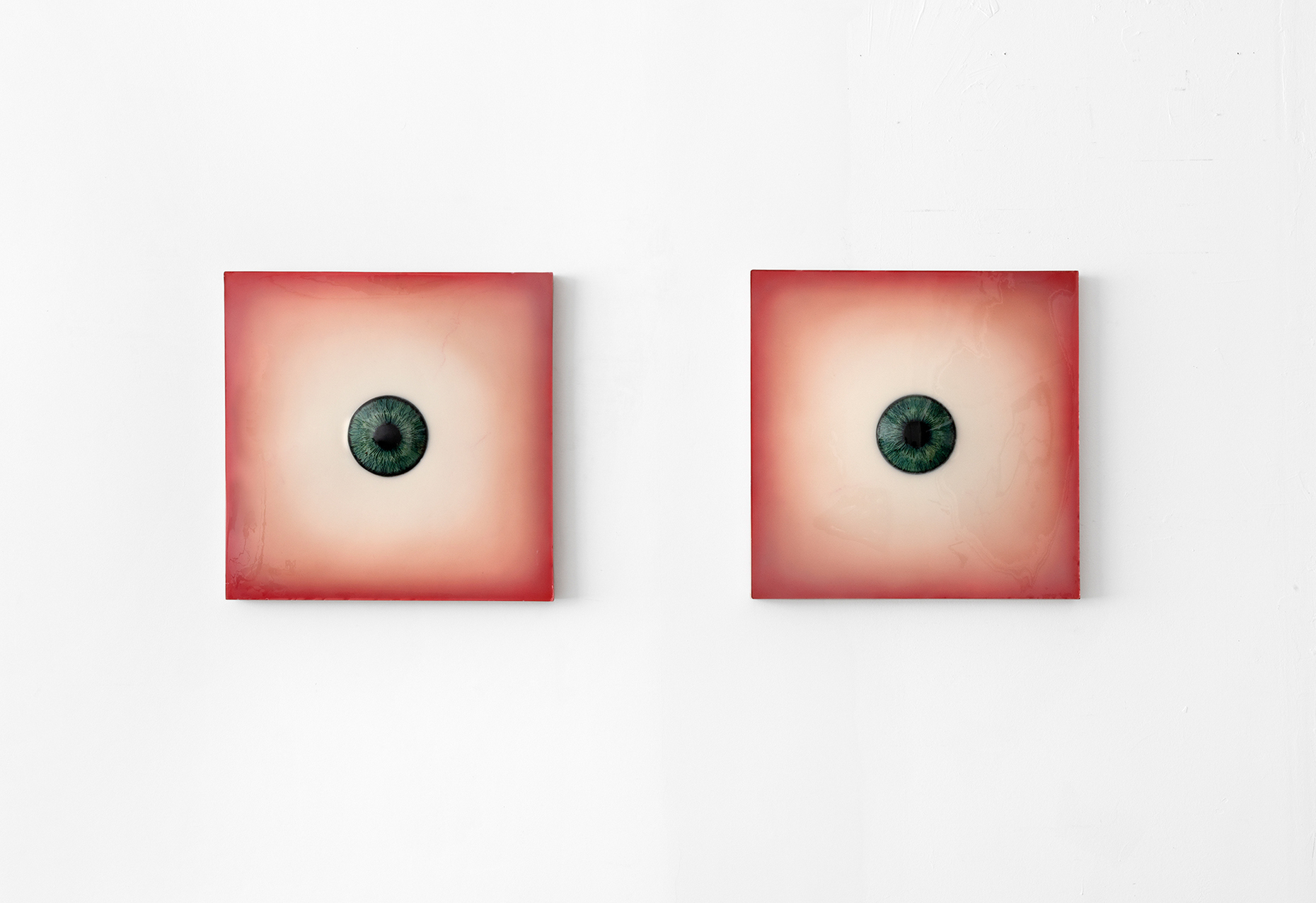
‘Left Eye, Right Eye’ depicts part of the human body and is one of the few pieces in your portfolio in which human beings themselves are visible, rather than objects, food or traces of human activity. Why has the human body not been a major theme in your work until now?
Frank Brechter: I am deeply fascinated by the depiction of the human form, yet it also presents a particular challenge. As a sculptor, I would argue that the human body is the ultimate subject to master. Minor inaccuracies are hardly noticeable with a savoy cabbage or a cigarette, for example. With people, however, mistakes are immediately apparent. This is why I am approaching this subject step by step. For instance, I experiment with different skin textures and ways of rendering them. As the eyes play a central role, I initially focused on them. I repeatedly produce small-scale studies and experiments as I work towards a possible representation of the human figure. However, I do not yet have a clear idea of what this should look like. Furthermore, I do not wish to compete with artists who have already made the human body their central theme. I am much more interested in exploring this subject area in a way that fits with my own body of work and adds a unique perspective to it. I also found the eyes particularly suitable as they blend well with the other motifs. This made me think of consumerism and the saying about 'eyes being bigger than one's stomach' – wanting more than one actually needs.
How can you tell when a piece of work is finished?
Frank Brechter: For me, a work is complete when its internal structure is right and nothing more needs to be added. Only then does it feel complete.
What are you currently working on?
Frank Brechter: At the moment, I’m mainly working on compiling a catalogue. I want to put together an overview of my work to date and am collaborating with writers to put my artistic vision into words. Alongside this, I’m currently creating a new body of work: large-format Polaroids designed as plaster sculptures. I’m particularly interested in failed Polaroid shots. This subject also has a personal significance for me: between 1997 and 2011, I took a great many photographs using Polaroid. In today’s world, which is so heavily influenced by digital images, I am once again fascinated by the immediacy of the Polaroid. It captures a moment directly and makes it tangible. I would like to integrate this quality into my work. At the same time, I am interested in the connection between figuration and abstraction. The Polaroid itself remains a clearly recognisable object, whilst the image surface contains abstract elements resulting from chemical errors, colour gradients and patterns. When the chemistry in a Polaroid ‘runs’ or the development is not fully successful, this often produces very distinctive colours and textures. At present, I am exploring how these effects can be technically transferred to sculptures. I am also experimenting with photographic processes such as cyanotype and attempting to transfer motifs onto the picture planes.
Do you already know what motifs will feature in these works?
Frank Brechter: I think the exhibition will mainly feature people whom I myself once photographed on Polaroid, often whilst out and about or at parties. I haven’t yet decided on a specific subject. I’d actually had the idea in mind for a long time, but didn’t know how to realise it technically. With Polaroid, for example, the ribbed, diamond-shaped detail is important to me. For me, it would have been unthinkable to use a smooth, white frame. It was only this year that I came up with a way to make it work. I also feel that now is the right time for it.
Current group exhibition:
“URBS ANIMALIS”
Until 15 November 2026
Walkmühle Artists’ Association, Wiesbaden