Room for rebels
What began in 1977 as an act of resistance against the established art world in a small office in New York City is now branching out in new areas: the New Museum, founded by curator Marcia Tucker, is undergoing extensive expansion. The previous main building in Lower Manhattan was designed by the Japanese architectural firm SANAA and opened in 2007. A seven-storey tower with skylights and large glass surfaces in the base symbolises openness, keeps thresholds low and lets in plenty of daylight. In contrast to the monuments of the metropolis, made of glass and steel, it resembles a sculpture itself, its floors stacked on top of each other like boxes. It was the first building designed by Kazuyo Sejima and Ryue Nishizawa in New York. To realise their ideas for the museum, they had only a small site about twenty metres wide at their disposal, which was also surrounded by neighbouring buildings. They solved this problem vertically by gradually reducing the size of the floors and ceiling heights. The steel skeleton was not hidden, but openly displayed, as were the concrete floors. A practical purism with an outer skin of aluminium expanded metal, which appears bright white to matt grey depending on the weather.
The futuristic structure is highly recognisable and attracted attention right from the start without making much noise – appearing like a computer simulation among the historic brick buildings with iron fire escapes and facades darkened by soot. The location also had a special character at the time: for decades, Bowery Street was considered a run-down area, a so-called ‘skid row’ associated with social decline and crime. Marcia Tucker took up the theme of alien bodies in her curation for the New Museum after she had lost her job at the Whitney Museum in the wake of a public controversy over the work of post-minimalist Richard Tuttle, which was interpreted as unconventional in 1975. Her programme was revolutionary, unconventional, experimental. The progressive shows quickly caused a sensation. Artists whose work did not fit into conventional categories found a space for expression, development and networking at the New Museum. Many of them are now internationally renowned, such as William Kentridge, Bruce Nauman, Pipilotti Rist, Isa Genzken and Jeff Koons. ‘New Art, New Ideas’ was Tucker's motto.
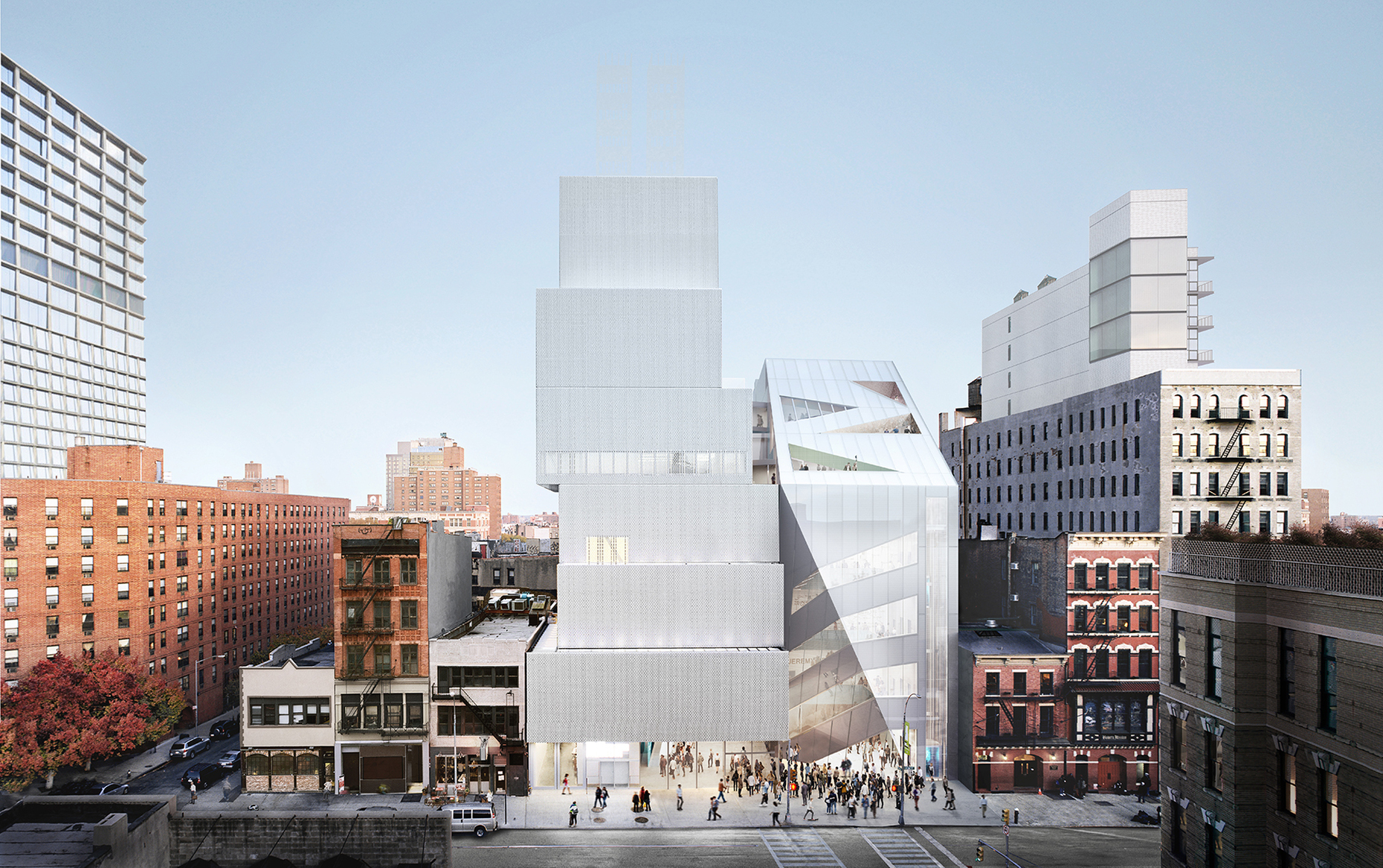
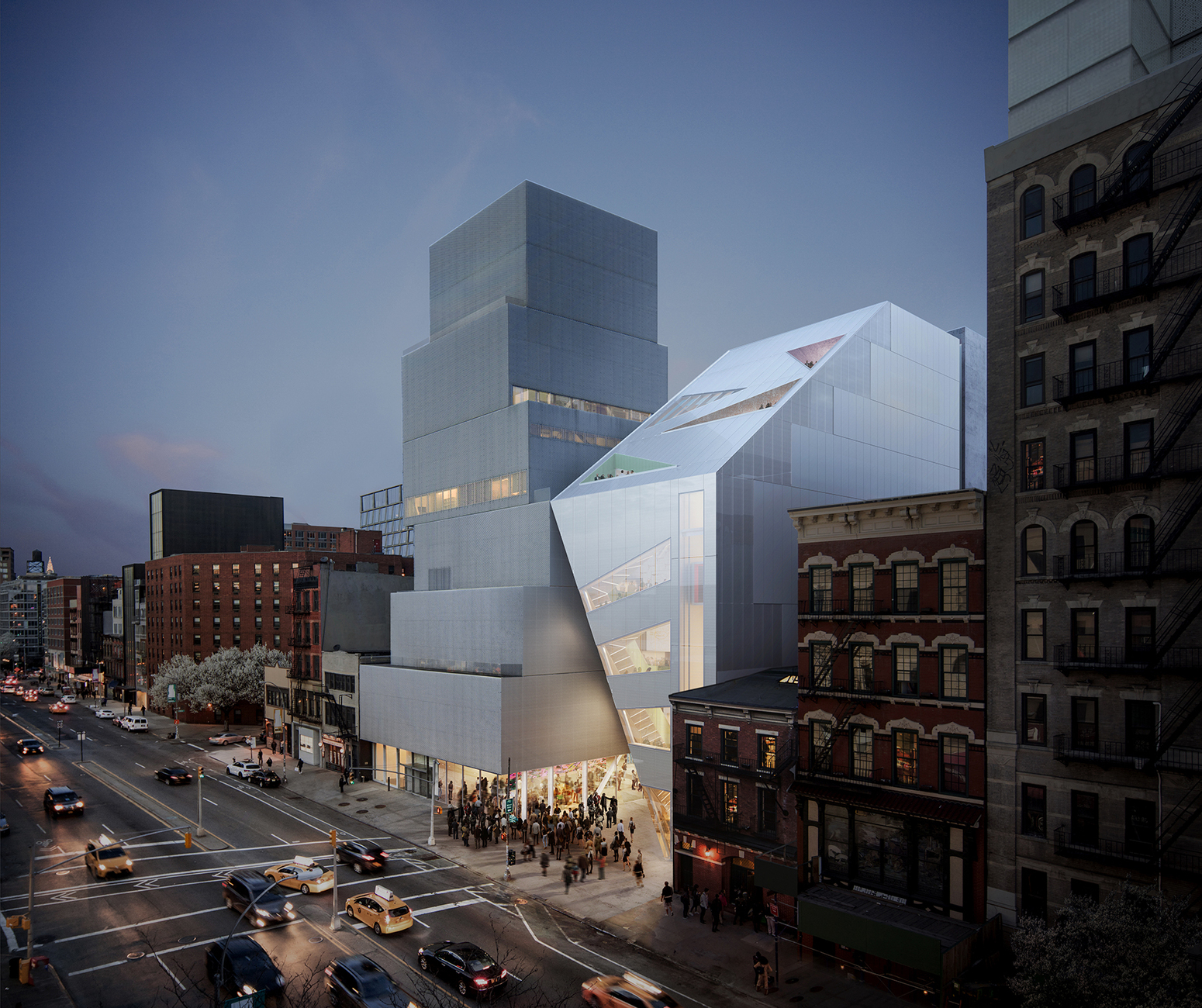
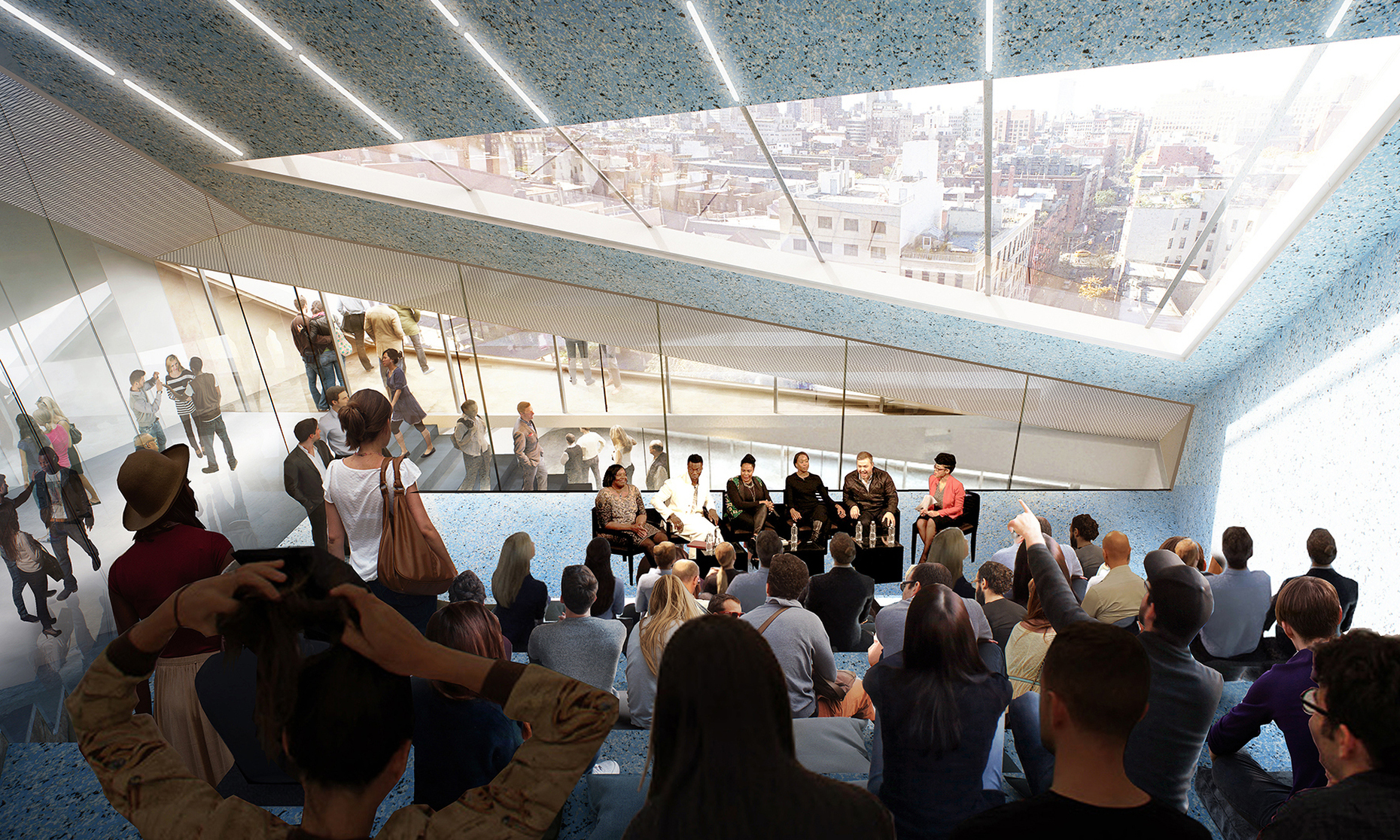
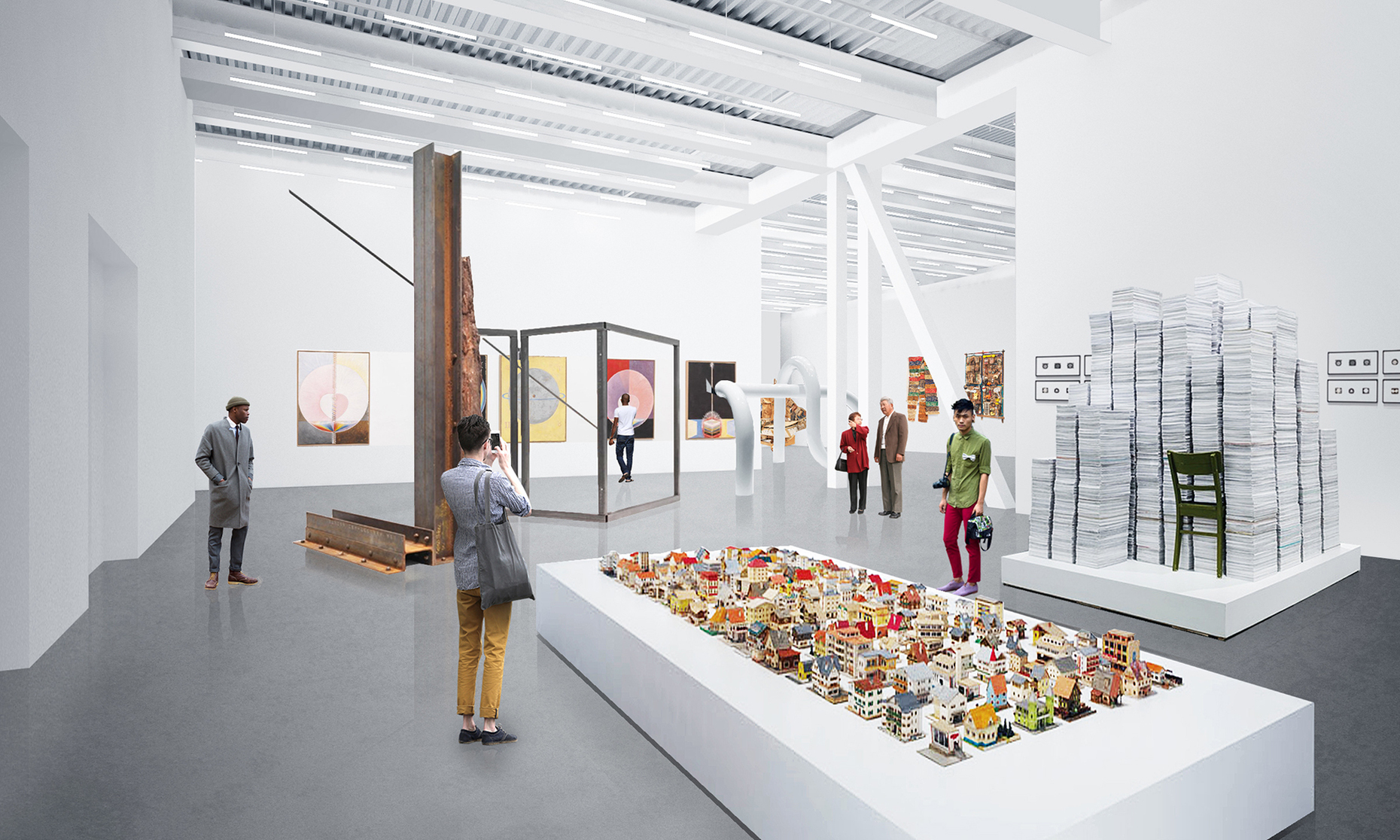
Also, an architectural exhibition by OMA/Rem Koolhaas was already part of the presentations at the New Museum: In 2011, they showed ‘Cronocaos’, which had previously been on display at the Venice Architecture Biennale and focused on monument preservation and transformation. For the new building, which complements the existing seven-storey flagship, the existing structure at 231 Bowery Street was demolished and a concept was designed that forms a close connection to the existing edifice. Three floors are used for exhibitions, while the remaining space will serve as an incubator for art, design and technology, an archive and artist residency, and for the museum's community and educational programmes. The terraced areas are therefore designed for flexible use. In addition, the upper floor features a restaurant and a forum connected to the Skyroom of the SANAA building. A photovoltaic roof completes the facility.
The façade of the new building consists of laminated glass with an intermediate layer of metal mesh and features architectural elements such as right-angled triangles, which appear discreetly. The silhouette thus forms an independent element and yet blends harmoniously into the whole. ‘The New Museum is an incubator for new cultural perspectives and production, and the expansion aims to embody that attitude of openness,’ says Shohei Shigematsu, partner at OMA. The new spaces will be inaugurated with the exhibition ‘New Humans: Memories of the Future’, whose interdisciplinary works explore how technological and social changes are generating new ideas about what it means to be human and creative visions for its possible future.