Architecture of Empowerment
Florian Heilmeyer: Congratulations! Your work for the Center for Art and Urbanistics (ZK/U) in Berlin, the extension and renovation of an existing freight depot on a disused railway site next to the tram line, has been awarded this year's DAM Preis. How satisfied are you with the building yourself?
Peter Grundmann: I'm never really satisfied. As an architect, you learn over the years that you have to be satisfied. You can't constantly start from scratch and invent a new style of architecture every Monday. You have no choice. So I've gotten into the habit of wanting to be satisfied with projects. And in that sense, I am already satisfied with the ZK/U.
Perhaps defining when a space or building is ‘finished’ is a particular problem with your way of working? As a team, you always spend a lot of time on the construction site, lending a hand yourselves and changing things that catch your eye or that can be done better than previously thought.
Peter Grundmann: Yes, perhaps that too. ‘Completed’ is such a big word. What exactly does that mean? The ZK/U is a cultural building that hosts a fantastic, varied and constantly changing programme. It's alive and that's how it should stay: artists come and go, bringing ideas with them and transforming the space. There are concerts and exhibitions, cinema, the goods market and theatre performances. It's completely beyond my control. Fortunately!
So it's never ‘finished’ or ‘complete’. That was also part of our mission here, to ensure that the spaces remained as multifunctional and open to use as possible. Of course, there is a difference between hardware and software. The hardware tends to remain the same. The software is there for change. An architecture of possibility that sets very few limits. That's something we like to do as a team. We've implemented this in many residential buildings: that many different things can take place in the rooms. That they don't dictate too much.
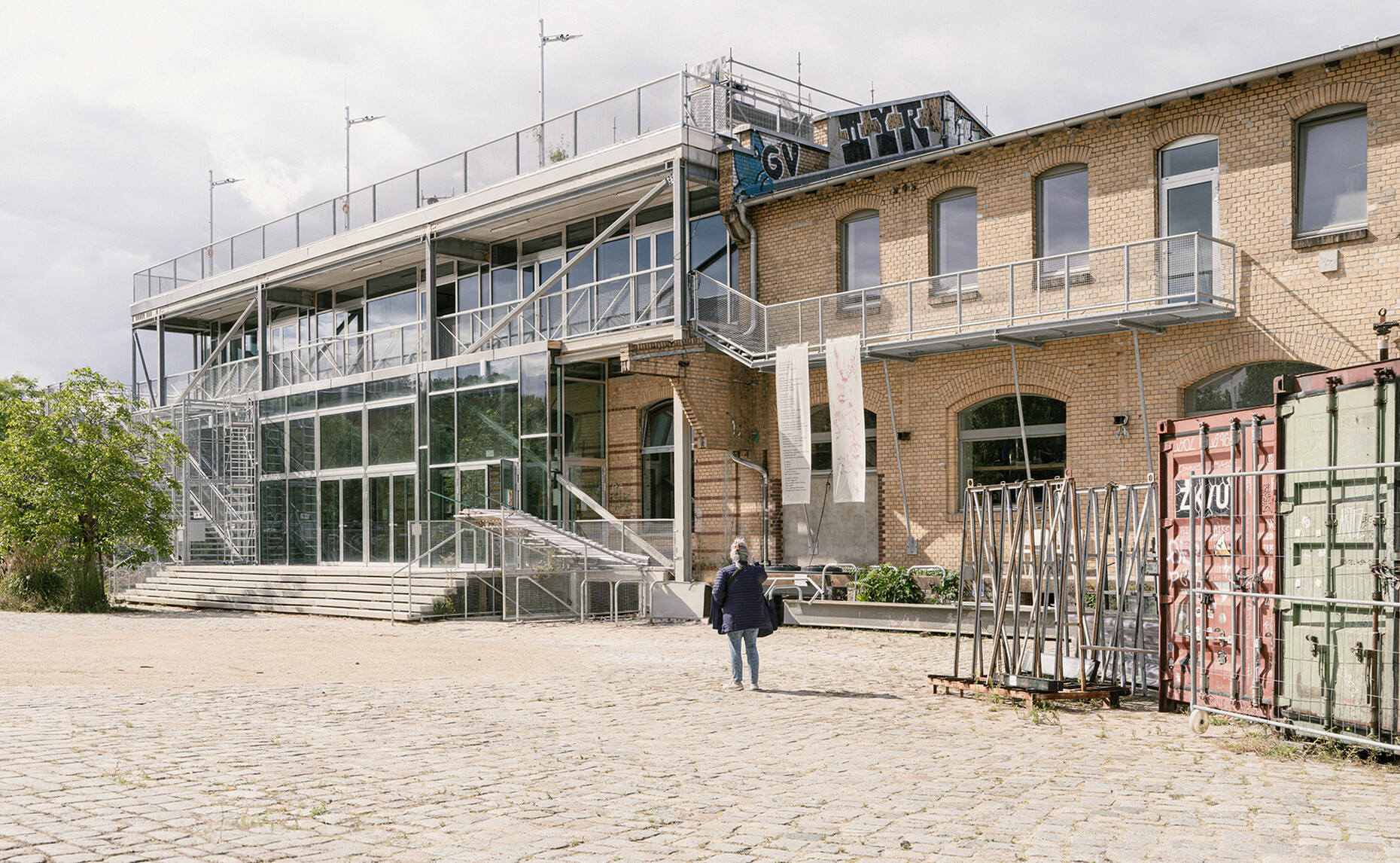
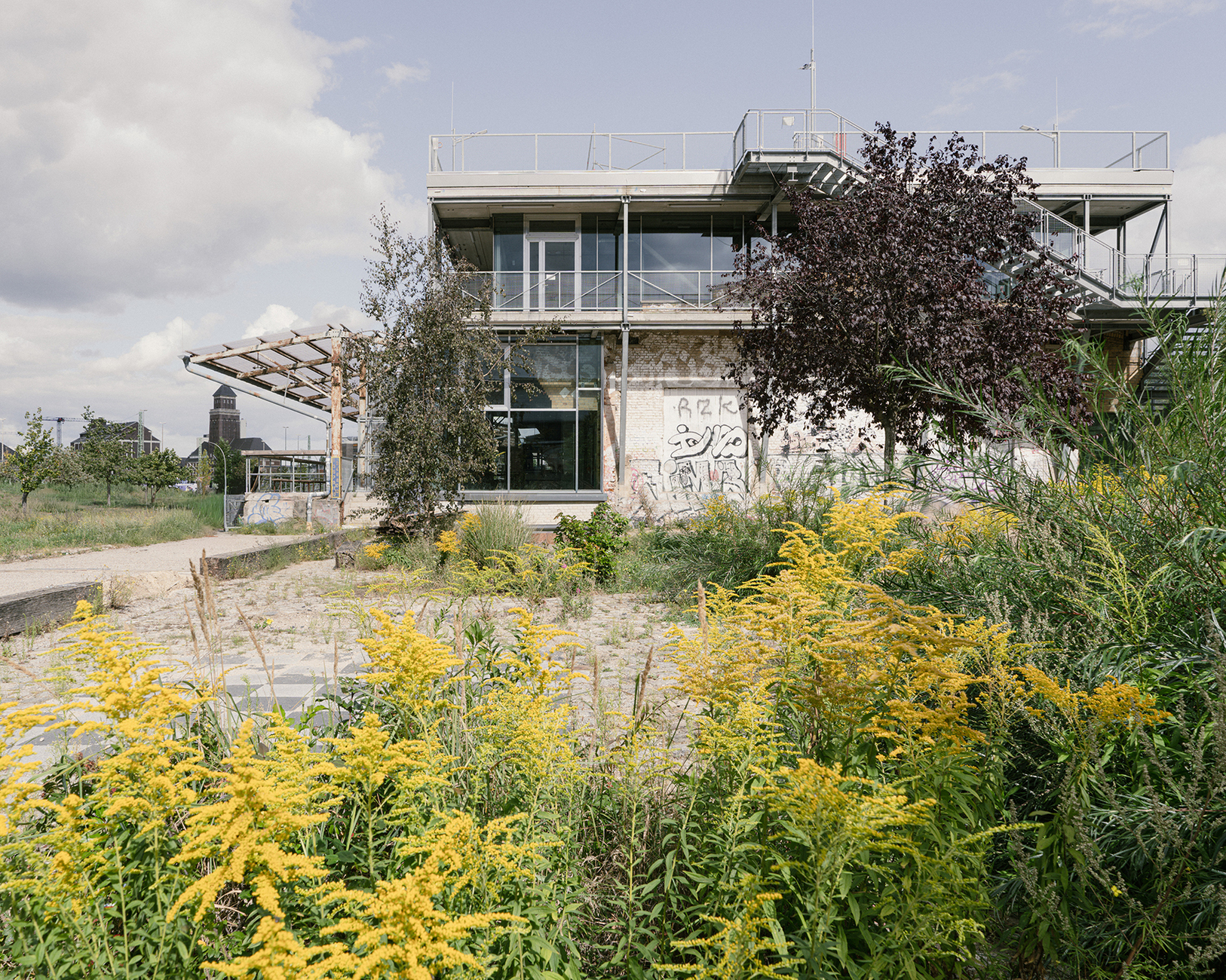
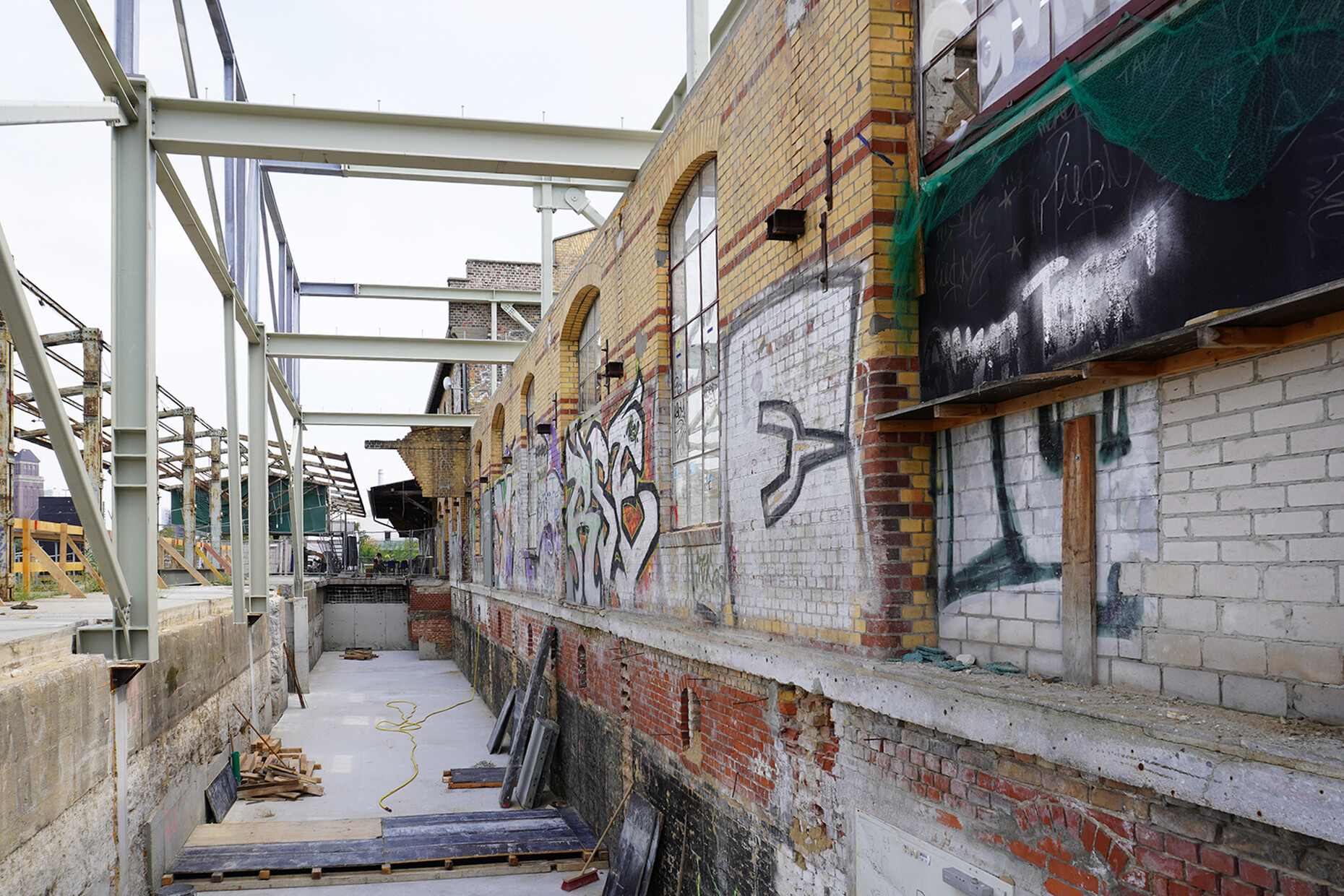
One of the most beautiful features of your extension is that it incorporates the wildness of this urban wasteland and the charm of the old buildings with their signs of wear and tear in its own unique way – while at the same time displaying it like a showcase with its transparency. This gives the wildness a value it did not have before, without romanticising or exaggerating it.
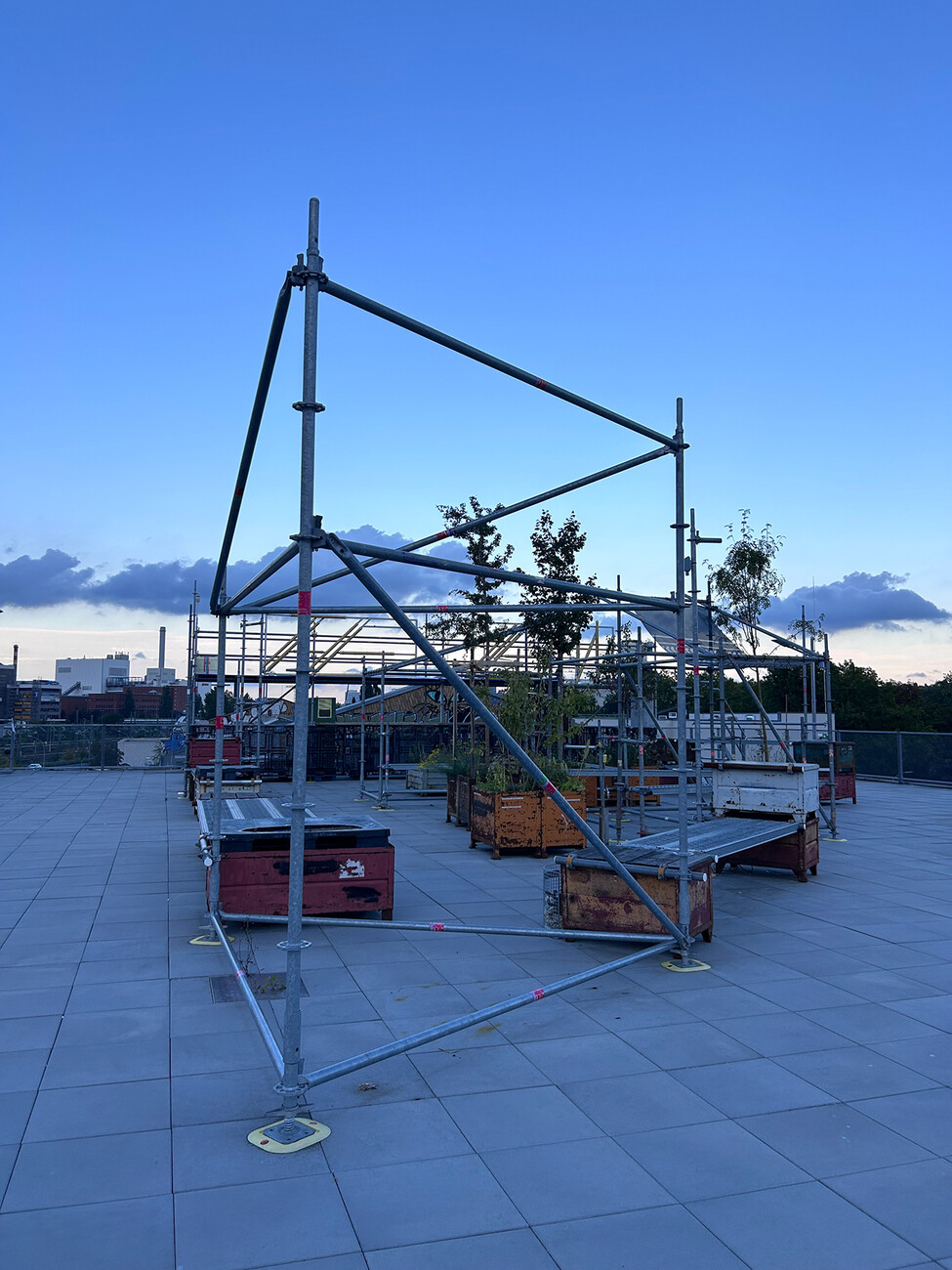
Peter Grundmann: Once I got to know the building and the people at ZK/U, it quickly became clear that our architecture didn't need to reflect the raw energy of the place. It was already there. Our architecture really just needed to be a machine that people could use effectively and that might even open up new possibilities for them. Like the large roof terrace, for example. Of course, we also tried to showcase the old buildings. I think that's the most beautiful thing anyway, when old and new come together. When there's already something there that you can work with. That you have to grapple with. That's often more exciting than building a new house. Then you have to come up with the friction and interference yourself that make such a space multi-layered and exciting.
The extension to the ZK/U is your largest and most public project to date. Before that, there was the Quillo cinema in an old stable in Falkenhagen, and the Rehof Rutenberg holiday farm in Lychen, but those were much smaller projects. You have mainly designed private residential buildings, many conversions, often in Brandenburg or Mecklenburg-Western Pomerania. There, too, I think you have always worked very sensitively with old buildings and overgrown landscapes. Is the ZK/U just a leap in scale, so to speak, or were you actually able to transfer your way of working directly from residential buildings to the cultural centre?
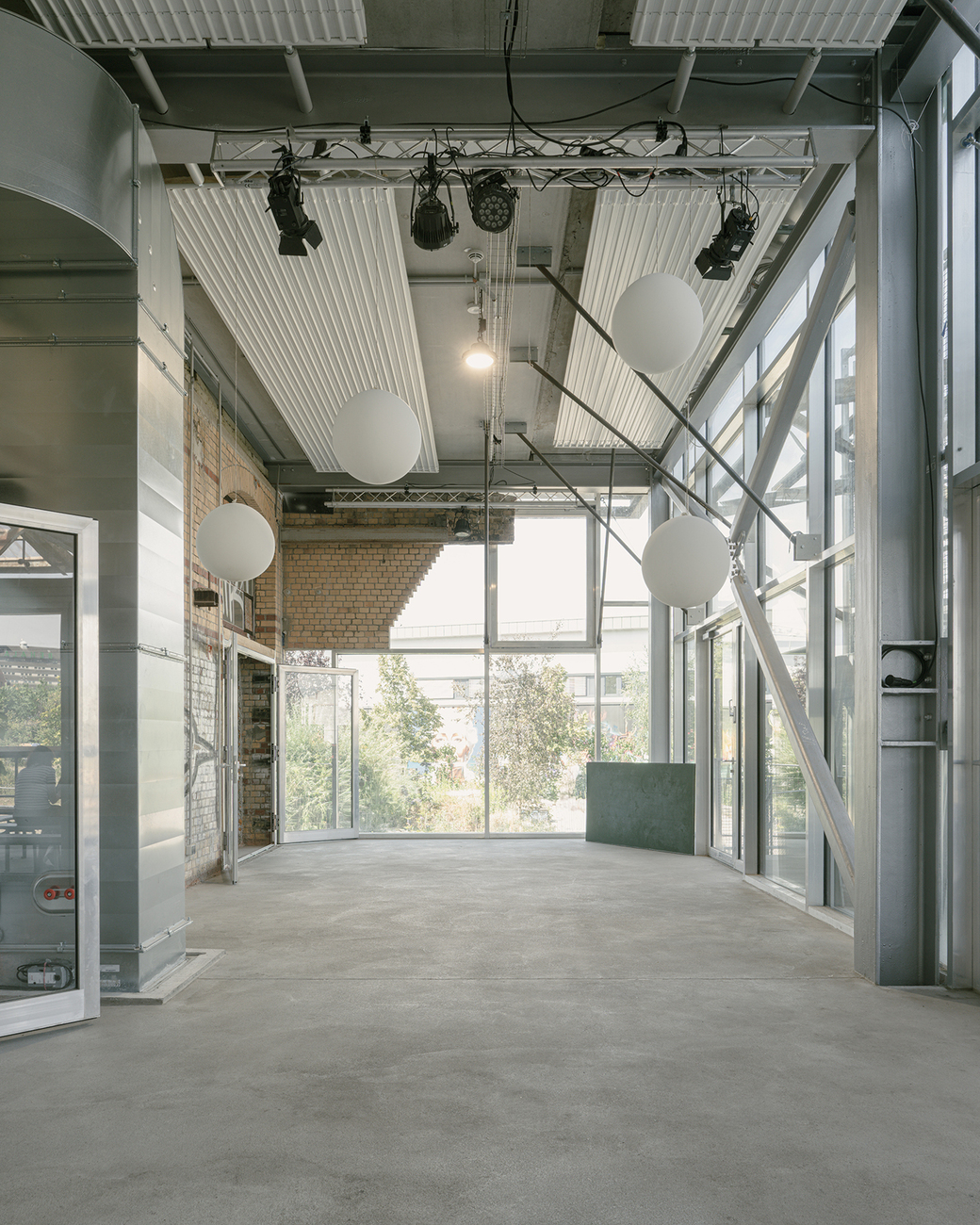
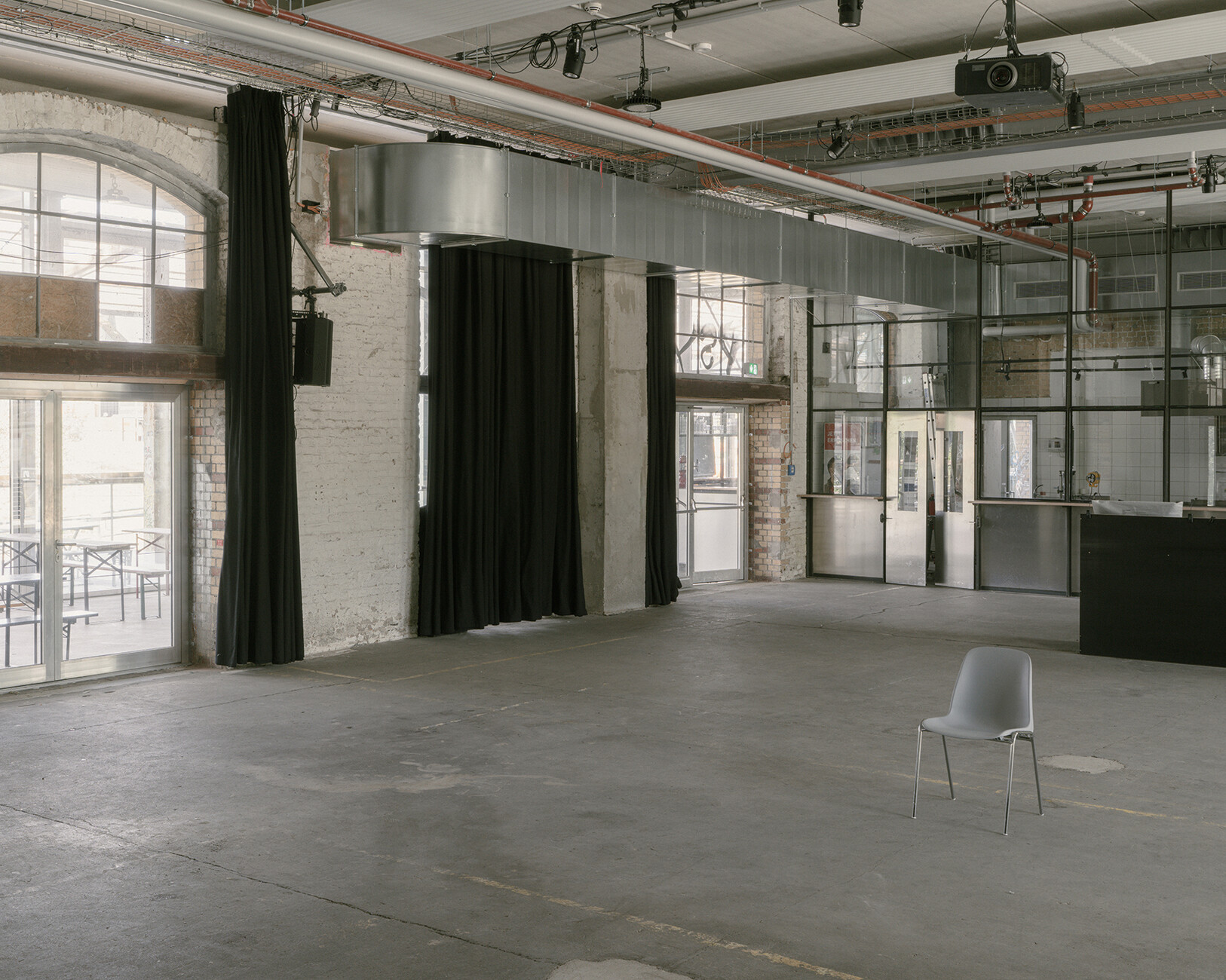
Peter Grundmann: Our aim is to question and break with routines. We are all very accustomed to rooms being designed for a specific function. I think it's better when all the rooms in a building have specific qualities that you can use for different things. When the rooms, with their size, lighting and proportions, don't immediately dictate anything. That's indeterminacy. That you try to dictate as little as possible. It is up to the users to decide what to do with it. They then have to negotiate or try things out. This can lead to the most exciting things – also in residential buildings, by the way, if you simply do away with the old hierarchy of living room, bedroom and dining room and, ideally, don't plan a hallway, but rather open zones where basically anything can take place. We called this deprogramming: when the prevailing programmes of the rooms are deleted and then not filled with any programme. In these rooms, everything has to be renegotiated, every day. There is no longer any overarching programming. The actors become capable of acting.
And the interference...?
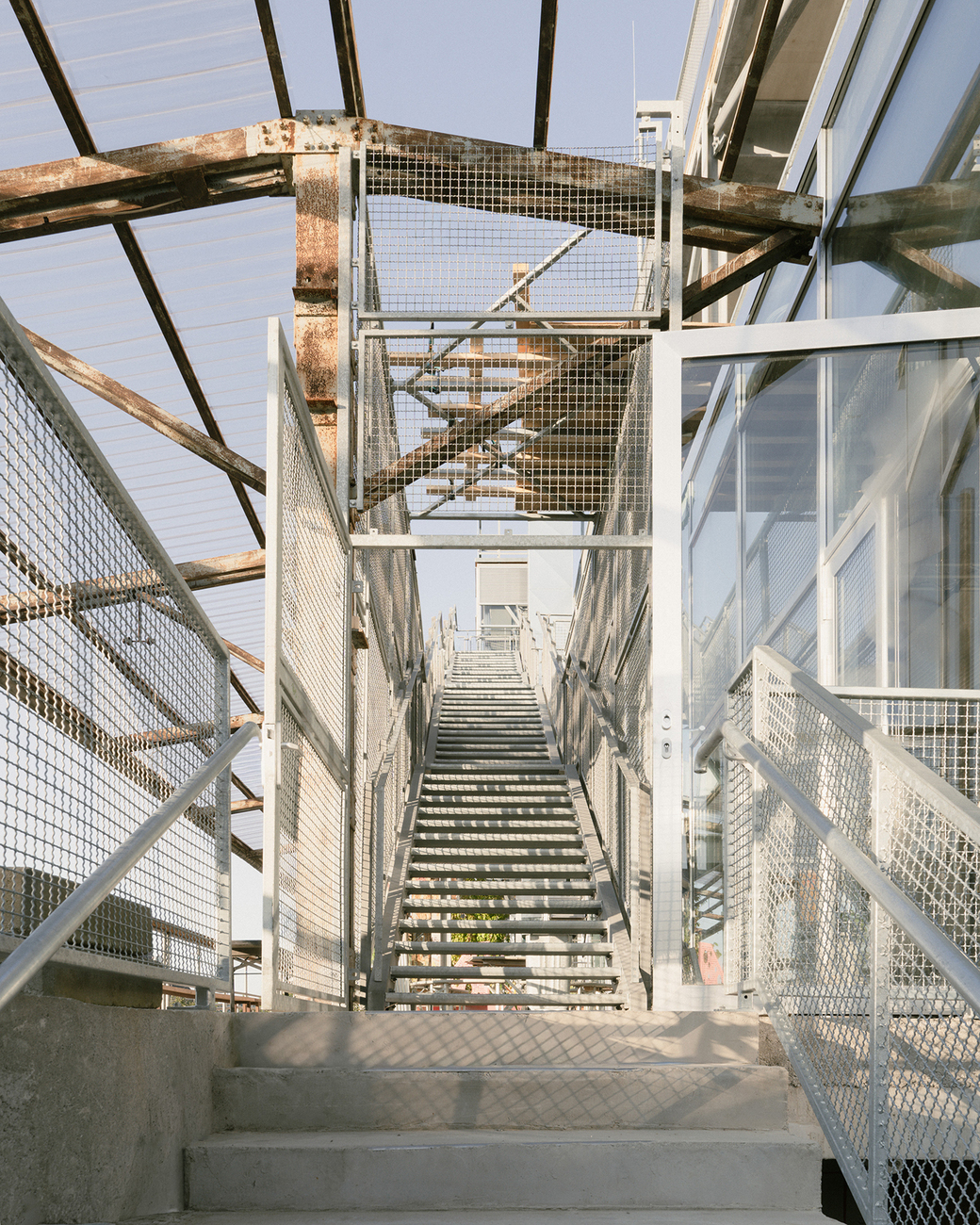
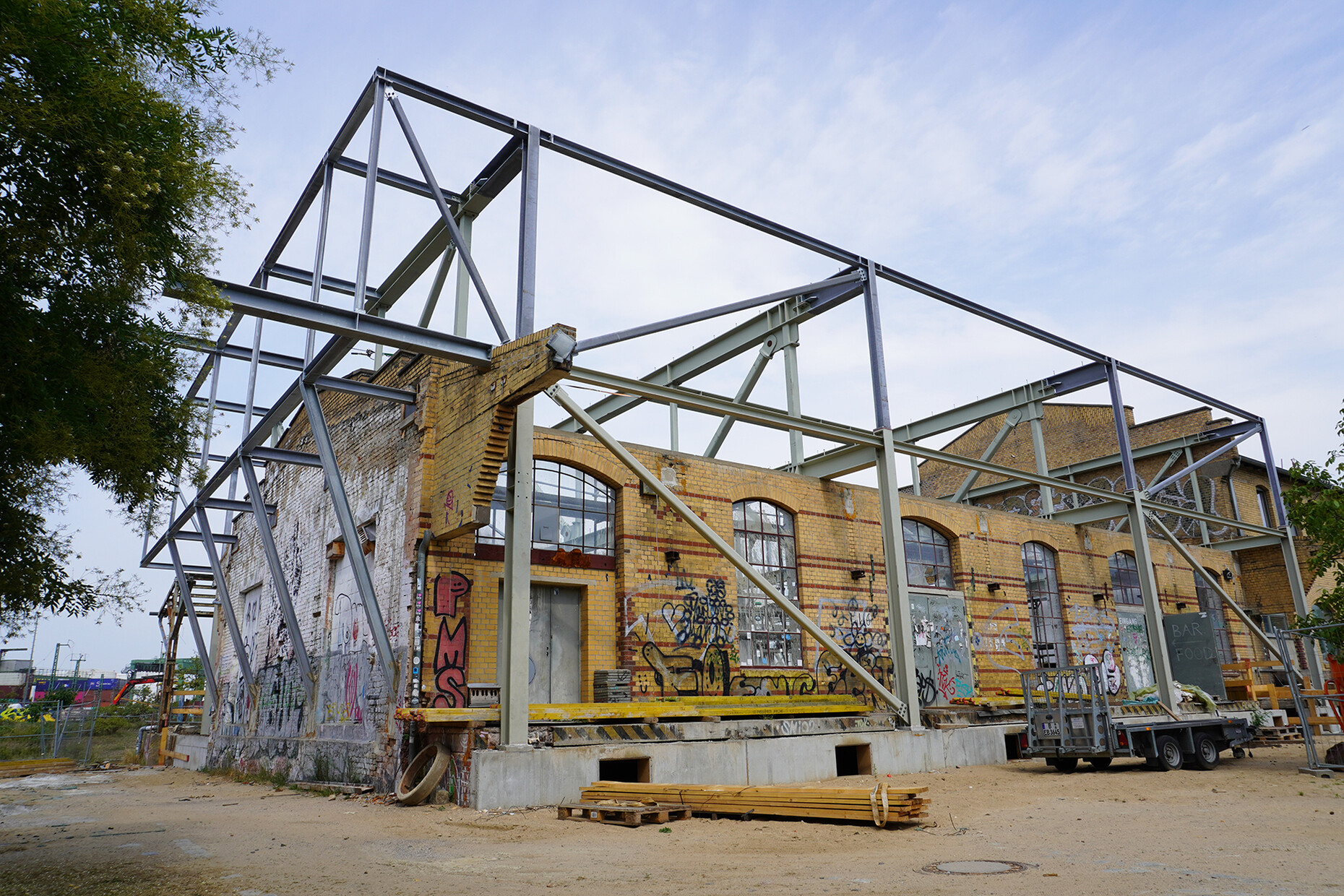
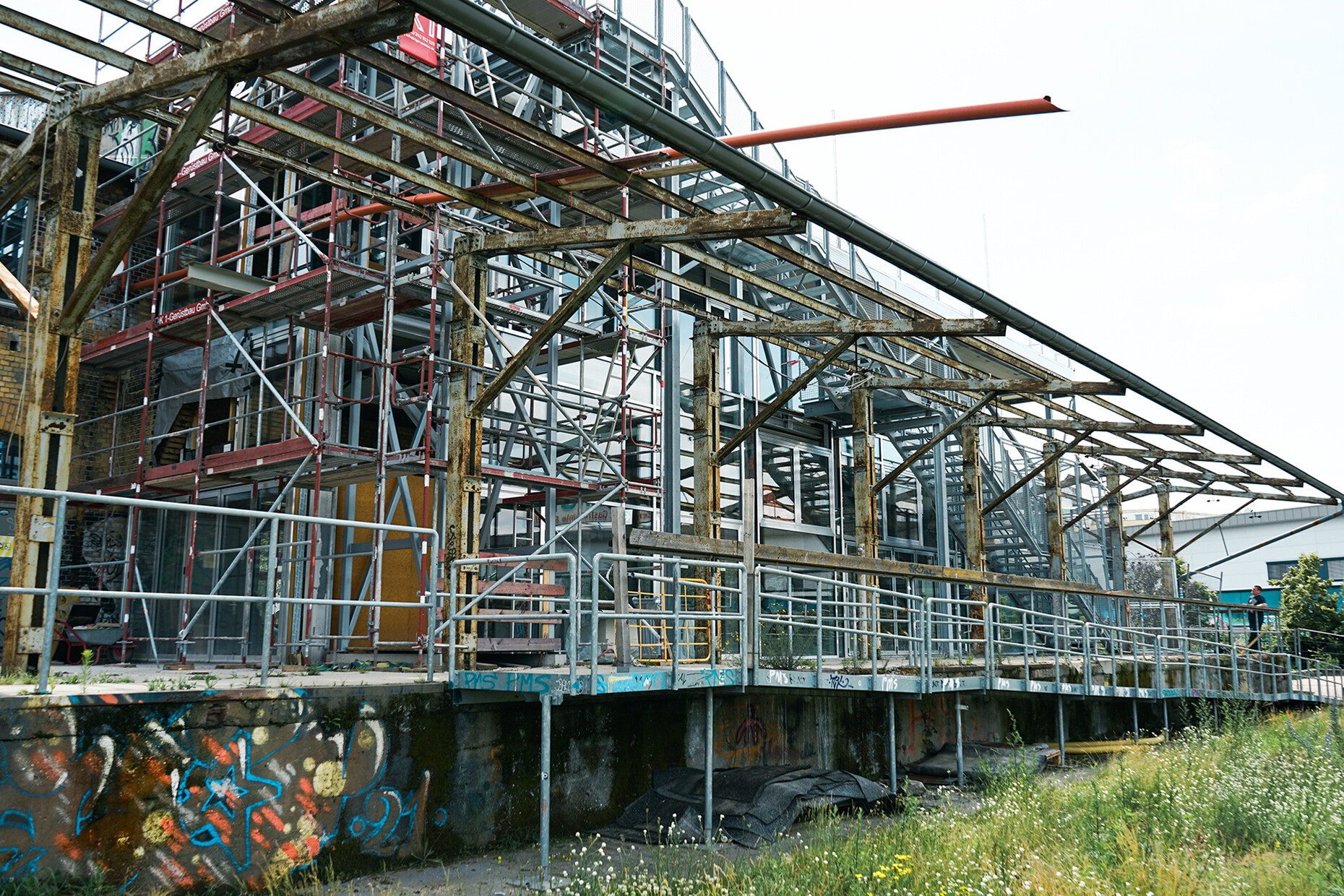
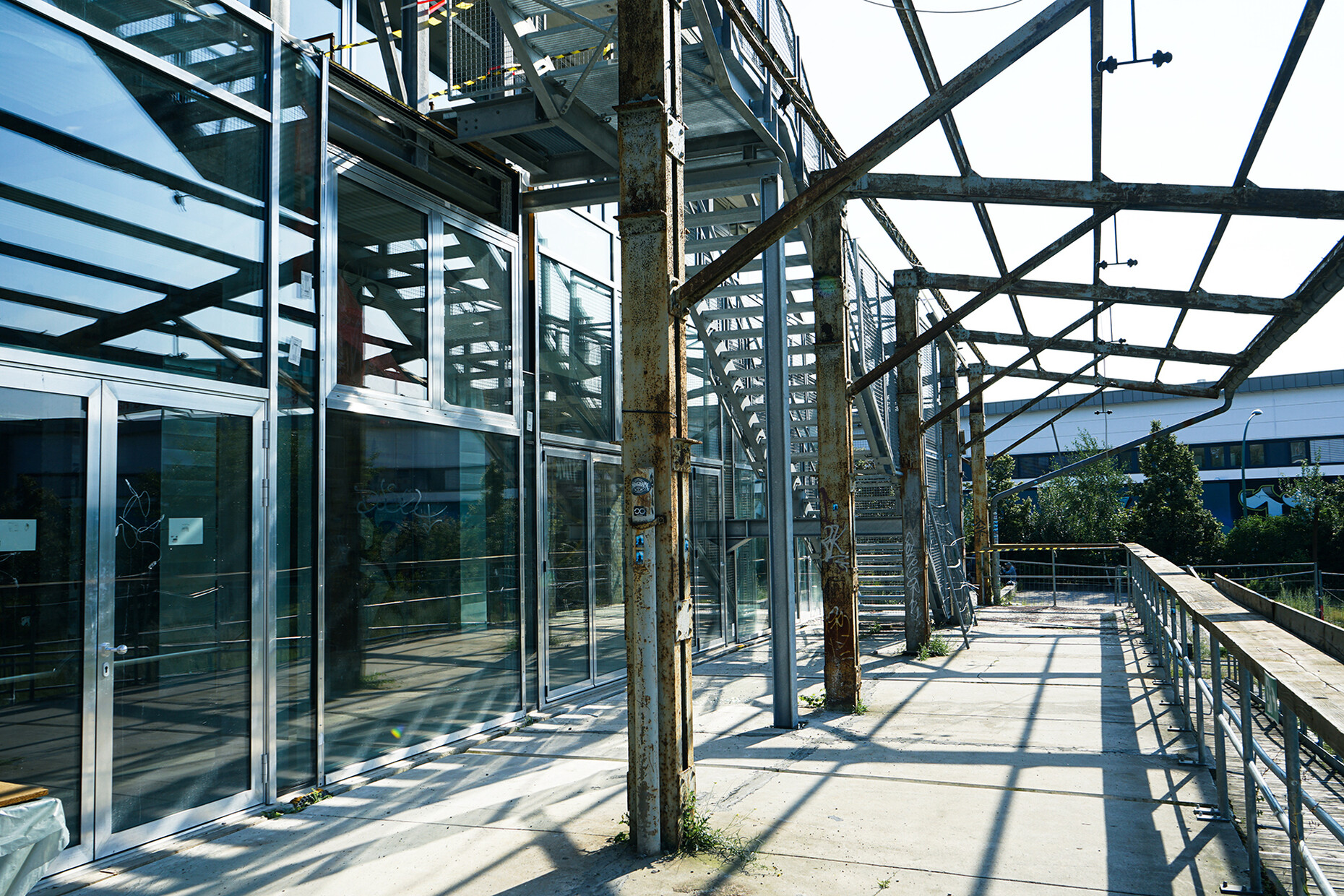
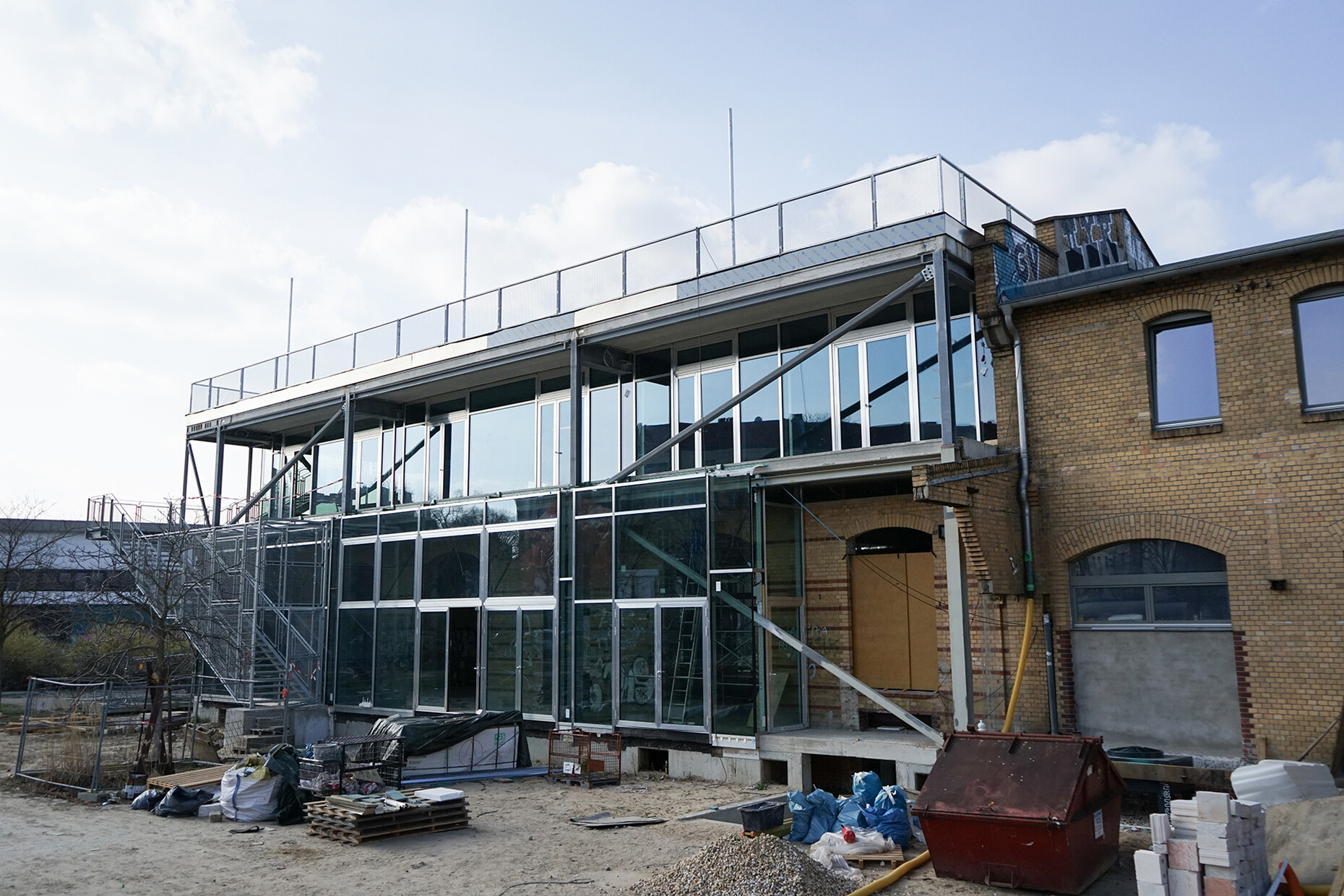
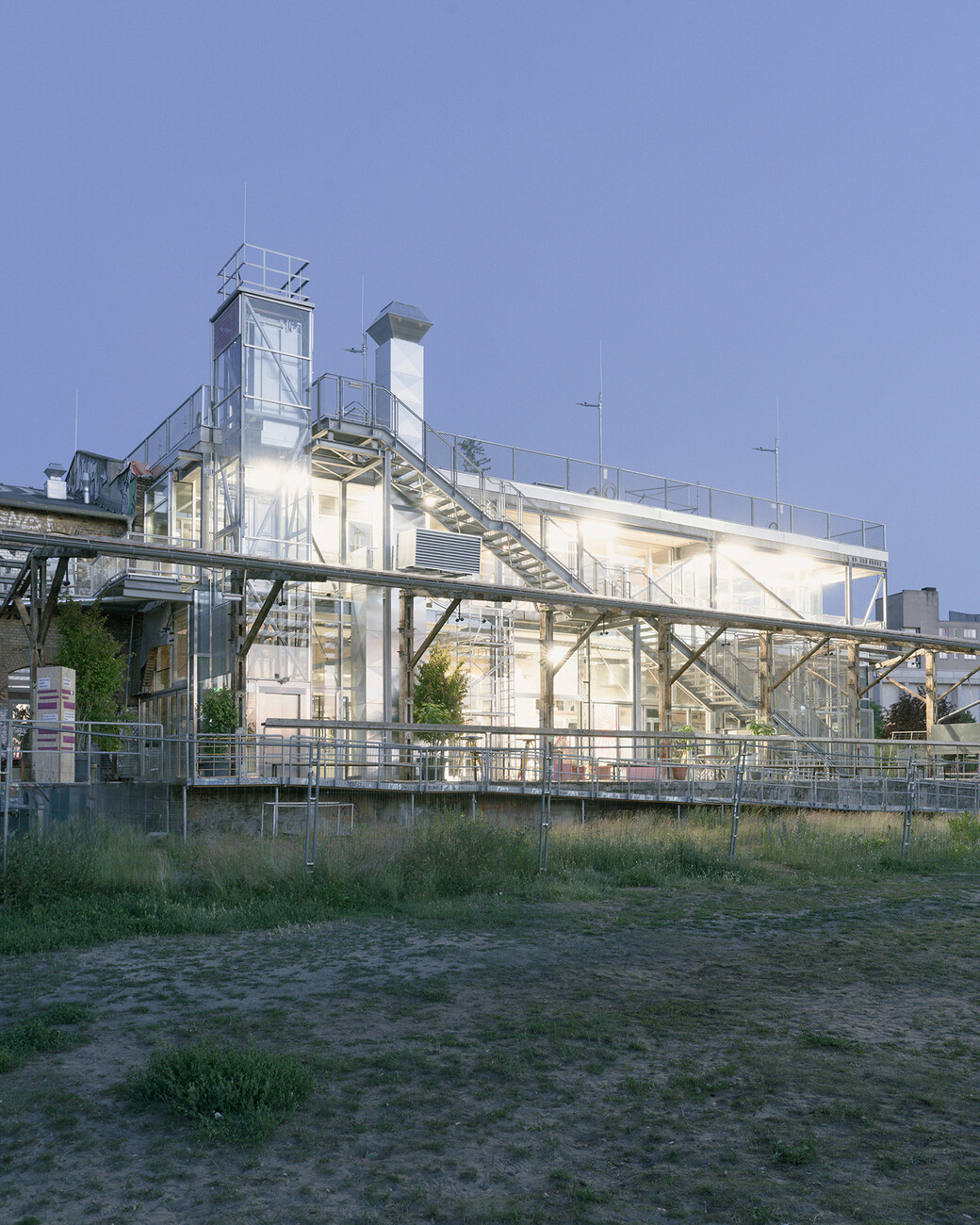
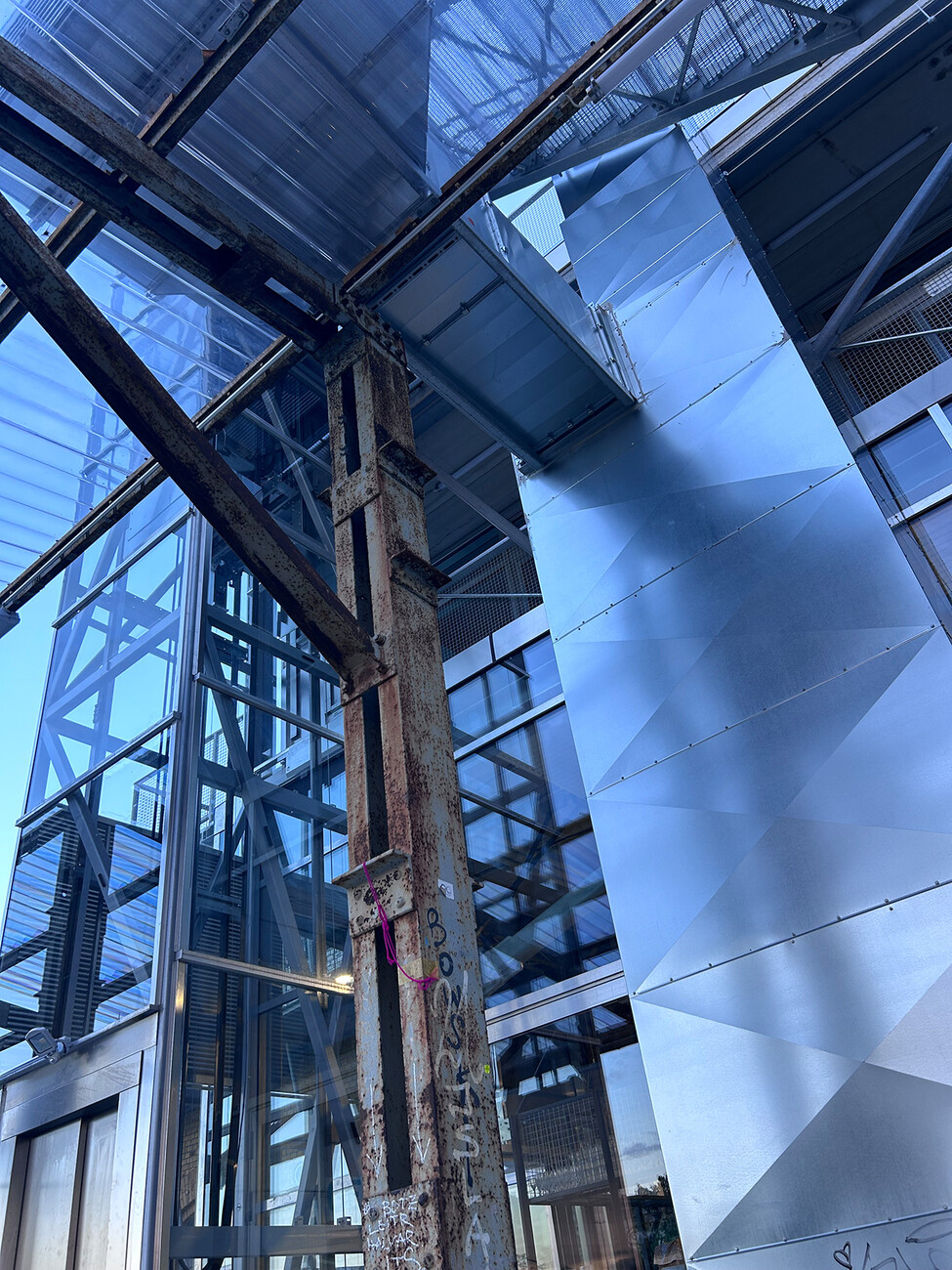
Peter Grundmann: Interference is the superimposition of elements of the building. When you look at the building from the park side, you see the old platform roof with its riveted supports and beams. Behind it, you see the external staircases, and behind them the new steel structure with vertical, horizontal and diagonal elements. Then there are pergolas with railings. Then the glass façade. Then the interior walls and the internal truss girders, until your gaze falls on the glass façade opposite. From there, you continue in the opposite direction. Only the platform roof cannot be seen from the street side.
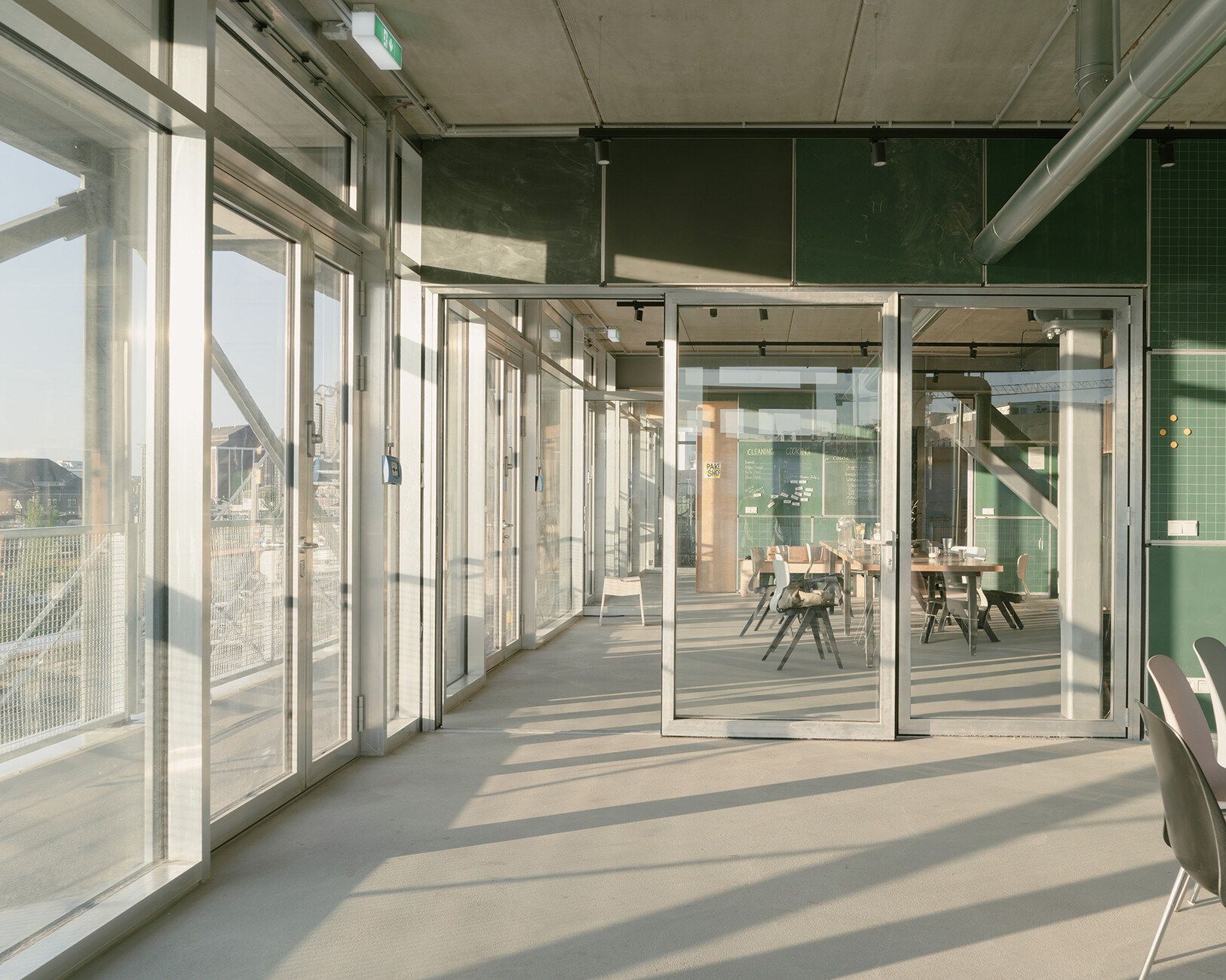
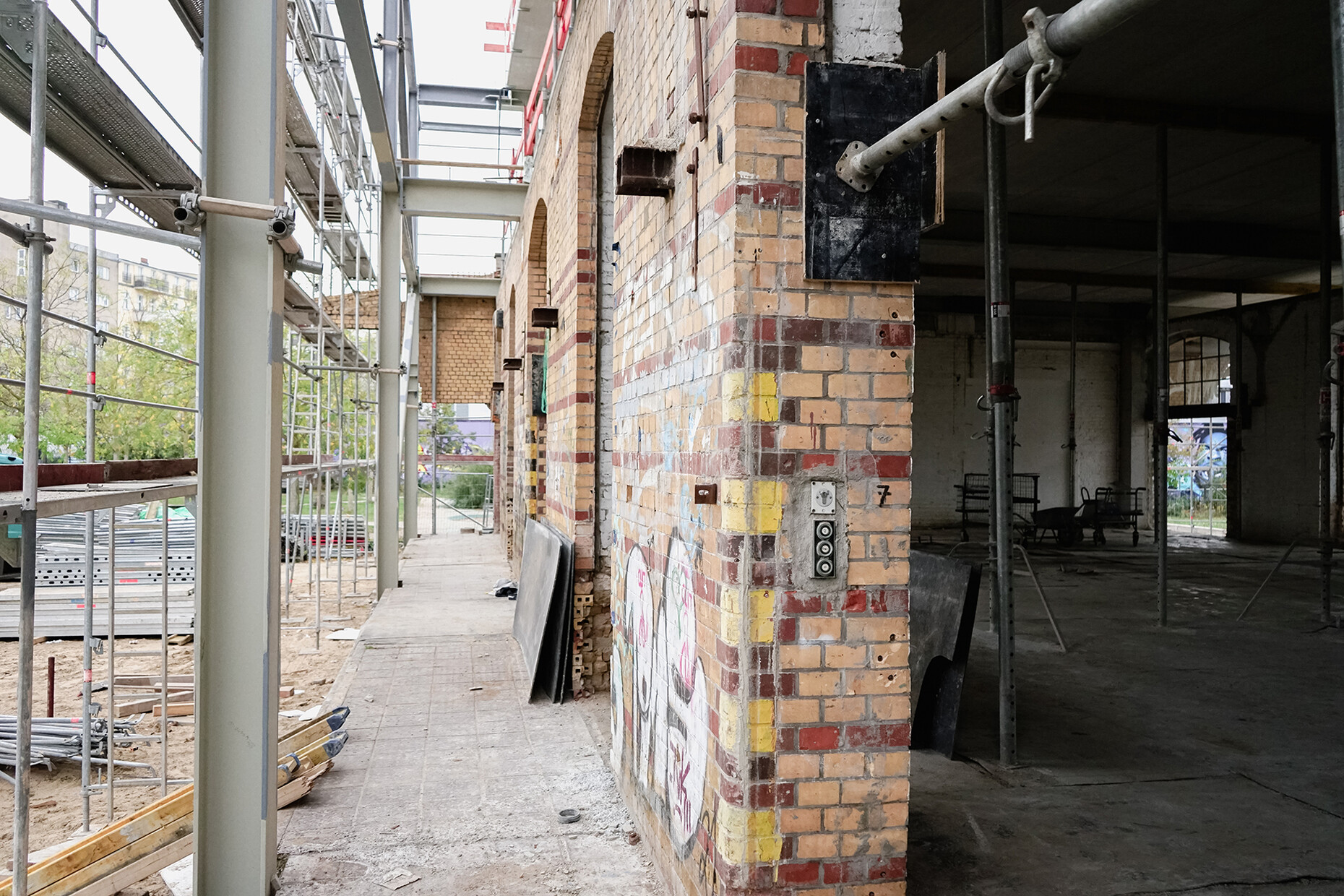
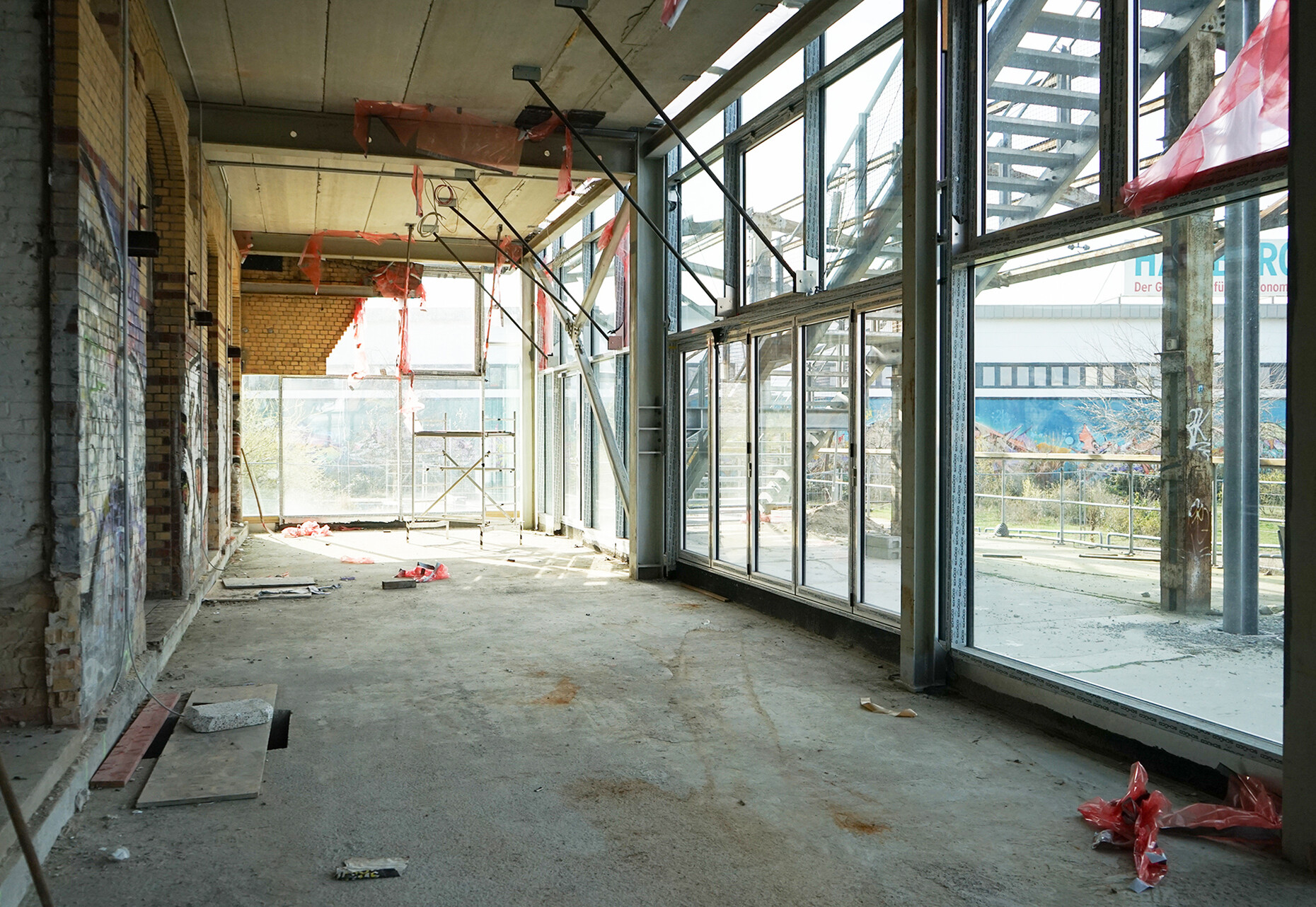
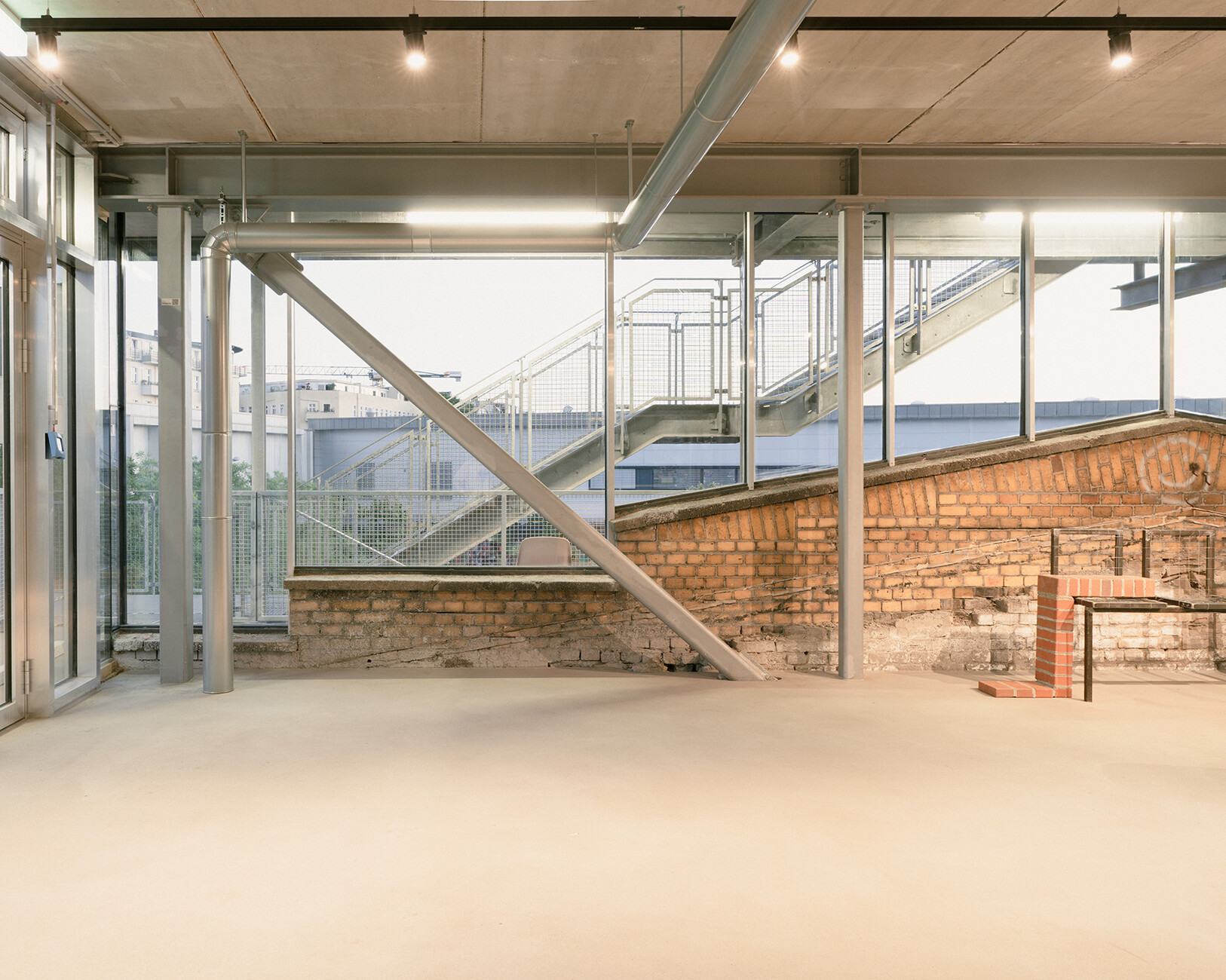
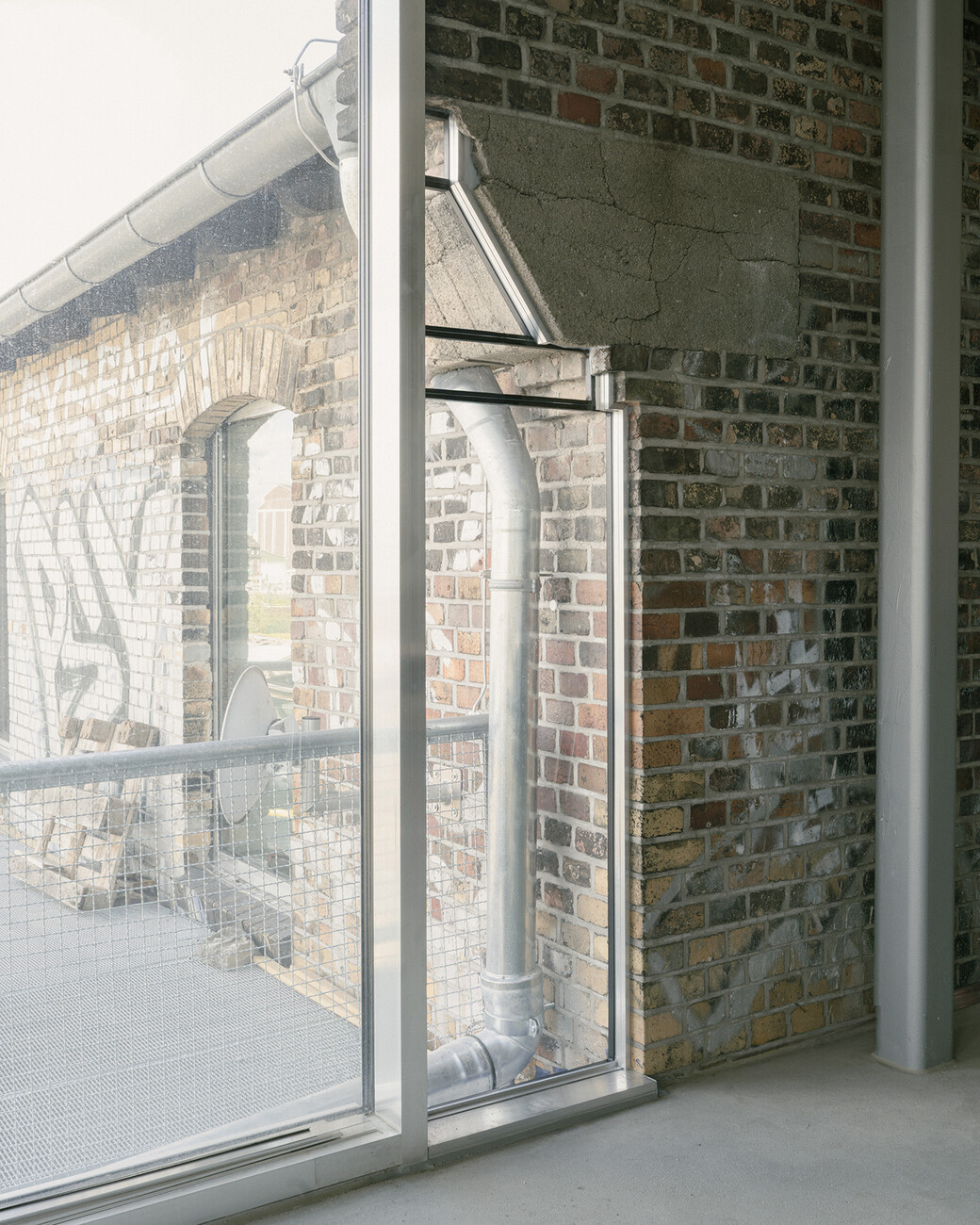
This only works if all these elements are radically exposed. Added to this are the contrasts between the old and new buildings, which touch each other without any mediation. The old and new buildings do not stand in opposition to each other, nor do they merge. It is very important to me to develop a different balance in which the old and new interpenetrate without one dominating the other. Like here in this double façade, where the new glass shell maintains a distance from the old brick walls. You come in and first stand in this gallery corridor between old and new. You can then either continue walking in the space between or go back inside and stand in the old hall.
On the other hand, to the north, the space between the two buildings will actually become a proper winter garden where you can also eat.
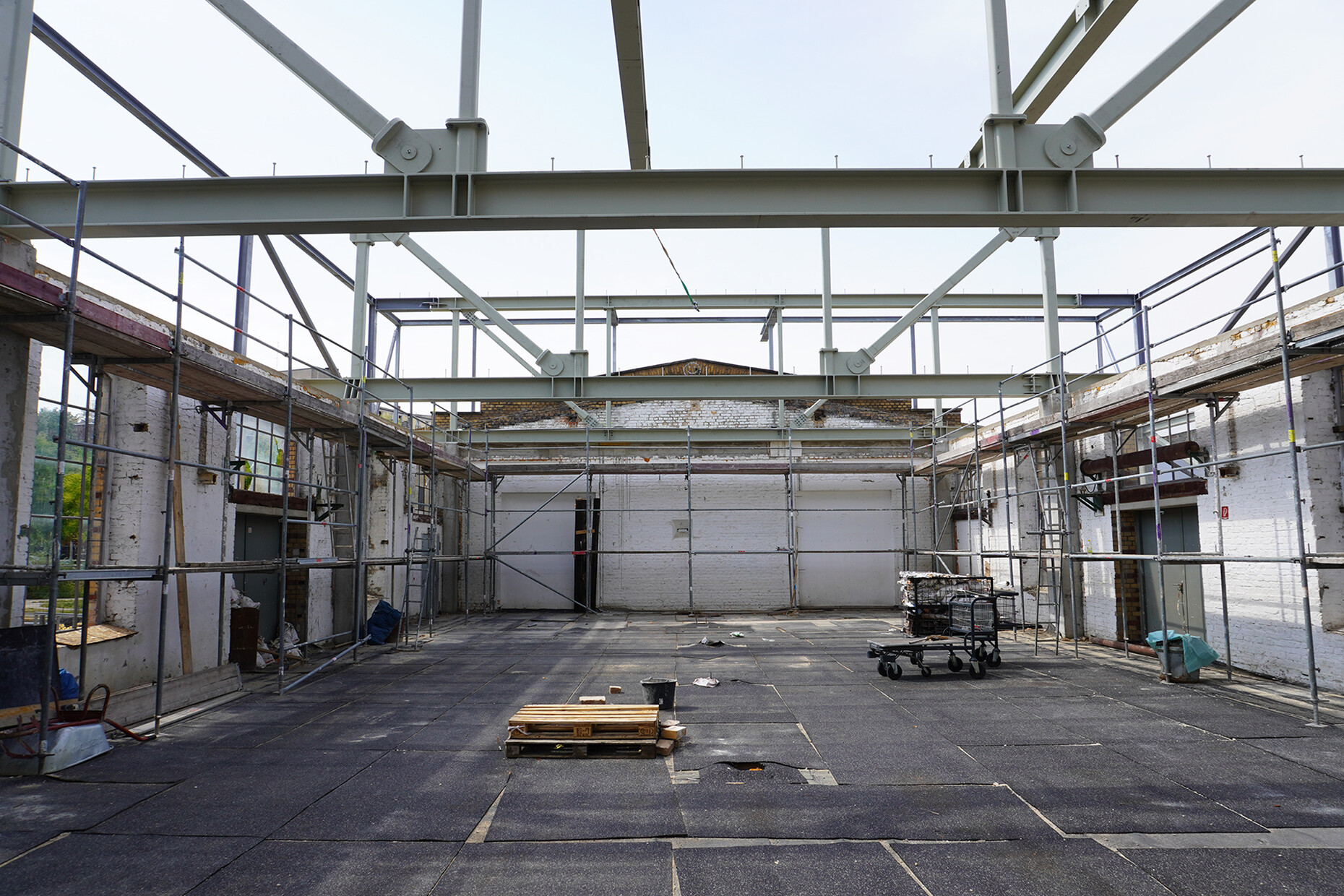
Peter Grundmann: Exactly. We tried to create different situations from the interferences. On the upper floor, for example, the old west gable penetrates the ground floor ceiling and reappears as an interior wall. This gable can be walked around inside and outside on the pergola. You can also see the entire structure. You could hold structural engineering seminars there and explain to students how the supporting structure works directly on the building. This turns it into a medium that has something to say, like a good book or a good work of art.
Like in a Gothic cathedral, where you can also follow the flow of energy?
Peter Grundmann: Yes. Five years locked up in a Gothic cathedral could replace an entire degree in architecture. A building can have narrative qualities. It must be able to communicate something about itself and its context. In this respect, it was important not to cover up the old with the new.
You left the graffiti as it was, didn't you?
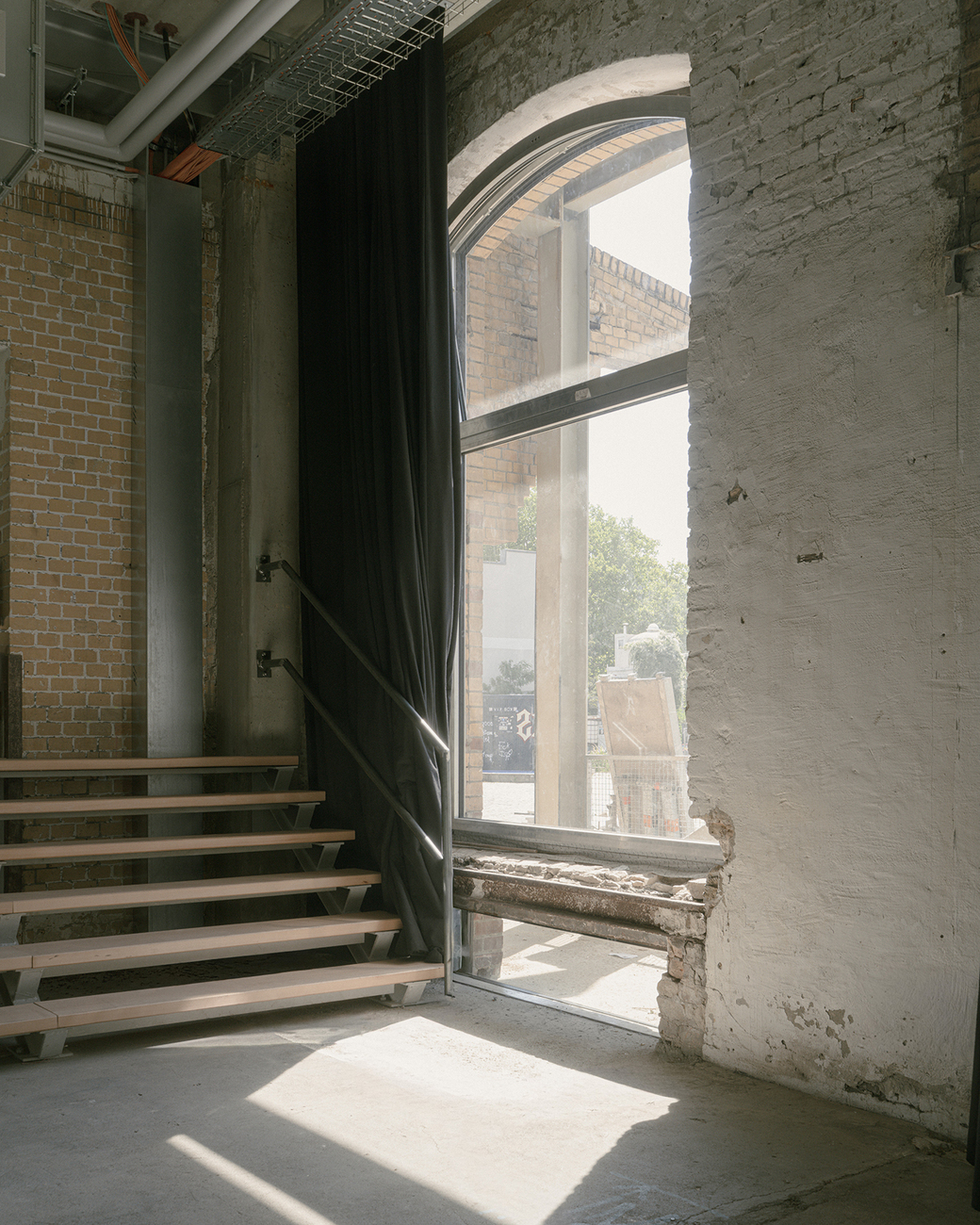
Peter Grundmann: We didn't want to decide which graffiti was worth preserving and which could be sanded off. So they were all important, as part of history, like a layer of images. Part of the wild.
You have already described the double entry. When you walk through the glass wall, you find yourself in this intermediate space – in a joint or a gap – and then you walk through the brick wall again to get inside. I found that to be a very successful moment. It's not intrusive, but there is a kind of deceleration, a brief moment of realisation that there is still an old building inside the new one.
Peter Grundmann: I'm glad you felt that way. I see it the same way.
Which made you decide to make this gap 1.80 metres wide?
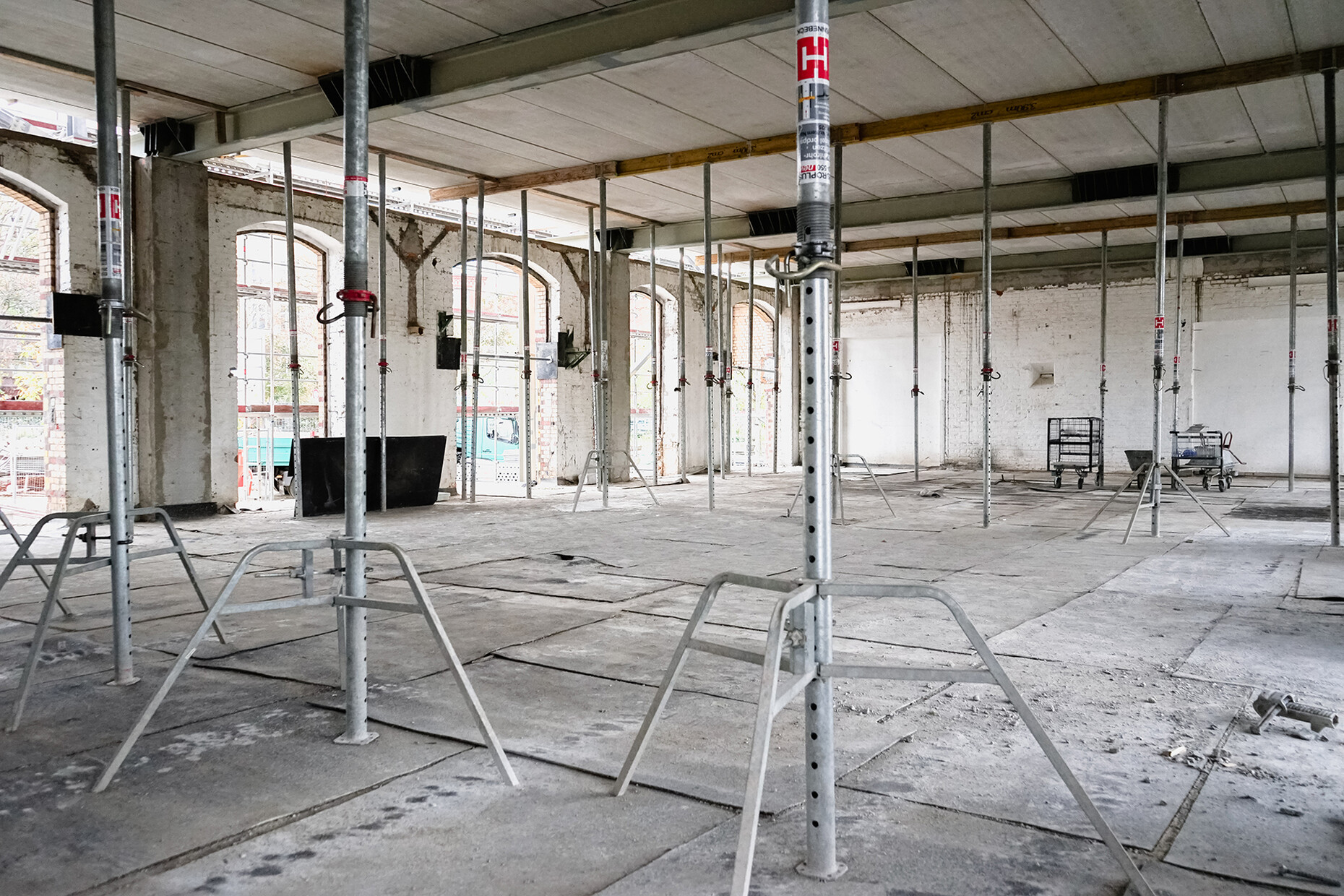
Peter Grundmann: That was simply the width of the old loading ramp. The station has ramps on both sides: trains arrived on one side and lorries were loaded on the other. Stations were always built to be very solid. The flooring on the loading ramp consists of steel tiles. We left that as it was. And we kept the 1.80 metre width because, on the one hand, everything new had to be built on the old footprint. On the other hand, it's a very good width. Two people can talk there and people can still walk past. The interior of the hall was given an asphalt screed during the first renovation in 2012. We kept that too. This meant that underfloor heating was not possible, so we had ceiling heating panels installed instead.
On the other side, in the conservatory, you have also incorporated the old structure. You can see that from the old, beautifully rusted beams.
Peter Grundmann: The conservatory is the same width as the old platforms. The old buildings gave us lots of opportunities to connect directly.
As an architectural office, you are very much present on construction sites and do a lot yourselves or together with the tradespeople. Was that also the case here?
Peter Grundmann: Yes. Every day would certainly be an exaggeration, but we were there quite often. And we did some of the work ourselves, for example all the connections between the glass façade and the old building. That was too complicated for the window manufacturer. The old buildings are crooked and uneven. So we did it ourselves.
Why are you spending so much time at the building site?
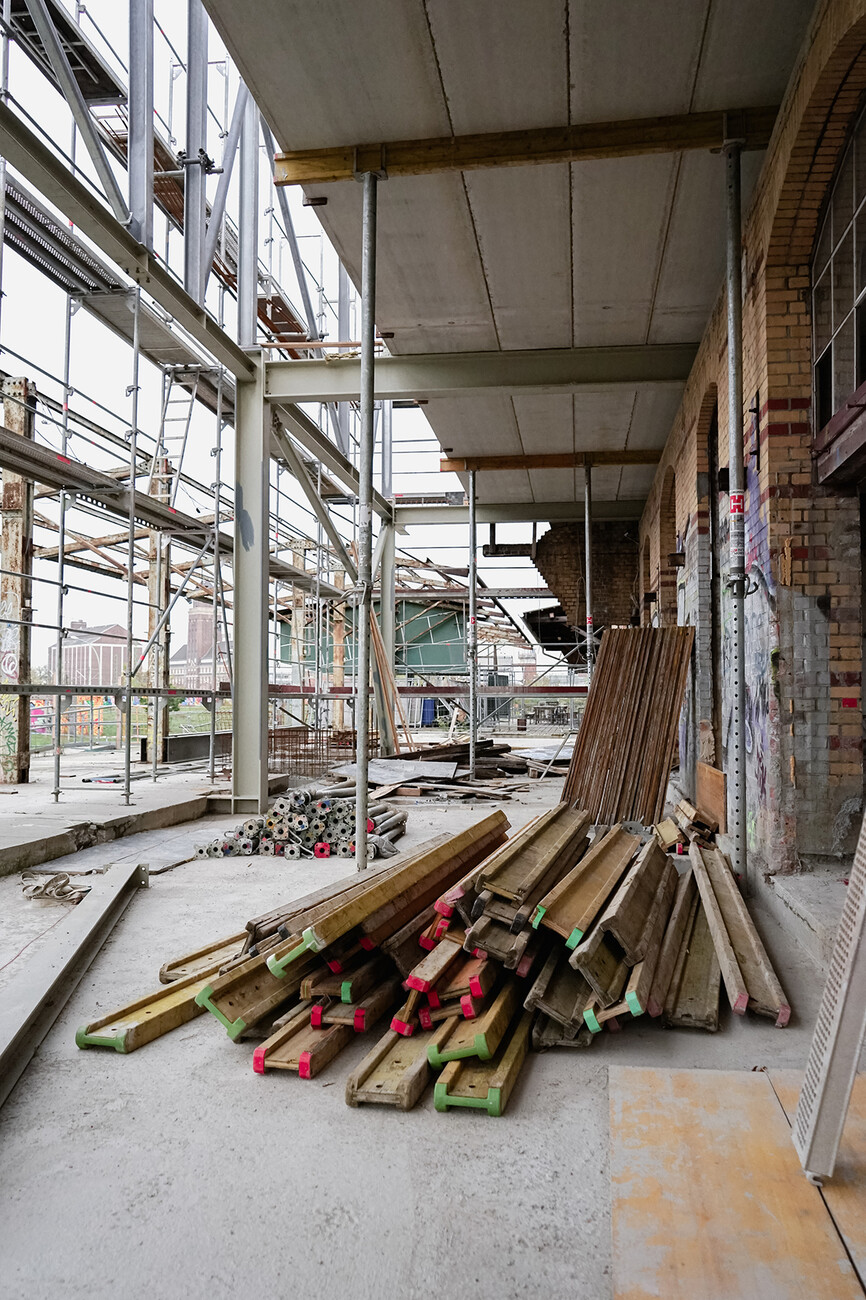
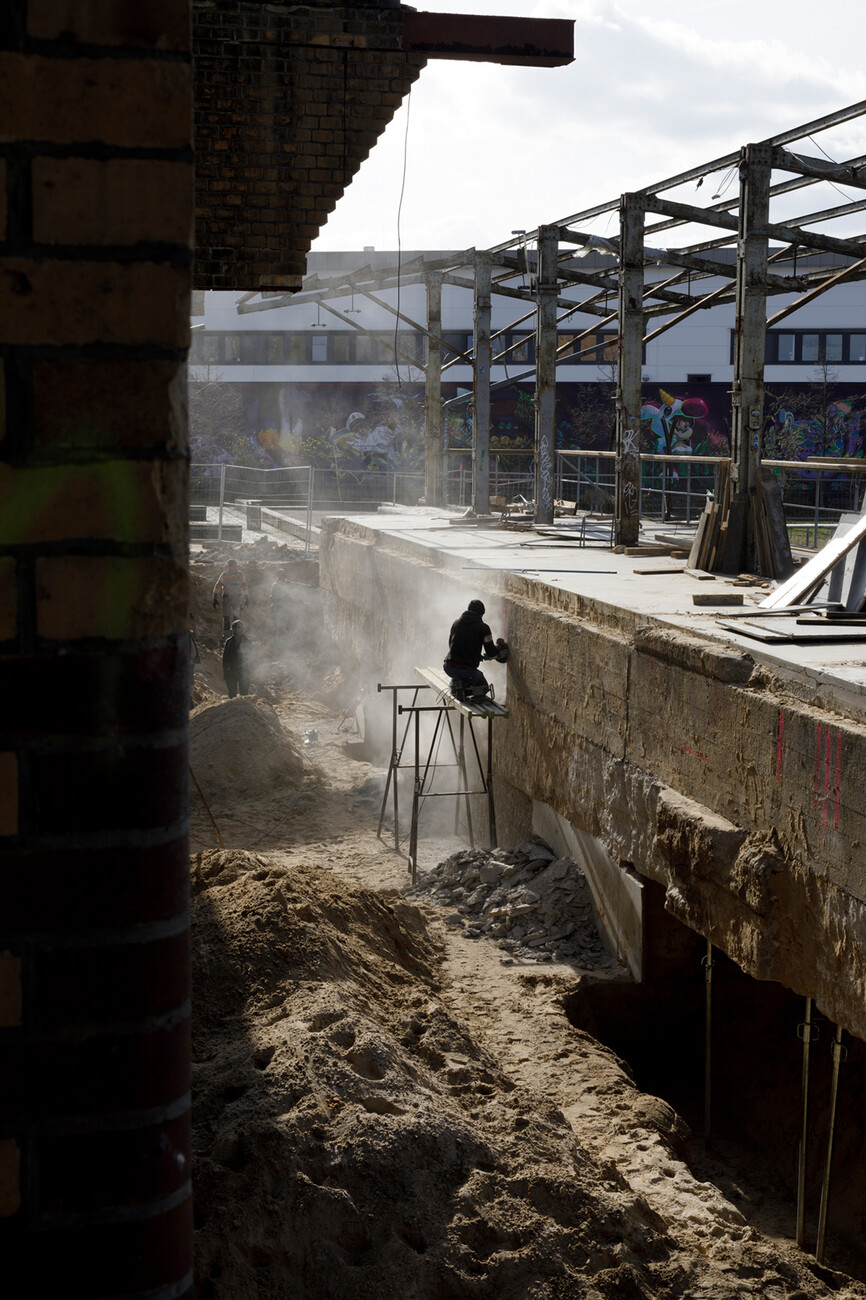
Peter Grundmann: Construction management is very costly when it comes to renovations. And building a new house on top of an old one is a major challenge from a structural engineering perspective. For example, ten large support foundations had to be placed under the old cellar walls, and this had to be done from inside the basement. Many things can only be resolved on site. But spending a lot of time on site is also beneficial for the design.
Many things can be corrected much better in a 1:1 model, and we actually make corrections right up to the end. For example, the structural engineers at the glass façade company calculated that the five-metre-high glass façade on the ground floor would require 24-centimetre-deep posts to withstand the wind pressure. That would have been expensive and would also have had a negative impact on the architecture. So we suggested halving the buckling length of the posts by installing diagonal struts to the floor slabs. Now the posts are ten centimetres deep.
When you talk about an architecture of empowerment, you're also talking about budgets, right?
Peter Grundmann: Yes, with a smaller budget, less is possible. But we are now used to working with insufficient funding. With certain strategies, you can achieve more with less budget. Lightweight construction, intelligent designs, open surfaces without cladding or paint, and sometimes even DIY – these things save costs. Reusing second-hand materials does too. For example, old Berlin school blackboards were used for the interior walls in the ZK/U, which we got for free. Anything that can be left untouched from the old building also saves money.
The renovation of the ZJ/U was funded by the EU and the Berlin Senate. The costs had to be repeatedly revised and verified. We spent 6.166 million euros on construction. That is the total cost, including all ancillary costs. For 3,200 square metres, including pergolas and a roof terrace, that works out to a price per square metre of less than 2,000 euros. Considering the building services required for an event venue with 1,200 guests, including ventilation, smoke extraction and fire protection systems, that is a very low figure. Detached houses currently cost significantly more.
What was the biggest challenge?
Peter Grundmann: There were many challenges. The roof terrace perhaps stands out. It had to be calculated for the worst-case scenario: 600 people jumping to the beat of the music. The structure had to be able to withstand this. To achieve this, the foundations had to be laid under the basement walls: the basement has a vaulted ceiling with brick supports that could be damaged by even the slightest vibrations. Repairs would have been very time-consuming and expensive. Fortunately, everything went well and the roof terrace is now one of the most beautiful places in the building.
Is the roof terrace your favourite place in the house?
Peter Grundmann: I like the whole house because it is complex and because there are many seemingly unresolved collisions between old and new. I like the raw and radically open nature of it. And I like the fact that we have repeatedly reversed the relationship between outside and inside: the pergolas and staircases outside and the open spaces wonderfully reflect the hustle and bustle of the guests and those working at ZK/U. And this can be experienced equally from the inside and the outside.
I was surprised that your work was awarded the DAM Preis. The major architecture prizes usually honour a different kind of architecture – buildings that are complete and seem to be cast from a single mould. What does the award mean for you and for the current discourse in architecture?
Peter Grundmann: We were naturally delighted. We hadn't expected it at all.
DAM PREIS 2026
THE 23 BEST BUILDINGS IN/FROM GERMANY
Until 10 May 2026
DEUTSCHES ARCHITEKTURMUSEUM (DAM)
Schaumainkai 43
60596 Frankfurt am Main
Phone +49 (0)69 – 212 388 44
This year, Stylepark is the media partner and part of the jury for the DAM Preis for Architecture in Germany.