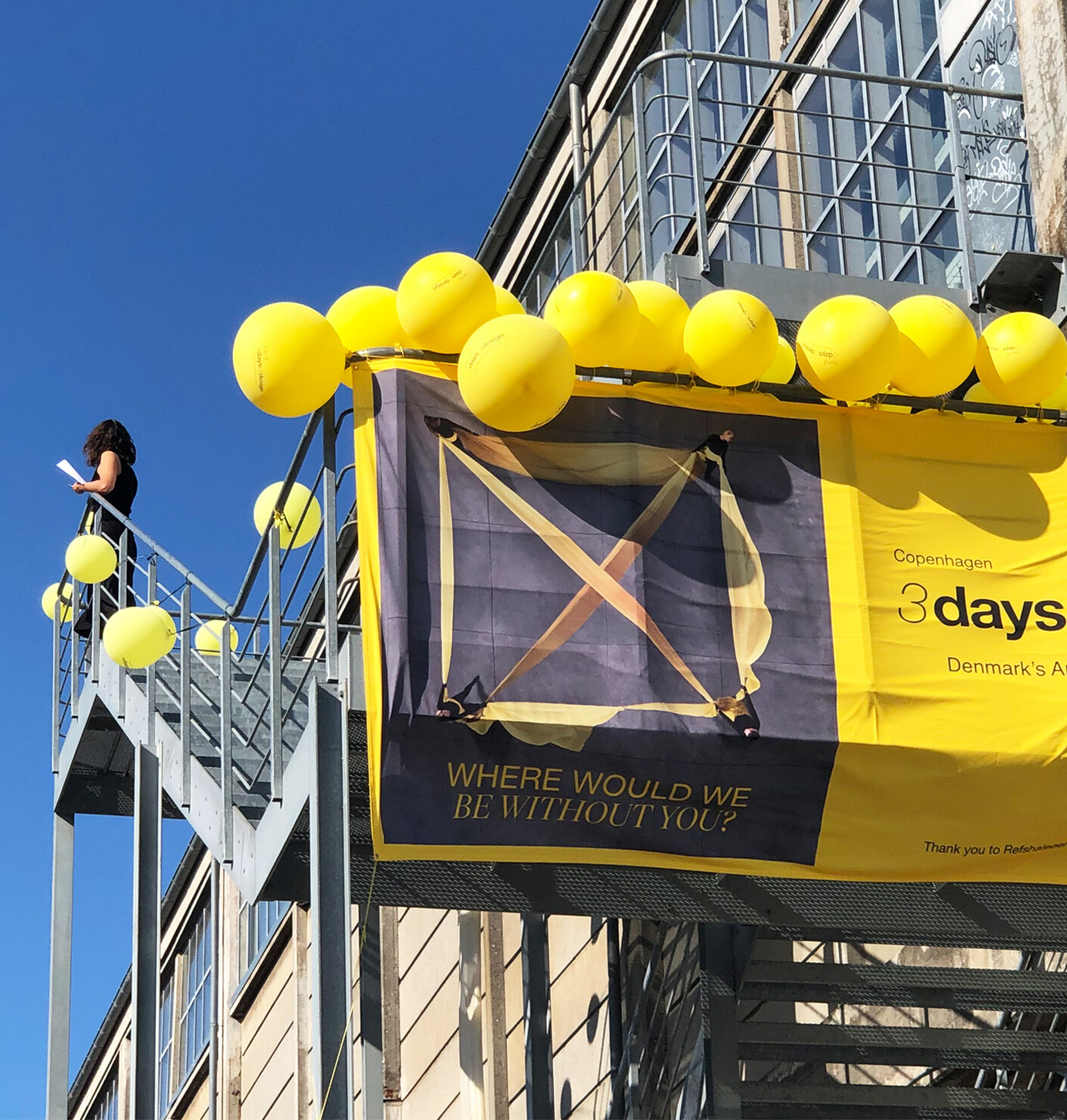
Stay human
Anna Moldenhauer: What surprised you about this year's 3daysofdesign?
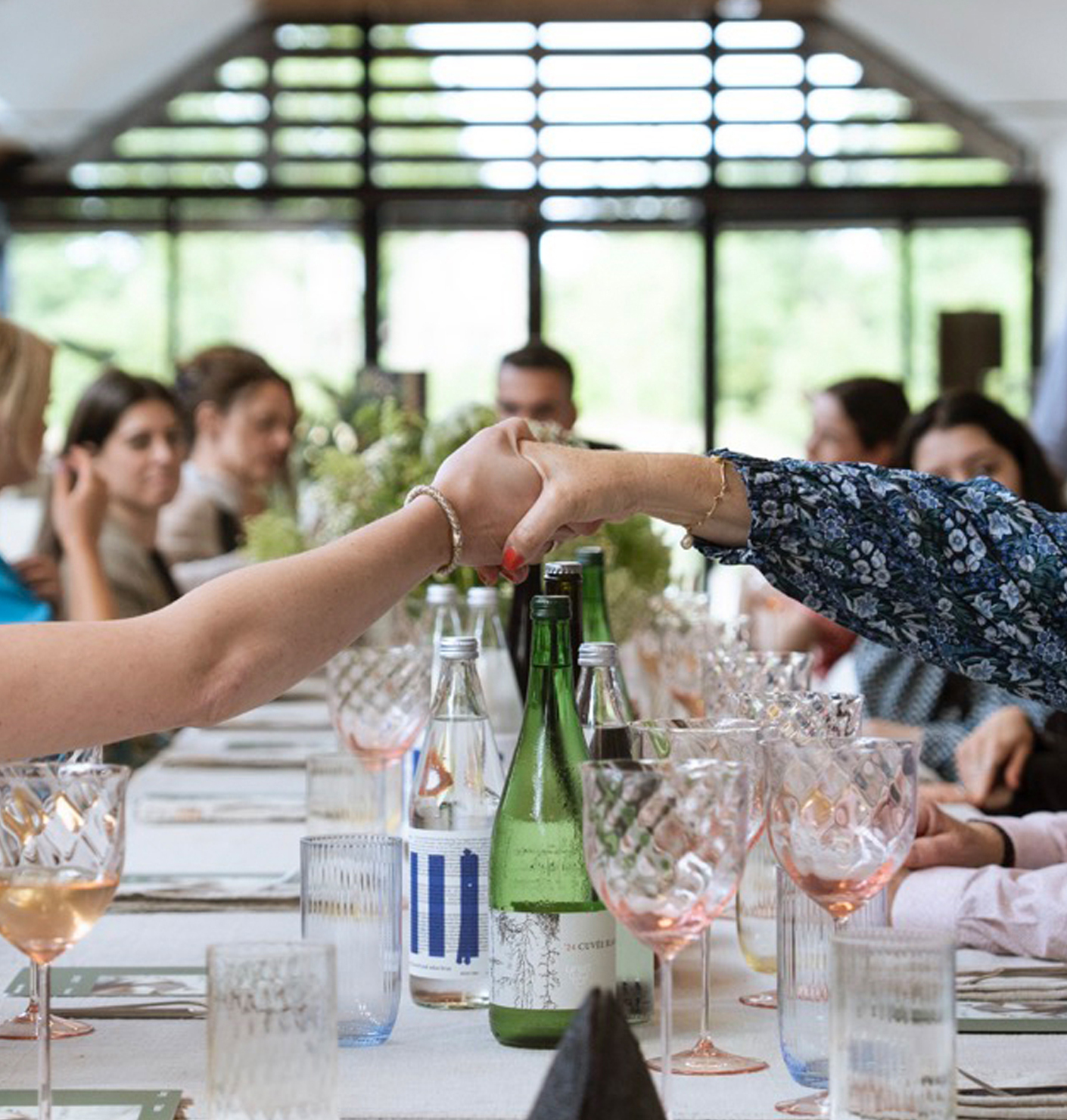
Signe Byrdal Terenziani: What never ceases to surprise me during the festival is people’s strong desire to connect with one another. They’re inspired by more than just the selection of products; friendships, inspiration and ideas are formed. This human aspect brings me joy anew every year. For instance, I didn’t expect our “3daysofdesign Dinner” concept to be so well received. We set up eight different venues with long tables, and the events were practically sold out. This shows that people truly want to connect with one another. I believe that every industry's business model should involve creating spaces where people can share ideas and experiences. At the end of the dinners, many participants exchanged business cards and discussed potential joint projects and ways to support one another. At 3daysofdesign, we don’t want to create events just for the sake of it. We want to create opportunities. Whereas, I sometimes feel that design events elsewhere have become increasingly larger and more spectacular just to attract attention, and be considered an important exhibition in the eyes of the press.
Can you give a counter-example?
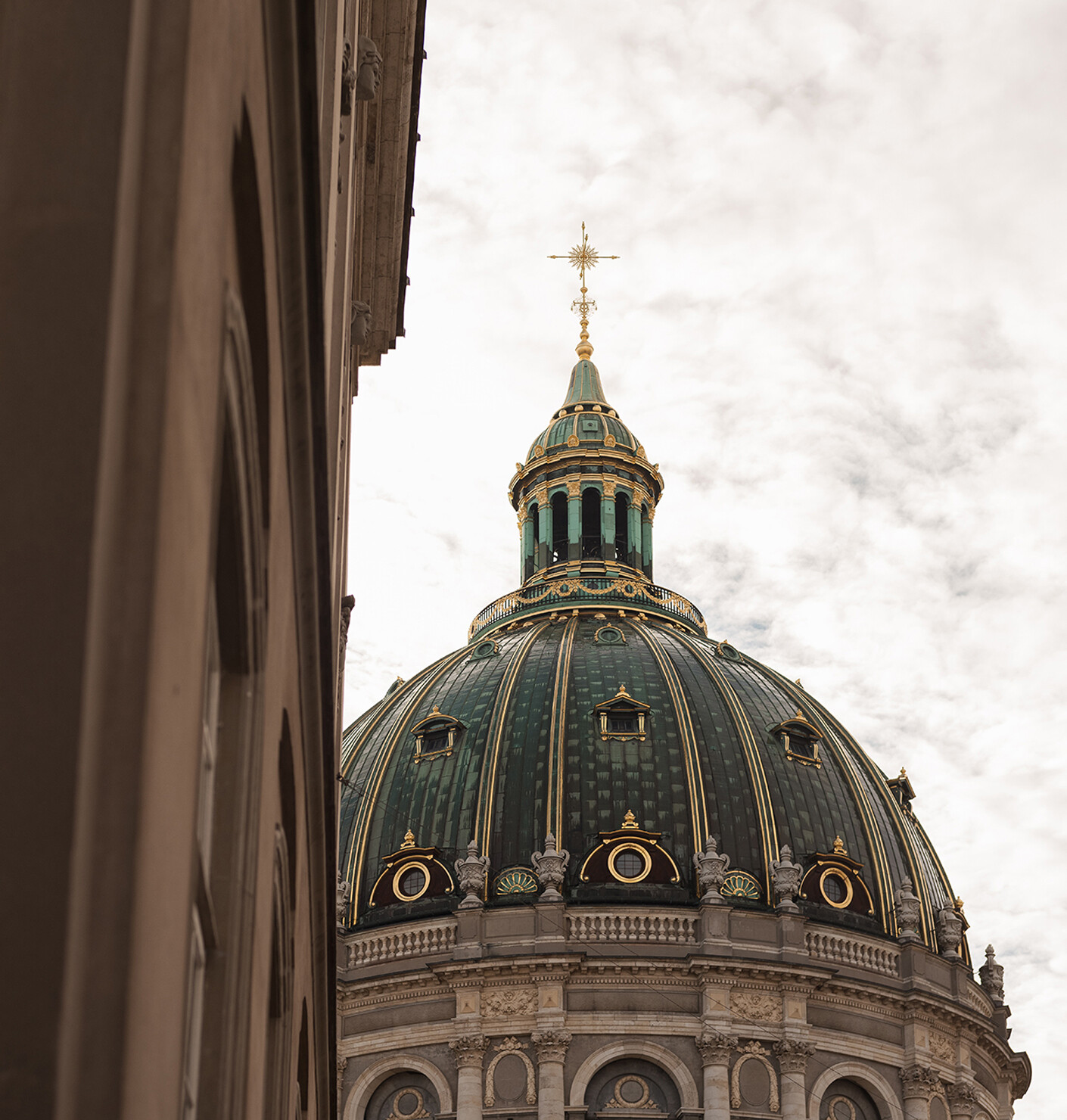
Signe Byrdal Terenziani: At our festival this summer, in the site-specific installation Confluentia Colorum, presented by File Under Pop at the Marble Church in Copenhagen, curator Josephine Yaa Akuamoa created an immersive environment in which colour could be seen, felt and heard through art, craft, scent and sound. The 'wow' effect doesn't necessarily have to come from scale. What I liked about it was its message of diversity and inclusion. Visitors were able to experience the multitude of colours in this world. No colour is right or wrong. I think it’s important in the design process to first consider the human aspect and ask ourselves: 'What do we need?' If the answer is 'We need a chair', we should then consider what makes a good chair. What makes it comfortable? How does it feel to sit on it? This is different from saying: 'Buy five for the price of three.' For me, therefore, it's more about connection and authenticity than specific products.
3daysofdesign is growing steadily; this year, around 125,000 visitors attended 572 exhibitions. You’ve said, ‘If people ever end up queuing around the block, then we need to change something.’ Despite the extensive programme, the atmosphere is usually relaxed. There are no endless queues outside the venues. How do you manage that?
Signe Byrdal Terenziani: That is precisely why we spread the events across the whole city. There are highlights outside the city centre itself, and on the way there, you can explore the city – by bike, for example. Copenhagen is our stage. And we are lucky enough to be performing on a wonderful stage where visitors can move about freely.
As far as I am aware, the festival is mainly funded by exhibitor fees, whilst the City of Copenhagen provides no financial support. Is that still the case?
Signe Byrdal Terenziani: The city and the official authorities here hold 3daysofdesign in very high regard. The festival brings considerable economic benefits to hotels, restaurants, shops and many other local businesses. We have proven that we, as a festival, can sustain ourselves independently. However, what we would like to see is support for conceptual exhibitions or the promotion of new names in design. Our business model is based on contributions from the exhibitors. We use this budget to showcase what they have to offer and to bring visitors to them. Using it for other projects instead would go against our commitment to the exhibitors. That is why external support would be helpful, actually. I have even been invited to explain to other festival directors why we are successful and how they could do something similar. Fortunately, a number of international brands support us, helping, for example, to fund our symposium or our Design Ambassador Programme. This enables us to invite emerging talent to Copenhagen, to give them a glimpse behind the scenes of the industry, and to learn from those who have paved the path before them.
How do you manage the programme’s steady growth?
Signe Byrdal Terenziani: You’ve known me for many years. In the early days, I did practically everything myself and took care of every little detail. These days, I simply don’t have the time for that. I do sometimes miss travelling round in the minibus with the press, but you can’t do everything at once. So I’ve adapted the structure and put together a team of nearly twenty people. Our members and exhibitors are happy because they pay relatively little compared to other design festivals. Of course, there are still countless things I’d love to put into practice. If someone gave me a million euros, I already have loads of ideas that I could introduce straight away.
There are currently lots of new design events springing up across Europe, each with links to the local creative scene. What’s your view on this trend?
Signe Byrdal Terenziani: We live in a world full of creative people, and we should celebrate that creativity. Rather than saying 'You can't organise a festival because we're claiming that time slot or target audience for ourselves', we should work together to explore how design can enhance people's lives. At the same time, we need to talk about responsibility. We’ll never stop developing and producing new things. But how can we do that without harming our planet? That’s a global challenge. I have just been to Istanbul and Italy. Next stop: Japan. It’s wonderful to get to know local initiatives and see what ideas are emerging. Maybe I’ll discover an exciting woodworking technique in Japan that I can then bring back to Copenhagen. That’s how inspiration and cultural exchanges happen. However, I consider it problematic if you set up a festival solely to make money or grow as quickly as possible. In contrast, 3daysofdesign operates as a not-for-profit organisation. Many people believe we make huge profits, when in fact, we reinvest the proceeds back into the festival. Festivals should be created with the aim of making a contribution.
You once said: “It’s important for the design industry to pause and reflect on itself and its role in the world.” Do you feel that this is already happening to a sufficient extent?
Signe Byrdal Terenziani: 'We can always improve, not just in our industry, but everywhere. We should never stop reflecting. Unfortunately, we live in a time when people often act out of fear. Even intelligent people make decisions based on uncertainty. Rather than trusting their knowledge, they allow themselves to be guided by emotions, such as worry. You see this in businesses, too. A manufacturer may be aware that a particular material is harmful to the environment. Yet they continue to use it because they’re afraid of financial losses. Perhaps this manufacturer should pause for a moment and consider producing less but higher-quality goods. This approach could generate the same profit. We should consider that option.
You see design as a catalyst for positive change. A glance at your CV reveals your expertise in Positive Output Management – your family worked in the hotel industry, you hold a Master’s degree in Business Management from the private Luigi Bocconi University of Economics, and you have extensive experience in marketing for international companies. What does it take to inspire people?
Signe Byrdal Terenziani: Listening. That is the most important prerequisite. If you really listen, you recognise other people’s needs and can better understand how they see the world. Perhaps they are facing challenges that I myself have never experienced. Inspiration stems from curiosity. It arises when you discover something you didn’t know before. The powerful emotions that art can evoke are a good example of this. Even in your rejection of a work of art lies the opportunity to reflect on why you feel that way. Why do you feel provoked? Why does it move you? That is where the true power of inspiration lies.
With 3daysofdesign, you’ve created a community whilst also providing a platform for a new perspective on what Scandinavian design can be. What key insight into the design industry have you gained through this?
Signe Byrdal Terenziani: The importance of sharing. When we first started out, many companies found it difficult to collaborate on projects or press tours. Events were usually organised exclusively for a small group of guests, too. That is why I believe that we have not only built a community, but also fostered the understanding that sharing is valuable. Sharing means caring. It also brings benefits for oneself. If you’re part of a community and confident in your own work, you shouldn't worry if visitors also take an interest in your neighbour's exhibition. It's about being open and transparent, not shutting yourself away in your own little world. I learnt this by bringing CEOs of design companies together around one table. I told them: “You need to talk to one another. I’m inviting people who will visit all of you. If you criticise each other and speak ill of one another, it won't work.” When you visit the festival today, hopefully you'll experience the supportive atmosphere for yourself. Companies even recommend the exhibitions of other brands or creatives whose work they’re enthusiastic about to guests. The fact that we have such a collaborative spirit at 3daysofdesign is also because we’ve built something together.
Through communication, a genuine sense of community has developed.
Signe Byrdal Terenziani: Perhaps I have learnt that one plus one can equal three. When people are willing to share their knowledge, work together, listen and support one another, they can achieve great things.
You describe 3daysofdesign as an “inclusive yet exclusive festival”. At first, that sounds like a contradiction. However, when you attend the programme, that’s exactly what you feel: there are hardly any visible barriers, conversations take place on an equal footing, and networking comes easily. The pace is dynamic, the atmosphere relaxed. How do you and your team manage to create such a diverse platform every year that’s authentic and positive?
Signe Byrdal Terenziani: You can’t control how people behave, but you can create places where they feel comfortable and safe. Sometimes we wear high heels to dinner, sometimes trainers. As an organisation, we encourage people to be open and honest. If, for example, a problem arises, we say: ‘We’re sorry, we’ll sort it out. In the meantime, we’ll treat you to a coffee.’ That’s more human. And it builds trust.
It’s not just about functions and roles. It’s about genuine encounters.
Signe Byrdal Terenziani: If everyone approaches one another with good intentions, then people are less likely to judge others. Perhaps this creates a sense that ‘I’m allowed to be just as I am’. Nobody needs to be afraid of being judged. I believe this contributes greatly to the atmosphere of the festival. When we talk about exclusivity, we mean something else.
What exactly?
Signe Byrdal Terenziani: We do have criteria for who can exhibit at our festival, based primarily on values. When companies copy products, that is not a respectful way to treat the people who originally developed those ideas. That is why even big brands can be turned down. Respect for intellectual work is important to us. Another point is our democratically-structured pricing model. Rising stars and small start-ups pay less because, as an inclusive organisation, we want to create opportunities to support emerging talent as well as established brands. Sustainability also plays a role. And sustainability doesn’t just mean being environmentally friendly. It’s also about a sustainable mindset and a responsible business model. If someone doesn’t share this fundamental approach, we retain the right to say: “We’re sorry, but we can’t represent you.”
How should formats from outside the industry, whose providers are trying to capitalise on the platform's success, be dealt with?
Signe Byrdal Terenziani: There are two ways to deal with situations like this. You can either raise your voice and say: These are our rules. This is our space. You’re not allowed to do that. However, that’s not our style. We love the creative industries. We’re happy to draw inspiration from fashion, food, music and other creative fields. At the same time, we have to ensure that our festival remains focused on furniture, lighting and interior design. We’ve deliberately created a design festival that encompasses this cross-section of design. That’s part of what makes us both inclusive and exclusive. Our brand represents a specific sector. If others wish to organise events outside of our festival, they should not use our name to do so, or advertise themselves as part of 3daysofdesign. It’s about mutual respect and acting with integrity. Not capitalising on the attention of the media and guests we’ve attracted over many years. Not exploiting our reach without being part of our community. We could, of course, take action against organisations that exploit our name. We hope that guests are wise enough to recognise the difference between our brand equity and the organic global following we’ve built up over a decade vs. outsiders trying to leverage our success.
As well as your work for 3daysofdesign, you also worked as a life coach for a while.
Signe Byrdal Terenziani: These days, I rarely find the time for it.
You support people, create spaces for people to come together, and generally invest a lot of energy and time in others. Where do you find the strength to do that?
Signe Byrdal Terenziani: For example, I am inspired by conversations like this one. Inspiration breeds new inspiration. It’s a two-way process. I recently read something interesting: humans are social beings by nature. You have a better chance of survival in a community. If you’re on your own, your body produces more stress hormones. You’re constantly asking yourself, ‘How am I going to manage all this on my own?’, ‘How am I going to tackle this task?’, and ‘I have to carry the whole burden myself’. This can lead to loneliness and pressure. However, when you feel part of a community and are working towards a common goal, positive emotions arise. You experience more joy and a greater sense of connection, and you have more energy. I feel strong when I see that our work makes others happy. When I make someone smile or when people connect with one another, for example. During 3daysofdesign, I’m incredibly stressed. But at the same time, I’m also incredibly happy. I meet lots of people I value. I'm happy to see that they're happy, too.
Is it like a kind of energy exchange?
Signe Byrdal Terenziani: Exactly! That’s the right word.
What has inspired you recently that might give us a preview of 3daysofdesign 2027?
Signe Byrdal Terenziani: We’re already working on it, but I can’t reveal the specific theme just yet. We’ll continue with theme-based festival concepts, such as “Make This Moment Matter”, “Keep it Real” and “Dare to Dream”. Based on these themes, we’re developing exhibitions and collaborative projects. The aim is not only to showcase beautiful objects, but also to encourage people to reflect on their actions and their role, whether as a manufacturer, buyer, or end consumer. That’s the direction in which we’d like to continue developing. It’s important that 3daysofdesign has depth. That we inspire people beyond design itself.
The 14th edition of 3daysofdesign will take place from 9 to 11 June 2027.