Spotlight on Women Architects – Annabelle Selldorf
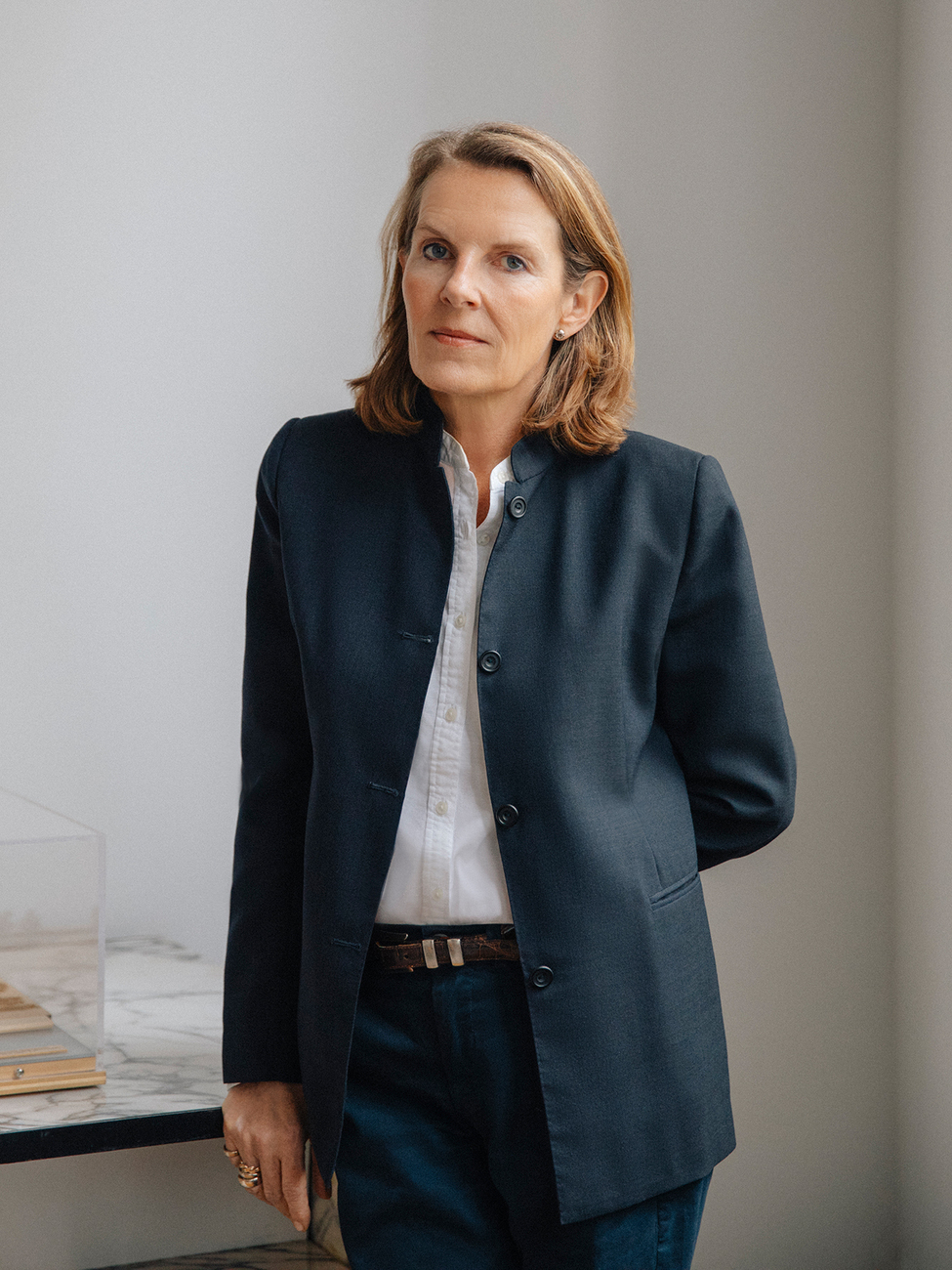
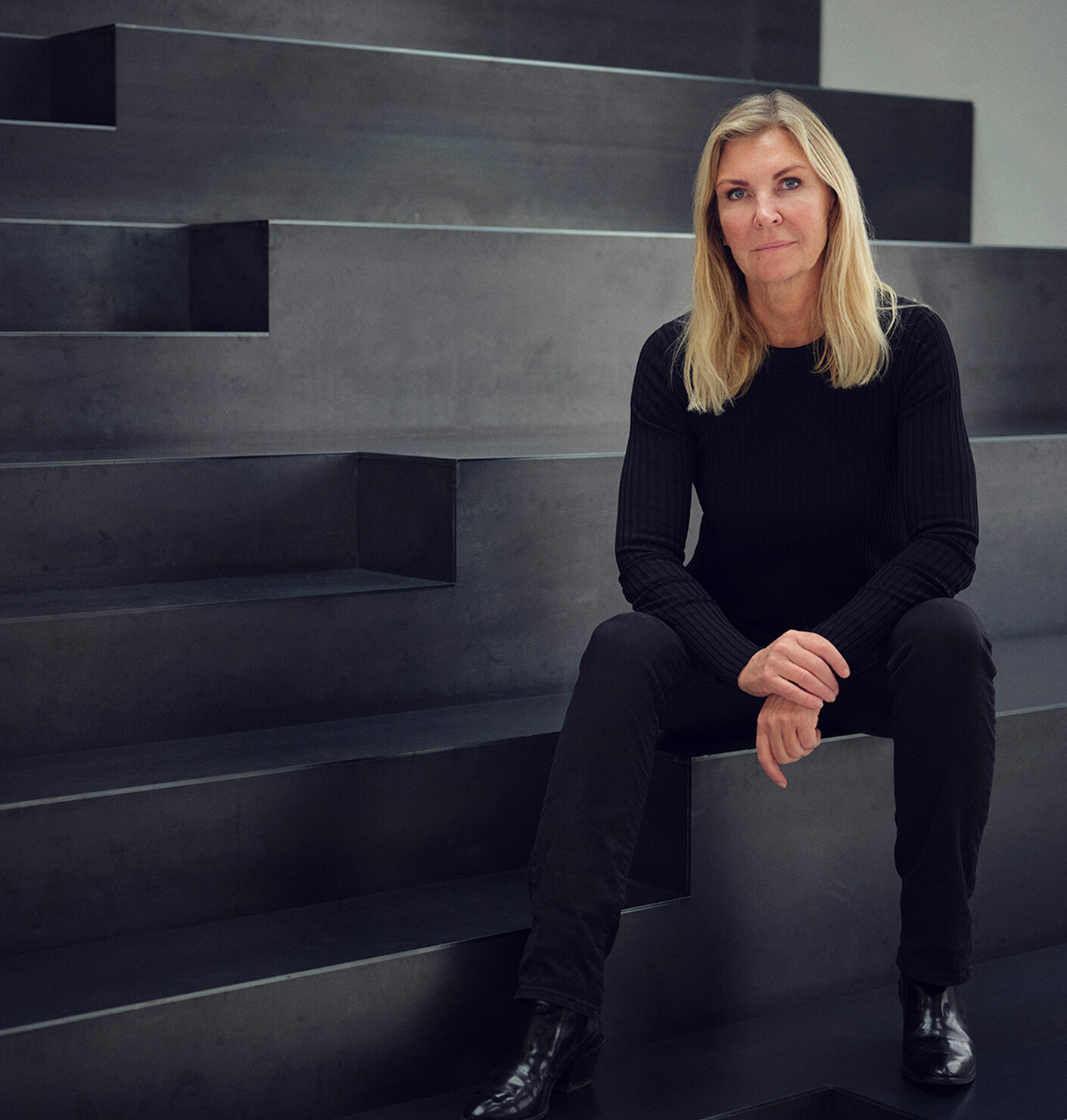
It is not entirely easy to arrange an interview with Annabelle Selldorf. The 65-year-old German architect, who lives in New York, is simply too busy. While negotiations over a suitable appointment are still ongoing, another major piece of news breaks: together with Studios Architecture and Base Paysagiste from Paris, Selldorf’s firm has won the competition to redesign the Louvre in Paris, the largest art museum in the world. This latest achievement suggests that Annabelle Selldorf’s already breathtaking career may be reaching yet another high point. Yet it all began with a rejection.
A Rejection
The young woman from Cologne did not have grades good enough to gain admission to study architecture in Germany. Faced with a waiting period, she decided to see a bit of the world instead. In 1979, at the age of 19, she arrived in New York for the first time and immediately fell in love with the city. “I had never left Europe before, and New York fascinated me. There was music everywhere. Every corner had different smells and different languages.” There was, she says, an incredible energy and a sense that, as a young person, you were immediately invited to take part, no matter where you came from. Of course, Selldorf adds, there is no need to romanticize New York as it was then. The subway trains were infrequent and just as dirty and dilapidated as many of the buildings. Union Square was a place one preferred to avoid. She was mugged three or four times, once with a knife pressed against her back. Yet above all, she remembers that energy. “And I still love New York today. Quite simply, I felt welcome from the very first moment.”
In 1981, she followed her dream and enrolled in architecture at Pratt Institute. The most formative influence, she says, was studying under the Austrian architect Raimund Abraham. Although her parents were far from enthusiastic about their daughter moving abroad, they paid her tuition fees. To cover the rent for her “windowless little room” on the Upper West Side, Selldorf worked part-time in an architectural office. During the day she was disciplined and ambitious, she recalls; at night she could be found lingering in bars and clubs such as the Mudd Club in Tribeca, “where Andy Warhol held court and Julian Schnabel worked as a waiter.” Today, by coincidence, Selldorf’s office occupies the very same building that once housed Warhol’s third Factory: at the northern end of Union Square, between Broadway and Park Avenue in the heart of Manhattan.
Family Influences
Looking back, Selldorf says that her move to the United States was not motivated by any grand career plan. Nevertheless, it proved to be extraordinarily fruitful in several respects. Initially, she needed some distance from her own family history, because it had brought the profession of architecture a little too close for comfort. Her father, Herbert, had trained as a carpenter and became an architect thanks to his practical experience. Selldorf found it frustrating to see him work so hard for relatively little financial reward while remaining dependent on the wishes of his clients for every one of his ideas. She preferred the idea of becoming a diplomat, studying at the Sorbonne, and living in Paris.
Then there was her industrious paternal grandmother, Ludovica Seligmann, who founded the interior design company Vica in postwar Cologne in 1951. According to Selldorf, “hard work and innovative taste” formed the basis of the company’s success. Annabelle’s father, aunt, and uncle all worked there at various times. Today, Annabelle Selldorf has revived Vica in New York, designing furniture that, like her architecture, is characterized by a quiet elegance often associated with early postwar Scandinavian modernism. Her grandmother’s entrepreneurial instinct and her father’s meticulous eye for detail seem to have been passed on to her. She also inherited an interest in art. Both her parents were deeply involved in Cologne’s vibrant postwar art scene. They took their children to exhibitions and museums and, as Selldorf recalls, dragged them through churches and museums on every vacation as well. The family maintained close friendships with artists such as Josef Fassbender and Hann Trier. As a teenager, Selldorf formed her own friendships with a younger generation of Cologne artists, including Marcel Odenbach.
Against this family backdrop, Annabelle Selldorf initially had little desire to become an architect. It was first a friend who suggested that they work together as interior designers, and then her father Herbert, who advised her that she should study architecture instead. After all, he argued, an architect can always work as an interior designer, but not necessarily the other way around. “That made sense to me,” Selldorf says. More decisive, however, was her leap across the Atlantic. “I had to find my own path to architecture, one that did not make me feel as though I was simply following in my family’s footsteps.”
A New Beginning
Yet she brought her family connections with her, and once again a door opened. The Cologne art dealer Heiner Friedrich arranged an internship for her in the office of Fred Stelle and Richard Gluckman. Gluckman, in particular, became known in the early 1980s as a specialist in converting old industrial buildings into exhibition spaces with remarkable sensitivity and minimal intervention. After graduating successfully, Selldorf moved to Florence in 1985 to pursue a master’s degree at Syracuse University. There she studied with Colin Rowe and Werner Seligman and developed an appreciation for what she calls “the rationality of the Renaissance” – the clear logic underlying the perfectly orchestrated proportions of Renaissance architecture.
One might argue, however, that this understanding of architectural theory was not especially helpful in everyday practice. Back in New York, she returned to work for Gluckman but found herself increasingly dissatisfied. “None of my colleagues spent time thinking about the perfect proportions of Leon Battista Alberti’s Rucellai Chapel in Florence,” she laughs. “Of course that was a ridiculous expectation. But I had a very strong desire to make decisions myself. I simply felt that I was no longer a particularly good employee.” So she seized the first opportunity that came her way. Friends needed someone to remodel their kitchen. “I was 28 and had absolutely no idea what would come after that one small commission. I just worked on that kitchen day and night for months. It was incredibly good for me because I had to work out every aspect of the design myself, without anyone telling me whether something was good or bad.”
Each subsequent commission was slightly larger, and her confidence grew accordingly. Then came a request from Cologne that would change her career forever. The gallery owner Michael Werner, who represented artists such as Georg Baselitz, Markus Lüpertz, and Jörg Immendorff, asked her to design his first New York gallery on East 67th Street. To this day, Selldorf describes the project as one of her favorites. “I did everything myself. Every drawing, every detail, every tiny element was carefully thought through. I could justify every single decision.” She believes that her ability to observe precisely and think deeply about every detail may have been nurtured by her childhood exposure to art and her studies in Florence. Yet it was Werner, she says, who taught her “conscious, precise observation” – a quality that still underpins all of her designs today.
The Breakthrough
That precise way of seeing remains central to Selldorf’s architecture. Today she is best known as an architect capable of creating nearly perfect, focused, and serene spaces for displaying art, whether in adapted historic structures or newly built environments. Werner’s gallery was an early success, and word of her thoughtful work began to spread throughout the art world. In 1996 she transformed a former brewery in Zurich for the newly established Hauser & Wirth gallery. Soon afterward she received the commission that would secure her breakthrough. For cosmetics billionaire Ronald S. Lauder, she converted a 1914 Fifth Avenue townhouse into the Neue Galerie New York, where Lauder displays works of German and Austrian modernism from his private collection. Upon opening, the project received enthusiastic reviews. Critics praised the way Selldorf had reorganized the residence into perfectly lit and carefully structured exhibition spaces through relatively modest interventions.
Thereafter, Selldorf designed galleries and museum spaces for figures such as Hauser & Wirth, David Zwirner, Maja Hoffmann, Larry Gagosian, Barbara Gladstone, and Thaddaeus Ropac. Artists including Not Vital and Jeff Koons commissioned her to design their homes and studios. She has now worked with David Zwirner for more than three decades and has designed all of his galleries around the world. According to Selldorf, their relationship is rooted in a friendship dating back to their Cologne years, which has fostered a shared understanding and vocabulary for creating spaces for art. Remarkably, the often competitive and status-conscious art world seems unusually united when it comes to choosing its architect.
Critics, too, admire her spaces and her thoughtful restraint. Elegance, calmness, timelessness, subtlety, and concentration are among the qualities most frequently associated with her work. Yet Selldorf admits that self-doubt has always been part of the process. “We always try to create spaces that bring people closer to art and to introspection; spaces for a pause, where one can think differently, focus on something, or allow oneself to be moved.” Such subtlety, however, can also be mistaken for dullness. “My architecture has no signature,” she says. “I have no recurring style, no fixed aesthetic, and not even a preferred material.” This can be a disadvantage in architectural competitions because her work offers no visual spectacle. Instead, it is an experience for all the senses.
The Power of Restraint
Fortunately for Selldorf, architecture has increasingly moved away from the era of star architects and their spectacular formal statements, exemplified by projects such as the Guggenheim Museum Bilbao. Nowhere do these contrasting approaches meet more directly than in Arles, France, where Swiss pharmaceutical heiress and art collector Maja Hoffmann has been transforming a former industrial site into the LUMA arts and research campus since 2010.
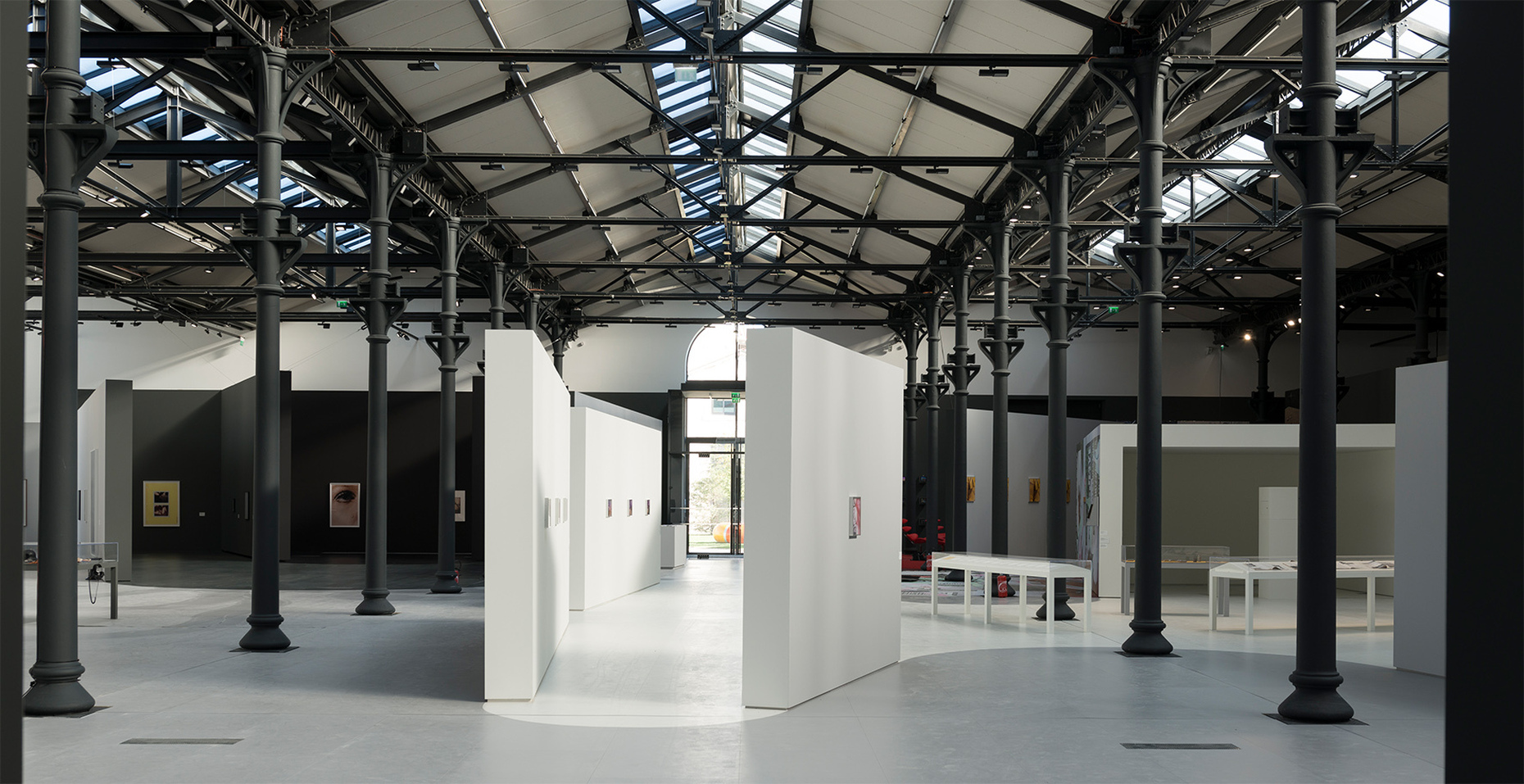
There, Frank O. Gehry – inventor of the so-called “Bilbao Effect” – designed a dramatically twisted 56-meter tower clad in shimmering stainless steel. It rises above and visually dominates the historic city of Arles. It is an undeniably loud and attention-grabbing gesture. At the foot of the tower, Selldorf’s office quietly transformed five former industrial workshops into calm and focused exhibition spaces through minimal, carefully targeted interventions. It also added a sixth building that integrates so seamlessly with its older neighbors that visitors can scarcely distinguish what belongs to which period or architect. Selldorf’s work exemplifies good architecture. By comparison, Gehry’s tower can seem almost like a desperate cry for attention in the age of Instagram.
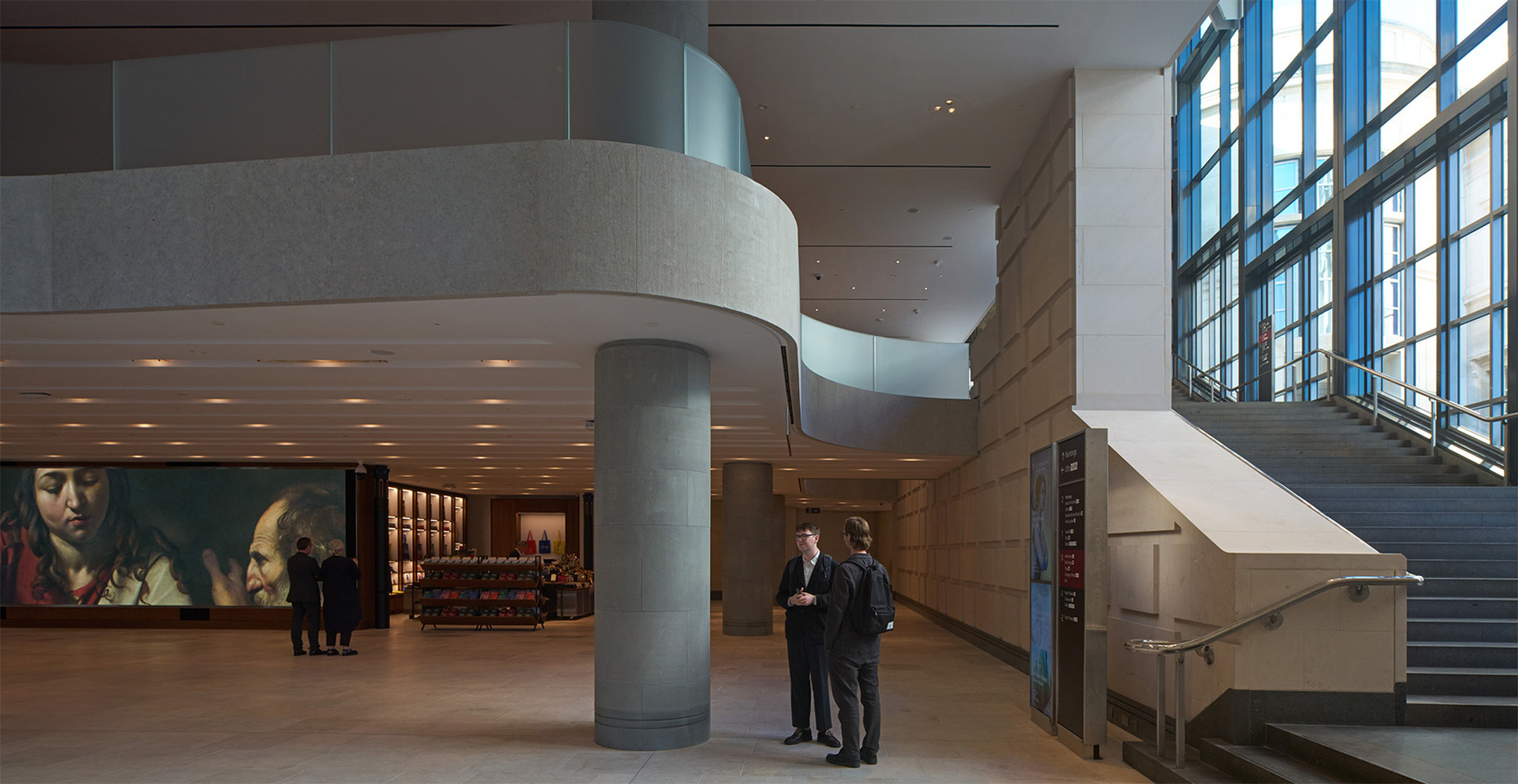
For contemporary architecture, it is therefore a positive sign that Selldorf’s concentrated, quiet, and consistently meticulous work has not been overlooked. On the contrary, it has been celebrated more and more in recent years. The Wall Street Journal described her renovation of the Museum of Contemporary Art San Diego as a “triumph,” while the Los Angeles Times called its new spatial proportions “masterful.” Reviews of her renovation of the Frick Collection in New York were even more enthusiastic. The New York Times praised it as a “poetic” and even “magical” renovation that united old and new with an invisible hand. The Wall Street Journal spoke of a “subtle revelation,” and the Washington Post joined the chorus of praise for her restraint and deep respect for the building’s history.
Today, critics consistently describe Selldorf not only as a master of light, atmosphere, and materials, but above all as a master of the small, understated gesture. “I still spend an absurd amount of time thinking about every tiny detail, even on large projects, and I probably drive everyone in the office crazy with it,” she says. “It can certainly be exhausting. But there is no better time for me than spending days immersed with the entire team in every detail of a single project.” Architecture, she says, is fundamentally like language or literature. There is a system by which letters become words and words become sentences. From this emerges a familiar grammar whose rules must first be mastered. Only then can one deliberately break them in order to transform ordinary text into literature. If her office succeeds in creating a logically grounded relationship between the largest scale and the smallest detail, then, she says, it remains “enormous fun” even today. As for the Louvre in Paris, one thing already seems clear, even though the implementation of the project has only just begun: in Annabelle Selldorf and her team, it could hardly be in better hands.