Building bridges
Anna Moldenhauer: You are currently in the United States. What are you working on?
Enric Ruiz Geli: For us architects, it’s crucial to seek dialogue with the sciences and to incorporate expertise from urban planning and sustainable thinking. The scientific and academic fields are the strongest drivers we have. However, there has been a separation between the two fields: academia was considered the brain and industry the muscle. That’s not an ideal situation. There is a collective intelligence that could benefit enormously from mutual inspiration. With the transformation of schools and universities, science itself is also changing. My education at a public high school and my conscious decision to study at a public university shaped me; I’m a public architect. It fulfils me to create something that benefits the community.
The United States is home to some of the best universities in the world and attracts people from every country. Virginia Tech is a public university in the Appalachian region and gives me the opportunity to start afresh, think differently and develop myself further. It also has a connection to Black Mountain College, which combines art, architecture, music, dance and many other disciplines. That’s why I currently spend around 70 per cent of my time here.
You have been teaching for many years. What advice would you give to the younger generation of architects?
Enric Ruiz Geli: When I studied at the Architectural Association School of Architecture (AA) in London, one of the most renowned architecture schools in the world, neither sustainable design nor environmental awareness were taught. It’s regrettable when a leading school produces graduates year after year who have no understanding of sustainability. That is why I wanted to stimulate debate and realise the potential of these students outside of school. One successful case is Julianne Wolf, who now leads Studio Gang's in Chicago. Giving students a voice for a sustainable future, ecological thinking, activism and decarbonised architecture is a significant step forward. Great examples of this are the IAAC in Barcelona or the SCI-Arc Institute of Architecture, which introduces the idea of synthetic landscapes. Landscapes will play a key role in the future: from agriculture, to toxic landscapes, to the integration of technology. Rotating landscapes and indigenous visions of the future are essential in this context. So my answer/advice would be: think sustainably and be an activist – understood in the sense of enabling new “indigenous” perspectives on the future. I incorporate both of these areas into my teaching.
With your studio, Cloud 9, you work at many interfaces that connect architecture with technology, nature and art. Among other things, you draw inspiration from the workings of nature and transfer this to our built environment. Why did you decide on this holistic approach?
Enric Ruiz Geli: Cloud 9 was already involving designers from the worlds of fashion, architecture and theatre at the end of the 1990s – so we have been working with multiple disciplines from the very beginning. It was only natural to expand the creative process through light, stage and music. We were inspired by artists such as Bob Wilson and Frederic Amat, who were not limited to a single field, but designed museums, theatre and opera installations, furniture, etc., so it was logical for us to see our studio as interdisciplinary.
Today, the central concept to our work is transdisciplinarity: the close connection between science and practice. It means working with different tools, understanding the perspectives of other disciplines and exploring their sensibilities, whether in an academic environment or in our daily work at Cloud 9. This collective intelligence underpins our projects and can give rise to a new dynamic. For example, an architect may say that an idea is not feasible because urban planning regulations do not allow it. If a politician who shapes these regulations is also at the table, a dialogue emerges that opens up new urban policy possibilities and supports creative processes. It’s a pity that we architects have not been prepared to work with politicians, anthropologists or experts in the environment, mobility and social classes.
The new generation of architecture students at VT Honors College defines itself through a broader perspective. All disciplines sit together at the No Blue No Green table/studio and form a team/tribe. When architects recognise that architecture is becoming a platform for inhabiting a shared, synthetic landscape, the learning curve is enormous. What once began as a radical pedagogy tool used in our classroom can become a highly effective, resilient, empathetic and holistic approach. We are only at the beginning of this phase.
It is essential to understand architecture as teamwork.
Enric Ruiz Geli: It is crucial that we learn to act together. Today's professional world clearly favours team players over lone wolves.
You became interested in sustainable construction methods and the holistic responsibility of architects at an early stage. Your forward-looking buildings use high-tech to mimic natural processes and drastically reduce energy consumption. Together with Jeremy Rifkin, you wrote a manifesto for green architecture at the 2008 Biennale. However, if we look at many new buildings in our cities, glass and concrete continue to dominate. In the wake of current crises, sustainability has also fallen out of the public eye and, in retrospect, seems like a short-lived trend. Why is it so difficult for us to establish adaptable architecture as the standard?
Enric Ruiz Geli: The answer lies in evolution. We are in a phase of rapid development, and in times like these people follow inspiring personalities. Initially, we need visionaries who can stimulate and advance society, the professional world, industry and politics. Jeremy Rifkin is of course one of them. His book ‘The Empathic Civilisation’ is considered a significant milestone for our civilisational progress. The central message is to build, not to waste, protect the planet and promote empathy, think interdisciplinarily and understand that we are part of a multifaceted ecological system, together with animals, plants and other humans. This holistic civilization is the goal. Personalities such as the American politician, entrepreneur and environmentalist Al Gore and philosophers such as Timothy Morton are also providing decisive inputs.
The second phase is that of pilot projects. They show that sustainable solutions have long been possible. Today, net-zero buildings are being constructed at conventional construction costs, a result that surprises many. Sustainability does not necessarily mean higher expenditure. They are not yet required by law, but they might soon be in the EU. Ideas, technologies and initial implementations are already in place, the future is clearly taking shape. What is slowing down this natural development is, on the one hand, the role of architects, which is often underestimated. Many define themselves as environmentally conscious thinkers, but ultimately we all are, whether we use high-tech, traditional, passive or indigenous methods. The apparent contradiction between modern technologies and traditional techniques is artificial. Both pursue the same goal: no fossil fuels, sustainable energy, design progress, a clean environment and less waste. However, marketing creates artificial categories such as ‘ecotec’, even though tradition and technology are not mutually exclusive. Such labels hinder cooperation.
Another obstacle is industry. The concrete industry, for example, advertises ‘sustainable’ concrete. Although progress has been made, CO₂ emissions remain enormous – this is where greenwashing lurks. At the same time, companies are relocating products to countries with lower standards as soon as stricter rules come into force. Industry must therefore actively participate in its own transformation.
It is a complex system, absolutely.
Enric Ruiz Geli: It’s important that we have a clear plan of action. Philosophers and thinkers have been pointing this out for a long time, because we are all in the same boat. There is no planet B, no alternative Earth, no way out on a large scale. But there is much that we share and must develop together. Pilot projects are essential in this regard. Equally important is the knowledge of our ancestors and passive architecture. And there are countless forms of innovation – they are all significant. Some architects say they don't want innovation. But think about what that would mean: would you tell your children that when they are at the hospital? Would you advise the hospital to forego innovation? Of course not.
As a Doctor of Philosophy, I would welcome you bringing this holistic perspective to the industry to help us take a different approach to the changes we are currently experiencing.
Enric Ruiz Geli: We will see how our work changes and how the use of composite materials increasingly moves towards biocomposites. An impressive future awaits us, a wonderful development of innovation and craftsmanship. That is why I call for action: form teams and treat each other with empathy. Large academic institutions and industry experts should give young people responsibility. Bring all generations together. The elderly must not be excluded. They are not passive figures on the sidelines who should be kept away from decisions or from life. Ellen Braaten, an 83-year-old professor emeritus, carries the knowledge of many decades within her. Why should she be excluded from the conversation? I strongly disagree with that.
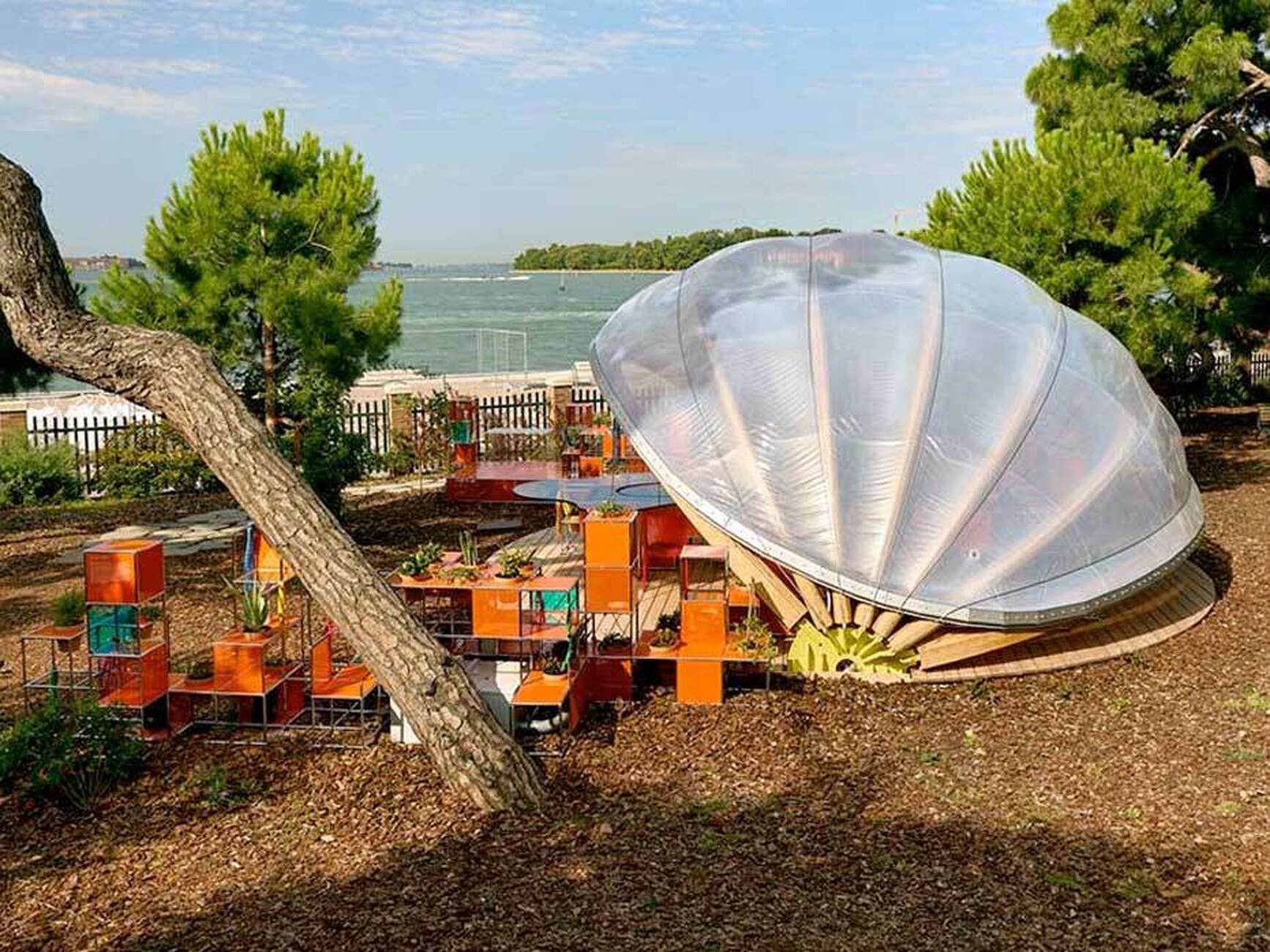
At the Biennale Architettura 2025, you presented the exhibition ‘Unearthed/Second Nature/Pollination’ on USM Haller structures in collaboration with Virginia Tech Honors College and the design firm Joba Studio. The transdisciplinary projects explored the sustainable coexistence of humans and nature using models, plans and prototypes. Carlo Ratti selected the exhibition as one of the most remarkable of the Biennale. How will this idea be carried forward?
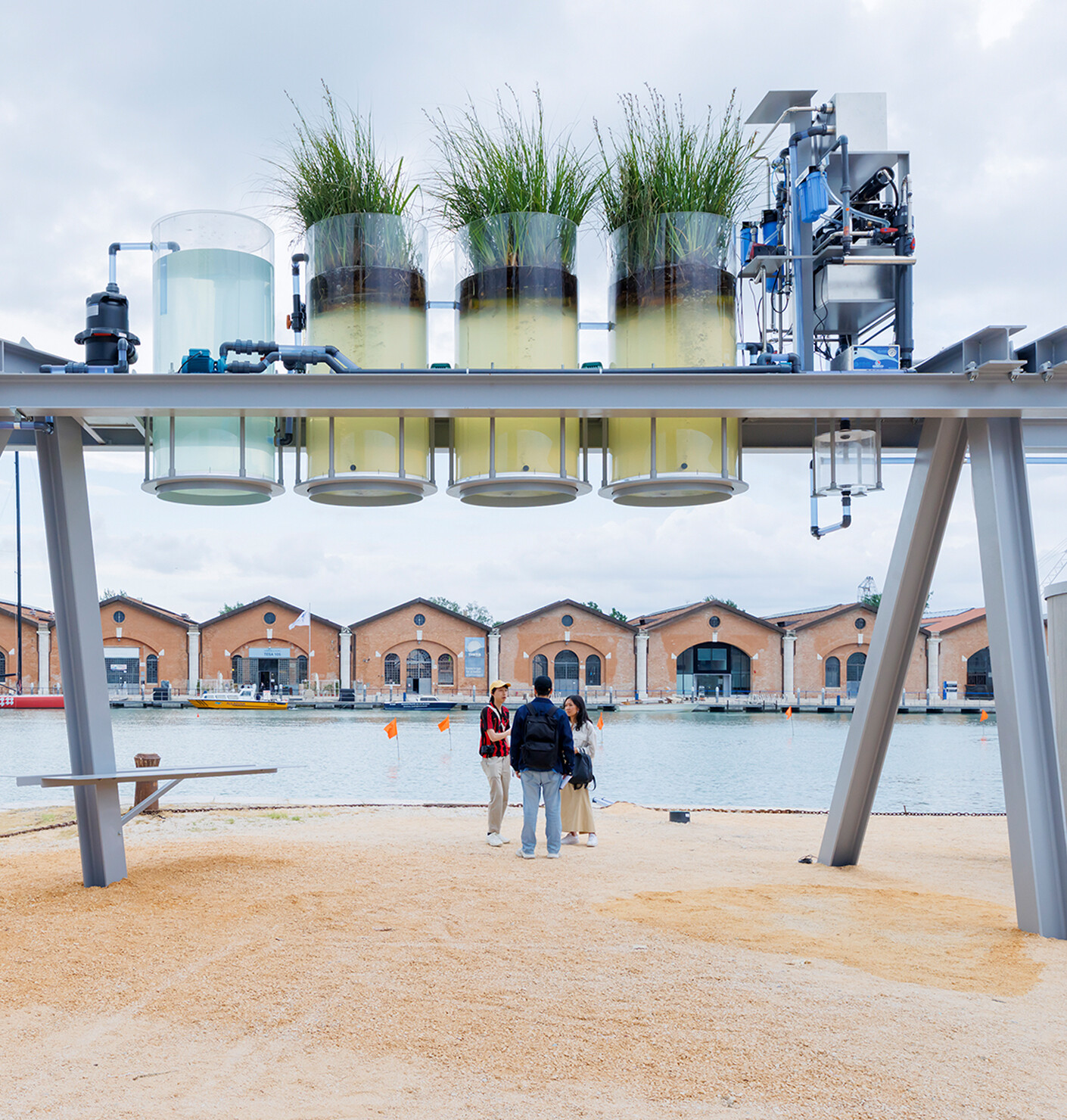
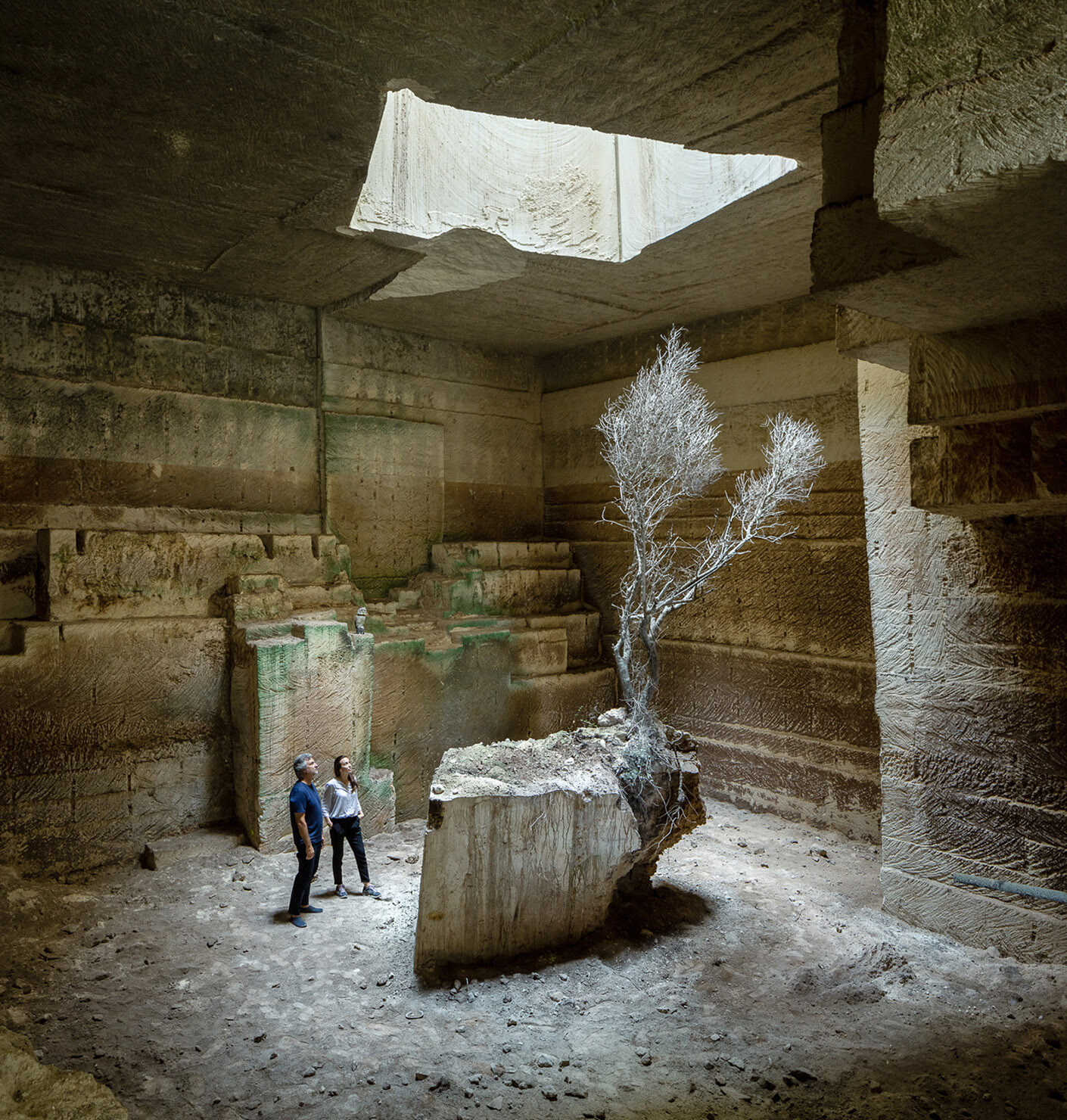
Enric Ruiz Geli: The Biennale is the moment when all disciplines come together. Every two years, it becomes the scene of a joint manifesto – not the conclusion of a project, but its public statement. At its heart is a clear message: Venice needs bees. Their pollination strengthens the islands of the lagoon and makes them more resilient to the effects of global warming. The citizens of Venice transported the bees by boat from island to island as active designers of an ecological system. This targeted intervention in natural processes is now considered a form of geoengineering: the use of human ideas and technologies to support natural processes. Together with Virginia Tech Honors College and supported by industry partner USM, Cloud 9 implemented this approach for the first time in a pavilion-like installation at the Biennale. For the first time, students were not only part of an academic accompanying programme, but also designed a contribution to the professional exhibition series themselves. The installation is now travelling to places that are particularly affected by the climate crisis – such as New York, the Hamptons and other coastal regions. There, it aims not only to raise awareness, but also to spark concrete discussions. Local communities will have the opportunity to come together in symposia to discuss solutions and future scenarios for their threatened coastlines.
The forms of your buildings are always extraordinary – futuristic and organic at the same time. You yourself come from Figueres, a Catalan city closely associated with the work of Salvador Dalí. Added to this is your intense engagement with philosophical questions. Has this shaped your search for your own distinctive form of expression?
Enric Ruiz Geli: Thank you for bringing that up. We see ourselves as architects operating globally, but at the same time we have strong local roots. The Mediterranean, Figueres and Cadaqués are my roots. Everything to do with the sea and Mediterranean culture, from cuisine to art, music to literature, is extremely inspiring to me. In the early years of my studio, I read a lot about how Salvador Dalí talked about physics and science. I found this poetic, surrealist madness, this productive indeterminacy, fascinating. Dalí could be extremely precise in quantum physics and at the same time remain dreamy and blurred in his paintings. I believe this dual quality can also be found in the work of Cloud 9: on the one hand, the precise handling of data, materiality and decarbonisation – scientific, performative, data-driven. On the other hand, an openness, a lightness, what I call the poetic soft: dreamy, cultural, full of light, optimism and embrace. For me, duality is fundamental. In my doctoral dissertation, we talk about exactly that: the data particles of our technology and performance, the biological particles of nature and the poetic particles of our words, concepts, light and cultural moments. Together, these three levels embody the work of Cloud 9.
You are also realising an architectural cultural centre there – a key project within the master plan for redesigning the transport system. Back in 2010, you took part in the Audi Urban Future Award, curated by Stylepark, under the motto ‘Building a Vision for 2030’. The aim was to develop new approaches to mobility, architecture and urban development. How do you assess your vision at that time today – and what can be derived from it for the present?
Enric Ruiz Geli: The city is currently in a decisive phase: the concepts developed in 2010 can now, in 2030, actually be implemented. The master plan covers all forms of urban mobility from cycling and walking to high-speed trains and cars to public transport. This interplay of different forms of mobility will shape the future of urban life. The vision has been with us for 20 years. However, such mobility requires clear landmarks along the way.
One of these hubs will be the architectural cultural centre we call ME WE Foundation. It will house our studio's archive, as well as works and materials by other artists: Bob Wilson, Frederic Amat, Salvador Dalí, Ryoji Ikeda, Barangay, and contributions from various disciplines, including thinkers such as Jeremy Rifkin. The building will be a repository for the manifestos that accompany the new mobility intellectually and culturally. Thanks to the impetus provided by the Audi Urban Future Award and Stylepark as curator, we now have the opportunity to realise much of what was started back then over the next three to four years. Our earlier exhibition in Venice, which dealt with an empathetic civilisation and cooperation with local communities, is now also being translated into concrete planning.
You also work with lighting manufacturer iGuzzini. What is important to you in this context and in general when it comes to building bridges to design?
Enric Ruiz Geli: We draw on three key areas of knowledge. The first is culture: the Mediterranean way of life, its poetry, its artistic traditions. These shape our perspective and provide a continuous source of inspiration. The second area is nature – how it works, the biology of photosynthesis, but also the findings of quantum physics. These show us how precise and at the same time poetic natural processes are. The third area deals with how technology can further develop our relationship with nature. How do we create new realities that are in harmony with natural processes? The interplay of artificial and natural light is particularly fascinating in this context.
Today, design is no longer about simple opposites, not black or white, not one or zero. It is about symbiotic interaction. Energy, light, data – these are all waves that we design and translate into spaces via our devices. What began with individual product designs has now led us to museum projects on artificial life. And the development continues: future projects could deal even more intensively with natural waves, sound waves or data waves such as Wi-Fi. This is giving rise to a new, hybrid industry. I consider partners such as iGuzzini to be crucial in this process. I see myself as an ambassador for this global movement, and I am proud to witness the development of this industry, from early experiments with plastics to working with glass, luminaires and LEDs, and finally to a future in which sensor technology and light become intelligent elements of architecture.
What is the last thing you learned from nature?
Enric Ruiz Geli: Today, it is increasingly assumed that trees have their own form of intelligence. They register the direction of the wind, when the day begins, where the water flows and where the soil is contaminated with salt or pollutants. They react to the species of birds that nest in their branches and orient themselves to the lunar cycle as well as the salinity of the air. Trees are highly sensitive organisms and astonishingly knowledgeable. In recent months, I have also learned that there are special cells at the tips of the roots that determine the morphology of the tree. While the human form develops over centuries, plants adapt their shape within a few months. Within five months, they actively change their growth direction, structure and even their composition. These cells are not neurons, which is why, from a classical scientific perspective, they would not be considered capable of thought. But from a biological point of view, they perform a similar function: they generate electrical impulses that are transmitted to the DNA and trigger changes in size, shape and structure. In a botanical sense, they make decisions. Although plants do not have brains, they do exhibit a form of intelligence. These root cells do not think like humans do, but they analyse their environment, respond to stimuli and actively adapt. Research by Stefano Mancuso has shown that these cells read signals from their environment and make ‘intelligent’ decisions based on them.