A boost for young trees
Anna Moldenhauer: Why did you choose the topic of circular deep irrigation?
Lennard Ludig: My motivation for this project stems from the intersection of my practical experience and training in design. During my seven years working in tree care, I encountered the real challenges of urban spaces daily. I regularly faced the task of removing dead young trees and tree-support structures that had ultimately failed. This made it very clear to me that existing systems simply do not function optimally, and that urgent improvements are needed in this area. As someone who has always been passionate about biology and appreciates trees as fascinating organisms, and who is deeply committed to bringing more living greenery into our cities, I wanted to start here. My studies in industrial and material design provided me with the perfect tools to bridge these worlds. This has enabled me to translate my practical biological observations directly into a targeted material concept. In my view, this entire sector still holds enormous, as yet completely untapped, potential for innovation. There are hardly any circular solutions that truly integrate functional design with ecological necessity.
What are the current challenges when it comes to watering new plantings in urban areas?
Lennard Ludig: Current irrigation systems have fundamental shortcomings in terms of resource use and biological impact. Firstly, the material costs are enormous: traditional designs, such as the three-legged stand, consume valuable wood, while common plastic watering rings are usually thrown away immediately after the short growth phase. At the same time, water use is extremely inefficient. During the increasingly hot summer months, frequent rewatering is required, placing a significant logistical and financial burden on municipalities as the water often evaporates from the surface or seeps away unused.
However, the most critical problem is the improper conditioning of the plants caused by surface-level systems such as watering bags. The tree becomes conditioned to find water only at the surface and, as a result, develops a very shallow root system. The vital deep roots are completely absent. Consequently, the tree remains in a state of permanent dependence. True climate resilience can only be achieved through autonomy, when the tree is able to sustain itself in the long term by drawing water from deep soil layers. The consequences of this shallow rooting are disastrous and costly: without proper care, trees suffer immediately from drought stress, become diseased or die, requiring extensive remedial work. In addition, the shallow roots cause significant damage to pavements and roads, further increasing urban infrastructure costs.
What is the approach to optimizing these?
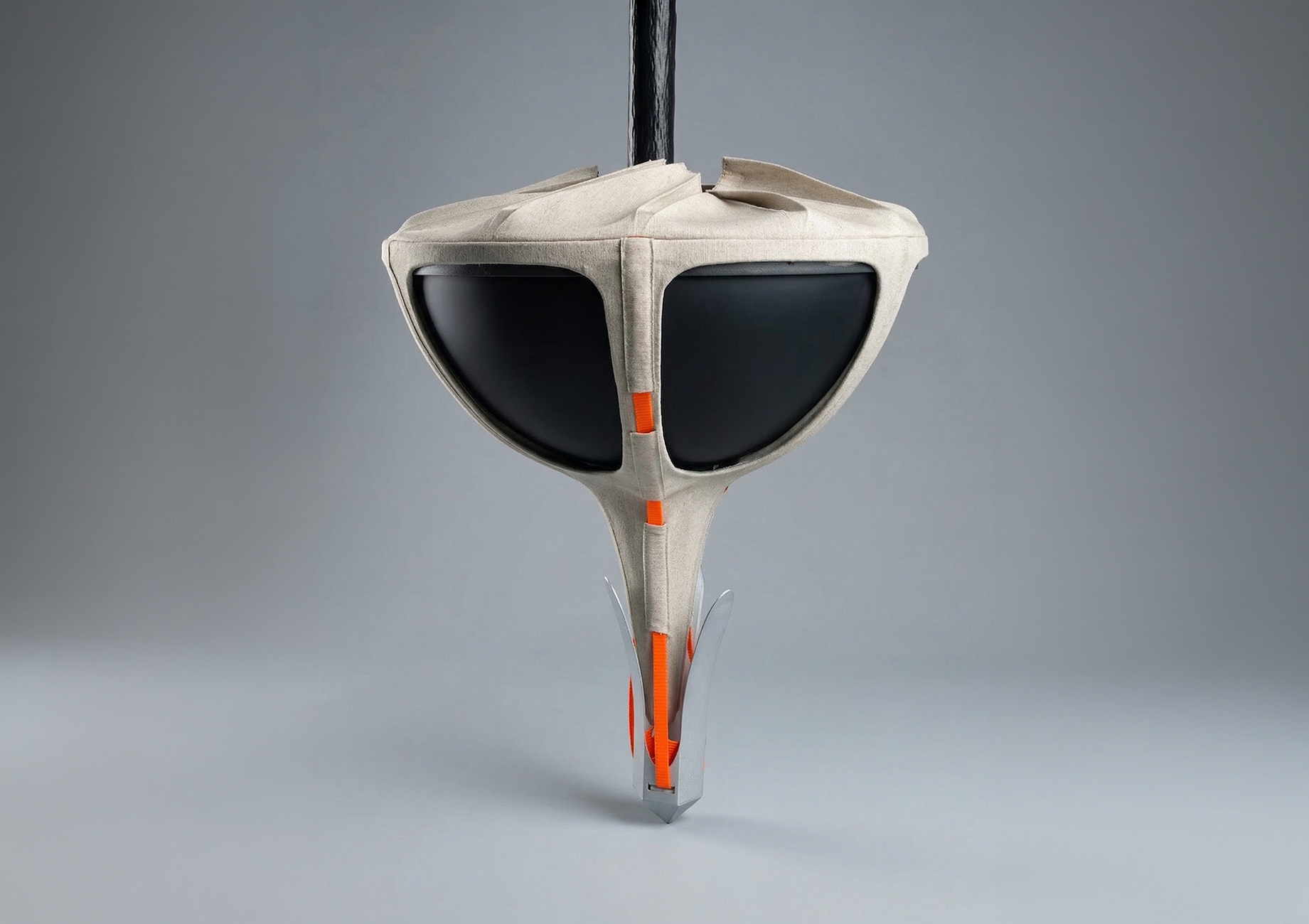
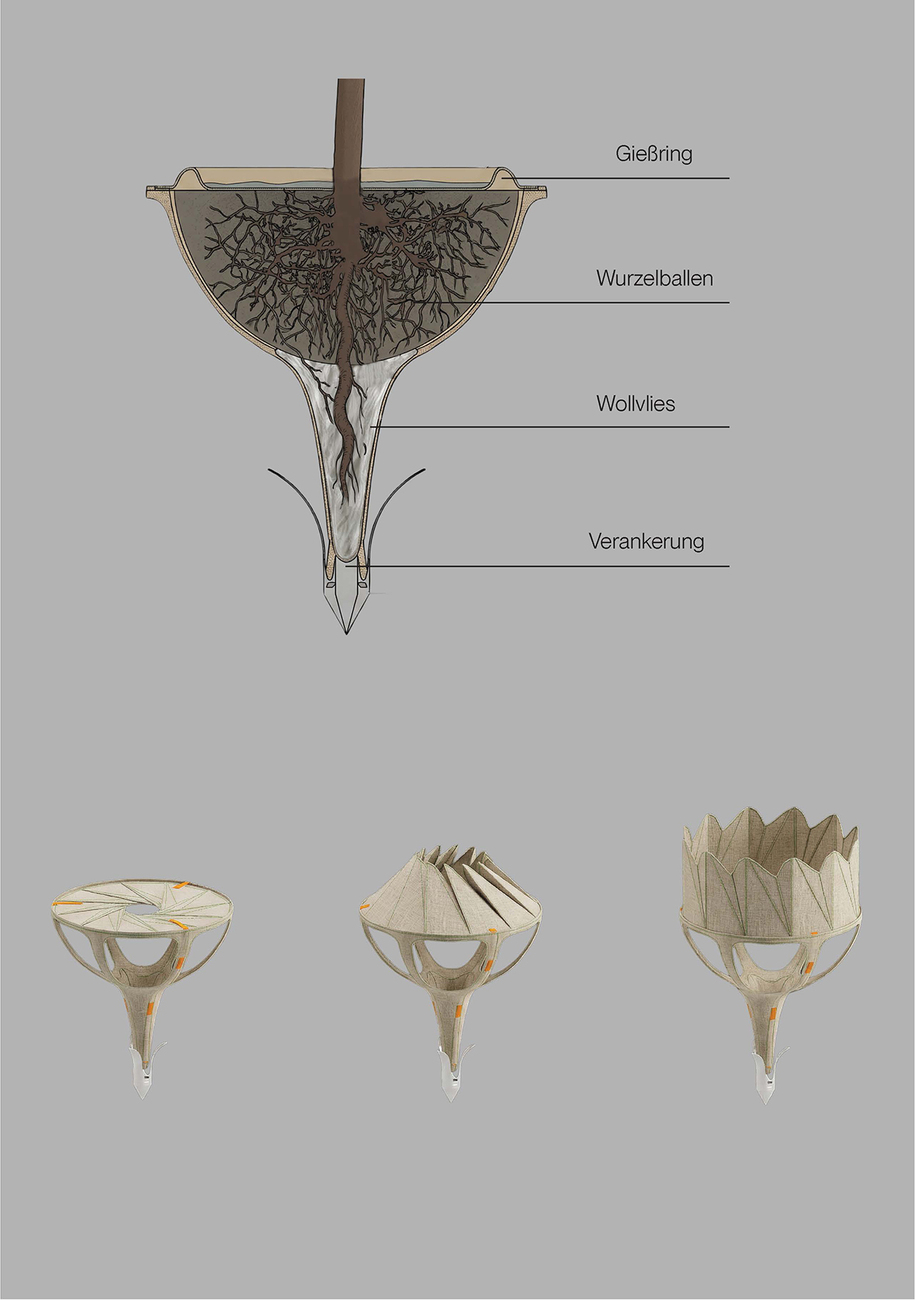
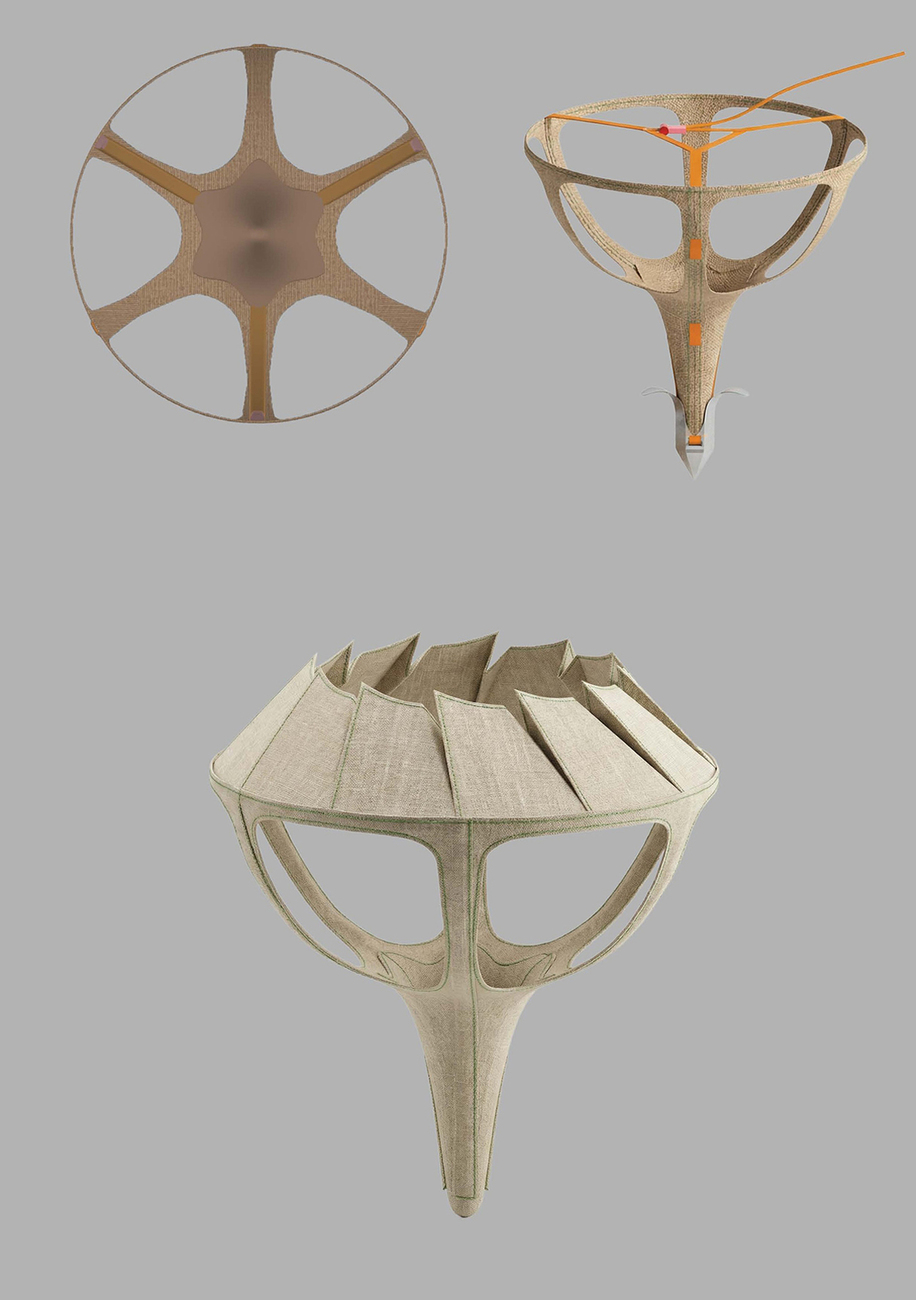
Lennard Ludig: The approach moves away from rigid plastics toward an adaptive, textile-based material concept. At its core, the system consists of tear-resistant hemp fibers that are stabilized by a coating of lignin, a type of biopolymer. This coating also makes the fabric waterproof, though it is applied specifically only in those areas where waterproofing is necessary. This fabric structure directs the irrigation water specifically past the root ball – the dense network of soil and existing roots – into a reservoir located deeper down.
This reservoir is designed as a funnel situated directly beneath the root ball. It is made from absorbent sheep’s wool, which is a byproduct of industrial production. Since the water is now stored in this funnel, it stimulates the roots to grow deeper. The wool functions not only as a sponge but also as a natural habitat that promotes mycorrhizal fungi and essential soil microorganisms. As the material decomposes, it continuously releases nutrients such as nitrogen to the tree – unlike conventional synthetic fertilizers, which leach out quickly.
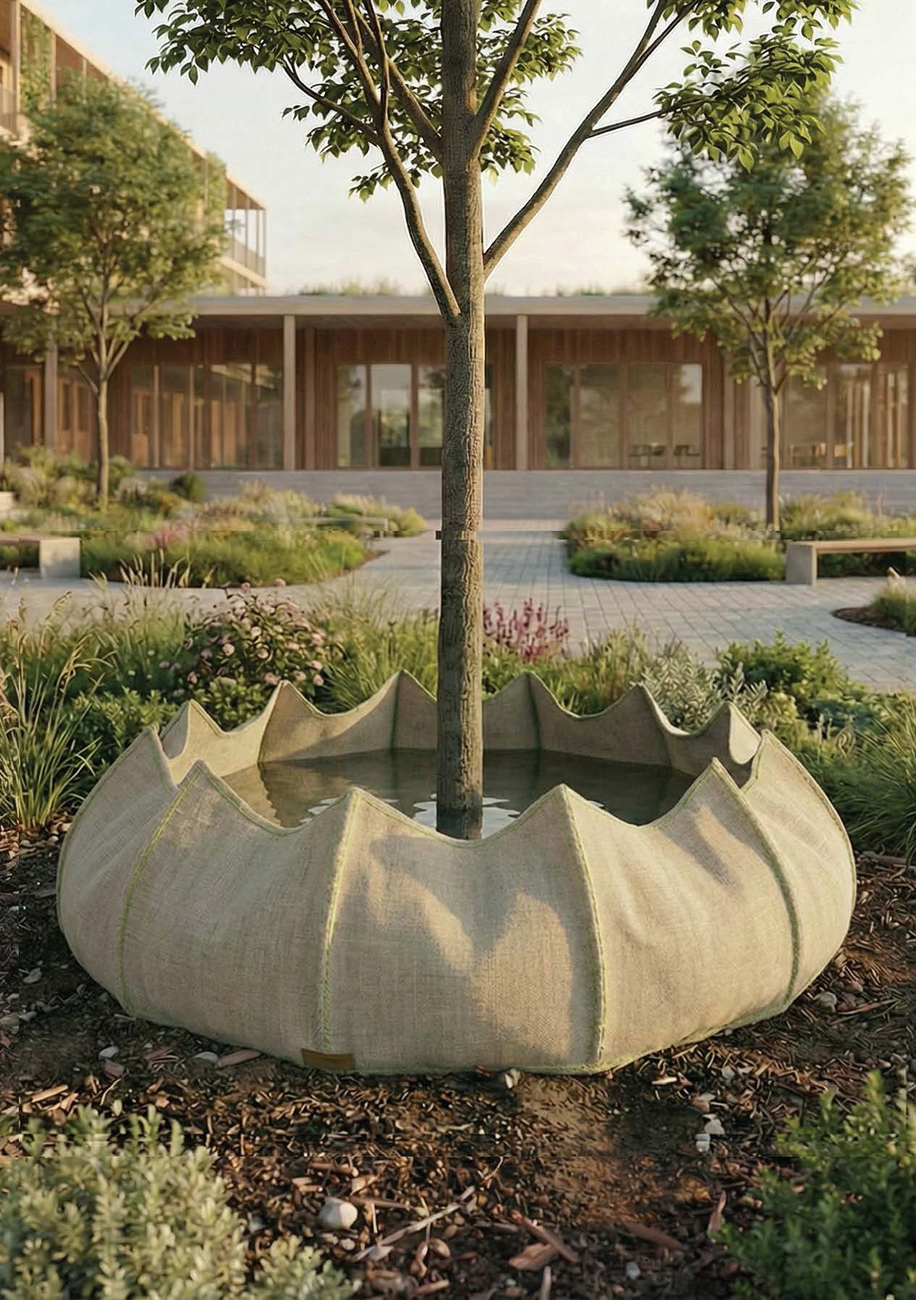
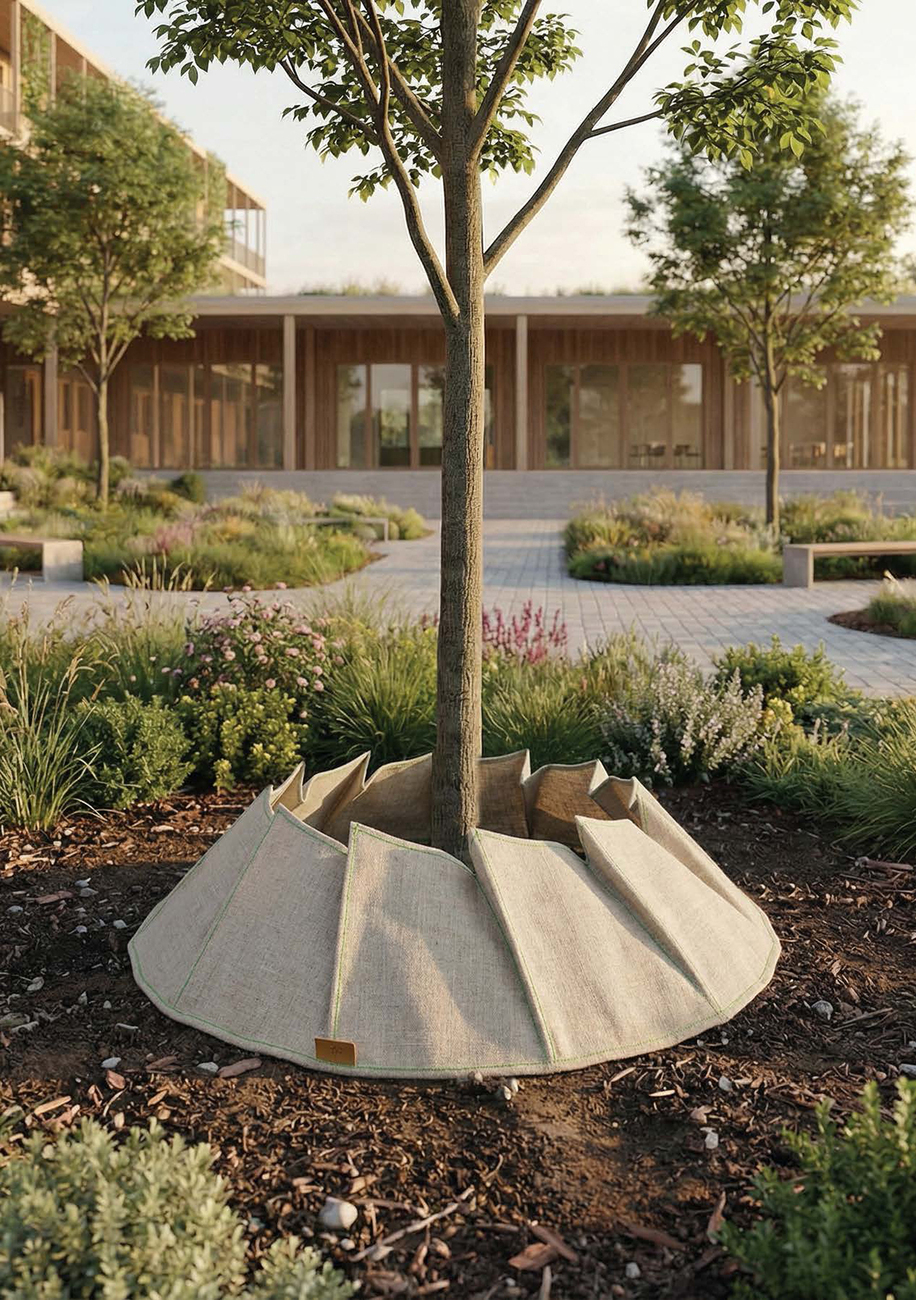
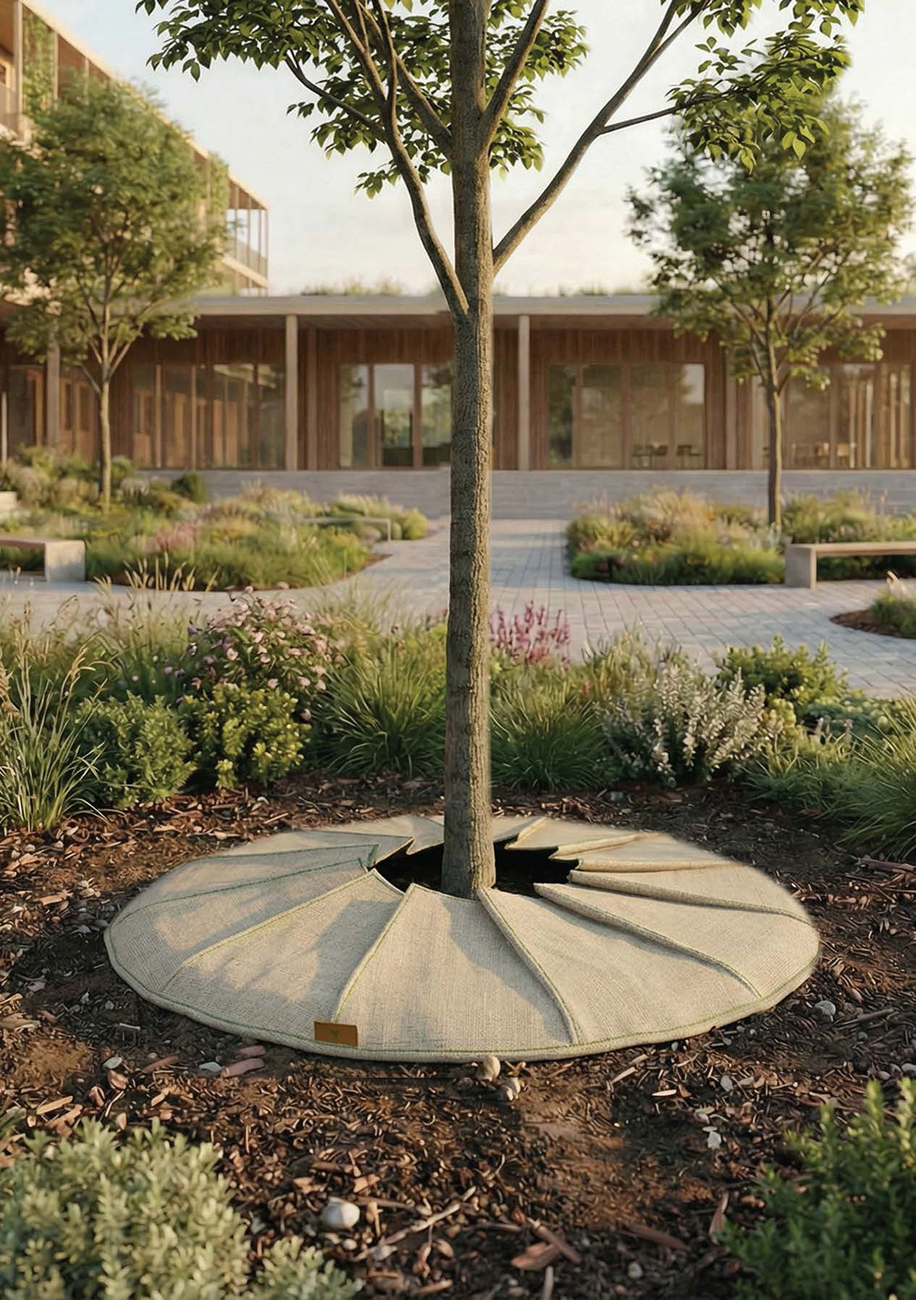
The second core element is the radially pleated watering ring on the surface. When watering, this ring stands upright and collects large amounts of water. Once the water has seeped away, the fabric lies flat on the ground. Rising moisture condenses on the underside and is retained in the soil. This minimizes evaporation and reduces the frequency of watering required by municipalities.
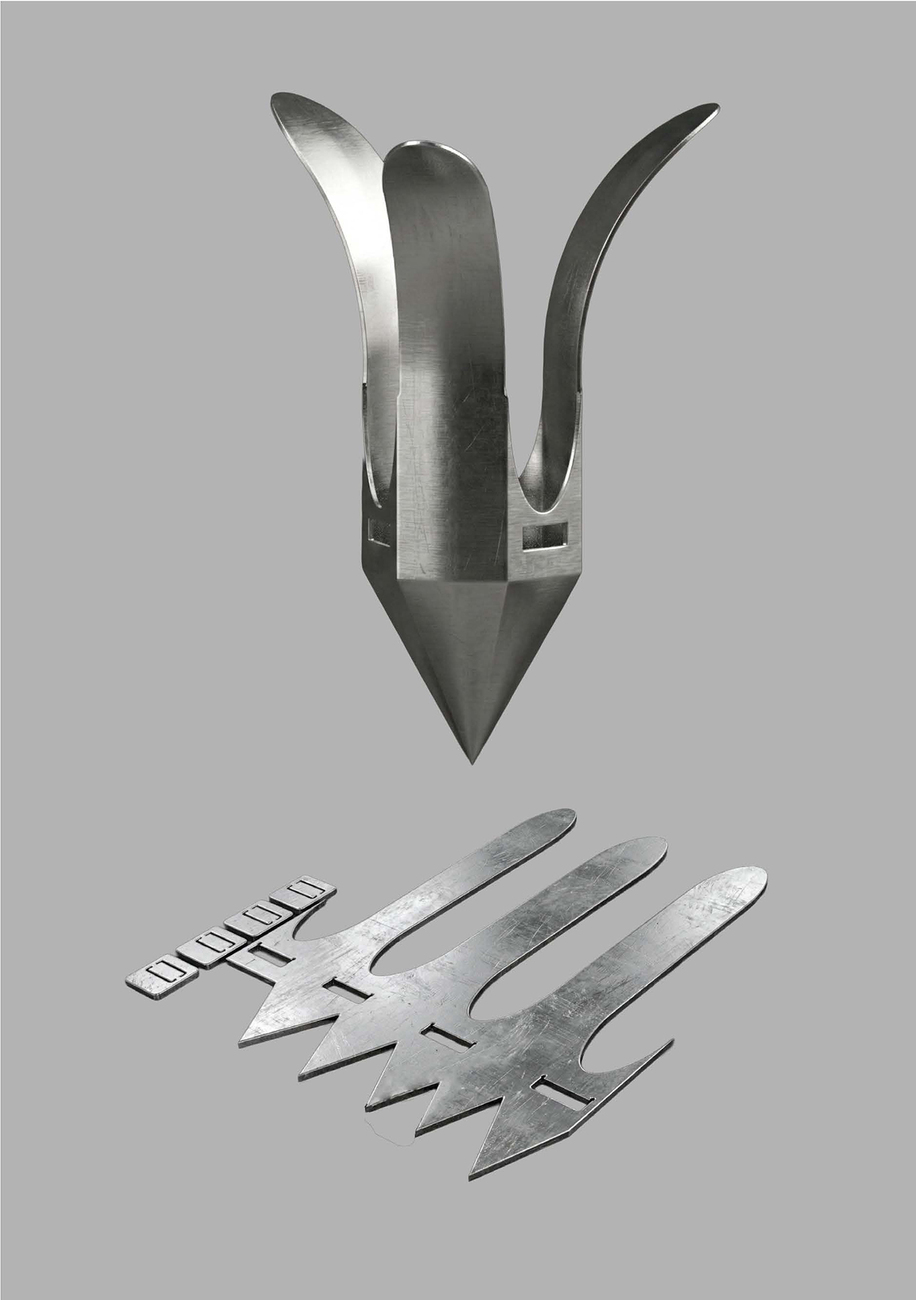
The third and final element is the so-called underground anchorage at the lowest point of the structure, which securely anchors the tree in the ground. Its shape and mechanism are reminiscent of an expansion anchor. It consists of untreated metal that, over time, rusts completely into the soil, releasing only harmless iron oxide instead of harmful substances. This invisible method of stabilization is essential for the tree’s development: Traditional above-ground supports, such as a tripod, restrict the trunk’s movement too much, resulting in a lack of important mechanical stimuli. Thanks to the underground anchoring, the tree remains exposed to the natural tensile forces of the wind. This acts like targeted training or a muscle memory effect: Only when the tree feels these resistances does it develop the necessary reaction wood, hardens in response to wind conditions, and thus learns to support itself permanently.
What role does the “design to decay” principle play in this?
Lennard Ludig: For this project, “Design to Decay” means understanding transience as a functional quality. Conventional irrigation aids and tree supports often remain in the environment as permanent waste or must be dismantled after a few years in a complex and labor-intensive process. Traditional wooden stakes used for stabilization, in particular, are frequently treated with preservatives and must even be disposed of as hazardous waste after use.
My system is designed as a temporary starter aid. It is intended to remain in place for exactly as long as the young tree needs to establish itself in its new location and access deeper soil layers. Once this phase is complete, the biological components–hemp, wool, and lignin–decompose without leaving any residue. This controlled decomposition eliminates all dismantling costs for local authorities: No additional trips by maintenance crews are required for dismantling, and no waste is generated that would need to be disposed of at great expense.
This decomposition process leaves no waste behind; rather, it sustainably improves the local soil structure through the release of nutrients and the formation of humus. The support structure intentionally disappears as soon as its function is fulfilled and is completely reabsorbed into the natural cycle.
Could the concept be expanded to include sensors that measure the water content in the soil?
Lennard Ludig: In principle, there’s absolutely no reason against it, and such an expansion would certainly be technically feasible. Knowing exactly when a tree needs water offers enormous advantages for tree care. Accordingly, there are already numerous companies and research projects that are testing and further developing various sensor technologies on a large scale.
For this project, however, sensor technology was deliberately not a central research question. For one thing, there are already functioning solutions in this area that could potentially be built upon. For another, smart technology always involves a certain cost and additional effort. Especially in the case of large-scale urban tree planting projects, it would be necessary to evaluate very carefully in advance whether this additional financial and technological investment is truly proportionate to the concrete added value it provides in day-to-day maintenance.
According to the Federal Environment Agency, about 45 percent of urban and transportation areas in Germany are currently impervious. From the perspective of tree care, how does this affect the water balance of urban trees?
Lennard Ludig: Soil sealing is arguably the most critical problem facing urban green spaces. If it weren’t so widespread, caring for trees in cities would be much easier. The lack of water infiltration is only one aspect of the problem; the severely compromised quality of the soil is equally serious. Urban soils often suffer from a severe lack of microorganisms and are frequently contaminated by pollutants or historical contamination sites. These conditions can vary greatly – in some cases, the level of toxic contamination can change from one street to the next. This makes choosing appropriate plants for a specific location immensely difficult, as it requires determining in advance whether an oak or a linden tree, for example, is more likely to thrive there. Another essential factor that is often overlooked is the oxygen requirements of the roots. While forest soils are naturally aerated by loose structures and animal activity, soil beneath sealed urban surfaces is literally sealed off. Gas exchange is so restricted that artificial ventilation systems must sometimes be installed to enable plants to survive.
Trees are often kept alive only through enormous technical effort due to urban planning that prioritises functional, easy-to-clean, low-maintenance spaces over green spaces. This approach leads to a long string of follow-up costs, which is particularly evident in infrastructure damage. Since water hardly seeps through the pavement anymore, trees seek out alternative sources. Rising ground moisture condenses directly on the underside of the asphalt or paving stones as it cannot escape. The roots grow specifically into these shallow gaps to reach the condensation. The result is significant damage and cracking of road surfaces.
Why is circular deep irrigation more suitable than water bags or the “sponge city” principle?
Lennard Ludig: The concept is intended to complement the 'sponge city' model, not compete with it. Unsealing urban soil is essential for trees to survive in the long term. In a complete concrete wasteland, even the best artificial irrigation systems have their limits. If the site is fundamentally unsuitable, a tree has virtually no chance of survival. This is why the 'Sponge City' principle is so important for urban planting. Conventional watering bags also need to be considered on a case-by-case basis. They certainly have their place for older trees that suffer from severe drought stress in the summer. For new plantings, however, the system is often not optimal. Although the water drips out over eight to twelve hours, it often does not seep deep enough into the soil. Instead, a large portion evaporates directly from the surface.
Furthermore, the bags lie directly against the trunk, creating constant moisture there. This is particularly dangerous for young trees, which are weakened and vulnerable after being planted. In this damp environment, fungi develop quickly and the trunk begins to rot – a condition that many trees do not survive. At the same time, the bark is constantly shaded, preventing the tree from developing natural UV protection. Lastly, the bags are made of plastic. They often remain on the trees for a long time, gradually breaking down and leaving avoidable plastic waste in the soil.
What would it take for “Ephemera:rbol” to evolve from a prototype into a widely used system on a large scale?
Lennard Ludig: The project is currently funded by the Hessen Ideas Grant. In collaboration with my fellow student Amelie Mattas, who has developed a complementary concept for providing immediate shade to young trees, the project is currently in its early stages of development. With the upcoming six-month grant, the goal is now to make the transition from a theoretical concept to real-world application.
To implement the system on a larger scale in the long term, an intensive evaluation and research phase is first on the agenda. To this end, we will deepen our collaboration with experts – such as those in biology – and actively seek out project partners. A key aspect of this is production optimization. The design must be adapted so that it can be manufactured easily and reliably meets all structural requirements.
The most important next step, however, is practical testing. The goal is to build functional prototypes and conduct initial real-world test plantings using the system. This phase is crucial for gathering concrete results: Does the concept actually measurably increase the chances of successful establishment, and what unforeseen challenges might still arise in the soil? To quickly address these questions and continuously improve the design, direct dialogue with potential customers – such as tree nurseries, tree care companies, and local governments – will now be sought in the near future. This direct feedback from the field will enable the system to be evaluated swiftly and prepared for widespread implementation.
What opportunities do you see for young designers in participating in awards for emerging talent, such as the Circular Design Award?
Lennard Ludig: Awards in the field of circular design provide an essential platform for bringing sustainable concepts to a broad public and a specialist audience. They create valuable connections to experts, potential collaboration partners, and networks that are indispensable for the further development of innovative ideas.
In addition to the important visibility they provide, the financial aspect plays a decisive role. Prize money offers a direct opportunity to continue funding projects and to take the crucial step from theory to real-world application. At the same time, this financial reward represents an enormous recognition of the design work accomplished. It sparks new enthusiasm and encourages designers to continue pursuing their chosen path. Furthermore, such an award demonstrates that sustainable concepts are not only valuable from an idealistic standpoint but also generate real, tangible added value for society and the designers themselves – value that can be leveraged for long-term professional success.
What do you think constitutes good design?
Lennard Ludig: Good design is characterised by the close integration of material-driven research and analysis of real-world application contexts. Design is rarely motivated purely by aesthetics; it is primarily derived from material-specific properties and intended function. A key feature is the focus on organic, renewable raw materials and the functional repurposing of waste materials.
Ultimately, this methodology aims to create objects that interact harmoniously with their environment. One example is the 'Design to Decay' principle, whereby an object reliably fulfils its temporary function and then dissolves into the biological cycle in a planned manner, leaving no residue behind. At the same time, the developed concepts must extend beyond unique handcrafted pieces and be suitable for mass production through scalability.
What is your goal for the coming years?
Lennard Ludig: The primary goal for the coming years is to consistently further develop solutions for urban tree planting. The preservation of trees in urban areas has become a central issue, given that up to 40 per cent of newly planted trees do not survive the first five years.
Winning the Circular Design Young Talent Award has been a major catalyst, validating our research to date and greatly boosting our motivation to address this issue. The focus is now on the practical implementation of these solutions. As a team, we are working intensively to bring the project to life, achieve market readiness and successfully launch the system.