SUSTAINABILITY
A shared language
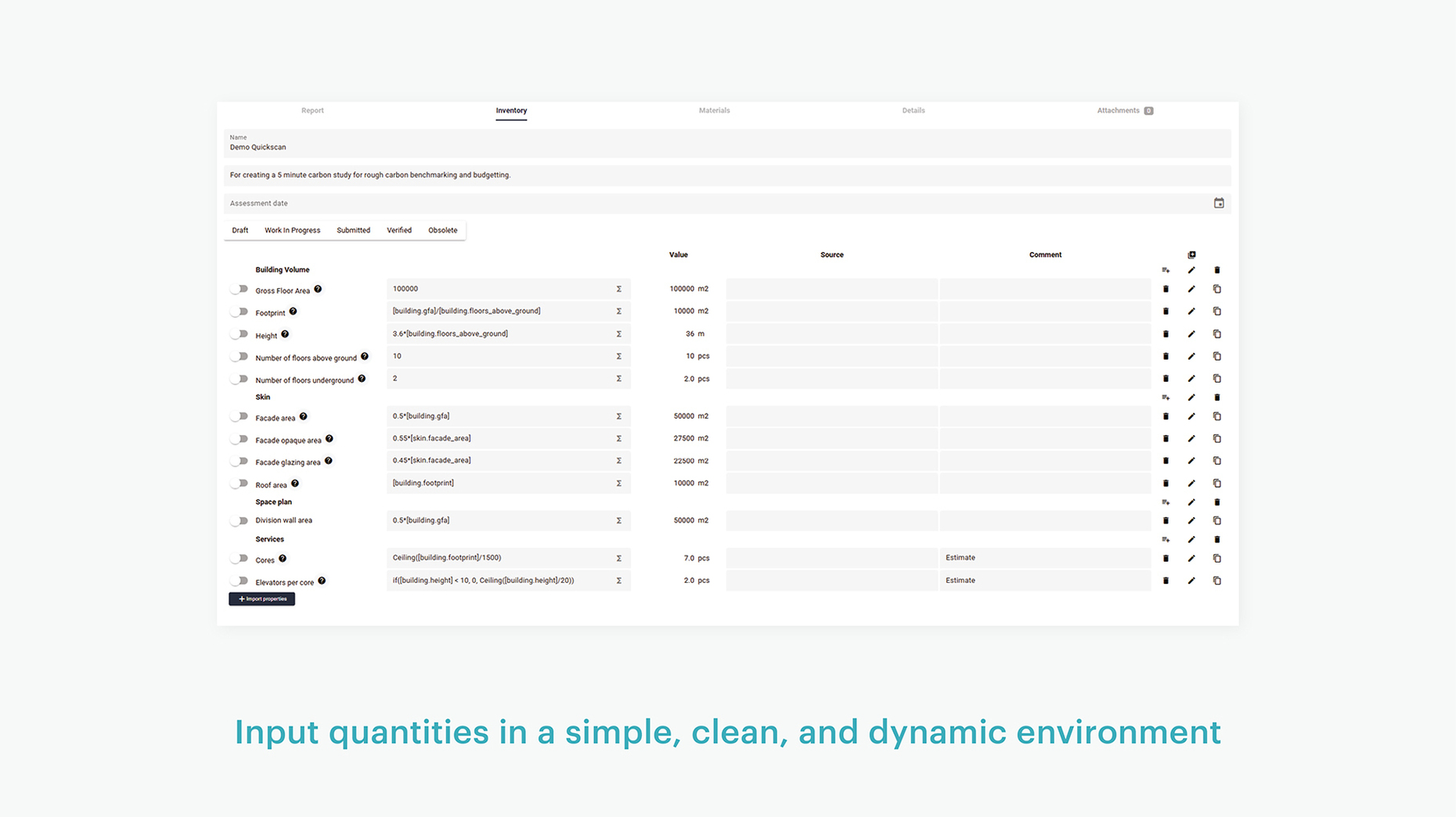
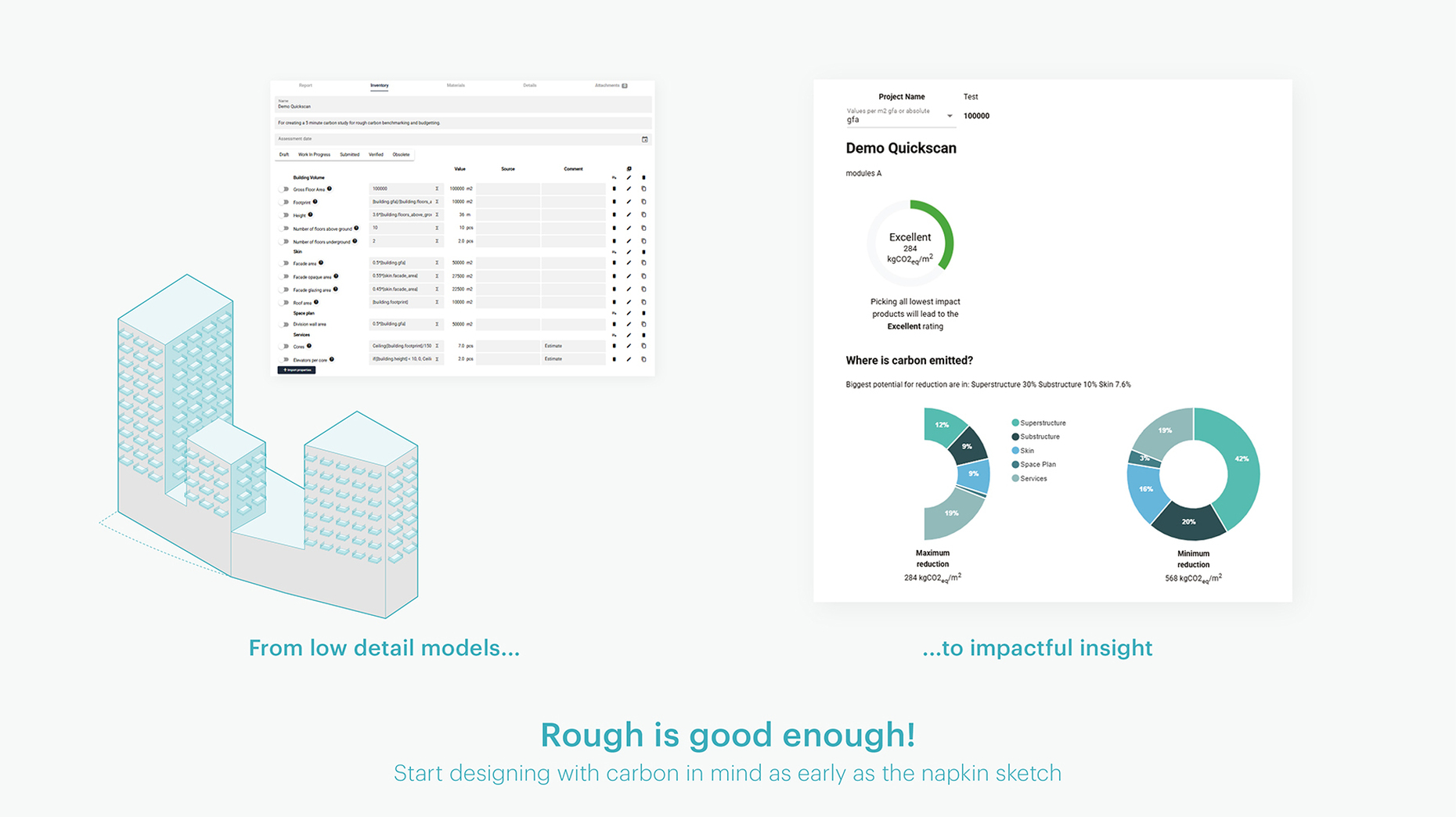
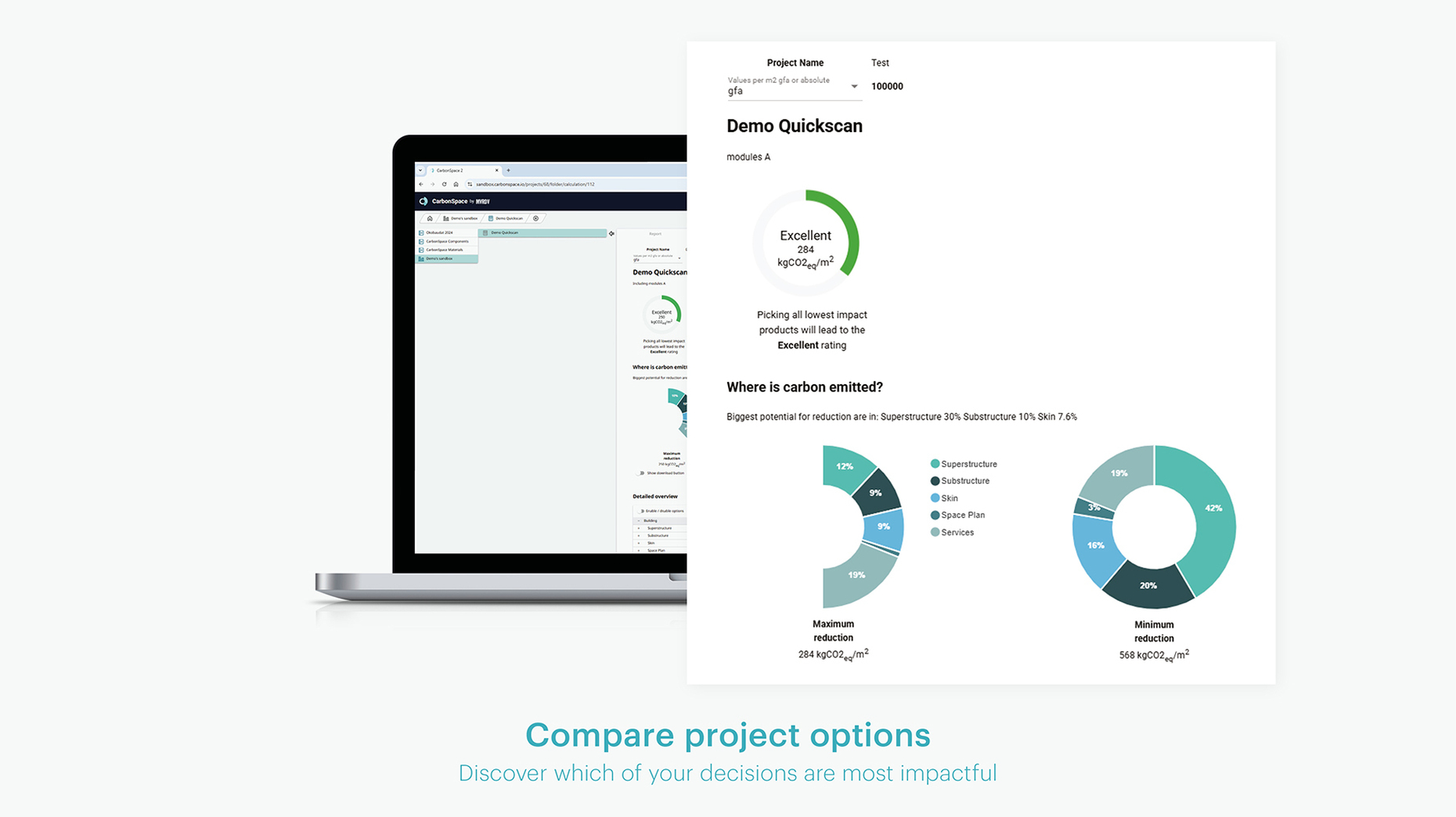
MVRDV has developed the CarbonSpace software for designers and is currently offering the beta version free of charge: Instead of focusing on detailed CO2 calculations at a late stage of the process, the tool is designed to be used from the very first sketch and provides immediate feedback on the CO2 impact of design decisions based on rough input data or simple rules of thumb. "CarbonSpace alone will not solve the climate crisis. But it will help architects plan with CO2 from the outset and make informed decisions,‘ says Sanne van der Burgh, head of MVRDV NEXT. ’We want to give designers the confidence to act without waiting for perfect data. More importantly, we want to create a common language for this so that we can work together, learn from each other and make better decisions as an industry."
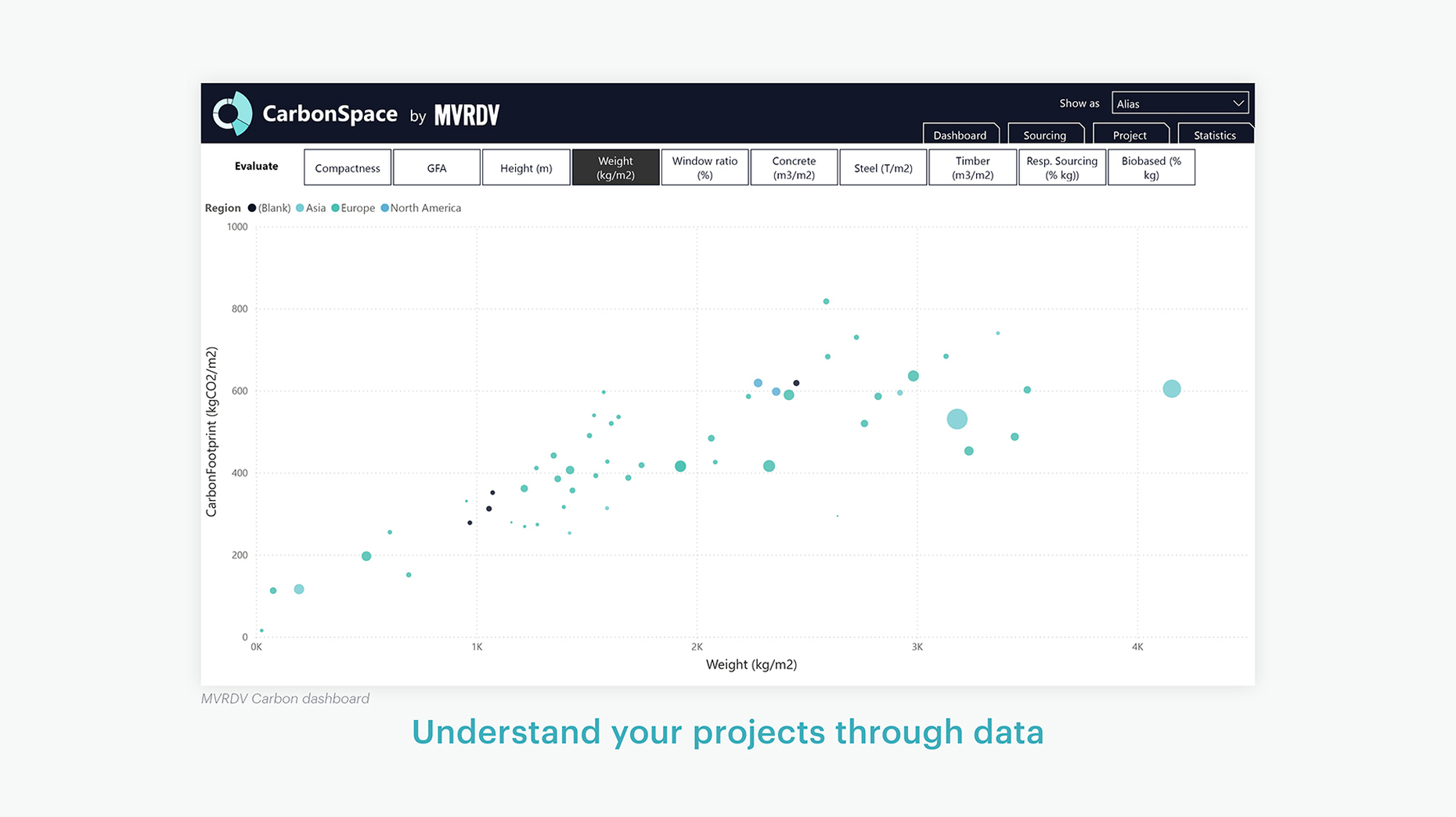
CarbonSpace combines quantity inputs such as floor and façade areas or the volume of a building's foundations with an optimised, internationally representative carbon database based on a simplified version of the open-source Ökobaudat database maintained by the German Federal Government. The tool also contains preset libraries of common components, materials and detailed constructions, enabling faster estimates for a wide range of project types. With this approach, CarbonSpace helps design teams understand how different systems, structures and materials affect a project's carbon footprint. At MVRDV, this process has already led to a focus on lightweight construction as the primary factor in the carbon footprint. It has also enabled MVRDV to steer projects through the design phase and raise the alarm when the original sustainability goals of the design were jeopardised by a series of compromises.
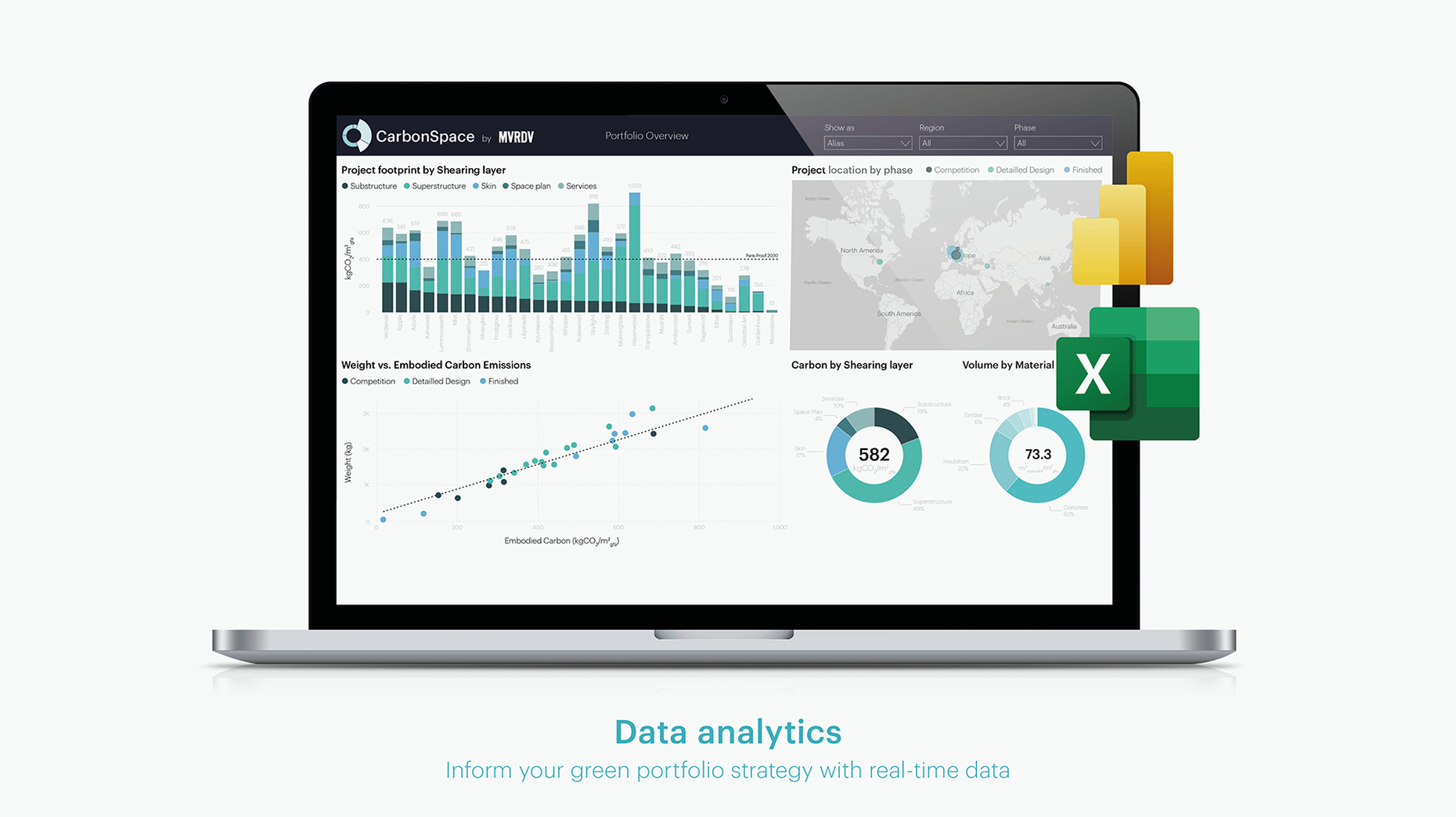
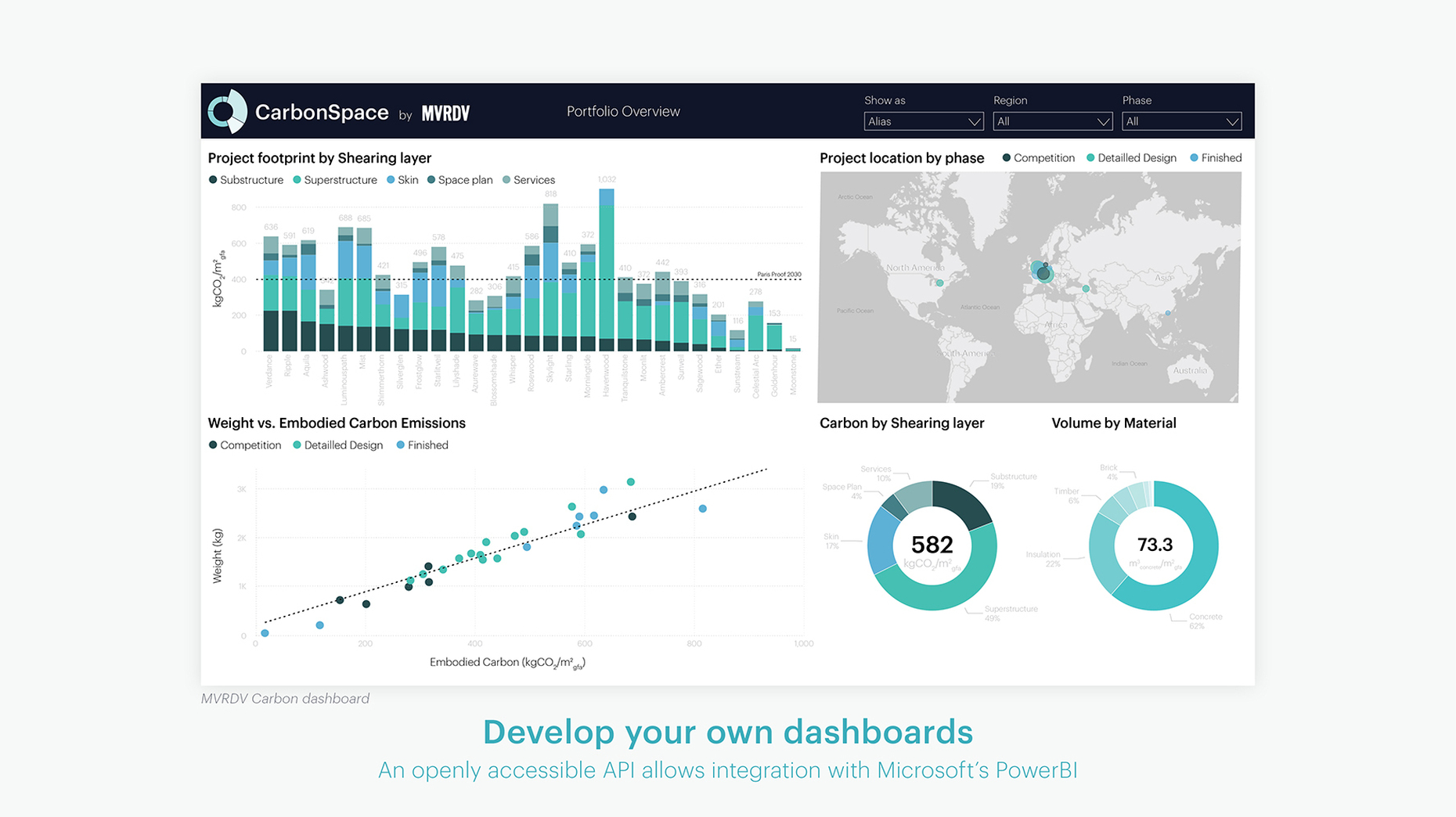
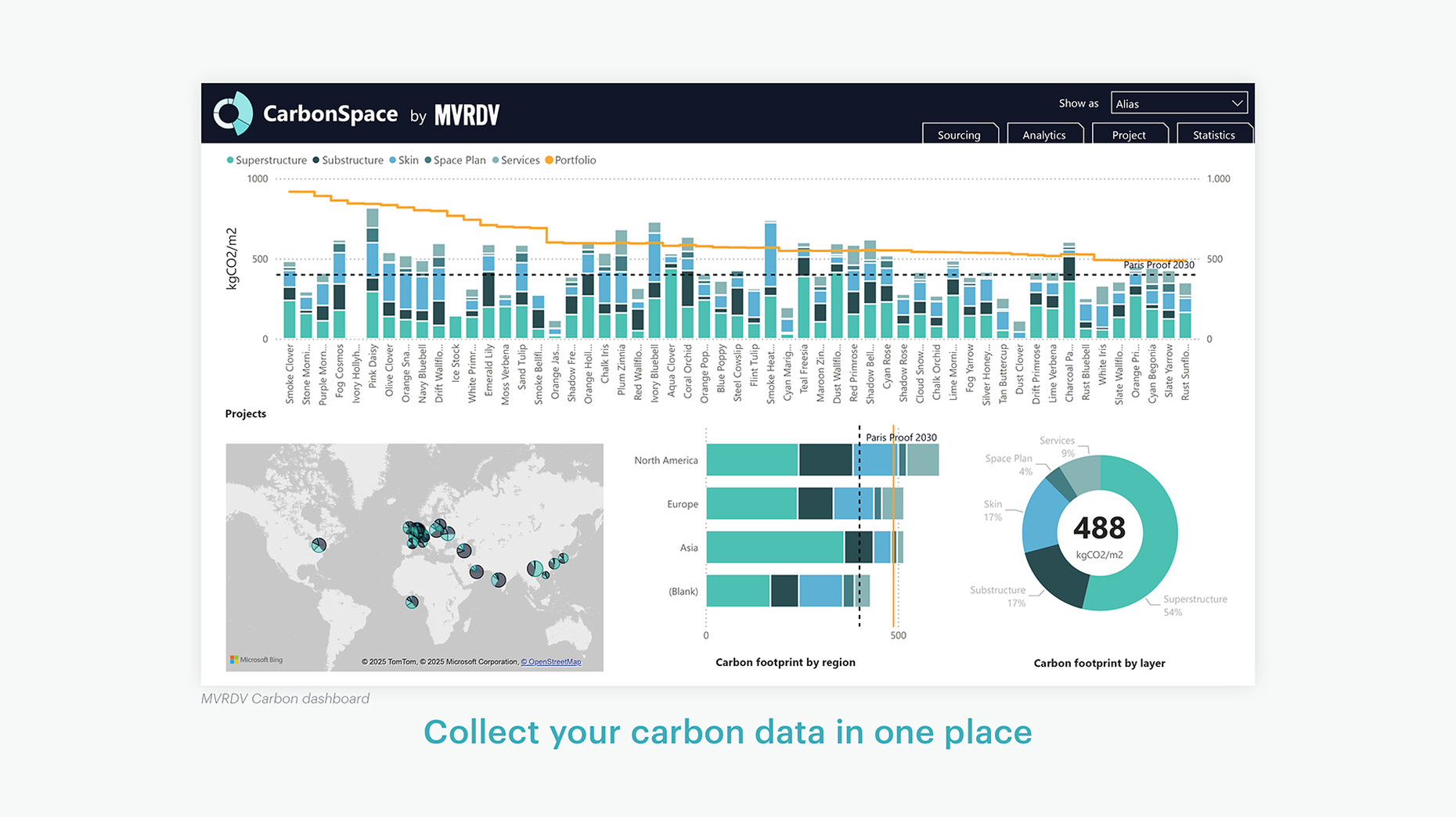
Thanks to an open programming interface, users can further enhance the performance of the current beta version of CarbonSpace. This allows the software to be connected to Rhino or Revit and data to be transferred to Microsoft's Power BI tool to create data visualisations. In the case of MVRDV, the latter function was used to create a dashboard that compares the CO2 emissions of all the company's projects and tracks the progress of the entire portfolio towards the 2030 climate targets. Similarly, other users can create their own dashboards to meet the specific needs of their organisation.
The software was created by the MVRDV NEXT research and development department in collaboration with Studio AvW. Following its launch, the software will be used in collaboration with the Council on Tall Buildings and Urban Habitat (CTBUH) to exchange building data and compare projects in the high-rise industry. ‘Our collaboration with MVRDV NEXT enables us to help shape the future of sustainable urban development through critical research and the dissemination of groundbreaking innovations,’ said Shonn Mills, Chairman of the CTBUH. He added: ‘As part of our 2026 sustainability initiative programme, CarbonSpace will help create a collaborative dashboard where professionals, scientists and industry leaders can come together to share building data and compare their projects with innovative practices in the high-rise industry.’
According to a press release from MVRDV, CarbonSpace complies with the provisions of the GDPR. Neither MVRDV nor other users have access to data or design information.