REVIEW – EuroCucina & Kitchen manufacturers at Milan Design Week
The kitchen's rejuvenation
Milan captivates time and time again. With its dilapidated backyards, green roof terraces and seemingly endless crowds of people eager to experience the visually stunning spectacle of Milan Design Week for themselves, it is easy to get lost in the city. This year, however, it seemed as if the entire industry was more than happy to lose itself in it. Milan answered the question raised in the run-up to the event: could the Salone del Mobile and EuroCucina biennial double bill, the leading international trade fair for furniture design, kitchens and architecture, hold its own and be worthwhile despite the ongoing slump in consumer spending and geopolitical tensions? The answer was a resounding yes, thanks to fearless self-promotion. Anyone who travelled to the Italian design metropolis as a sceptic is likely to have returned as a dreamer and visionary, perhaps even as a fan. Amidst secluded gardens, winding labyrinths and billowing balloon backdrops, Milan enveloped its visitors in a veritable bubble of enthusiasm and creative energy, offering ideas and inspiration on every street corner that were far from mainstream furniture.
Italian drama
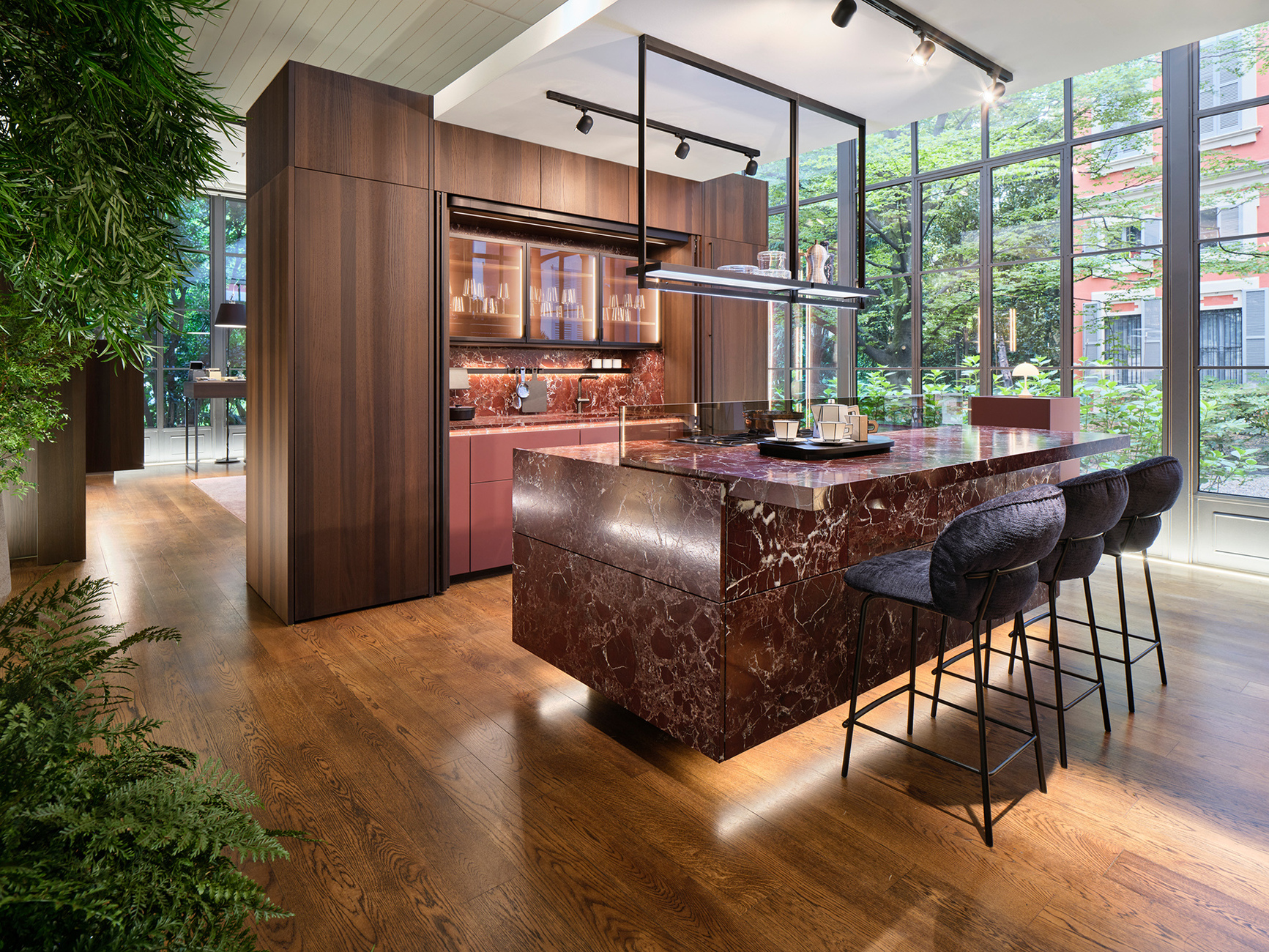
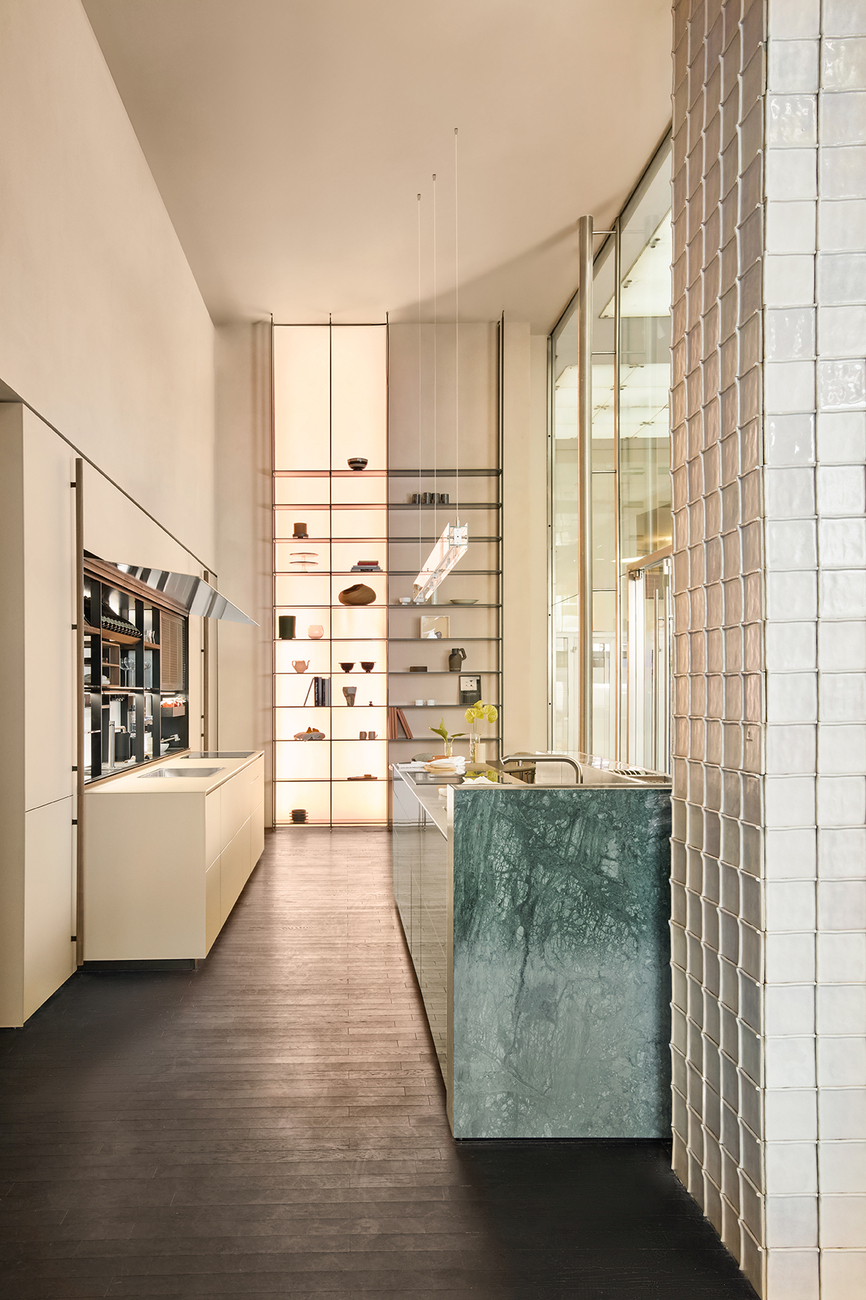
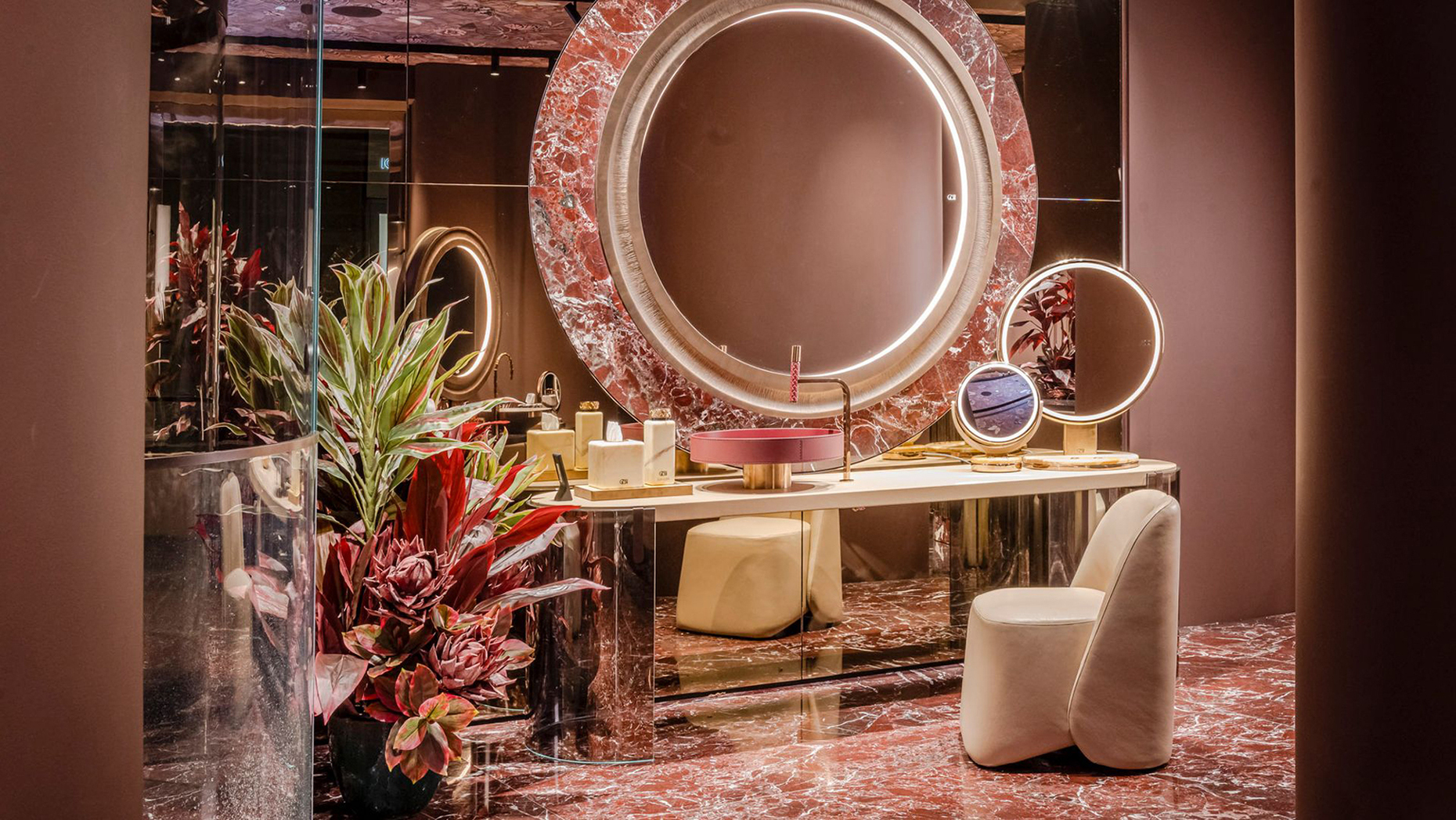
And so, in 2026, the German kitchen industry ventured out of its comfort zone for the first time. For example, the Baden-Württemberg-based manufacturer Leicht Küchen set up shop in the city centre for the first time. In the generously glazed orangery of the Museo Poldi Pezzoli, the elegant kitchen design featuring burgundy stone, lacquer and walnut offered a fresh perspective on the manufacturer's bespoke work. According to CEO Stefan Waldenmaier, this is part of the company's strategy to establish itself definitively in the interior design and complete fit-out segment. His attention to detail proves him right: virtually the entire exhibition was designed using the characteristic 'Rosso Lepanto', a deep red marble veined with white. This stone, which is quarried in Liguria (only about three hours from Milan), was used for the kitchen splashback, side panels and fronts, and even within the handle recess. This meticulously milled masterpiece was elevated to the level of Italian drama by the invisibly integrated light strips in vertical and horizontal designs.
Make an appearance
Ultimately, this trade fair is all about showcasing what could be, rather than what is. Milan wouldn't be Milan if everyone didn't exhibit a certain degree of self-aggrandisement. The German luxury appliance brand Gaggenau skilfully demonstrated this at EuroCucina. For the third time, the manufacturer presented itself in a setting that was both minimalist and elaborate in the garden of Villa Necchi, thereby driving its own evolution forward. Following previous installations such as 'A Statement of Form' (2022) and 'The Elevation of Gravity' (2024), Gaggenau arrived at the simple slogan 'Presence' in 2026. Set amidst an atrium of light-coloured concrete columns, stepped travertine and glass, the oven from the “Gaggenau Expressive Series” stood enthroned at the front of the temple-like showroom, exuding a tremendous force of precision and desire as a solitary statement. The orange cone of light that backlit the structure mimicked the rising sun that users see on the display when using their appliance; this is intended to signal the progress of the food being cooked.
The Munich-based creative studio 1zu33, responsible for the installation, also considered a similar fusion of appliance and spatial architecture for the products of the 'Minimalistic Series', albeit as a more subdued presence in a recess of the pavilion. Within a cube featuring five apparent layers of glazing and light grids, the collection's oven, steam cooker, and warming drawer were integrated so discreetly that only the stainless steel control ring in the centre identified the dark built-in appliances. What was the appliance manufacturer's message? “When the world quiets, presence speaks.”
Green oases
Those who hadn’t had their fill of the Villa Necchi garden moved on to one of the city’s many oases. Indeed, the unwritten motto of Milan’s twin trade fairs in 2026 seemed to be that everything was literally ‘in the green’: From Swiss fittings manufacturer Franke, who invited visitors to the “Pure Garden” in his flagship store, to Ethimo’s “Patio Café” in the old town centre, right through to Poliform’s urban city forest under the motto “Multitude” – recreated using bamboo-like aluminium rods – numerous displays revolved thematically around the intertwining of design and nature. Not least to draw attention to themselves amidst the city’s clamour through tranquillity and deliberate sensory experiences. Just as Molteni succeeded in doing with its “Responsive Garden” installation, a furniture exhibition conceived by Italian architect Elisa Ossino and curated by Vincent Van Duysen, set amidst six distinct botanical worlds. Through a combination of deliberately concealed and generous sightlines, the furniture manufacturer drew his guests’ attention to the exclusivity and materiality of his outdoor collection within a natural setting – a setting that, by virtue of the elaborate installation alone, set it apart from any competition.
Grooves, grids, curves
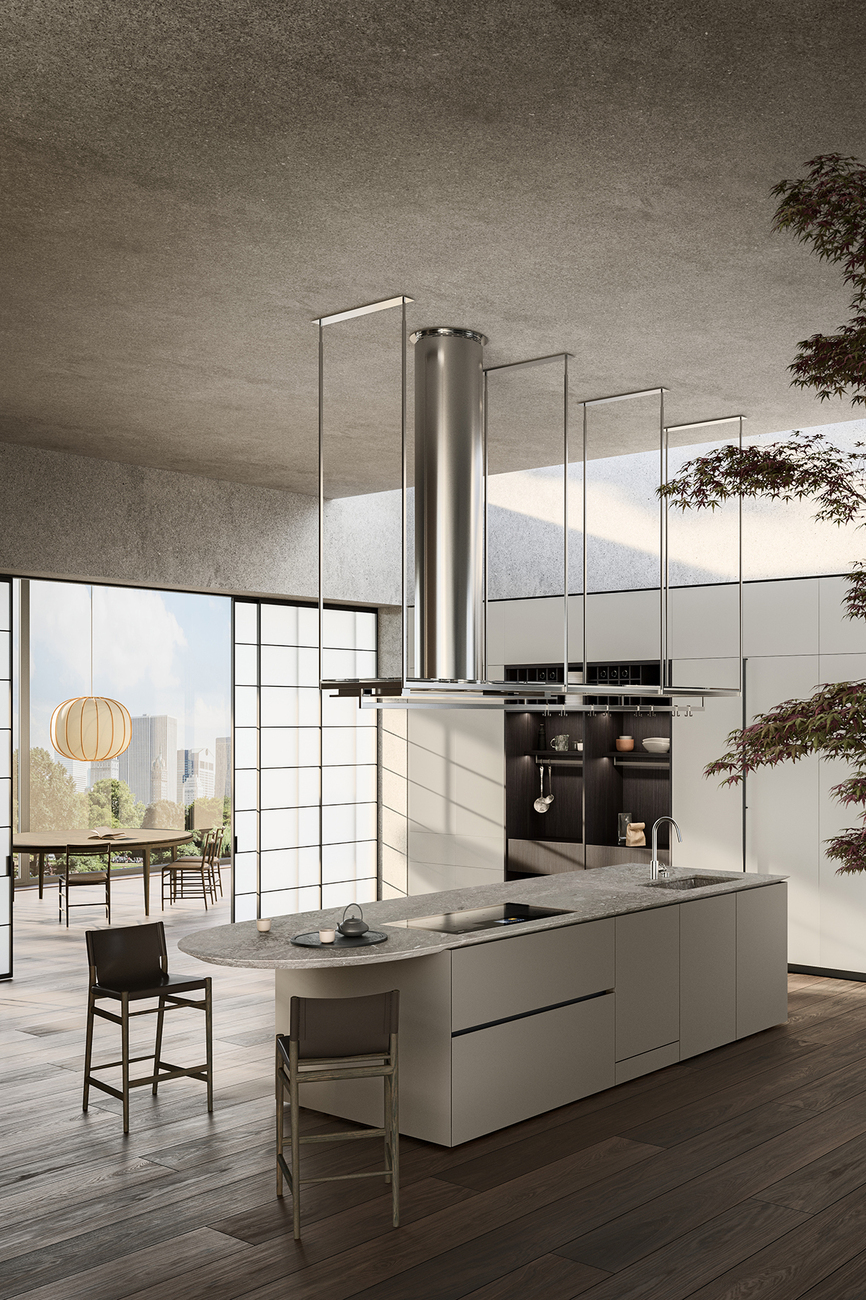
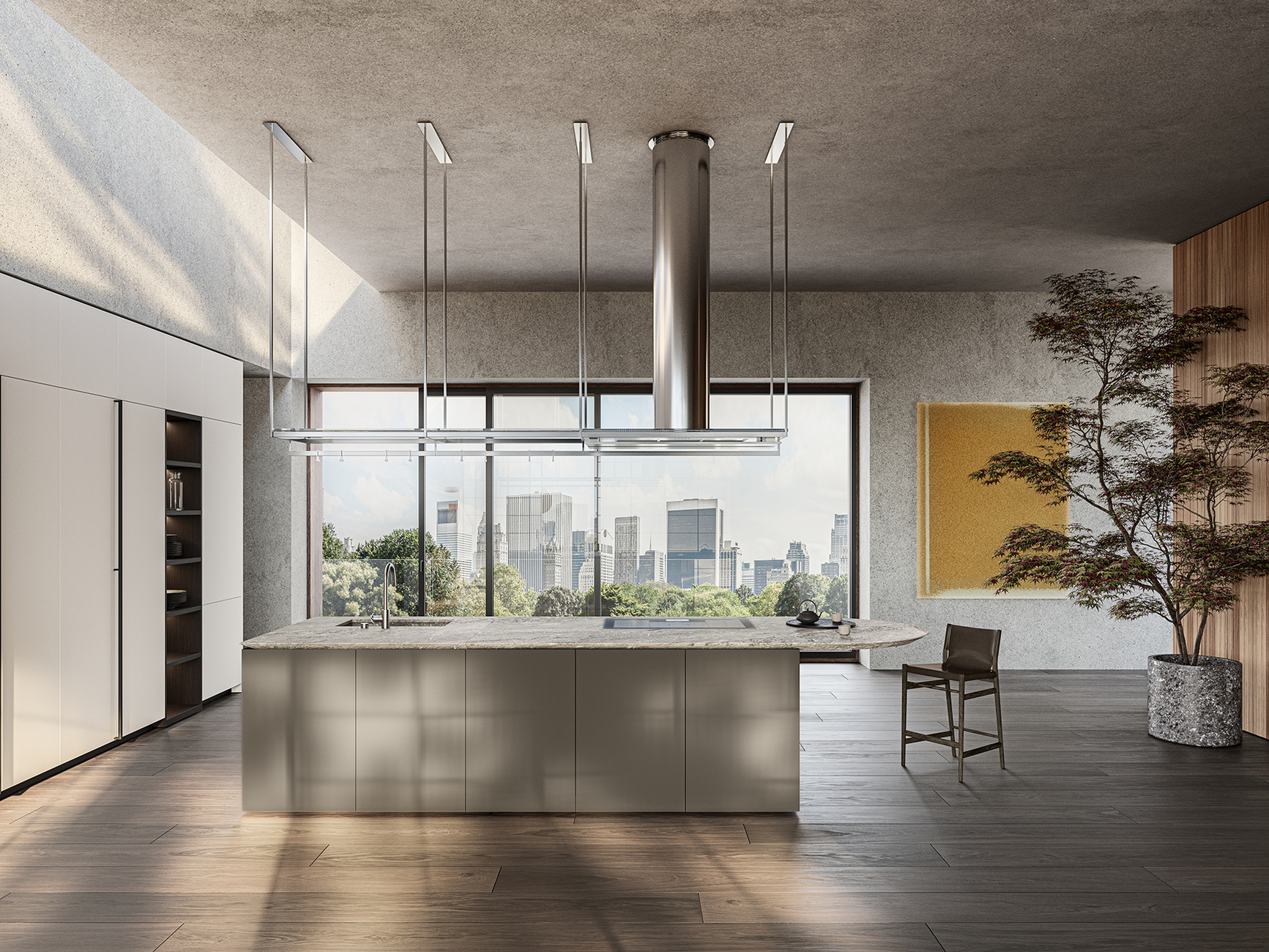
And yet, despite all the grand gestures, this year's Salone and EuroCucina trade fairs offered little that was new in terms of content or design. Thus, the global kitchen world is still dominated by grooves, grids and curves. What’s more, alongside arched cooking islands, tall units and worktops, hobs, extractor hoods and sinks now also come in an organically rounded design. This is a matter of taste, but given the widespread adoption of these features, it can hardly be described as a short-lived trend.
In some quarters, however, a slight evolution of this format can be discerned. For example, Next125, the design brand from Schüller, presented its side table for the first time in an elliptical teardrop shape. Crafted from the new material 'LavaTech', a combination of porcelain stoneware and recycled glass, the product impressed above all with its smooth, tactile glaze, which is available in the colours 'Corallo' (red) and 'Asparago' (green).
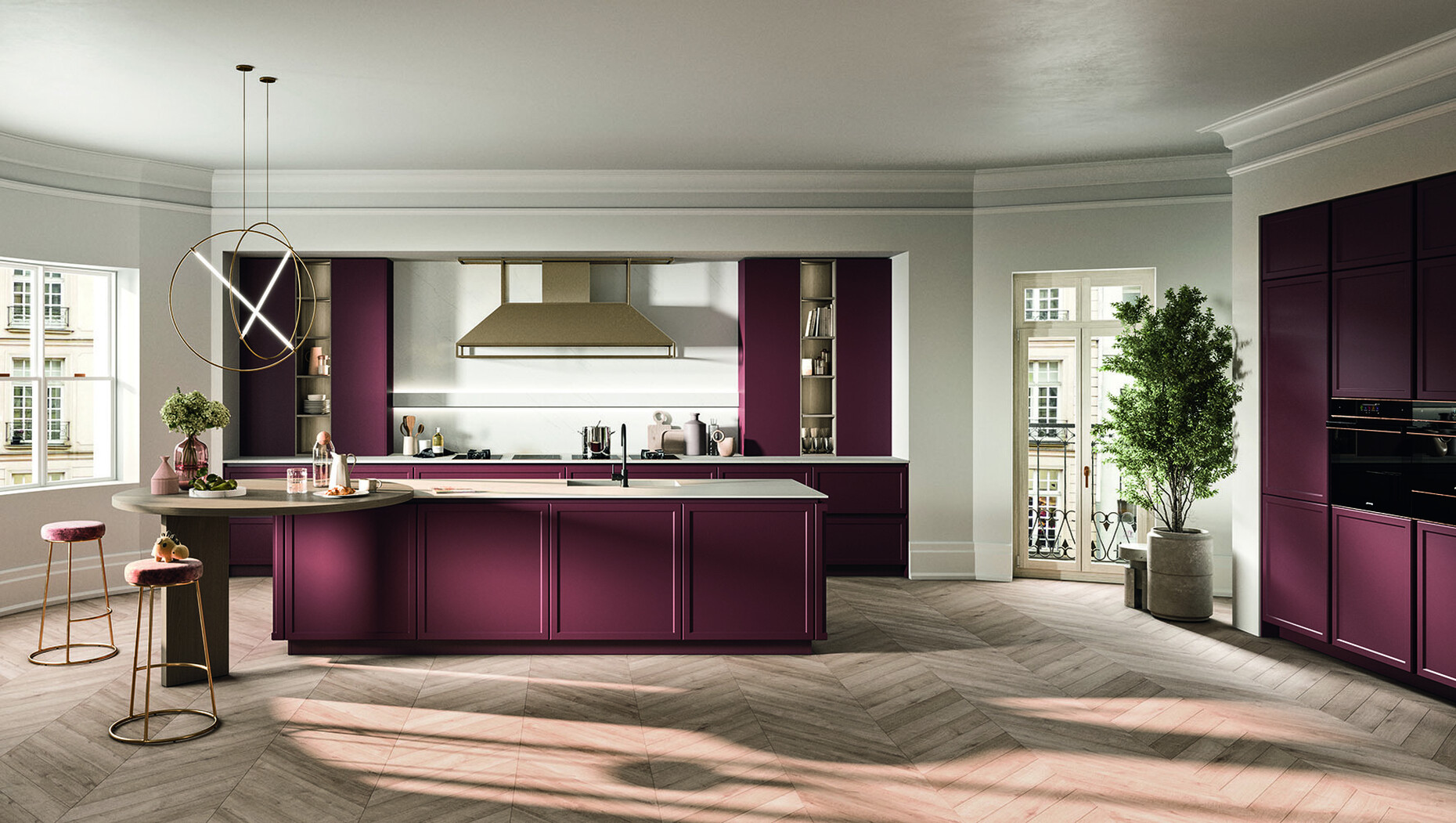
Speaking of which, the shades of the Italian tricolour were the overarching theme of this year's EuroCucina anyway. The ubiquitous Bordeaux hue seamlessly transitioned from the worktop to the matt-lacquered kitchen fronts and onto the adjoining dining table. Alongside Cassina, Gessi also devoted its newly opened 'Haute Culture' branch almost entirely to this captivating shade of red – from floor to ceiling. Mint and sage green shades, as seen at Nobilia, Snaidero and Veneta Cucine, offset the intensity of this colour scheme.
White Wave
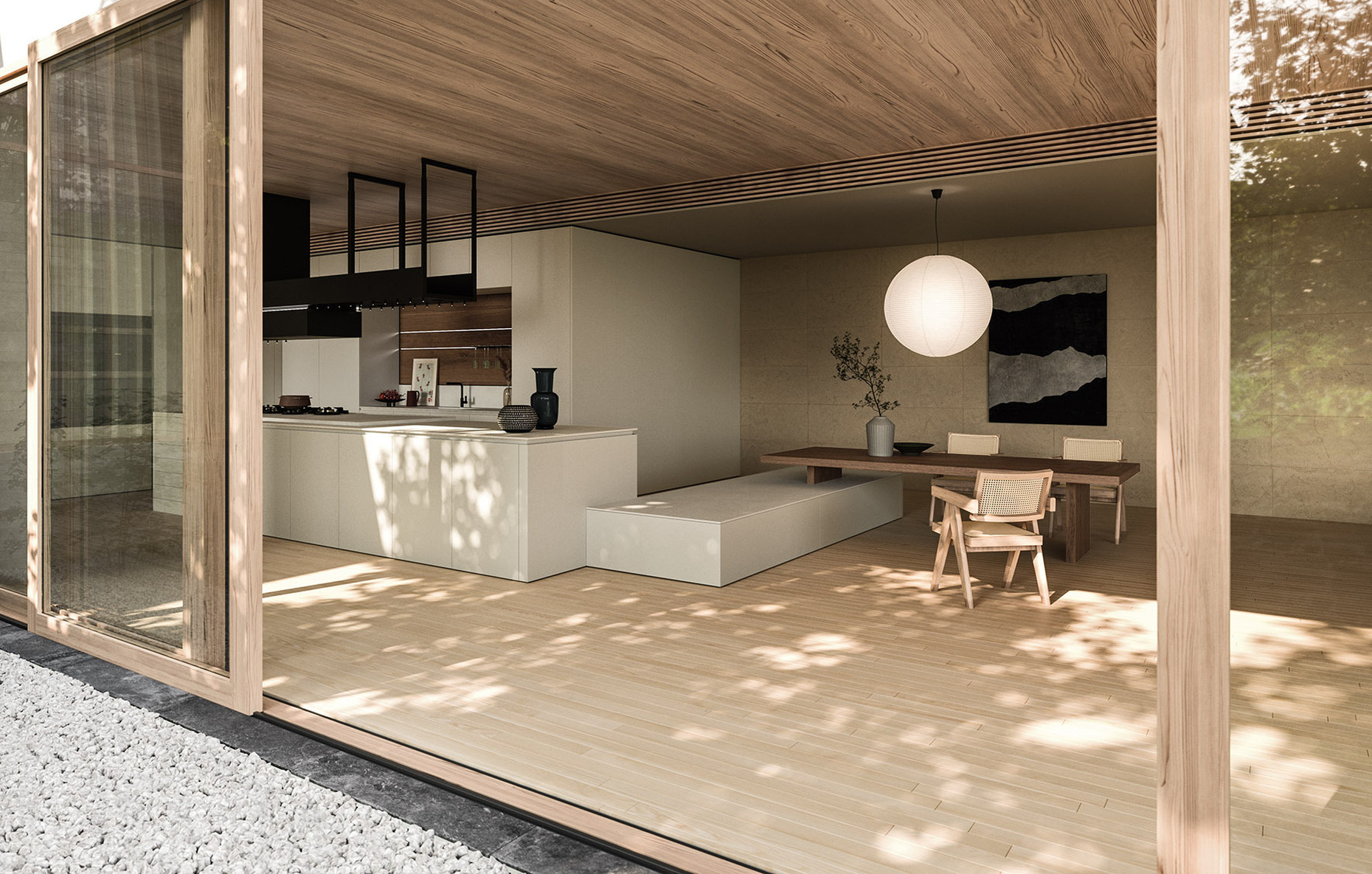
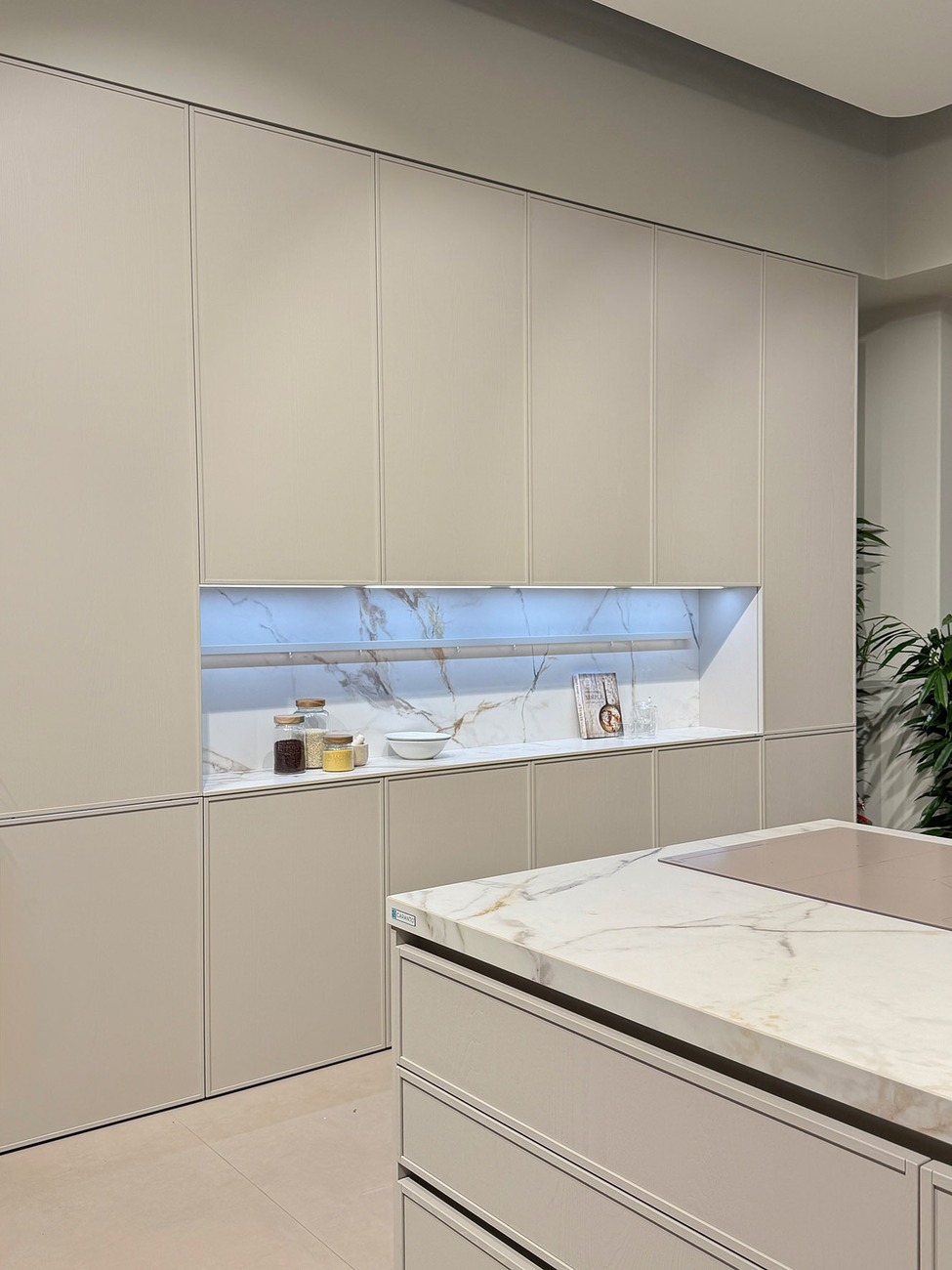
And what about the white on the Italian flag, which is meant to symbolise the Alps' glaciers? It truly represents the pinnacle of Milanese trends, with the entire city, from kitchens to coffee tables, enveloped in the brightest and most innocent shade of white. White – or the colour of the year, as proclaimed by the Pantone Institute, and known as 'Cloud Dancer' – is thus experiencing a renaissance that many would not have thought possible. It is accelerating the transformation of the kitchen from an elegant, dark status symbol to a bright, lively space for interaction, harmony and socialising.
It is a shift that Italians, in particular, find hard to embrace, as they are naturally drawn to the noble, and sometimes dramatic, composition of smoked oak and walnut. However, even at Boffi, Valcucine, Minotti and Arclinea, a change is finally becoming apparent, with light-coloured stone and Corian fronts, white-grey speckled 'Taj Mahal' slabs and textiles made of bouclé, linen and faux leather. Soft oak tones and chrome-plated surfaces give the kitchen a facelift without making it unapproachably cold. Even built-in appliances, which have just transitioned from high-gloss to matte finishes, are already undergoing their next transformation – from black and anthracite to champagne, cream, pearl and beige.
This was evident – to a greater or lesser extent – at the Swiss appliance manufacturer V-ZUG, which celebrated the world premiere of its latest product in Milan: the “Integra” induction hob, which is seamlessly integrated into the worktop. The technology, developed in collaboration with Inalco, is housed beneath a narrow ceramic panel that visually blends into the worktop. The material was chosen deliberately: robust enough to withstand the rigours of everyday cooking, yet also capable of transferring the desired temperature to the cookware with virtually no energy loss. The understated aesthetics of the invisible hob, which is controlled via a magnetic knob that can be attached to it, were once again showcased by designer Elisa Ossino – who was already considered one of the big names at this year’s Salone.
Share a message
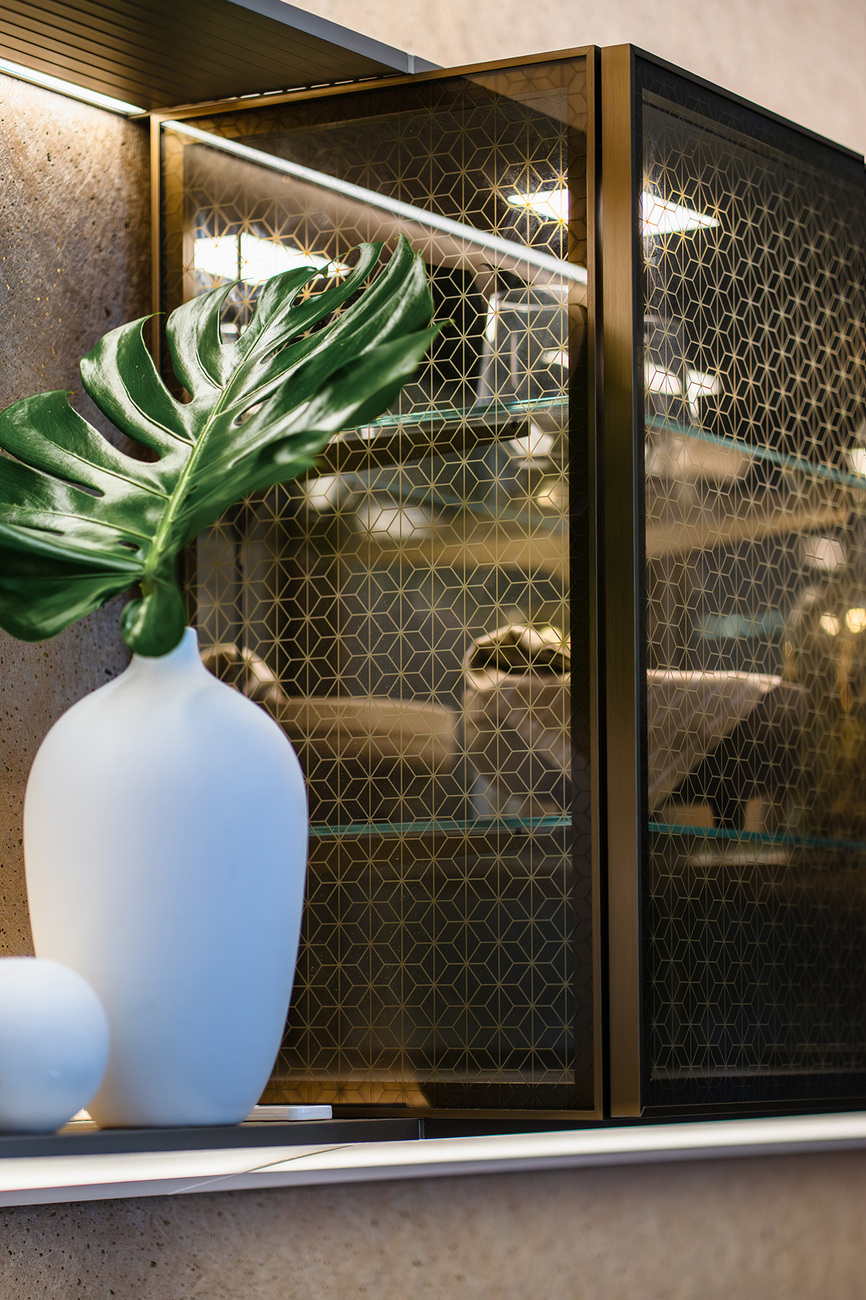
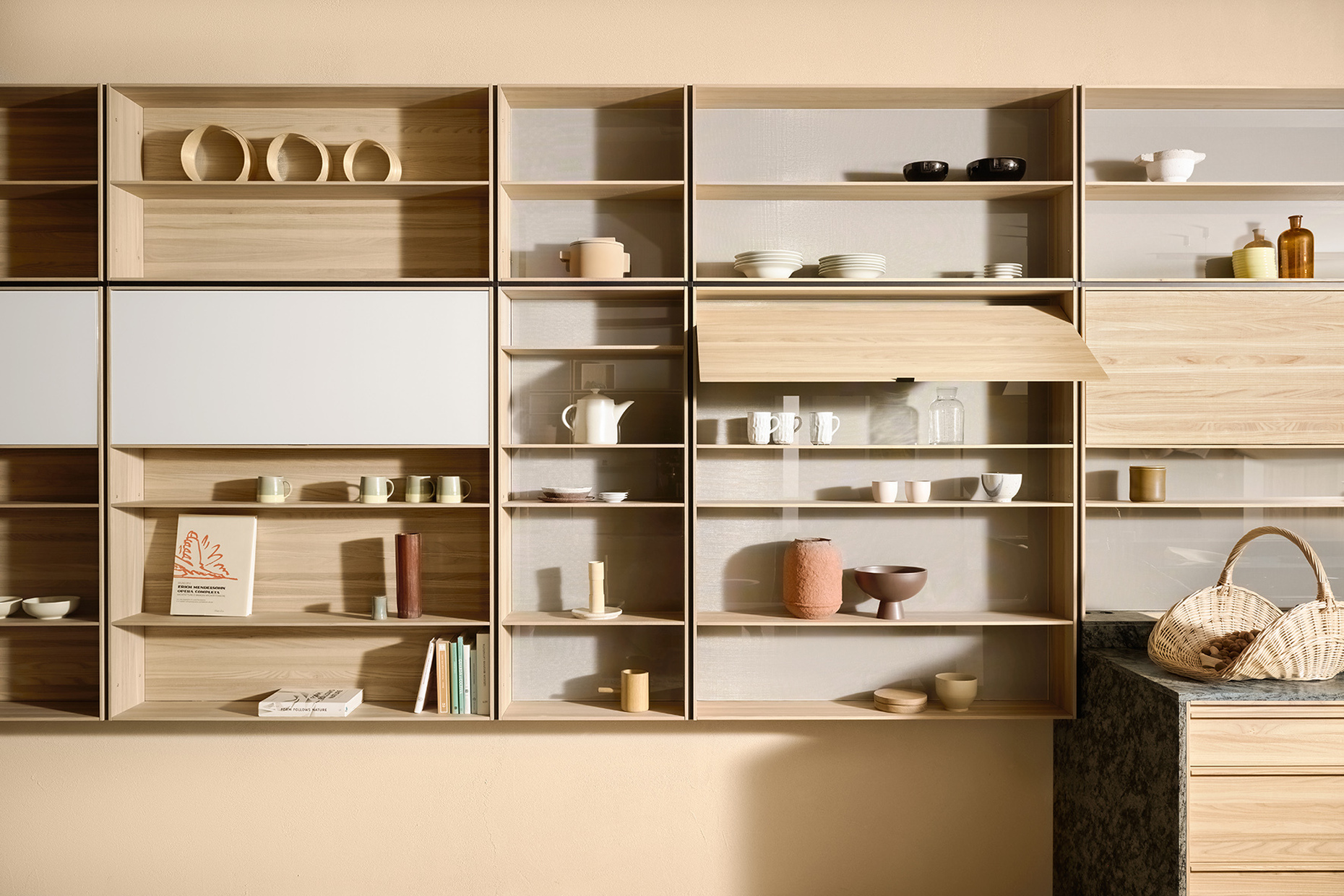
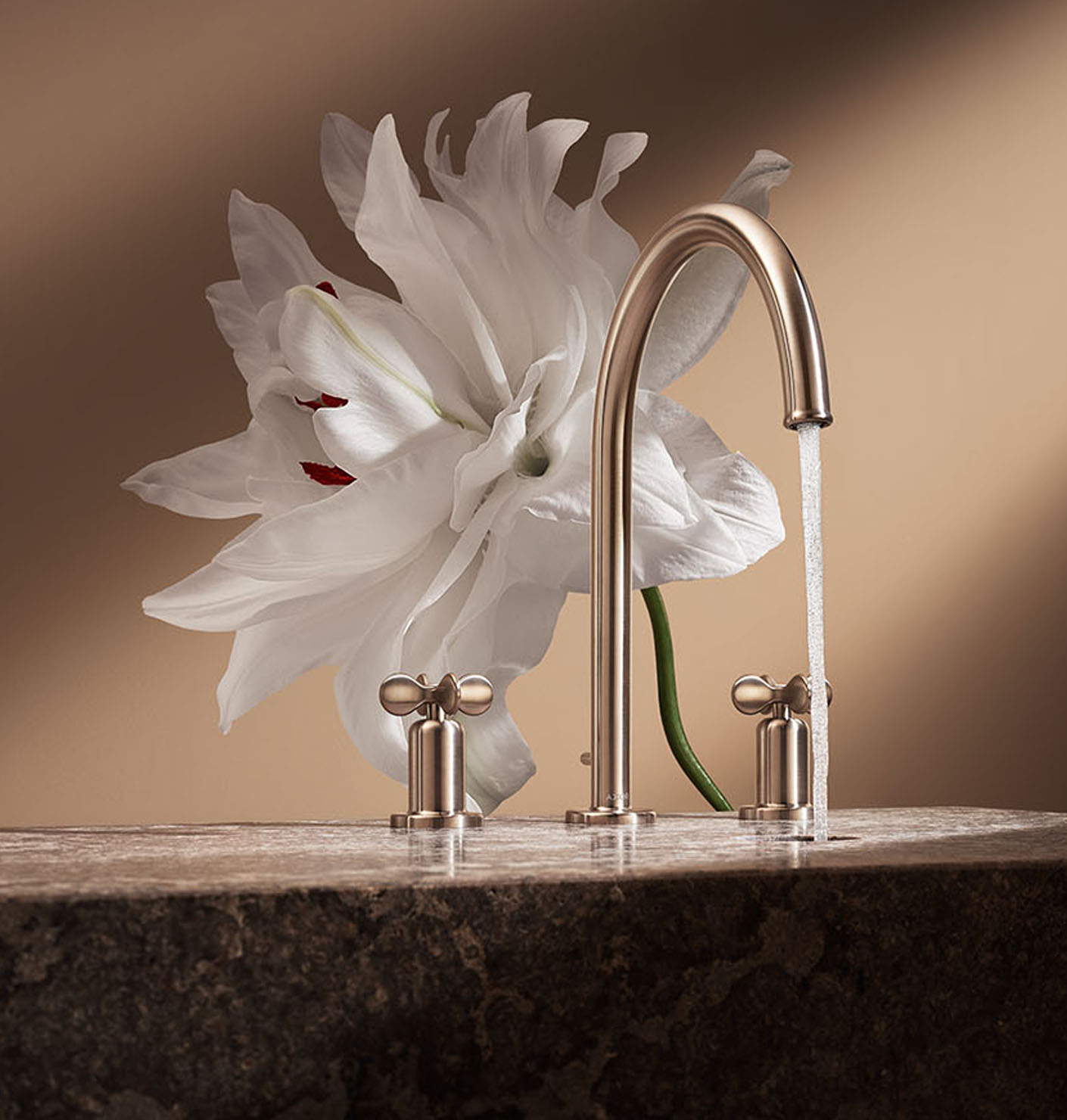
After the hustle and bustle of the trade fair, a sense of what is to come remains: the kitchen of 2026 will be brighter, more fluid and quieter than before, yet will retain its expressive character. Handle-free cabinets, retractable taps, matt appliances, subtle lighting concepts and floor-to-ceiling fronts will come together to create a calm and cohesive ensemble, replacing the bold statement once made by dark woods and stone surfaces. Individuality is increasingly achieved through texture within a harmonious colour palette – a technique that can also be applied to light surfaces. Examples of this can be seen in Nobilia and Häcker's hatched front finishes, which take inspiration from Viennese wickerwork, and in Leicht Küchen and SieMatic's delicately printed display glass panels.
However, some exhibitors opted not to participate in EuroCucina in 2026, including the luxury kitchen manufacturers Poggenpohl and Eggersmann, who had attracted attention in 2024 with sculptural stone and steel modules. Then there was the brand bulthaup, whose much-heralded return to Milan's repurposed 'Chiesa di San Carpoforo' church was cancelled just a few weeks after the official invitation had been sent out. When asked why, Managing Director Marc Eckert criticised the city's expensive stand-building and rental conditions, as well as its hectic atmosphere: 'You’re supposed to convey what the brand actually stands for in a fast-paced environment. But nobody’s listening anyway. We want to make the kitchen emotionally tangible – not just put up a box with a worktop because it’s trade fair season,” Eckert said. “Ultimately, the world keeps turning after these four days, and you wonder whether your message has actually got through.” Those who take more home with them from Milan this year are fortunate indeed.