ORGATEC 2026 – REVIEW
The Work Hotel
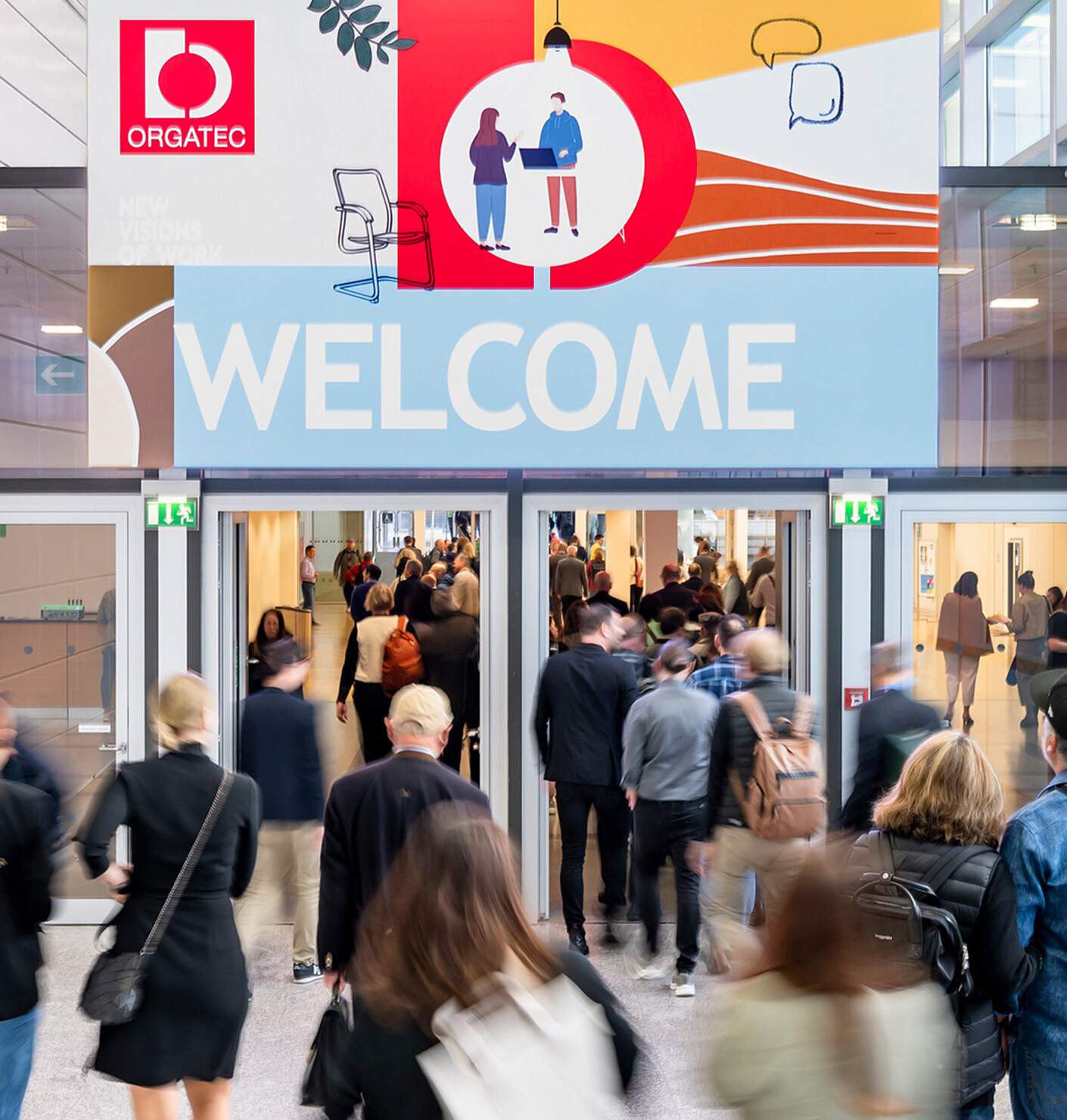
There’s a lot moving around at and surrounding the Cologne Exhibition Centre: this year, for the first time, idd cologne took place in parallel with Orgatec, bringing together residential interior design, modern working environments and contract solutions for a week-long interior design event. The exhibitions were on display at both Design Post Köln and machwerkhaus köln, alongside showrooms and urban creative venues such as the Wasserschloss Weißhaus, which also provided a platform for emerging talent. In the halls of Koelnmesse, the programme was divided into the ‘Workspace Solutions’ and ‘Contract Solutions’ segments. Among other things, visitors could experience a special exhibition on the Eames Pavilion System, the Architecture+Office Innovation Award and the ‘Wherever Whenever – Work Culture Festival’, initiated by the Industry Association for Offices and the Working Environment (IBA).
1. Is the office furniture in the room with us?
The days when Orgatec was primarily about ergonomics, technology and systems are now well and truly a thing of the past. As early as 2022, walking through the halls could at times give the impression of visiting imm cologne – a shift that became particularly striking at this year’s edition. Alongside new, graceful swivel chairs with concealed mechanisms – such as the “U-Type” by Edward Barber & Jay Osgerby for Kettal or the fully upholstered ‘Swivel Armchair 521’ by Marco Dessí for Thonet– there was a wealth of upholstered furniture, chairs, bar stools, shelving and textiles on display. Rather than prioritising straight lines and technical details, manufacturers are focusing on dynamic shapes, rounded edges, wooden surfaces and vibrant colours. At home in the office, or in the office at home? The distinction became increasingly blurred. At the same time, the topic of the ‘smart office’ took a back seat; tools for efficient space planning using digital ecosystems and sensor technologies, as well as intelligent solutions for power and data distribution, were seen only sporadically, as at Waldmann, Evoline, Zumtobel, Erco or Interstuhl. The latter also used the space to encourage physical activity and, under the motto “Office is Active”, kept its guests on the move with a basketball hoop, table football, balance boards and a virtual tour using VR headsets. The match could then be continued at the Design Post Cologne on the table tennis table by RS Barcelona.
2. Furniture for every occasion
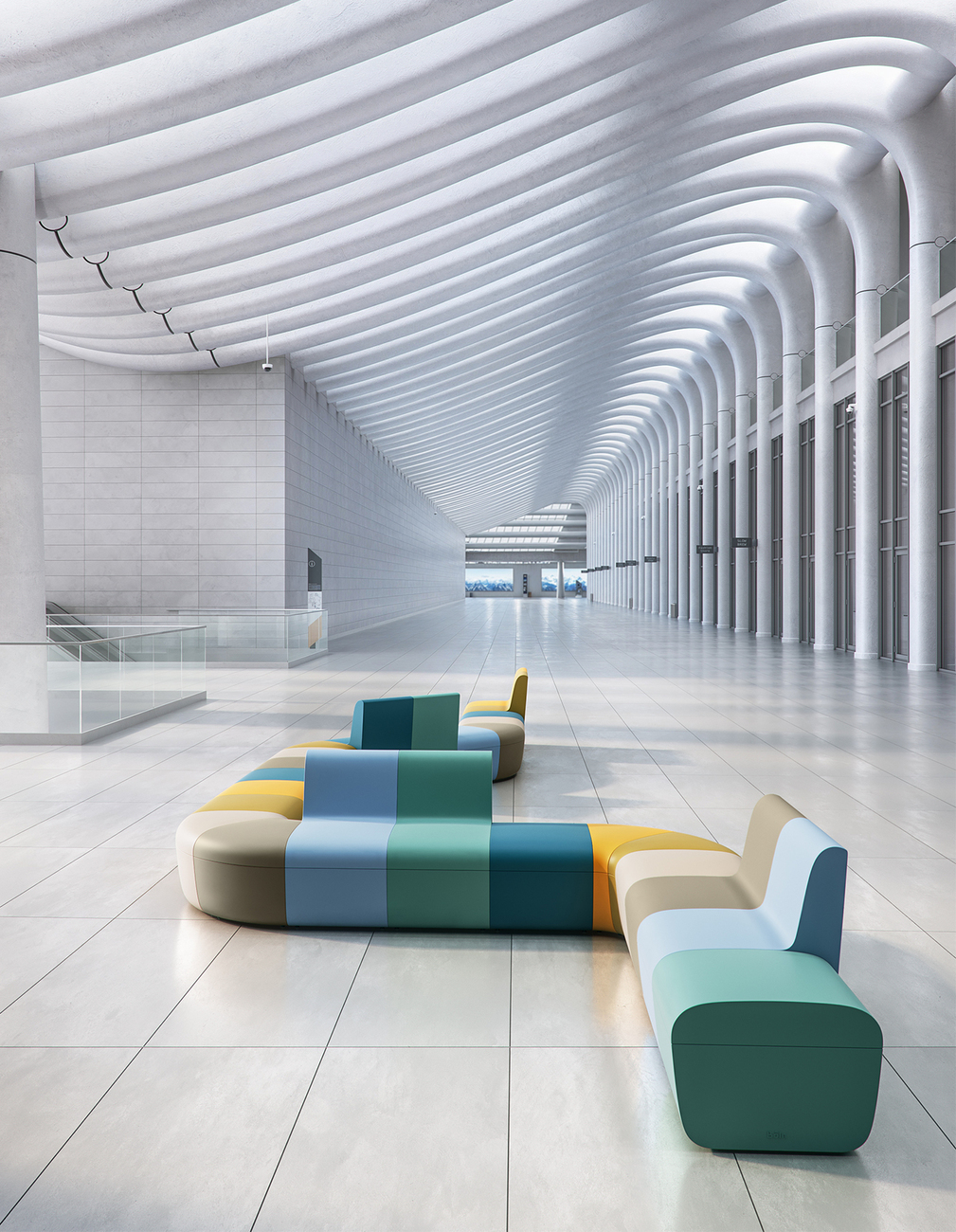
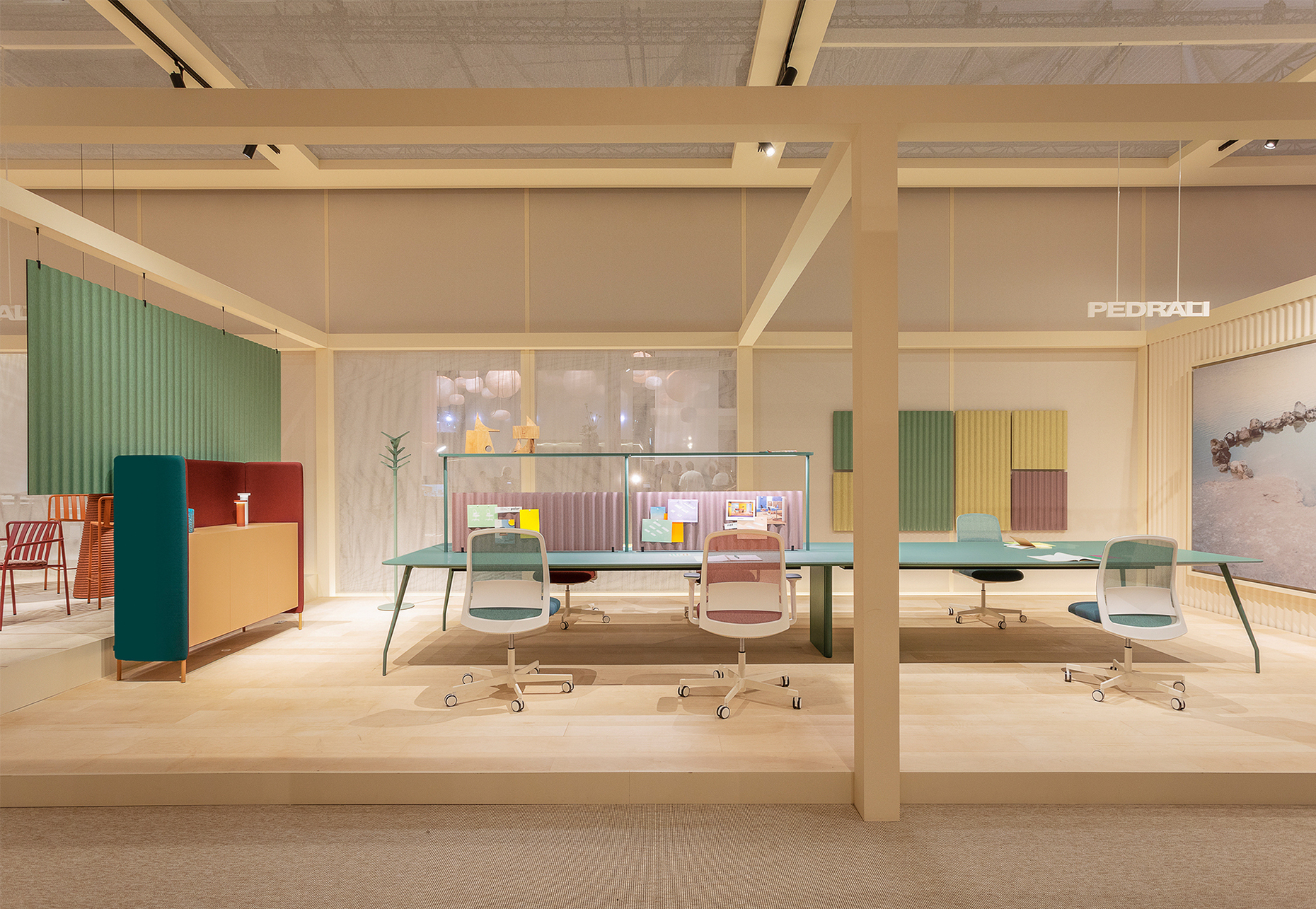
No request should go unfulfilled, for ‘standard’ is no longer an option – that is the credo at the trade fairs. In order for a piece of furniture to cater for a wide range of usage scenarios, its design must be as multifunctional and combinable as possible. This requires a comprehensive modular system with a wide range of options: colours, materials, finishes and textiles should be selected entirely according to one’s own needs. At the Pedrali stand, visitors could discover the “Buddy Oasi Serpentine” modular system by Busetti Garuti Redaelli, which expands the “Buddy Oasi” collection and enables the creation of a potentially infinite number of flexibly reconfigurable compositions. Meanwhile, Werner Aisslinger has designed “Floy” for COR, a “multichannel chair” that was unveiled for the first time at Orgatec. With a particularly wide, comfortably upholstered seat and numerous customisation options, the piece is suitable for universal use. Sabine Marcelis has further developed the “Dew” series for Arco: “Dew Desk” is a compact desk version available in two sizes, which can be customised with a wide range of colours and finishes. Müller Small Living presented, amongst other things, the modular “Aventa” sideboard, which can be extended to fit exactly as required and is particularly robust and easy to maintain thanks to its durable surfaces. Jonathan Olivares, on the other hand, designed the symmetrical contours of the “perga” chair for Brunner; crafted from beech, oak or walnut, it offers various frame options as well as optional full upholstery.
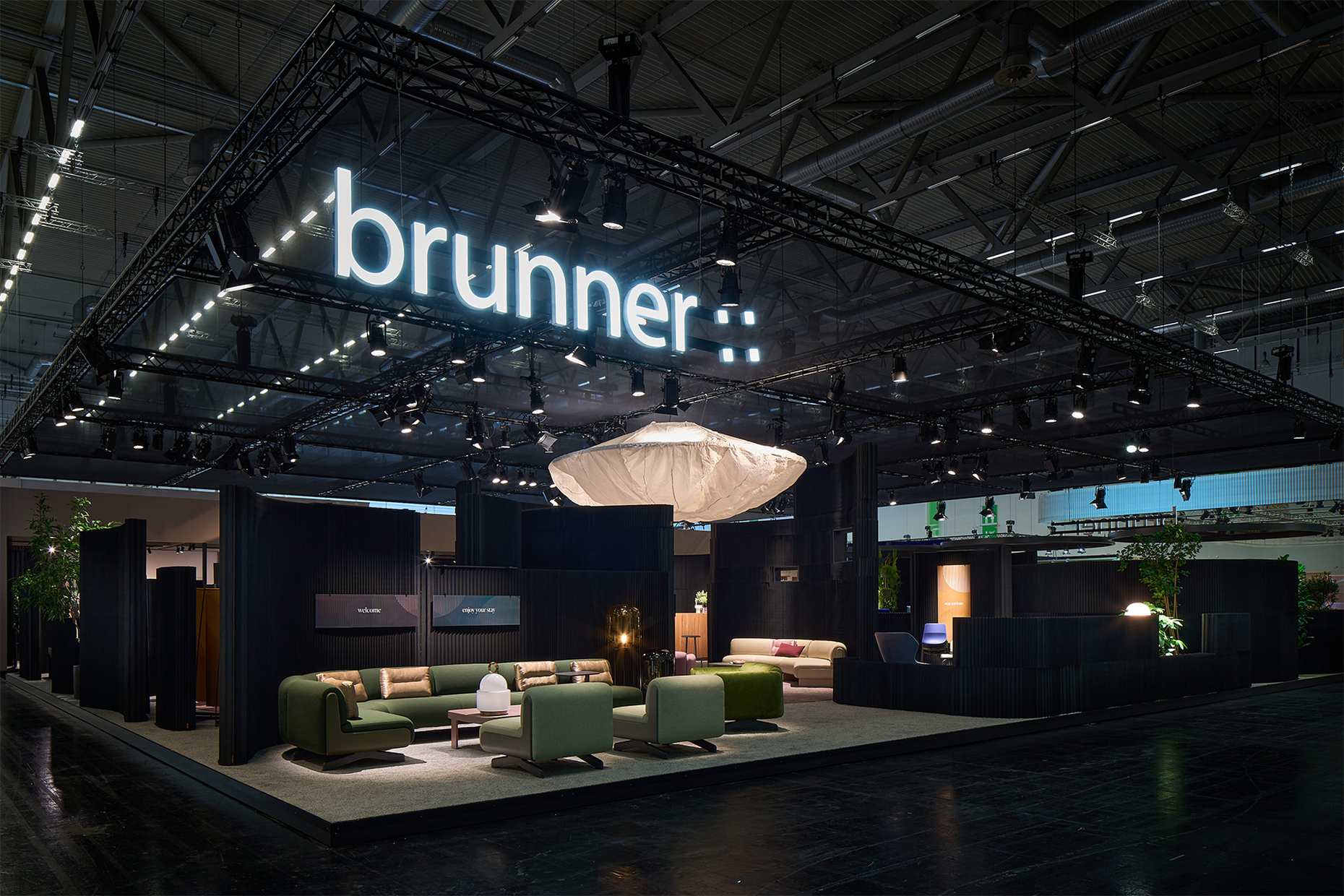
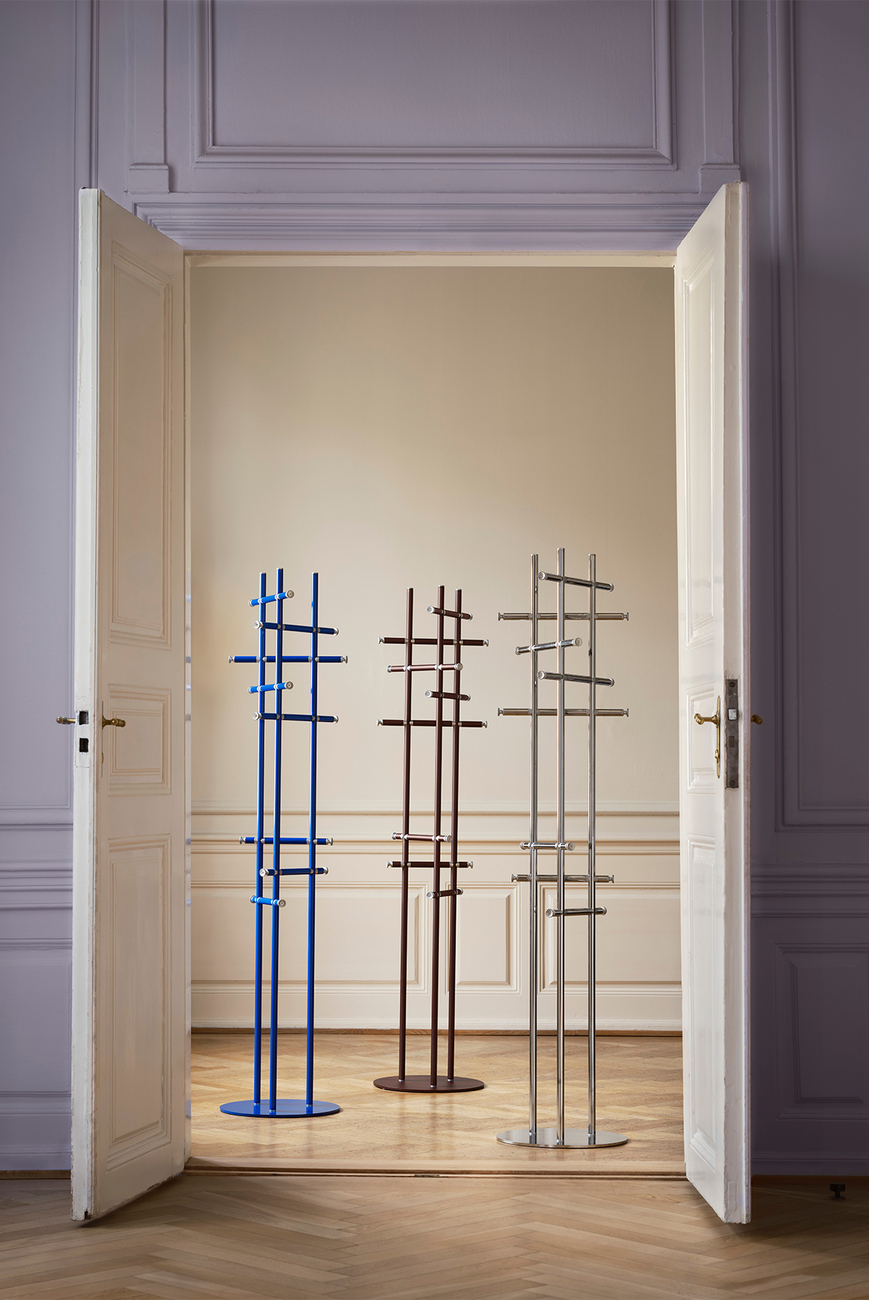
Fermob unveiled its new collaboration with Gensler for the first time at Orgatec, presenting a concept designed to rethink the chair. Based on a basic form, all details are customisable and partially interchangeable, from the seat to the legs, and from the colours to the materials. Thonet displayed a clever new product for large-scale seating at its stand, which was designed by Werner Aisslinger: the ‘Plenum’ seat number is battery-free and maintenance-free, as the e-paper display can be attached to or recessed into the backrest of various Thonet chair models and can be changed in a matter of seconds via an app. Johan Lindau, Stefan Borselius and Thomas Bernstrand developed the “Able Stand” coat rack for Blå Station, which offers plenty of space for jackets and bags thanks to its staggered rails. Wagner Living showcased, alongside the bespoke, modular room and furnishing system “d2” by Gonzalez Haase AAS and Diez Office, the “W-Bench” by Christian Neumeier, a reinterpretation of the beer bench. System+ demonstrated the versatility of its modular system, which is also perfectly suited for kitchen fittings. At the stand designed by the Ippolito Fleitz Group for Brunner, featuring partition walls by molo design, visitors could also explore the “Brunner Design System”, which enables a cross-collection approach. Kinnarps focused on the process of planning the ideal working environment at its stand: under the motto “Design with a purpose”, visitors could work through the key preparatory steps at five different stations. “From our many years of experience and numerous projects, we know that there is no one-size-fits-all solution. Every office must be shaped by the company’s objectives, culture and way of working. In Cologne, we’re bringing to life why analysis is so important before making an investment,” said Dan Molander, Commercial Director of Kinnarps AB and Managing Director of Kinnarps GmbH.
3. Please get comfortable!
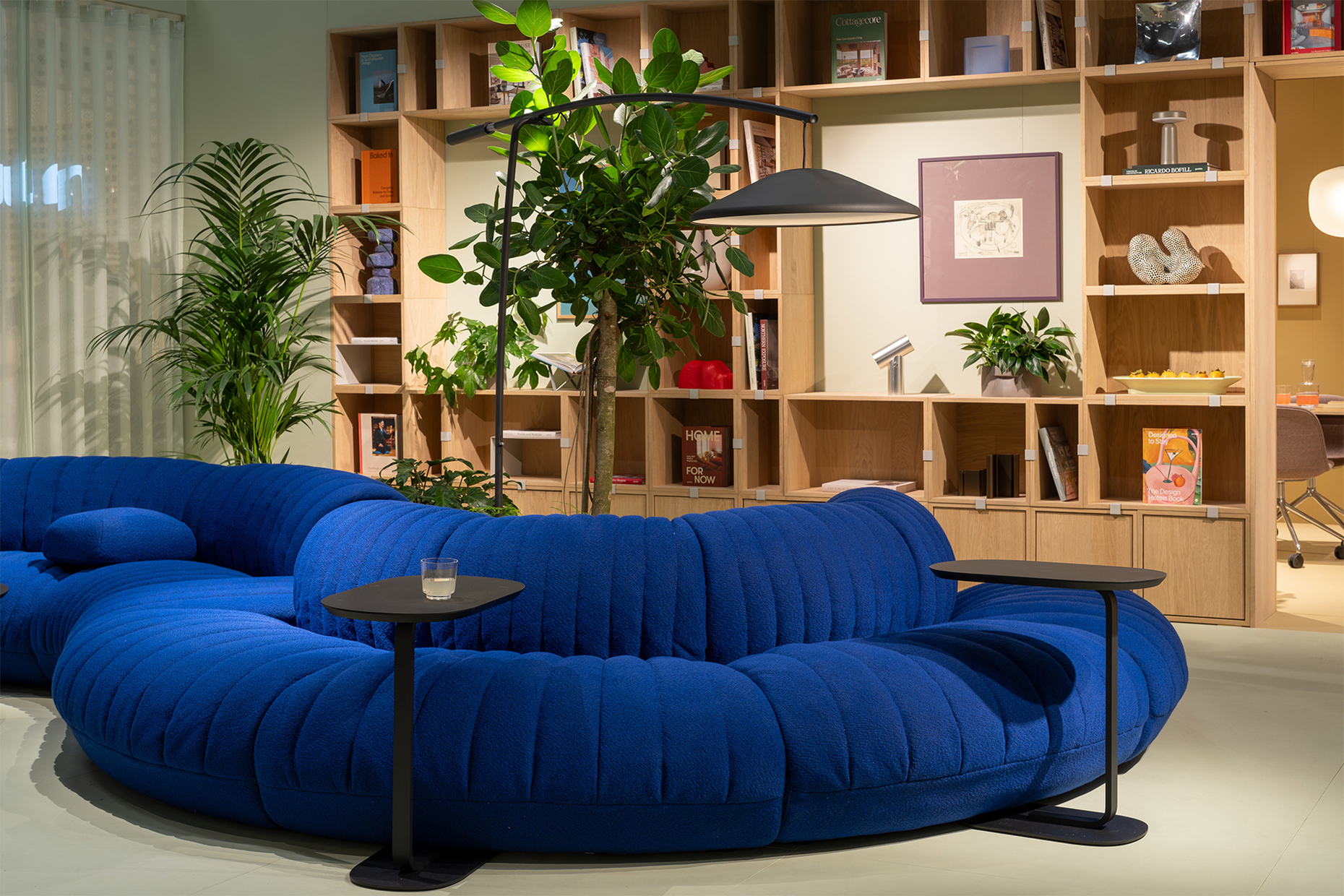
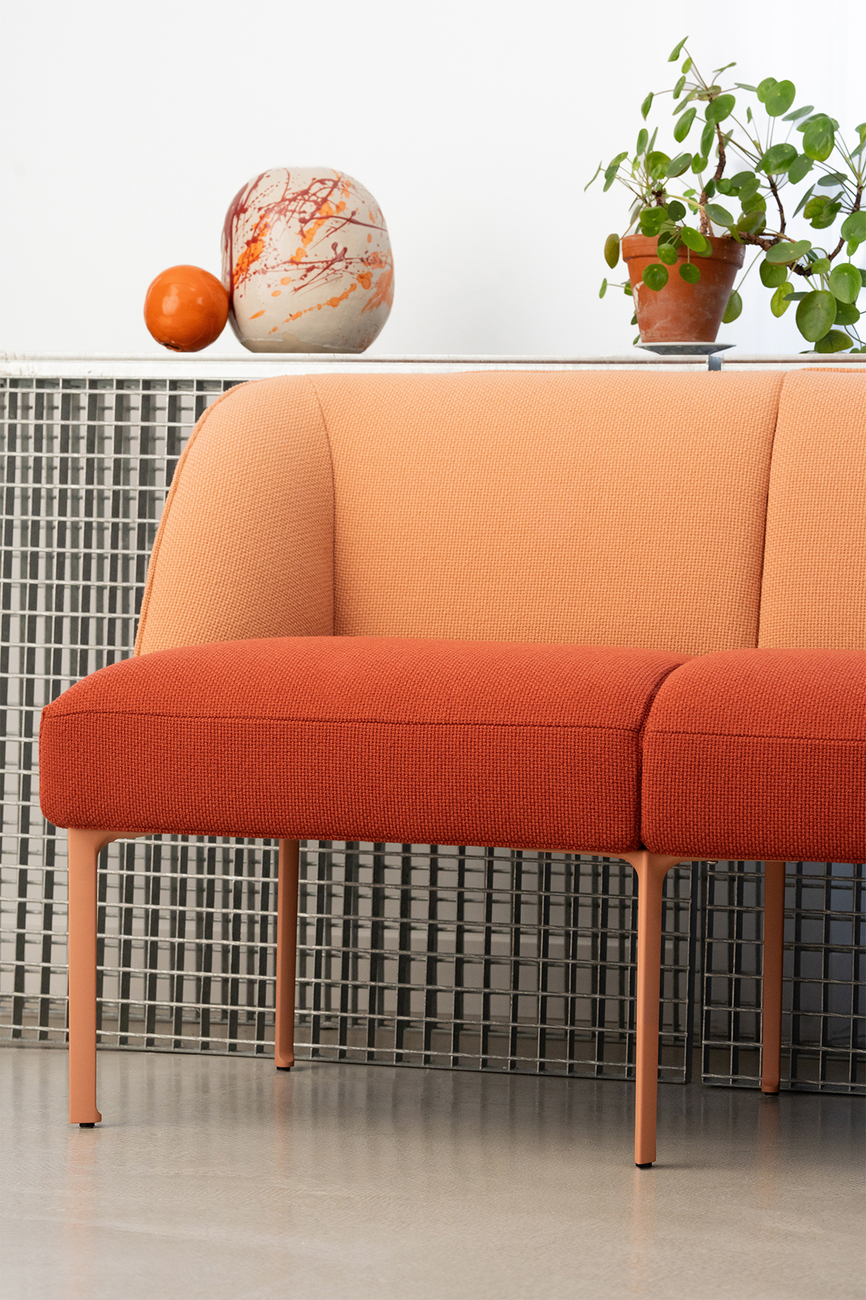
The office space as a purely functional workplace is a thing of the past: for mental and physical well-being, as well as maximum productivity, formal and informal uses should alternate. This approach was evident at the Sedus stand: “Welcome & Arrival, Focus & Retreat, Workshop & Meeting, Desk-Based Working, Socialising & Sharing”. The workplace is increasingly seen as a homely space which, like a host, offers a high quality of stay and a pleasant atmosphere. People should enjoy spending time there, feeling a sense of belonging and that their needs are understood. In this context, Koray Malhan designed “Composing Habitus” for Koleksiyon, a concept that describes the workplace as a living space for encounters, concentration, retreat, dialogue and collective intelligence. Freifrau, in collaboration with the Janua brand, demonstrated how the “Marie” product family can be used to create a spacious seating landscape that is extremely comfortable yet, thanks to its dynamic form, does not appear bulky. Profim, part of the Flokk Group, presented “Lunea”, a modular sofa system with individually configurable modules in 10-centimetre increments. estudi{H}ac, led by Jose Manuel Ferrero, showcased “Ondula”, the first wooden chair in Actiu’s range. The design is inspired by the perfect armhole cut-out found in made-to-measure clothing and features an ergonomic backrest that moulds smoothly to the body. In this spirit, style, craftsmanship and high-quality materials are set to have a greater presence in offices, as exemplified by ‘Beam’, a shelving system by Foster + Partners Industrial Design made from FSC-certified oak. Inspired by the cross-section of a load-bearing beam, it can be configured as required.
Arper calls its concept ‘(Re)Connecting’ – offering spaces that bring us closer together again in a fast-paced world. To this end, the company is showcasing, amongst other pieces, ‘Cari’ by Doshi Levien, a chair with soft upholstery and integrated armrests, designed for spaces where work meets hospitality. Many of the pieces of furniture were bathed in warm, rich colours to suit the autumn season, proving once again their positive effect on our mood. LaPalma devised a bespoke colour system in collaboration with the architect and designer Raffaella Mangiarotti and presented, amongst other things, the modular lounge seating system “Hub” by Francesco Rota.
4. Could it be less noisy?
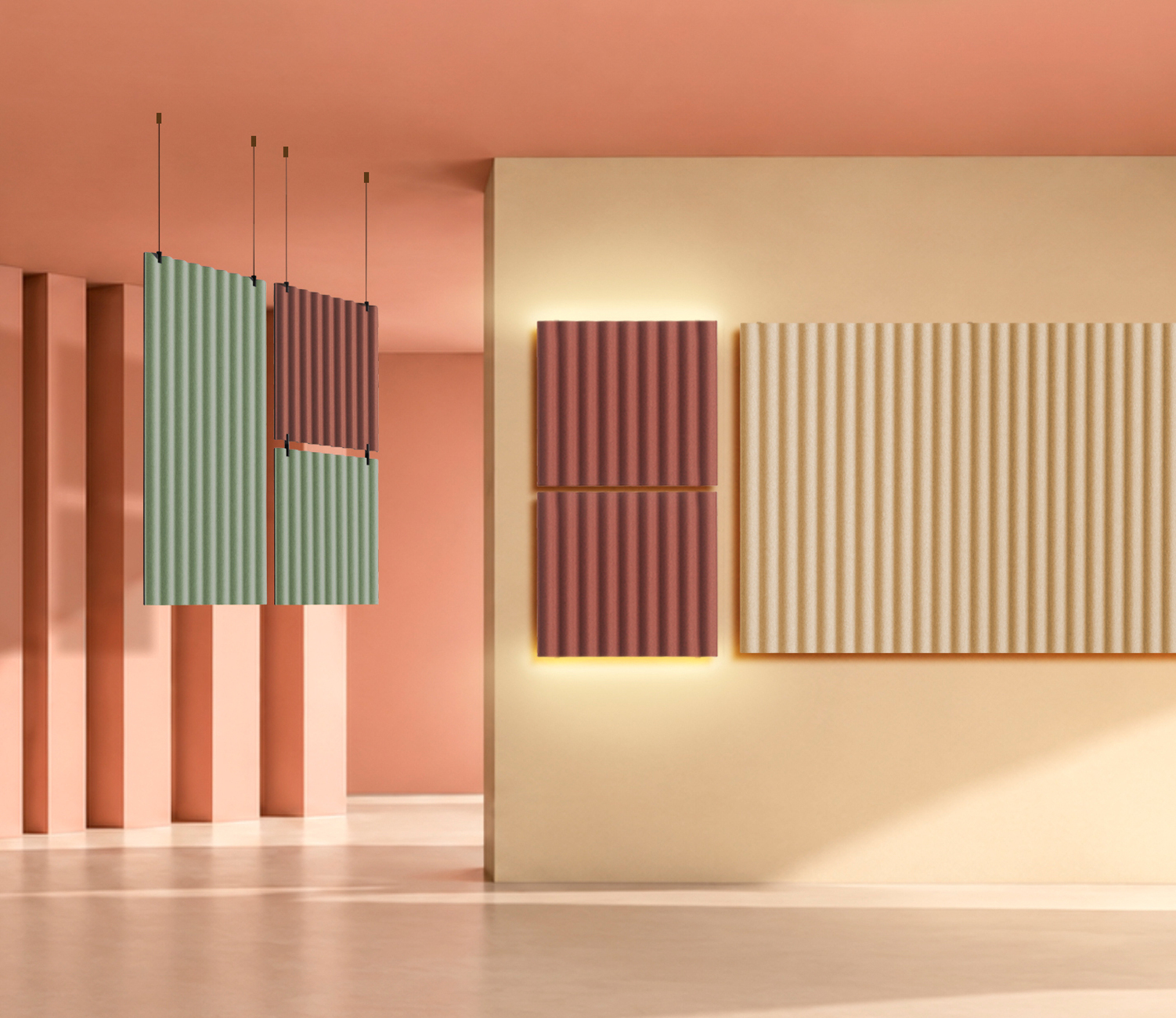
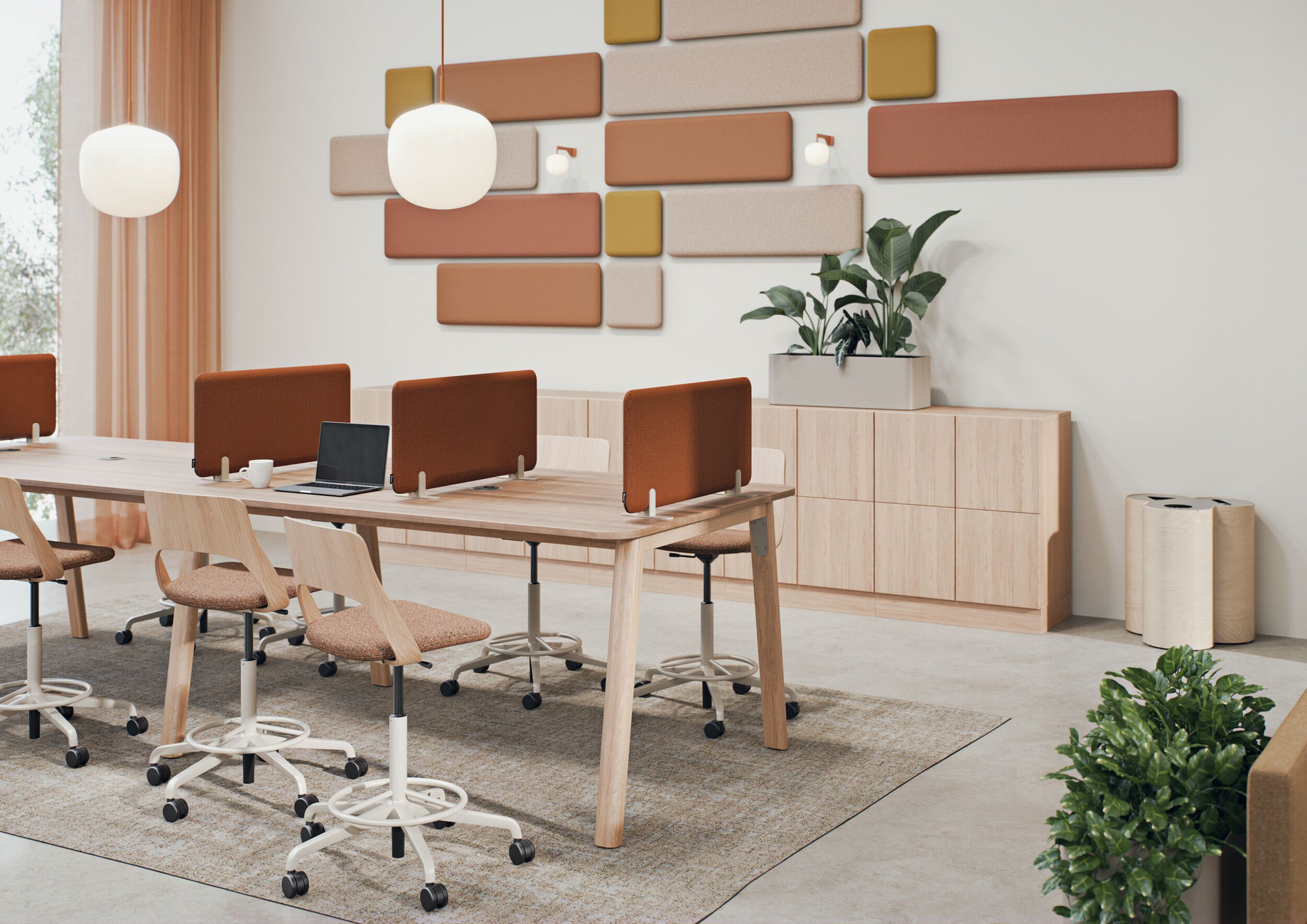
Large open-plan spaces used for a variety of tasks usually have one drawback: the acoustics. To enable open-plan offices to be used for tasks requiring concentration and confidential conversations, soundproof cubicles are ideal; these were once again on display in large numbers at Orgatec, such as the “Ace Acoustic Cubicles” from Nowy Styl. At the same time, manufacturers are looking for solutions that think outside the box: DWA Design Studio have designed “Ondine” for Pedrali, a collection of sound-absorbing, modular, wave-shaped panels that are upholstered in fabric on both sides and can be configured in many different ways. Meanwhile, a wide range of acoustic textiles such as “Acoustic Guard” were on display at Jab Anstoetz, alongside the photo exhibition “Textiles in Architecture” by HG Esch Photography. Working in close collaboration with Erco and Jung, the team created a holistic spatial experience combining light, textiles, acoustics and technology. Meanwhile, the Ippolito Fleitz Group, led by Tilla Goldberg, designed the expressive installation “Landscape of Resonance” for Slalom: Translated into circular, immersive spaces, the social, physical and media dimensions of resonance became tangible. Hayworth harnessed the power of the collective and offered an acoustic ecosystem for modern workplaces featuring ergonomic office furniture, acoustic solutions from BuzziSpace and sound-absorbing cubicles from Hushoffice. Also of interest in this context is the magazine “Akustik im Büro” (Acoustics in the Office) by V/S Vereinigte Spezialmöbelfabriken. In addition to its acoustic solutions, such as the “Sonis” acoustic screens, the company offers professional acoustic measurement services and can integrate a specialist acoustic engineering firm as a project partner.
5. Up and down, please!
Height-adjustable tables made a surprisingly elegant comeback at Orgatec 2026: a far cry from the black and white models with long cables, the technology is now discreetly integrated into the frame. Bene, for example, showcased the “Concept x Lift Table” prototype by Morten Nikolajsen at its joint stand with XAL, Vescom and Forte; its pull cord is concealed beneath the tabletop. Jorre van Ast designed “HAT” for Arco, a wooden table whose legs are fitted with both a motor and the mechanism for height adjustment. The production version will also be available with an optional battery.
6. Outdoors or indoors?
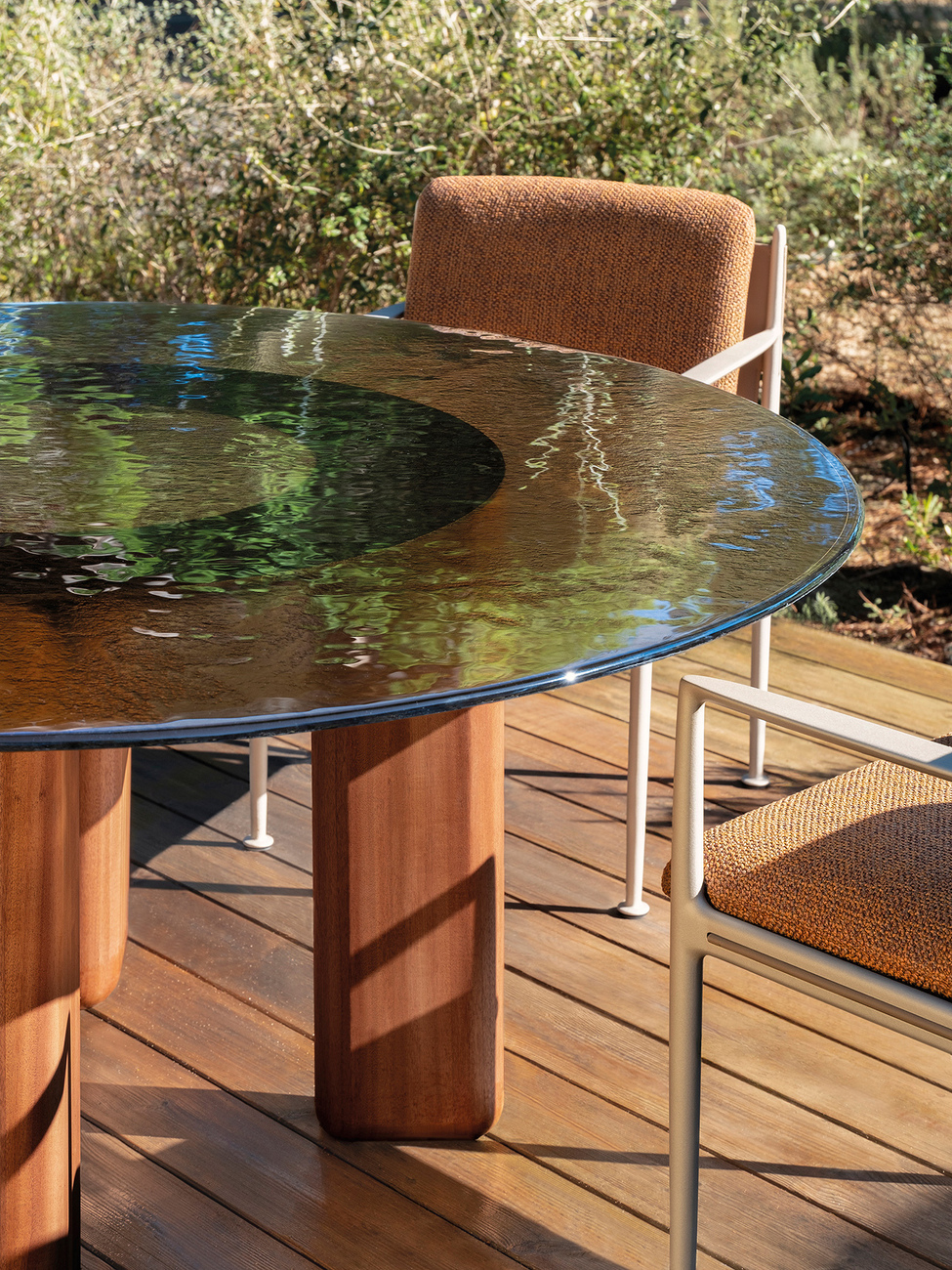
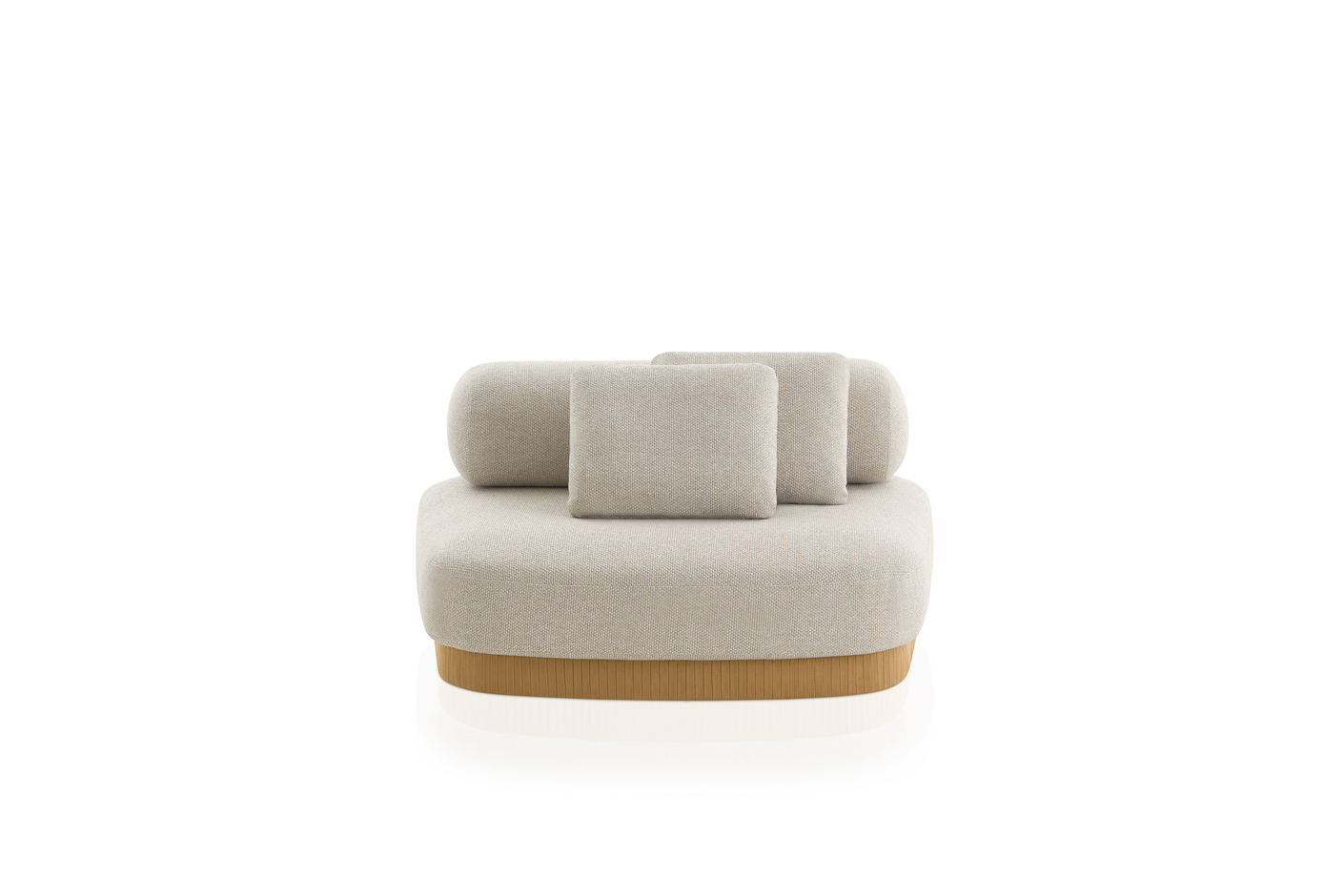
An cosy design is also in demand for outdoor spaces: ideally, sofas, tables and chairs should look as though they’ve simply been moved from the living room out into the sunshine. ‘Modular’ is the buzzword here, as modules that can be swapped and combined ensure that the arrangements remain flexible. Take, for example, the gently curved “Brae” sofa system by Norm Architects, featuring removable covers and a base finished with woven rope. Or the “Leku” table collection by Javier Pastor, with tempered glass tops and legs made from FSC-certified sapele wood – both models were designed for Expormim. At Dedon, visitors could take a seat on the “Tricot” collection, which allows for a wide range of configurations, from linear sofas and corner solutions to lounge islands and daybeds. Visitors could also explore “Tibbo”, Dedon’s first teak collection. Both designs were conceived by Edward Barber and Jay Osgerby.
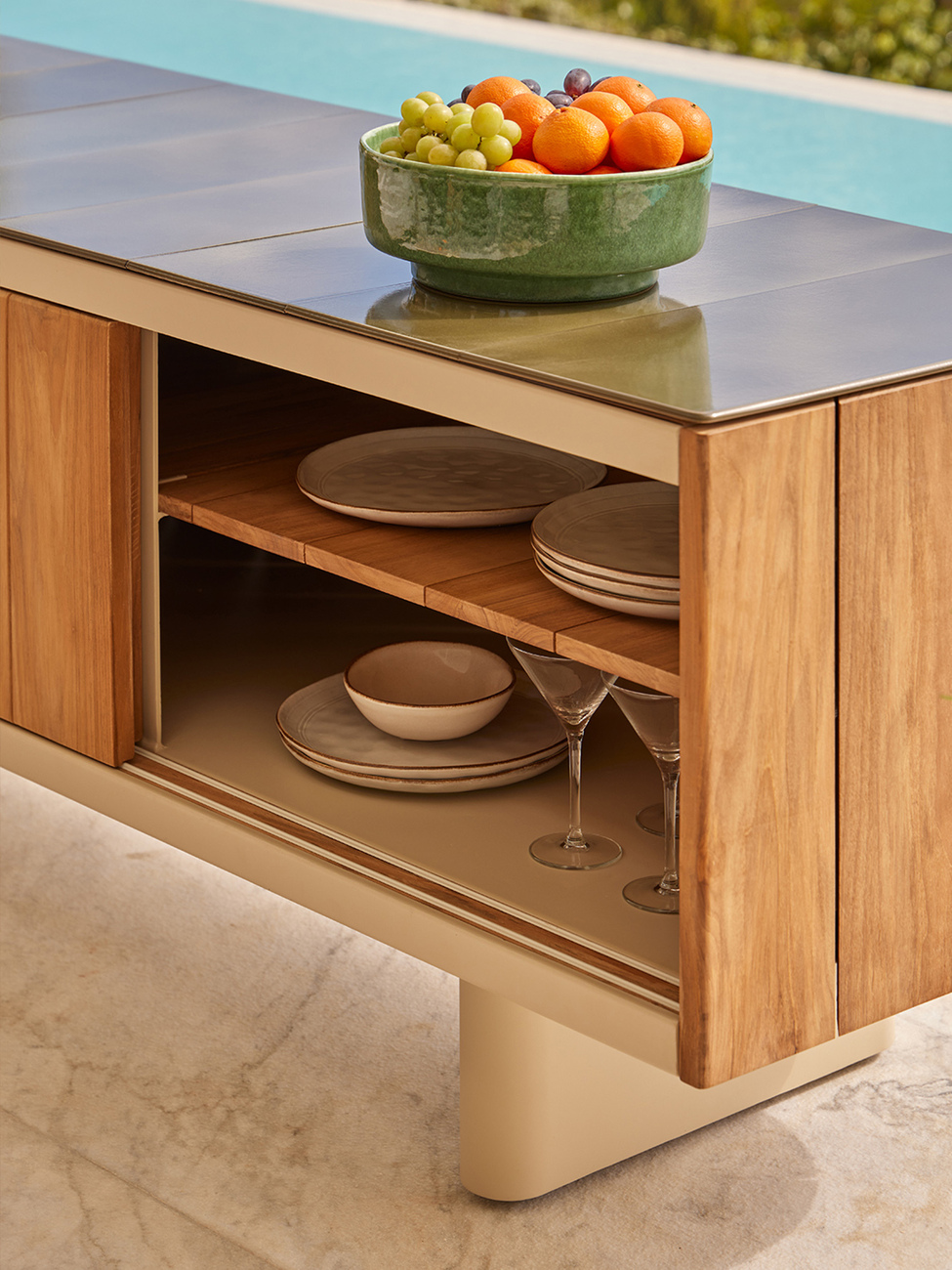
At Gloster, meanwhile, visitors could experience the extraordinary design language of “Itaca”: AMDL Circle have developed a slender, diagonally oriented structure from teak that appears both precise and dynamic. In the lighting sector, a visit to Lodes was well worth it: the understated “Arrakis” wall light by Patrick Norguet, with its finely ribbed profile, is designed as a system and offers light emission from one or both sides. Set against the backdrop of a brewery, Extremis showcased, amongst other pieces, “AMAi”, an adaptable table with lighting and power sockets that can be adjusted for any kind of gathering, both indoors and outdoors. Punt has a stylish sideboard for the terrace in its range: “Atrio” by Mario Ruiz is crafted from FSC-certified teak and features a glazed ceramic top.
7. Looking to the future
It was encouraging to see that the industry’s young talents were much more visible at Orgatec 2026 than before: For the exhibition “11 Kränze / 11 Studios” at Design Post Cologne, curated by Kosmoform, the designers Alexander von Dombois, Budde, Celina Kroder, Eric Degenhardt, Kaschkasch, Kosmoform, Marta Pracht & Beatrice Cadar, Moritz Putzier, Paula Burfeind, Scheidegger Pauli and Vosding Industrial Design reimagined the Kölschkranz, thereby sparking a discussion about design for the community, everyday culture and regional identity. Running in parallel, the ‘New Voices’ exhibition showcased works by, amongst others, Mike Wirthensohn, Jaskarn Singh Hanspal and Marvin Kasper. The historic Weißhaus moated castle in Cologne-Sülz also hosted the DesignersTower (DT26) exhibition format as part of Design Season Cologne and idd cologne. A total of over 100 pieces of furniture and interior design objects by independent designers and studios were on display, including works by Hahn & Wolf, Marie Luise Stein, Marcus Götschl, Tamara Zgraggen, Cäcilia Halbgewachs and Cornelius Richter.
8. Working against the flow
In terms of sustainability, alongside the traditional stand designs, it was particularly the exhibitors’ displays that stood out – those who are steadfastly seeking new ways to present their products whilst conserving resources: Klöber staged three versions of the “Looc” swivel chair as if it had just rolled onto the floor. The open cardboard box hovered above each chair, concealing a spotlight that further highlighted it. Practical: once the trade fair is over, the chairs can be transported directly in their packaging. Similarly, Klöber reuses the linoleum flooring internally. At Design Post Cologne, Frezza displayed a backdrop made of untreated cardboard, from which architectural shapes had been cut. Akaba created a pleasant atmosphere on its spacious stand with a wave-shaped ceiling installation made of paper. Thonet placed its company name above the structure in metre-high wooden letters. With an eye on new research, “Ēclos®” by consentino was also of interest – a new generation of mineral surfaces. Using Inlayr® technology, the material is produced in a process that combines minerals with up to 88 per cent recycled materials. The result is robust, heat-resistant surfaces with eclectic grain patterns and layered textures, such as the first Ēclos® collection, “Eclectic Veins”. Bõln showcased the material innovation Flexyskin®, based on plant-based polyurethane foam. This is used to create soft, organically shaped furniture that combines a pleasant feel with the requirements of heavily frequented public spaces – as seen in the modular seating system “Selma” by Stefan Borselius.
Continuing to change
The atmosphere on the exhibition floors was positive, although the once-dense array of displays appeared significantly sparser. Two years ago, 729 companies exhibited at Orgatec; this time, the figure stood at 550. With the reorientation of imm cologne towards a consumer-focused interior design market, a gap was left which some of the high-end furniture manufacturers filled by exhibiting their collections at the leading international trade fair for workspace and contract solutions – a move made possible by the event’s broader scope. To conclude, however, that Orgatec is now the new imm cologne would be an oversimplification. Many major manufacturers such as Wilkhahn, Tecta, Gumpo, Kvadrat, Cassina and Vitra were absent from the exhibition halls; instead, they exhibited at their own shows or trialled new formats, such as the machwerkhaus Köln. Furthermore, Design Post Cologne will cease operations in its current form on 31 December 2026 and, from 1 January 2027, will be integrated into Koelnmesse’s existing trade fair and events structure. The central theme of this year’s Orgatec is therefore essentially a hint at the challenge it faces for the 2028 edition: “From rooms to relationships: designing spaces in an ever-changing world”.