The Design Confectionery
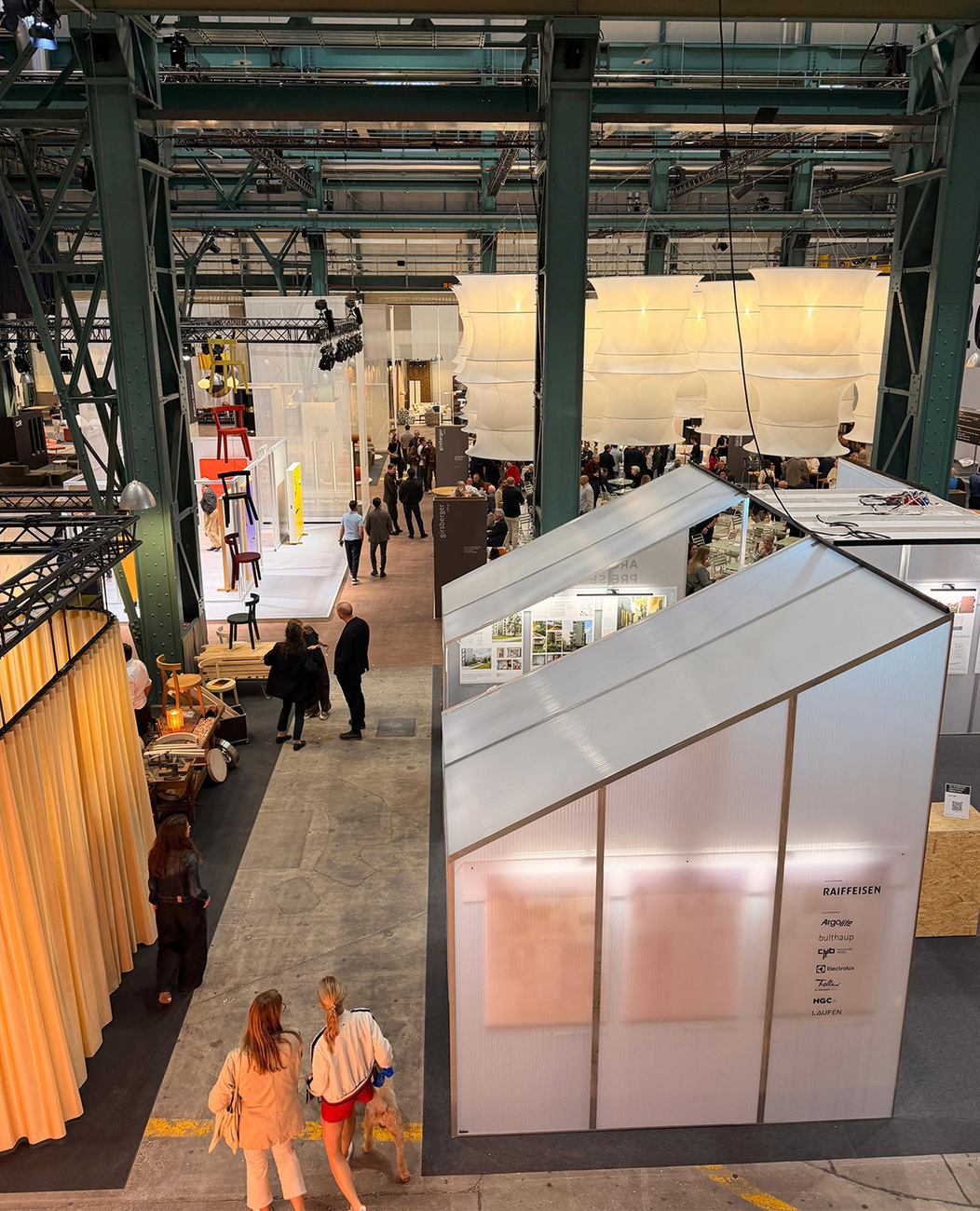
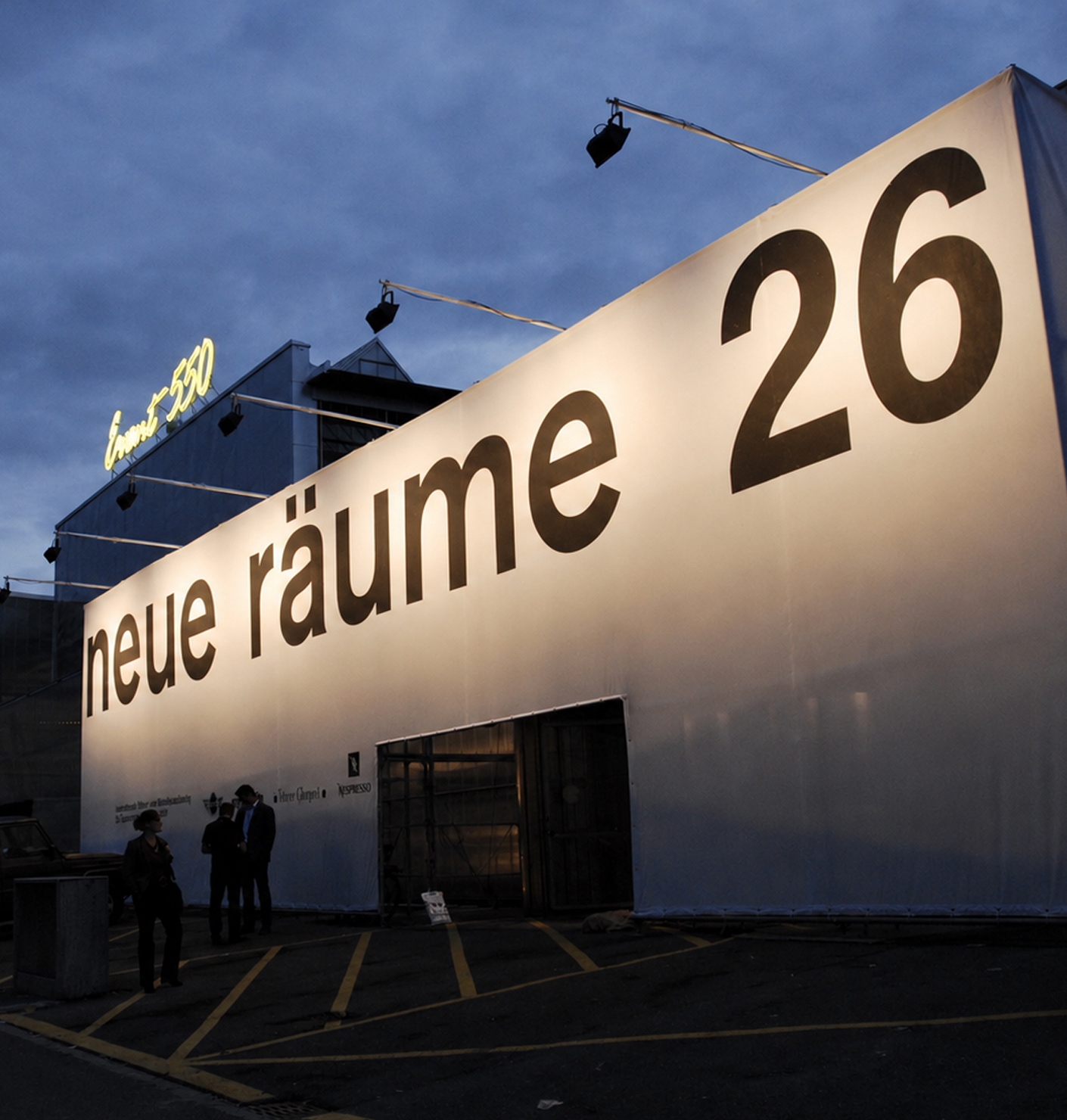
Every two years, a design fair takes place in Zurich that operates by its own rules – and does so very successfully. ‘neue räume’ is the name of the event, which was launched by architect and designer Stefan Zwicky. "The idea arose in 2001 from a question that had long preoccupied the industry: how can high-end specialist retailers attract new customers?" Our answer is a concept that brings together manufacturers' displays and specialist retailers," Zwicky says in interview. He adds: 'If, for example, a visitor is interested in a ClassiCon product, we can put them in direct contact with a local retailer. This creates a link between the manufacturer, the specialist retailer, and the end customer.’ The programme is designed to promote diversity, which he sees as a counterpoint to similar events such as the biennial “Designers’ Saturday” in Langenthal, which took place from 1987 to 2020. Today, neue räume is Switzerland’s largest design platform, utilising around 7,000 square metres in Hall 550 in Zurich-Oerlikon. This year, more than 90 participants from ten countries showcased the latest interior design trends, furniture designs and new products. “The exhibitors come from across the entire interior design sector,” explains Stefan Zwicky.
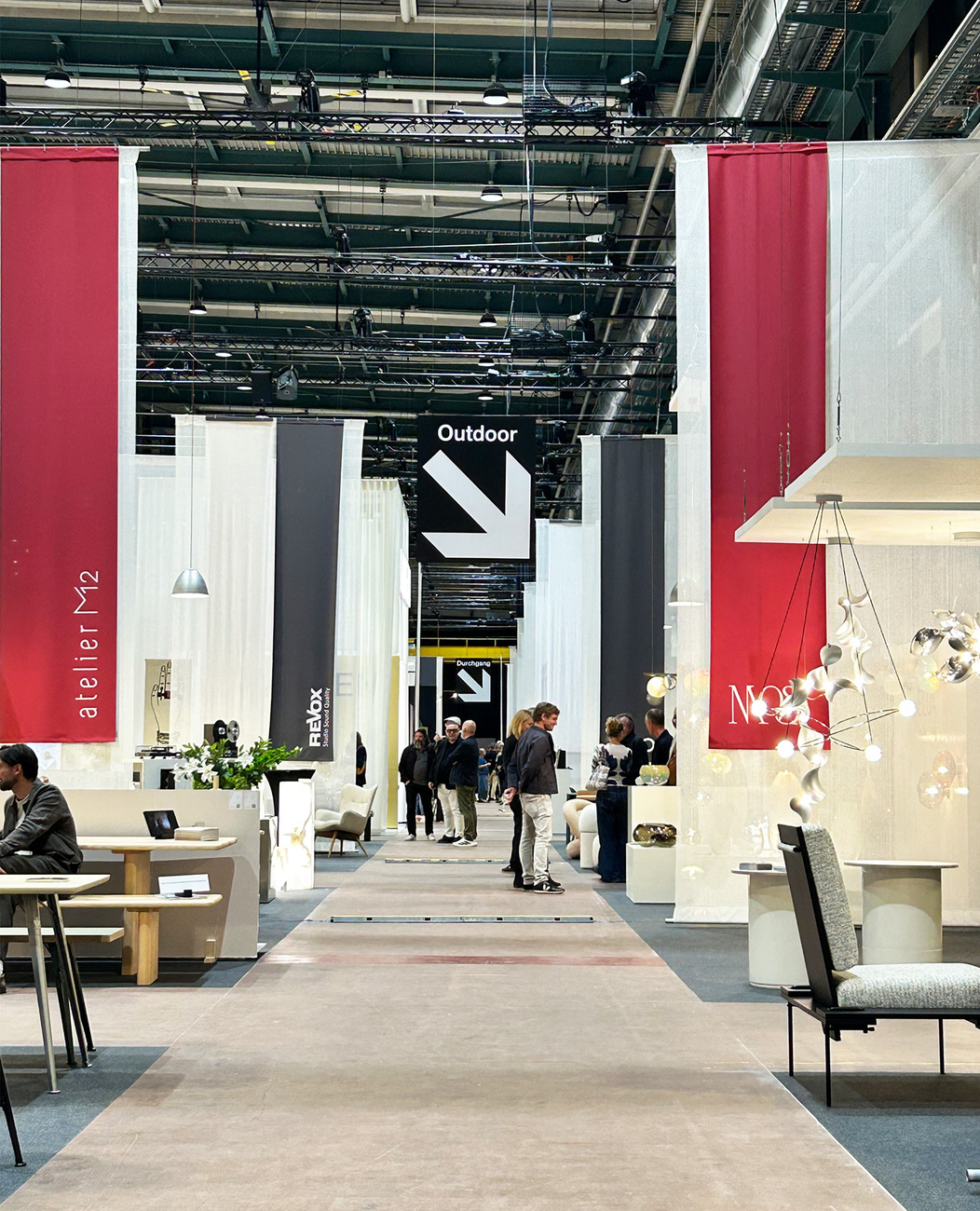
The historic ABB hall has been carefully modernised by the Zurich-based firm Spillmann Echsle Architekten to preserve its industrial charm. With its flexible usable space and abundance of natural light, the hall provides an ideal setting. The predominantly uniform design of the presentation areas, structured using fabric partitions, also contributes to the appealing atmosphere. "Companies can focus on their products rather than investing significant resources in temporary exhibition architecture," said Stefan Zwicky. Among other designs, Laufen showcased collections such as 'Tricolor', which is made from Vitreon, a composite material that allows for wall thicknesses of just 1.5 to 3 millimetres. Despite its glass-like appearance, the surface is very robust and stain-resistant. Zeitraum presented the new 'Onde' sideboard by Formstelle for the first time in Switzerland. With a vertical wood grain and gently rounded edges, it has a pleasantly compact appearance in all three available heights and widths. The body, top panel and legs can be configured in various materials and colours, such as solid wood or marble. müller möbelfabrikation had twice the reason to celebrate: for the first time, the Augsburg-based company exhibited at neue räume and presented its special 30th Anniversary Collection. This was created in collaboration with Studio Daphna Laurens, René Otto and Paleworks under the motto ‘mūller. crafted editions. made to last’.
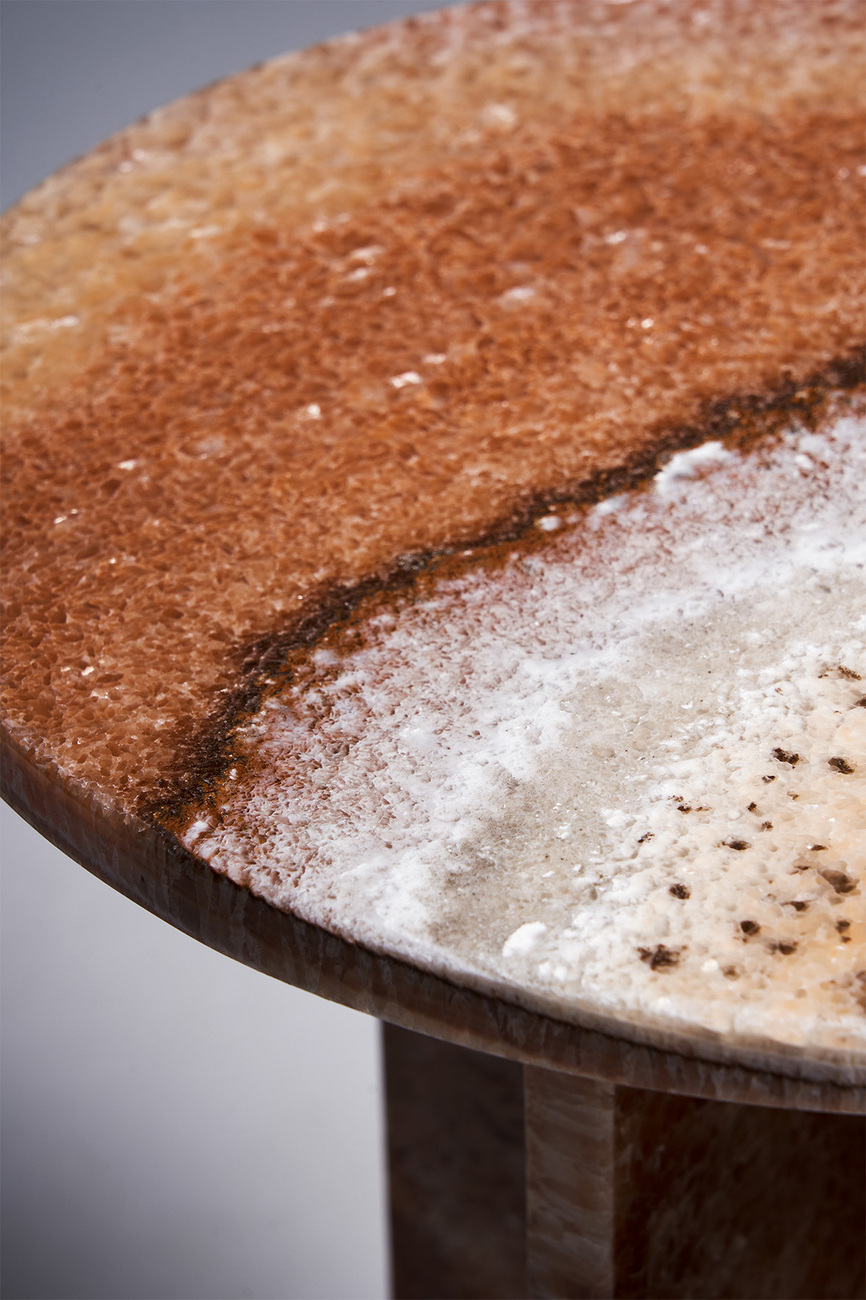
Another exciting piece was the 'AEVA' side table, designed by Tilla Goldberg for Tola Dolza. This unusual shape is 3D-printed using econitWood™ by additive tectonics. This patented composite consists of finely ground wood waste, a non-toxic, flame-retardant magnesium carbonate binder and salt water. The rough, untreated material on the inside, with a structure reminiscent of arcades, contrasts with the sanded, open-pored surfaces on the outside. Finally, coloured finishes in shades of plaster, bronze, and pearl blackberry are sprayed on to emphasise the natural surface texture. Founded just last year by Michael Groth, the Munich-based furniture label caused a stir right from the start with the “Ambito” furniture series by Steffen Kehrle.
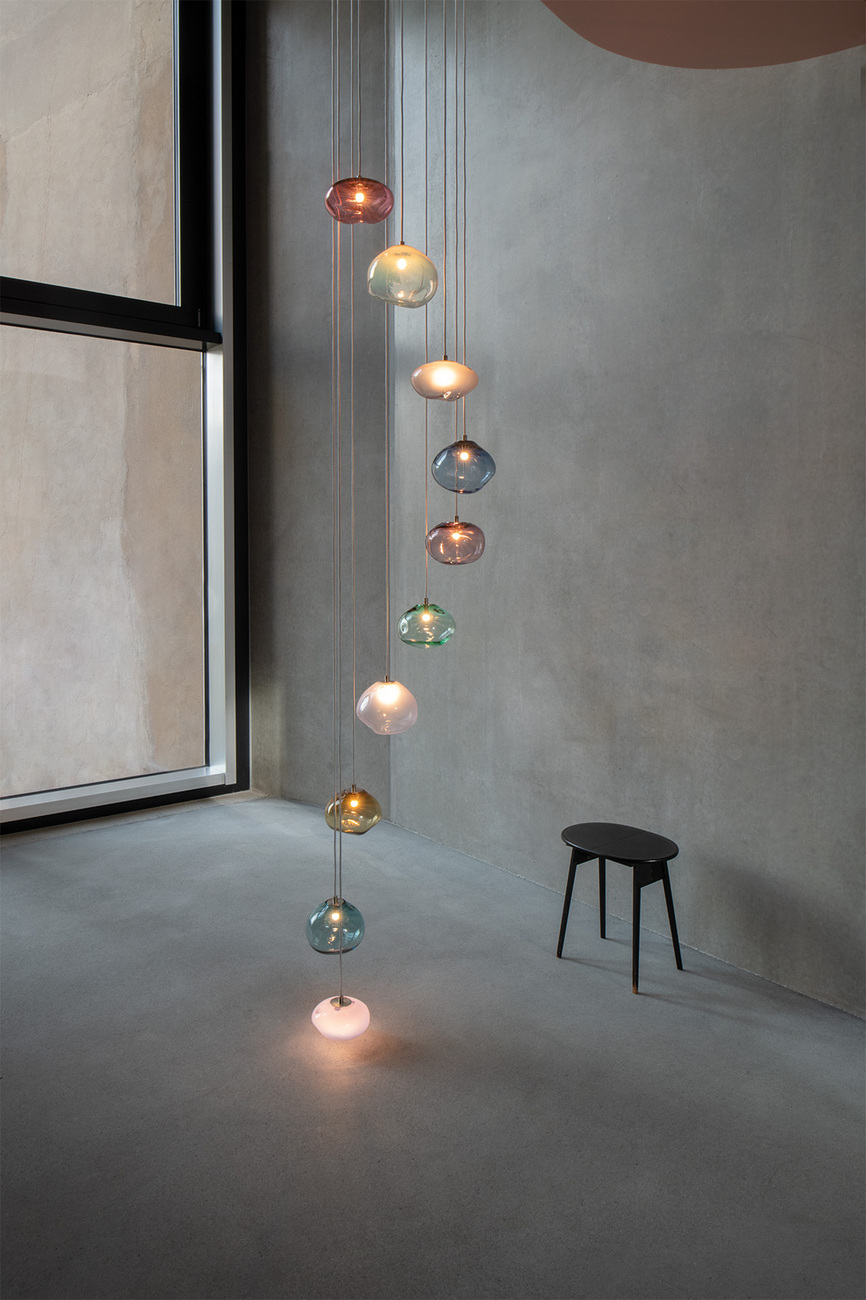
COR presented a selection from its collections featuring fresh accents in warm autumnal shades, such as amber and dark violet. These included the Cordia 26 armchair by jehs + laub. The new CORcosy blanket collection is perfect for the start of the cooler season. These high-quality knitted blankets are made from 100 per cent merino wool. The 'Line' and 'Wave' patterns, which are available in eight colour combinations, were created in collaboration with a Belgian knitwear manufacturer. Basel-based textile designer Isabel Bürgin also presented her high-quality plaids, woven from 100 per cent alpaca wool. Eloa presented its lighting for the first time at the ‘neue räume’ design fair with its own stand, showcasing the latest addition to the ‘Omega Centauri’ series made of glass, amongst other things. Bolon showed the “House of Bolon” table and chair collection, as well as its inaugural flooring collection, “BKB Sisal Fawn”, inspired by sisal mats and woven from plaited yarn. This soft-to-the-touch texture combines neutral beige and dark brown, and is manufactured in Sweden. Visitors to the Weishäupl stand could explore teak furniture and choose to relax on the magnificent 'New Hampton Daybed' with a canopy, or take a more formal seat on the 'Teva' chair, which was designed by Michael Schneider and Jan-Patric Metzger.
Visitors to the Danish design brand Form & Refine sat comfortably on the oak chair from the 'Sonder' collection. "The curved backrest is reversed compared to a traditional chair, creating a large surface area against the back for enhanced comfort. The chair was designed to have a precise, graphic appearance, so I experimented with the joints to emphasise this,” explained designer Jonas Herman of Herman Studio. Thanks to the long-established Danish company Vola, visitors could also experience the elegance of multifunctional taps: the new 'KV5' kitchen tap provides five different types of water from a single source, including boiling, filtered, chilled still and chilled sparkling water. Embru presented the new 'Patio Chair' lounge chair by Moritz Schmid, featuring a tubular steel frame, as well as the 'Kunz Table' by architect Peter Kunz. Individual components can be replaced as required. The furniture is manufactured in Switzerland.
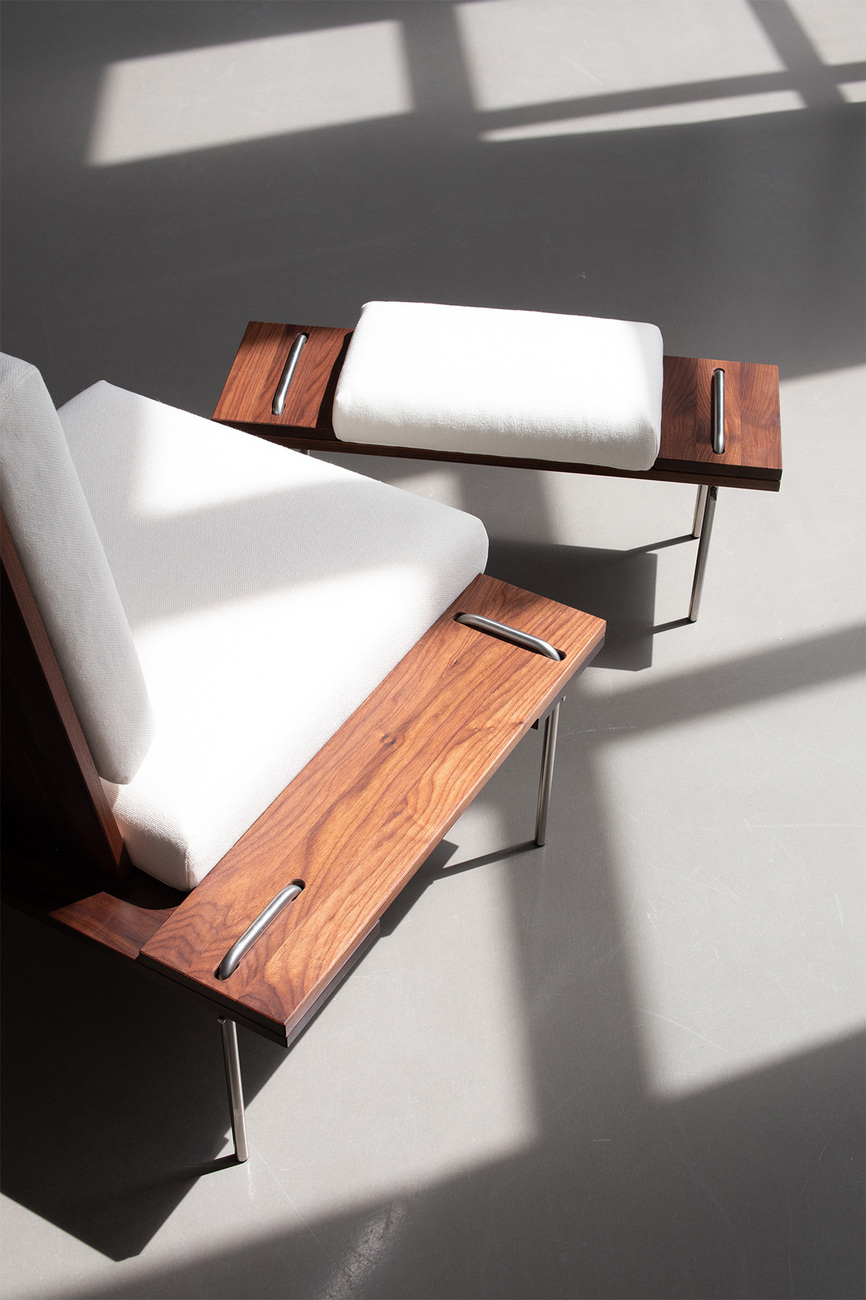
Alongside its well-known steel collections, such as the “Pool Desk”, “Ziggy”, and “Oolo and Ool” ranges, Mox presented the “Brise” prototype, which was unveiled for the first time at neue räume 2026. Von Denen, from Hanover and one of the 'Young Labels', gave the traditional wooden wedge a starring role in the 'Schneidersitz' lounge chair, interlocking the wood with the metal to lend stability to the seating unit and its side shelves. Jakob Bill of wb-form reimagined the Ulm stool with the 'Billtwin', combining two solid spruce units to form a bench. The Italian brand Dooor demonstrated the versatility of its bespoke textile doors, movable partition walls and systems with an impressive emerald green display.
Alongside the presentation of new ideas, the numerous anniversaries meant that reflection on and development of proven successes were key themes at the neue räume design fair. As part of the special exhibition organised by the professional associations VSI.ASAI and the Swiss Interior Design Archive, visitors could view a prototype of a chair by Richard Hersberger, reissued in collaboration with Girsberger and the Gasser Derungs practice for the Swiss Embassy in Addis Ababa. Girsberger has also recently developed a mobile wall system with Mathias Seiler for flexible, spontaneous zoning in modern workplaces. To celebrate its 75th anniversary, Baltensweiler unveiled new additions to the flexible 'IRIO' lighting range by Lukas Niederberger, including a reading lamp and a wall lamp characterised by a clean, minimalist design.
The founders of Rowac, Alide and Dieter Amick, also demonstrated how to successfully bring a design from the past into the present. Originally a hardware factory, the company was founded in Chemnitz in 1888 and produced the world’s first riveted seat made of lightweight steel in 1909. The Bauhaus founder and architect Walter Gropius once chose the round workshop stool for the Bauhaus school building, earning it the nickname ‘Bauhaus stool’. The reissue was on display at the Rowac stand, retaining the technically sophisticated details of the robust steel construction developed by the company's founder, Karl Robert Wagner, as well as the regional production. There are also new colours, as well as a bench and a table featuring a Faust linoleum surface.
A few steps further on, visitors had the opportunity to try out a piece of furniture from Carl Hansen & Søn that will soon be available: the 'FK64 Scimitar Chair', which was designed by Preben Fabricius and Jørgen Kastholm in 1963 and is now being reissued. Its striking, crescent-shaped stainless steel frame supports a veneer seat that can be upholstered in either leather or fabric. This industrial design language marked a turning point in Danish furniture design. B&B Italia collaborated with Ronan Bouroullec to create the 'Abaco' range, for which the designer emphasises the structural logic rather than concealing it. The tabletop, crossbars and legs of the table are available in various combinations of materials: solid wood, lacquered or light grey concrete legs, and a smoked glass tabletop. ClassiCon has created an intriguing dialogue between the reissue of Eileen Gray's iconic “Lota” sofa from 1924 and the recently launched modular “Soft Stone Sofa” by Gabriel Tan.
To mark the 50th anniversary of Magis, visitors were able to gain an insight into the company’s creative history through the photo books “Leute” and “Jump” in the special exhibition, as well as enjoy a spot of fun spinning round and round in the “Spun” swivel chair by Thomas Heatherwick as part of a photoshoot. At the joint Magis and marset stand, visitors could discover, amongst other things, “Archeo” by Jaime Hayon for Magis, which, with its sculptural design, can serve as both a side table and a stool – indoors or outdoors. It is inspired by the forms of ancient archaeological artefacts. Truly unique were the handcrafted natural stone furniture and limited-edition ranges in marble, onyx, travertine and quartzite by Lamaro Designs, including pieces from the “Companions” and “Tres Aires” collections. The furnishings are produced in small batches at Mexican workshops.
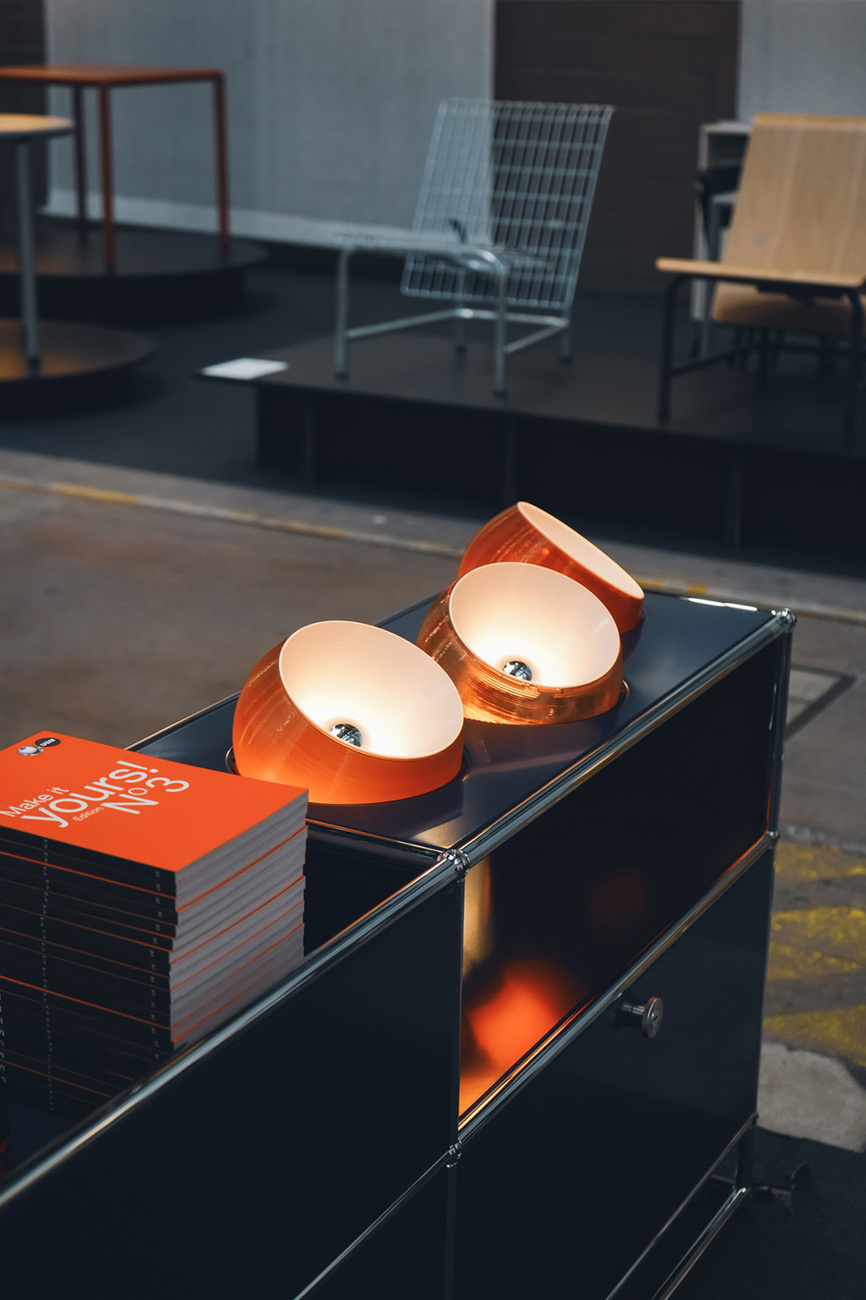
Joint exhibitions were very popular with companies as they offered new synergies and gave visitors the chance to experience products in different contexts. For example, USM Modular Furniture collaborated with AG Möbelfabrik horgenglarus, Silent Gliss and Dehgraf Design AG to create a holistic interior design concept. The colourful light fittings by Dehgraf Design, made from aluminium, PET and PLA, were a real eye-catcher within this concept, while horgenglarus collaborated with architect Bernhard Aebi to create an updated version of the classic Viennese chair offering exceptional seating comfort: the three-piece 'Abbey' chair range. The seat frame of all models is reduced to the limits of structural feasibility, measuring just 38 millimetres in height with no reinforcing elements. Midgard illuminated the shared space with Foyos, using the new “Ray” table and floor lamp amongst other things: The adjustable lamp was conceived by Christian Loddo, Hugo Berger and David Einsiedler. Its lamp arm, made of curved, flexible steel strips, can be infinitely adjusted in height and reach by moving a mounted slider. The robust 'Foyos System' by Mark Braun, made of solid oak and stainless steel, combines the functionality of classic workshop furniture with a contemporary, homely design language. The modular structure comprises six elements — The Bench, The Wall, The Rack, The Corpus, The Shelf and The Unit — which can be flexibly combined and adapted to changing requirements.
Wästberg exhibited alongside S+ Systemmöbel: amongst the pieces on display was ‘V’ by Foster + Partners Industrial Design for W+, a table lamp inspired by the classic banker’s lamp and offering a contemporary take on it. Its geometry ensures a wide, even distribution of light: the V-shaped shade is combined with a rod that can be positioned vertically or at an angle and allows rotation of up to 340 degrees. Lehni Furniture showcased the “Hall” floor lamp by Panter & Tourron, made from extruded aluminium tubing, whose anodised surface features distinctive colour gradients. It was developed in collaboration with From Lighting and bwb Surface Technology. Equally striking was “Occulta” by John Pawson in the Röthlisberger Collection, who, for this floor lamp, has combined two interlocking elements made of moulded plywood with Douglas fir veneer to form a vertical structure within which linear light sources are concealed.
Orea and Team by Wellis presented the “S2-Line” kitchen by Bodo Sperlein, showcasing a balanced range of materials, including lacquered surfaces, ceramic stone and solid surface materials. These materials define the functional fittings as architectural elements in the modern living space. Okro, the official kitchen partner of Vipp for German-speaking Switzerland, represented the long-established Danish company in Zurich. Alongside the luxurious kitchen fittings, visitors could explore the expanded ‘Swivel Chair’ series with an extended backrest and enlarged seat. arflex and cc-tapis demonstrated how well furniture designs from the 1950s, 1960s and 1970s fit into the present day by reimagining the iconic “Botolo” armchair, designed by Cini Boeri in 1973, with chrome-plated legs. At Andreu World, seating was also close to the floor, as with the voluminous 'Nina Lounge' armchair designed by Patricia Urquiola as a continuous curve. Fortunately, a love of colour was slowly returning to the collections – a particular highlight was the Tecta exhibition, which presented its classics in collaboration with Wohnhilfe in numerous shades. Lintex showed that even whiteboards can be aesthetically pleasing in vibrant colours, adorning them with solid oak and raw aluminium frames. Jörg Boner added fresh accents in the form of ochre, dove blue and pale yellow to a trade fair concept for Schätti. Part of the display was his elegant 'Glarona' lighting range.
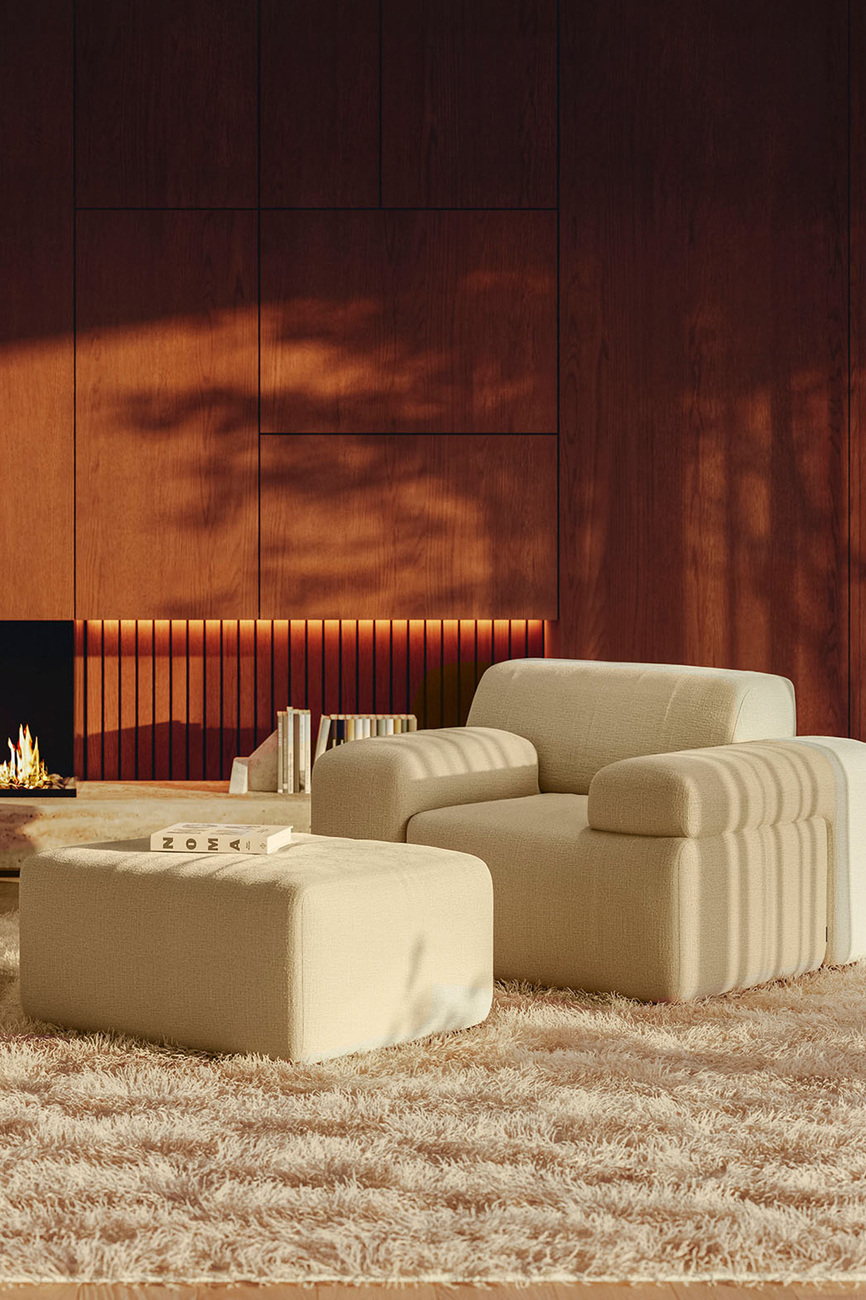
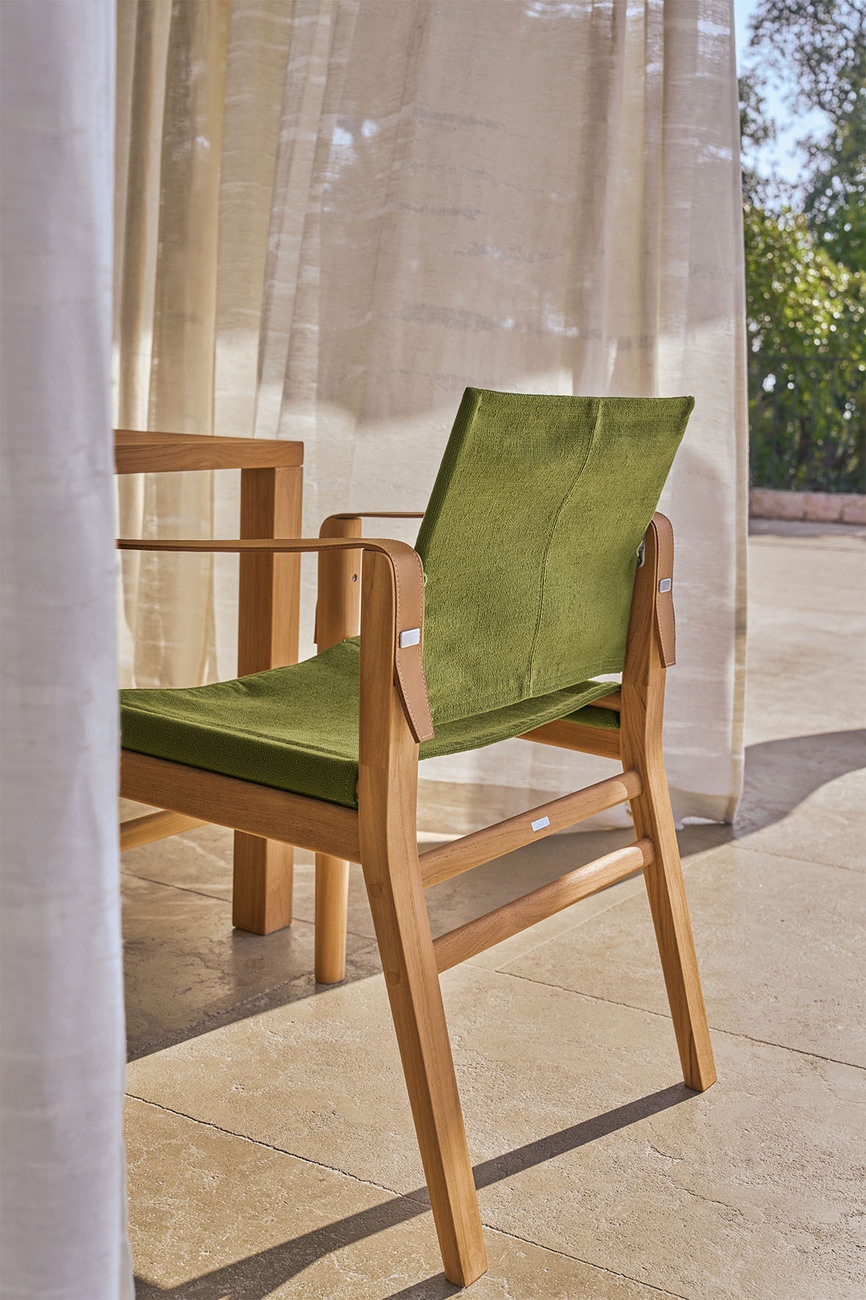
The special ‘Outdoor’ exhibition was included in the neue räume programme for the first time. Garpa collaborated with Outdoorchef to showcase the ‘Nomai’ collection by Sören Jungclaus, featuring teak, leather, and weather-resistant upholstery. These armchairs have adjustable backrests and a cosy feel, making them perfect for patios and gardens. The inspiration came from the “Kaare Klint Safari Chair” from 1933. Fermob's products typically bring a vibrant touch to outdoor spaces, as seen in the popular “Bellevie” collection by Pagnon & Pelhaître, crafted from aluminium. However, the French manufacturer always has surprises in store: from January 2027, it will add the ‘Lake’ to its range – a modern take on the classic high-backed lounge chair made from teak and aluminium. Naturally, a small side table that can also serve as a footstool is included.
Overall, the choice of space in Hall 550 and its layout for the ‘Outdoor’ theme could be improved. The walkway area, with its partially covered skylights as well as the limited presence of greenery, made it challenging to create a truly atmospheric ambience.
Among the special exhibitions at neue räume was 'Design and Craftsmanship from Graubünden' by Mobiglias, a group of craft businesses that showcased their new furniture and objects. One such business was the family-run WRUWA Holzbau, which carries out every stage of the process itself, from sawing the logs and planning to creating finished products such as knitted structures. Another example is the designer David Rohrbach, who exhibited his “Relax” lounge chair made of walnut. "Alongside international manufacturers, we showcase Swiss companies, which has always been important to us. Many of them collaborate closely with local designers and do not produce mass-market goods. It is crucial for them to be able to present their work to a wider audience every two years,” said Stefan Zwicky.
A platform for young talent was a must at this event: the HSLU Lucerne University of Applied Sciences and Arts brought insights from its "Public Interiors" module to Zurich. The projects showed how traditional model-making techniques can be combined with AI-assisted image generation to create new ways of visualising space. Meanwhile, interior designers from the HF Higher Technical College in Zug presented three rooms within a wooden cube alongside the walk-through installation ‘Übergänge’. Each room was dedicated to a different topic — sensation, reflection and reorientation — and was designed to explore the question, ‘How much speed can our everyday lives cope with?’ Furthermore, tiled.ch, a Swiss company specialising in high-quality tiling and joinery work, presented experimental spatial objects and accessories in collaboration with JPB Design Studio and Puzzle Design.
The accompanying programme was equally impressive. Not only did V-ZUG showcase its luxury kitchen fittings, including the latest additions to the ‘Supreme Line’ and concealed induction hobs, it also organised a three-day series of talks. Speakers included Philippe Baumann from Création Baumann, colour expert Katrin Trautwein from kt.COLOR, and Stefan Zwicky.
‘neue räume’, Switzerland’s leading international home and furniture exhibition in the high-end interior design sector, has been making an impact for the past 25 years without the need for spectacle. This compact, democratic and approachable event is ideal for networking in a relaxed atmosphere and getting an initial impression of the products on display. Regional workshops and young creatives can showcase their work alongside international brands, providing a wealth of inspiration and fresh perspectives. This made a visit to Hall 550 worthwhile for guests who had already attended this year's market-leading industry events in Milan and Copenhagen, as well as for those primarily active in the local area. The changing special exhibitions – such as this year’s showcase of award-winning buildings from ‘The Swiss Architecture Awards 2026’ – and the specialist retailer’s lounge, where visitors can find a local interior design partner, provide straightforward opportunities to forge connections. And thanks to the excellent catering by Simon Tanner, refreshments were well taken care of.
In the global hub of the banking and finance sector, which tends to have a rather homogeneous focus, there is a need for regular meeting places for the creative scene, design, architecture, and crafts. “neue räume” provides these in collaboration with Zurich Design Week and offers a wide range of inspiration for both trade visitors and end customers. It's a fine selection of pralines, so to speak – and, as everyone knows, these are the best in Switzerland.
Stylepark magazine is a media partner of ‘neue räume’.