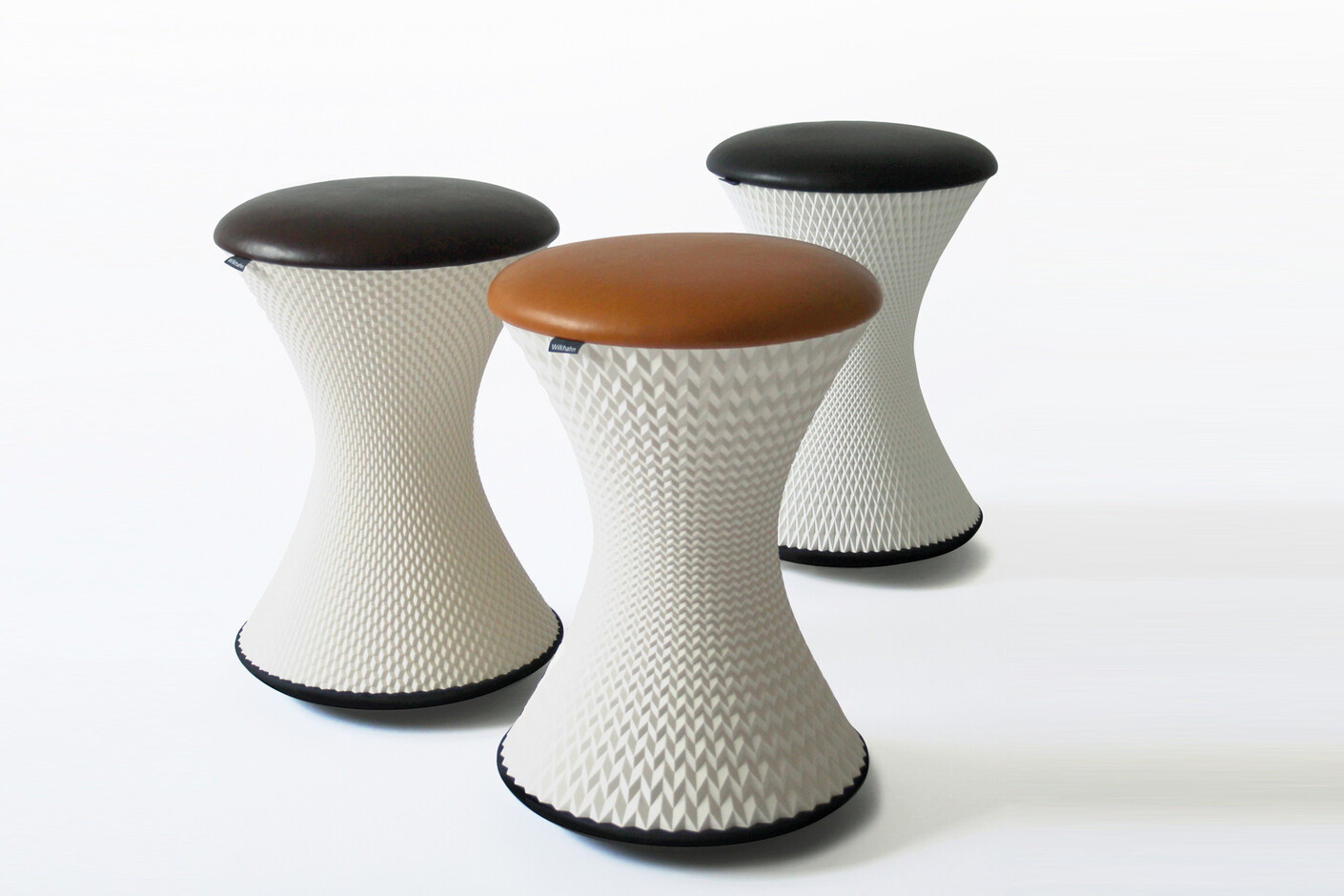
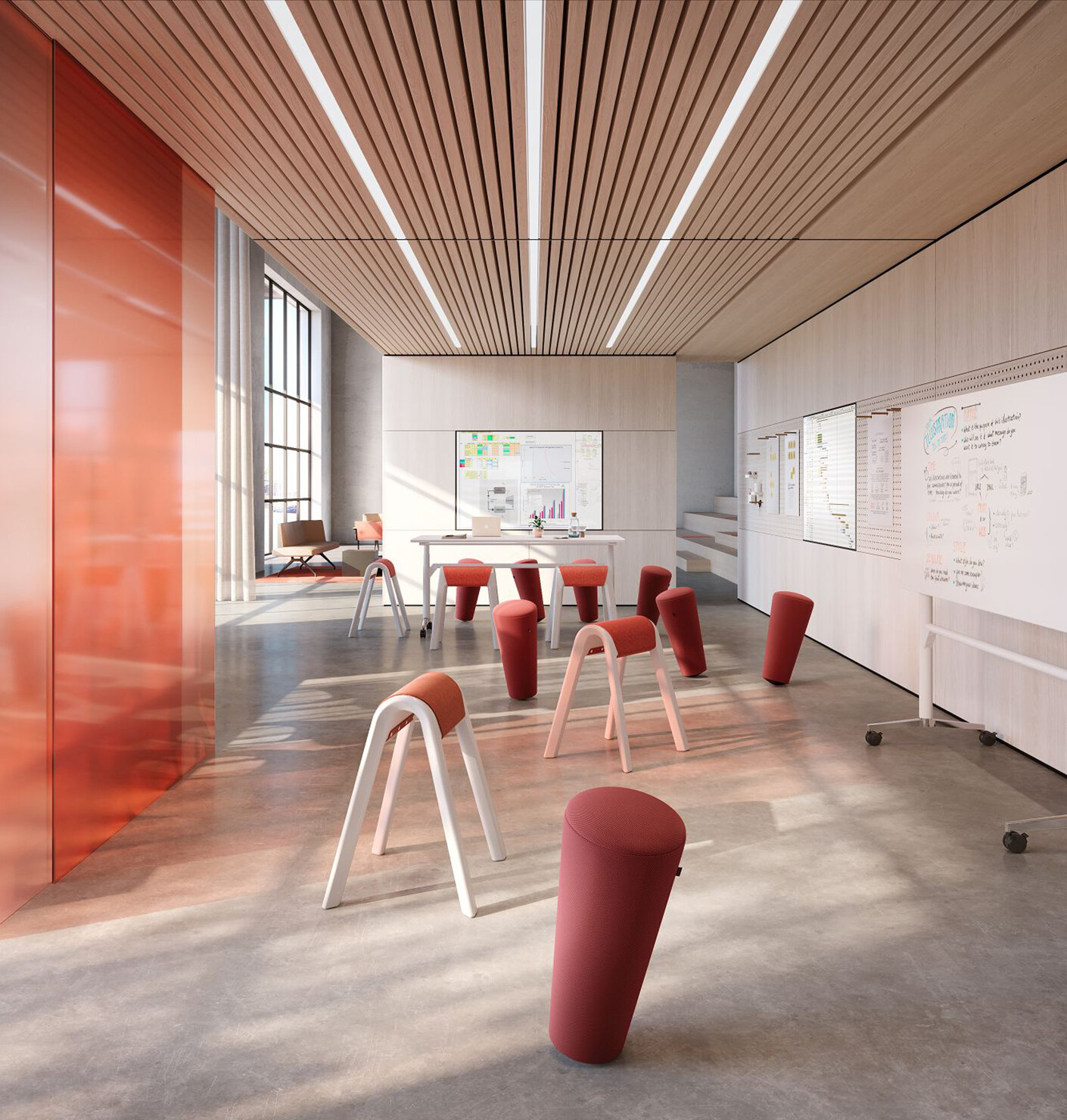
Wilkhahn is the first furniture manufacturer worldwide to
produce ready-to-use, 3D-printed furniture. A collaboration with designer Thorsten
Franck has produced a stool collection whose shapes are ideal for production via this
method with its sparing use of materials. It’s the innovative technology that makes the
progressive aesthetic of the PrintStool One possible in the first place. The
sophisticated, three-dimensional structures of the stool’s body stand out for efficient
use of material. The stool is very strong due to the clever way the seat and base are
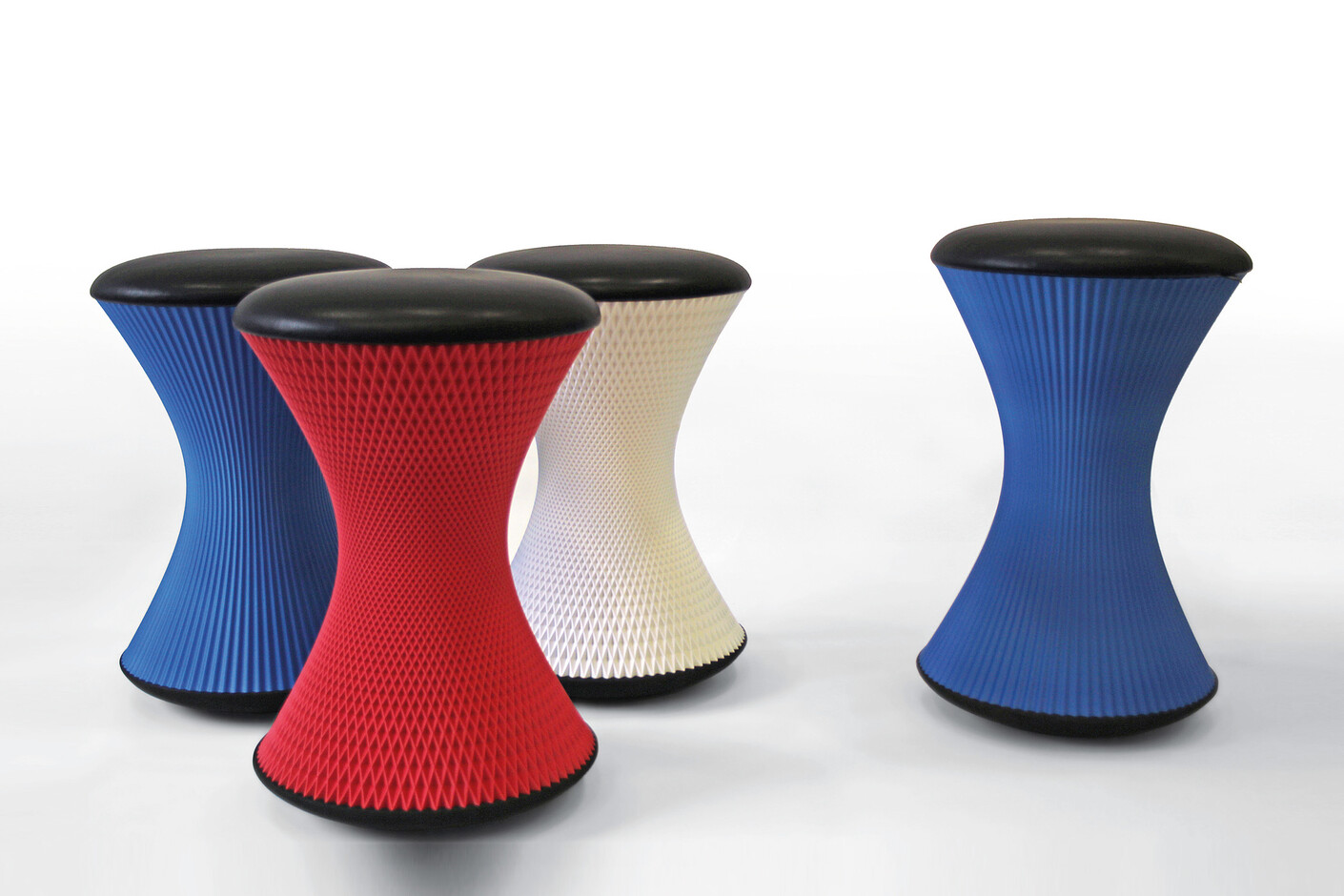
connected and it can take people weighing up to 100 kg. The printing material also has huge potential. The Orgatec showcase will
feature prototypes of the current stage of development to try out in diverse colours
and shapes.
Together with the digital revolution that’s Industry 4.0, 3D printing is considered a key
technology. In the office furniture industry, Wilkhahn’s PrintStool One places the company at
the forefront of this state-of-the-art manufacturing method that taps into totally new
dimensions. 3D printing techniques allow the roles of producer and consumer to merge –
customers become prosumers. Once they send their printing jobs, they control production and
can become co-designers who define structures, shapes, colours and even sizes. The results are
simply sent as data sets to 3D printers that produce the stools within just a few hours. In terms
of despatch, the new method is also very promising. It’s feasible for example that to save time,
but also costs and emissions during transportation, furniture production could take place locally,
or even at the place it’s destined for.
Wilkhahn uses lignin as the basic material for the PrintStool One. This occurs as a natural
polymer in plants and is responsible for turning cell walls into wood – and is therefore a solid
filler. Accounting for 20 to 30 per cent of the dry matter of woody plants, along with cellulose
and chitin, lignin is one of the most common organic compounds available on Earth. This material is available in virtually unlimited quantities. 3D printing with lignin is a groundbreaking technology.
However, there’s still a lot to do in order to comply with the international norms and standards
that are associated with industrial production for the contract furniture business. At the moment
there are no valid long-term studies on the technical characteristics of the material used, the
same applies to the reliability of the processing technology. However, investments in this
development project already reveal that Wilkhahn is a pioneer where this technology’s
concerned too and is pressing ahead with developments of the 3D printing technology together
with OEMs and designers. Visitors can look forward to experiencing the current stage of
development live.